
Quick Take
- The world's largest beaver dam wasn't found by scientists on the ground. It was stumbled upon by accident during a completely unrelated research project. See the discovery story →
- Beavers have a biological trigger that forces them to repair their dam, even in the dark of night. Remarkably, this trigger has nothing to do with sight. Explore the repair instinct →
- Beavers will happily move into an abandoned dam, though there is one condition that makes them avoid a site entirely, no matter how perfect it looks. Find out the condition →
- The record-breaking dam has been quietly growing since the mid-20th century, and it still isn't finished. See the record-breaking dam →
The North American beaver (Castor canadensis) stands out with its flat, paddle-shaped tail, thick waterproof brown fur, and famous orange front teeth that never stop growing. An adult usually measures three to four feet long and weighs between 40 and 70 pounds, though some rare giants can reach up to 110 pounds. These animals build mud and branch dams to create deep ponds, keeping them safe from predators and close to food. By slowing down water, their dams build vibrant wetlands that prevent floods, clean the water, and house countless other species. Keep reading to discover the largest beaver dam ever found.
What is a Beaver Dam?
Beavers build dams across streams to slow flowing water and create deep, protective ponds. Within these ponds, they construct dome-shaped homes called lodges, with hidden underwater entrances that keep families safe from land predators and remain accessible during freezing winters.

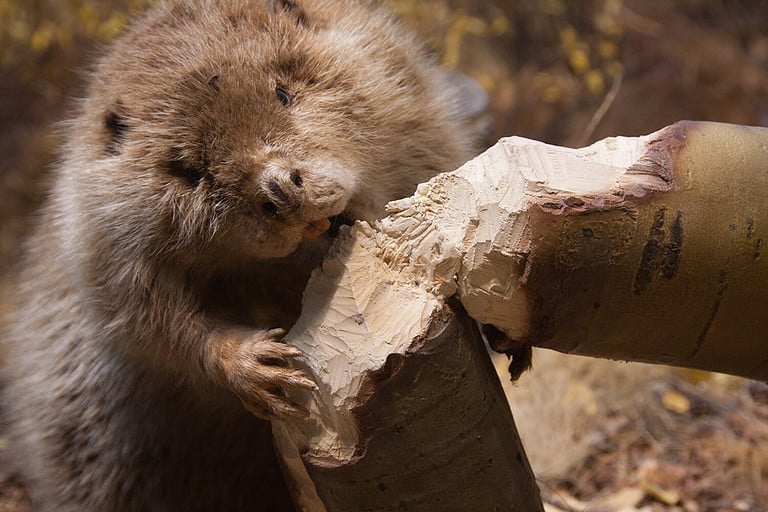
Beavers are semi-aquatic rodents found throughout North America.
©A-Z Animals
In smaller wetlands or narrow streams, the lodge is frequently built directly upstream from the dam. Beavers construct their dams by first driving heavy branches and rocks into the riverbed to anchor the foundation against the current. They secure these branches using their powerful upper bodies, jaws, and forepaws. Once the branch is in position, the beaver will pile heavy stones onto the base of the submerged branch, pinning it firmly against the riverbank so the current cannot sweep it away.
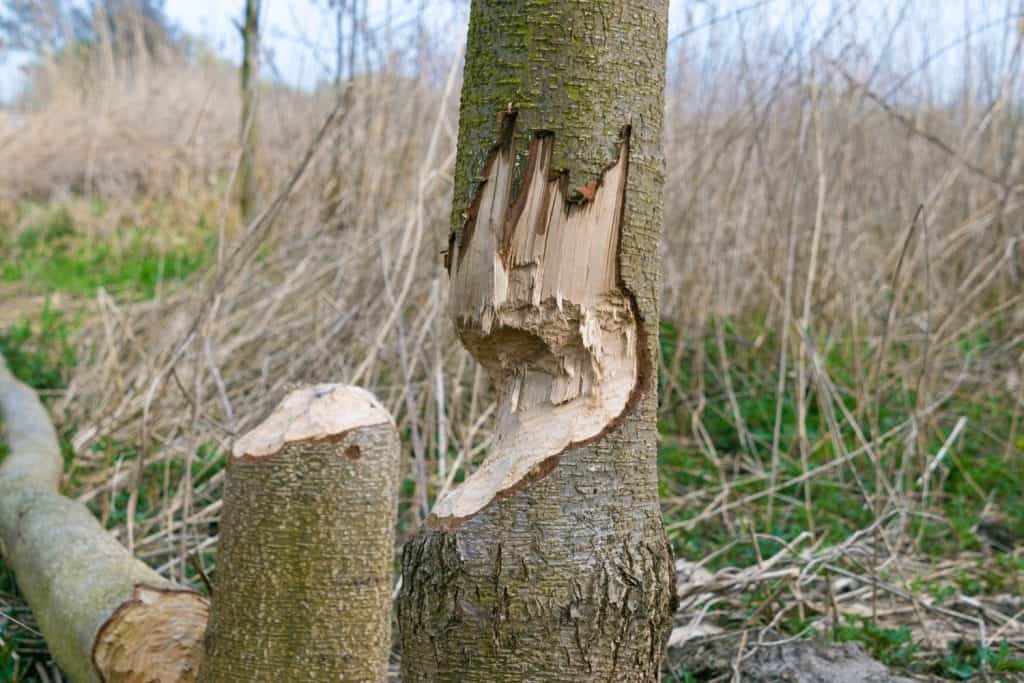
Beavers cut down trees to build lodges and dams using their powerful teeth and jaws.
©bykot photo/Shutterstock.com
Next, they weave a dense matrix of smaller limbs and twigs through the base, packing the upstream side tightly with mud, stones, and river muck to create a waterproof seal. Driven by the sound of rushing water, beavers continuously maintain and expand the structure to ensure that the resulting pond remains deep enough to protect their nearby lodge.
Is Dam Maintenance Lifelong?
Because the materials used to build the dam (sticks, mud, and leaves) naturally decay, erode, and wash away under the constant pressure of flowing water, the structure requires continual upkeep.
A beaver treats its dam as a lifelong maintenance project, constantly repairing and reinforcing it.
Beavers are biologically attuned to the sound of running water. Any trickling sound indicating a leak immediately compels them to patch the area with fresh mud and twigs. Although beavers monitor their dam year-round, activity peaks dramatically in autumn, when they reinforce the structure with heavier timber and extra layers of river muck to ensure it holds firm against winter freezes and spring snowmelt.
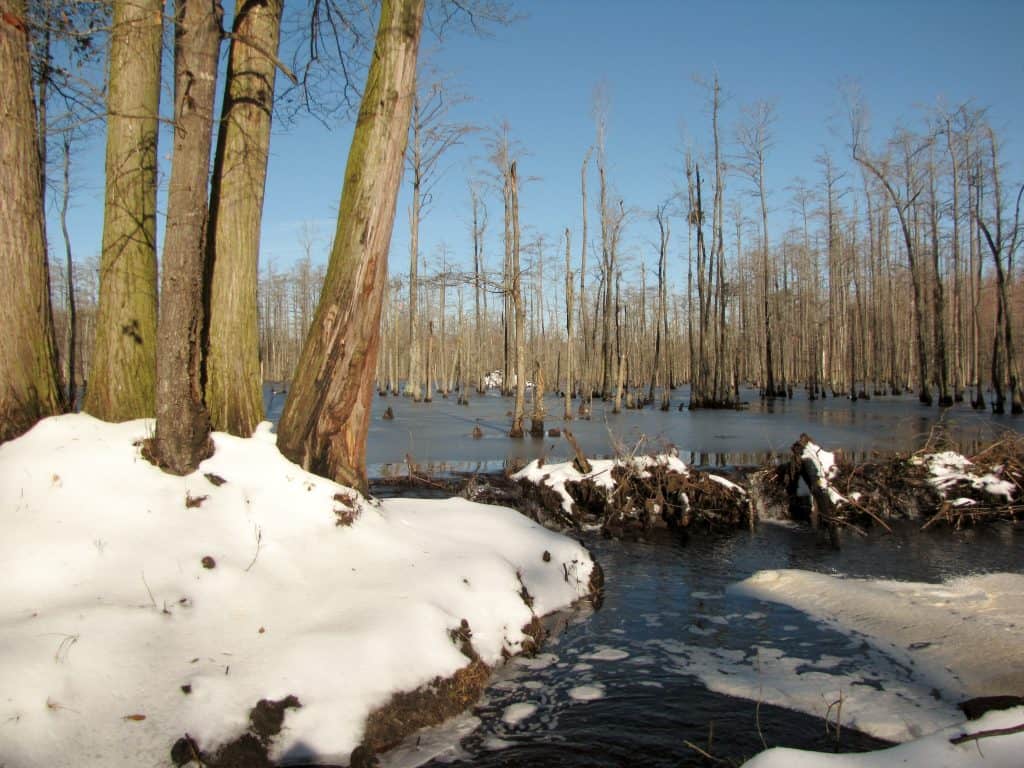
Beavers must consistently maintain their dams.
Do Beavers Share Dams?
Although beavers do not typically share their dam or lodge with unrelated individuals, other beavers will frequently take over abandoned dams and lodges.
They are highly opportunistic and prefer inheriting an existing dam because it saves them significant time and physical energy compared to building a complex wetland infrastructure from scratch.
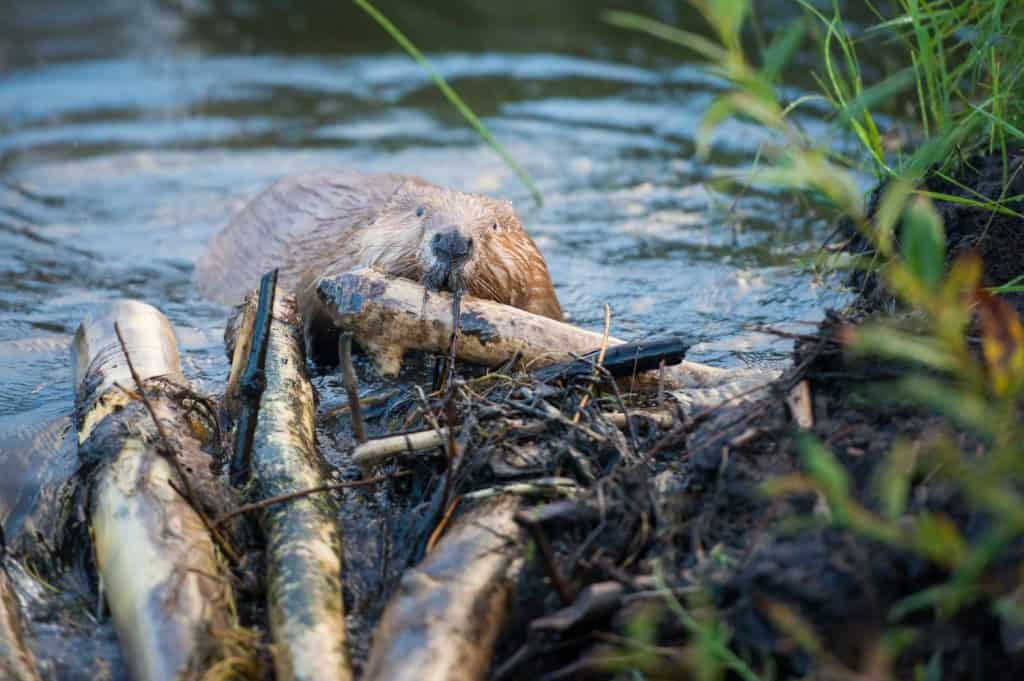
Beavers will appropriate abandoned dams.
©Ghost Bear/Shutterstock.com
However, if the original colony left because it completely exhausted the local food supply, other beavers will avoid the area. In such cases, the site must go through a decades-long natural cycle, during which the pond transforms into a nutrient-rich beaver meadow and a new generation of fast-growing woody plants matures. Once the food supply has fully regenerated, a new generation of beavers may return to the same site to rebuild on top of the old, buried foundation.
The Largest Beaver Dam
The largest beaver dam on record is located in Wood Buffalo National Park in Northern Alberta, Canada. The dam measures approximately 2,790 feet long. Its size suggests that several generations of beavers have worked on it.

Beavers have an average lifespan of four to five years.
©Tony LePrieur Photography/Shutterstock.com
The enormous dam was discovered accidentally in 2007 by researcher Jean Thie, who was using Google Earth to track the effects of climate change on the melting permafrost in Canada. Noticing an unusually long, dark line cutting through a remote wetland, Thie analyzed older images of the area and determined that what he saw was a dam and lodge that multiple generations of beavers had been building since the mid-20th century.
Because the dam is located deep within Wood Buffalo National Park, it is incredibly difficult to reach by land. It likely would have remained hidden if not for satellite technology. After careful observation, it was determined that the dam began forming in the late 1970s or early 1980s, and was already visible in satellite imagery by 1990.
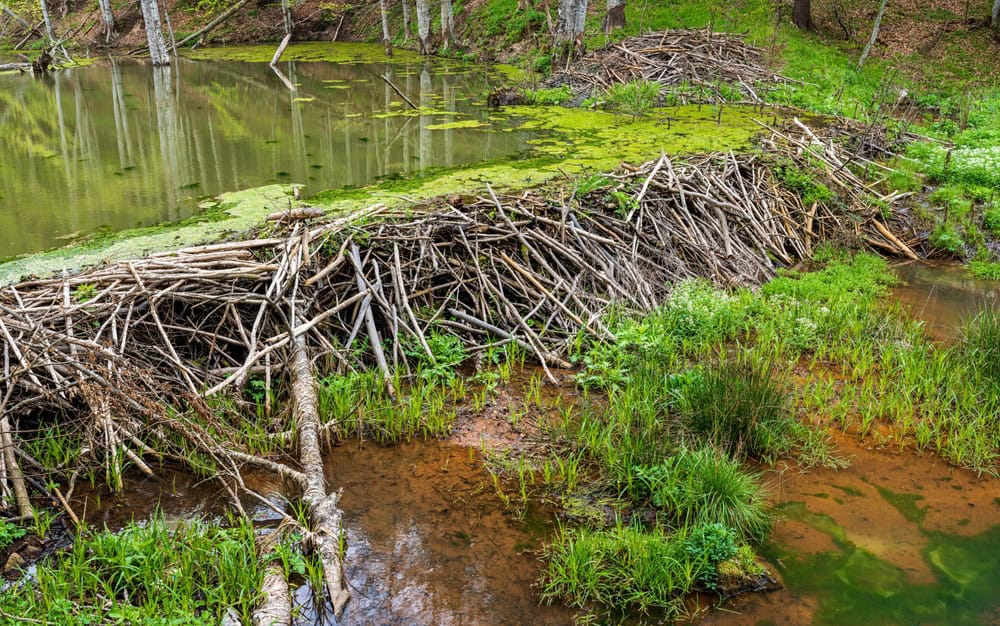
Beavers use a combination of wood, rocks, and mud to build and maintain their dams.
©krstrbrt/Shutterstock.com
Nearby dams currently being constructed by beavers could add another 300 feet or more to the main dam’s length once they are connected. The area provides abundant access to both fresh water and building materials, thanks to the dam, which spans a secluded wetland.
Wood Buffalo National Park, the largest national park in Canada, protects a large swath of the Northern Boreal Plains ecosystem, including the largest herds of wood bison on Earth, vital whooping crane habitat, and the aforementioned beaver dam.
.