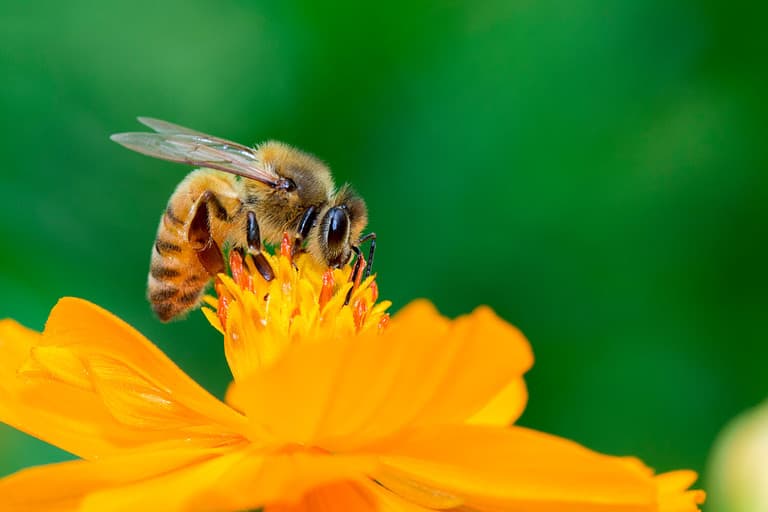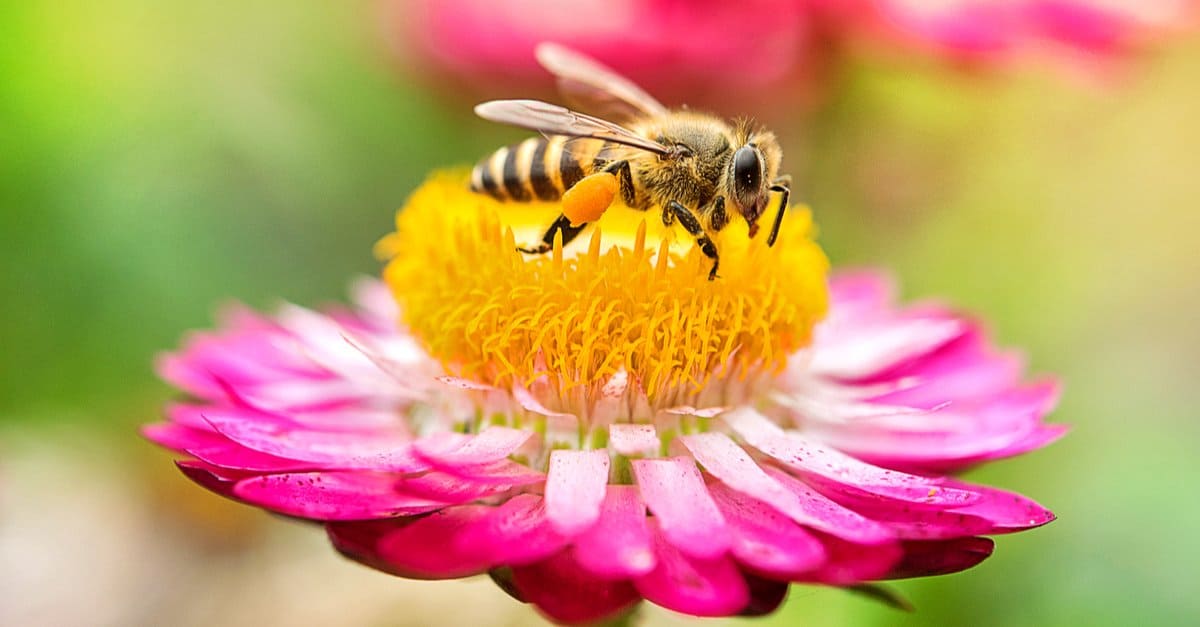

The bee is one of nature’s most prolific pollinators. There are over 20,000 bee species, most of which spread pollen between flowers. Bees can be divided into groups based on their social behavior. More than 90% of all known bee species are solitary. The remaining species, including the honey bees and the bumblebees, are eusocial. This means they form a massive hive of cooperative workers with a queen at its head. Keep reading to learn what bees eat, how they transport food, and how they eat.
The Bee’s Diet
Bees generally feed on two types of flower products: nectar and pollen. Nectar is the sweet, sugar-filled liquid produced by plants to attract pollinating insects. Nectar is primarily composed of sugars, which contain carbon, and may also contain trace amounts of nitrogen in the form of amino acids. Pollen is the powdery substance that contains enough male gametes (sperm cells) to fertilize another plant. Pollen is composed of proteins, lipids, vitamins, and minerals.
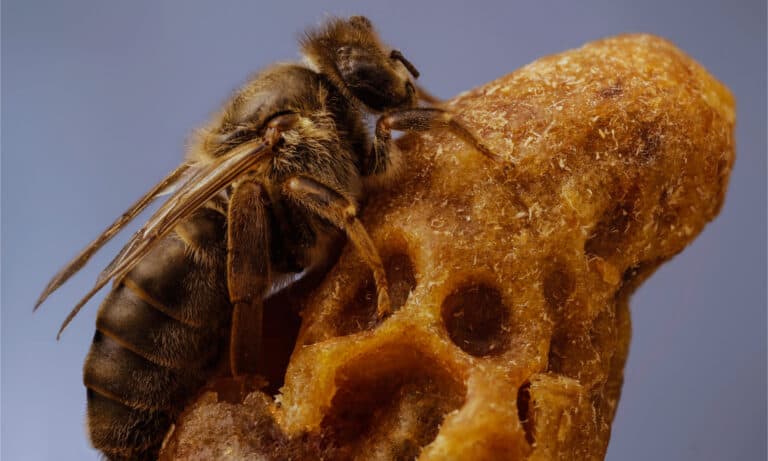
For the first three days of development, all honeybee larvae feed on a substance called royal jelly, which contains proteins, sugars, and fatty acids. The female larva chosen to become the queen continues to feed on royal jelly as she develops. Worker bee larvae are switched to a diet of worker jelly, also called bee bread, which is made of pollen, honey, and nectar.
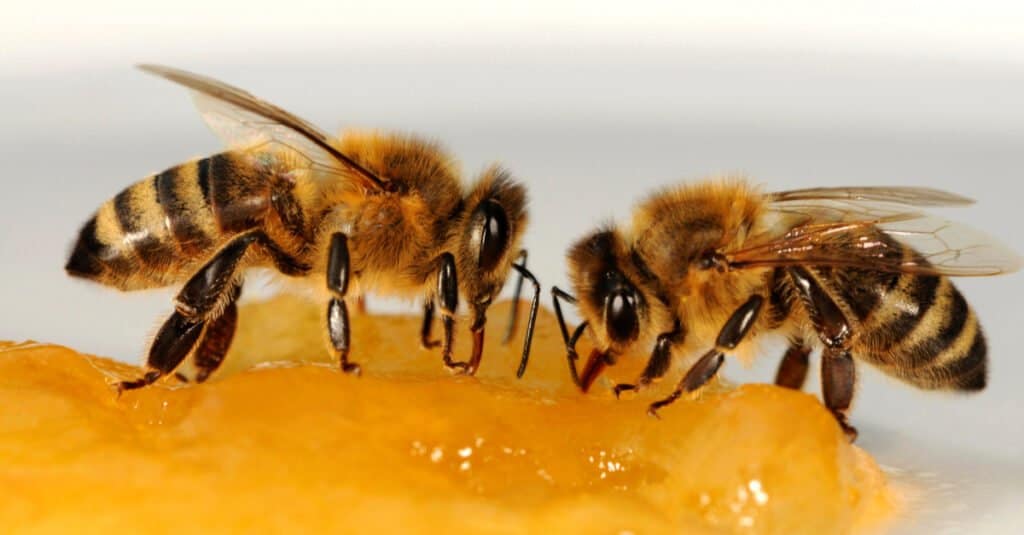
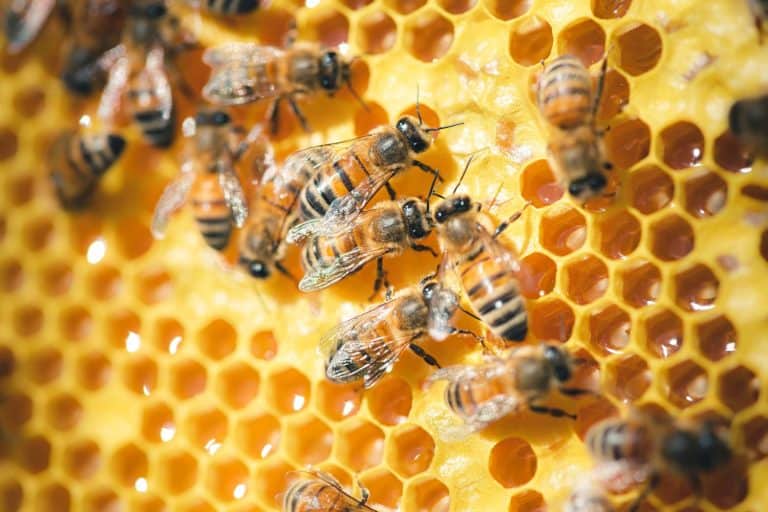
Only the bees that make honey also consume it.
©schubbel/Shutterstock.com
Honey bees and some stingless bees make and consume honey. This is a complex process in which the worker bees ingest nectar collected by the forager bees, process it, and then store the resulting honey in wax combs for later use. Most of the honey cultivated for human consumption is produced by a single species: the western honey bee, Apis mellifera.
Most bees feed exclusively on pollen, nectar, honey, and foods derived from these substances. However, there are a few exceptions. For example, the vulture bees of South America feed on carrion left by other animals and produce a honey-like substance from it.
A bee’s diet may include the following foods:
- Nectar
- Pollen
- Honey
- Fruit
- Carrion
- Royal jelly (primarily for the queen honeybee)
- Worker jelly or bee bread (made from pollen, nectar, and honey)
Transporting Nectar and Pollen to the Hive
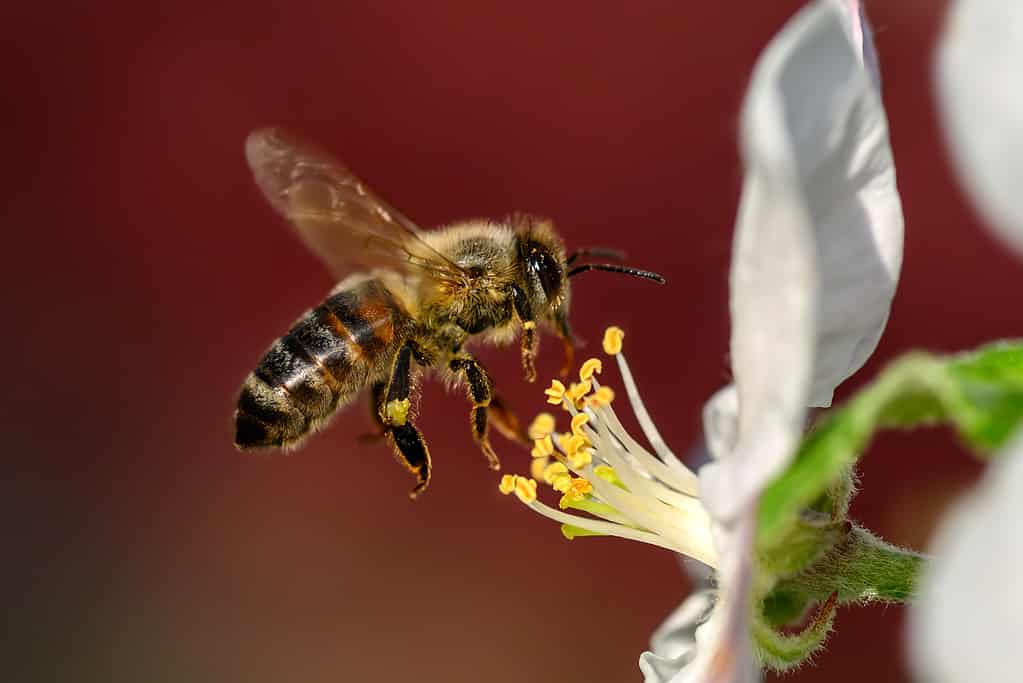
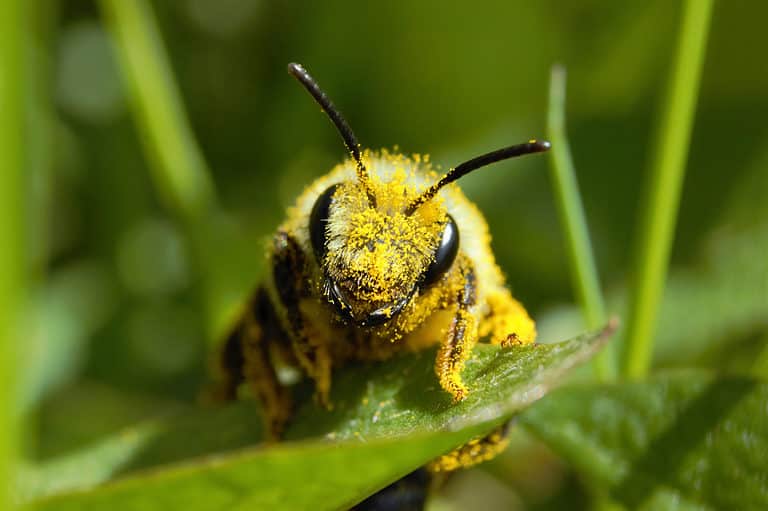
Bees carry pollen back to the hive to help provide food for the whole colony.
©Byrdyak/iStock via Getty Images
To make honey, bee bread, and other foods, the bees need to transport pollen and nectar back to the hive. Some bees carry pollen in a structure called the pollen basket, or corbicula. This is located on the hind legs of female bumblebees, European honey bees, stingless bees, and orchid bees. The pollen basket is a cavity fringed with hairs, into which bees pack pollen. Upon visiting a flower, the bee will brush the pollen toward the basket, where it is pressed and compacted. Most other bee species have a similar structure on their hind legs called a scopa, which consists of long, dense hairs used to collect and transport pollen.
Bees store and transport nectar in their honey stomach, a specialized pouch in the digestive tract that keeps the nectar separate from the food being digested. As bees carry nectar back to the hive, enzymes in their honey stomach begin breaking it down into fructose and glucose, while also reducing its water content. The nectar is then regurgitated for worker bees to begin the honey-making process.
How Do Bees Eat?
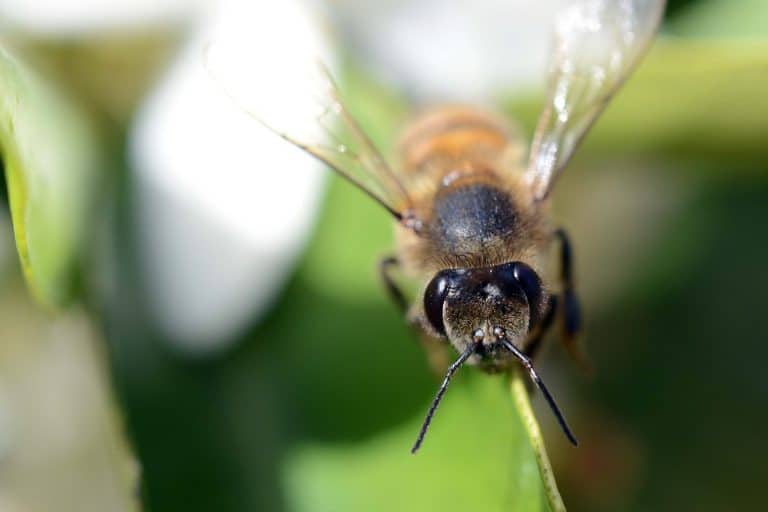
Bees have a long, retractable mouthpart called a proboscis that allows them to reach the center of a flower and collect the nectar inside. The proboscis is somewhat analogous to a human tongue, but it is actually a thin, hairy tube that extends from the bee’s mouth. It functions like a straw, allowing the bee to draw nectar, water, and honey into its mouth.
The proboscis is surrounded by strong mandibles, or jaws, to aid in cutting, biting, defense, and forming the wax to build the honeycomb. The mandibles also support the proboscis and provide stability as the bee eats or collects nectar.