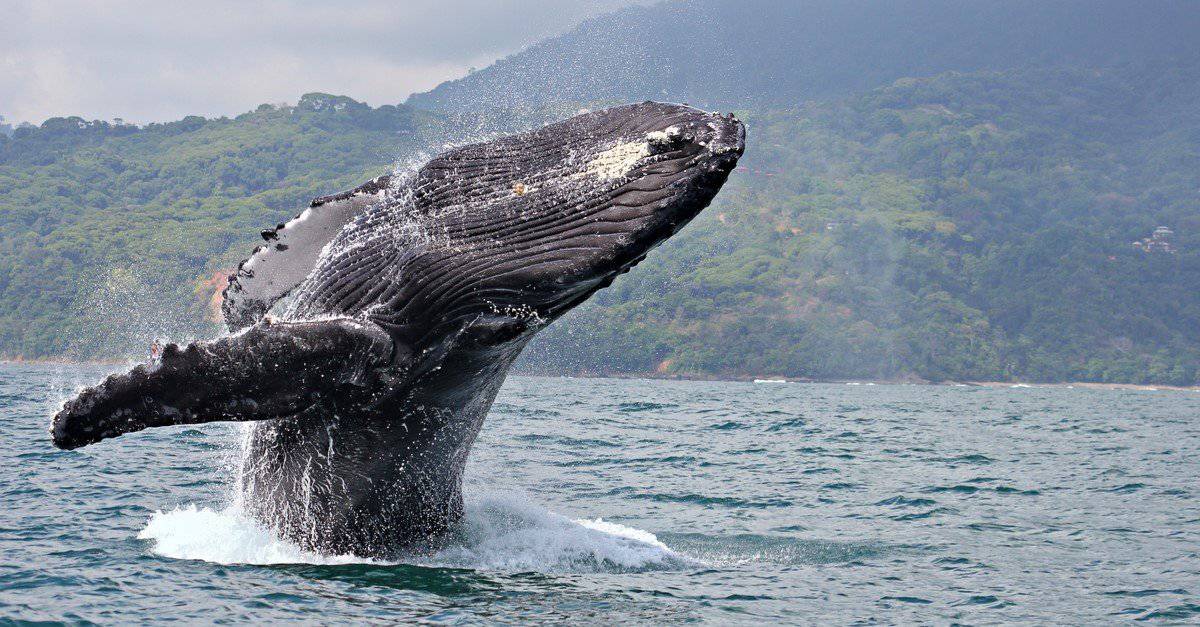

Have you ever seen a picture or a video of a whale jumping out of the water? If you have, you’ve seen a whale breaching. However, you may be wondering — “Why do whales breach?” While sharks typically breach to catch fast-moving prey, whales do not breach while hunting. So, let’s dive into the reasons scientists have suggested for whales’ breaching behavior.
The Background on Breaching
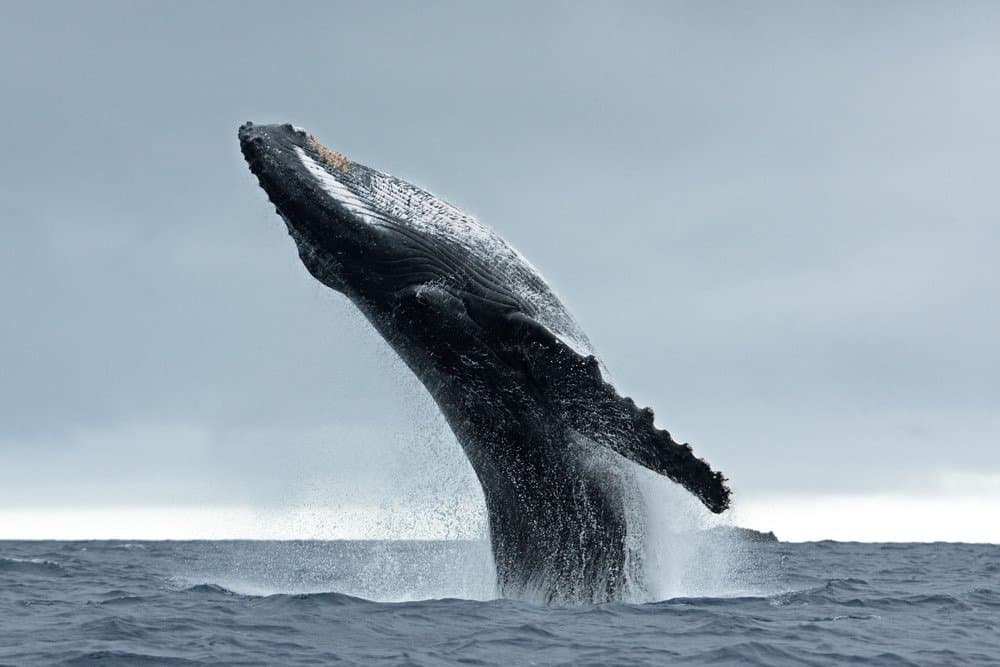
Due to their large size, humpback whales expend considerable energy breaching.
©Martin Prochazkacz/Shutterstock.com
As noted above, when a whale hurls itself out of the water, that is called a breach. A full breach occurs when more than half of its body appears above the surface. If less than half of its body appears, it is considered a half breach. Sometimes whales spin either clockwise or counterclockwise while breaching, with spinning initiated at different times. If they do not spin, they land on their sides or backs.
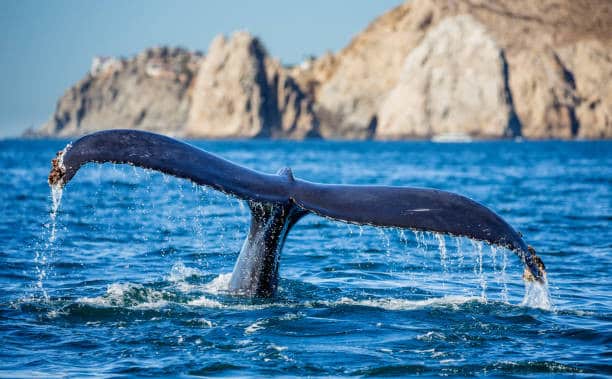
Researchers have also described other types of breaches. When a whale emerges from the water vertically and lands on its throat or belly, it is called a chin-slap breach. A tail breach occurs when its tail and lower body are pushed up out of the water. Some whales, such as humpback and minke whales, sometimes emerge from the water upside down.
Why Do Whales Breach?
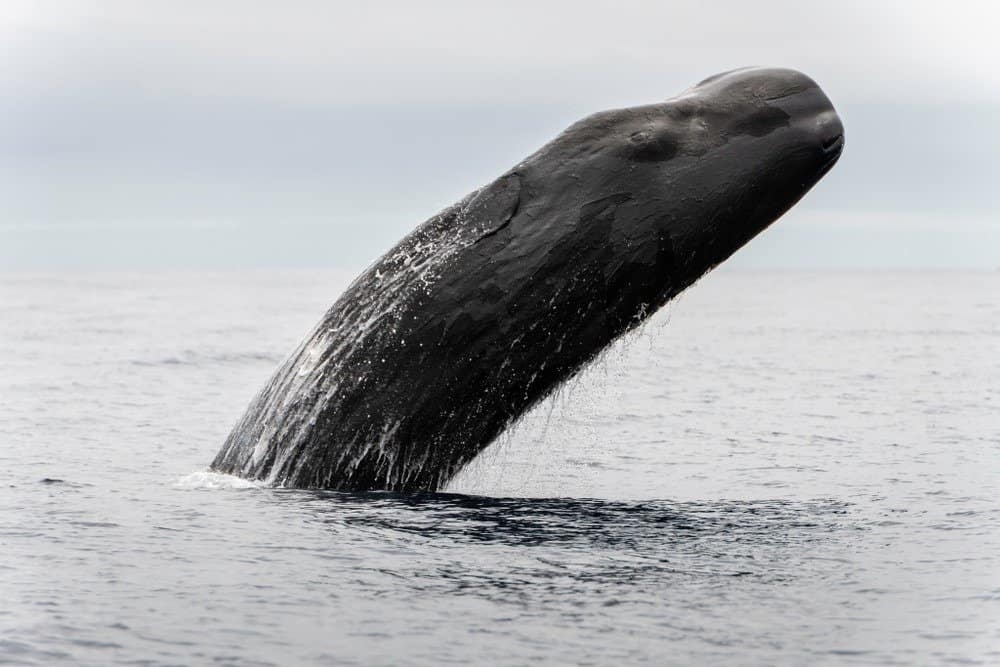
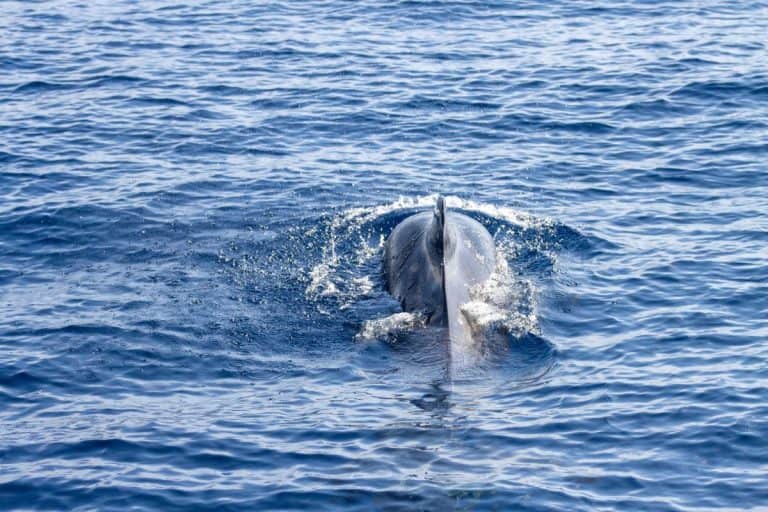
Female sperm whales are frequently seen performing breaches.
©wildestanimal/Shutterstock.com
Many whale species breach, but humpback whales, minke whales, right whales, orcas, and female sperm whales are known to breach more often than other species. Scientists have put forward a number of theories as to why whales breach. Explanations include external parasite removal, play, stunning prey, navigation, courtship, communication, and even exercise.
Of course, there may be more than one reason for breaching. However, researchers have found that breaching has huge energy costs. For a 48.5-foot whale weighing over 101,000 pounds, breaching is equal to a 132-pound human running a marathon. A humpback whale can spend up to 2.3% of its daily energy budget on just one breach. With breaching possibly being the most energy-expensive burst movement in nature, such outlays are likely to serve a vital social purpose for some whale species, specifically communication.
Whale Communication
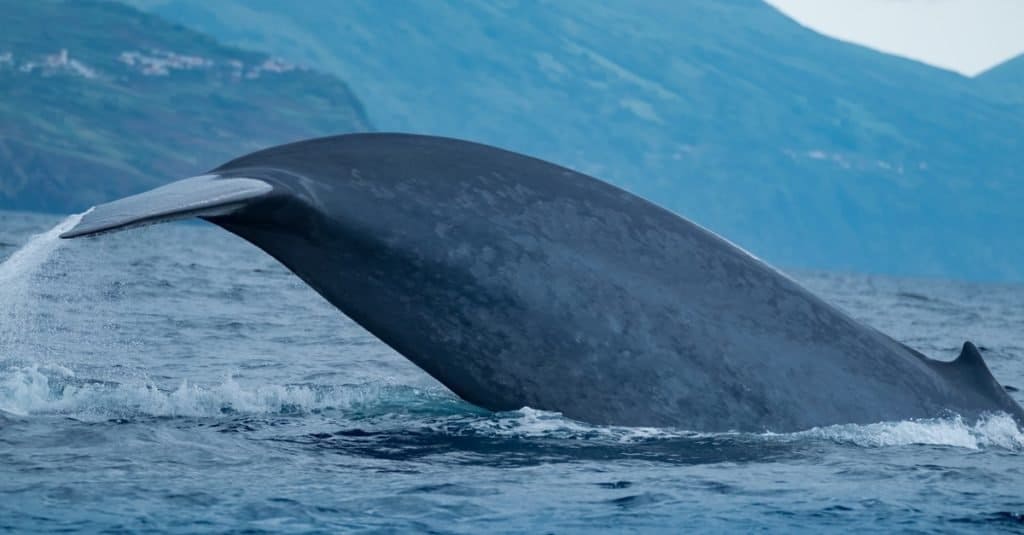
Scientists believe that whales most likely breach to communicate over long distances.
©Wild_and_free_naturephoto/Shutterstock.com
Sound moves about 4.5 times faster in the water than in the air. In the water, sound generally moves at 0.93 miles per second. In the air, it drops to only 0.21 miles per second. Water is also denser than air, so sound waves travel with less energy loss. This allows sound waves to travel further underwater, which enables whales and other marine mammals to communicate over long distances. Due to the force of a whale’s re-entry, it is possible that in some frequency ranges, whales can make louder sounds by breaching than by vocalizing. This is especially true in areas where sound might be obscured by background noise.
A study of 94 groups of humpback whales concluded that breaching may be a way for distant groups to communicate. They found that breaching behavior decreased when groups were closer than 2.5 miles apart, and increased when groups were beyond 2.5 miles. When groups split or join together, researchers observed more pectoral and tail fluke slapping, which suggests that whales use those methods of communication within groups or when groups are in close range. So, although breaching may serve more than one purpose, communication is considered the main reason why whales breach.