
Quick Take
- One beetle species can survive being run over by a car, and engineers are paying close attention to how it manages this feat. Meet the ironclad beetle →
- Some beetles don't breathe the way you think, and this unusual trait may be the secret behind their 300-million-year survival streak. See how beetles breathe →
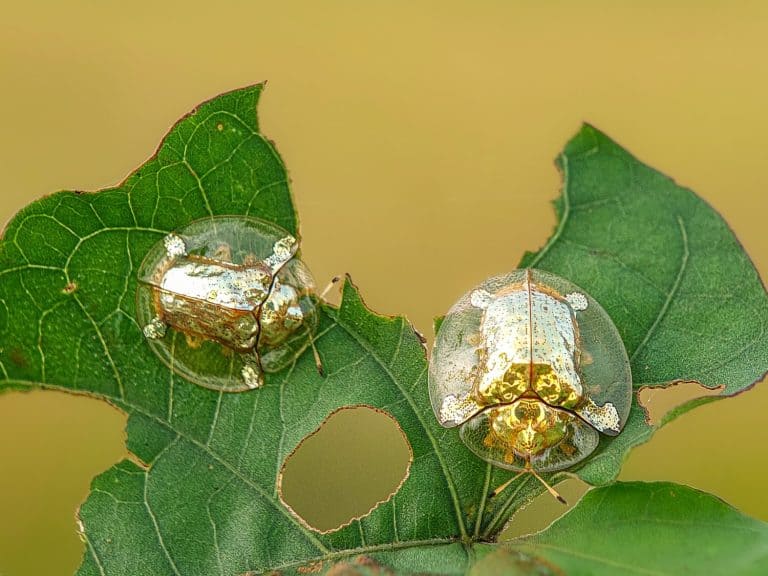
- There's a beetle that looks nothing like a beetle, and it pulls off the disguise well enough to fool a glance. See the tortoise disguise →
- Aquatic beetles live underwater but can't really swim, which raises the question of how they breathe down there. Discover underwater breathing →
Beetles are one of nature’s most successful designs, with over 350,000 described species in the world. Their adaptability allows them to live in all sorts of terrestrial and aquatic habitats. There are very few places where they’re not found. You can find beetles in small puddles and massive mountain streams. A single rotting log can contain hundreds of feather-winged beetles looking for a meal. What else should you know about these intriguing insects? Read on to learn 10 incredible beetle facts that are stranger than you’d expect.
1. Certain Beetles Live With Bees
As we mentioned above, you can find beetles in almost any habitat. There’s nearly an infinite variety of beetle species, and each species is specially designed for its unique lifestyle. For instance, silken fungus beetles, belonging to the family Cryptophagidae, are known to invade the spaces of other insects. You can find them living in the nests of wasps, bees, termites, and ants. Why would these beetles like beehives? It has to do with food. Silken fungus beetles feed on any mold, fungi, or other decaying organic debris such as unused honeycomb they can find in these nests.
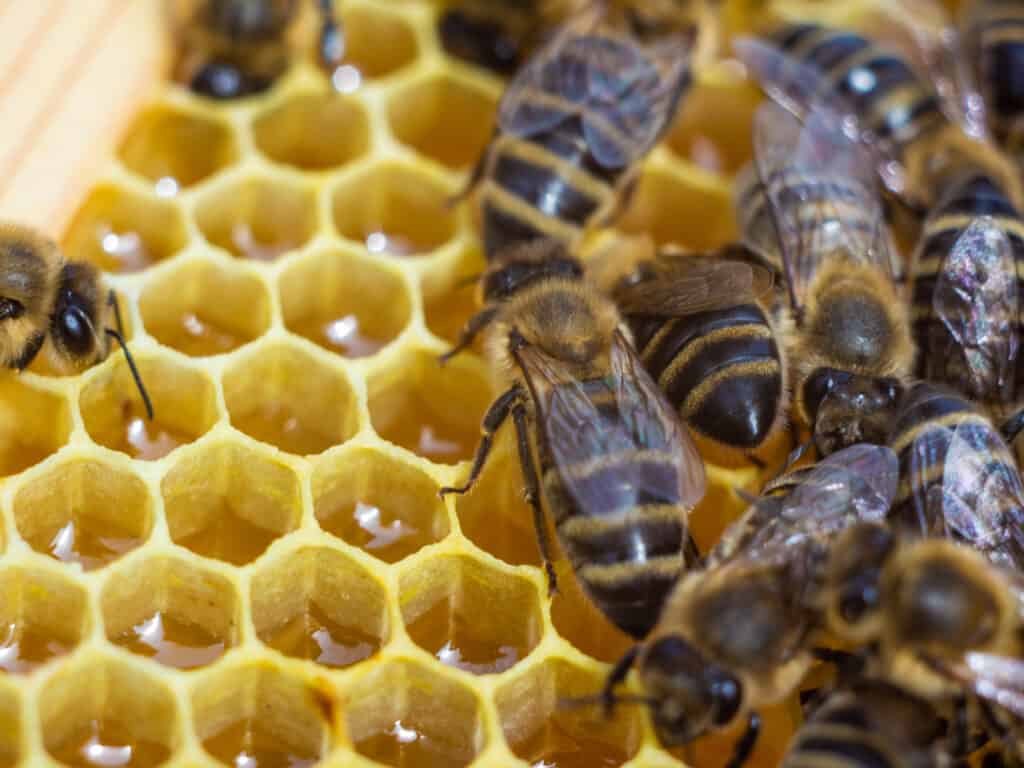
Sometimes beetles live in beehives.
©Goncharov Taras/Shutterstock.com
2. Beetles Breathe From Every Part of Their Body
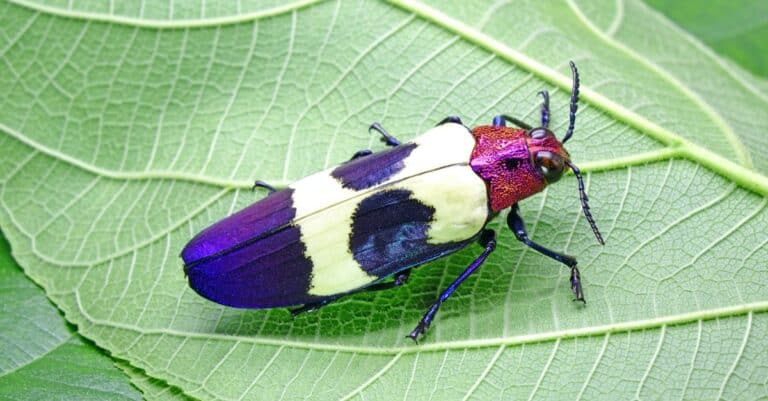
Beetles have a unique breathing system that’s different from that of higher animals. On the sides of the abdomen and thorax are external openings called spiracles. The spiracles directly connect to the beetle’s trachea and branch out to every part of their body. When beetles breathe, they take oxygen directly into their cells. It’s not carried into the bloodstream as it is with vertebrates. Since they don’t have oxygen in their bloodstream, beetle blood varies significantly in color. The beetle’s unique breathing system might also be one of the reasons beetles have been able to survive for millions of years.
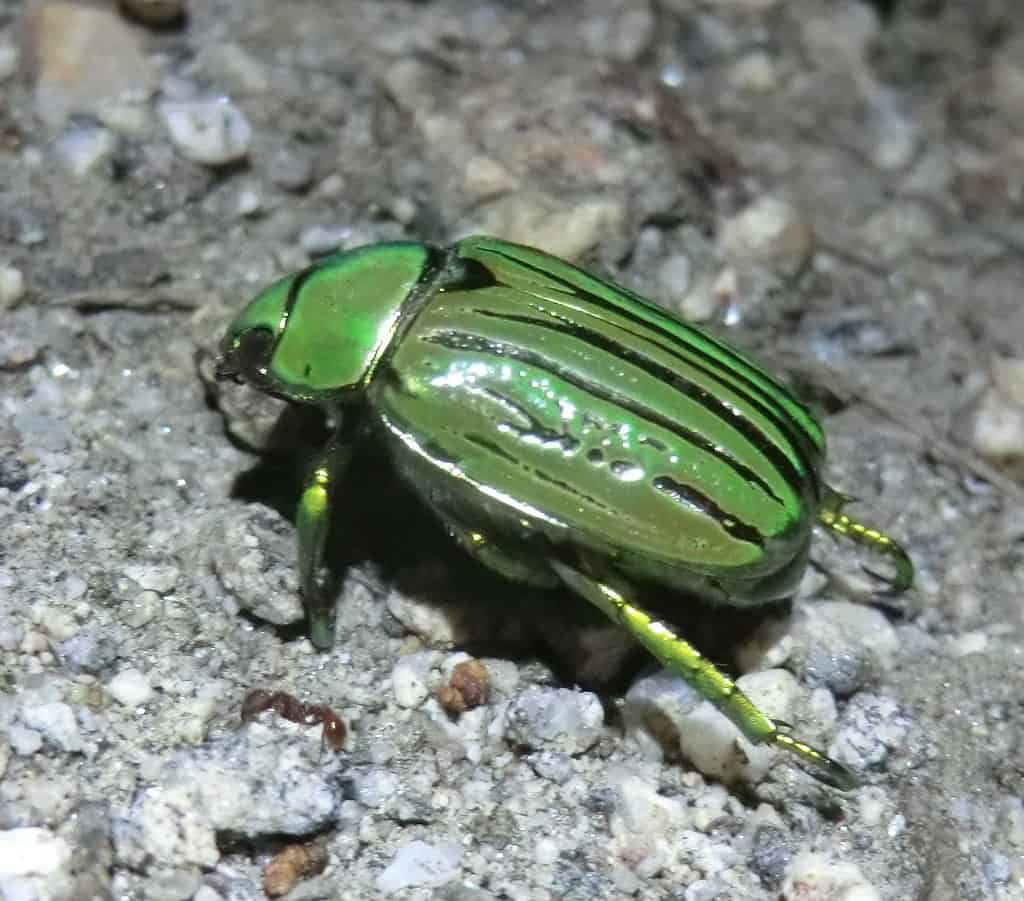
Beetles have external openings on the sides of their bodies called spiracles that help them take in oxygen.
©1208 Jewel Scarab – Chrysina gloriosa Uploaded by Magnus Manske – Original / License
3. Beetles Have an Advanced Form of Metamorphosis
Beetles have one of the most advanced forms of insect metamorphosis. Significant changes occur during the beetle’s complete metamorphosis, or holometabolous development. Beetles begin as eggs that hatch into worm-like larvae. Their bodies are elongated, and they lack legs. Beetle larvae live on land and in all sorts of aquatic habitats. They feed on plants above and below ground until they change into the next stage of development and become pupa. The pupa is the resting stage of the beetle, and it’s the last stage before adulthood.
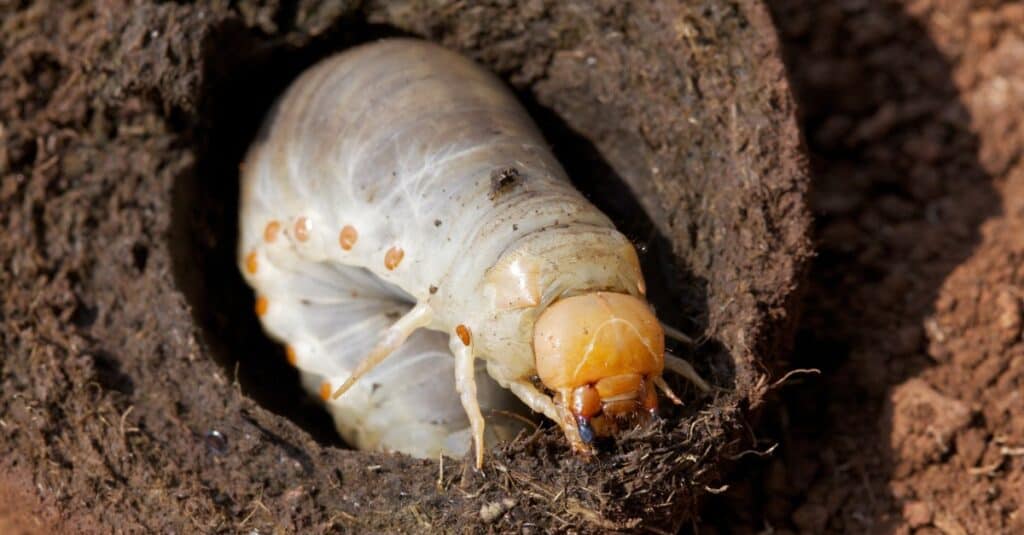
Beetle larva undergo an advanced form of insect metamorphosis.
©Jan Mastnik/Shutterstock.com
4. Beetles Can Look Like Tortoises
There are 35 species of tortoise beetles in North America. These beetle species are known for having a turtle-like shape. Tortoise beetles have an oval body that’s almost circular. From above, their head is completely concealed. Just like a turtle’s head when it pulls back into the shell.
The Argus tortoise beetle has a broad body and head that slants backward. The golden tortoise beetle has a beautiful shine. When it’s alive, the golden tortoise beetle has transient golden reflections. After dying, the beetles fade and take on a dull orange-yellow color.
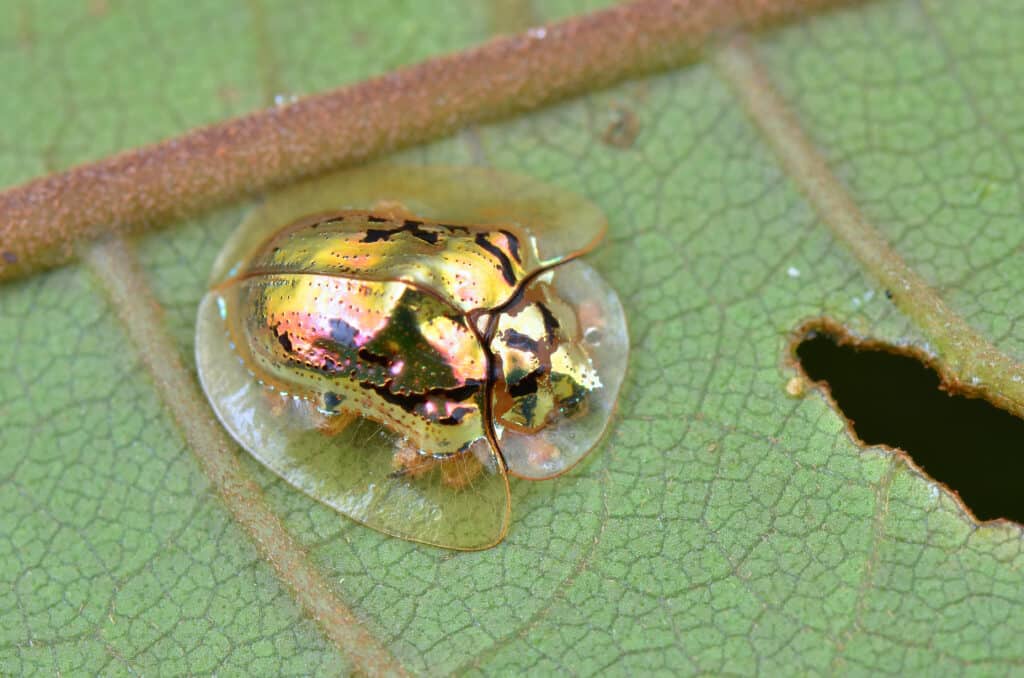
A golden tortoise beetle has features that resemble a tortoise.
©SIMON SHIM/Shutterstock.com
5. Beetle Fossils Date Back to Nearly 300 Million Years Ago
Coleopsis archaica has been described by scientists as the oldest beetle fossil known to man. The holotype was discovered in an early Permian deposit in western Germany. This fossil is estimated to be about 297 million years old. The holotype is a slender beetle that measures 0.30 inches long.
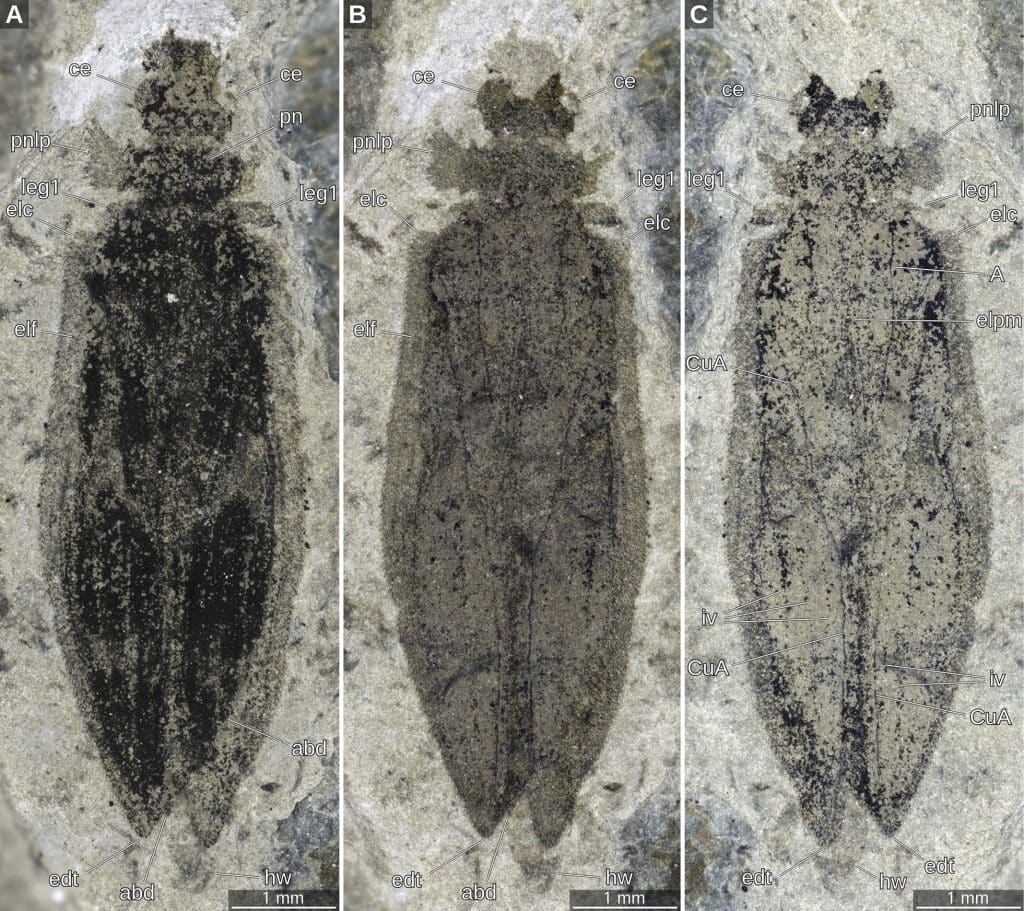
The Coleopsis archaica beetle fossil is around 297,000 years old.
©expand article infoMario Schädel, Margarita Yavorskaya, Rolf Beutel / CC BY 4.0 – Original / License
6. Beetles Can Be Great Swimmers
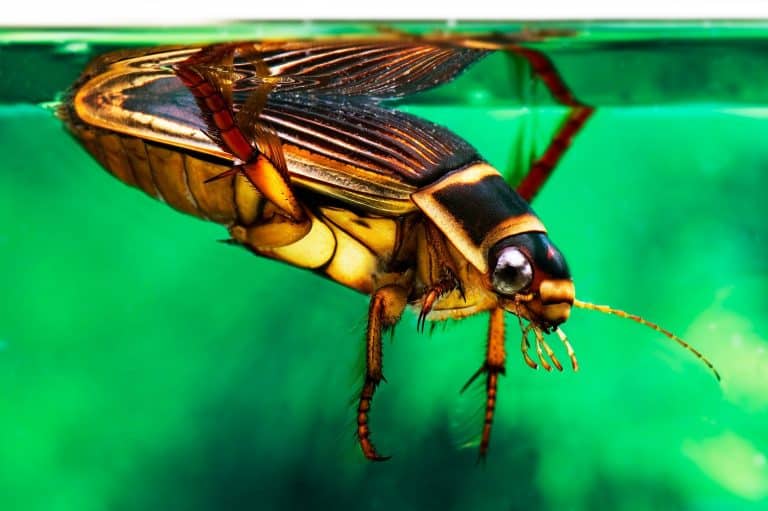
Some beetles love the water and have evolved to be great swimmers. The diving beetle in the family Dytiscidae swims by paddling the right and left hind legs at the same time. It has three pairs of legs: the forelegs are mostly for grabbing and feeding, the middle legs help stabilize its body while swimming, and its hind legs generate propulsion. This beetle has mastered forward swimming, backward swimming, and has even figured out how to turn corners by swinging its hind legs.
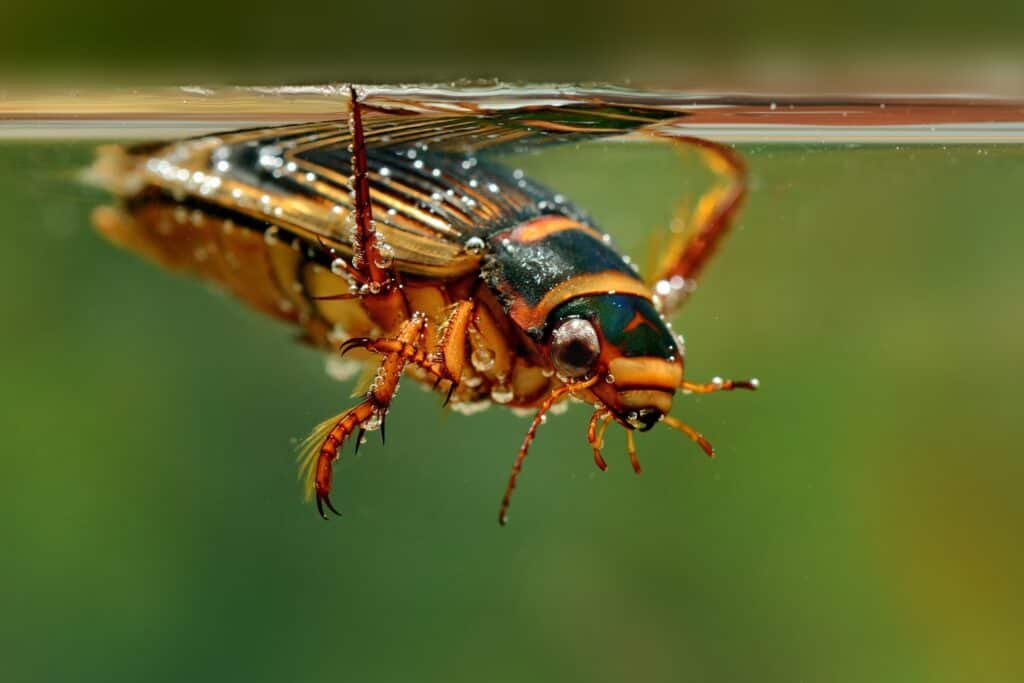
Diving beetles can swim forward, backward, and turn.
©Martin Pelanek/Shutterstock.com
7. Some Beetles Act and Look Like Tigers
You probably don’t think of tigers when considering beetles, but they have similarities. There’s even a species of beetles called tiger beetles. Tiger beetles belong to the family Cicindelidae. When a tiger beetle hunts its prey, they pounce on it the same way a tiger would. They can also fly and run rapidly. Of course, tiger beetles also have stunning colors and attractive patterns.
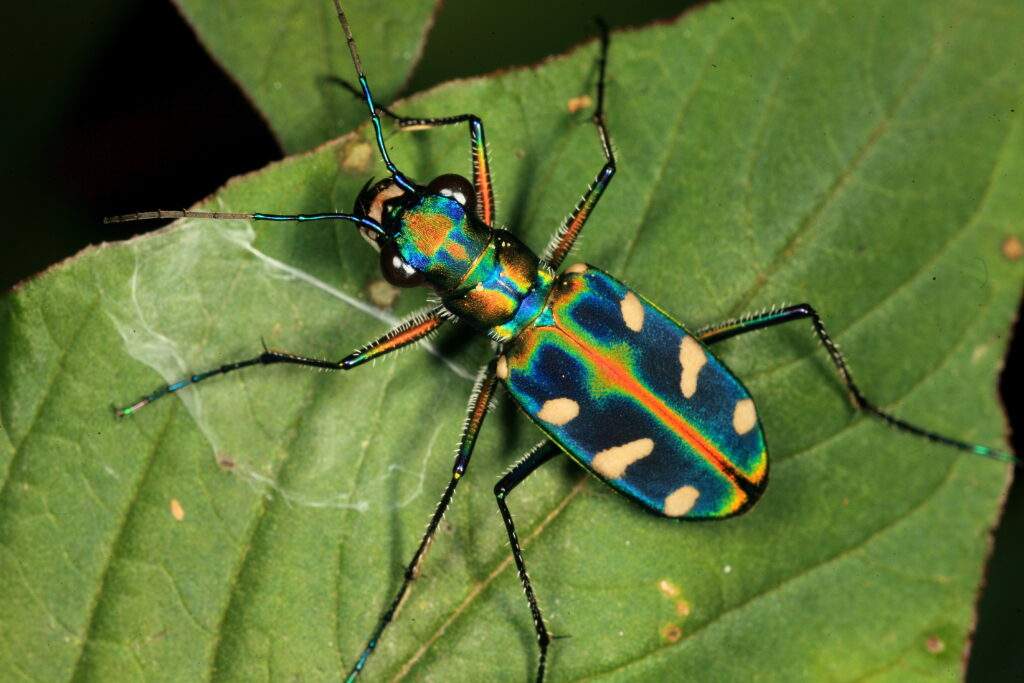
Tiger beetles hunt their prey, then pounce similarly to how a tiger does in the wild.
©wagtail/Shutterstock.com
8. Some Beetles Can Survive Being Run Over By a Car
The ironclad beetle (Phloeodes diabolicus) has an exoskeleton so tough it can survive getting run over by a car. Interlocking structures and impact-absorbing proteins connect both the top and bottom and the left and right sides of the beetle’s exoskeleton. Scientists have found that the beetle can withstand around 39,000 times its own body weight.
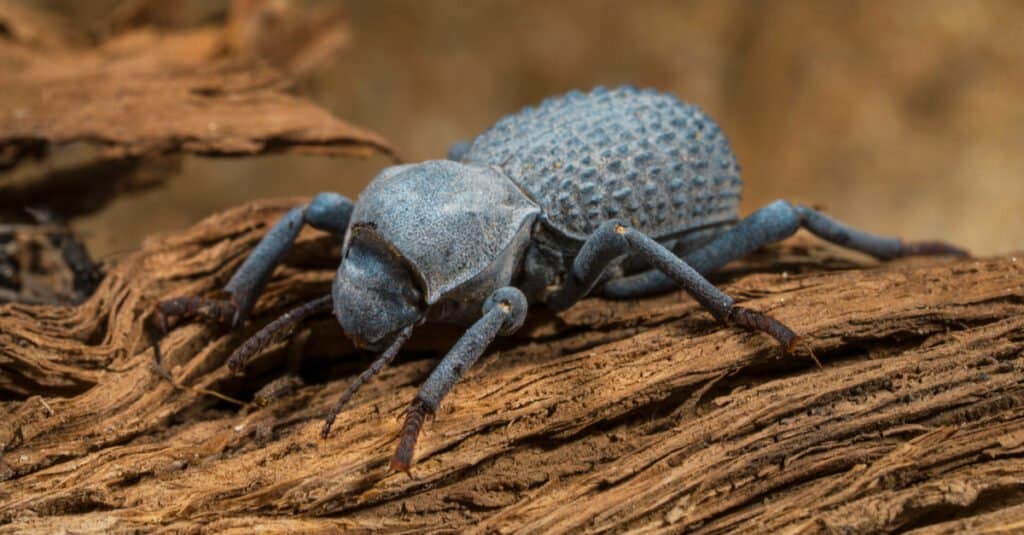
An ironclad beetle’s hard shell can withstand around 39,000 times the beetle’s body weight.
©GypsyPictureShow/Shutterstock.com
9. Aquatic Beetles Breathe With Hair
If you’ve ever studied a beetle close-up, you’ll notice that they have tiny hairs on their legs. Aquatic beetles use these hairs to trap air. For example, riffle beetles in the Elmidae family include species that use leg hair for breathing. Although they live in the water, they are not good swimmers. They have a dense layer of microscopic hairs that repel water to trap a thin layer of air for breathing underwater.
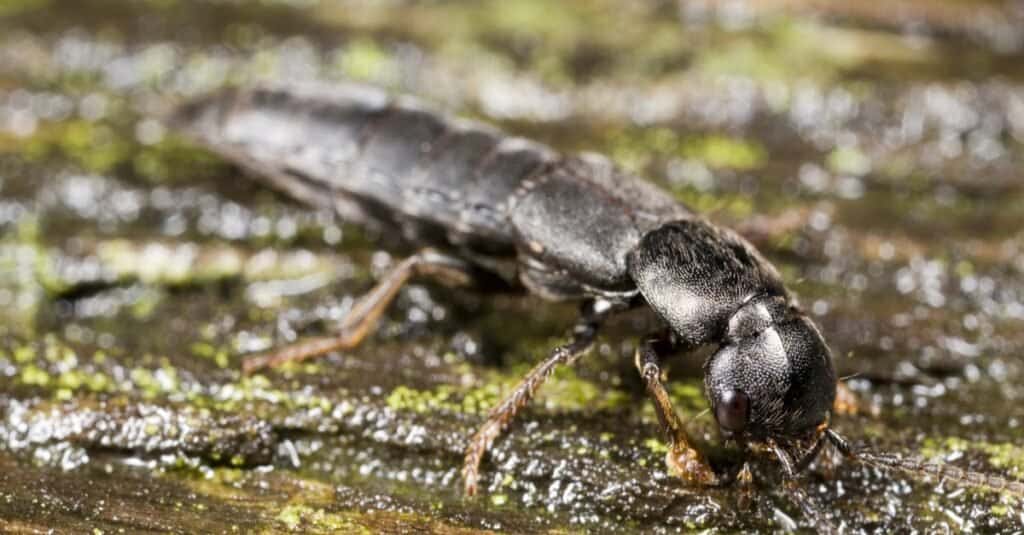
Rifle beetles have tiny hairs on their legs that help with breathing underwater.
©Joseph Calev/Shutterstock.com
10. Certain Beetles Are Carnivorous
Beetles are primarily herbivores, but some beetle species are carnivorous, eating a diet that includes other insects. The forest caterpillar hunter (Calosoma sycophanta) climbs trees and shrubs to eat caterpillars and pupae such as those of gypsy moths, while the fiery searcher beetle (Calosoma scrutator) is primarily a ground predator that only occasionally climbs shrubs and trees to forage on caterpillars. Usually, the carnivorous stage happens when the beetles are still larvae. For instance, Throscid beetles belonging to the family Throscidae. The adults live on plants and are usually found on flowers. They lead a vegetarian lifestyle, feeding on roots, leaves, and other plant parts. However, when they’re larvae, Throscidae beetles are carnivores.
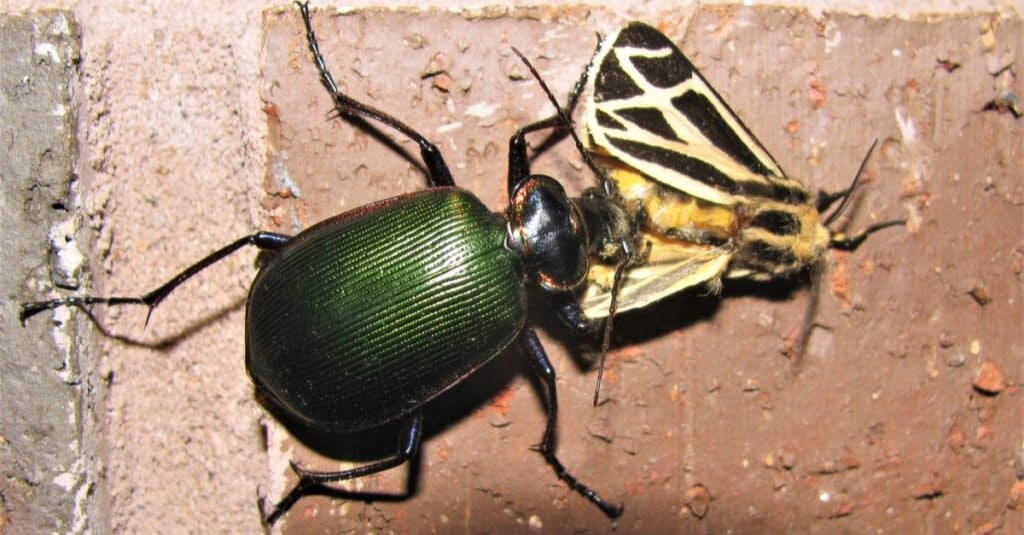
Fiery searcher beetles are carnivores, preying on insects like moths.
©Kevin Jarrell/Shutterstock.com