Fire and water do not normally mix. But when it comes to these imported fire ants, water is not a problem. In this extraordinary YouTube clip, we get to see. A colony of fire ants is dealing very effectively with a flooded nest. Read on for a fuller description of these amazing, if scary, creatures and how they build impressive rafts.
Red Imported Fire Ants
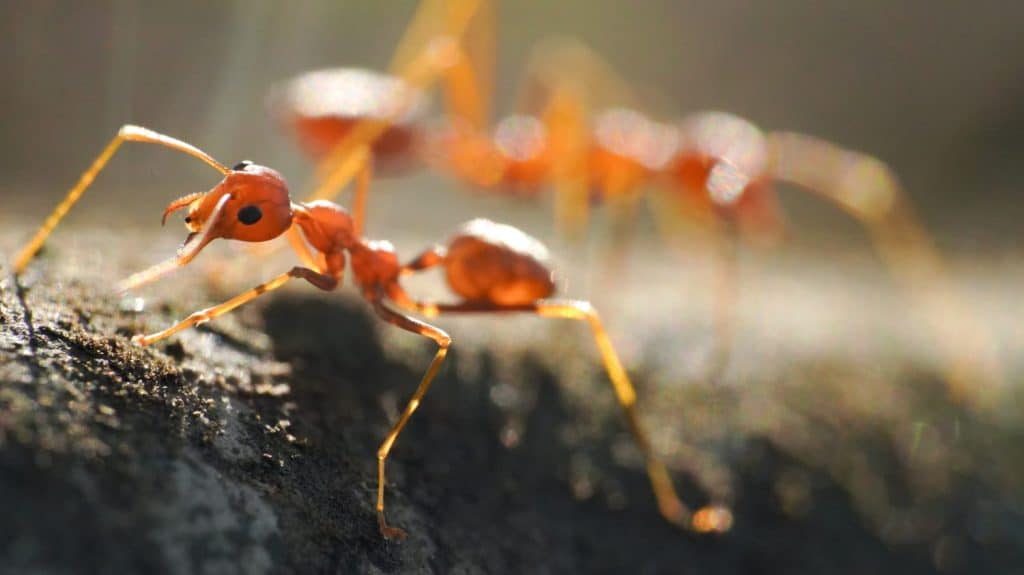
Red fire ants are successful, aggressive, and resourceful, but unpopular!
©Dafi Yasin Addafi/Shutterstock.com
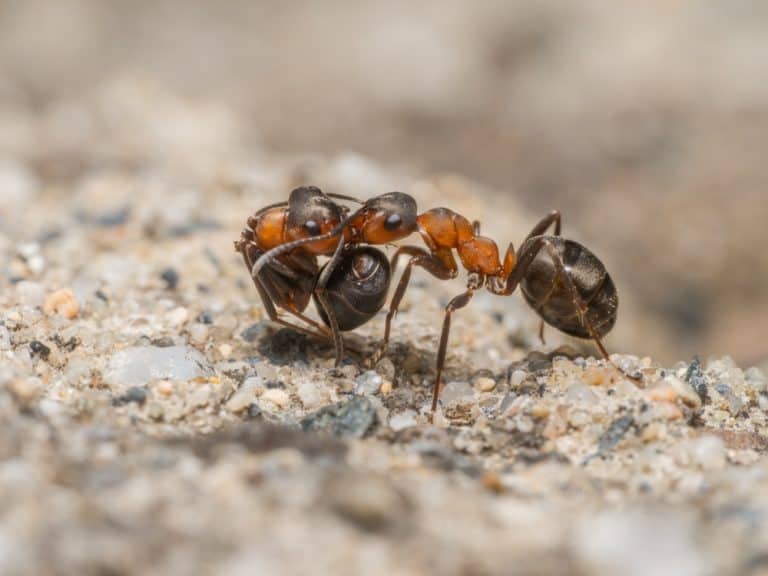
If you research red imported fire ants (Solenopsis invicta), you will find that they are not exactly the most popular species on the planet. They are native to South America but have been invading many other parts of the world and causing a lot of disruption. They are described as aggressive, and because they are a generalist forager that is found in high densities, they often out-compete native species and soon dominate local food sources. Humans don’t like their nasty sting, but it is even worse news for their prey, which are soon subdued by it.
One of the reasons for their success in colonizing areas away from their native habitats is their ability to relocate quickly when the colony is threatened. Water is important for them to thrive, so they are often found near lakes, rivers, streams, or aquaculture containers. Flooding should be a disaster for them, but as you can see in the clip, they have a very effective way to deal with it. As they are accustomed to regular flooding of their habitat in the rainforests of Brazil, they have evolved ways to be able to cope easily with this challenge.
Ants Raft Construction
These fire ants can make a raft from their own bodies. They detect water entering their mound, and this triggers an emergency response. Larvae and pupae are picked up and carried to the surface. They are placed at the bottom of the ‘raft’ where tiny hairs on their bodies trap air bubbles and give the raft buoyancy. These air bubbles also come in very handy for breathing, which the ants do through spiracles (tiny holes) on the sides of their bodies. The adult ants also hold the larvae together, forming tight clusters.
Inevitably, some ants end up with parts of their body in contact with the water. But the workers grab hold of each other using the tips of their legs. Others grab hold of the larvae and lock their legs together to give the raft stability. This is a very rapid procedure. In experiments, they took just two minutes to assemble a living ant raft. The raft is also long-lasting. They can stay afloat for weeks or even months. Bumping into one of these floating colonies is bad news. The ants become more aggressive and their stings are more painful when they are in this state. Once they reach dry land, a new nest is established.
The Science Behind the Cooperative Ant Rafts
Researchers have used time-lapse photography to investigate exactly how fire ants link their bodies together. Many animals co-operate with each other to overcome challenges, but fire ants take this to another level. These ants have evolved many impressive cooperative behaviors, including constructing chains, ladders, and walls made from their own bodies. However, the raft is probably the most impressive.
Ants are denser than water, and so should not be able to float; surface tension is too weak to support them. Yet, the raft floats. Scientists have established that this is because of the ants’ strength, speed, and ability to trap air pockets. This makes the raft both buoyant and water repellent. The thickness of the raft is self-regulating. Researchers believe that the ants can sense how many of their colony members are walking on top of them. The squeezing force applied by the ant’s grip keeps the raft together. If they let go, the raft falls apart.
Air Bubbles Explained

The plastron layer gives buoyancy and allows red ants to breathe underwater.
©assistant/Shutterstock.com
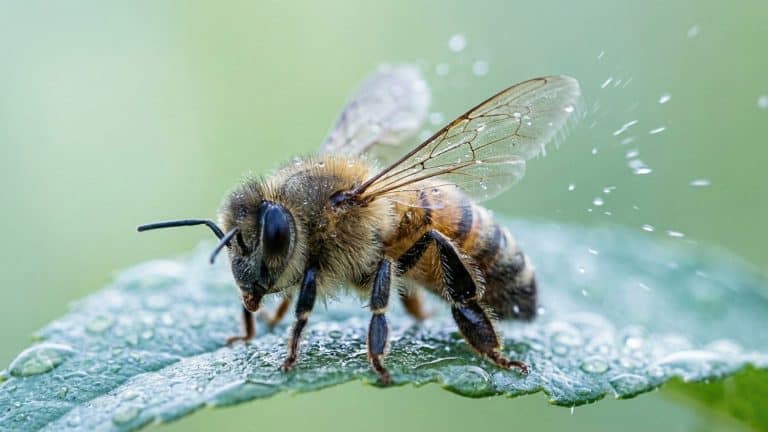
The science behind the air bubbles is also fascinating. The ant’s body is mildly hydrophobic (water repellent) and therefore does not absorb water. This causes a tiny layer of air (called a plastron layer) to form around their bodies when they are in the water. The trapped air decreases the overall density of the ants, allowing them to float. What’s more, it provides a source of air so that they can breathe even if they are at the bottom of the raft.
The raft can also repel water from above, which is essential in a rainstorm! The way that the ants are locked together is similar to a woven waterproof material. If the raft begins to submerge or encounters choppy waters, the ants contract their muscles even more tightly and in unison. This squeezes the raft into a tight mass. It loses a little buoyancy (because it becomes denser) but stays intact!