

Quick Take
- The Binturong is classified as a carnivore, so why does it mostly eat fruit? Explore its frugivorous diet →
- Its scent glands produce an odor that smells nothing like what you'd expect from a wild jungle predator. Discover the popcorn scent →
- One physical trait the Binturong shares with only a single other carnivore on Earth sets it apart from almost every other mammal. See its prehensile tail →
- Its gentle, passive nature turned out to be one of the biggest reasons its population collapsed. How passivity drove its decline →
The binturong (Arctictis binturong), also called the bearcat, is a mammal that lives in the forests of South and Southeast Asia. It is not related to bears or cats, despite the nickname. Binturongs have a long, prehensile tail they use like an extra limb when climbing trees, and they give off a musky scent that smells like buttered popcorn.

Classification and Evolution
The Binturong (Arctictis binturong) is a medium-sized carnivore inhabiting the dense forests of South-East Asia. It belongs to the same family as other small carnivores, including civets and genets, and shares a number of characteristics with them, including a long snout and more teeth than most other carnivorous mammals. The Binturong is thought to be most closely related to the Palm civet and is the largest member of this family.
Also known as the Bearcat, the Asian Bearcat and the Asian Civet, the Binturong was once commonly found throughout much of its historical range, but sadly, today they are rarely found in the thick jungles, and very little is known about their behaviour in the wild. There are possibly nine different subspecies of Binturong which vary little in appearance but tend to be most easily distinguished by their size and geographic location.
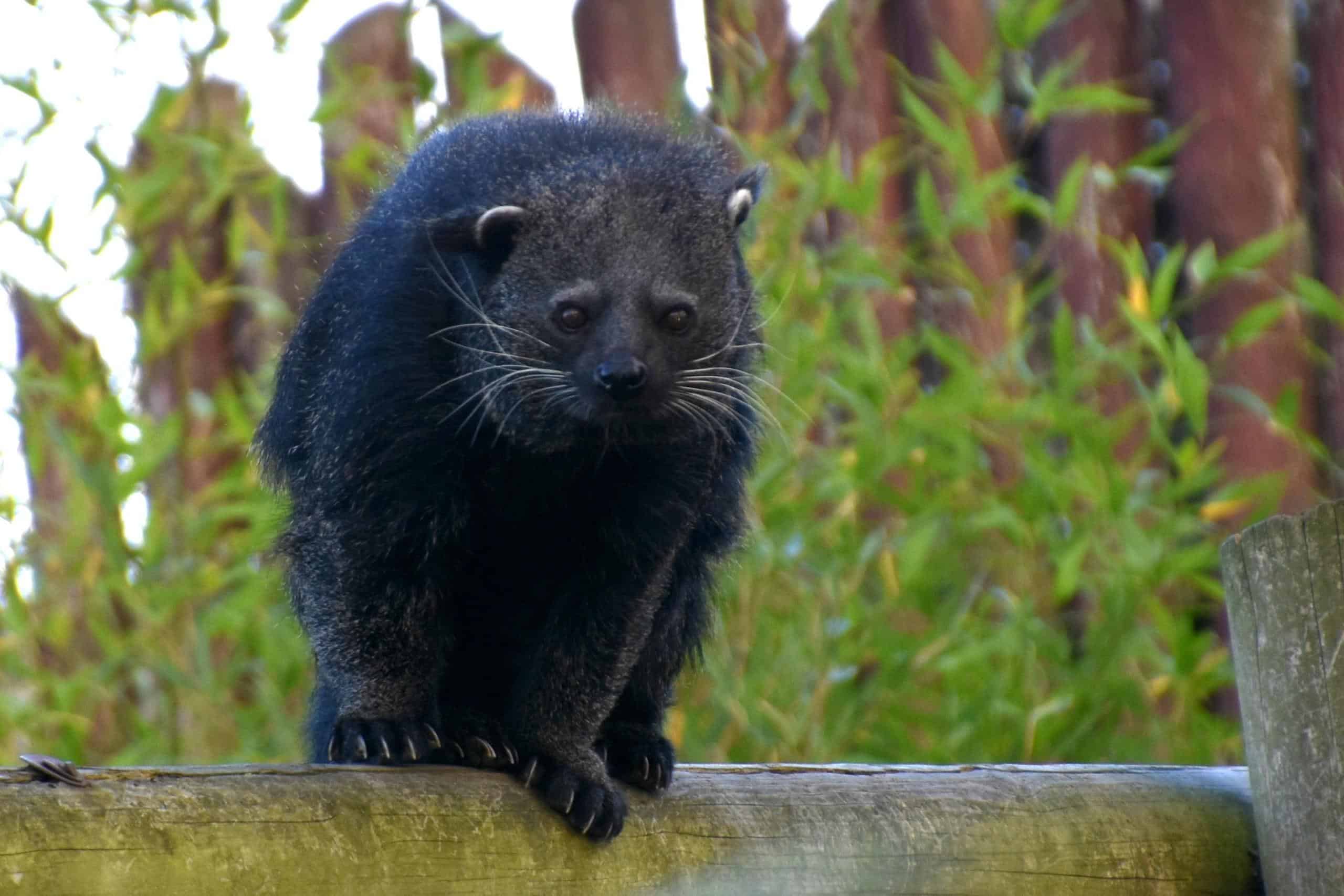
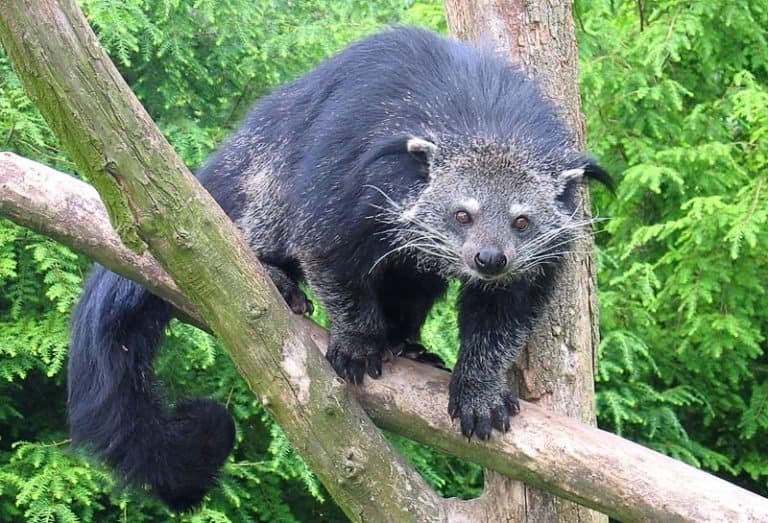
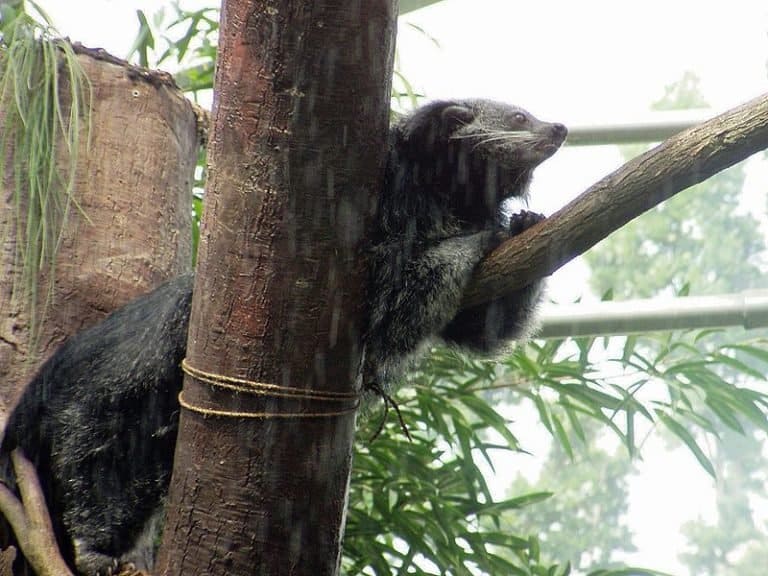
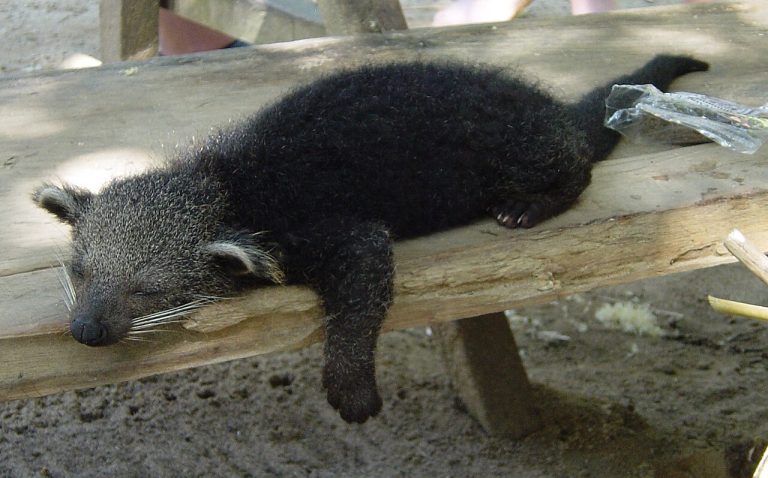
A Binturong (Arctictis binturong) is also known as a Bearcat or Asian Civet.
©Millie Bond – Copyright A-Z Animals
Types
The Binturong is classified in the family Viverridae. There are nine subspecies of Binturong. They are separated into two clades (a group of organisms believed to have evolved from a common ancestor): the northern clade in mainland Asia is separated from the Sundaic clade (i.e., from the Sunda Islands in the Malay Archipelago) by the Isthmus of Kra. Each subspecies is practically identical in appearance, but their genomes may contain key differences between individuals from different populations.
- Palawan binturong (Arctictis binturong whiteii), or bearcat, is endemic to the island of Palawan in the Philippines.
- Cambodian Binturong (Arctictis binturong albifrons) may be the largest and most robust binturong. It has shaggier, longer, and darker fur with a more distinct margin between the pale silver-flecked face and the body fur.
- Malayan Binturong (Arctictis binturong binturong) lives on the Malay Peninsula.
- Bornean Binturong (Arctictis binturong pageli) is endemic to northern Borneo and darker than other subspecies.
- Javan Binturong (Arctictis binturong penicillatus) lives on Java and possibly south Borneo.
- East-Sumatran Binturong (Arctictis binturong kerkhoveni) lives in East Sumatra.
- Chinese Binturong (Arctictis binturong menglaensis) relies on running to move around.
- Siamese Binturong (Arctictis binturong gairdneri) is native to Thailand.
- Nias binturong (Arctictis binturong niasensis) is endemic to the Indonesian island of Nias.
Anatomy and Appearance
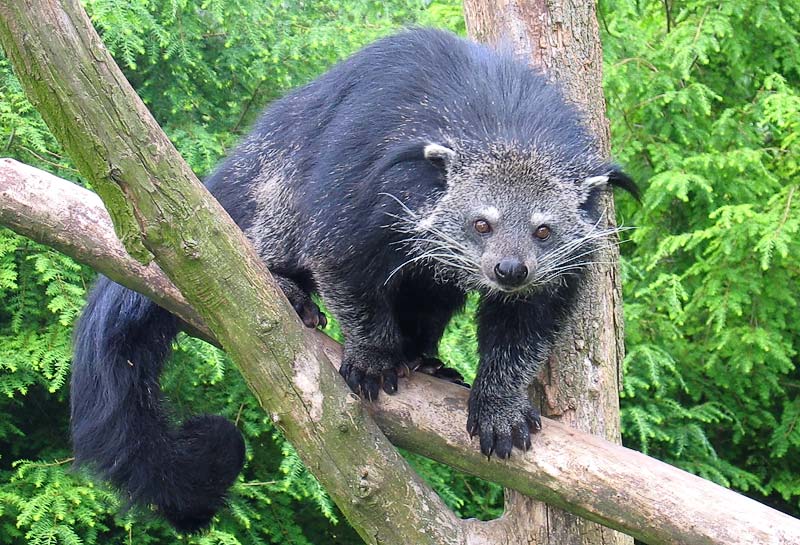
The Binturong has a prehensile tip to its tail that acts almost like another leg.
©TassiloRau, CC BY-SA 3.0, via Wikimedia Commons – Original / License
The Binturong is a large, heavy animal whose body alone can grow to 2 to 3 feet (0.6 to 0.9 meters) long, with a tail nearly the same length, bringing its total length from snout to tail tip to well over 3.28 feet (1 meter). Females are up to 20% bigger and heavier than their male counterparts. They have very long, coarse, and shaggy fur which varies from dark brown to black in colour and is tipped with grey, along with tufts of long and dark straight hair which protrude beyond the tops of their ears.
The Binturong (along with the Kinkajou of South America) is also unique among carnivorous mammals as it possesses a prehensile tip to its tail, which acts almost like another leg, helping both with climbing and gripping onto branches to give the Binturong more stability.
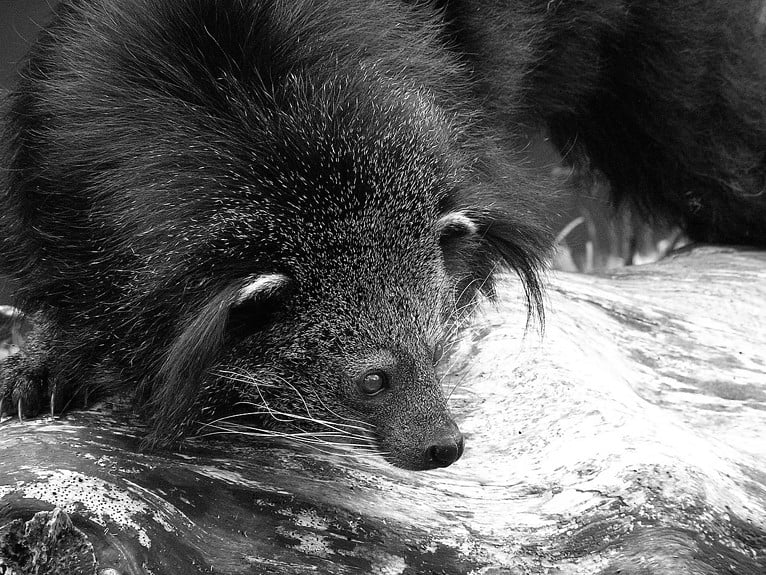
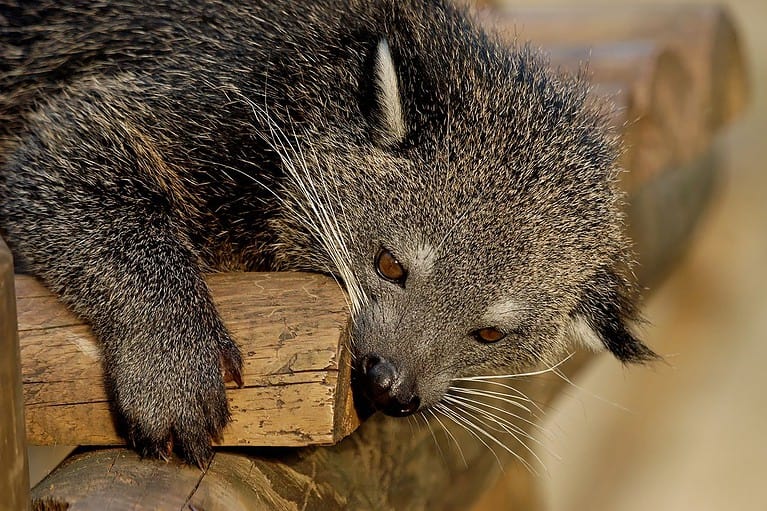
the Binturong also has long, white whiskers that are thick and sensitive and are found both on its cheeks and above its brown eyes. These whiskers make it look like a cat, but its body is like that of a bear, which is why its nickname is “bearcat.”
Distribution and Habitat
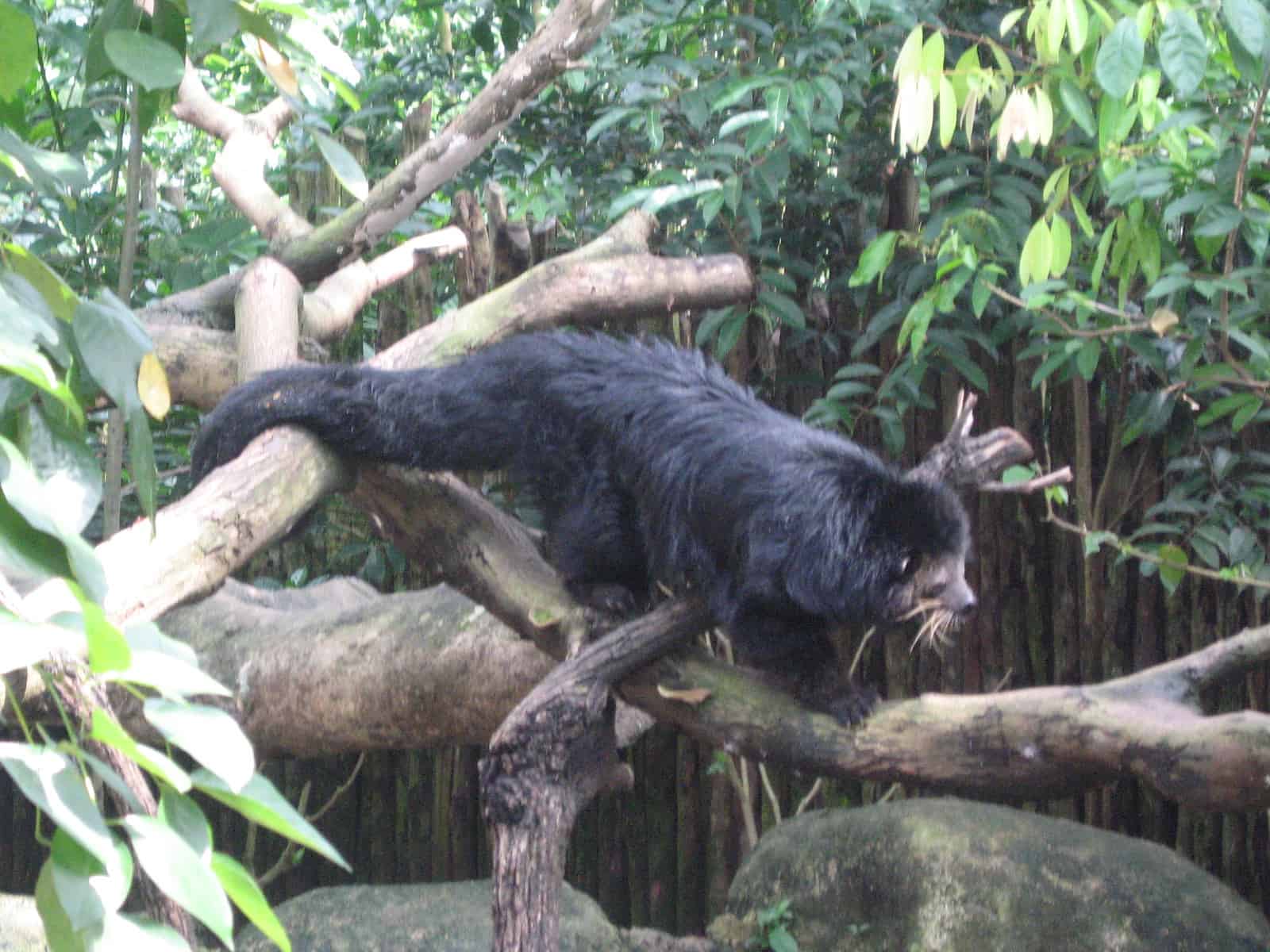
A binturong in its habitat of a dense, thick forest.
©Terence Ong., CC BY-SA 3.0, via Wikimedia Commons – Original / License
The Binturong was once found natively throughout China, India, Thailand, Cambodia, Laos, Malaysia, Indonesia, the Philippines, and on the island of Borneo, and although there are populations still found in a number of these countries, their numbers have been declining, and the Binturong can now be extraordinarily hard to spot.
Found in dense, moist jungles and in areas that are close to a slow-moving water source, the Binturong has been most affected by habitat loss, particularly in the more southern parts of its natural range. Towards the north, however, where the rate of deforestation is not as severe, they have been more affected by hunting and capture as well as generally expanding human populations. The Binturong relies heavily on dense, thick forest where there is plenty of cover both in the trees and on the ground, and with a big decline in its native jungles, this mammal simply has fewer places to go.
Behaviour and Lifestyle

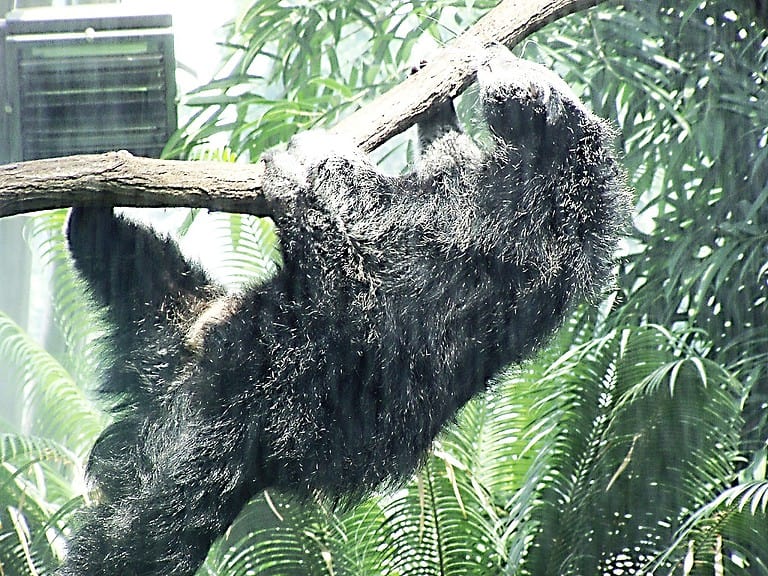
A Binturong is an excellent climber but cannot leap between one tree and another.
©Bodlina, CC BY 3.0, via Wikimedia Commons – Original / License
The Binturong is a generally solitary and nocturnal animal that spends the majority of its time moving about slowly and cautiously amongst the trees. Due to their large size, Binturongs cannot leap between trees and must instead climb down to the ground to move from tree to tree. They are excellent climbers and are well aided by their strong feet, agile bodies, semi-retractable claws, and their prehensile tail. The Binturong is also known to both swim and dive well and often spends time in the water to simply cool down in the heat of the sun.
Although they do tend to be mainly solitary, small groups of Binturong are not uncommon and usually consist of an adult pair and their young. As with the hierarchy in Mongoose society, however, it is the female Binturong who remains the dominant adult. The Binturong is known to be a very vocal animal and makes several sounds to both communicate with other Binturongs and to warn off species that it sees to be a threat. They are known to make chuckling sounds when they seem to be happy and appear to utter a high-pitched wail if they become aggravated.
Reproduction and Life Cycles
Although there is not thought to be a mating season as such, there are thought to be higher instances of mating between February and April and then later in July and November. After a gestation period that lasts for around three months, the female Binturong climbs down to the ground to nest in thick vegetation that is sheltered both from the elements and out of sight of passing predators.
Between one and three small cubs are born, each about the size of a human fist. Like a number of other mammalian young, Binturongs are born blind and cannot hear, and rely solely on their mother to provide them with milk. They are usually weaned by the time they are 2 months old and reach their adult size after a year. The Binturong is thought to live for between 10 and 15 years in the wild but can happily reach older ages in captivity, with one individual having died at the age of 26.
Diet and Prey
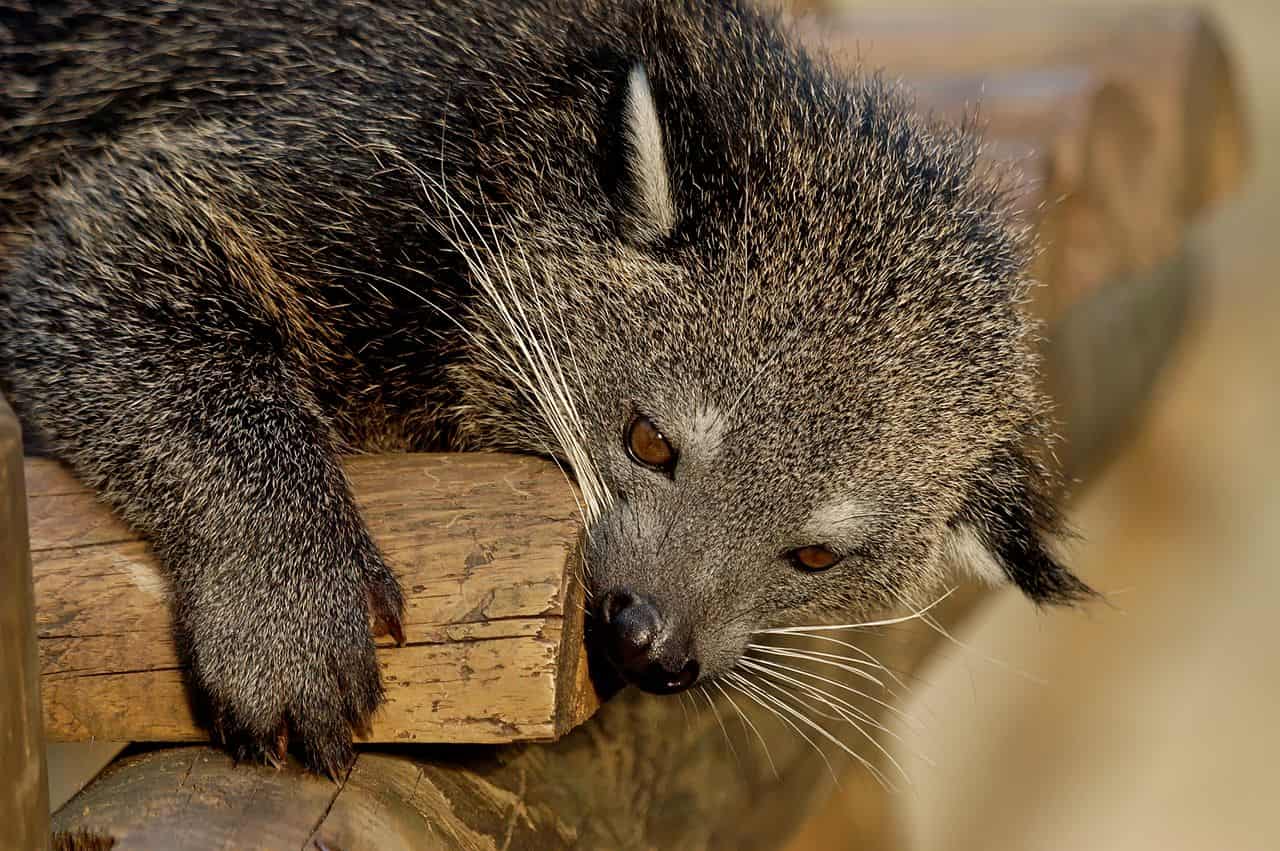
This Binturong may be eating insects it finds under the logs.
©Jastrow, Public domain, via Wikimedia Commons – Original / License
Despite belonging to the carnivorous mammal group, the Binturong is mainly frugivorous, meaning that it survives primarily on a diet that is comprised of fruit. Although they are also known to hunt insects, birds, and rodents, which they stalk in a cat-like manner amongst the branches, the Binturong has evolved well to eating in the trees, with front feet designed not only to climb and dig but also to hold onto fruit and even open it with their agile toes.
The Binturong primarily hunts for food under the cover of night but is also known to feed while resting in the trees during the heat of the day. Due to its ability to swim and dive well, the Binturong also hunts fish when cooling down in the water.
Predators and Threats
The Binturong is a relatively large and slow-moving animal, yet it is not really a main source of prey to the predators that also inhabit the dense, surrounding jungle. Larger animals such as Tigers and Snakes would pose the biggest threat to the Binturong adults, along with birds of prey and small carnivores that could easily target one of the young cubs. The biggest threat to the world’s Binturong population, though, is people, in several ways. The Binturong has been caught for its meat, captured and sold into the pet trade, subjected to vast habitat loss (mainly in the form of deforestation), and trapped and sold into the Chinese medicine market, where a number of their body parts are used in traditional remedies.
Interesting Facts and Features
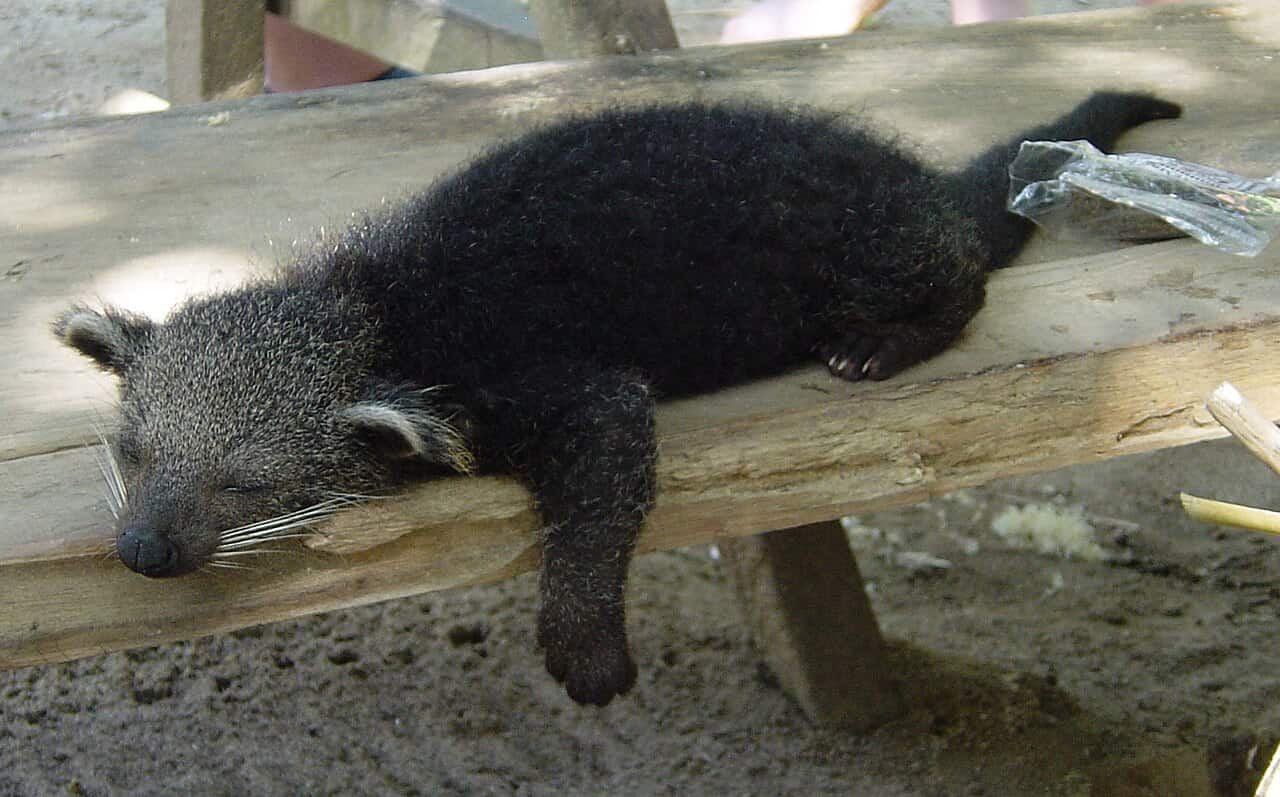
A Binturong cub is likely to spray a foul-smelling liquid when frightened.
©Bart Van den Bosch, CC BY-SA 2.5, via Wikimedia Commons – Original / License
Like other members of the Civet family, the Binturong has scent glands which are located just under its tail. These glands are used to mark trees and foliage, outlining an individual’s territory, and the scent is deposited as the Binturong moves about. Oddly enough, the odour of this scent is said to smell like buttered popcorn, as do Binturong cubs when they are newborn. Until they become stronger and are more aware of their surroundings, young Binturong are incredibly vulnerable and are able to spray foul-smelling liquid (like a Skunk) when they are really frightened. This behaviour, however, has not been observed in individuals older than a couple of months, as they are able to defend themselves more easily as they grow.
When climbing, the Binturong is actually able to rotate its hind legs backwards so that their claws still have a good grip when climbing down a tree head first.
Relationship with Humans
This tree-dwelling mammal is actually known to be startlingly passive towards people and has been easily domesticated and kept as an exotic pet all over the world. However, it is this industry that, along with other factors, has aided in the rapid decline of Binturong population numbers throughout Southeast Asia. Having been over-exploited not only as pets, zoo attractions, for medicine, and for food, the Binturong is also subjected to the devastating loss of vast areas of its natural habitat, which has pushed the remaining populations into smaller and smaller pockets of their once large historical range. Both growing human settlements and forest clearance for agriculture are the main culprits, and since the Binturong needs dense jungle to successfully survive, plantations provide no sanctuary in their dwindling homelands.
Conservation Status and Life Today
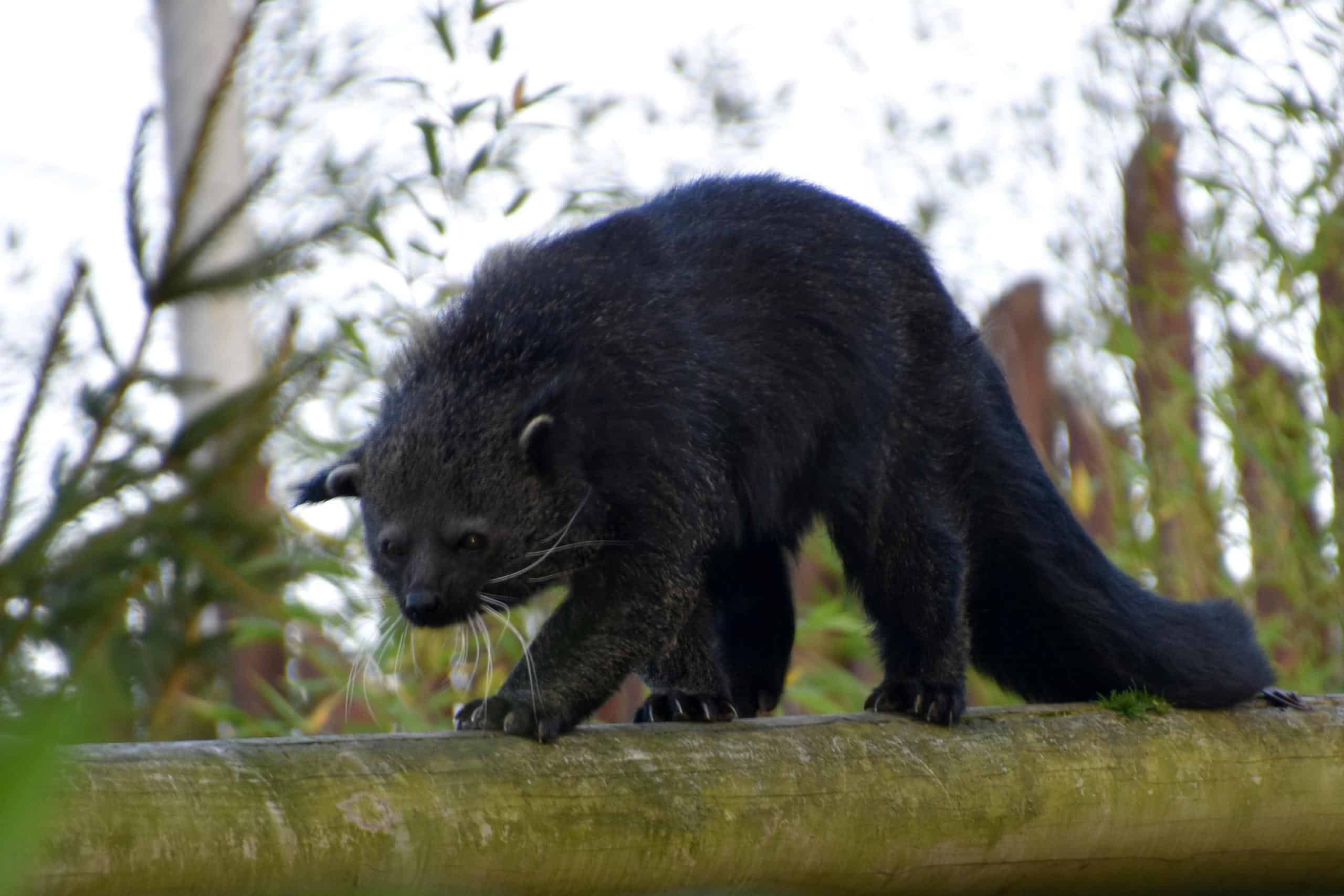
The Binturong is rarely seen in the wild, and their habitats are threatened by human encroachment.
©Millie Bond – Copyright A-Z Animals
Today, the Binturong is rarely seen in the wild, with just a handful of sightings having been reported over the past decade. The Binturong is listed by the IUCN as a species that is Vulnerable to extinction in its natural environment in the near future. Human encroachment on their historical habitats has meant that their numbers have declined drastically and, along with their capture in many places, has led to a 30% decline in Binturong populations over the last 30 years.
Binturong Pictures
View all of our Binturong pictures in the gallery.

How to say Binturong in ...
Sources
- David Burnie, Dorling Kindersley Animal, The Definitive Visual Guide To The World's Wildlife / Accessed November 14, 2008
- Tom Jackson, Lorenz Books The World Encyclopedia Of Animals / Accessed November 14, 2008
- David Burnie, Kingfisher The Kingfisher Animal Encyclopedia / Accessed November 14, 2008
- Richard Mackay, University of California Press The Atlas Of Endangered Species / Accessed November 14, 2008
- David Burnie, Dorling Kindersley Illustrated Encyclopedia Of Animals / Accessed November 14, 2008
- Dorling Kindersley Dorling Kindersley Encyclopedia Of Animals / Accessed November 14, 2008
- David W. Macdonald, Oxford University Press The Encyclopedia Of Mammals / Accessed November 14, 2008
- Animal Diversity Web / Accessed November 14, 2008
- Phoenix Exotics / Accessed November 14, 2008
- IUCN Red List / Accessed November 14, 2008