Quick Take
- One bird that's usually a daytime regular switches to night shifts, and a full moon plays a role. Meet the night-shift killdeer →
- Some birds hide in plain sight by perching in a way most birds never do. See the camouflaged nightjar →
- One seabird does nearly everything in the dark, from laying eggs to leaving on migration.
- Less than 3% of birds are truly nocturnal, so who else is out after dark, and what are they chasing?
The vast majority of birds are diurnal, meaning that they are active during the day and sleep at night. Less than 3% of all bird species are truly nocturnal, but there are other birds that exhibit nocturnal behaviors, such as movement, vocalization, and foraging after dark. In this article, we’ll discuss five different groups of birds that are frequently active at night. We’ll explore where you can find these birds and what makes them unique.
5. Petrel
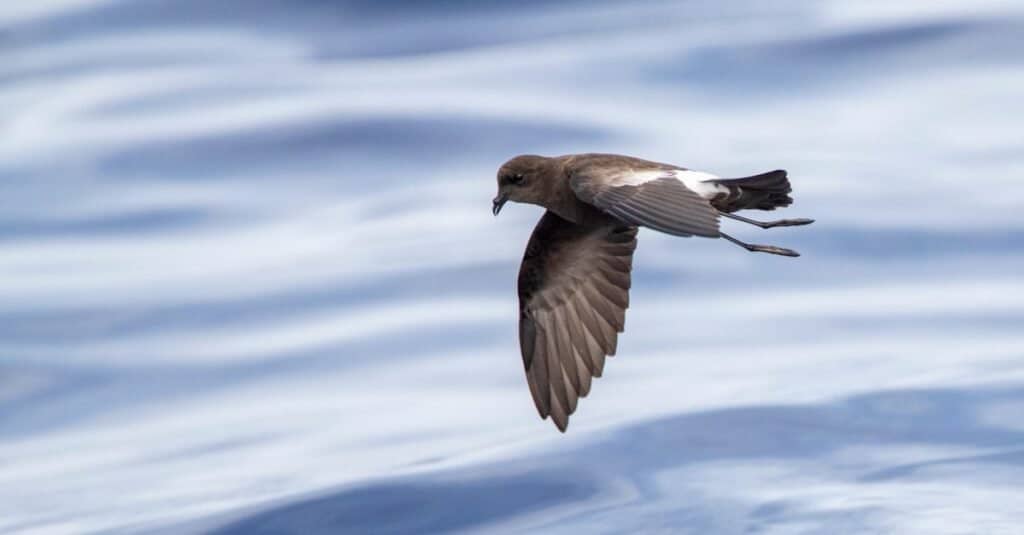
Wilson’s Storm Petrel in flight over the Atlantic Ocean surface off Madeira.
©Agami Photo Agency/Shutterstock.com
Petrels belong to the order Procellariiformes, which is made up of four families. Groups in these families include the storm, diving, fulmarine, and gadfly petrels, as well as prions, shearwaters, and albatrosses. Also known as tubenoses due to their tubular nostrils, petrels live and hunt in the open ocean. In fact, they only return to land to breed, which they primarily do on coasts and on small, isolated islands.
While some species only fly during the day, a few rank among the birds that fly at night. For example, during the summer, storm petrels hunt at night for crustaceans, fish, and squid. Besides helping them find food, hunting at night allows petrels to avoid predation by large raptors. Back in their colonies, petrels will call out to each other at night from the safety of their nests. These cries may be part of courtship rituals or serve other social functions. Bulwer’s petrel (Bulweria bulwerii) is among the most nocturnal of seabirds. They lay their eggs, swamp partners during incubation, feed their chicks, depart for migration, fledge, and forage primarily at night.
#4: Nightjar
The term nightjar refers to a group of about 100 species that belong to the family Caprimulgidae. They fly at night or during the hours around twilight. Their name is said to have come from the “churring/jarring” song of the European nightjar. Nightjars also include 10 species known more commonly as nighthawks in the Americas. Except for Antarctica and some inhospitable islands and habitats, you can find nightjars around the world. They prefer to live in grasslands with intermediate ground cover, as they typically build their nests on the ground.
Most nightjars possess short legs and bills but long wings and dark, mottled plumage. Unlike most birds, which perch atop of a branch, some nightjars perch along a branch. This tactic helps to conceal them from predators during the day. At night and around twilight, nightjars become active and set off to hunt for insects, their primary prey. They hunt by sight and can catch insects in mid-air, which makes their nighttime flights all the more impressive.
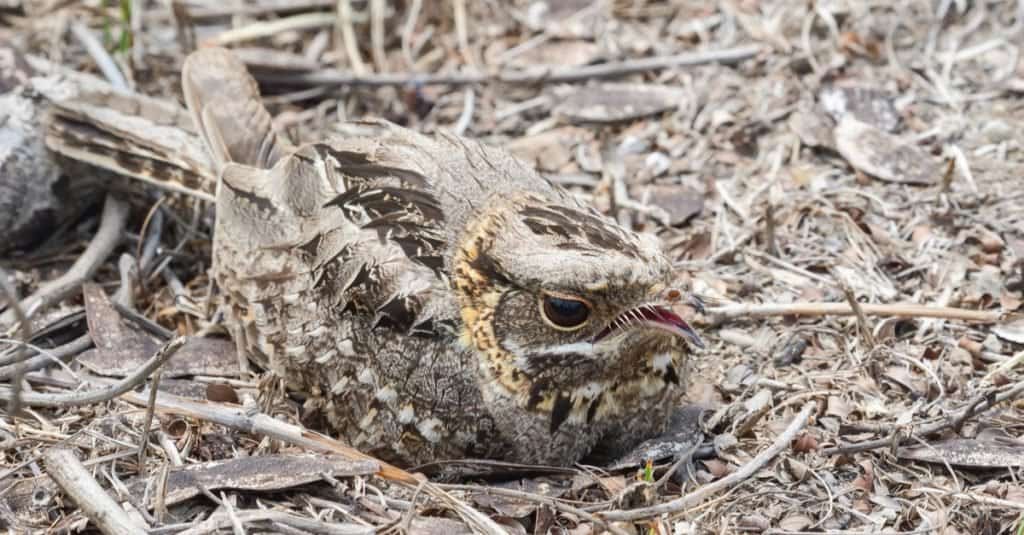
A nightjar relies on its excellent camouflage to avoid daytime predators.
©MRS. NUCH SRIBUANOY/Shutterstock.com
#3: Killdeer
The killdeer is a species of plover commonly found throughout the United States, Mexico, and Canada. It gets its name from the distinctive, high-pitched vocalizations it makes, which can occasionally sound like the words “kill-deer.” Killdeers feature unique plumage, made up of a brown back, white belly, and two black bands across the breast. Killdeers live in varied environments depending on the season.
While technically wading birds, killdeers do not necessarily spend all of their time near water. For example, although they often inhabit wetlands, during the breeding season, they build scrape nests in open fields. Though these birds are usually diurnal (active during the day), they become active at night during the non-breeding season, especially during full moons, to hunt for insects and forage for fruits and seeds. By hunting at night, they gain the advantage of remaining hidden from predators.

Killdeer hunt at night so they can avoid predators.
©iStock.com/passion4nature
2. Night Heron
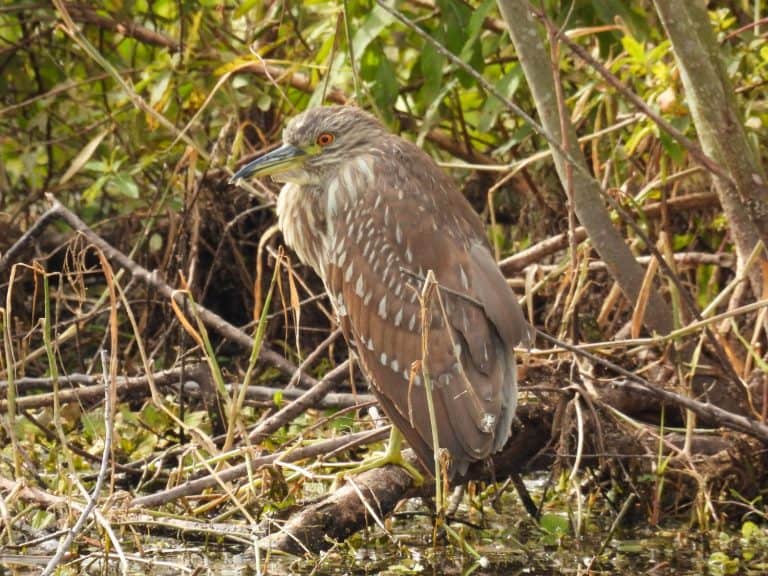
“Night heron” is the name given to a group of six species. which are more active at night than most herons. While sometimes used for all of the birds, the term can also specifically refer to the black-crowned night heron. Depending on the species, you can find them all over including North and South America, Europe, Asia, and Australia. Only the black-crowned night heron (Nycticorax nycticorax) and the yellow-crowned night heron (Nyctanassa violacea) can be found in the U.S.
Most night herons feature a short neck and legs as well as dark gray or brown plumage. A medium-sized species, most measure between 22 and 25 inches long. When not feeding, they often rest on platform nests either on the ground or in trees. At night, they get more active as they set out to hunt for food. Their diet primarily consists of fish, crustaceans, frogs, and insects. To catch their prey, they stand still at the water’s edge and then ambush their unsuspecting target.

Night herons become more active at night and will stand still at the water’s edge to lure in prey.
©Jeff W. Jarrett/Shutterstock.com
1. Owl
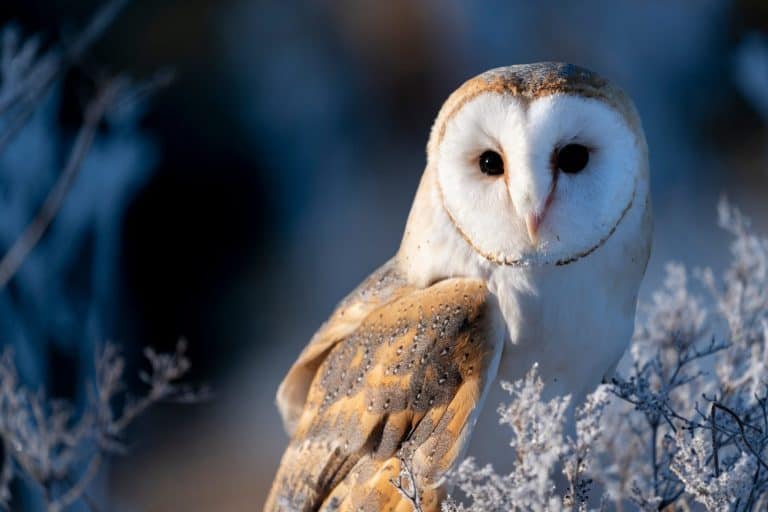
Perhaps the most well-known birds that fly at night, owls belong to two families, which include roughly 250 species. However, not all owls are strictly nocturnal. Some species (northern hawk owl, burrowing owl, snowy owl) can be diurnal or crepuscular. You can break down owls into the true owls, or Strigidae, and the barn owls, or Tytonidae. Owls range throughout every continent on Earth other than Antarctica and live in a wide variety of habitats.
While primarily solitary, a few owls live in groups, called a parliament. Most owls stand upright and feature wide heads, keen hearing and eyesight, and sharp talons. Almost all owls hunt at night and prey on various animals including insects, small mammals, birds, and some fish. They have feathers that make them well-adapted for silent flight, which helps them to ambush their prey. In addition, many owls make unique vocalizations that you can hear long into the night. Their distinctive “hoots” serve as a warning to would-be intruders or predators, or as communication between mates.
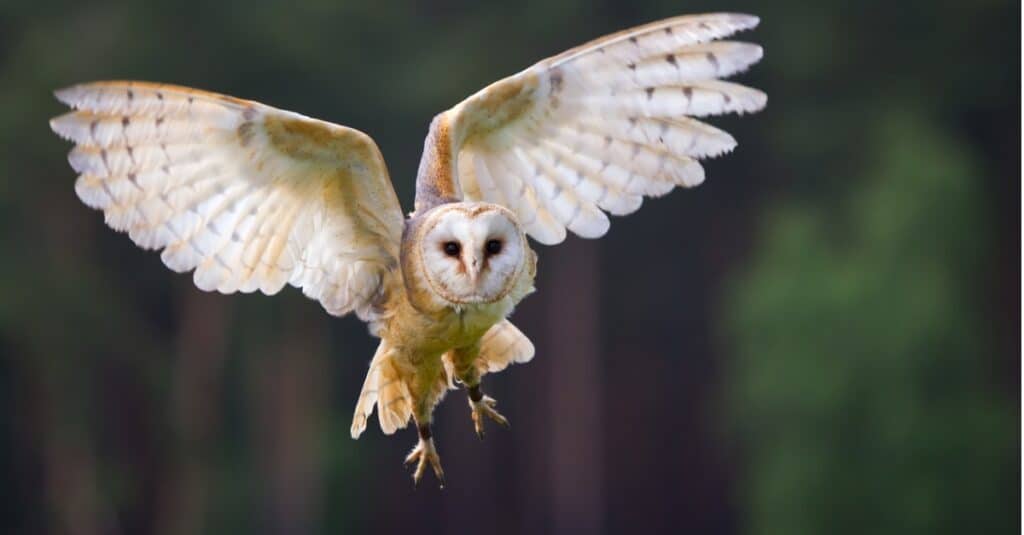
Owls soar silently through the night before swooping down on unsuspecting prey.
©iStock.com/M-Reinhardt