
Quick Take
- Not every bird called a robin is actually related, and the famous namesake isn't who you'd expect.
- One robin has a fiery name and a strange attraction to disaster zones.
- A tiny, all-black robin on remote islands faces a threat that's closing in fast.
- One robin breaks the red-breast mold entirely, and its color may surprise you.
The American robin (Turdus migratorius) is a large, iconic passerine bird known to millions. However, the name robin is actually a taxonomic misnomer that spans multiple avian families, meaning that not all robins are closely related. European settlers traveling the globe colloquially named any small-to-medium bird with a reddish breast after the European robin (Erithacus rubecula), which belongs to the Old World flycatcher family Muscicapidae. The large, familiar American robin, in contrast, is a true thrush in the family Turdidae. Continue reading to discover eight birds that are called robins.
American Robin
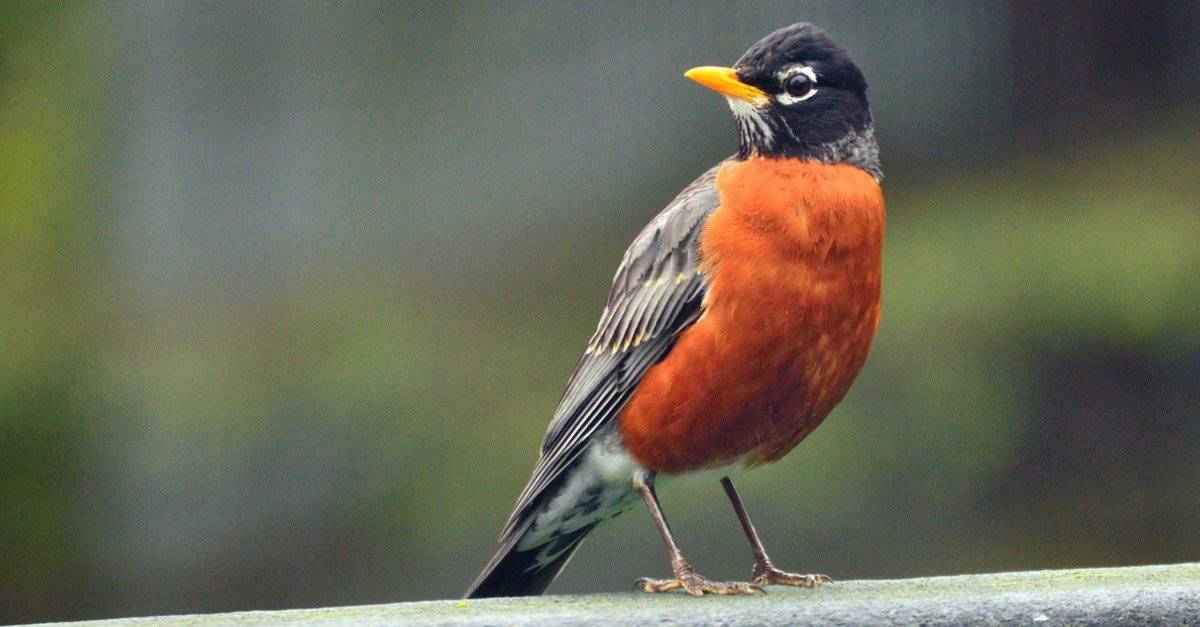
The American robin (Turdus migratorius) lives year-round across most of the United States and can often be spotted early in the morning pulling worms out of the ground. Canada and Alaska host breeding populations of American robins, which spend the summer there before heading to warmer wintering grounds in the Southern United States and Mexico. In addition to your backyard, American robins can be found in fields, parks, forests, mountains, and tundra.
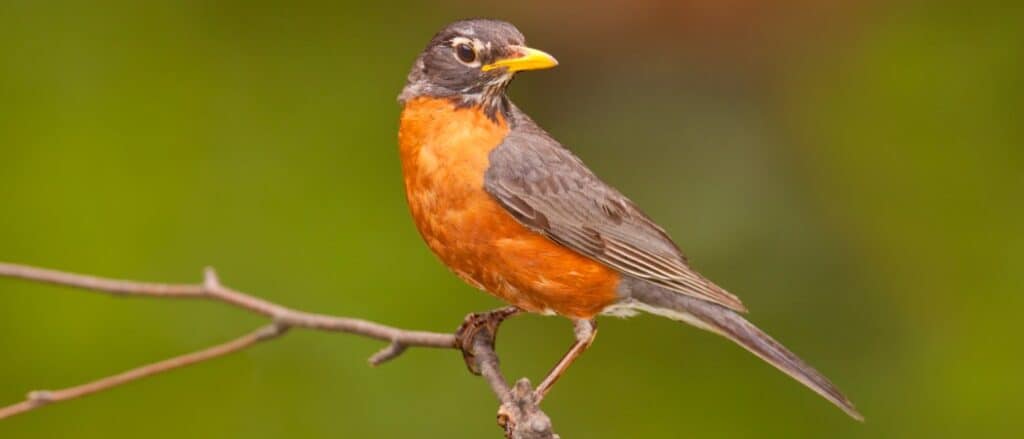
American robins are large with round bodies and warm tones. They have grayish-brown plumage with rusty red bellies.
©iStock.com/Silfox
European Robin
The European robin (Erithacus rubecula) is an Old World flycatcher traditionally grouped with the chats. European robins have grayish brown bodies with rusty faces and chests and white bellies. They live throughout Europe, east to Western Siberia, and in North Africa, where they inhabit woodlands and forests. European robins can also be found in gardens and backyards.
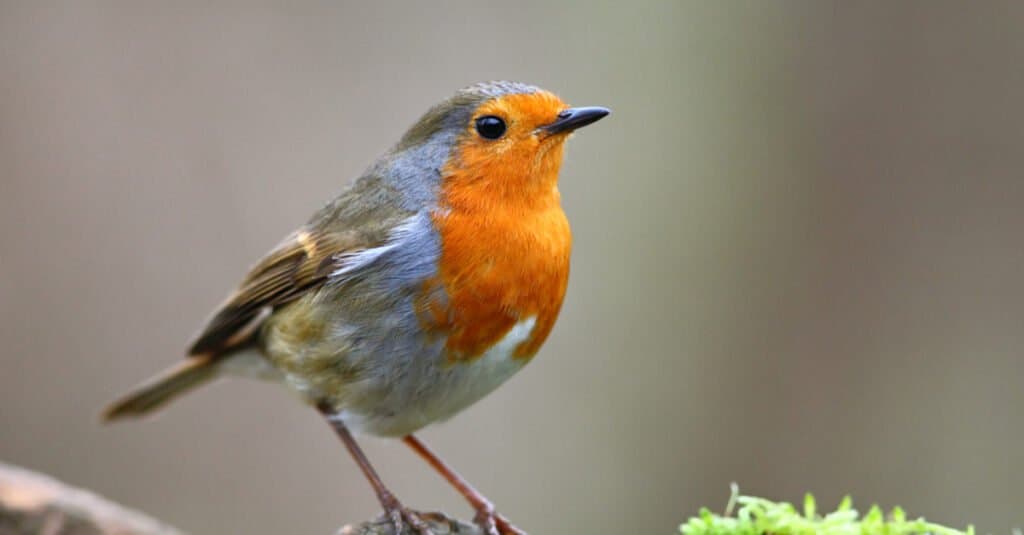
The American robin was named after the European robin for their similar red breasts, but they are not closely related.
©Tomatito/Shutterstock.com
Rufous-Backed Robin
The rufous-backed robin (Turdus rufopalliatus) belongs to the thrush family and is native to Mexico. They are related to American robins but are slightly smaller and paler in color. Their back is rufous (reddish-brown), and they have pale gray heads, wings, and tails.

The rufous-backed robin mostly inhabits dry deciduous forests on the Pacific slope of Mexico.
©VIKVAD/Shutterstock.com
Rufous-backed robins have white throats and white bellies. Rufous-backed robins inhabit dry deciduous forests on the Pacific slope of Mexico, and some vagrants may reach the U.S. border. They are inconspicuous compared to their American cousins, but you will find them in flocks during winter.
White-throated Robin
The white-throated robin (Irania gutturalis) is a small songbird once thought to be a part of the thrush family but now considered an Old World flycatcher, like the European robin. This species is migratory, breeding in Western Asia and wintering in East Africa. White-throated robins are occasional vagrants in Europe. White-throated robins live in thickets in dry woodlands. They are larger than their European relatives but similar in appearance. These birds have gray upperparts and orange undersides with black faces and white throats.

White-throated robins have gray upperparts and orange undersides with black faces and white throats.
©Abdullah Durman/Shutterstock.com
Siberian Blue Robin
The Siberian blue robin (Larvivora cyane) is an Old World flycatcher. Siberian blue robins breed in the eastern Palearctic and winter in Southern Asia. They range from Siberia to Japan and Indonesia. They build their nests in the dense undergrowth of coniferous forests near rivers or woodland edges. You will often find this species foraging on the ground or skulking through dense vegetation. Unlike the other robins in this list, the Siberian blue features dark blue upperparts and white underparts.

Siberian blue robins breed in the eastern Palearctic and winter in Southern Asia.
©Tuah Roslan/Shutterstock.com
Black Robin
Black robins (Petroica traversi), also known as Chatham Island robins, are native to the Chatham Islands, off the coast of New Zealand. These robins are threatened (listed as Vulnerable by the IUCN) due to introduced mammalian predators, such as rats and cats.

The black robin is native to the Chatham Islands off the eastern coast of Australia.
©Narith15/Shutterstock.com
Black robins belong to the Petroicidae family, which contains all of the Australasian robins. Chatham Island robins are all-black birds that live in lowland scrub forests, foraging on the forest floor and nesting in hollow trees.
Flame Robin
The flame robin (Petroica phoenicea) is an Australian robin. Flame robins are common in the cooler regions of Southeastern Australia. They get their name from their bright reddish-orange chests and throats.

Australia is home to flame robins, which can be found in eucalyptus forests in mountainous areas.
©Mari_May/Shutterstock.com
Flame robins’ heads, backs, and wings are dark gray and their tails black, with white bars on their wings and a white patch on their foreheads. Flame robins live in the wet eucalyptus forests of temperate, mountainous areas. They are also abundant in areas recently burned by bushfires but leave once the undergrowth regrows.
Red-Capped Robin
Red-capped robins (Petroica goodenovii) are named for the fluffy red caps of feathers on their crown and forehead. They have scarlet breasts, white bellies, and jet-black upperparts with white barring. They are striking birds that are easy to identify in their native range in Australia. Red-capped robins are widespread across the continent but not particularly common. They are found in arid habitats, like scrublands and woodlands. Most populations are nonmigratory, although some seasonal movement exists.

These are striking birds easy to identify in their native range of Australia.
©David Ongley/Shutterstock.com