A
Species Profile

American Robin

Turdus migratorius

Spring's orange-breasted songster
Mason Maron/iStock via Getty Images

American Robin Distribution

Click a location to explore more animals from that region

Loading map...

Found in 79 states/provinces

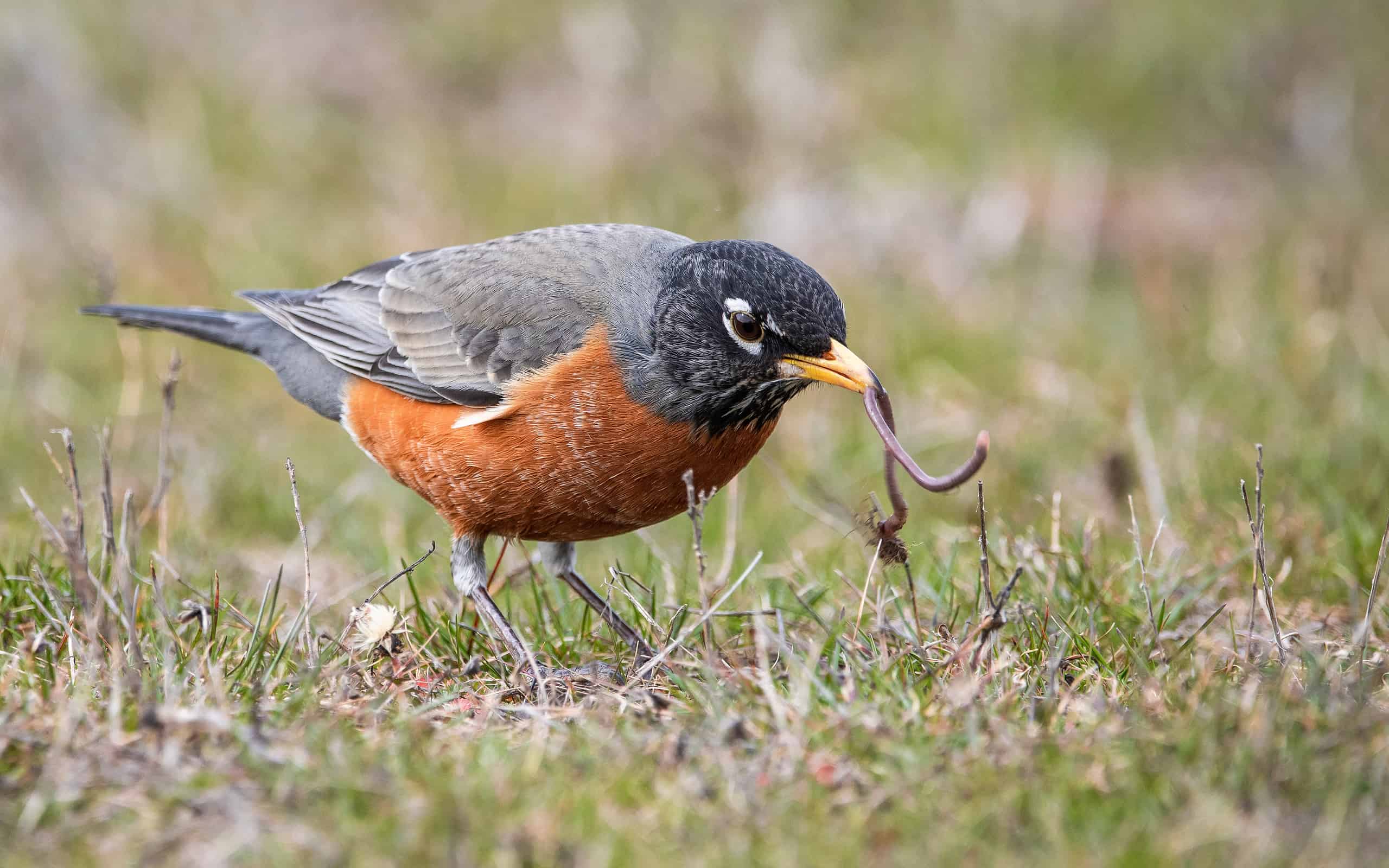
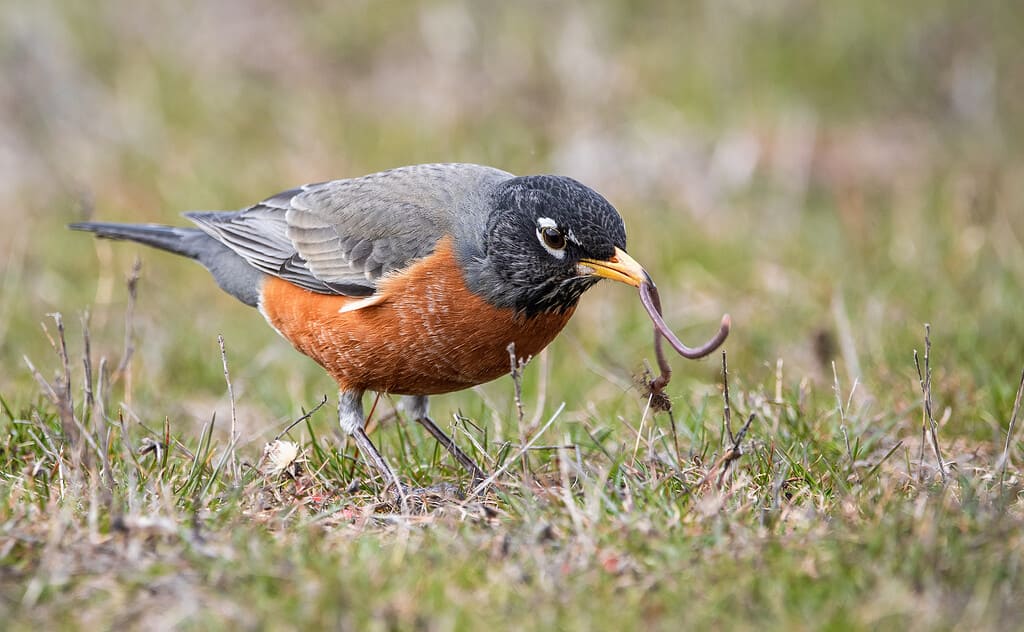
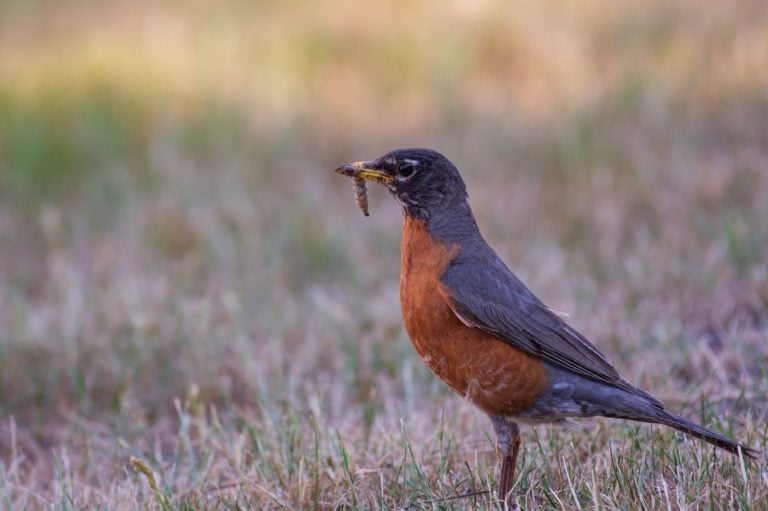
American Robin gathering Worms

At a Glance

Wild Species
Also Known As Robin, North American robin, Robin redbreast, Red-breast
Diet Omnivore
Activity Diurnal+
Lifespan 2 years
Weight 0.094 lbs
Status Least Concern
Did You Know?

Size: 23-28 cm long with a 31-41 cm wingspan (adult).

Scientific Classification

The American Robin is a widespread North American thrush known for its orange-red breast, melodious song, and common presence in yards, parks, and woodlands. It is often among the first birds noticed in spring in many regions.

Kingdom
Animalia
Phylum
Chordata
Class
Aves
Order
Passeriformes
Family
Turdidae
Genus
Turdus
Species
Turdus migratorius

Distinguishing Features

  • Medium-sized thrush with warm orange-red underparts and gray-brown back
  • White eye arcs (broken eyering) and white throat with dark streaking
  • Dark head in many males; females often paler with less contrasting head
  • Often seen running, stopping, and cocking posture on lawns while foraging for earthworms
  • Rich, repeated song phrases; sharp ‘tut’ alarm calls

Did You Know?

Size: 23-28 cm long with a 31-41 cm wingspan (adult).

Typical adult mass is ~0.077 kg (often reported range ~0.059-0.094 kg, varying by sex/season).

Clutch size is usually 3-5 sky-blue eggs; incubation ~12-14 days; young fledge about 13 days after hatching.

They can raise 2-3 broods in a single breeding season in many areas.

Robins often switch from worms/insects in the breeding season to mostly fruit in fall and winter.

Longevity record (banded bird): 13 years 11 months (North American banding record).

Unique Adaptations

  • Seasonal diet flexibility: effective at switching between animal prey (worms/insects) and fruit, allowing year-round use of diverse habitats.
  • Strong terrestrial locomotion: long legs and upright posture aid ground foraging in open lawns and forest edges.
  • High-contrast facial patterning: white eye arcs and a streaked white throat create clear visual signals used in close-range social interactions.
  • Robust nest architecture: mud-reinforced nest cups provide stability and insulation for eggs/young in variable spring weather.
  • Broad habitat tolerance: thrives in forests, edges, suburbs, parks, and yards-helped by its generalist feeding and nesting habits.

Interesting Behaviors

  • Lawn "run-and-stop" foraging: sprints, pauses, then probes soil-often targeting earthworms and beetle larvae.
  • Head-tilting "listening" posture: pauses with head cocked to detect subtle prey movement in soil/leaf litter.
  • Early-morning singing: males frequently sing from high perches at dawn during breeding season to advertise territory and attract mates.
  • Territorial defense: males chase rivals with direct flights and sharp calls; territoriality is strongest in spring and early summer.
  • Mud-cup nest building: females typically build a sturdy cup of mud and grass, lined with fine dry grass, often on ledges, branches, or human structures.
  • Partial migration: many northern birds migrate south, while some populations (especially in milder coastal/urban areas) may remain year-round; winter flocks can be large around fruiting trees.
  • Fruit-focused winter feeding: in cold months, robins may congregate to feed on berries (e.g., hawthorn, juniper), sometimes defending heavily laden trees.

Cultural Significance

The American Robin (Turdus migratorius) is a common North American sign of spring, often in poems and songs. It is the state bird of Connecticut, Michigan, and Wisconsin, common in towns, farms, and woodlands. Early settlers named it after the European robin because of its warm-colored breast.

Myths & Legends

In several Native American storytelling traditions, the robin's red breast is explained as a gift or mark earned through courage-often from carrying fire to humans or being singed/stained while helping bring warmth to the people.

A common North American tale tells of a small bird, later called the American robin, that warms or protects people or children in winter; its breast turns red from the fire or its effort.

In some regional folklore, the first robin of spring is treated as a fortunate omen-its appearance marking the turning of the year and the safe beginning of planting and outdoor work.

Conservation Status

LC Least Concern

Widespread and abundant in the wild.

Population Increasing

Protected Under

  • United States: Migratory Bird Treaty Act (MBTA) - protects American Robin as a native migratory bird (prohibits unauthorized take, possession, sale, etc.).
  • Canada: Migratory Birds Convention Act, 1994 - protects migratory birds, nests, and eggs.
  • Mexico: Protected under Mexico's migratory bird framework implementing international migratory bird conventions/agreements.

Life Cycle

Birth 3 chicks
Lifespan 2 years

Lifespan

In the Wild
1–13.9 years
In Captivity
1–14 years

Reproduction

Mating System Monogamy
Social Structure Socially Monogamous
Breeding Pattern Serial
Fertilization Internal Fertilization
Birth Type Internal_fertilization

American Robin (Turdus migratorius) are socially monogamous: males defend territory, females build nests and incubate. Pairs often stay through broods and re-pair each season (serial monogamy). Clutch 3–4, incubation 12–14 days, ~2 broods; extra-pair fertilizations occur.

Behavior & Ecology

Social Flock Group: 25
Activity Diurnal, Matutinal, Vespertine
Diet Omnivore Earthworms
Seasonal Migratory 3,000 mi

Temperament

Breeding season: strongly territorial and aggressive near nests/territory (chasing, alarm calling, mobbing of predators); tolerance for conspecifics drops markedly compared with winter (Sallabanks & James 1999; Vanderhoff et al. 2020).
Nonbreeding season: more gregarious and relatively tolerant; dominance interactions occur at concentrated food (especially fruiting trees), but flock cohesion is generally loose and fluid (Vanderhoff et al. 2020).
Often bold/approachable in human-modified habitats (yards, parks), but can be highly vigilant; rapid shift to alarm behavior in response to aerial predators.

Communication

Complex, melodious song given primarily by males, with peak output at dawn and again near dusk; used in mate attraction and territory advertisement Sallabanks & James 1999; Vanderhoff et al. 2020
Sharp 'tut-tut-tut' alarm call Often repeated), commonly used during nest defense and in response to terrestrial threats (Vanderhoff et al. 2020
High, thin 'seee'/'zeee' call associated with aerial predators and triggering immediate freezing/cover-seeking behavior Vanderhoff et al. 2020
'Whinny' call Descending series) used in agitation and during social interactions, including mobbing contexts (Vanderhoff et al. 2020
Contact notes used to maintain spacing in flocks and during foraging movements Vanderhoff et al. 2020
Visual threat displays and posture changes E.g., upright stance, head-forward postures), wing/tail movements, and direct chases to enforce territorial spacing (Sallabanks & James 1999; Vanderhoff et al. 2020
Mobbing behavior: coordinated approaches, scolding/alarm calls, and swoops at predators Especially near nests), often recruiting nearby robins and sometimes other species (Vanderhoff et al. 2020
Spatial/behavioral signaling via countersinging and movement along territory boundaries Acoustic and positional advertisement) during the breeding season (Sallabanks & James 1999; Vanderhoff et al. 2020

Habitat

Biomes:
Temperate Forest Boreal Forest (Taiga) Temperate Grassland Mediterranean Temperate Rainforest Alpine Freshwater Wetland +2
Terrain:
Mountainous Hilly Plateau Plains Valley Coastal Island Riverine +2
Elevation: Up to 12139 ft 1 in

Ecological Role

Common mid-trophic omnivore that links soil/lawn invertebrate communities and fruiting shrubs/trees; functions both as a significant invertebrate predator and as an important fruit consumer and seed disperser across disturbed and natural habitats.

Biological control of soil-surface and foliage invertebrates (e.g., beetles, caterpillars, grasshoppers) Seed dispersal for many fleshy-fruited plants (native and ornamental), aiding plant recruitment and gene flow Energy transfer within food webs (robins are common prey for raptors and other predators), supporting higher trophic levels

Diet Details

Other Foods:
Fruit and berries Seeds and soft mast Cultivated fruits

Human Interaction

Domestication Status

Wild

American Robin (Turdus migratorius) is a wild North American thrush with no domestication history. It lives near people in lawns, parks, and suburbs, nests on buildings, and often gets used to humans. Robins feed on worms and fruit. North American Turdus are generally protected and not kept as pets.

Danger Level

Low
  • Occasional defensive swooping/scolding near nests, especially during breeding season; injuries are uncommon and usually minor
  • As with many wild birds around feeders, there is a small, indirect risk of pathogen transmission (e.g., Salmonella contamination of surfaces) if hygiene is poor
  • Potential (generally low) indirect relevance in vector-borne disease ecology as a passerine host for mosquito-borne viruses (e.g., West Nile virus), though this does not equate to direct danger from the bird itself

As a Pet

Not Suitable as Pet

Legality: American Robin (Turdus migratorius) is protected in the United States under the MBTA and in Canada under the Migratory Birds Convention Act; keeping, buying, selling, or owning birds, eggs, nests, or feathers is usually illegal without permits.

Care Level: Expert Only

Purchase Cost:
Lifetime Cost:

Economic Value

Uses:
Ecosystem services (invertebrate predation, seed dispersal) Cultural/recreational value (birdwatching, education, soundscape) Horticultural/agricultural interactions (occasional fruit consumption)
Products:
  • Non-consumptive value via birdwatching/ecotourism and educational programming
  • Ecosystem service value from consumption of soil invertebrates and dispersal of seeds from berries and other fruits (supports plant recruitment)

Relationships

Related Species 7

Song Thrush
Song Thrush Turdus philomelos Shared Genus
Rufous-backed Robin Turdus rufopalliatus Shared Genus
Eurasian Blackbird Turdus merula Shared Genus
Fieldfare Turdus pilaris Shared Genus
Hermit Thrush Catharus guttatus Shared Family
Varied Thrush Ixoreus naevius Shared Family
Wood Thrush Hylocichla mustelina Shared Family

Quick Take

  • Sustaining a population of 370 million requires a strict dietary intake of 60% fruit.
  • The average lifespan of only 2 years constrains the timing of the diurnal migration cycle.
  • It is paradoxical that the American robin shares no family relation with the English robin.
  • Completing the nesting structure at 14.8 feet is a requirement for raising altricial chicks.

The American robin is a songbird in the thrush family. Thrushes are commonly referred to as “heralds of spring.” American robins have a positive relationship with humans. They are a friendly species that can help control pests. They also benefit the ecosystem by dispersing seeds from the fruit they eat.

A detailed infographic about the American Robin featuring sections on its fruit-heavy diet, 2-year lifespan, and a life cycle diagram showing light blue eggs and altricial chicks.
With a population of 370 million but a lifespan of just 24 months, the American Robin is locked in a high-stakes race for survival. Discover why this 'herald of spring' isn't actually related to the English robin at all. © A-Z Animals

4 Incredible American Robin Facts

  • The American robin is the official state bird of Wisconsin, Michigan, and Connecticut.
  • In the wild, their average lifespan is about two years. However, one individual lived to be almost 14 years old.
  • American robins roost in groups of 20 to 200 individuals.
  • Cowbirds sometimes lay their eggs in American robin nests, but robins usually recognize and reject the foreign eggs.

Where to Find American Robins
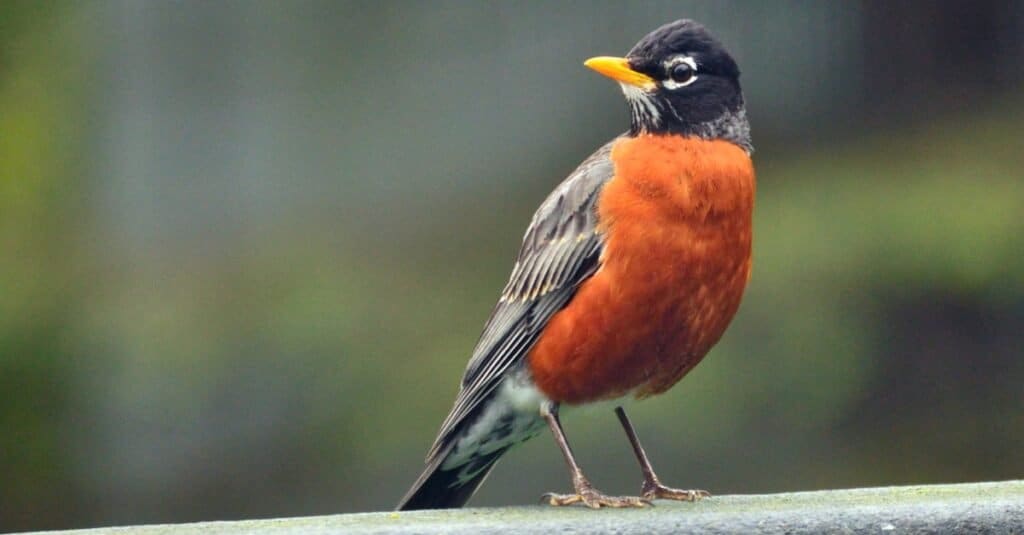
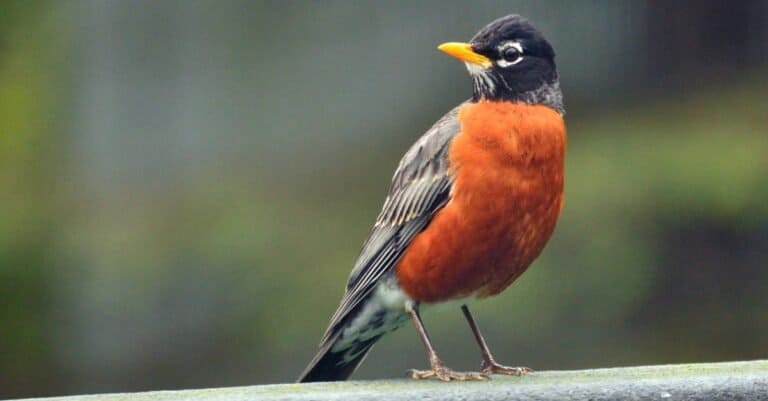
American robin perched on a branchThe Robin is center frame., looking left. The bird has a rust-colored body, and medium brown wings and darker fromn head. indistinct green background.

American robins are pretty versatile in terms of their habitat and can be found in the wild as well as urban areas.

On the continent of North America, American robins reside in the United States, Canada, and Mexico. They live in a temperate climate in woodland and shrubland habitats as well as open land areas. They commonly have habitats in residential areas, also. You can find them in the grass foraging for food when they are not roosting or nesting in trees. You may see them in lawns and gardens, farm fields, city parks, and wooded areas.

The best time of year to find this bird relies heavily on the location. Since they migrate, they are found in different areas depending on the season. However, they are active all year long.

Nests

Females build the nests with no help from their partners. She gathers twigs, grass, feathers, and paper to form the outside structure of the nest. She lines the nest with mud to hold it together. The inside is cushioned with soft materials, including grass and other plant matter. When finished, the nesting structure is about three to six inches tall and six to eight inches wide. The nest is located either in the fork of tree branches or in a dense bush. It is typically placed a great distance from the ground, between 4.9 and 14.8 feet high.

Classification and Scientific Name

The American robin’s scientific name is Turdus migratorius. It is in the thrush family, Turdidae, and the Aves class. Aves is a class of birds. The origin of the scientific name comes from the Latin words “turdus” meaning thrush, and “migratorius” which means to migrate.

There are seven American robin subspecies:

  • Eastern robin (Turdus migratorius migratorius)
  • Northwestern robin (Turdus migratorius caurinus)
  • Southern robin (Turdus migratorius achrusterus)
  • Western robin (Turdus migratorius propinquus)
  • Mexican robin (Turdus migratorius phillipsi)
  • Newfoundland robin (Turdus migratorius nigrideus)
  • San Lucas robin (Turdus migratorius confinis).

American Robin vs. English Robin
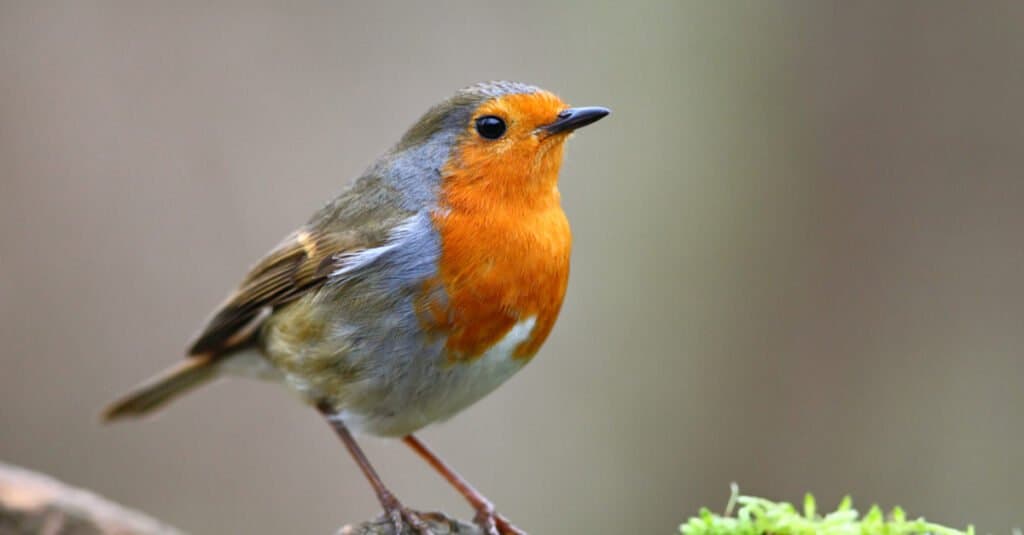
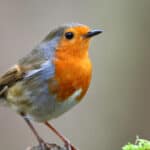
European Robin sitting on a branch.

In spite of their red chest feathers, American and European robins are two distinct species.

The English robin, formally named the European robin, is where the American robin got its name. Early settlers noticed it had similar features to the European robin, mainly the appearance of its red-orange breast. This, however, seems to be the only comparative similarity between the two birds. These species are not closely related. Though they share the same order and class, they belong to different families.

The English robin is native to Europe and is part of the Muscicapidae family, also referred to as Old World Flycatchers. The American robin is actually a thrush that belongs to the Turdidae family. American robins’ anatomy is different, so they are also larger than their European lookalikes.

Size, Appearance & Behavior
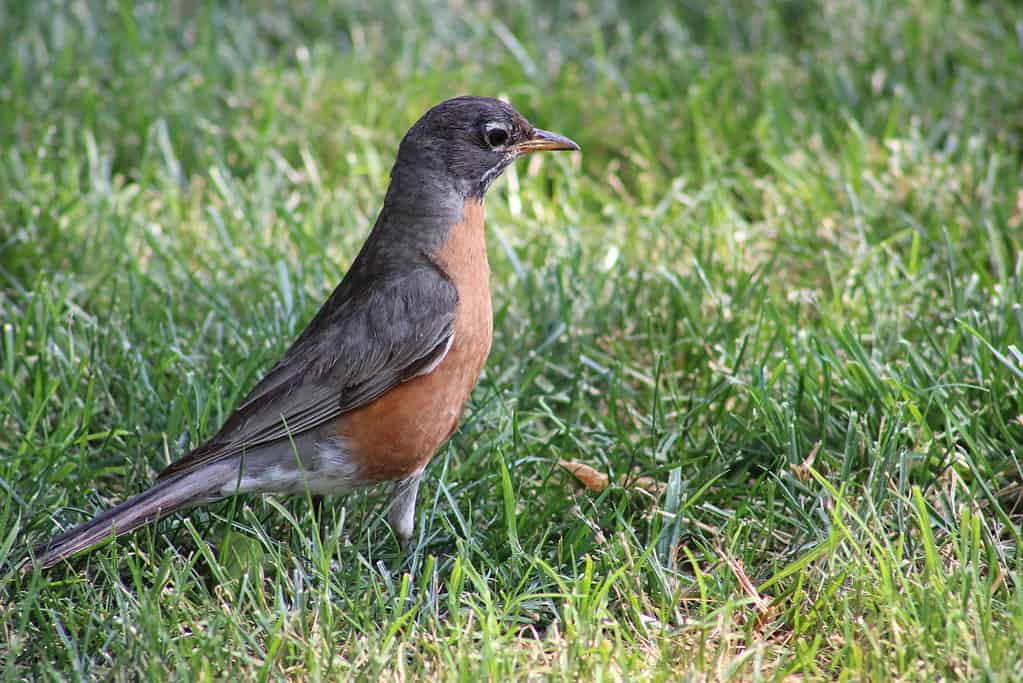
American robin
American robins are social birds and are most active during the day.

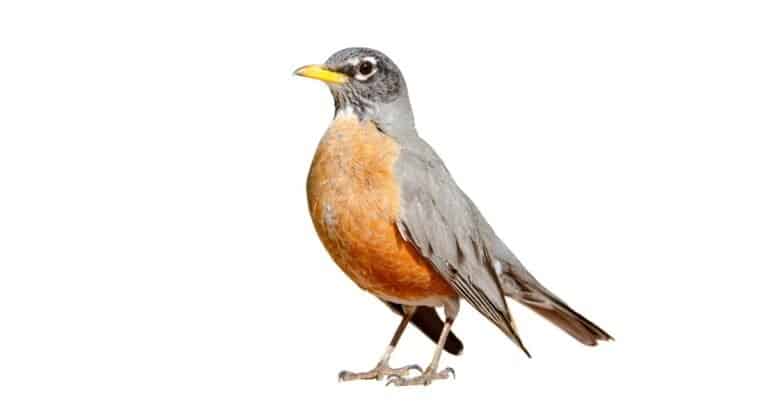
American robins are between eight and 11 inches in length and weigh 2.6 ounces to 2.7 ounces. They have a wingspan of 12 to 16 inches. Their anatomy is typical of a thrush. Their anatomy features include feathers, wings, and a beak. The beak is yellow, and the throat is striped black and white. The head is black, and the back is gray or black. The chest is a vivid orange color. Males are usually somewhat larger than females and have more colorful features.

These birds exhibit social behavior. They tend to live in small groups and flock in larger groups at night. They are diurnal; they are most active during the day. They sing a melodious song. It is often one of the first bird songs you hear in the morning.

Migration Pattern & Timing

These birds are fully migratory. They migrate in flocks in the daytime. In the winter, they fly south. In the spring, they head north. In the fall, their migration depends on where there is a decent food supply available.

Diet

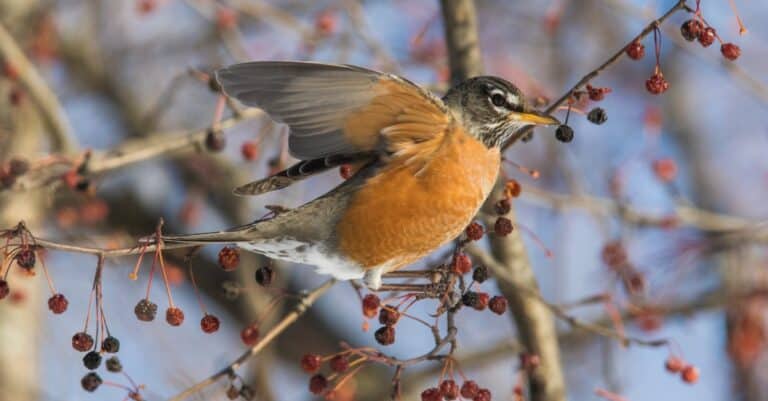
The American robin is an omnivore. It eats both plants and animals. It forages on the ground throughout the day and will also forage at night. About 60% of their diet consists of fruits and berries, and these foods are especially important in the winter.

What does an American robin eat?

Aside from fruits and berries, an American robin eats a variety of invertebrates such as earthworms, caterpillars, grasshoppers, beetle grubs, spiders, and snails.

Predators, Threats & Conservation Status
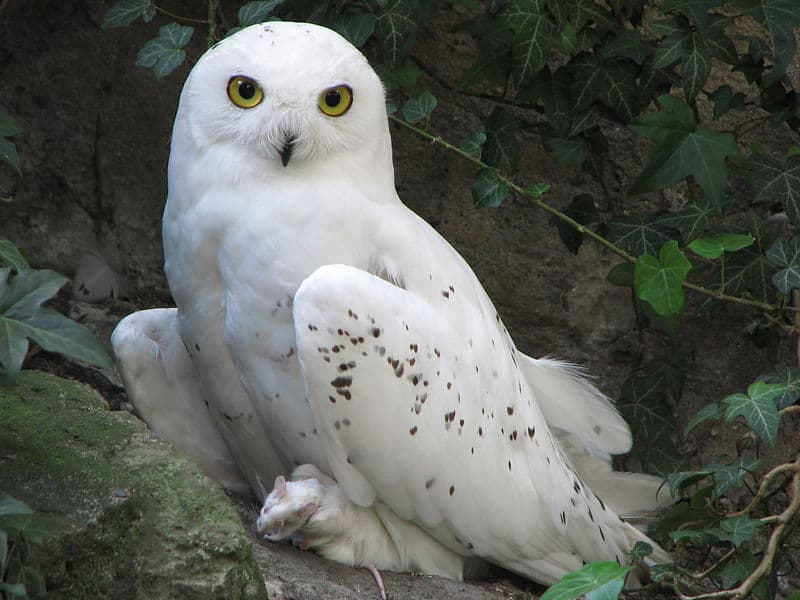
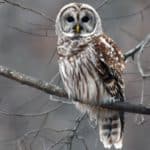
Snowy owls are one of the American robins’ many predators.

Because American robins frequently spend time in residential backyards, they are sometimes indirectly poisoned by pesticides used by humans and killed by pet cats. They are also preyed upon by several animals in the wild.

The American robin’s conservation status on the IUCN Red List is of least concern. The species is stable. Poaching was a problem in the past. They were hunted many years ago, but they are now protected by the US Migratory Bird Treaty Act.

What eats the American robin?

Other than domestic cats, American robins are eaten by birds of prey and snakes. Some birds that prey on American robins are hawks, eagles, snowy owls, and northern pygmy owls. Snake species that regularly eat them include rat snakes and gopher snakes. American robin eggs and young have additional predators due to their vulnerability. Some common animals that eat eggs and chicks are raccoons, squirrels, foxes, crows, common ravens, and blue jays.

Reproduction, Young & Molting

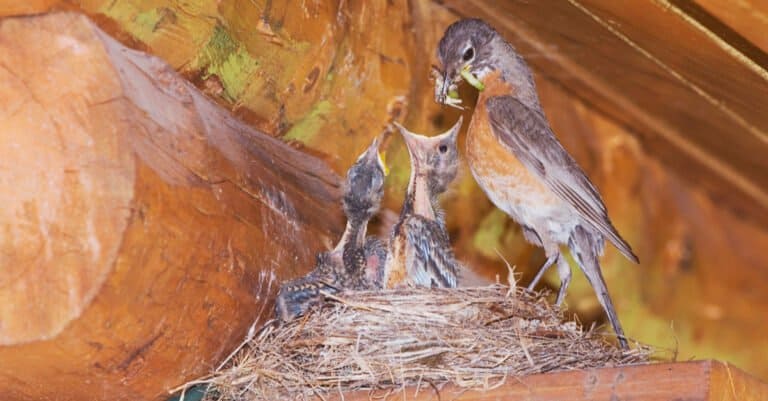
The breeding season for American robins occurs between April and July. Reproduction is viviparous. The courtship behavior of the male is meant to attract a mate. He shakes his wings, spreads his tail, and sings for her attention. The female usually lays between three and five light blue eggs. It takes 12 to 14 days for the eggs to hatch. When the chicks hatch, they are altricial. This means that they are not independent and require care and feeding from their parents. The chicks leave the nest and begin to fledge about 13 days after hatching. It generally takes them two weeks to get good at flying and be able to sustain flight.

Their average lifespan is two years, and they molt once a year.

Population
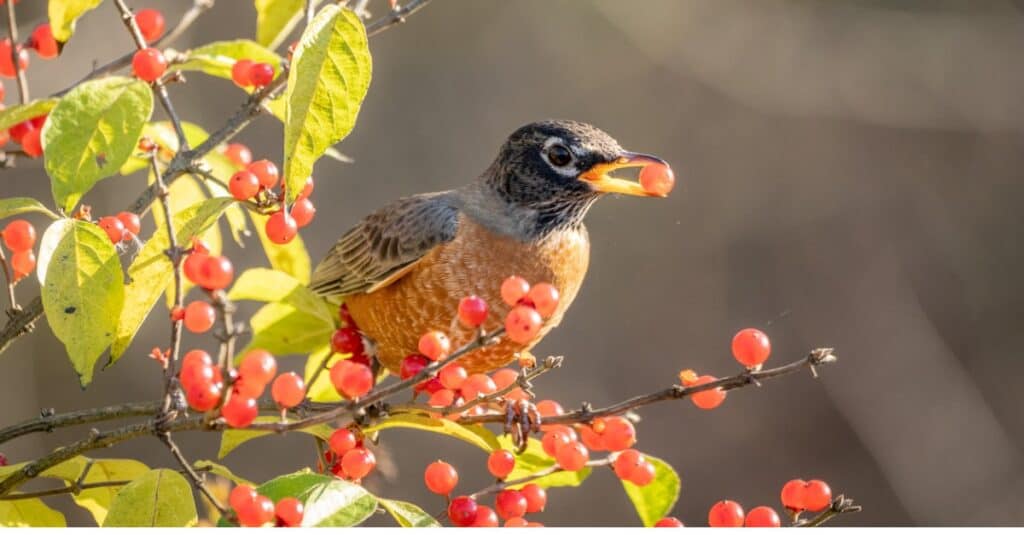
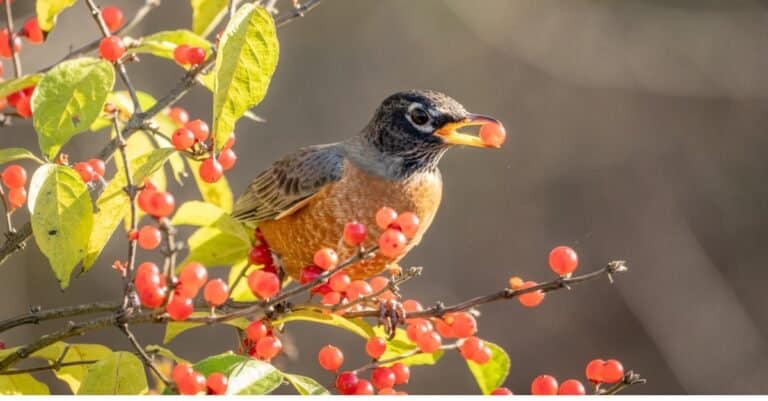
American robin with a berry in its mouth

American robins are doing extremely well, population-wise

The estimated American robin population is about 370 million. Roughly 79% of them are in the United States, 45% are in Canada, and 13% are in Mexico. These birds have a huge range and are abundant. The population trend is increasing, and there is no current threat to its decline. Their conservation status is of the least concern.

View all 327 animals that start with A

Sources

  1. eol / Accessed September 13, 2021
  2. IUCN red list / Accessed September 13, 2021
  3. Cosley Zoo / Accessed September 13, 2021
  4. Audubon / Accessed September 13, 2021
  5. The National Wildlife Federation / Accessed September 13, 2021
  6. Brittanica / Accessed September 13, 2021
Dana Mayor

About the Author

Dana Mayor

I love good books and the occasional cartoon. I am also endlessly intrigued with the beauty of nature and find hummingbirds, puppies, and marine wildlife to be the most magical creatures of all.
Connect:

Thank you for reading! Have some feedback for us?


American Robin FAQs (Frequently Asked Questions)

Yes, it does migrate.