
Quick Take
- Mississippi is located along the Mississippi Flyway, a major bird migration route following the Mississippi, Missouri, and Ohio rivers from Canada to the Gulf of Mexico.
- Swallow-tailed Kites are present in Mississippi during the spring and summer breeding season.
- Mississippi is the only state where birders can view wild Mississippi sandhill cranes, a non-migratory bird
Over 400 bird species from approximately 50 families have been observed in Mississippi, with the state’s diverse habitats supporting a wide range of breeding and migratory birds. The state is along the Mississippi Flyway, with 325 species traveling this path annually. Mississippi serves as a crucial breeding ground for a variety of species, including the bald eagle, and is home to the rare, nonmigratory Mississippi sandhill crane. Continue reading to discover some of the best places in Mississippi to birdwatch.
Pascagoula River and Ward Bayou Wildlife Management Areas
The Pascagoula River is the largest, by volume, unimpeded river system in the contiguous United States, and along the river are more than 50,000 acres of wildlife management lands open to the public. It offers year-round birdwatching opportunities.
The Pascagoula River Wildlife Management Area, which features bottomland hardwood forests and scattered oxbow lakes, serves as an important north-south corridor for migrating songbirds traveling from the Gulf of Mexico. Rhyme Lake, Boneyard Lake, and Josephine Sandbar are splendid birding locations.
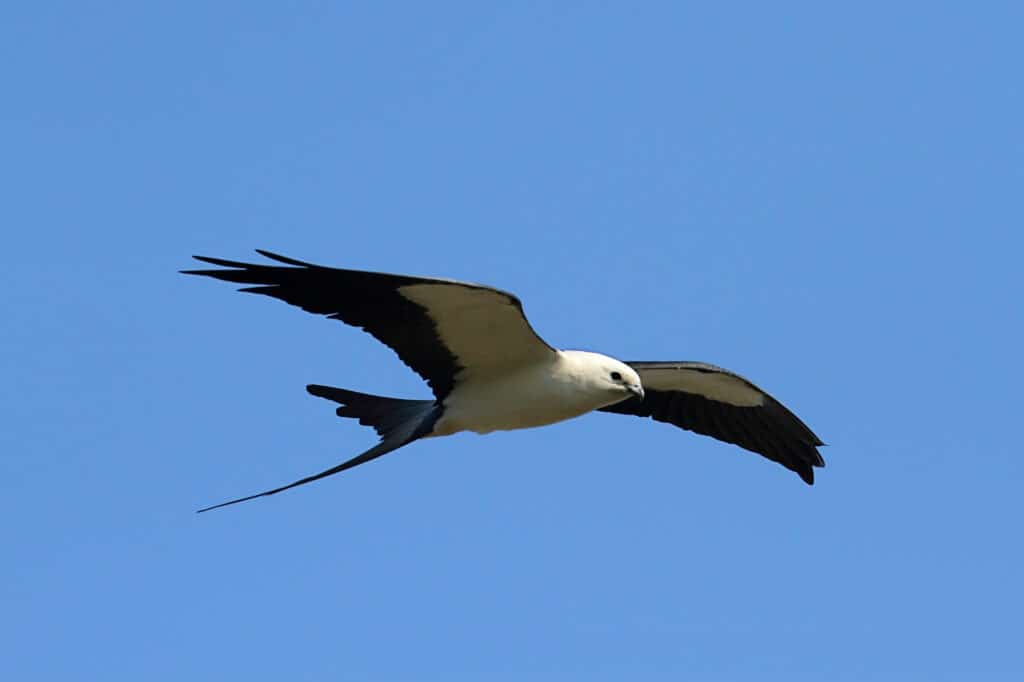
Swallow-tailed kites often eat on the fly.
©iStock.com/SteveByland
Birders flock to the area to view swallow-tailed kites, especially during the spring and summer breeding season. They are frequently seen soaring, foraging, and occasionally roosting along the rivers and in the surrounding bottomlands. Often called the coolest bird on the planet, these masterful aerialists drink, eat, and even snatch prey such as dragonflies and snakes from treetops while flying.
Other bird species that may be seen at the Pascagoula River and Ward Bayou Wildlife Management Areas include:
- Wood Duck
- Sparrow
- Flycatcher
- Tanager
- Warbler
- Thrush
- Heron
- Egret
- Woodpecker
- Owl
- Hawk
Harrison County Beachfront
One of Mississippi’s best bird-watching spots is the Harrison County Beachfront, the world’s longest manmade beach. The 26-mile stretch of sandy beaches is one of the most important birding areas in the state.
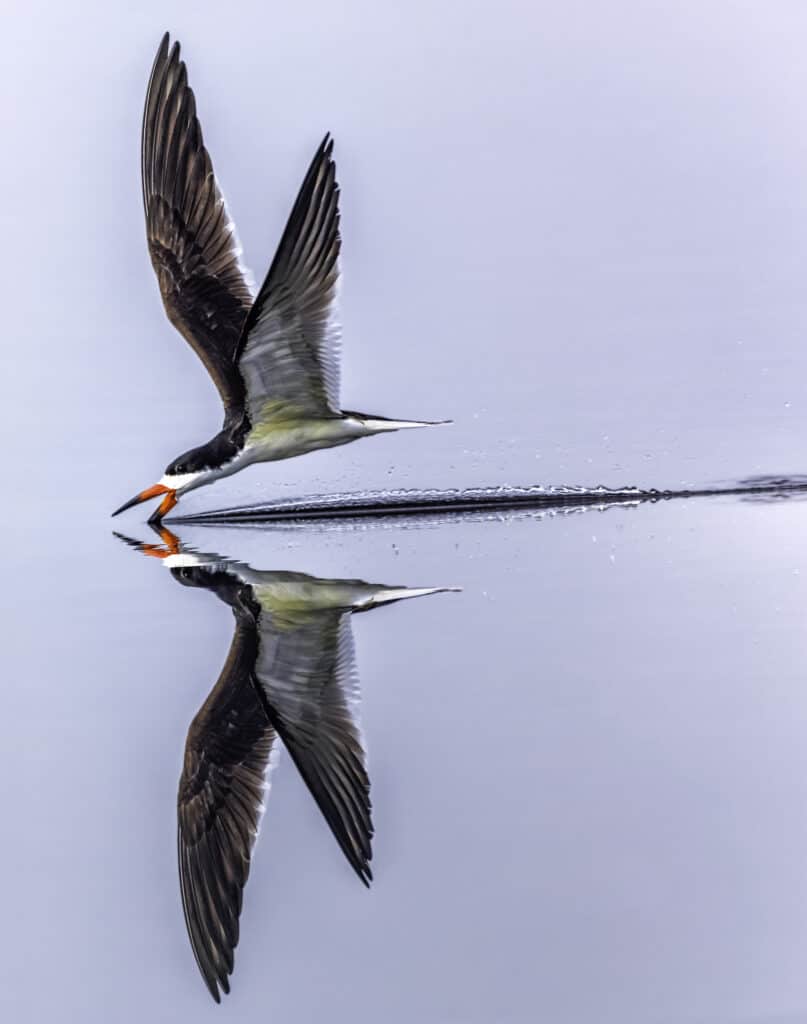
As their name suggests, Black Skimmers often fly along the surface of the water.
©iStock.com/Natures_Vision
The beach provides vital wintering and migratory habitat for shorebirds and seabirds. Portions of the beach are recognized by the National Audubon Society as Important Bird Areas (IBAs) because they support nesting populations of least terns and black skimmers. The beach is also an excellent place to see American avocets, snowy plovers, and brown pelicans.
Other birds that are commonly seen at Harrison County Beachfront include:
- Purple Sandpiper
- Reddish Egret
- American Oystercatcher
- Lesser Black-backed
- Wilson’s Plover
- Long-billed Curlew
LeFleur’s Bluff State Park
LeFleur’s Bluff State Park is a 492-acre urban birding hotspot and designated Important Bird Area (IBA), with over 200 documented species. Located along the Pearl River, the park provides critical habitat for a diverse range of migratory and resident bird species. Its oxbow lakes, swamps, and hardwood forests support over 75 breeding species and offer excellent birding opportunities within the city limits of Jackson.
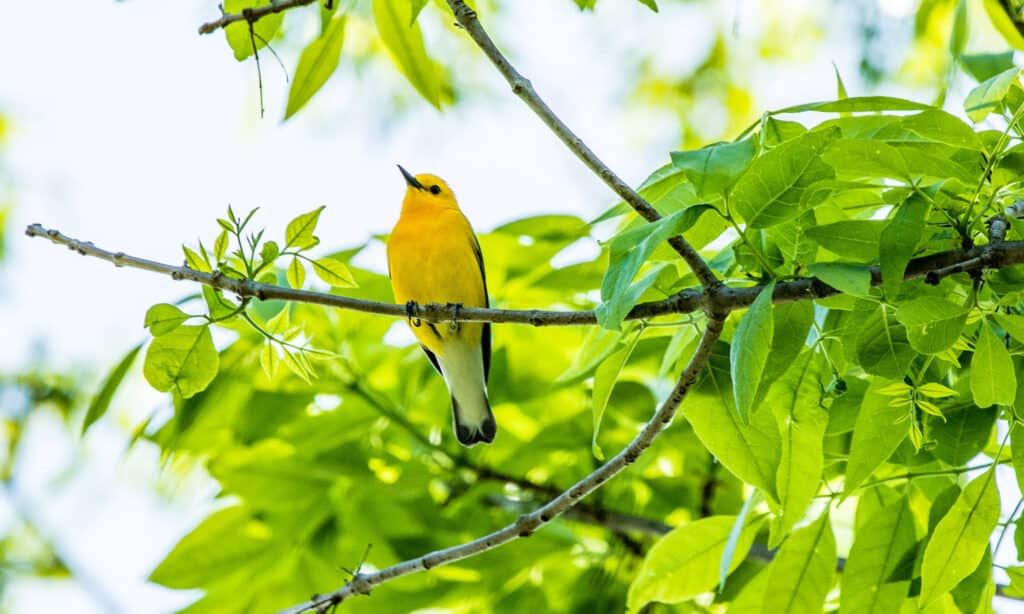
The prothonotary warbler is a migratory bird that breeds at Lefleur’s Bluff State Park.
©Mark C. Morris/Shutterstock.com
The prothonotary warbler, or golden swamp warbler, is a striking golden-yellow songbird that breeds at LeFleur’s Bluff State Park after arriving from Central and South America. The Jackson Audubon Society maintains a nest box trail for these birds at the park, where they reside from spring through early summer.
Other birds at Lefleur’s Bluff State Park include:
- Sapsucker
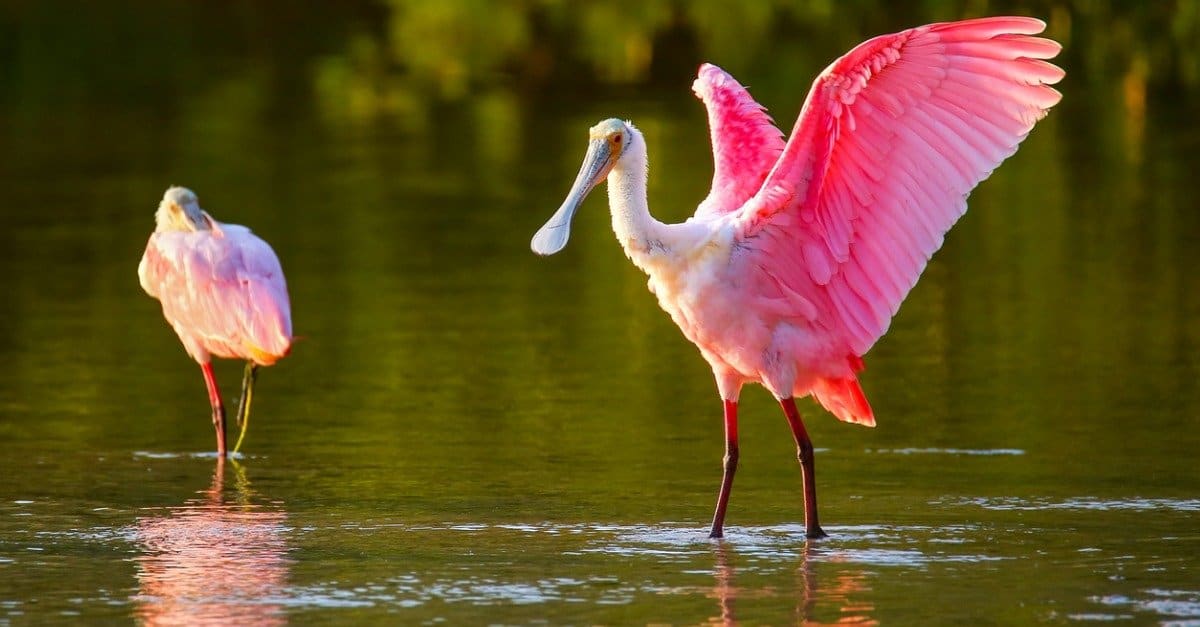
- Roseate Spoonbill
- Eastern Bluebird
- Acadian Flycatcher
- Wood Thrush
- Red-eyed Vireo
- Northern Parula
- Kentucky Warbler
- Hooded Warbler
- Summer Tanager
Tunica County River Park
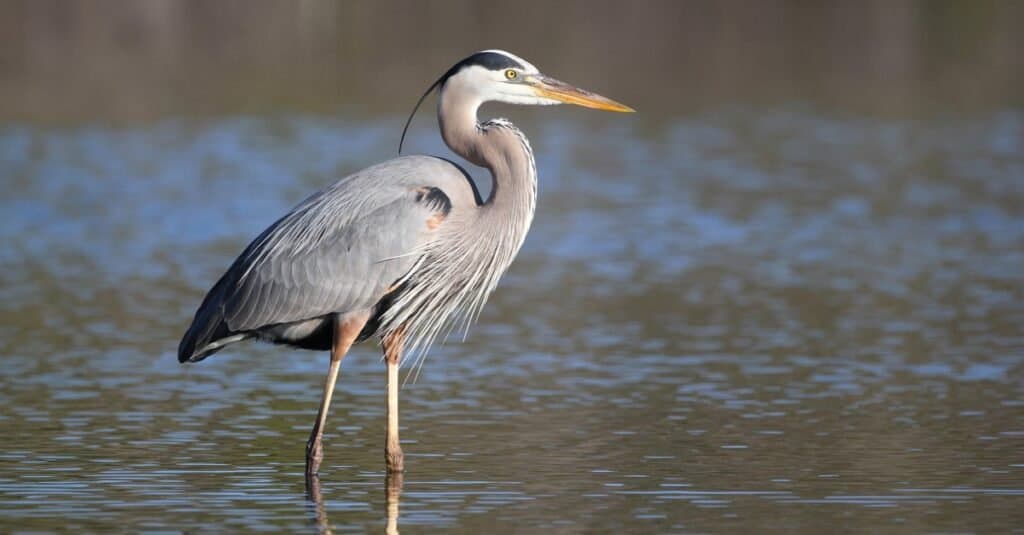
The great blue heron is a wading bird that mostly eats fish.
©Brian Lasenby/Shutterstock.com
Tunica County River Park, located along the Mississippi River, is a birdwatcher’s paradise. The park’s 130 acres of bottomland hardwood forests, wetlands, and riparian habitats provide critical nesting, foraging, and stopover sites for hundreds of bird species, including bald eagles, Mississippi kites, and numerous migratory songbirds and waterfowl.
Situated along a major migration corridor, the park hosts a wide variety of birds during biannual migrations. The park has observation piers that offer an up-close look at the Mississippi River and its surrounding wildlife. Birders can spot woodland birds, warblers, and raptors such as Mississippi Kites in the surrounding meadows and forests.
Common bird species at Tunica County River Park include:
- Ducks
- Great Blue Heron
- Double-crested Cormorant
- Tern
- Goose
- Seagull
- Cowbird
- Grackle
Mississippi Sandhill Crane National Wildlife Refuge
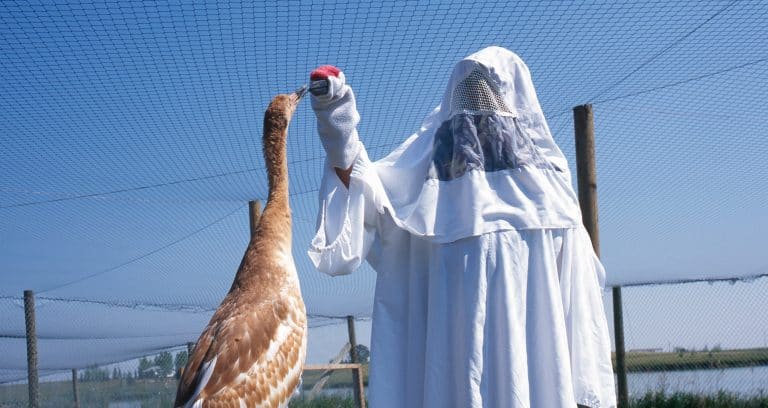
The Mississippi Sandhill Crane National Wildlife Refuge in Gautier, Mississippi, is a critical birding site dedicated to protecting the last remaining wet pine savanna in the U.S. Established in 1975, the refuge serves as the primary sanctuary for the critically endangered, non-migratory Mississippi sandhill crane.
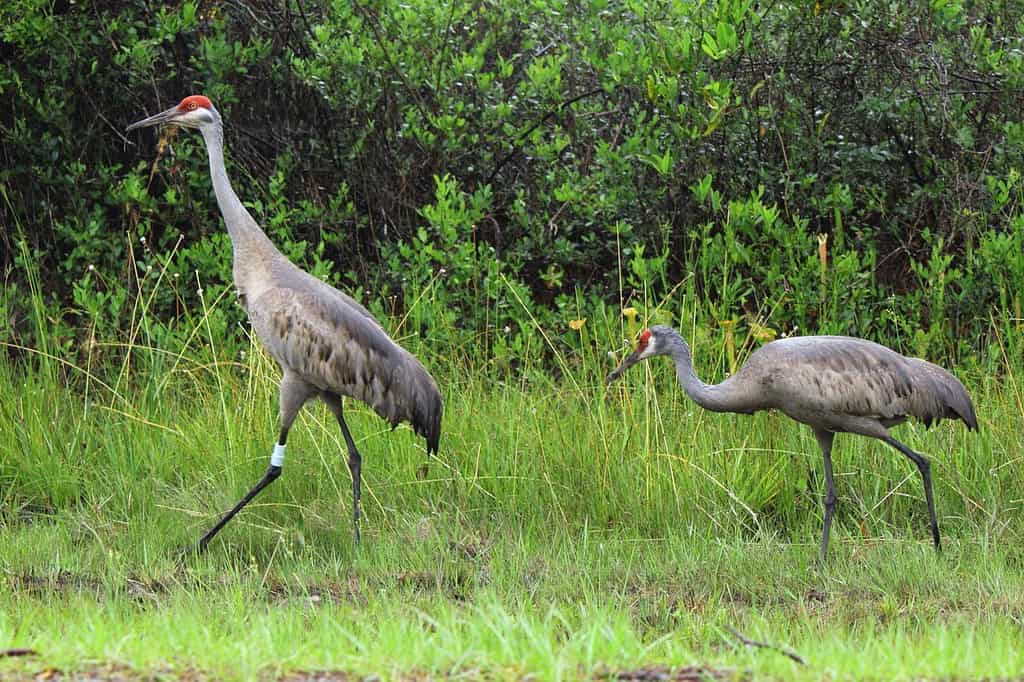
Unlike Northern populations, Mississippi Sandhill Cranes are not migratory. This critically endangered subspecies is a year-round resident of coastal Mississippi, living in the wet pine savannas of the Mississippi Sandhill Crane National Wildlife Refuge.
©Jean Faucett/Shutterstock.com
The Mississippi Sandhill Crane National Wildlife Refuge is a significant destination for birdwatchers because it protects the critically endangered Mississippi sandhill crane, found nowhere else in the world.
Other birds on view at the Mississippi Sandhill Crane National Wildlife Refuge include:
- Great Egret
- Snowy Egret
- Great Blue Heron
- Osprey
- Sharp-shinned Hawk
- Marsh Hawk (Northern Harrier)
- Marsh Wren
- Orange-crowned Warbler
- Palm Warbler
- Yellow-rumped Warbler
- Mourning Dove
- Turkey Vulture
- Bluebird
- Cardinal
- Blue Jay
- Mockingbird
- Tufted Titmouse
- American Robin
- Downy Woodpecker
If you are in the Mississippi area, you can’t go wrong by choosing any of the above locations for birdwatching. Other notable locations include:
- Grand Bay National Estuarine Research Reserve
- Sam D. Hamilton Noxubee National Wildlife Refuge
- Gulf Islands National Seashore
- Vicksburg National Military Park