
Quick Take
- One bird on this list is named for a color it barely shows, and the real red is hidden somewhere most people never look. See the hidden red →
- Georgia has only one hummingbird species that actually breeds here, and its arrival window is narrower than most birders realize. Georgia's only breeding hummingbird →
- One of these crimson visitors migrates erratically and may never appear in your yard two winters in a row, and the reason comes down to something entirely out of the bird's control. The irregular winter visitor →
Of approximately 10,000 to 11,000 distinct bird species inhabiting various global ecosystems, the state of Georgia provides crucial habitats for over 300 species of birds throughout the course of a year. Migratory species make up a significant portion of the bird life observed throughout the year, with migratory species making up more than half of Georgia’s recorded bird species. Numerous bird species in Georgia have varying degrees of red plumage. Continue reading to learn about 11 of these crimson beauties and when and where you are most likely to spot them.
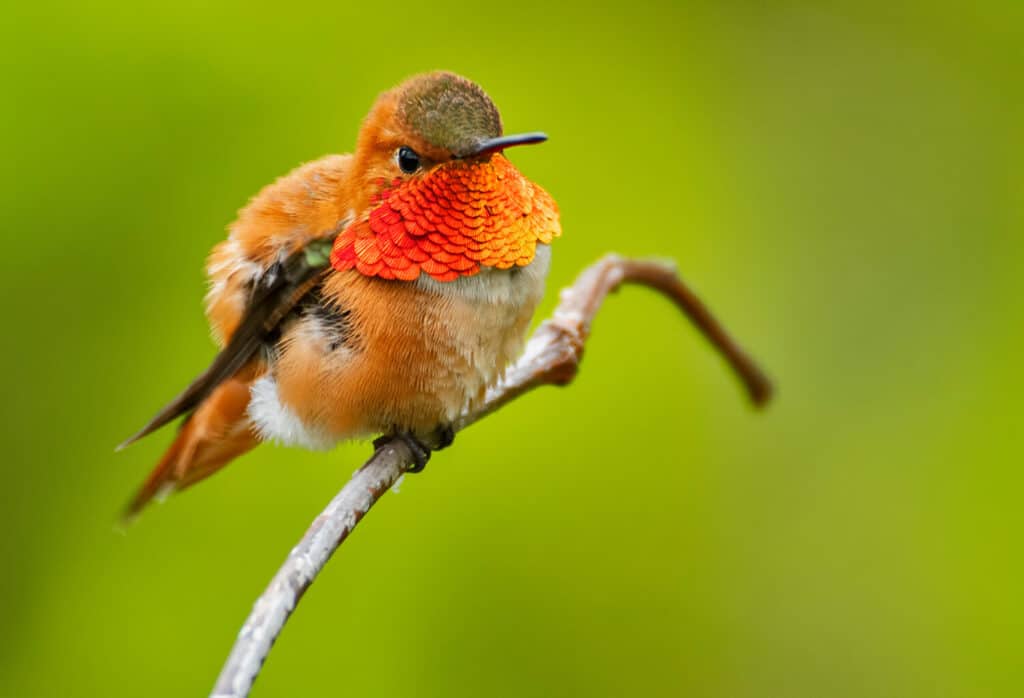
According to the Georgia Department of Natural Resources, more than half of the state’s recorded bird species are migratory. The rufous hummingbird is a rare migratory visitor to Georgia.
©punkbirdr/Shutterstock.com
Ruby-throated Hummingbird
The ruby-throated Hummingbird (Archilochus colubris) is a remarkably tiny bird, measuring just 2.8 to 3.5 inches in body length, with a wingspan of 3.1 to 4.3 inches.
As Georgia’s only breeding hummingbird species, the ruby-throated hummingbird is widely seen across the state, from suburban backyards and city parks to open woodlands and orchards. These miniature flyers typically arrive in Georgia between mid-March and early April.
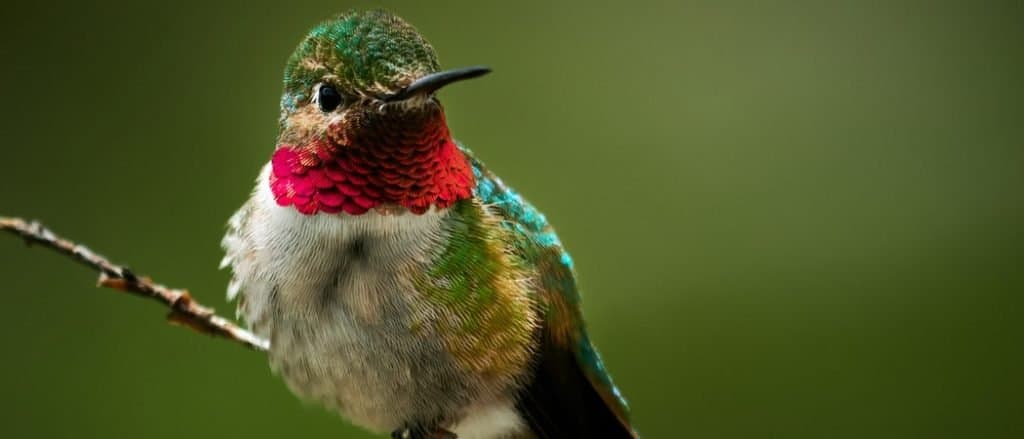
Ruby-throated hummingbirds are naturally drawn to red and orange flowers.
©Palantirian/Shutterstock.com
They spend the spring and summer nesting and feeding on nectar and small insects before the vast majority depart for their wintering grounds in Mexico and Central America by October.
Northern Cardinal
The average Northern cardinal (Cardinalis cardinalis) measures 8.3 to 9.1 inches in body length and features a wingspan between 9.8 and 12.2 inches.
Cardinals are year-round residents in Georgia and do not migrate. They can be viewed any time of year, but they are easiest to spot in the winter when the trees are bare and during the spring breeding season when males sing loudly from high perches.
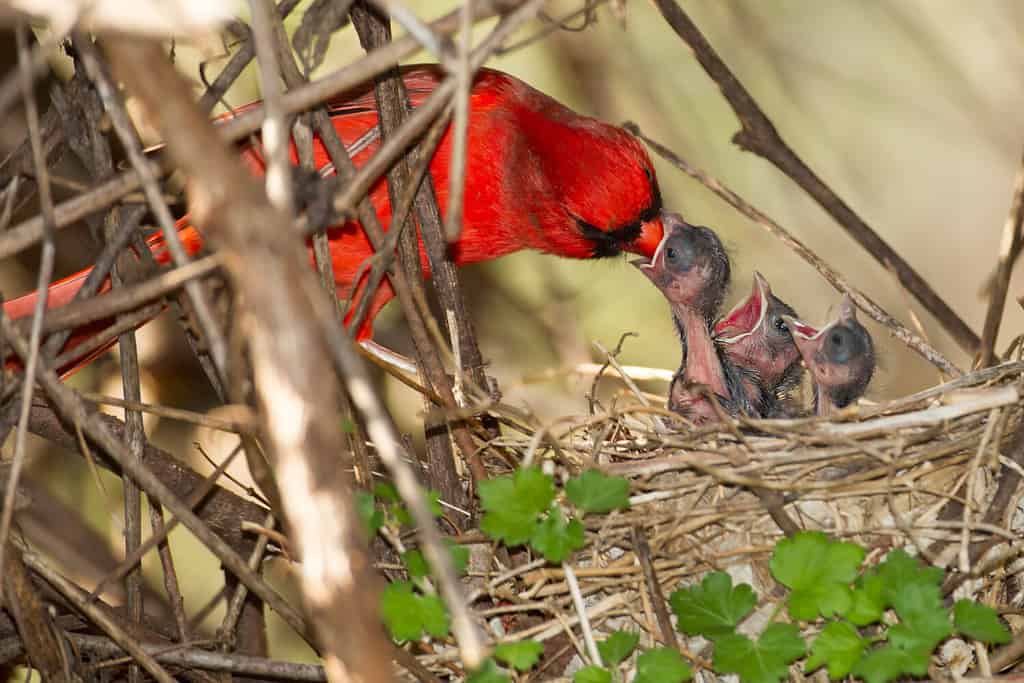
Northern cardinals are easiest to spot in the winter when the trees are bare.
©Agnieszka Bacal/Shutterstock.com
Scarlet Tanager
The medium-sized scarlet tanager (Piranga olivacea) averages 6.3 to 6.7 inches in body length and features a wingspan between 9.8 and 11.4 inches. Scarlet tanagers are summer residents in Georgia, most commonly viewed between late April and early October. The best time to spot them is during their spring arrival in late April and May, before the forest canopy fills with leaves.
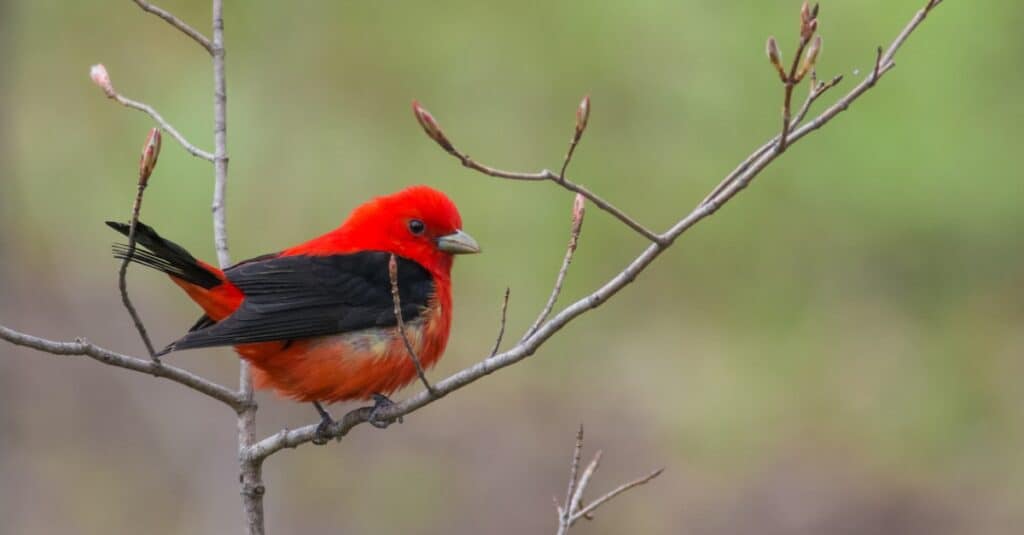
The scarlet tanager is a summer resident of Georgia.
©iStock.com/bookguy
Scarlet tanagers are best spotted high in mature deciduous and mixed forests across Georgia’s upper Piedmont and northern mountain regions at high-elevation sites such as Kennesaw Mountain.
Summer Tanager
The summer tanager (Piranga rubra) is a bit larger than the scarlet tanager. Summer tanagers typically measure 6.7 to 7.5 inches in body length, with a wingspan between 11 and 12 inches.
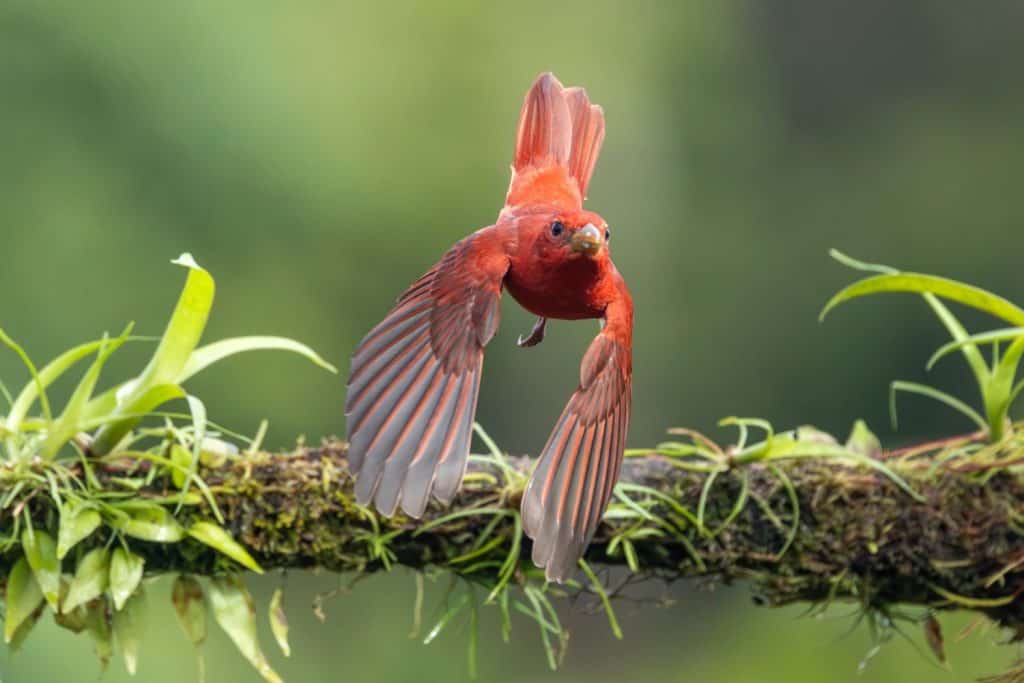
Summer tanagers are fair-weather residents of Georgia, departing for warmer climes when the mercury begins to drop.
©Dennis W Donohue/Shutterstock.com
In Georgia, these migrants are strictly warm-weather residents, arriving in mid-to-late April and remaining through September or early October before flying south for the winter. They are highly adaptable and are most likely to be viewed in open oak, pine, or mixed deciduous forests across the entire state.
They often stay high in the leafy canopy, where they hunt for bees and wasps. One of the best spots to view them is the Songbird Habitat Trailhead and Wildlife Sanctuary at Stone Mountain.
House Finch
The house finch (Haemorhous mexicanus) typically measures 5.1 to 5.5 inches in body length and has a wingspan of between 7.9 and 9.8 inches. These highly adaptable songbirds are permanent, year-round residents of Georgia, making them easy to view during any season.
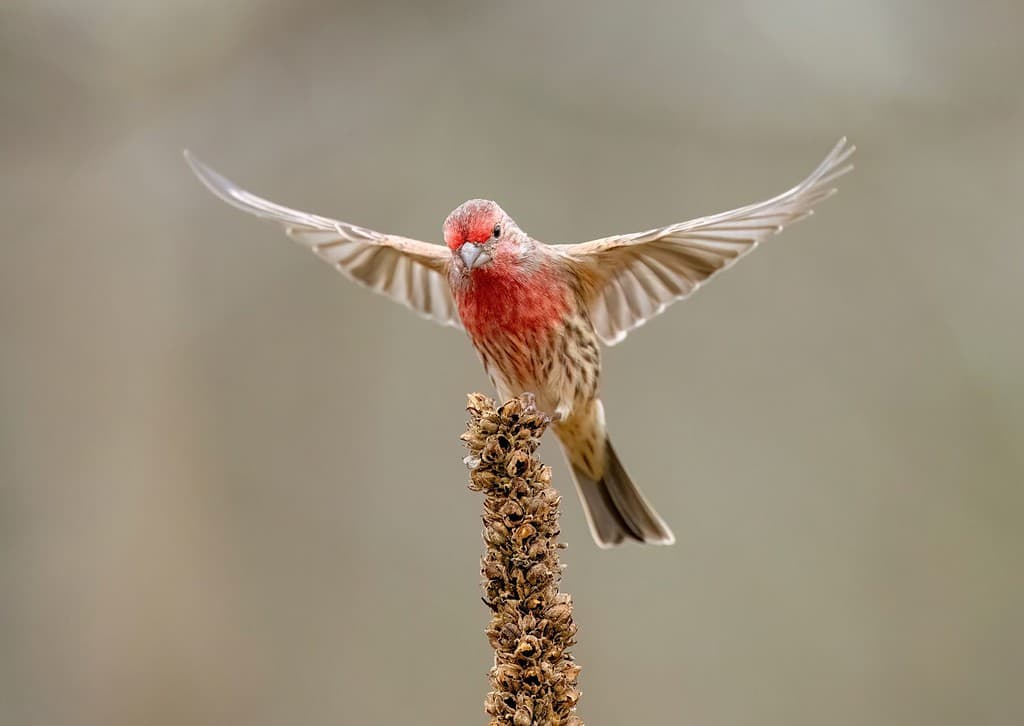
The house finch is a small bird with a red breast.
©Jeff Caverly/Shutterstock.com
The house finch is incredibly common across the entire state and most frequently spotted in urban and suburban environments, such as residential backyards, city parks, and farms, where they gather in social flocks around hanging bird feeders.
Purple Finch
The purple finch (Haemorhous purpureus) measures 4.7 to 6.3 inches in body length, with a wingspan of between 8.7 and 10.2 inches.
Unlike their year-round house finch cousins, purple finches are irregular winter visitors in Georgia, most often arriving from their northern breeding grounds in late fall and staying through early spring, depending on food availability.
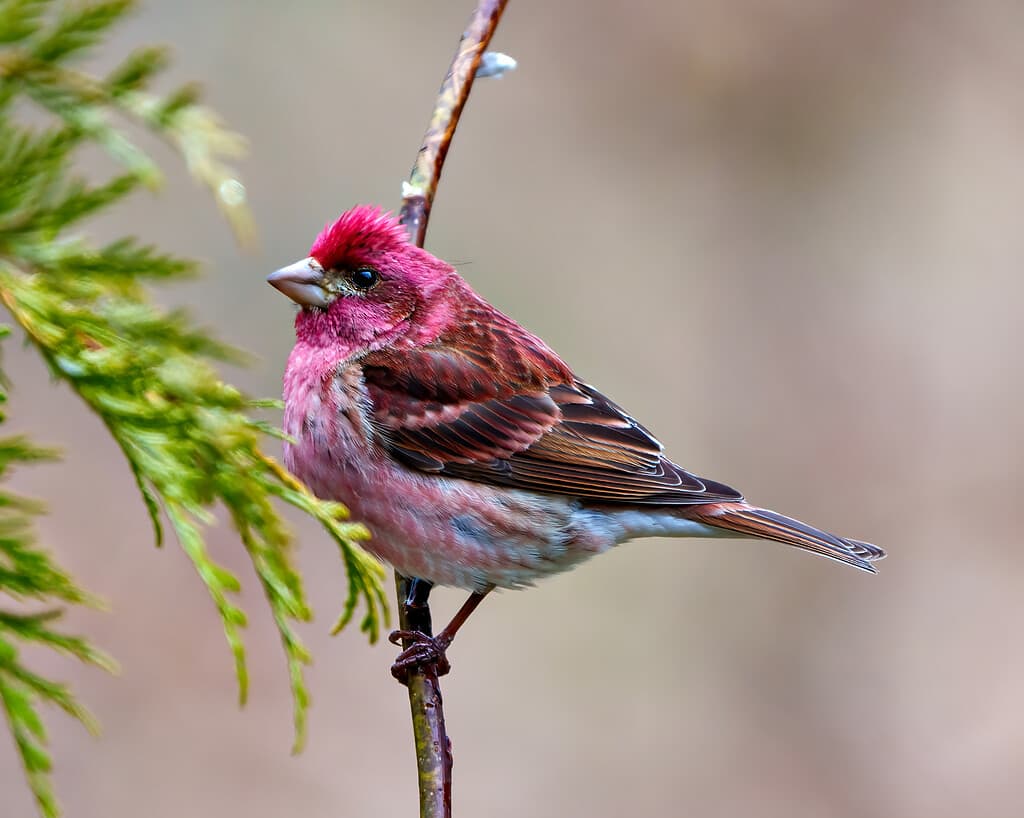
The male purple finch has a more raspberry-colored plumage.
©Rejean Bedard/iStock via Getty Images
Purple finches migrate erratically depending on winter seed crops and are most likely to be seen in the northern and central parts of the state, where they forage in mixed forests, brushy fields, and suburban backyards with bird feeders filled with sunflower seed.
Rose-breasted Grosbeak
The rose-breasted grosbeak (Pheucticus ludovicianus) is a medium-sized songbird measuring roughly 7.1 to 8.3 inches in length with a wingspan of 11.4 to 13 inches. These birds are regular visitors to Georgia primarily during their spring migration (mid-April to mid-May) and fall migration (late September to mid-October) as they travel between the tropics and northern breeding grounds. Migrating individuals can be spotted statewide in deciduous woods, forest edges, and suburban backyards.
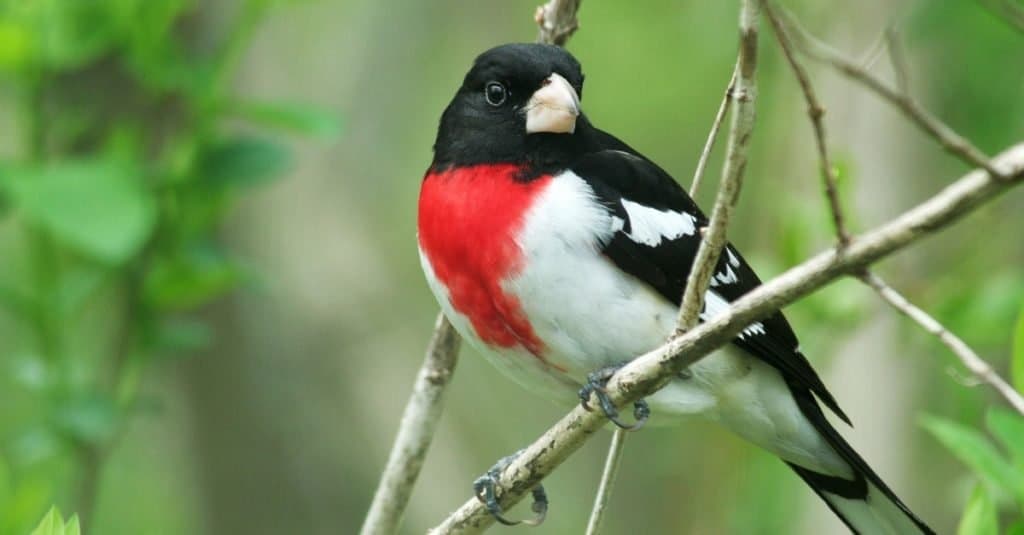
The male rose-breasted grosbeak has bold black-and-white plumage with a vivid triangular rose-red patch on its breast.
©Jayne Gulbrand/Shutterstock.com
Red-winged Blackbird
The red-winged blackbird (Agelaius phoeniceus) measures approximately 6.7 to 9.1 inches in length with a wingspan of 12.2 to 15.8 inches. Adult males are glossy, jet-black birds accented with vibrant scarlet-and-yellow shoulder epaulets, whereas females are dark brown and lack the splash of color on their wings.
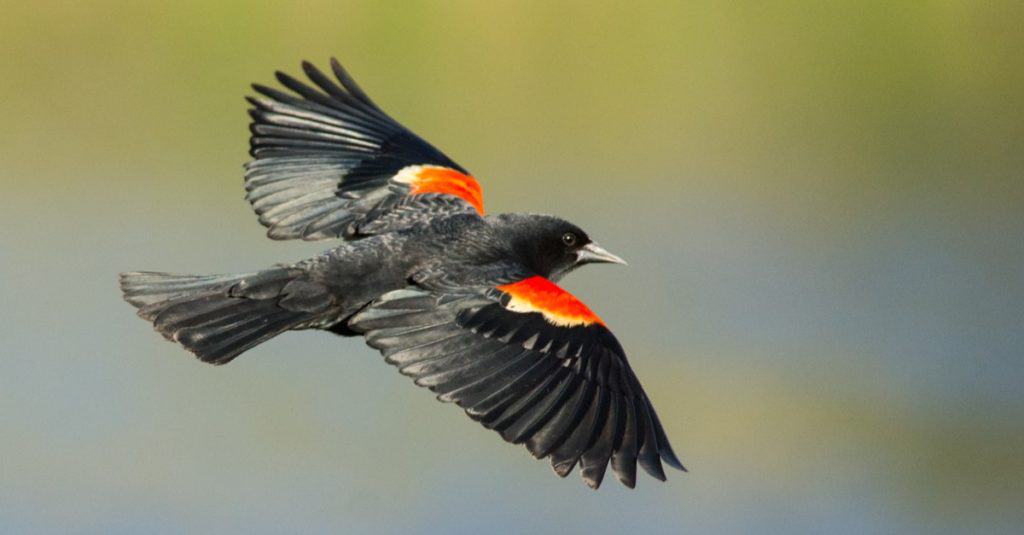
Male Red-winged blackbird in flight.
©JoshCW Photo/Shutterstock.com
Red-winged blackbirds can be seen year-round across Georgia, though they become exceptionally conspicuous and vocal during their spring and summer breeding season (from mid-February through July). During the fall and winter months, they will frequently congregate in massive, bustling flocks across open agricultural fields, pastures, and occasionally suburban backyard feeders.
Pileated Woodpecker
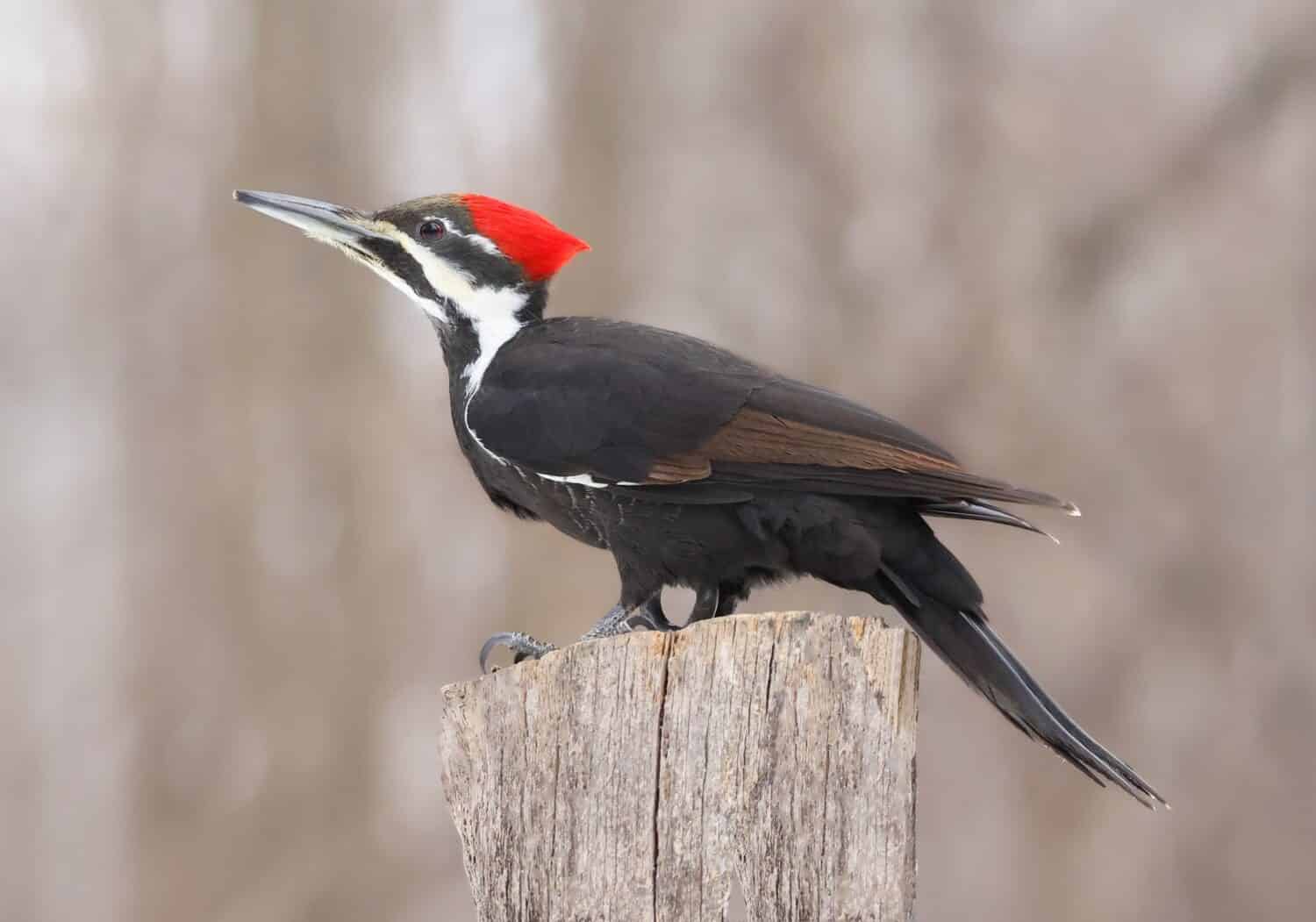
The pileated woodpecker (Dryocopus pileatus) is easily identified by its flaming-red crest, mostly black plumage, and bold white neck stripes. The largest surviving woodpecker species in North America, its body measures 15.8 to 19.3 inches in length, and its wingspan is 26.0 to 29.5 inches.
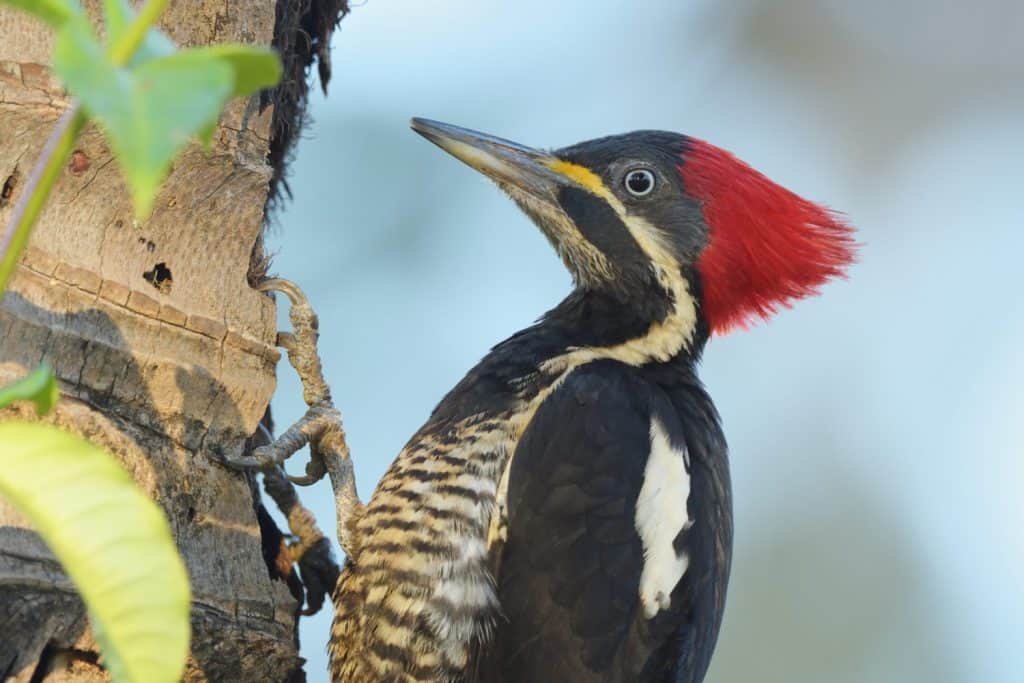
The pileated woodpecker is the largest woodpecker species in North America.
©Hugh Lansdown/Shutterstock.com
The pileated woodpecker is a permanent, year-round resident in Georgia. They can be found throughout the state in areas with standing dead trees and downed logs, which they rely on for nesting and foraging for carpenter ants.
Red-headed Woodpecker
The red-headed woodpecker (Melanerpes erythrocephalus), named for its solid red head, measures 7.5 to 9.1 inches in body length, has an average wingspan of about 16.5 inches, and weighs between two and four ounces.
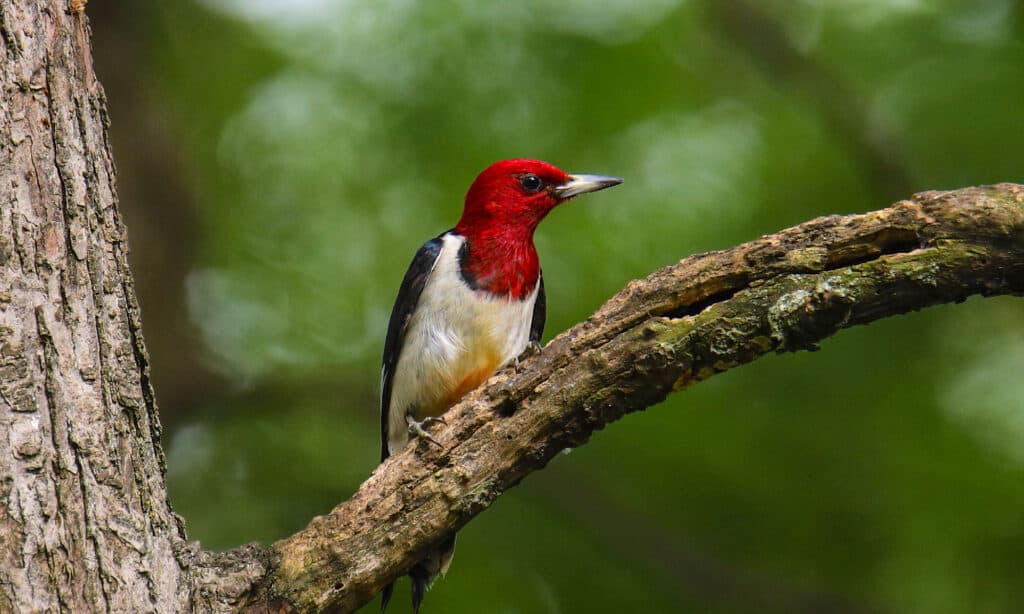
The red-headed woodpecker
©vagabond54/Shutterstock.com
Red-headed woodpeckers can be spotted in Georgia year-round, with popular locations including the Piedmont National Wildlife Refuge and Kennesaw Mountain National Battlefield Park. The best times to see them are during their highly active spring breeding season (March to June) or in the fall, when they gather nuts for winter.
Red-bellied Woodpecker
The red-bellied woodpecker (Melanerpes carolinus) is a medium-sized bird typically measuring between 9 to 10.5 inches in length with a wingspan ranging from 13 to 17 inches. As permanent, non-migratory year-round residents, they can be seen throughout Georgia at any time of the year. Red-bellied woodpeckers are commonly found in mature deciduous and mixed pine-hardwood forests, swamps, city parks, and backyard bird feeders stocked with suet, nuts, or seeds.
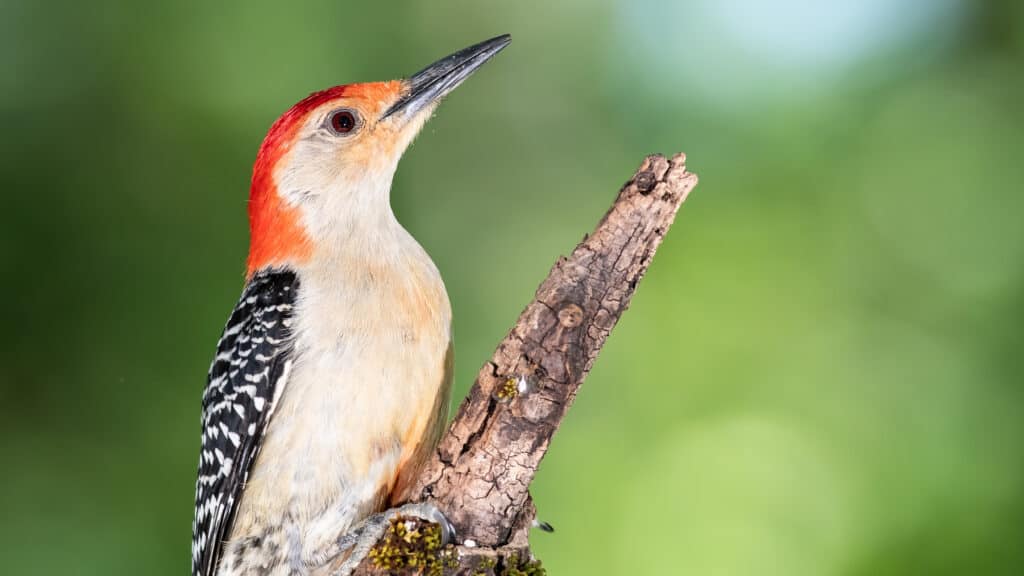
The red-bellied woodpecker has a red hood as well as a red belly.
©rck_953/Shutterstock.com