
Quick Take
- The Shakespeare story behind the starling invasion has a suspicious origin, and it isn't the one you'd expect.
- One of America's deadliest bird-strike crashes involved this bird, but the full story is more complicated than the headline.
- The damage bill is huge, but one crop group takes the hit while others are barely touched.
- A famous composer owned one, and its musical talent hints at why people admire the bird.
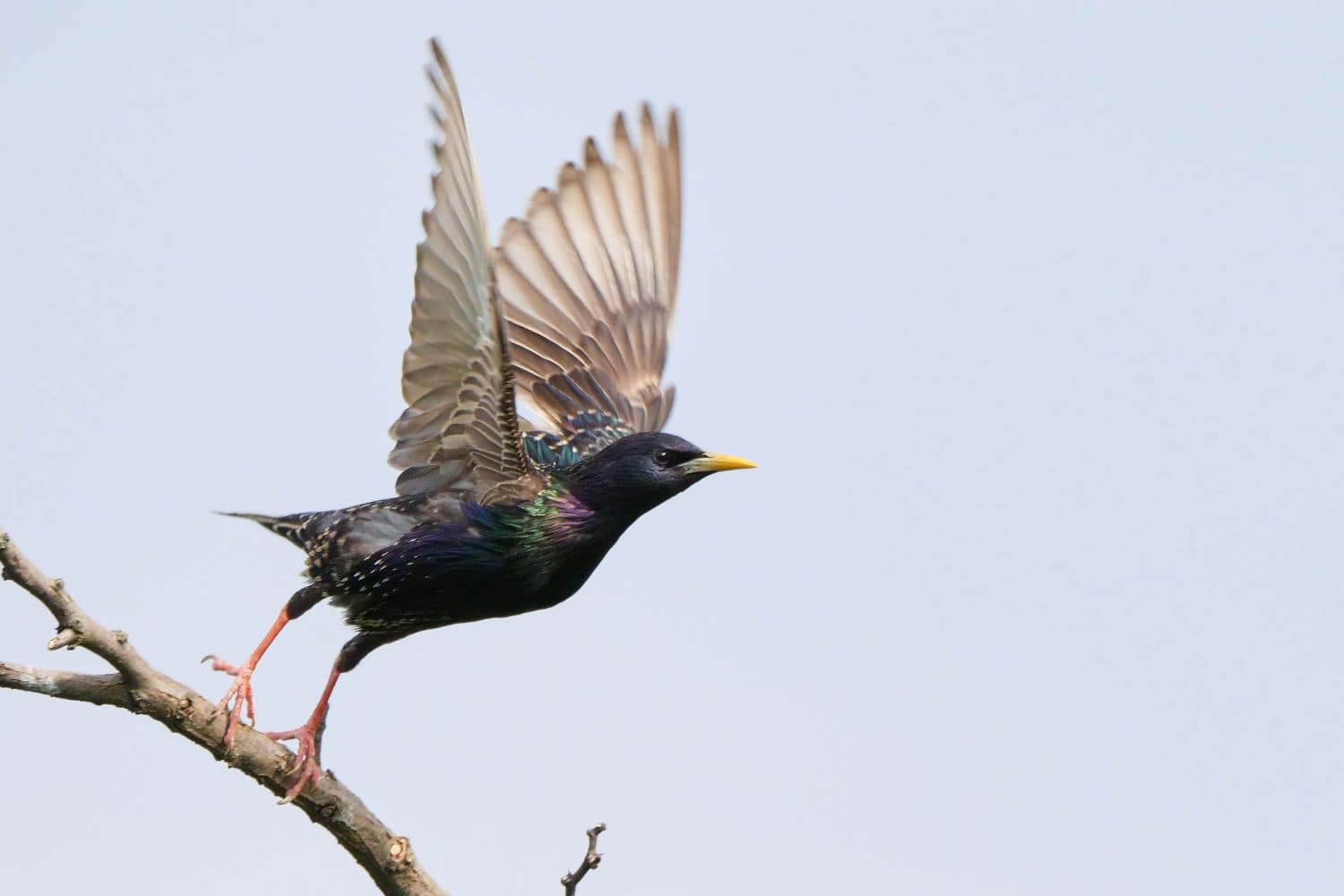
The European starling is one of the most numerous birds in North America, but it isn’t native to the continent, and these birds come with a famous origin story.
In the most commonly told version of the tale, a New York pharmacist named Eugene Schieffelin released about 100 starlings in Central Park in 1890 and 1891 because he wanted every bird mentioned in Shakespeare’s works to live in America. While the release of the birds is well documented, the Shakespearean motive behind Schieffelin’s actions is not. Is one man’s obsession with Shakespeare truly to blame for this invasive bird species?
Here’s what historians have uncovered about starlings, including how the species spread, what it costs, how it affects native birds and aircraft, and why many people admire it without knowing its connections and history.
Starlings in Shakespeare: a Brief History Lesson
Starlings appear only once in Shakespeare: in Henry IV, Part 1, when Hotspur imagines teaching a starling to say “Mortimer” to keep the king’s anger alive, according to the Folger Shakespeare Library. Legend has it that this was enough to inspire Schieffelin to release the birds in America.
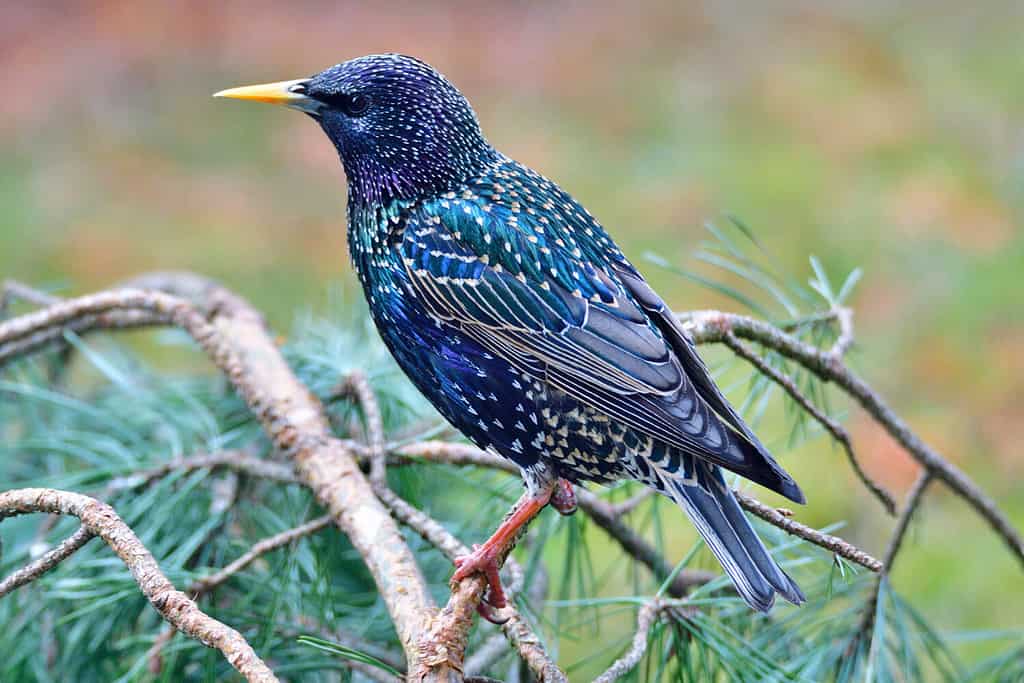
Starlings did not originate in America; they were brought here and introduced.
©Karin Jaehne/Shutterstock.com
It helped that Schieffelin belonged to the American Acclimatization Society, which had been releasing foreign birds since 1877 with the stated goal of establishing species that would be “useful or interesting,” according to the Oxford University Press. Deliberate releases of Old World birds in America date back to the 1840s, but no concrete evidence links Schieffelin’s love of Shakespeare to his bird introductions.
The most thorough investigation is a 2021 paper in Environmental Humanities by John MacNeill Miller and Lauren Fugate of Allegheny College. Their abstract concluded that the Schieffelin story is almost entirely fictional. Coverage of this paper in The New York Times reported that the nature writer Edwin Way Teale first linked Schieffelin to Shakespeare in the late 1940s, four decades after Schieffelin died in 1906. Teale’s draft speculated that a Shakespeare garden in Central Park had inspired the release, but the garden was not planned until about a decade after Schieffelin’s death.
Environmental Humanities, 2021 Peer-reviewed
The Schieffelin story is almost entirely fictional, according to the paper’s abstract.
Regardless of whether Schieffelin had Shakespearean motivations or not, he is responsible for releasing starlings into America. And it certainly didn’t take long for the birds to spread.
How Many Starlings Spread Throughout America?
- 1877 The American Acclimatization Society starts releasing foreign birds
- 13 years later
- 1890 Schieffelin releases about 100 starlings in Central Park The releases ran across 1890 and 1891.
- 16 years later
- 1906 Schieffelin dies
- 36 years later
- 1942 Starlings are on the West Coast
- Late 1940s Edwin Way Teale first links Schieffelin to Shakespeare
A 2017 USDA technical report says starlings were on the West Coast by 1942 and now inhabit all of North America, with all of the birds descended from Schieffelin’s New York City introduction. Starlings have a remarkable ability to adapt to a variety of habitats, nest sites, and food sources. Cornell Lab researchers found that over the course of 130 years North American starlings adapted to local conditions, showing subtly different adaptations and appearances, depending on their home turf.
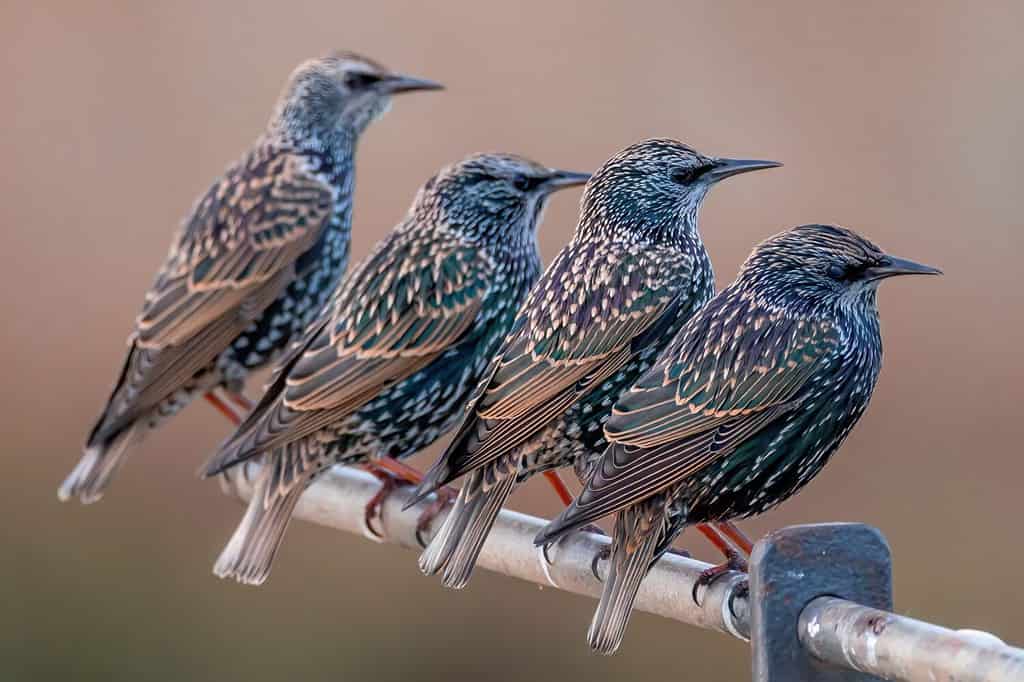
There are millions of starlings in America thanks to one man.
©Estudax/Shutterstock.com
Population estimates of starlings in America vary. The USDA report puts them at about 150 million, and only red-winged blackbirds outnumber them in Breeding Bird Survey documentation. This staggering population is important to keep in mind, especially when we consider what starlings have done to our habitats and industries.
What Starlings Cost Farmers and Cities
According to a USDA symposium abstract, starlings cause $800 million a year in agricultural damage. Meanwhile, the 2017 USDA report estimates starling-caused agricultural damage at $1 billion per year. The same source cites a 2012 survey of fruit producers in five states who estimated damage from all bird species affecting five fruit crops at $189 million, including more than $70 million for wine grapes.
Starlings ranked first or second among the species blamed for these losses, but the birds aren’t considered serious pests in cereal or oilseed crops. Grapes and other fruits take most of the damage. In addition to crop damage, it’s important to keep in mind one other potential threat: their penchant for carrying disease.

Starlings feeding on fruit make a huge impact on the agricultural industry.
©Troggt/Shutterstock.com
It’s estimated that 1,000 starlings eating for 60 days consume about 1.5 tons of feed, which is a loss of $200 to $400. Plus, the report says starlings can carry pathogens such as Salmonella and E. coli without showing symptoms. It notes that studies disagree on how much they affect livestock health. Further studies need to be performed to determine their overall harm.
How Much Do Starlings Harm Native Birds?
Starlings nest in cavities, including old woodpecker holes and nest boxes, so they compete with native birds for fairly limited nesting sites. The USDA report lists eastern bluebirds, purple martins, wood ducks, and several types of woodpeckers among the species they may affect.
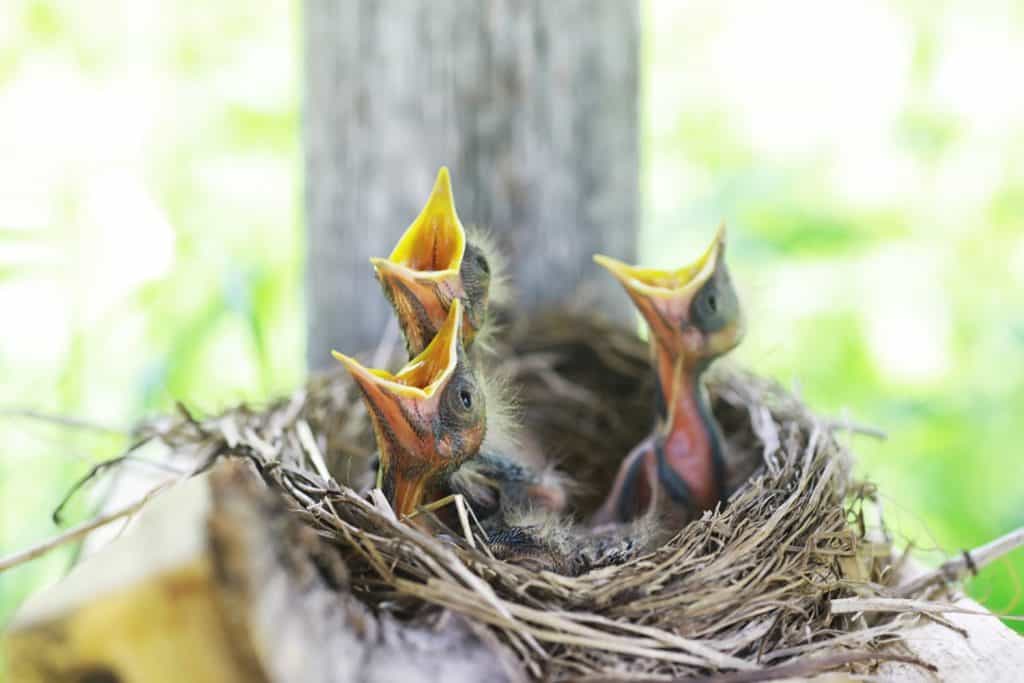
Starlings compete for common nesting sites, threatening native birds.
©alexkich/Shutterstock.com
Cornell Lab biologist Natalie Hofmeister notes in an essay that starlings occasionally eject bluebird eggs from nest boxes. For this reason, the USDA recommends a round 1½-inch opening for eastern bluebird nest boxes, which is too small for most starlings to enter.
Starlings and Aircraft: a Larger Threat
Starlings tend to roost in the wooded buffer zones around airports and sometimes in landscaped areas on airport grounds. In 1960, a Lockheed Electra ingested a flock of starlings on takeoff and crashed, killing 62 people. It remains the worst U.S. aircraft incident involving a bird collision. The USDA report says design flaws made those engines highly susceptible to damage and that modern engines better withstand small birds.

Starlings are common in bird strikes, with at least one fatality linked to them.
©aapsky/Shutterstock.com
However, starlings were still identified in 3,203 of the 145,124 U.S. bird strikes reported from 1990 to 2013, at an estimated cost of $7 million and, fortunately, with no human fatalities. The report says starling roosts remain a substantial management challenge at airports during fall and winter, costing more money and posing more risks than most plane passengers realize.
The Joys of Starlings: Mimics and Murmurations
Starlings are accomplished mimics worth studying. The USDA notes that they readily imitate sounds from their environment, including bird calls and traffic, and that a trained starling can even imitate a human voice.
The best-known example of their mimicry involves Mozart, who bought a pet starling in 1784. After finishing the finale of his Piano Concerto No. 17, he heard the bird sing almost the exact tune, except for a G sharp where the score has a G. How the bird learned the song remains a mystery, but Mozart was apparently impressed enough to write it down.
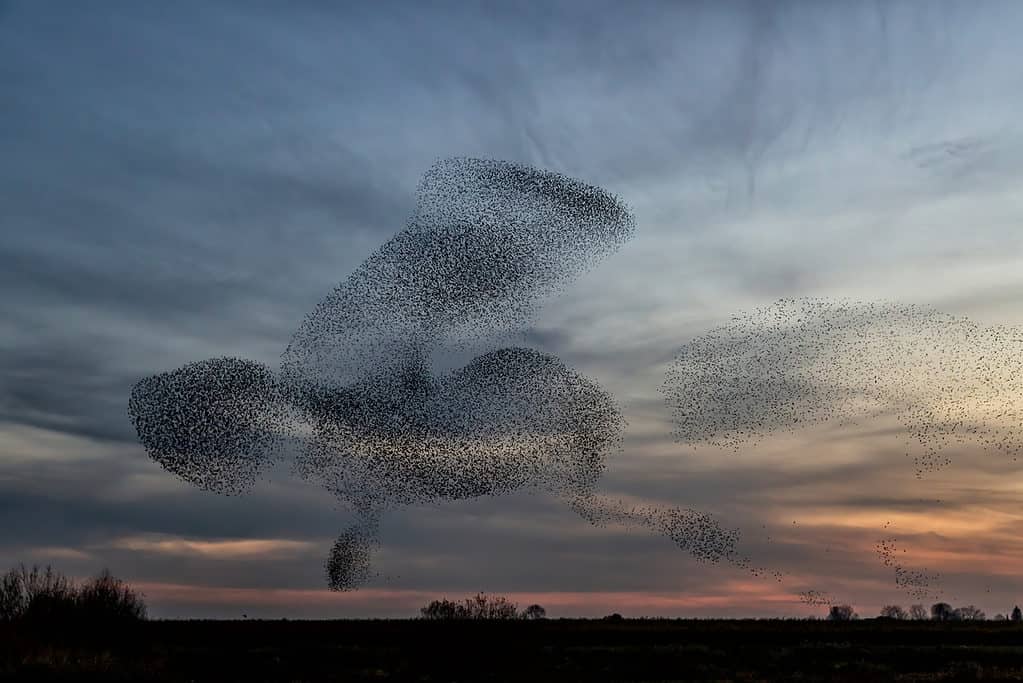
Starling murmurations are beautiful sights to behold.
©iStock.com/Henk Bogaard
In flight, starling flocks form shape-shifting clouds known as murmurations. Researchers in Rome who reconstructed starling flocks in three dimensions found that each bird interacts with about six or seven neighbors, no matter how far away they are. The arrangement helps a flock stay cohesive when predators disturb it.
The USDA report says starling winter roosts in agricultural landscapes can exceed 1 million birds, which makes for an impressive murmuration should they be disturbed.
The Legal Status of Starlings in America
European starlings are not protected by the Migratory Bird Treaty Act, and the USDA report says no state laws in the U.S. directly protect them. However, local ordinances and state agencies may require collection permits, even for an unprotected species.
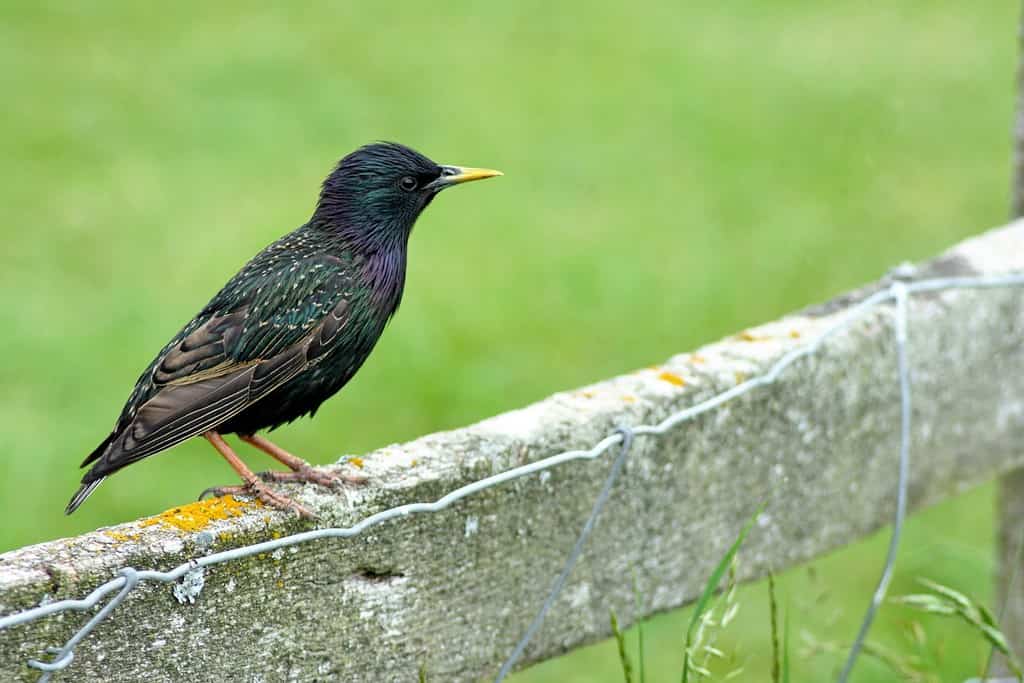
Starlings are commonly removed from agricultural areas by the USDA.
©BreizhAtao/Shutterstock.com
In addition, USDA Wildlife Services takes 1 to 3 million starlings a year, mostly at feedlots in late fall and winter. There appear to be plenty of starlings to go around, and there are certainly enough to cause problems, possibly all because one man was obsessed with Shakespeare.