
Quick Take
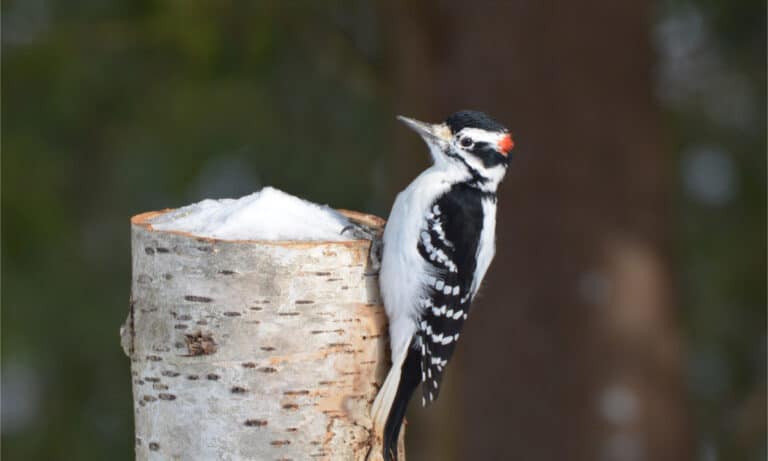
- One bird on this list nearly vanished from existence, and its fragile comeback depends on a single type of tree found only in a small corner of Virginia. Discover the threatened woodpecker →
- One Virginia bird dives faster than most race cars, and it has been spotted nesting somewhere most people would never think to look. See the falcon's nesting spots →
- A common backyard bird completely transforms its appearance twice a year through a process almost no other bird on earth shares. Explore the goldfinch's transformation →
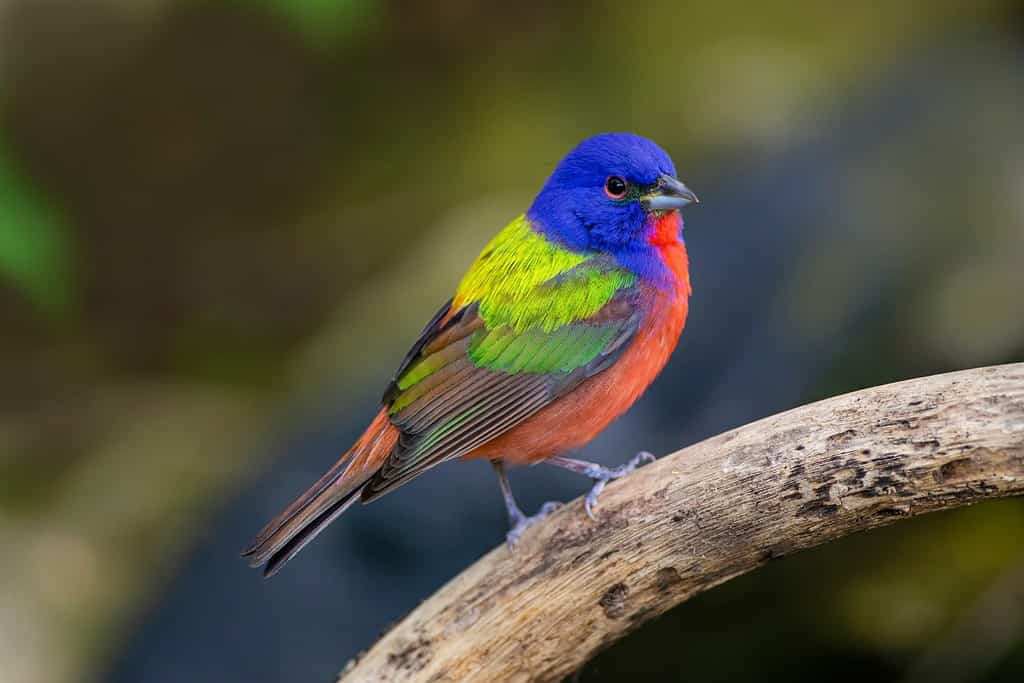
- Virginia's most electrifyingly colorful bird is actually a winter visitor, and the odds are most locals have never seen one. Meet Virginia's colorful winter visitor →
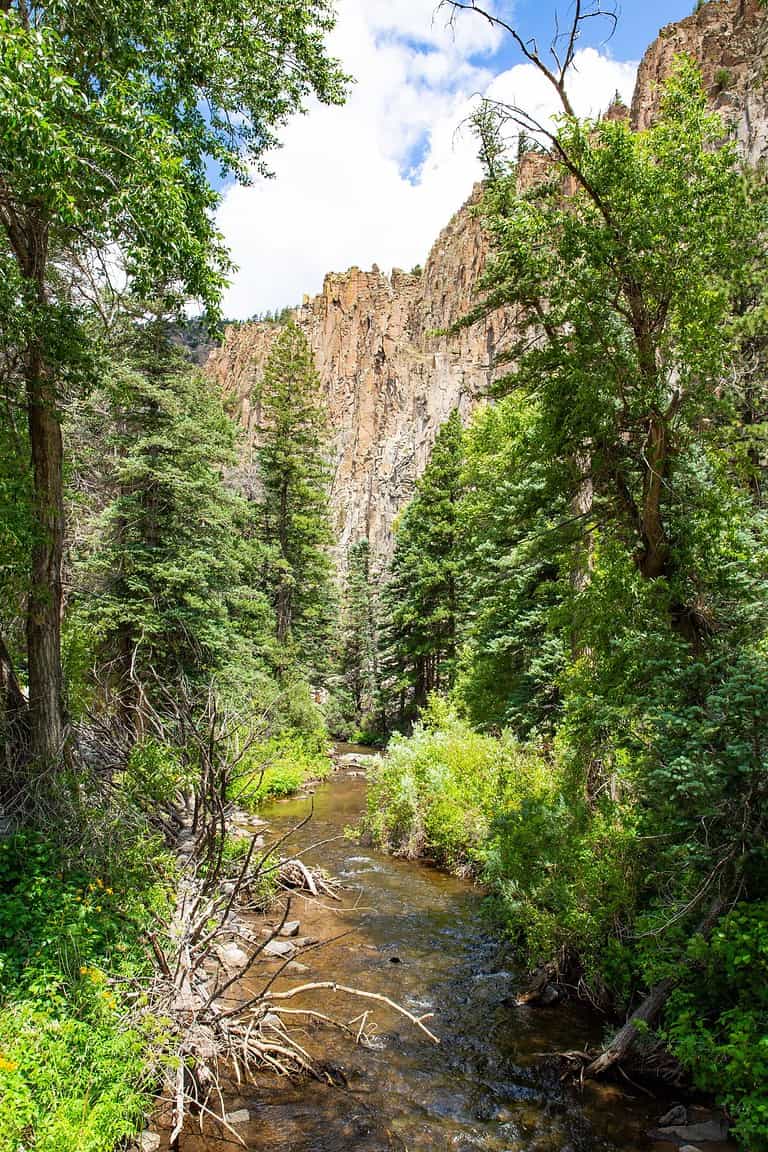
There are about 494 different bird species in Virginia. The state boasts a variety of environments for birds to flourish, from the dense vegetation that makes up nearly 59% of the state to the meadows, plains, and marshes in the low-lying areas. In Virginia, you can hear birds tweeting and singing throughout the year. We’ve compiled a list of some of the prettiest and rarest birds you might encounter in the state, in addition to some of the more common ones. Learn more about the beautiful birds of Old Dominion.
American Goldfinch
In the summer, American goldfinch males can be identified by their bright yellow bodies and distinctive black head caps, wings, and tail feathers. Females and winter males are more subdued, with bodies of yellowish-tan and grayish-brown wings with white patterns. On their neck is a semi-vibrant patch of yellow. They are one of the few birds that completely molt their feathers each spring and fall.
These birds prefer overgrown grasslands and wooded environments, and they can be spotted in suburban areas with a lot of bushes and trees. They hunt for seeds in bushes, shrubs, and trees. While they occasionally eat insects as snacks, the majority of their nutrition consists of seeds. American goldfinches commonly spend the entire year in Virginia.
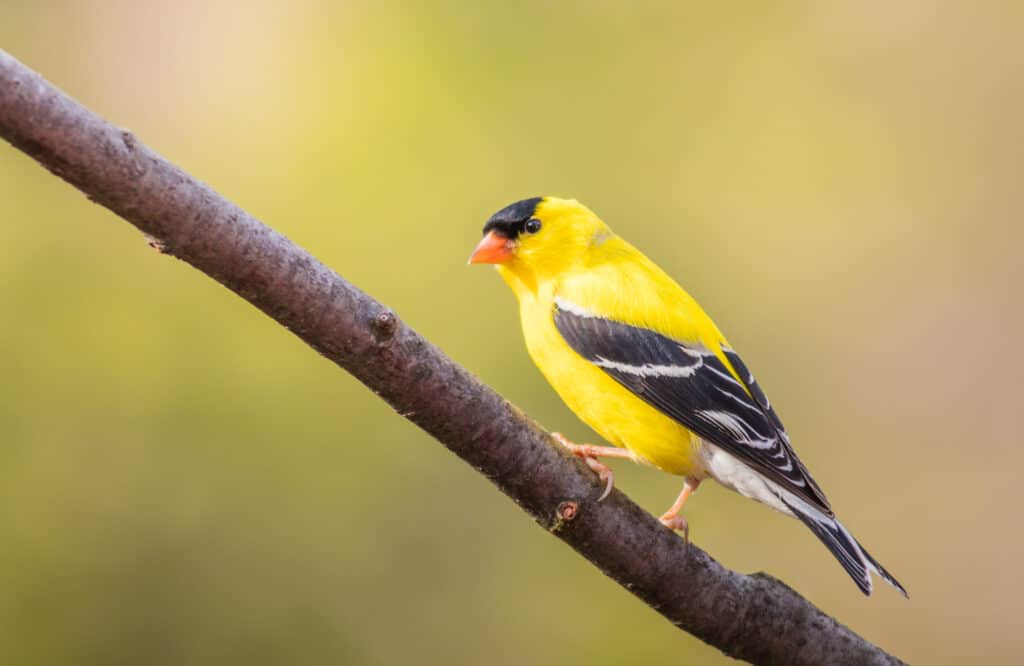
American goldfinches are common, year-round residents of Virginia.
©Rabbitti/Shutterstock.com
Ruby-Throated Hummingbird
Virginia is home to the swiftly flapping ruby-throated hummingbird. These small birds are capable of nearly 50 wing flaps every second. They are up to 3.5 inches long and barely 1/5 of an ounce in weight. Although males and females have fairly similar appearances, you can tell them apart by the coloring of their necks. The throat is ruby red on males and white on females. Their breasts and bellies are white, and they have metallic green feathers.
Ruby-throated hummingbirds are the only hummingbirds that breed in Virginia. These birds migrate to Florida, Mexico, and Central America beginning in late July through September, and they return in April. They prefer woodlands, forest edges, meadows, old fields, orchards, gardens, and parks. These hummingbirds feed on native flowers such as trumpet honeysuckle, bee-balm, wild bergamot, and cardinal flower. They may also feed on small insects.
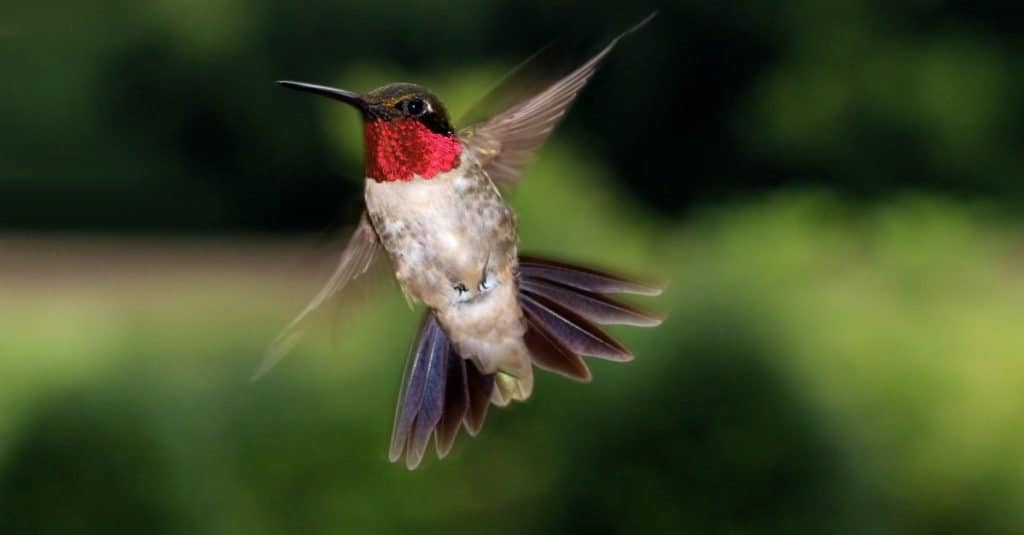
The ruby-throated hummingbird is adorned in green metallic feathers.
©Ramona Edwards/Shutterstock.com
Golden-Winged Warbler
The male golden-winged Warbler stands out from the crowd due to its bright yellow, white, and black patterns that contrast with its gray body. These birds have a black neck and a black face patch around the sides of their eyes. They have a brilliant yellow crown and yellow patches on the top portion of their wings. Females are more typically gray and white, with less vibrant hues, but they have a bright yellow crown on top of their heads.
In the higher altitudes of western and southern Virginia, golden-winged warblers can be seen in rural settings and grasslands with woods nearby. Moths, caterpillars, and other insects make up the majority of their diet. They migrate each autumn to spend the winter in Central America and the northern parts of South America.
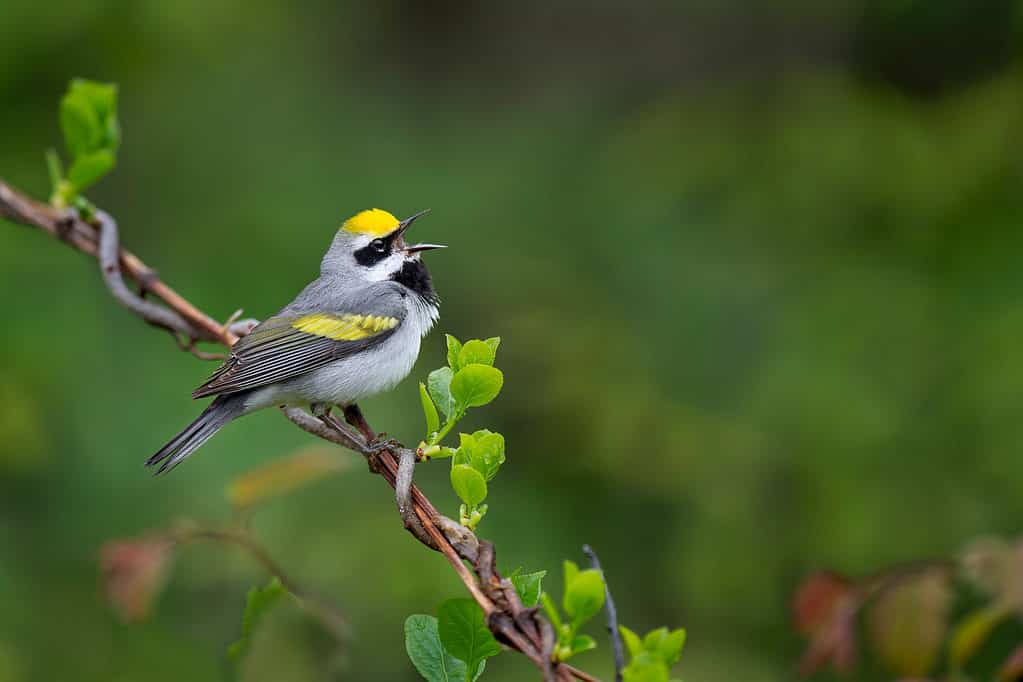
Moths, caterpillars, and other insects make up the majority of a golden-winged warbler’s diet.
©Ray Hennessy/Shutterstock.com
Eastern Screech Owl
Virginia is the year-round home to the small eastern screech owl. They are generally found living in tree cavities in suburban and woodland settings at altitudes of less than 5,000 feet. Their wingspan, which measures between 19 and 24 inches, is roughly two to three times as long as they are.
They can be found in two main colors in Virginia: gray and reddish-brown, often referred to as rufous. Both colors feature distinctive patterns that help them camouflage themselves against the tree bark. Eastern screech owls are generally nocturnal, but they can also be crepuscular, hunting at dawn and dusk. They eat small animals, typically birds, mammals, and amphibians.
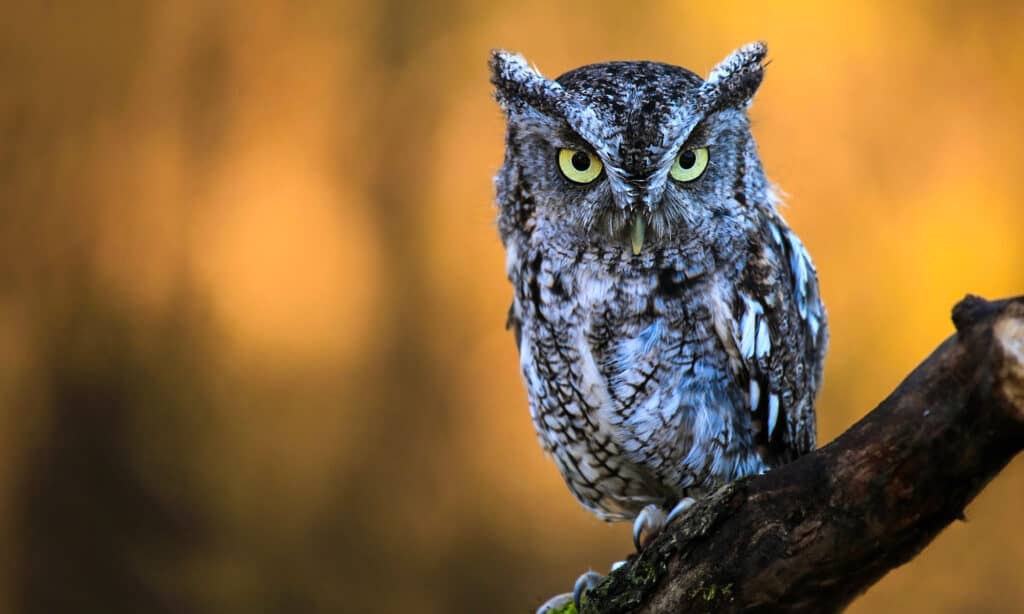
The eastern screech owl’s wingspan, measuring between 19 and 24 inches, is twice as long as its body.
©mlorenz/Shutterstock.com
Peregrine Falcon
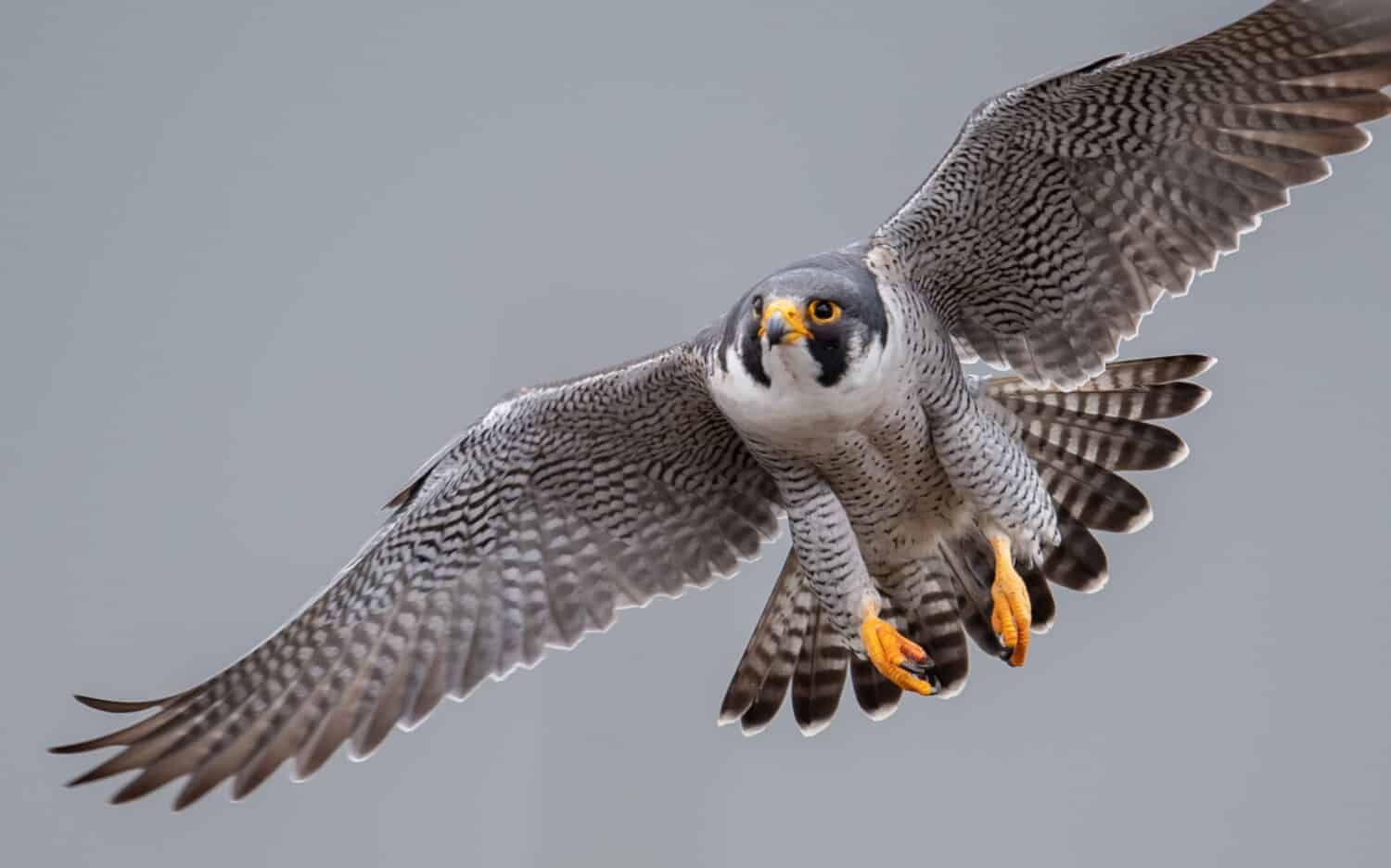
The peregrine falcon is a large raptor that can fly up to 200 miles per hour in a hunting dive. They are frequently seen nesting on high cliffs in the Appalachian and Blue Ridge regions. Peregrine falcons can also be seen along barrier islands in the Coastal Plain and Eastern Shore. They have even been observed nesting on tall buildings in metropolitan areas.
Peregrine falcons are dark blue-gray above with pale, barred underparts. Their eyes are surrounded by yellow, and they also have yellow feet and mandibles. These falcons eat most other birds. They are both permanent residents and migrants in Virginia, with around half of the population flying south for the winter to Florida, the Caribbean, and South America.
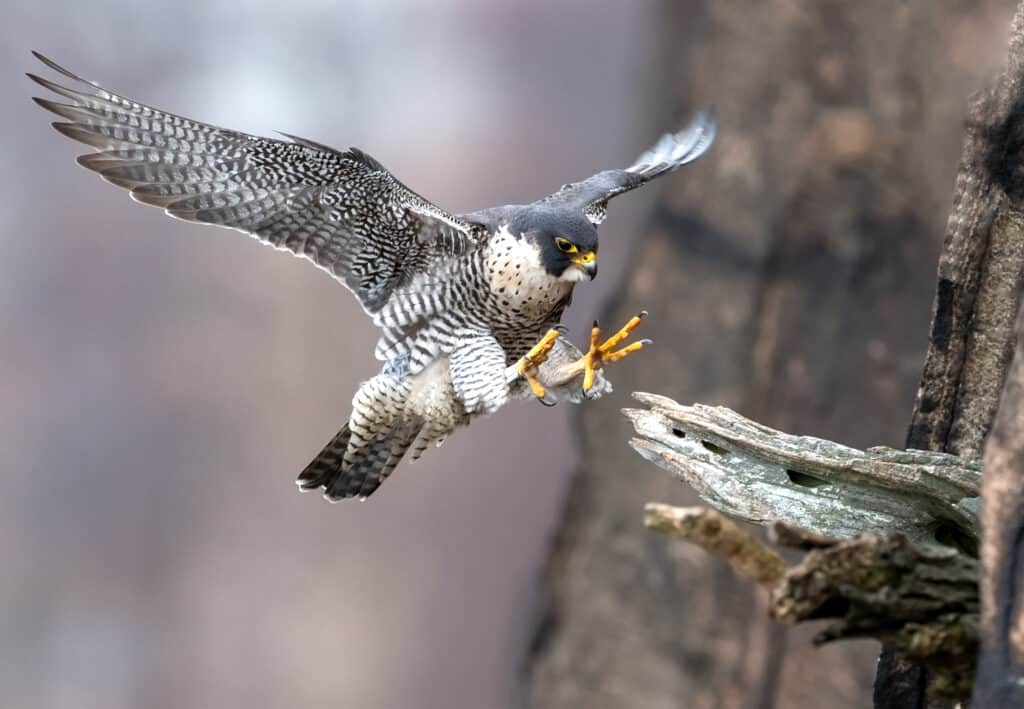
Peregrine falcons often nest in the Appalachian and Blue Ridge regions.
©Harry Collins Photography/Shutterstock.com
Barn Swallow
The barn swallow is a little bird that weighs less than an ounce. They are plump birds with blue feathers that shimmer on top of their heads and down their backs. Their wings are bluish-black, while their foreheads and necks are reddish-brown. They have a faint reddish-brown coloring on their chest and a white underside.
As long as there is plenty of food and water, barn swallows can live in a wide range of habitats. They are common summer residents throughout the state, arriving in late March to breed. Barn swallows typically forage over open fields and wetlands. They can also be found nesting in cup-shaped nests made of mud on man-made structures like barns and bridges. Their diet consists mostly of flying insects, which they catch in the air.
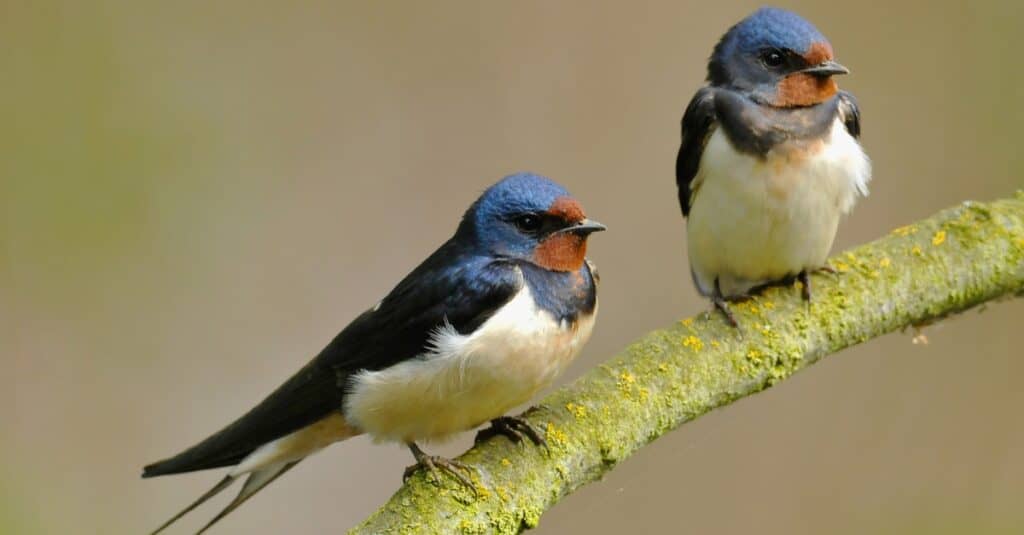
Barn swallows are common summer residents in Virginia.
©CezaryKorkosz/Shutterstock.com
Common Grackle
Common grackles are year-round residents of Virginia, found in suburban areas, wetlands, farms, and other open spaces. With shiny emerald-colored bodies and a metallic blue, turquoise, or green sheen on their heads, they have a highly distinctive appearance. Additionally, they have a violet-to-bluish-brown shine to their wings.
These birds can be found gathering in large, loud flocks that are frequently mixed with other blackbirds and starlings. They generally forage on the ground or hunt for food in shallow water. Common grackles consume a wide range of insects, as well as small frogs and lizards. They will also forage for berries, nuts, seeds, and grains throughout the winter.
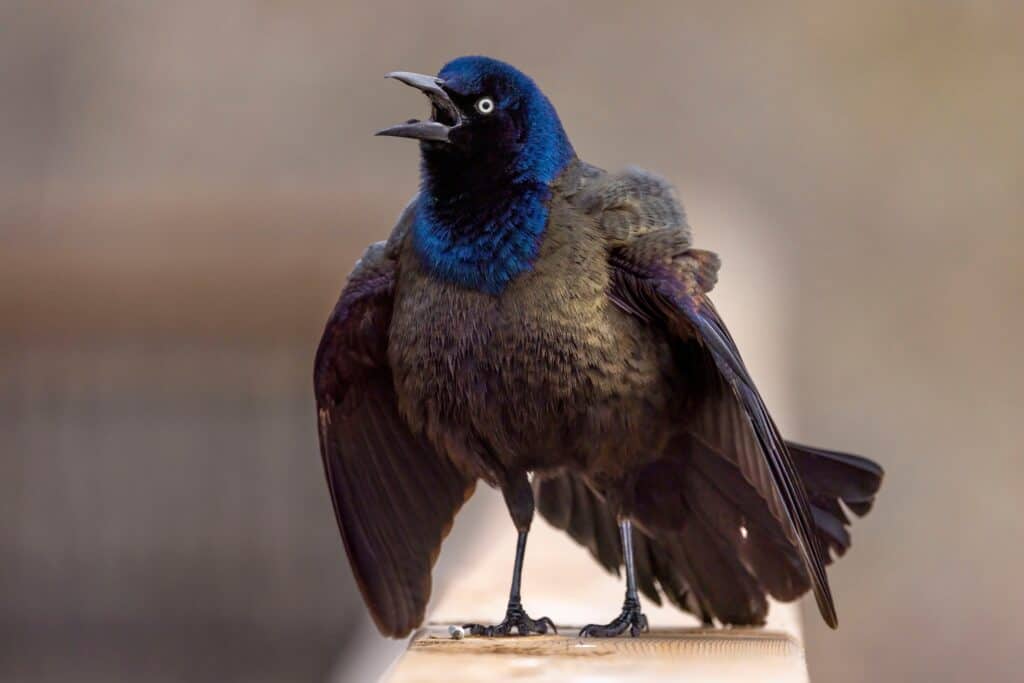
The common grackle is a New World blackbird.
©Kendall Collett/Shutterstock.com
Red-Cockaded Woodpecker
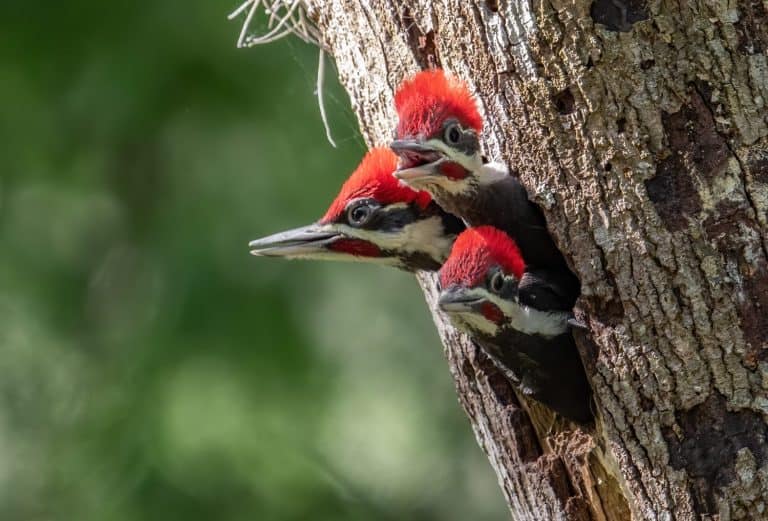
The red-cockaded woodpecker, once common in the southern states of the U.S., is now listed as a threatened species at the federal level, though it remains at risk of becoming endangered again due to habitat loss. Their northernmost range limit worldwide is in southeastern Virginia. The destruction of a large portion of their habitat due to forest harvesting is a factor in their population decline.
These woodpeckers favor mature pine woods, such as loblolly and longleaf pines. They primarily consume insects and arthropods they find under loose pine bark. The majority of these woodpeckers are black and white. They have black to brown streaks on their chest and underside, white cheeks, and a white chest. They have black upperparts and wings with white specks arranged in a line pattern. On each side of the head, males have a small tuft of red feathers.
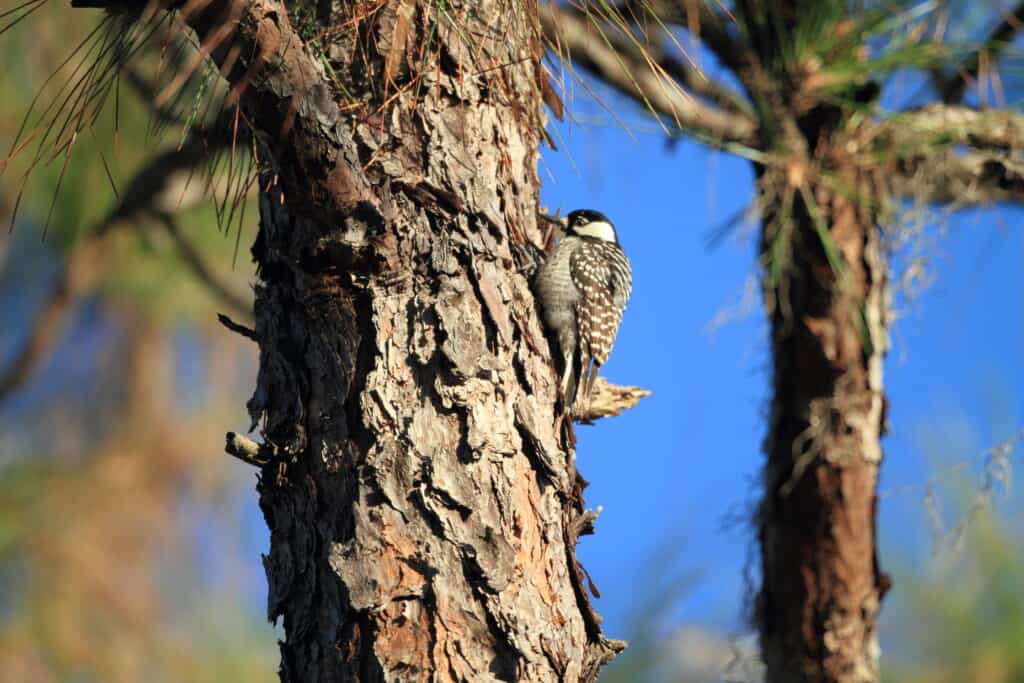
The majority of red-cockaded woodpeckers are black and white.
©feathercollector/Shutterstock.com
Northern Cardinal
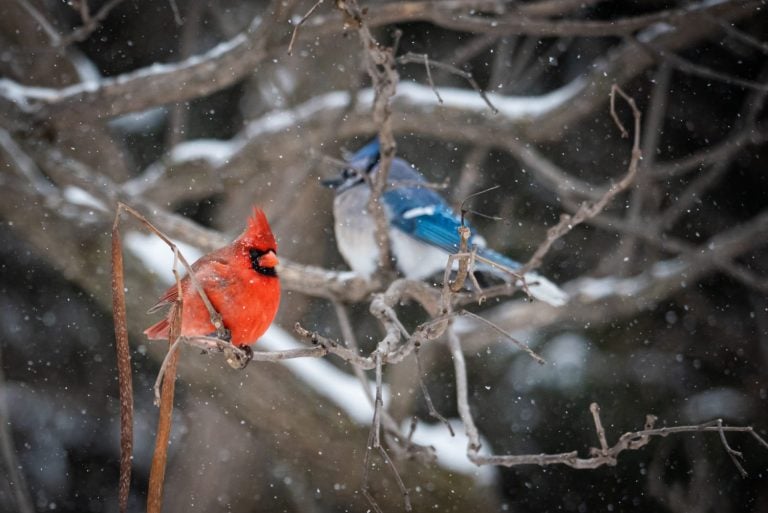
What would a list of Virginia birds be without mentioning the beloved state bird, the Northern cardinal? These birds are year-round residents found in backyards, woodlands, and thickets across the state. The male cardinal is distinguished by its vivid red hue and a distinctive black patch covering its face and throat. Females are generally shades of gray, cream, and tan.
Their primary food sources include insects, berries, and seeds. In summer, cardinals frequently consume more insects than they do in winter. If you ever come across a bird’s nest with whitish or greenish-white eggs speckled with pale gray to brown spots, you might have found a nest belonging to a cardinal.
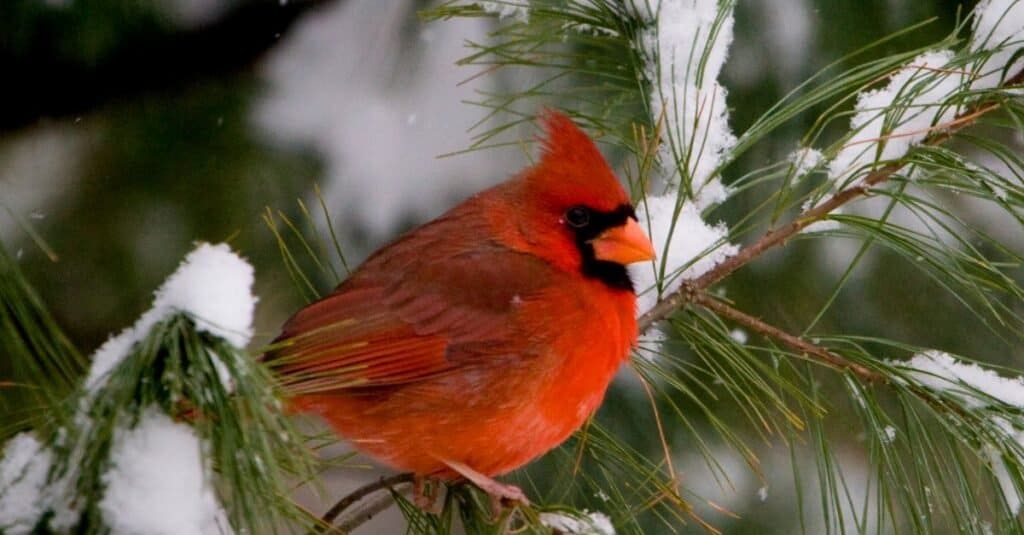
The male cardinal is distinguished by its vivid red hue and a distinctive black patch on its face and throat.
©iStock.com/BeyondMyLens
Painted Bunting
The painted bunting is primarily a winter visitor in Virginia, most commonly seen in the Tidewater or Coastal Plain regions. Males have electric blue-violet heads, with lime green upper backs. They have darker green, red, and purple wings and tail feathers and bright red throats, bellies, chests, and rumps. Females are a pale green color.
These songbirds favor dense coastal scrub and shrublands, but they can sometimes be seen at backyard bird feeders. They typically consume seeds but may also eat insects and spiders closer to the breeding season.
©Danita Delimont/Shutterstock.com