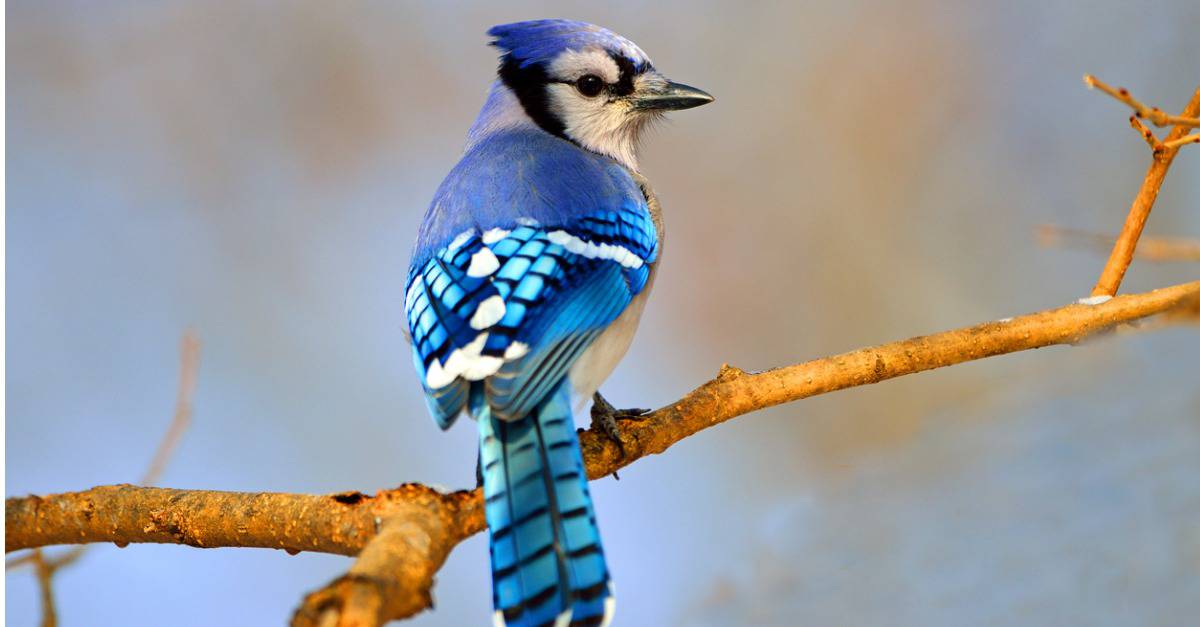

Blue jays are large, intelligent songbirds in the Corvidae family. They are common in the eastern half of the United States and southeastern Canada. Blue jays are known for their blue, black, and white plumage and loud, raucous calls. These birds are opportunistic feeders, but what exactly do blue jays eat? Keep reading to learn more about the blue jay’s diet, feeding habits, and where they forage for food.
What Does the Blue Jay Eat?
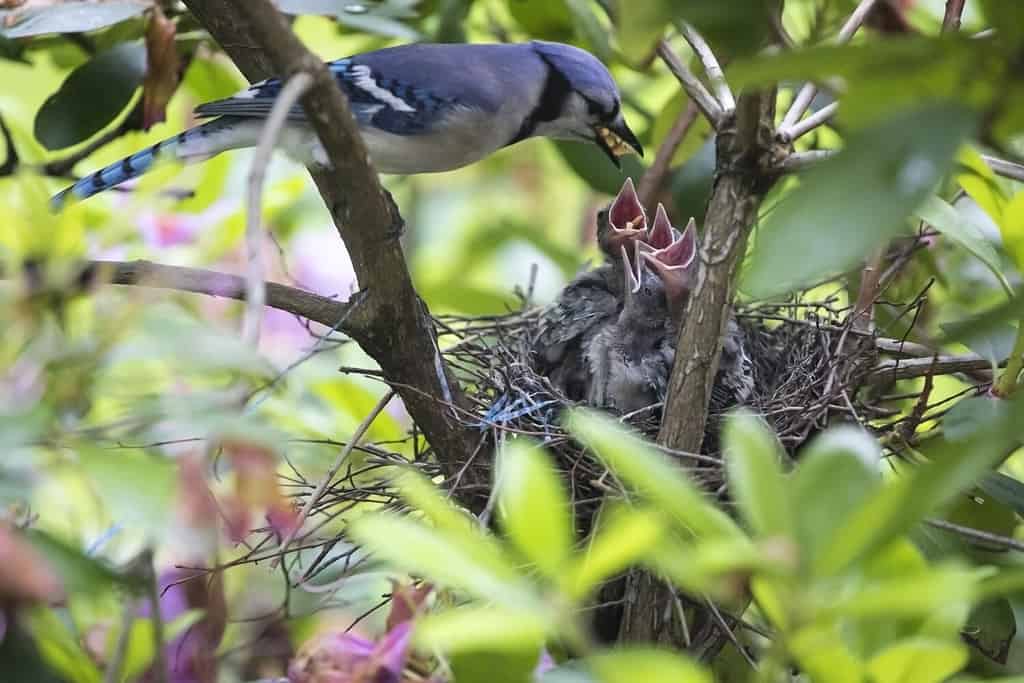
About 75% of the blue jay’s diet is plant matter.
©Cytis77/Shutterstock.com
The blue jay is omnivorous. It has a very wide and diverse diet, consuming almost anything it finds. However, it is estimated that around 75% of its diet — and an even higher percentage in the winter — consists of plant matter. Fruits, grains, corn, seeds, and nuts constitute the bulk of the blue jay’s diet. This provides the bird with most of the necessary nutrients and calories.
The most important source of meat is insects — beetles, grasshoppers, and caterpillars are all common staples. In order to supplement its diet with more meat, the blue jay will sometimes hunt rodents, frogs, spiders, and snails. It also sometimes raids bird nests to consume eggs and young hatchlings. If it finds carrion, then it has no qualms about eating that either. The exact composition of the diet changes slightly based on its location and the time of year.
Some of the following foods are grouped into wider categories because the blue jay will feed on many species within that group, not just a single one. Here is a list of the top 10 foods favored by the blue jay:
- Nuts
- Seeds
- Grains
- Fruits
- Insects
- Spiders
- Snails
- Rodents
- Frogs
- Eggs
Blue Jay Feeding Habits
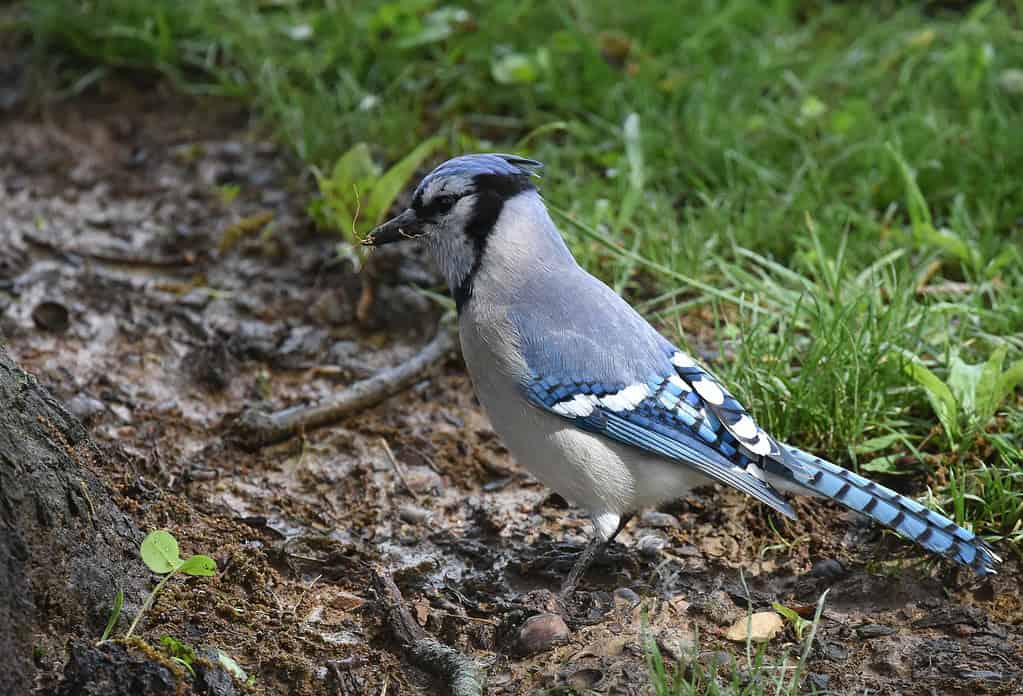
Blue jays cache leftover food throughout their territory for later use.
©Andy Reago & Chrissy McClarren / CC BY 2.0 – Original / License
The blue jay’s evolution reflects its plant-heavy diet. While tough foods might deter other animals, the blue jay is undeterred. While holding the nut with its feet, the bird will pry open the outer shell with its long and sharp bill. The blue jay will rarely let anything go to waste. Often, when it has leftover food after a meal, it will keep the remaining bits temporarily stored in its expansive throat pouch. The blue jay will then bury, or cache, leftover food throughout its territory for later use, utilizing trees, rocks, and other crevices as storage spaces.
Caching is a very common strategy throughout the animal kingdom. Chipmunks and squirrels also store their food in this manner. The extent to which blue jays cache food varies by individual, but this behavior is believed to play an important ecological role. When the blue jay forgets where it has hidden its food, the seeds have the opportunity to grow into plants.
As a member of the crow family, the blue jay is highly intelligent and resourceful. However, the blue jay isn’t a great hunter, and it prefers to forage or scavenge for easy food. If it can’t find food on its own, the blue jay sometimes resorts to tricks and deceit to obtain it. The blue jay steals food from other birds by frightening them with a sudden loud call. When the unsuspecting target drops its meal, the blue jay will be there to swoop in and take it.
Where Does the Blue Jay Forage?
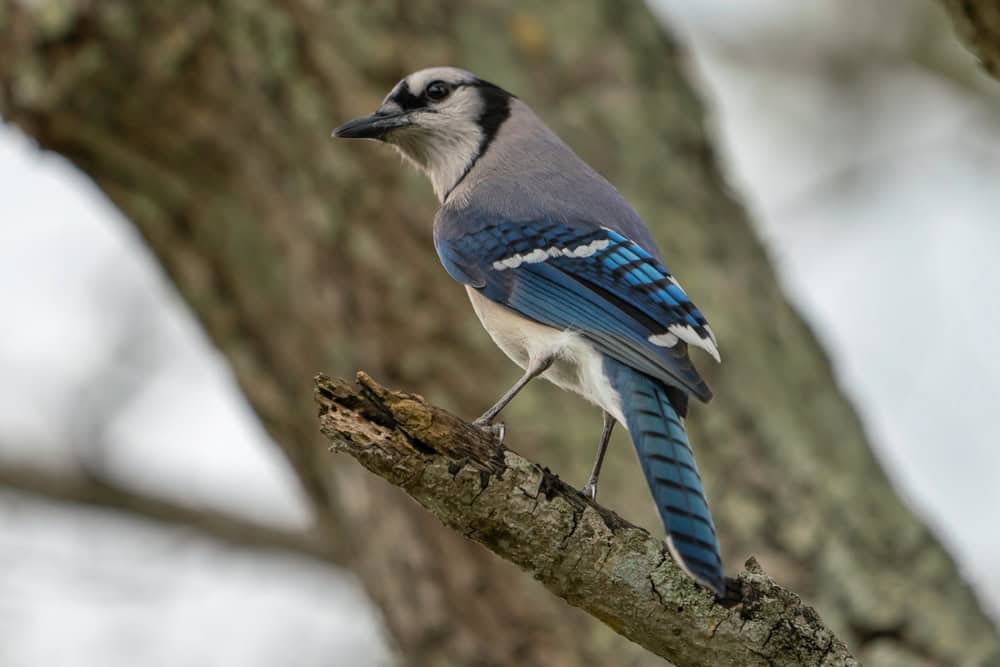
Beech and oak trees are the most common places where blue jays forage.
©Patrick Messier/Shutterstock.com
Blue jays generally have a defined territory in which they forage or hunt during the daytime. Beech and oak trees are among their favorite foraging and nesting sites. They also like to pick through shrubs and bushes for any little morsels they can find.
Some blue jays migrate during the winter, but their migration patterns are irregular and not fully understood. While some individuals travel south, others remain in their territories year-round, and the reasons for migration are still being studied.
In the middle of the year, a breeding pair maintains a very strict territory and guards it aggressively. Both the mother and father will feed their voracious nestlings for the first few weeks after hatching until they’re ready to leave the nest and forage for themselves. The young birds generally stick around and forage with the family, but they must disperse by wintertime to avoid competition for scarce resources.