
Quick Take
- The population decline is far steeper than scientists previously believed, and the real number changes everything about how urgent the situation is. See the population data →
- A technique involving decoys, mirrors, and recorded sounds has successfully relocated entire puffin colonies, and the method is stranger than it sounds. Discover the relocation technique →
- Iceland's ancient belief that puffins could predict storms has stopped working, and climate change appears to be the reason why.
Puffins have long symbolized love and commitment, dedicating their entire lives to one partner. Their playful, clown-like nature reminds us not to take life too seriously. And as they continue to survive in some of the world’s harshest winter climates, their endurance is inspiring. But for many colonies, survival hasn’t come easy.
In Iceland, puffins are known as lundi. Locals once believed their migration patterns predicted the weather, with puffins coming inland before big storms. In a cruel twist of fate, this early warning behavior has slowly ceased. Climate change leaves puffins with few places to shelter, while rising temperatures slowly starve them of food. Conservation is their last hope, and it’s offering them a second chance.
The Plight of the Puffin
Puffins have long been viewed as the cute seabirds of Nordic territories. Even people who have never seen them in person love them, and many are blissfully unaware of their conservation status. Stephen Moss, author of the recently published book The Puffin, calls them paradoxes. Cute, but fiercely protected. Beloved, but rarely seen. And lastly, strong but weakened by climate change.
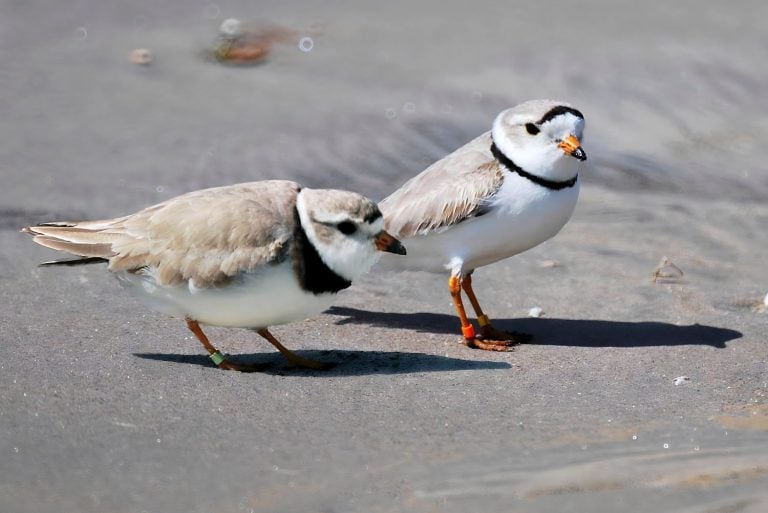
The horned puffin is a North Pacific species classified as Least Concern. But sadly, the Atlantic puffin isn’t as lucky.
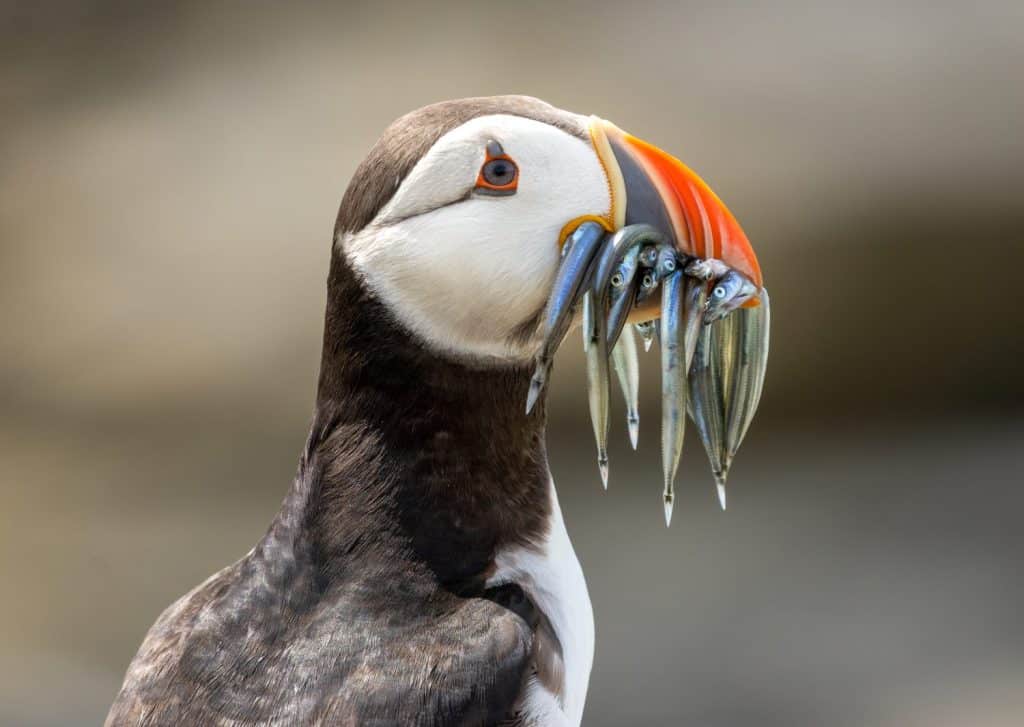
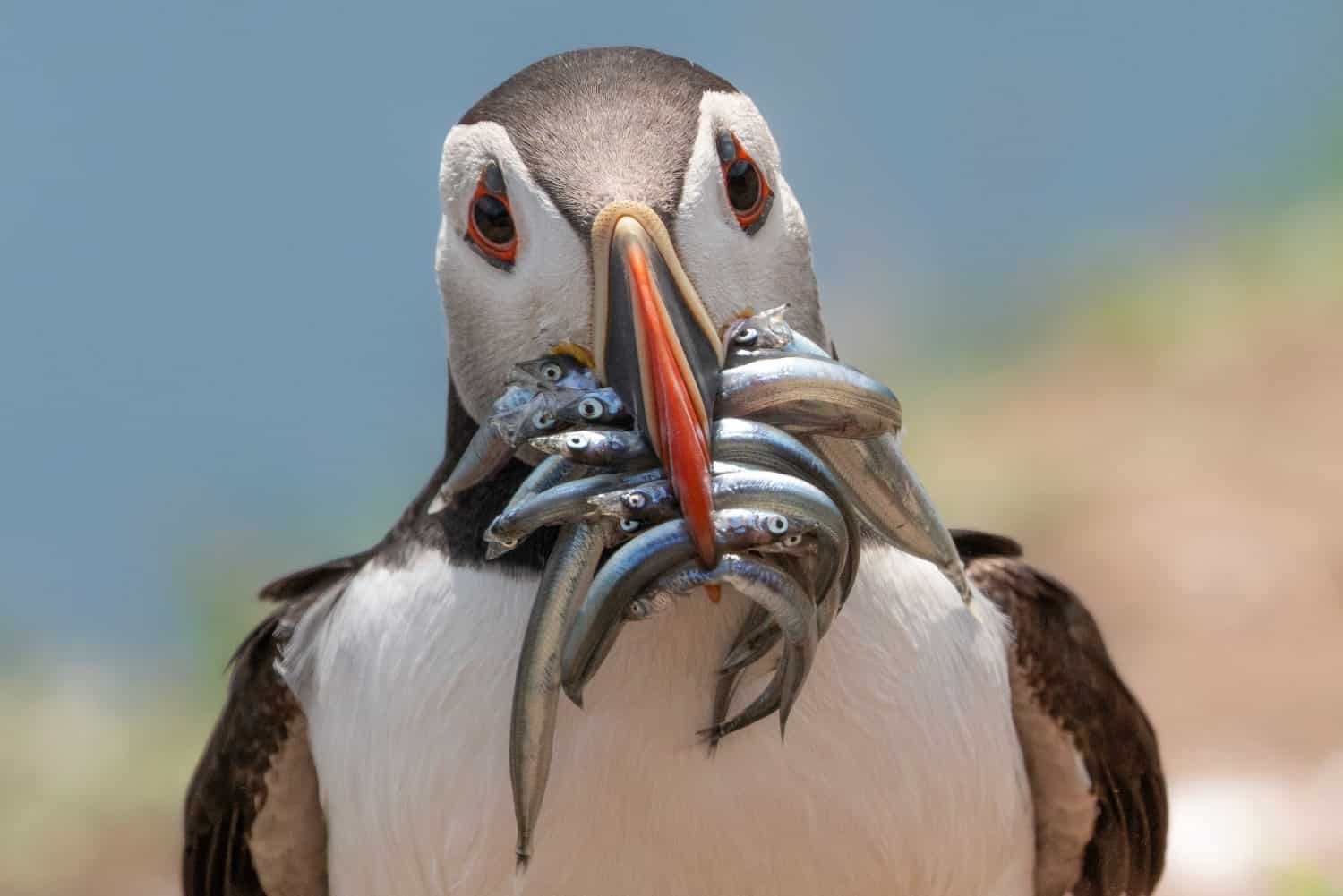
Atlantic puffins rely heavily on sand eels and Atlantic herring for nutrient-dense meals.
©SarahLou Photography/Shutterstock.com
The tufted puffin is listed as Endangered in Washington state, while colonies in Alaska are relatively stable. The Atlantic puffin, native to the North Atlantic — including Eastern Canada and Western Europe — is listed as Vulnerable. This raises concern, but it doesn’t tell the whole story.
Of Europe’s Atlantic puffin population—which accounts for 90% of the species—roughly 60% breed in Iceland and Norway, with Iceland alone home to 60% of the world’s Atlantic puffins. New data show that since 1975, the Atlantic puffin population has declined by 70%. This is far steeper than the previous estimate of 40%. In a 2021 study, Dr. Erpur Snær Hansen wrote that while 140 years of hunting accounts for 10% of this decline, rising sea temperatures drive most of it.
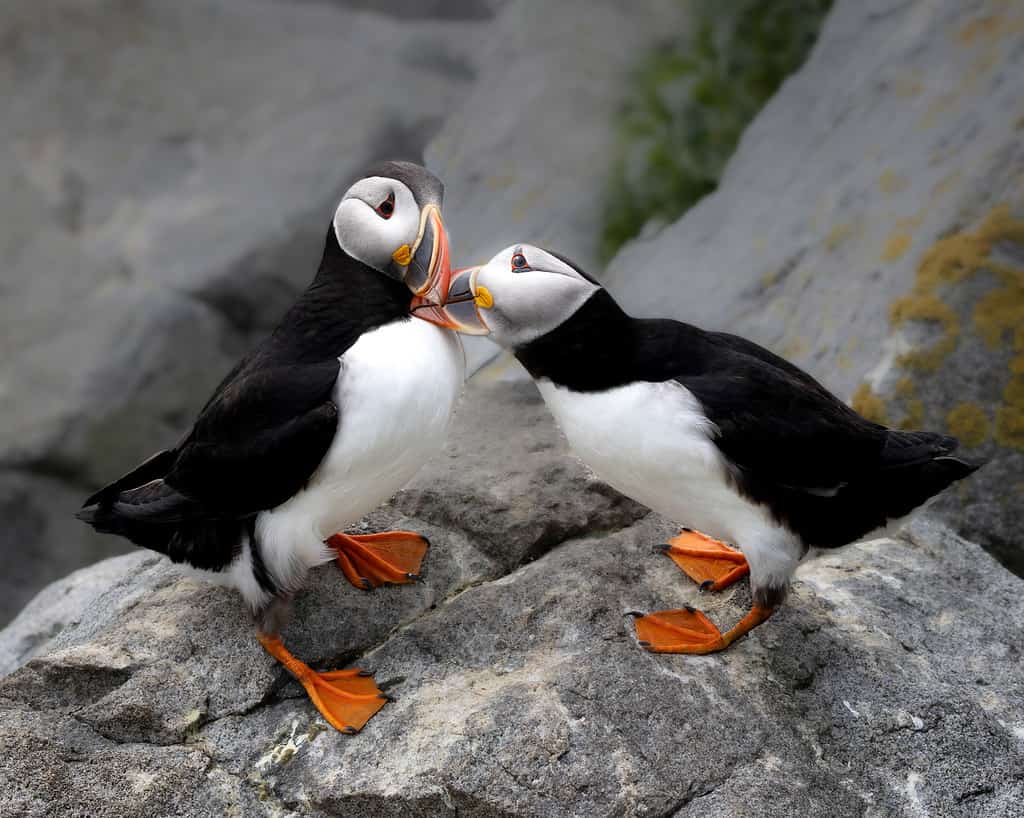
Maine is home to many Atlantic puffin colonies and is often used for relocation.
©Jessica Lutz/iStock via Getty Images
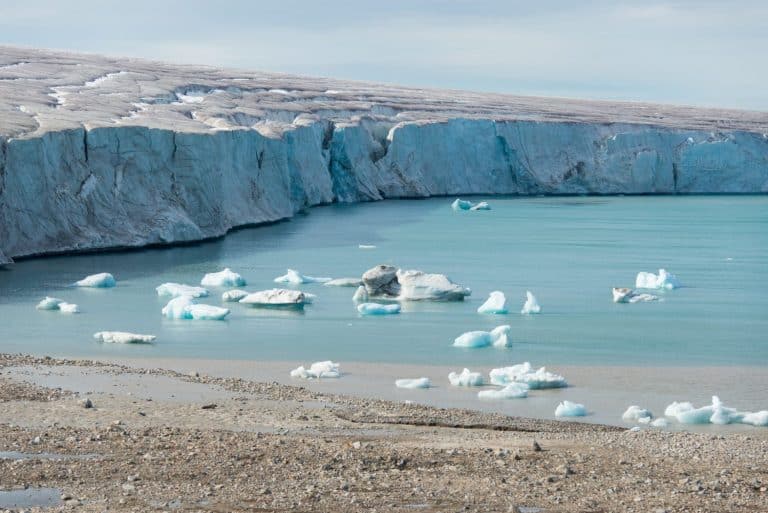
Since 1890, Iceland has lost roughly 540 billion metric tons of glacier ice, or 16%. This has sped up over the last two decades, with Iceland now losing 8 to 11 billion metric tons of ice annually. The International Cryosphere Climate Initiative claims this loss may be even higher, estimating that previous measurements underestimated Iceland’s glacier mass loss by as much as 32%.
For Atlantic puffins, this loss is devastating.
An Early Warning Sign for Climate Change
Through observation, some species can tell us about an ecosystem’s overall health. Puffins are one of these bioindicators. They’re sensitive to their environment and react to even the smallest changes. Given their glacial habitats, they provide some of the earliest warning signs for climate change.
Everything from a puffin’s diet to its breeding rate conveys a message. Through careful tracking, scientists can learn about a colony’s health and how melting sea ice, rising water temperatures, and stronger storm systems affect it.
| Observation | What It Tells Scientists |
| Diet | Atlantic puffins primarily consume sand eels and Atlantic herring. Both of these species are sensitive to water temperatures and migrate to colder waters as sea temperatures rise. When these food sources aren’t available, scientists have noted Atlantic puffins feeding fledglings low-nutrient fish, such as butterfish and rough scad. |
| Fledging Health | Starvation is common in colonies affected by climate change. With low food sources, adults must travel further to find meals for their fledglings. If they don’t return in time, the fledglings die, lowering the colony’s reproductive rate. |
| Body Condition & Weight | Scientists often weigh puffins to determine if they’re at a healthy weight. Low body mass in adults strongly indicates their food source has disappeared, likely due to rising sea temperatures. |
| Mass Deaths | Known as “wrecks,” these mass die-offs occur at sea. Intense storms and extreme heat waves usually drive them, leaving puffins unable to regulate their body temperature or forage for food. |
Puffins are ecological sentinels for the world’s most vulnerable regions. As scientists continue to monitor colonies, they also work to conserve the species.
Project Puffin and Habitat Restoration Are Saving Seabirds
Several conservation projects offer hope for Atlantic puffins. Dr. Stephen W. Kress founded Project Puffin in 1973 and authored Project Puffin: The Improbable Quest to Bring a Beloved Seabird Back to Egg Rock in 2015. Operated by the National Audubon Society, this conservation program has worked to reverse damage done to puffin colonies in the late 1800s.
It does this through chick translocation, which requires biologists to move vulnerable young puffins to safe, sheltered nests. This operation alone has seen tremendous success, relocating pufflings in Newfoundland to artificial sod burrows in Maine.
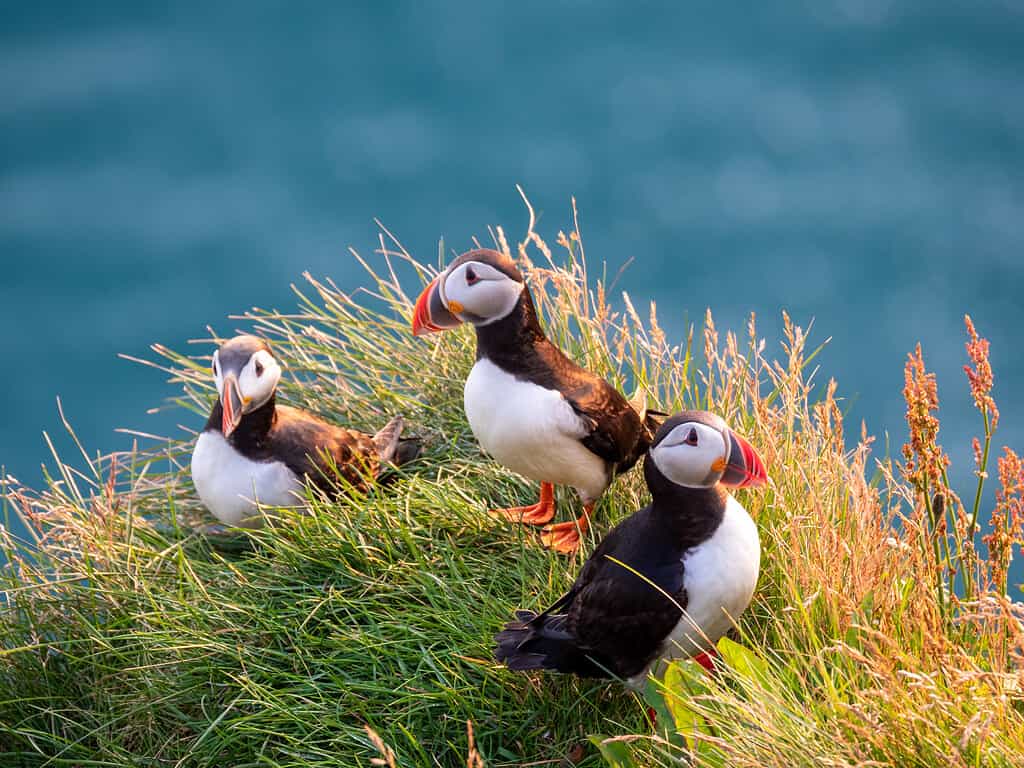
Iceland’s Atlantic puffins remain vulnerable, but conservation is working hard to change that.
©bzzup/iStock via Getty Images
But Project Puffin biologists can do more than that. Hand-rearing chicks, tracking juveniles, and providing vitamin-rich fish during feedings have brought vulnerable colonies back from the brink. In some cases, puffin decoys, mirrors, and seabird recordings have lured colonies to safer locations such as Maine’s Eastern Egg Rock.
In Iceland, locals also play a significant role in puffin conservation. “Puffling patrols” are made up of community members who observe and track nesting colonies. Some volunteers weigh and log each puffling’s overall health. Others safely release healthy puffins in areas where they can thrive away from artificial lighting, which can throw off juvenile cycles. Haimaey Island is well-known for its volunteer efforts, which help dozens of pufflings each year.
And while conservation still has a long way to go to change the fate of Atlantic puffins, the future of these beloved birds is in good hands.