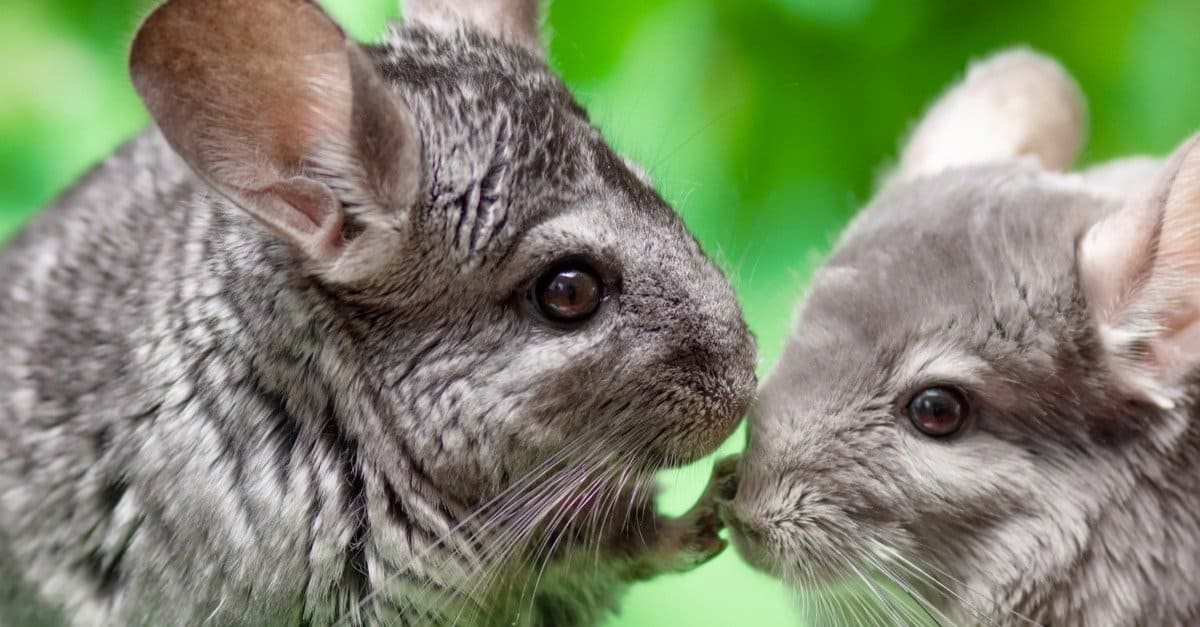

Slightly smaller than a house cat, but larger than pet mice, chinchillas may be one of the cutest and most charming rodents in the world. Chinchillas are known to have luxuriously silky, grayish fur that looks so soft to touch, although their original color used to be mottled yellow-gray in the wild, but has evolved into dark blue-gray due to selective breeding. Chinchillas also feature rounded ears that add to their already oozing cuteness, and huge, round eyes. Due to their enchanting appearance, these Andes Mountains natives are one of the many rodent species that are often kept as pets, along with hamsters and guinea pigs.
Chinchillas are equipped with thick fur because of their original habitat. These rodents can live at a height of 9,800 to 16,400 feet, where it can be very cold. But as tiny mammals who live in such elevations, we can’t help but wonder, what do chinchillas eat?
What Do Chinchillas Eat?
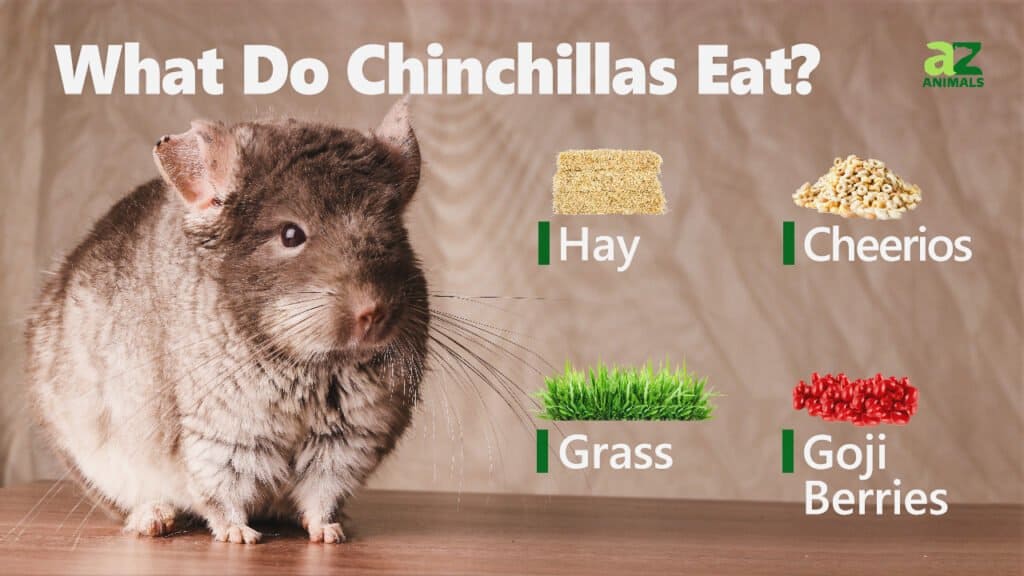
In their natural habitat, chinchillas are herbivores that eat grass, seeds, leaves, bark, and twigs, and may very rarely consume insects or bird eggs if encountered.
In the wild, chinchillas search for their food, which mainly includes plants and grass. Occasionally, they will include some insects and bird eggs in their diet, but they do not hunt them and will only eat some when they happen to come across them. Chinchillas eat almost all sorts of vegetation, such as flowers, roots, cactus fruit, seeds, and shrubs.
Chinchillas are also observed to eat tree bark, which is rich in fiber. Fiber is one of the nutrients that chinchillas need in order to survive, and such nutrients should also be present when they are in captivity.
What Do Pet Chinchillas Eat?
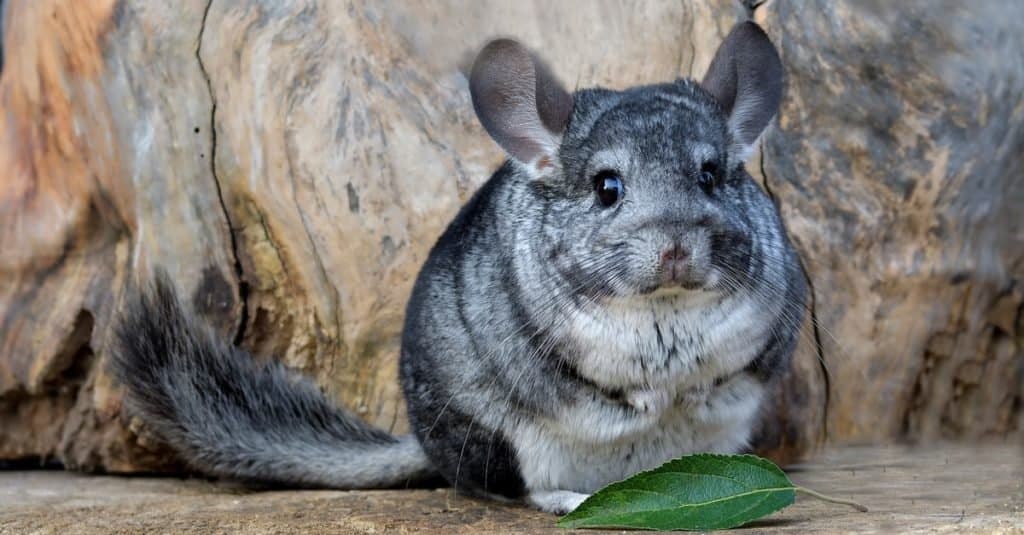
As pets, chinchillas mainly eat a variety of vegetation.
©ATTILA Barsan/Shutterstock.com
As you may expect, domesticated chinchillas eat a slightly different diet than they do in the wild. Chinchillas as pets are mostly herbivores, and they eat a variety of vegetation such as grass, hay, fresh fruits, vegetables, chinchilla pellets, roots, and leaves. They often require a balanced diet of low fat, low moisture, low carbohydrates, and high fiber.
Hay should make up the majority of a chinchilla’s diet and should be available at all times. However, you should only feed hay and grass that has been specifically designated for feeding to chinchillas, as residential grasses may be contaminated with chemicals.
When planning for a balanced chinchilla diet, two important things must be included: chinchilla pellets and a good-quality grass hay. Alpine, alfalfa, orchard grass, and oats are some good and healthy options for roughage. Pet chinchillas should also be fed only with pellets that are specifically made for them, and not those made for other types of rodents.
What Fruits and Vegetables Do Chinchillas Eat?
Chinchillas can eat celery, potatoes, sweet potatoes, squash, carrots, alfalfa, and kale regularly. However, when it comes to fresh fruit and vegetables, chinchillas can only be fed on these options occasionally and in moderation. Fruits and vegetables should not account for more than 10% of a chinchilla’s diet. Not all vegetables can be a good option for their diet, though, so it is still better to feed them with food that contains the nutrients they need, such as fiber. Vegetables like parsley, carrots, dandelion greens, lettuce, kale, collard greens, and turnip greens are good for their diet.
For fruits, chinchillas can eat strawberries and other berries, grapes, pears, raisins, or apples chopped into bite-sized pieces to control their calorie and sugar intake.
How Much Do Chinchillas Eat in a Day?
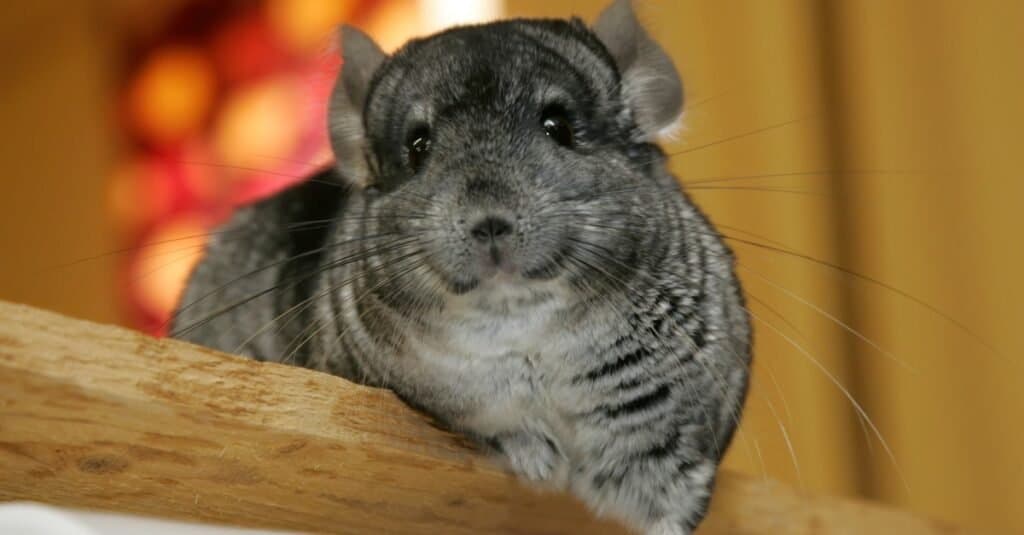
Pet chinchillas eat one to two tablespoonfuls of pellets daily.
©AJSTUDIO PHOTOGRAPHY/Shutterstock.com
When feeding pet chinchillas pellets, only one to two tablespoons daily will do. For fruit and vegetable treats, on the other hand, chinchillas should be fed only two to four times weekly.
Fruits and vegetables should be fed in moderation because these greens are filled with natural sugar and moisture, which chinchillas are not used to. Chinchillas come from a region with a dry climate, so their diet has also adapted to their dry surroundings. Too much moisture in fruits and vegetables can lead to bloating. Excess sugar can also be unhealthy for chinchillas and may cause them serious nutritional deficiencies. Too much sugar in their food can also cause obesity, which chinchillas can be prone to.
Domesticated rodents also require constant activity to get their food moving throughout their body in order to keep them from having health problems. It’s also important to ensure that clean, fresh water is available for your chinchilla at all times.
How Often Do Chinchillas Eat?
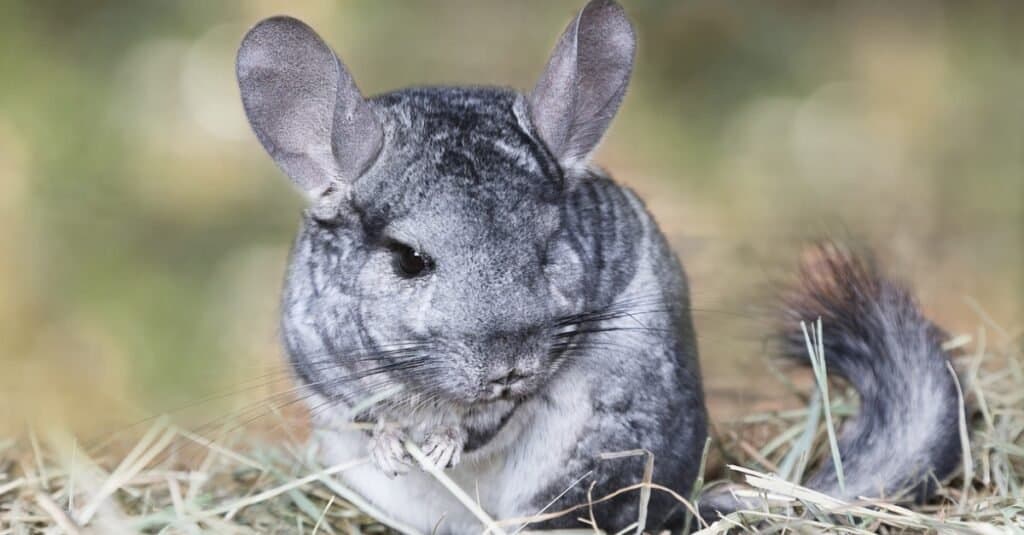
Chinchillas eat twice a day.
©iStock.com/alkir
Chinchillas in the wild often eat small amounts of food throughout the day. Since they eat slowly, they may not be able to eat all the nutrients they need in one go. Pet chinchillas, on the other hand, are usually fed twice a day, but should be constantly provided with hay.