
If you have always wanted to be able to tell the difference between an American crocodile vs. American alligator, you’re in the right place! But what are all of the differences between these two animals, other than their physical differences? There may be more than you think. In this article, we will address all of the differences between American crocodiles and American alligators, including their scientific classifications, preferred habitats, lifespans, and more. Keep reading to learn what sets these giant carnivores apart.
Comparing the American Crocodile vs. the American Alligator
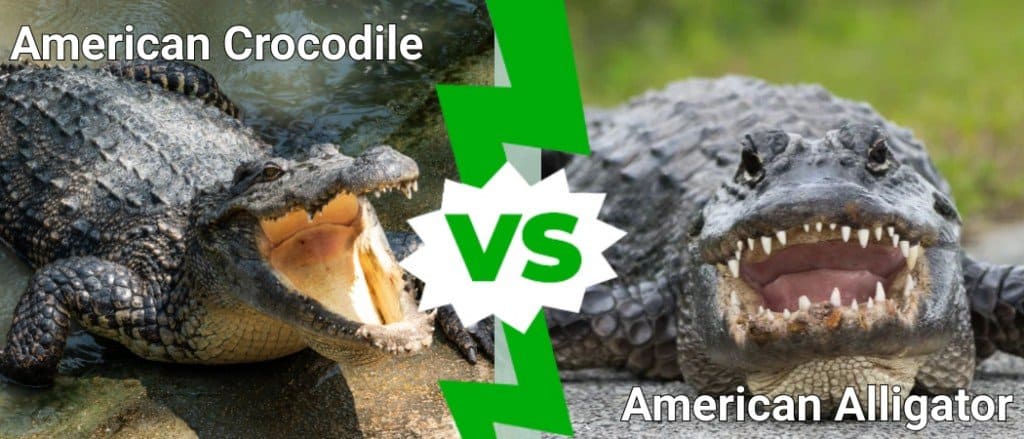
| American Crocodile | American Alligator | |
|---|---|---|
| Scientific Classification | Crocodylus acutus | Alligator mississippiensis |
| Size | 7.5-23 feet long; 300-2,000 pounds | 6-19 feet long; 400-1,000 pounds |
| Appearance | Greenish-grey to greenish-brown in color, V-shaped snout | Grey to black in color, U-shaped snout |
| Location and Habitat | South Florida, Mexico to Peru on the Pacific coast and Venezuela on the Caribbean coast, Cuba, Jamaica, Hispaniola; freshwater and saltwater habitats | Throughout the Southern United States; freshwater habitats |
| Behavior and Diet | More aggressive and reclusive; primarily feeds on marine animals | More docile and social; primarily feeds on freshwater invertebrates |
| Lifespan | 50-70 years | 30-50 years |
Key Differences Between the American Crocodile vs. American Alligator
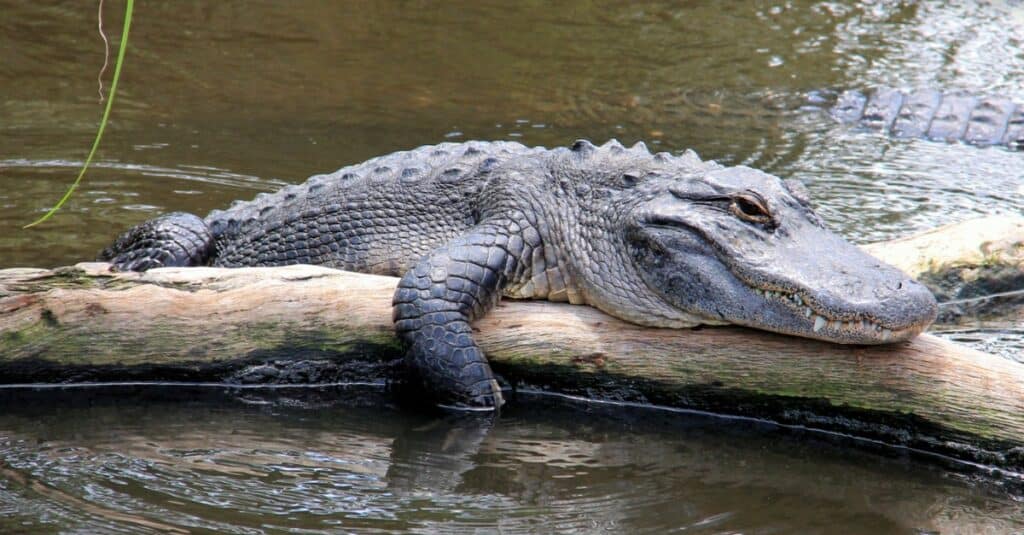
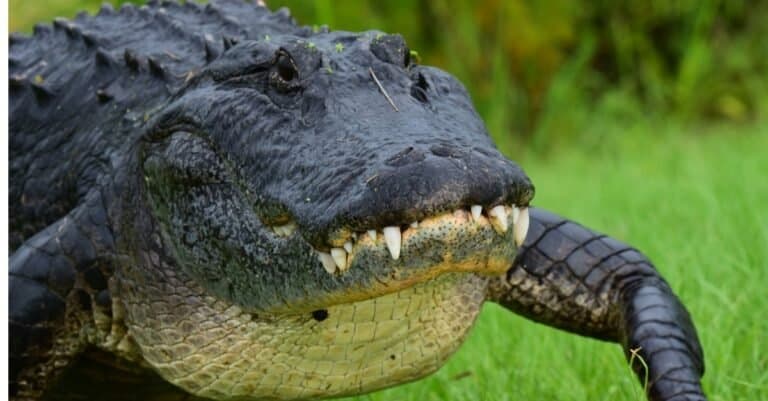
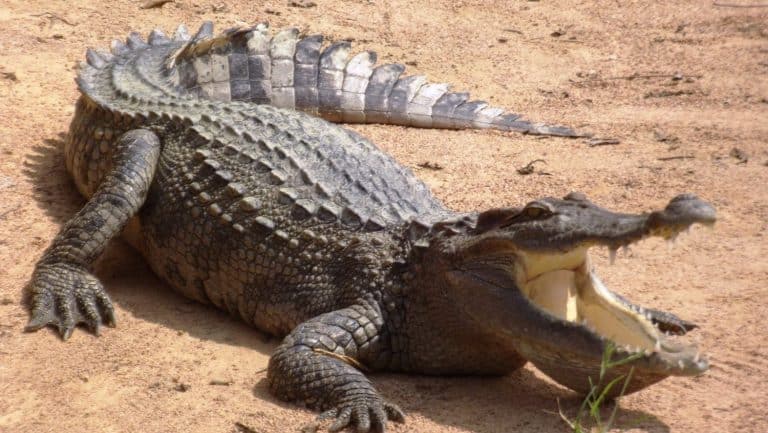
The American alligator is usually grey to black in color, while the American crocodile is greenish-grey to greenish-brown.
©iStock.com/Nikola Art
There are many key differences between American crocodiles vs. American alligators. These differences include scientific classification, physical characteristics, geographic location and preferred habitat, behavior and diet, and lifespan. Let’s discuss some of these differences in more detail now.
Scientific Classification
Although they are both part of the Crocodylia order, these two crocodilians belong to different families. The American crocodile is a member of the Crocodylidae family, while the American alligator is a member of the Alligatoridae family. There are 16 species of crocodile in the Crocodylidae family and eight species in the Alligatoridae family.
Physical Characteristics
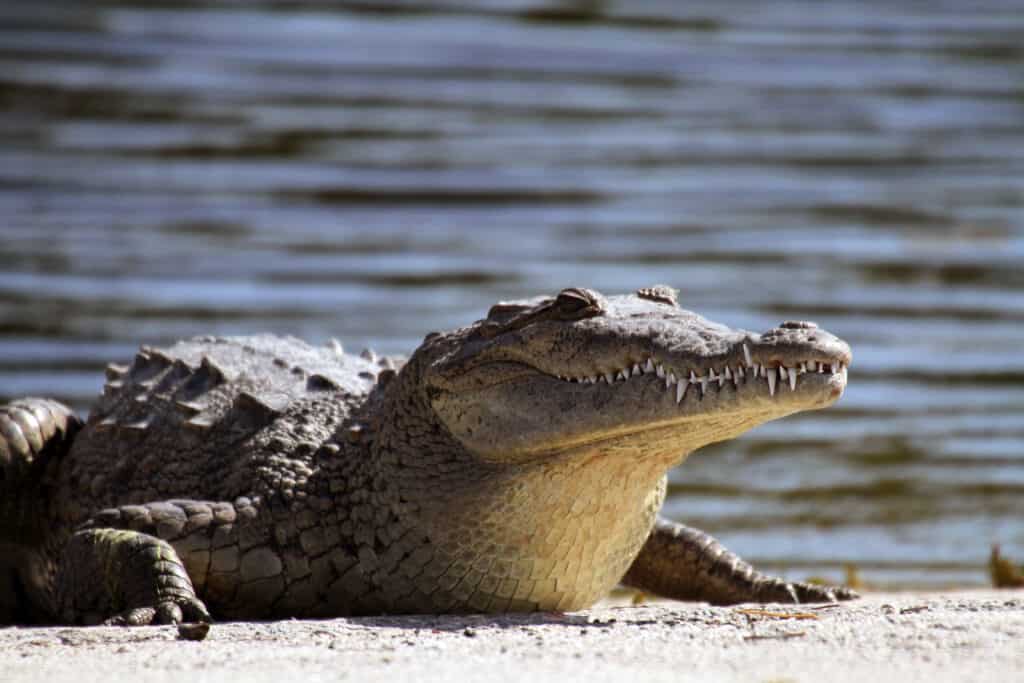
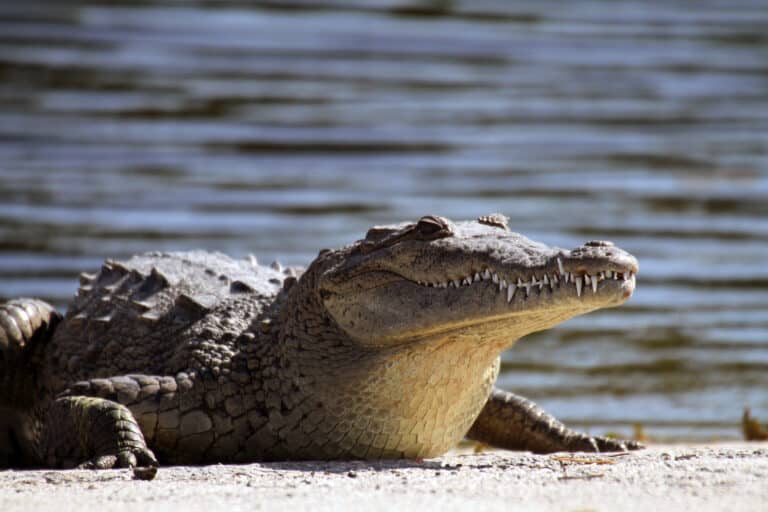
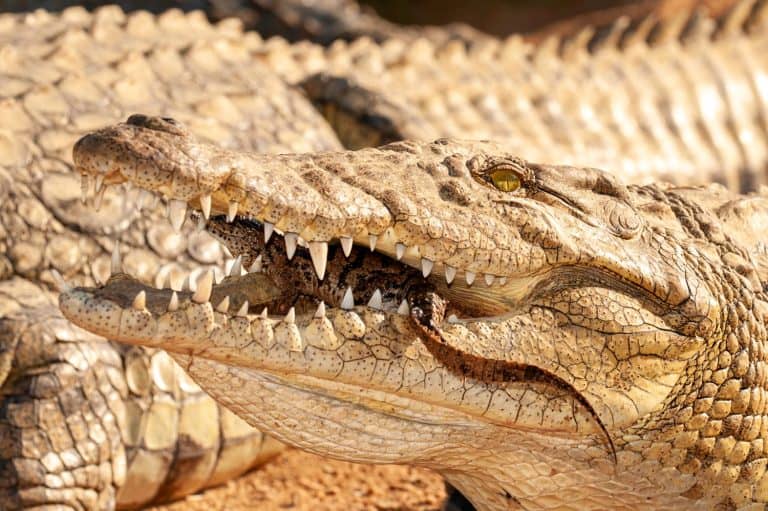
American crocodiles have narrow, tapered snouts.
©iStock.com/GriffinGillespie
Another key difference between the American crocodile vs. American alligator is their physical appearance. They also differ when it comes to size. Let’s discuss the differences in their physical characteristics below.
Appearance
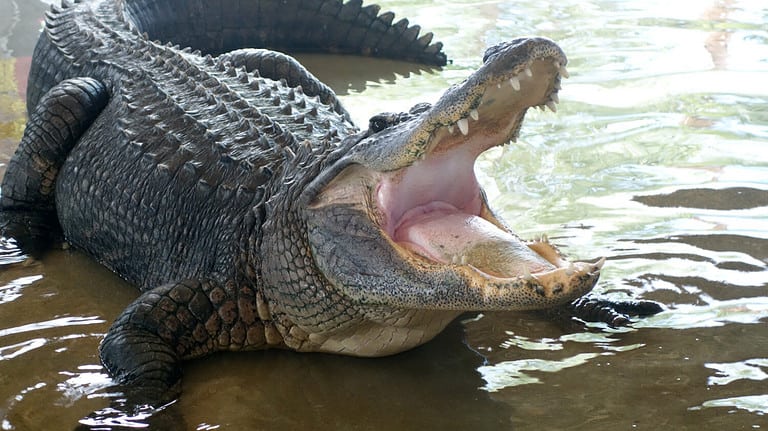
There are a few subtle physical differences between the American crocodile and the American alligator. The snout shapes of these two animals differ, with American crocodiles having more slender, pointier, V-shaped snouts, while alligators have broader, rounder, U-shaped snouts. Alligators also have wide upper jaws, so only their upper teeth show when their mouths are closed. Since crocodiles’ jaws are about the same size, more of their teeth are exposed.
They also differ in color. The American crocodile is more greenish-grey to greenish-brown with paler underbellies. The American alligator is darker in color, ranging from grey to black, with lighter undersides. Juvenile crocodiles are light colored with dark stripes, while young alligators are dark with yellow stripes.
Size
The average American crocodile grows anywhere from 7.5-23 feet long and weighs 300-2,000 pounds. In the U.S., the record for an American crocodile is only around 15 feet long, with most only reaching around 12 feet. The American alligator grows 6-19 feet long and weighs 400-1,000 pounds. The average is just over 11 feet in length. Both female crocodiles and female alligators are smaller than their male counterparts.
Geographic Location and Preferred Habitat
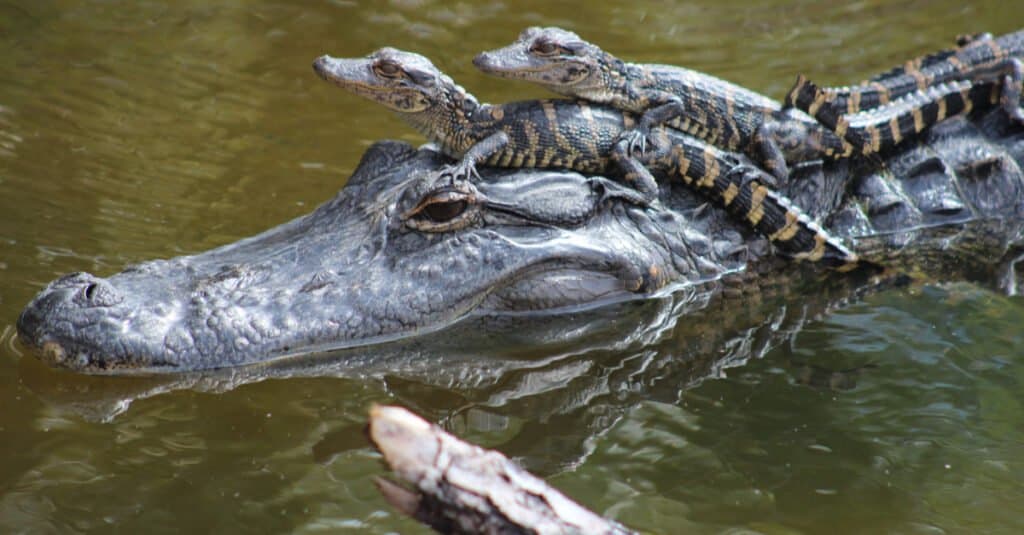
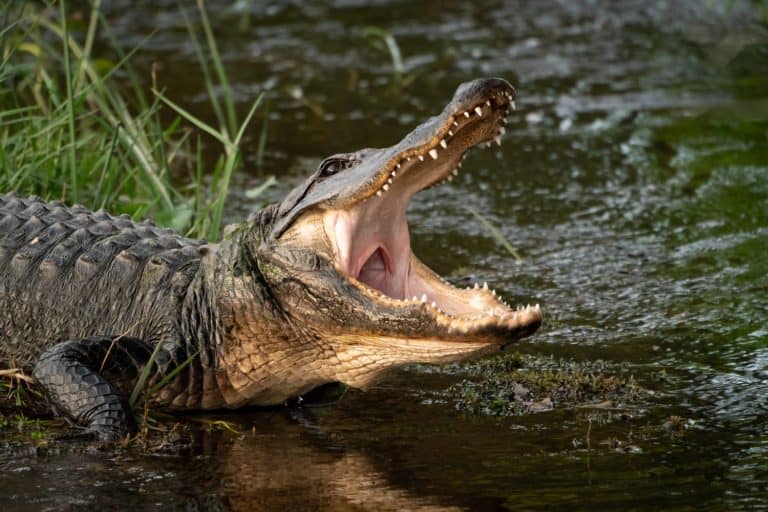
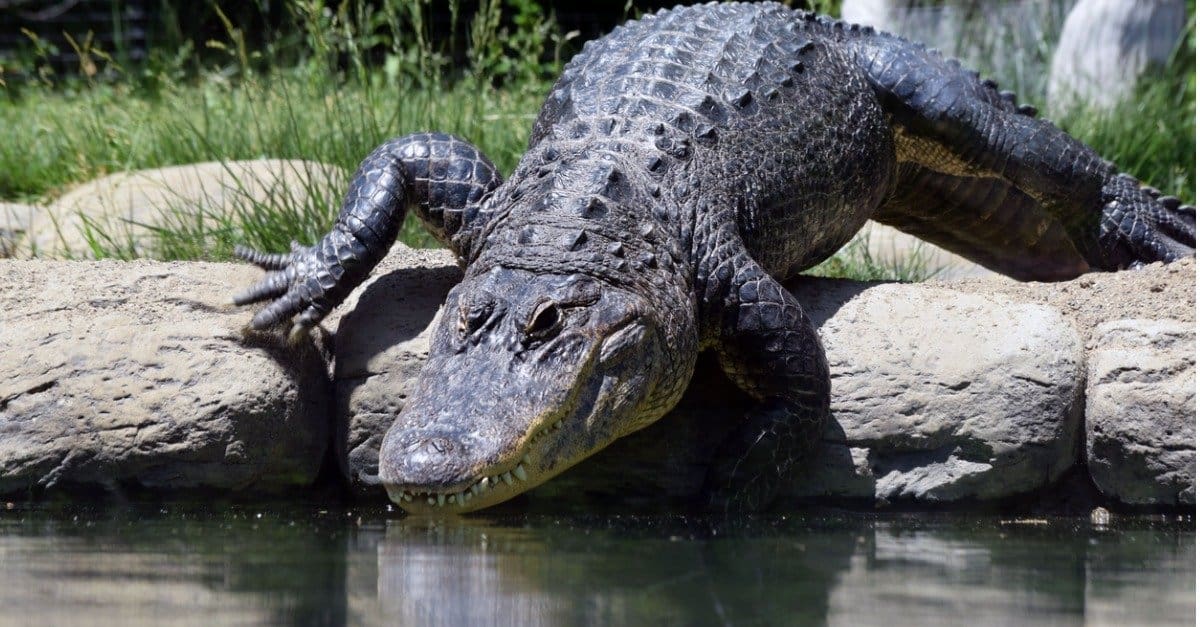
The American alligator lives only in freshwater.
©Marc Pletcher/Shutterstock.com
Another key difference between an American crocodile vs. American alligator is where they live. The only place that these two animals can be found together is Florida. Take a closer look at their geographical location and preferred habitat to find out why.
Geographical Location
American alligators only live in the Southern United States, including the states of Florida, Louisiana, Texas, North and South Carolina, Alabama, and Georgia. In the U.S., the American crocodile only lives in Florida. However, it also lives in Cuba, Jamaica, and Hispaniola. In Central and South America, it lives along the Caribbean coastline from Mexico down to Venezuela and along the Pacific coastline from Mexico to Peru.
Everglades National Park in southern Florida is the only location in the world where you will find both of these animals coexisting. Florida is the northernmost part of the American crocodile’s range. Although these animals are both ectotherms, meaning they require an outside heat source for thermoregulation, alligators tolerate cold better than American crocodiles.
Habitat
While both of these reptiles enjoy similar habitats of warm, slow-moving water with marshy surroundings, the American alligator lives only in freshwater. However, American crocodiles can live in both freshwater and saltwater, although they prefer coastal areas with more salinity. Despite their different requirements, both animals can inhabit the Everglades due to the freshwater from Lake Okeechobee and saltwater from the ocean.
Differences in Behavior and Diet
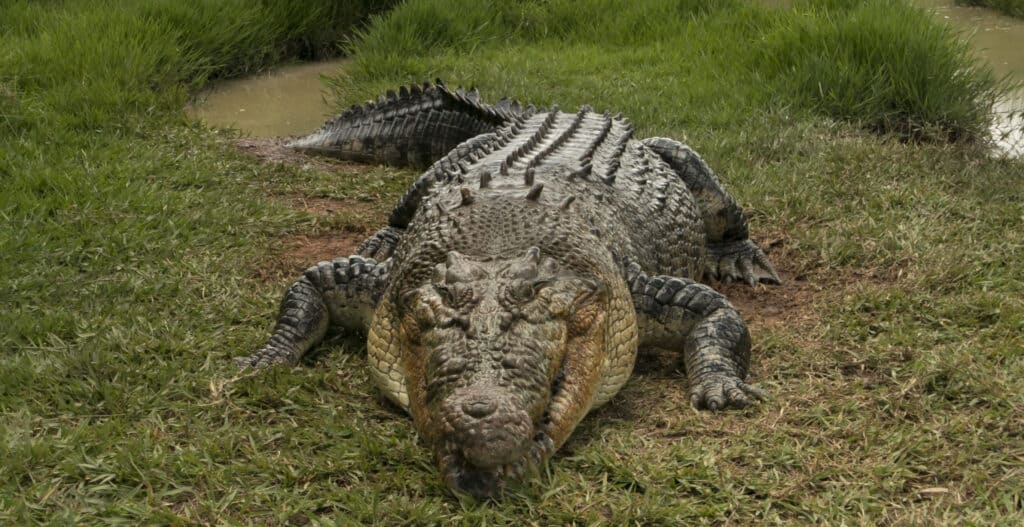
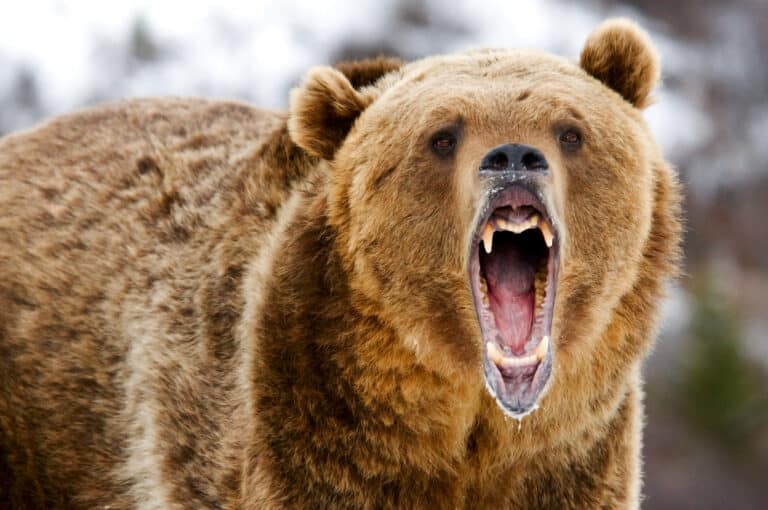
Both American crocodiles and American alligators are extremely territorial.
©Firepac/Shutterstock.com
Another difference between the American crocodile and the American alligator lies in their overall behavior. Their dietary preferences are also different due to their respective habitats. We’ll discuss these different aspects in the following paragraphs.
Behavior
Both American crocodiles and American alligators are extremely territorial. Fortunately, American crocodiles are less aggressive than their counterparts in other countries. However, they are more aggressive and reclusive than the American alligator. They tolerate other animals when basking or feeding, but they are not considered particularly social.
American alligators are generally more docile than American crocodiles. They are also more social and tend to live in groups. They have been found to demonstrate complex social behaviors when they congregate together.
Dietary Preferences
While both of these crocodilians are considered apex predators and fearsome carnivores, they eat different things based on their habitats. For example, the American alligator primarily eats freshwater fish, birds, turtles, amphibians, and reptiles. The American crocodile focuses more on marine prey, including large fish, crabs, and snakes. They may also eat mammals that often live near the water, such as opossums and raccoons.
Crocodile vs. Alligator Lifespan
The final difference between the American crocodile and the American alligator is their lifespan. While both of these animals are considered to be particularly long-lived given their apex predator status, the American crocodile tends to outlive the American alligator. The American crocodile lives for an average of 50 to 70 years, while the American alligator lives anywhere from 30 to 50 years on average.
American Crocodile vs. American Alligator: Which Would Win in a Fight?
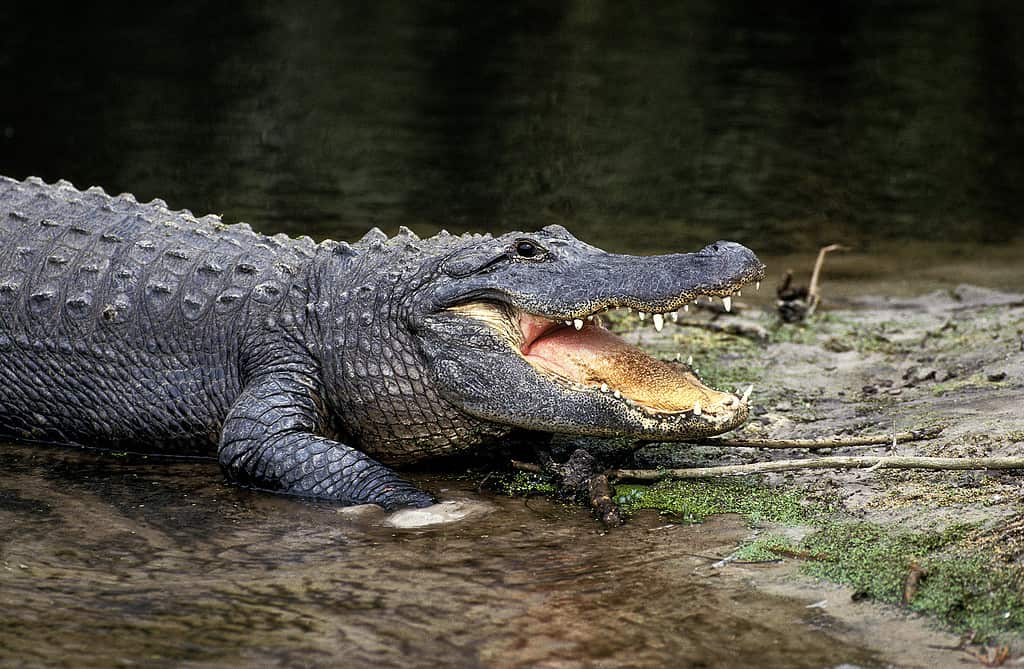
American alligators are surpassed only by the saltwater crocs of Australia in terms of bite force.
©slowmotiongli/iStock via Getty Images
In Florida, American crocodiles and American alligators are surprisingly tolerant of one another, considering their territorial behavior. Where their habitats overlap, these animals are fairly evenly matched. In its U.S. range, the American crocodile typically only reaches an average of around 12 feet and 800 pounds. The American alligator reaches an average of just over 11 feet and can weigh around 795 pounds.
However, the largest American crocodile can grow over 3 feet longer and weigh twice as much as the largest American alligator. In this case, the advantage is clearly on the side of the American crocodile. Especially since it has a reputation for being more belligerent compared to the American alligator.
Yet, there is also the issue of bite force. Alligators have a maximum reported bite force of 2,980psi. While a number of sources often cite the crocodile’s bite force as 3,700psi, this is not the bite force for the American crocodile. This is the bite force of the saltwater crocodile, Crocodylus porosus, found in Australia and Southeast Asia. In laboratory experiments, the American alligator demonstrated a bite force of 9,452N, while the American crocodile only had a bite force of 4,355N. So, in the only environment where these two animals interact, unless the American crocodile is significantly larger and heavier, a powerful bite from an American alligator would likely be lethal.