
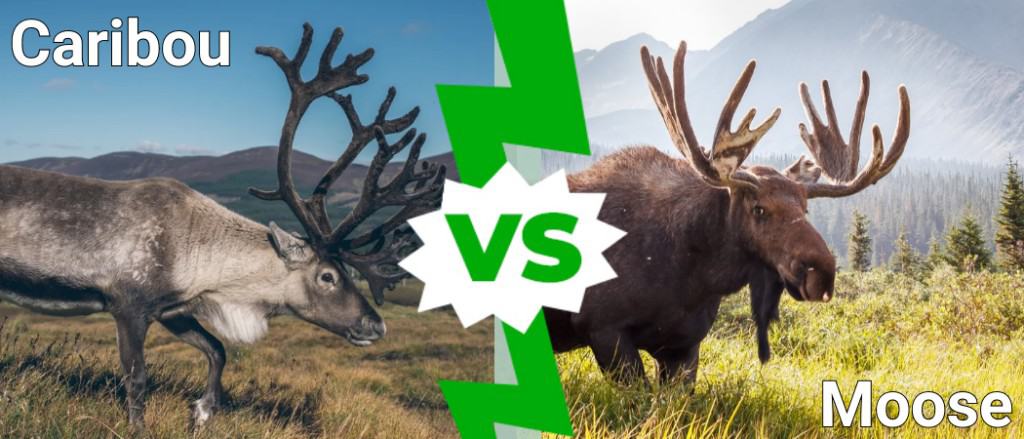
Caribou (Rangifer tarandus) and moose (Alces alces) are two very large animals that belong to the Cervidae family. Caribou are also known as reindeer. They are called caribou in North America and reindeer in Eurasia. However, domesticated populations are referred to as reindeer, regardless of their location. As members of the Cervidae family, both caribou and moose have similarities that characterize their family, such as antlers and cloven hooves. Yet, they have many differences that set them apart. Read on to discover the major differences between caribou and moose.
Comparing a Caribou and a Moose
| Caribou | Moose | |
|---|---|---|
| Size | Weight: 180-700 pounds Height: 2.5-4.9 feet Length: 5.2-7 feet | Weight: 800-1,600 pounds Height: 4.6-6.9 feet at shoulder Length: 7-10 feet |
| Antlers | Large, tall, branching antlers; both males and females have antlers | Large, flat, wide antlers; only males have antlers |
| Physical Characteristics | Short, bushy tail; small shoulder hump; dark gray, white, and brown fur; small dewlap | Small, short tail; large shoulder hump when mature; typically dark brown fur; large dewlap |
| Distribution and Habitat | Circumpolar; Arctic tundra, boreal forests, mountain tundra; long migrations of around 3,000 miles | Northern United States, Alaska, Canada, Europe, and Asia; boreal forests, swamps, marshes; not as far north as caribou |
| Diet | Grasses, leaves, lichens, fungi, and other plant matter | Aquatic plants, woody plants, conifer needles |
| Relationship with Humans | Rarely aggressive towards humans; provide milk, meat, hides, and transportation | Aggressive and territorial when young are involved; involved in many car accidents each year; source of food and resources |
The Key Differences Between Caribou vs. Moose
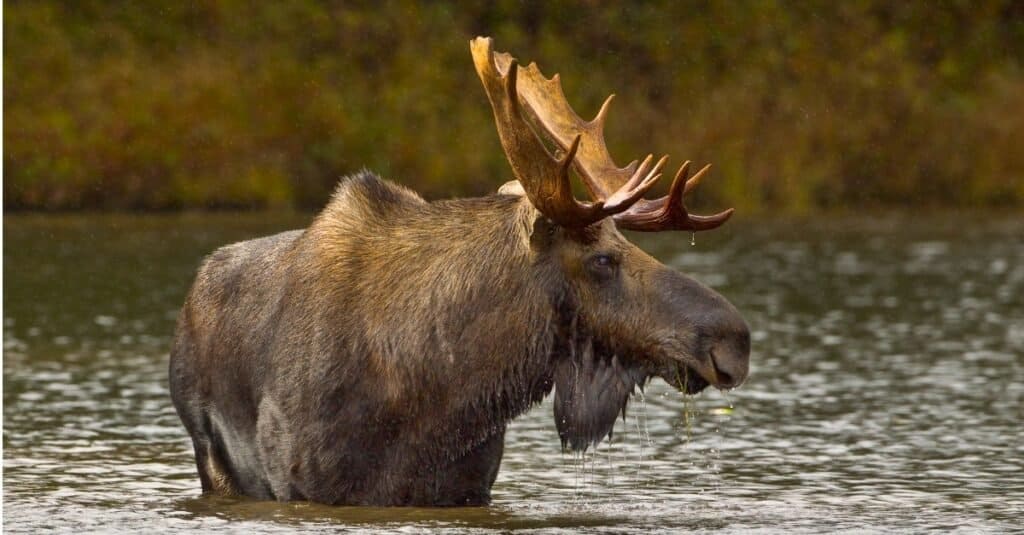
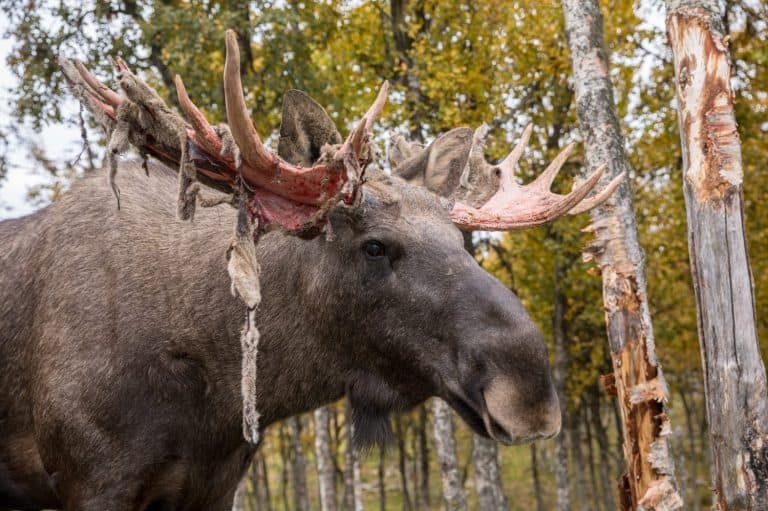
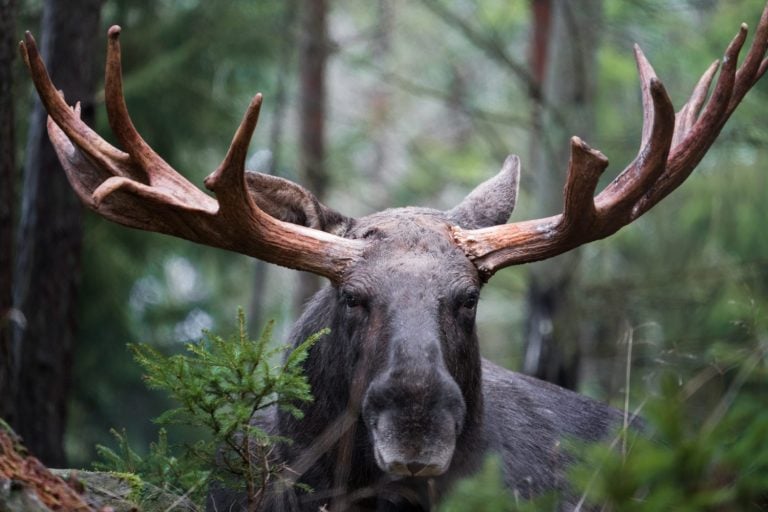
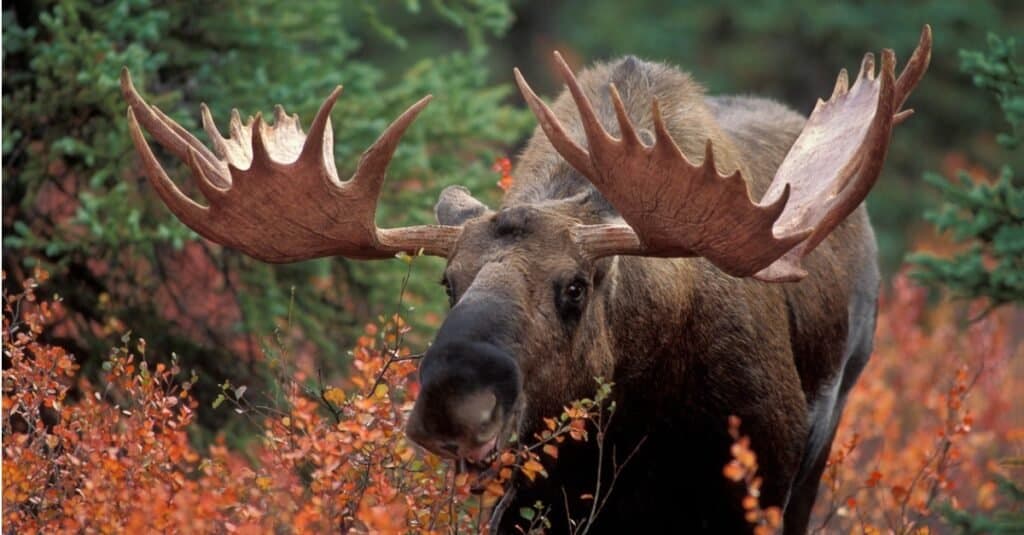
Moose are known for their large size, massive antlers, overhanging snouts, and the dewlap under their chins.
©iStock.com/RichardSeeley
The greatest differences between caribou and moose are their size, antlers, and general morphology. However, there are other significant differences. In the following paragraphs, we’ll take an in-depth look at the differences in size, antlers, physical characteristics, distribution and habitat, diet, and their relationship with humans.
Size
Caribou are much smaller than moose. They typically weigh between 180 and 700 pounds, with males sometimes weighing twice as much as females. Caribou can stand up to 4.9 feet tall and reach lengths of up to 7 feet.
Moose generally weigh between 800 and 1,600 pounds. When fully grown, they can stand nearly 7 feet tall at the shoulder and measure up to 10 feet in length. Researchers have found that male moose are around 24% larger than females.
Antlers
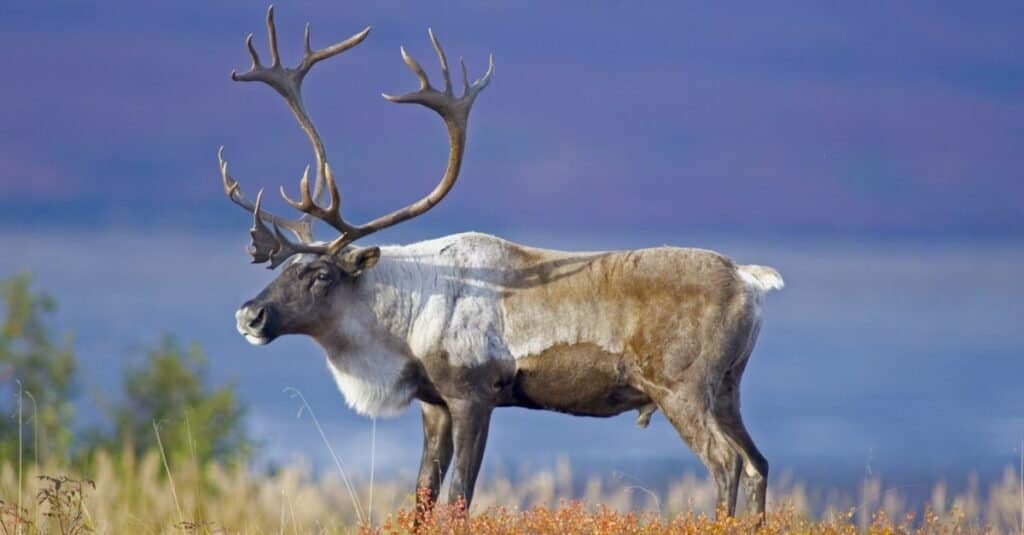
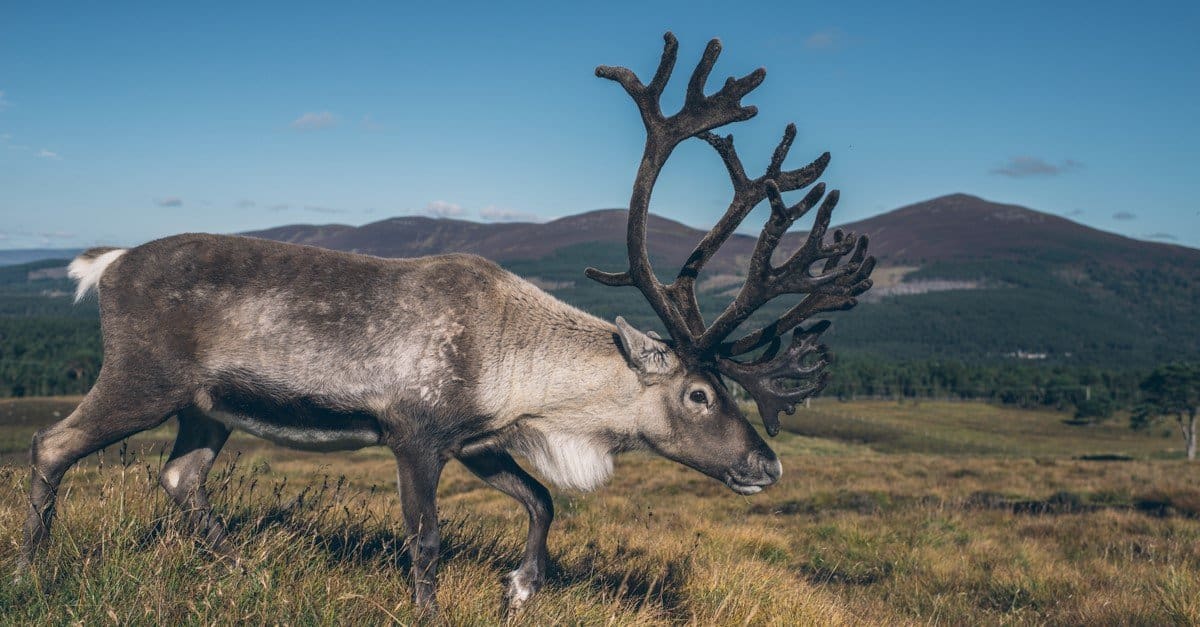
Caribou antlers are twig-like, with numerous, pointed branches.
©Jeff McGraw/Shutterstock.com
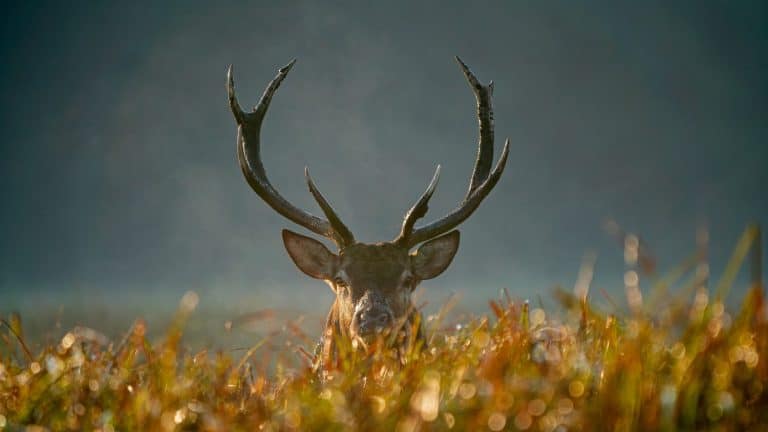
Caribou antlers are called dendritic, which means they are twig-like in nature. Their antlers are C-shaped and have many branches with sharp points. Caribou have the largest antlers relative to their body size of any deer species. Unlike moose, both male and female caribou have antlers.
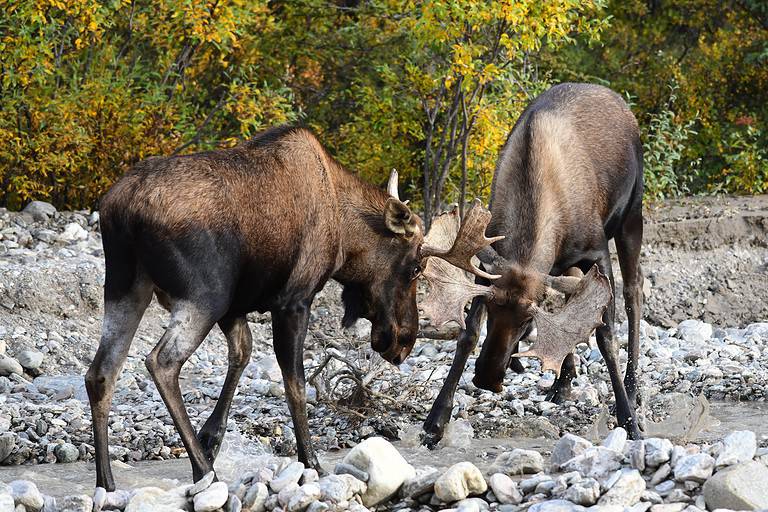
Moose have larger antlers than caribou in absolute size. Moose antlers are palmate, meaning they are shaped like open hands. These antlers are wide, have no gaps between their points, and are very heavy. Moose antlers can reach up to 6 feet across and weigh up to 50 pounds.
Physical Characteristics
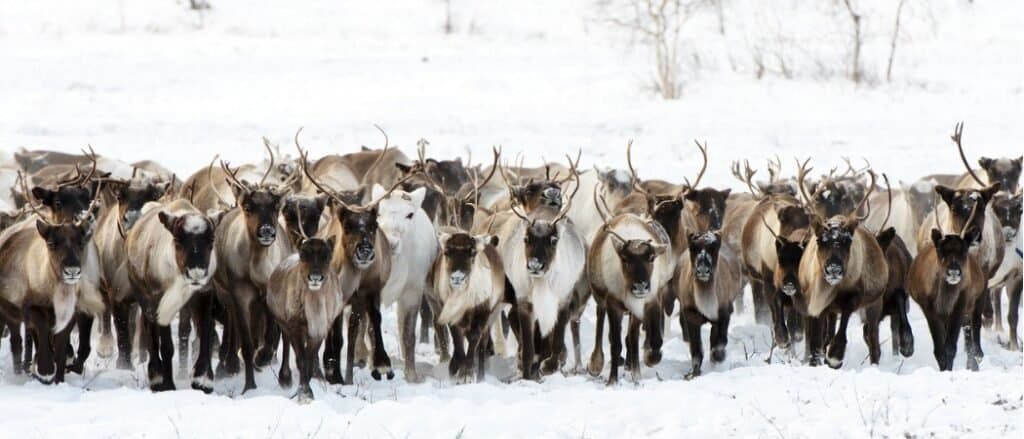
Caribou have more color variation than moose, with shades of brown, gray, tan, and white fur.
©longtaildog/Shutterstock.com
Caribou are easy to tell apart from moose based on their tails and shoulder humps alone. They have short, fluffy tails and very slight shoulder humps. Caribou are much lighter in color than moose, and they have different colors throughout their fur. They can be gray, brown, tan, and white. Caribou have smaller snouts than moose and a smaller dewlap along the throat that is typically covered with long white hair.
Mature moose have very large shoulder humps and small, short tails. They are a uniform dark brown when young, with gray appearing in their fur as they grow older. Moose have large, broad snouts that extend over their lips. Their unique snout structure allows them to close their nostrils when foraging underwater for aquatic plants. Moose also have a large dewlap under their chin, which is covered in dark hair.
Distribution and Habitat
Caribou live in some of the coldest, northernmost regions of the world, including Alaska, Canada, Russia, and Greenland. Caribou migrate vast distances throughout the year to reach warmer areas for foraging and reproduction. They are the longest-distance land migrants on the planet, with some populations traveling nearly 3,000 miles annually. Caribou favor Arctic tundra, boreal forests, and mountain tundra habitats.
Moose share some of the same range as caribou, including Alaska, Canada, and northern parts of Europe and Asia. Moose also live in northern states of the contiguous U.S. However, they do not venture as far north as caribou. Some moose populations are also migratory, traveling between seasonal ranges in search of mates and food. However, they do not travel such long distances. The distances vary by sex and region, but most migratory populations travel less than 100 miles. Moose inhabit boreal forests and woodlands, but they also favor marshes and swamps near permanent water sources.
Diet
Moose consume leaves, twigs, buds, herbs, and shrubs, among other plants.
©iStock.com/RONSAN4D
The caribou diet changes seasonally. In the summer, they prefer vegetation such as grasses, sedges, herbs, shrubs, shoots, flowers, and leaves. However, during the winter, lichens, sometimes referred to as “reindeer moss,” are their primary food source. They also eat fungi and moss. Caribou use their hooves to scrape and dig in the frozen ground to forage for food.
The moose diet also changes with the seasons. However, unlike caribou, moose forage underwater for aquatic plants like pondweed, water lilies, and rushes. They also eat leaves, twigs, buds, herbs, and shrubs. In the winter, moose eat more woody plants, such as bark, twigs, and buds from willow, aspen, and birch trees. They also eat needles from balsam fir trees and other conifers.
Relationship With Humans
Caribou rarely pose a danger to humans since they live in remote areas and lack the territoriality of moose. As mentioned above, some caribou populations are even domesticated. For centuries, many northern indigenous peoples have relied on caribou to provide milk, meat, hides, and transportation. For some groups, herding caribou is their livelihood and an important part of their culture.
Like caribou, moose are also a source of food and resources for indigenous peoples. However, moose are not domesticated. They pose a threat to humans and animals that get too close to them or their young. Although moose are not generally fearful of humans, they are unpredictable and should be given their space. The most significant danger that moose pose to humans is vehicular accidents. Although fatalities are rare, injuries are common. Hundreds of people are injured every year in collisions with moose, particularly in regions like Alaska and northern Europe.