
Quick Take
- Red foxes are the largest true fox species and have a native range across Europe, Asia, Africa, and North America.
- Gray foxes are the only extant canid native to both North and South America, and they are adept climbers.
- Gray foxes eat fruit whenever available and typically consume more fruit than red foxes.
Foxes are found on every continent except Antarctica. Red foxes (Vulpes vulpes) are the largest species of true fox, and gray foxes (Urocyon cinereoargenteus) are monotypic, as they are one of two living species of their genus. They both have fur coats that are a mix of red and gray in color, with the amount depending on the subspecies. The red fox has between 45 and 47 recognized subspecies, while the gray fox has several recognized subspecies, though the exact number varies by source. Continue reading to learn the differences and similarities between the red fox and gray fox.
Appearance
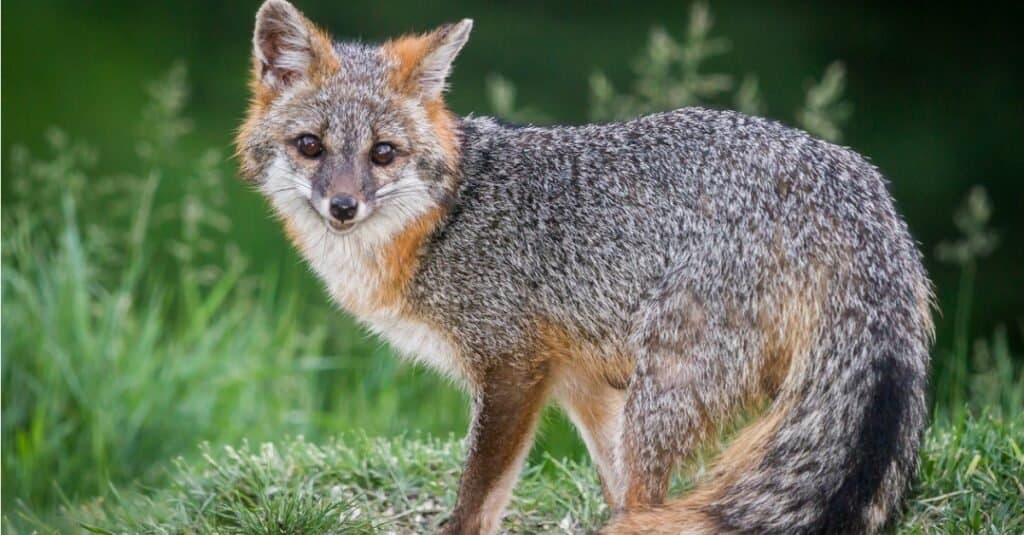
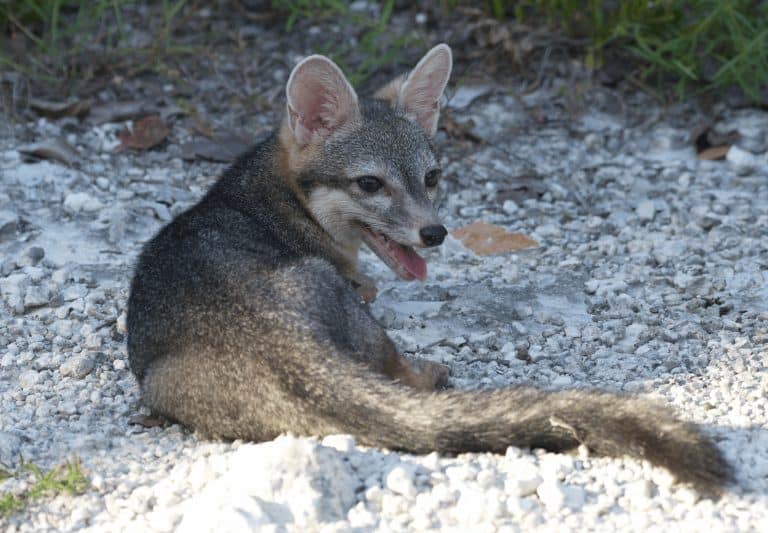
The gray fox is not a true fox as it is not a member of the Vulpes genus.
©iStock.com/johnpane
The gray fox stands 1 to 1.25 feet tall at the shoulder, measures 2.6 to 3.6 feet long on average, including the tail, and typically weighs 7 to 14 pounds. It has a short, catlike snout, short legs, and broad temporal ridges. The coat of a gray fox is silvery gray with red on the chest, legs, and around the ears. It has white markings on its face and legs and a black stripe on the tail. The most unique physical features of the gray fox are its partially retractable hooked claws and fully rotating ankles.
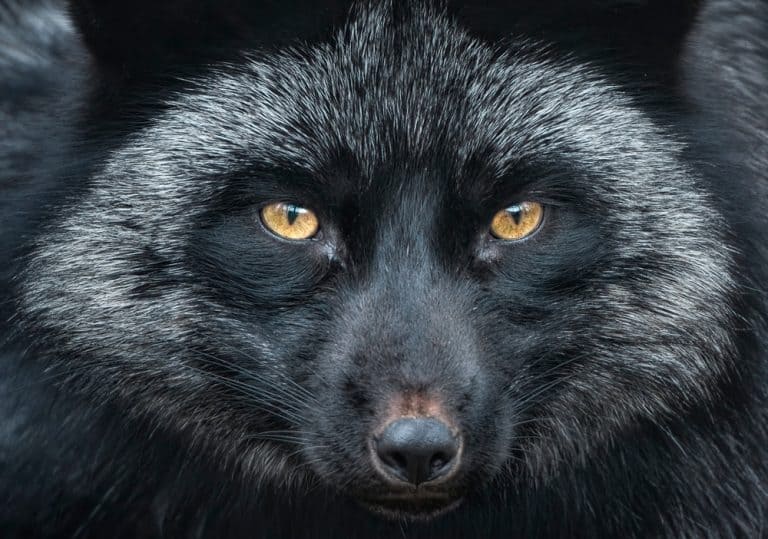
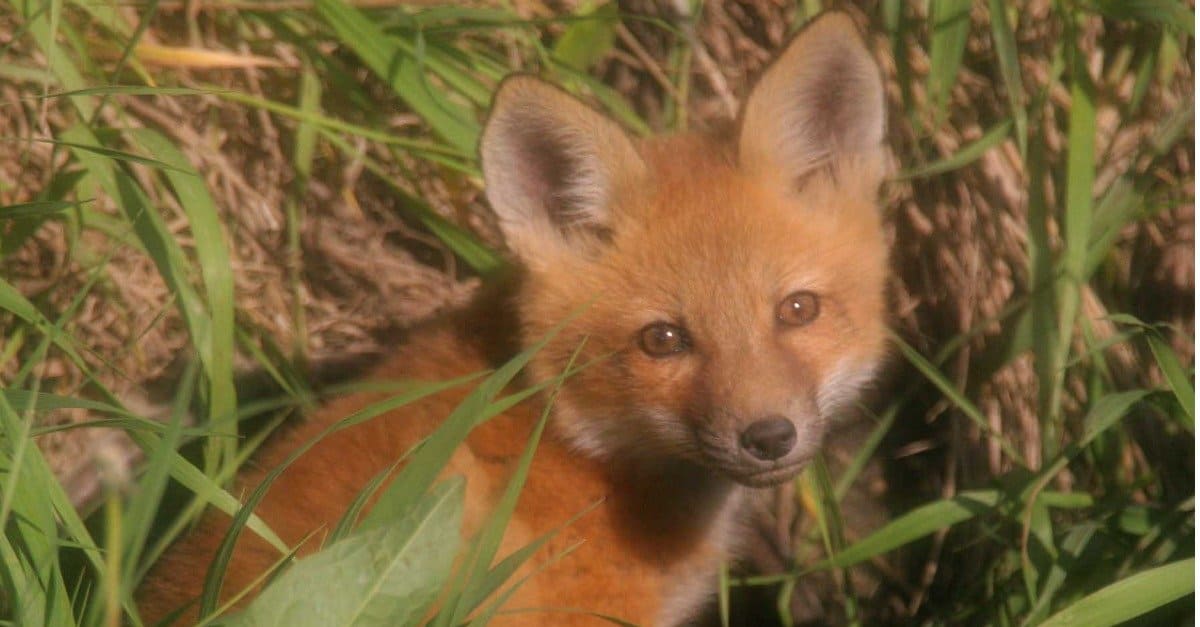
The red fox has a shoulder height of 1.2 to 1.5 feet, measures 3 to 3.5 feet long, including the tail, and weighs 8 to 24 pounds. While the red fox is known for its distinctive red coat of fur, it has other color variations. It can be gray, brown, red, black, or silver, depending on the subspecies. The red fox’s double coat of fur is soft underneath and coarse on the outside.
Distribution and Habitat
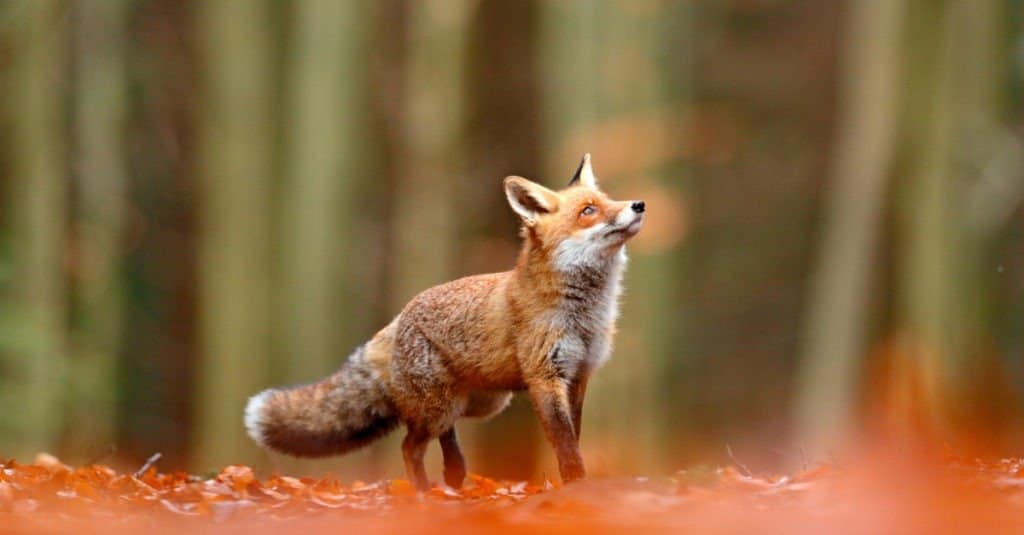
Red foxes are found in five of the seven continents.
©Ondrej Prosicky/Shutterstock.com
The red fox has an extensive native range that spans almost 27 million square miles across Europe, Asia, Africa, and North America. The species has also been introduced in Australia, where it has become an invasive species. In New Zealand, there is no established population of red foxes, and their import is illegal under the Hazardous Substances and New Organisms Act. Red foxes are highly adaptable, inhabiting a variety of environments, including forests, farmlands, grasslands, and urban areas. They are typically found at the edges where these different environments meet. Red foxes primarily live in open areas with dense vegetation and use underground dens during their breeding season, for raising kits, and as shelter from storms.
Gray foxes are endemic to the Americas, where their range extends from Southern Canada to Northern Colombia and Venezuela. They are the only extant canid species native to both North and South America. The gray fox’s habitats include woodlands, deciduous or mixed forests, overgrown fields, and rocky outcrops. Similar to the red fox, gray foxes have also been able to adapt to urban and suburban areas, particularly in Southeastern Mexico. They also frequent farmlands that border woody and forested areas. Gray foxes make their dens in trees, logs, burrows, and abandoned buildings. Their dens are used year-round and are typically better concealed than those of the red fox.
Prey and Predators
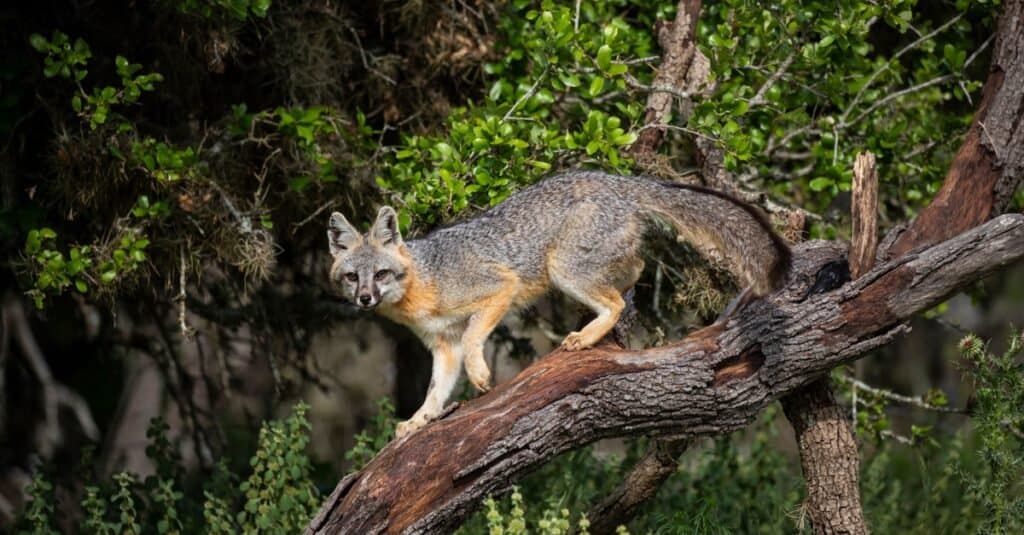
The gray fox is an adept climber that will scurry up trees to escape predators.
©Danita Delimont/Shutterstock.com
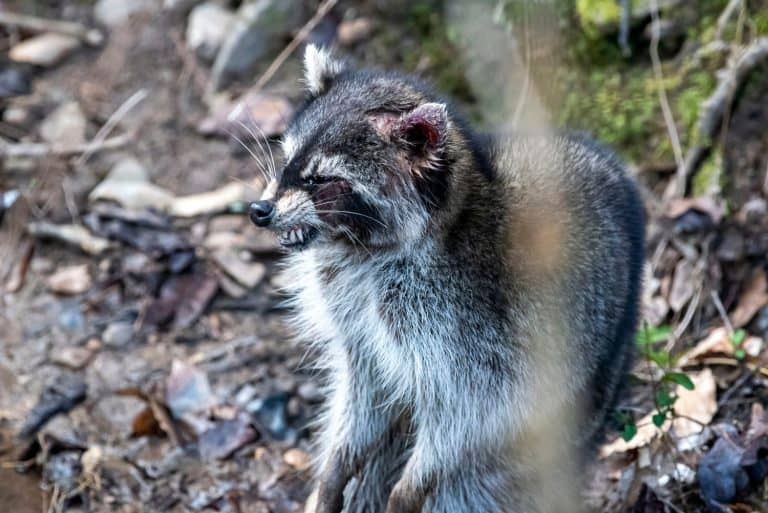
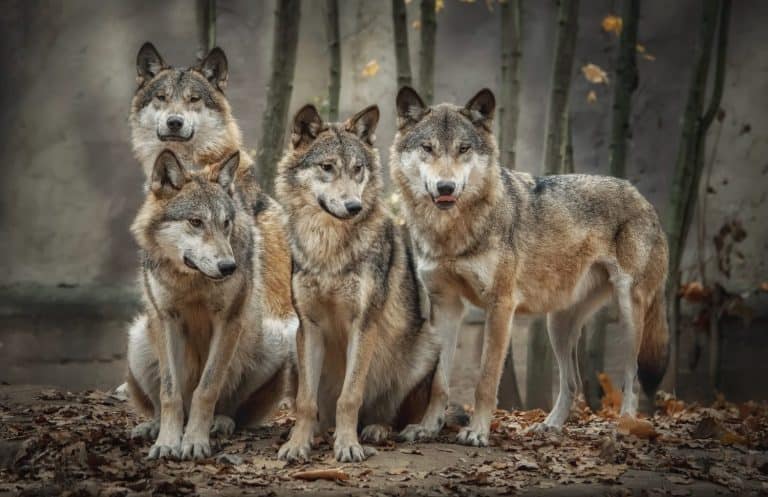
Both the gray fox and red fox are omnivores. In North America, these foxes often compete for prey because of their overlapping diets and distributions. Gray foxes also compete with coyotes and bobcats, which may kill them in acts of intraguild predation, often on or near the boundaries of their territories. Red foxes typically dominate other fox species when they overlap. However, the gray fox dominates the red fox. Red foxes compete with wolves, golden jackals, striped hyenas, common buzzards, and northern goshawks. They are often killed and eaten by wolves during carcass disputes and will steal kills from common buzzards and goshawks.
Red foxes are preyed upon by leopards, caracals, Eurasian lynxes, and golden eagles. Gray foxes are also preyed upon by golden eagles. Humans are major predators of both species, hunting and trapping them for fur and to protect livestock. Red foxes prey on a wide variety of animals, including small rodents, birds, raccoons, young ungulates, small reptiles, insects, invertebrates, and occasionally livestock. Gray foxes primarily prey on Eastern cottontail rabbits, but also hunt voles, rodents, shrews, and birds. The gray fox will also feed on carrion when it is available. Both species also eat fruit, with it making up to 100 percent of the red fox’s diet in the fall, and the gray fox is primarily herbivorous in some of the Western United States. The gray fox will eat fruit whenever it is available and typically consumes more fruit than the red fox.