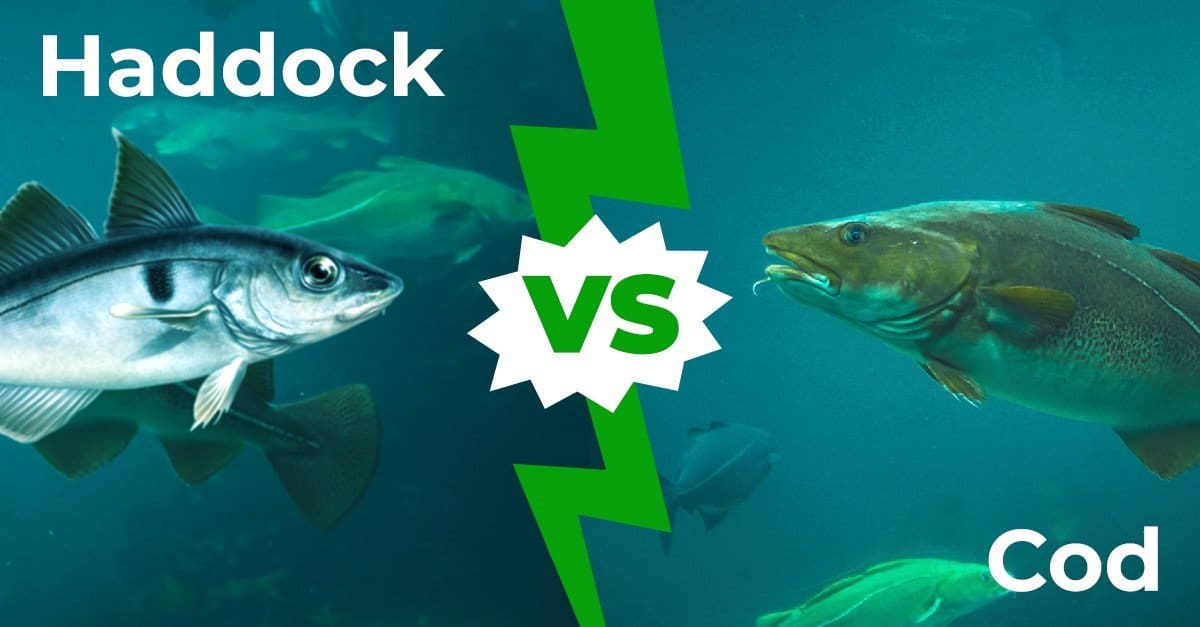

Haddock (Melanogrammus aeglefinus) and cod are both very popular white fish for human consumption. Atlantic cod (Gadus morhua) is the most harvested cod species, although Pacific cod (Gadus macrocephalus) is becoming more popular due to availability. Although both haddock and cod belong to the Gadidae family, also called the cod family, there are differences in habitat, physical appearance, and diet. They also differ in commercial use and nutrition. Find out what sets these two fish apart in our comparison of haddock vs. Atlantic cod.
Haddock vs. Cod Quick Comparison
The table below provides a quick comparison of the two fish.
| Haddock | Cod | |
|---|---|---|
| Habitat: | Western and eastern sides of the North Atlantic | Northwestern Atlantic |
| Physical Features: | More slender and darker in color with dark lateral lines; 3 feet long and up to 7 pounds | Stockier, lighter, more mottled skin with pale lateral lines; 4 feet long and up to 25 pounds |
| Diet: | Carnivorous; Feeding on fish, crustaceans, and marine invertebrates | Omnivorous; Feeding on fish, crustaceans, marine invertebrates, and some plant matter |
| Commercial Use: | Human consumption but a lower market share than cod; lighter flakes with a slightly sweeter, nuttier flavor | Human consumption with a higher market share than haddock; denser flakes with a more neutral flavor |
| Nutrition: | Higher in B vitamins | Higher in vitamin D, potassium, and phosphorous |
The 5 Key Differences Between Haddock and Cod
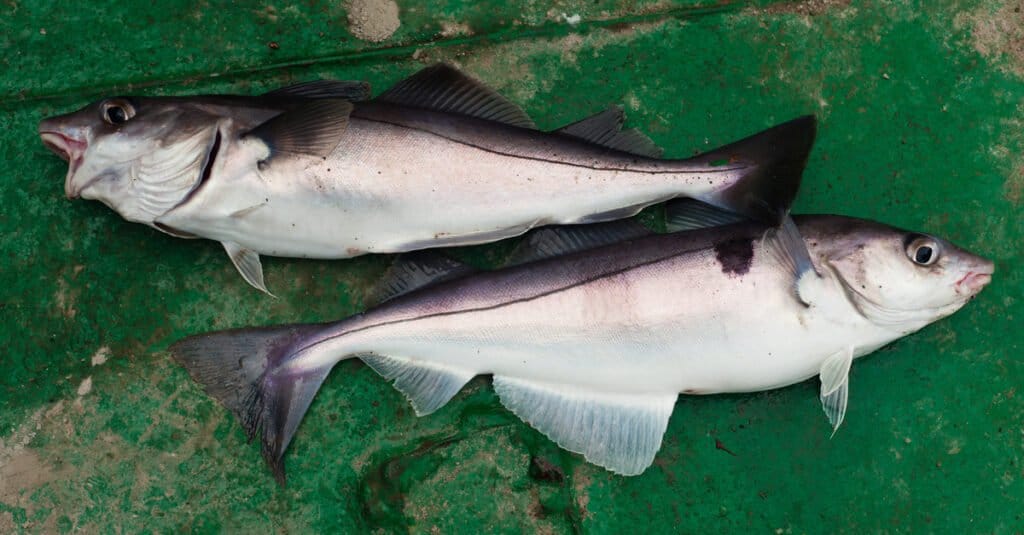
Similar to the cod, haddock is often caught for culinary purposes.
©Solodov Aleksei/Shutterstock.com
In this article, we will focus on the differences between haddock and Atlantic cod, as Atlantic cod is the most popular cod species and continues to dominate the global market. Take a closer look at the differences in habitat, physical features, diet, commercial use, and nutritional value in the paragraphs below.
Habitat
Haddock inhabit both the western and eastern sides of the North Atlantic Ocean. In the western North Atlantic closest to the U.S., they can be found from Newfoundland to as far south as New Jersey. Haddock live near the bottom of the ocean and prefer rocky substrates. They are typically found at depths between 130 and 500 feet.
Atlantic cod inhabit the northwestern Atlantic from Labrador to Virginia. They prefer to be close to the bottom of the ocean along ledges and rocky slopes. These fish are generally found at depths between 131 feet and 427 feet, with larger fish found in deeper, colder water. At night, Atlantic cod migrate vertically from the bottom up through the water column.
Physical Features
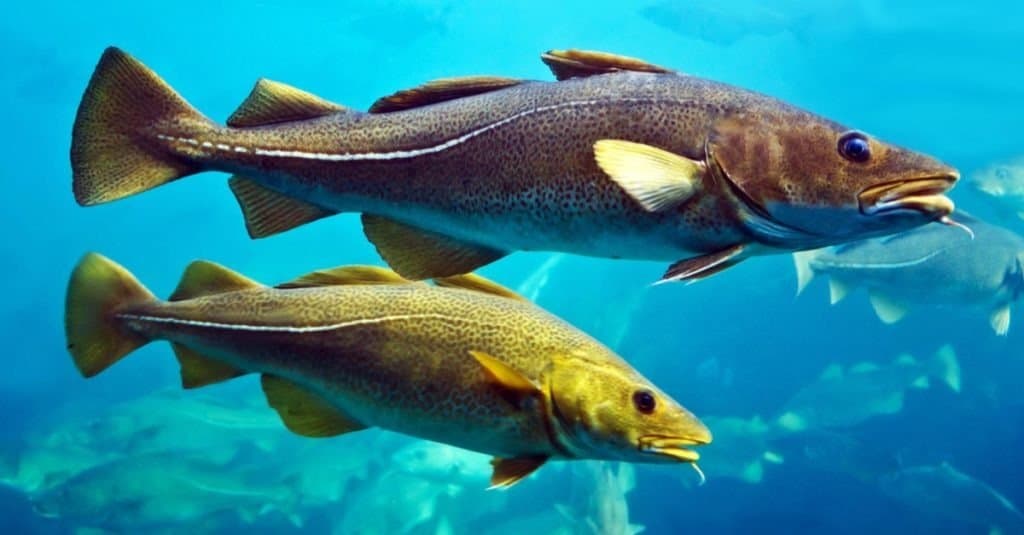
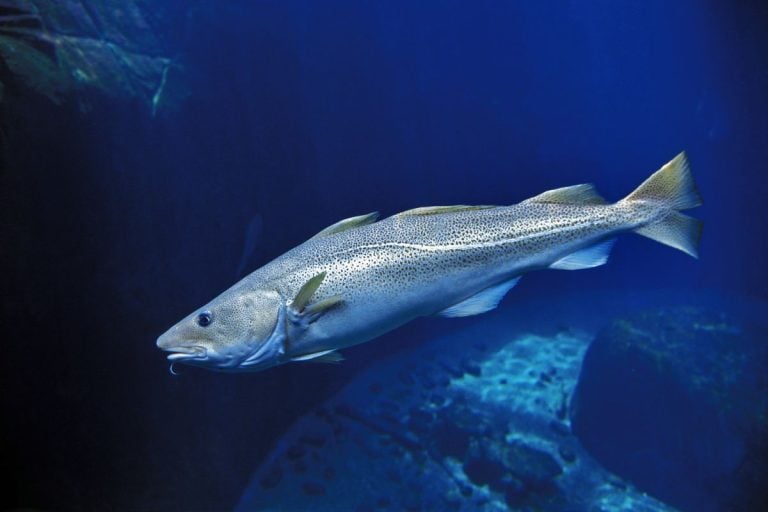
Cod are mottled greenish-brown to brownish grey with pale lateral lines.
©Travel Faery/Shutterstock.com
One of the easiest ways to tell a haddock from an Atlantic cod is its color. Haddock are darker, with blue-grey, brownish-grey, or dark grey on their upper sides and light, silvery colored bellies. They have a dark blotch above each pectoral fin referred to as a “thumbprint.” Haddock have black or dark grey lateral lines. However, the Atlantic cod is generally a mottled greenish-brown to brownish-grey with a lighter belly and pale cream or white lateral lines.
Haddock are typically smaller and more slender than Atlantic cod, reaching 1-3 feet long and weighing between 2 and 7 pounds. They have three dorsal fins, the first being noticeably pointed, and two anal fins. In contrast, Atlantic cod have more robust bodies and large heads. They can grow much larger, typically reaching up to 4 feet and weighing up to 25 pounds, with some individuals exceeding these sizes. They have blunt snouts and a chin barbel, or a whisker, similar to a catfish’s whiskers. Like the haddock, they also have three dorsal fins and two anal fins, but the cod’s dorsal fins are more rounded.
Diet
Haddock are carnivores. They rely on a diet of bottom-dwelling animals like worms, crustaceans, mollusks, sea urchins, sea stars, sand dollars, and fish eggs. Some adults also eat small fish like herring.
Atlantic cod are omnivorous, but their diet depends on their region. They eat smaller fish such as haddock and mackerel, crustaceans including crabs and lobster, invertebrates such as mussels, mollusks, sand eels, squid, and worms, and some plant matter. Cod can also be cannibalistic, although this is rare.
Commercial Use

Haddock is ideal for frying due to cooking more quickly.
©NORTHERN IMAGERY/Shutterstock.com
Both fish are prized for their commercial value, but Atlantic cod has a larger global market share than haddock. While the haddock market size was estimated to be around $715.98 million in 2024, the Atlantic cod market was estimated at $11.4 billion. Although haddock is more popular in certain regions, overall Atlantic cod is more popular due to its neutral flavor and firmer texture, which makes it more versatile. However, overfishing in the North Atlantic has made it necessary for fisheries to look for substitutes for Atlantic cod, which include Pacific cod and haddock.
The difference in flavor between these two white fish is subtle. Both fish have mild flavors, but haddock is said to be more flavorful, with a slightly sweeter, nuttier taste than cod. Atlantic cod is said to have a lighter, more neutral flavor with more salinity.
Haddock fillets are thinner and more fragile, with softer flakes. They are often fried, poached, or smoked and readily take on the flavor profile of sauces. Cod fillets are thicker and stay together well during the cooking process. Cod is more versatile than haddock and is often grilled, fried, or used as an ingredient in stews. Both cod and haddock are commonly used in fish and chips, a popular dish in the U.K.
Nutritional Value
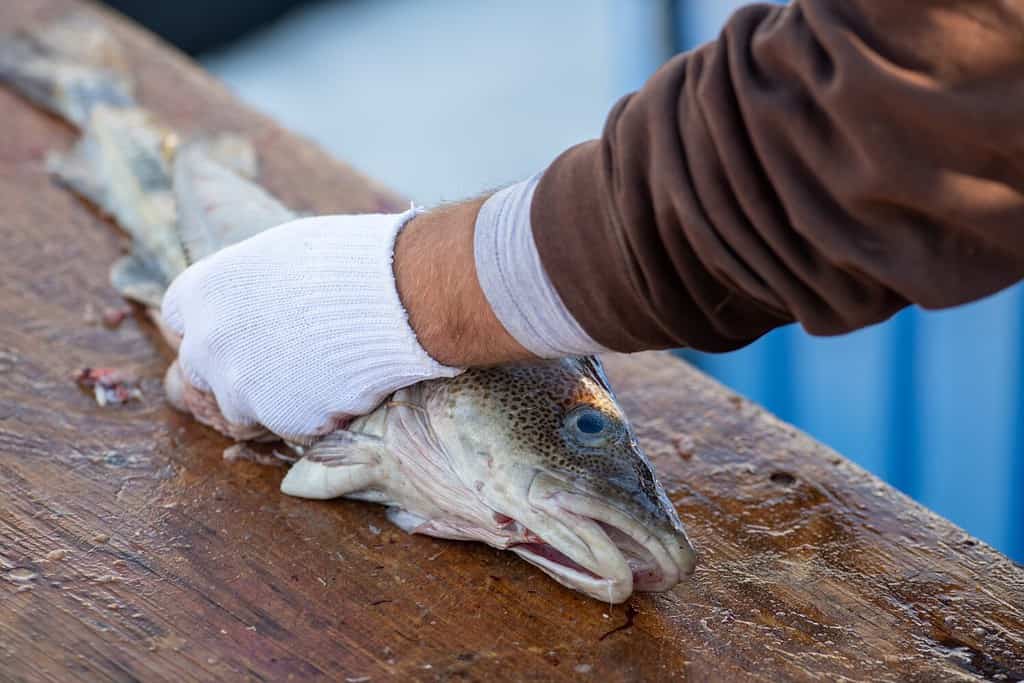
Cod contains more vitamin D than haddock.
©Dolores M. Harvey/Shutterstock.com
Both fish are considered low-fat and high in protein, with some sources indicating that cod generally has more protein than haddock. Haddock contains more vitamin B6, which supports nervous system function. Haddock is a better source of vitamin B12 and vitamin B3, which reduces the risk of anemia and improves metabolic function, respectively. However, haddock is higher in sodium than cod.
Cod is a good source of potassium, which can help lower blood pressure. It also contains magnesium, which can improve nerve and muscle function, as well as support bone health. Cod is higher in vitamin D than haddock, which helps boost immune function and can help your body absorb calcium, increasing bone health. Cod also contains more phosphorus, which can aid in tissue and cell repair. Click on the links to learn more about the nutritional values of haddock vs. the nutritional values of cod.