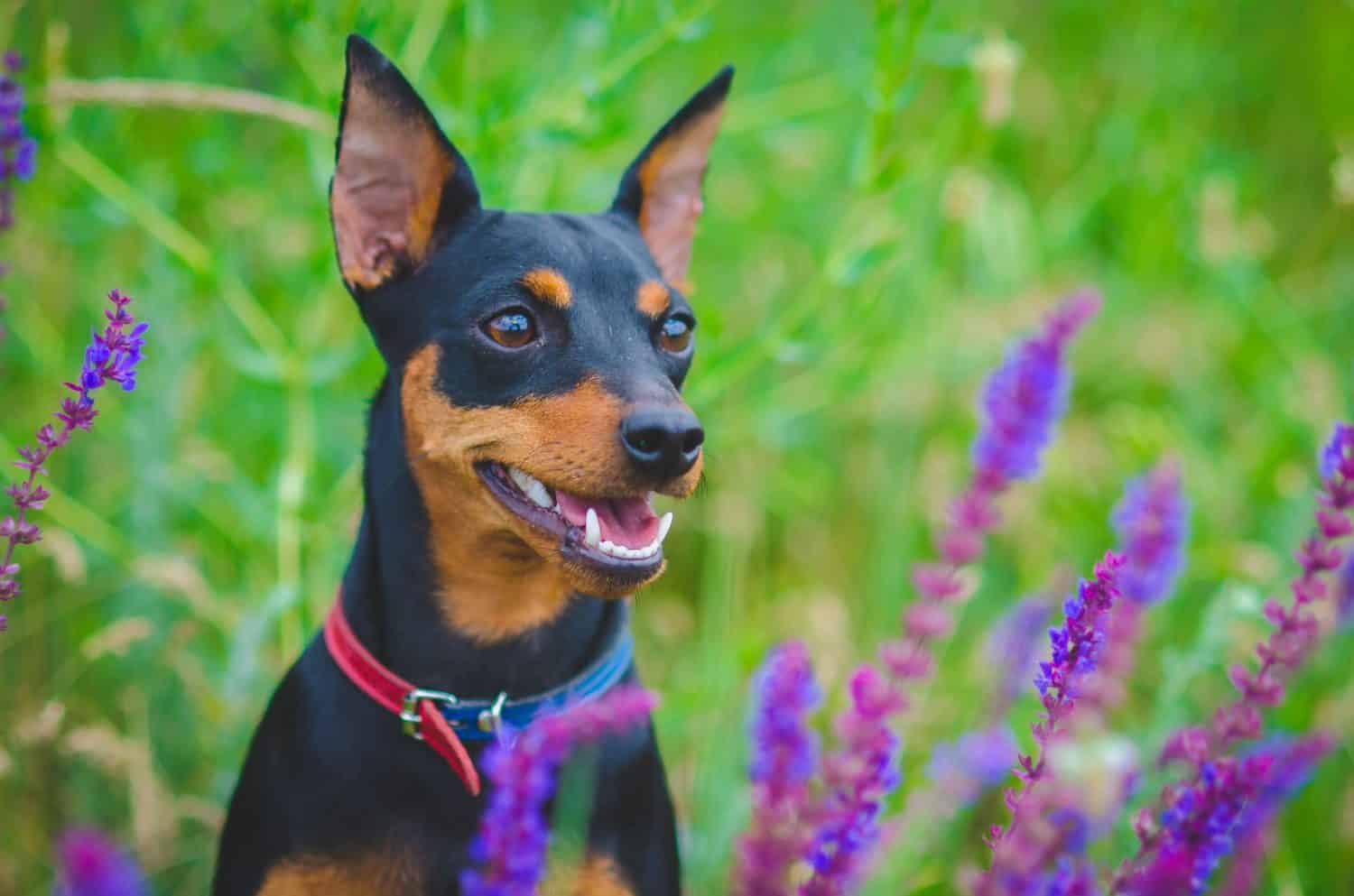

Chihuahuas and Miniature Pinschers (Min Pin) are both small dogs that share many traits. It’s no wonder many people mix up these two dog breeds. However, when you take a closer look, there are a number of differences. For example, a Min Pin’s head is elongated, and its body is square. Chihuahuas have varying head shapes, such as deer heads or apple heads. These dogs also have different character traits and health concerns. Check out our comparison of the Chihuahua and the Miniature Pinscher to discover what sets these breeds apart.
Chihuahua vs. Min Pin: Quick Comparison
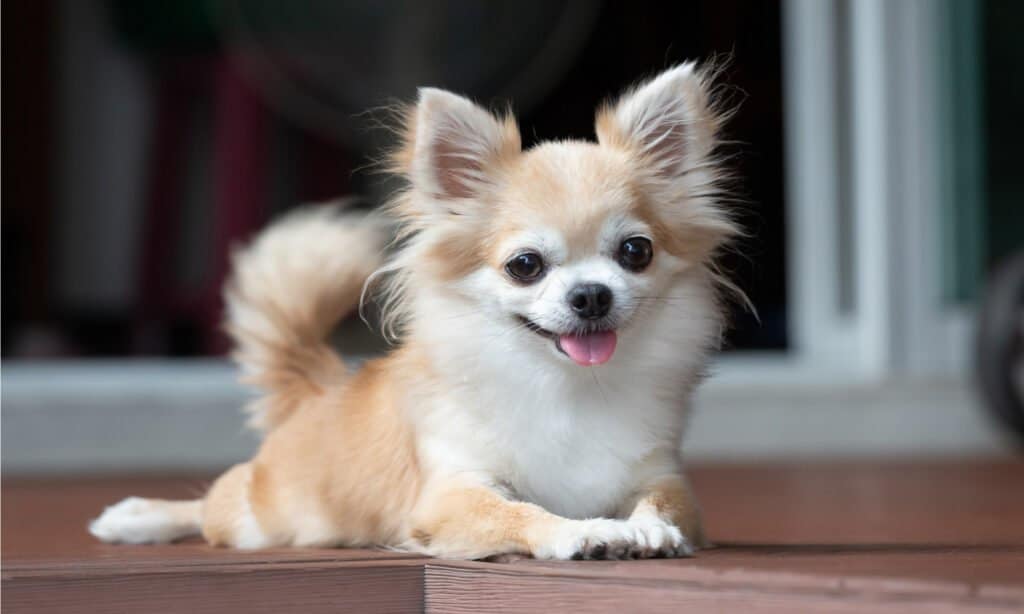
Chihuahuas are among the world’s tiniest dog breeds.
©Ratchat/Shutterstock.com
| Key Differences | Chihuahua | Miniature Pinscher (Min Pin) |
|---|---|---|
| Size | 5–8 inches; 2-6 pounds | 10–12.5 inches; 8-10 pounds |
| Coat Type | Smooth-coat or long-haired | Smooth and shiny |
| Color | Chocolate, fawn, tan, cream, red, black | Rust, chocolate, red, tan, black |
| Temperament | Alert, devoted, lively, quick, independent, sassy; not recommended with young children | Clever, playful, energetic, outgoing, independent; affectionate, protective |
| Energy Level | Above average; can get plenty of exercise in a small space | Above average; require mental stimulation |
| Health Problems | Heart problems, eye disease, epilepsy | Legg-Calve-Perthes disease, thyroid, progressive retinal atrophy |
| Life Expectancy | 14 to 18 years | 12 to 16 years |
Key Differences Between a Chihuahua and a Min Pin
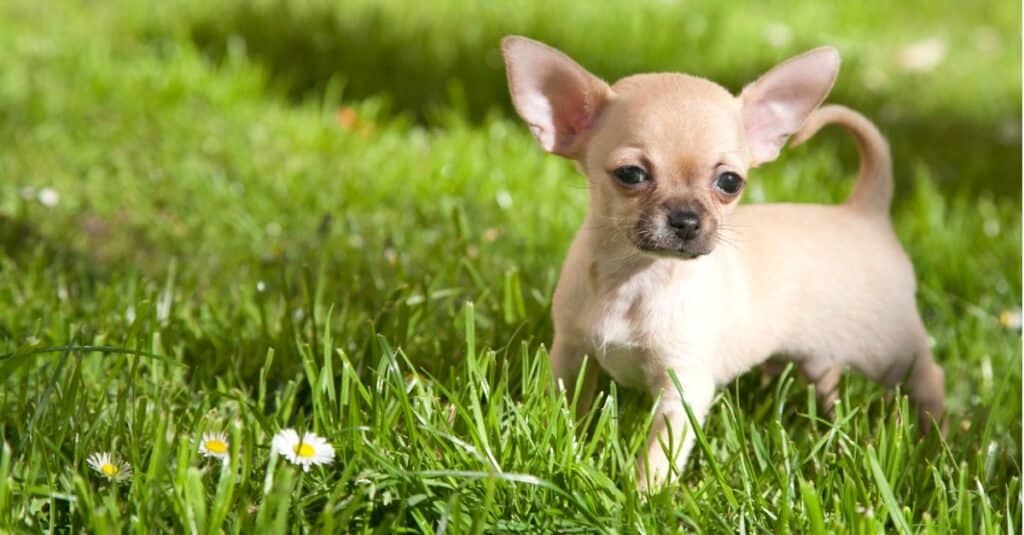
Tiny, curious, and devoted, the Chihuahua is a very charismatic breed.
©iStock.com/Coica
As mentioned above, since these are both small breed dogs, there are some similarities in both looks and character traits. However, they differ in size, coat type, color, temperament, energy levels, health problems, and life expectancy. Take an in-depth look at each of the differences in the paragraphs below.
Size
Chihuahuas are among the world’s tiniest dog breeds. Both males and females measure from 5 to 8 inches tall and weigh no more than 6 pounds.
Male and female Min Pins range in height from 10 to 12.5 inches. The Min Pin is commonly referred to as the King of Toys, despite their diminutive stature. Min Pins are generally between 8 and 11 pounds in weight.
Coat Type
The Chihuahua has two coat types: short-haired, often called smooth-coat, and long-haired. The sleek, straight coat of the Chihuahua sits close to its body. The coat is of medium thickness — not too thin or too thick. However, both coat types can have a double coat. The long coat is longer than that of many other small dogs, but it does not reach the floor. The ears, mane, underbelly, and tail are thicker. Long-haired Chihuahuas shed as much as short-haired ones.
A Min Pin’s coat is short, smooth, and shiny. It has no undercoat and lies close to the body. Although it sheds infrequently, you should expect your Min Pin to shed from time to time. Fortunately, shedding is easy to manage with regular grooming.
Color
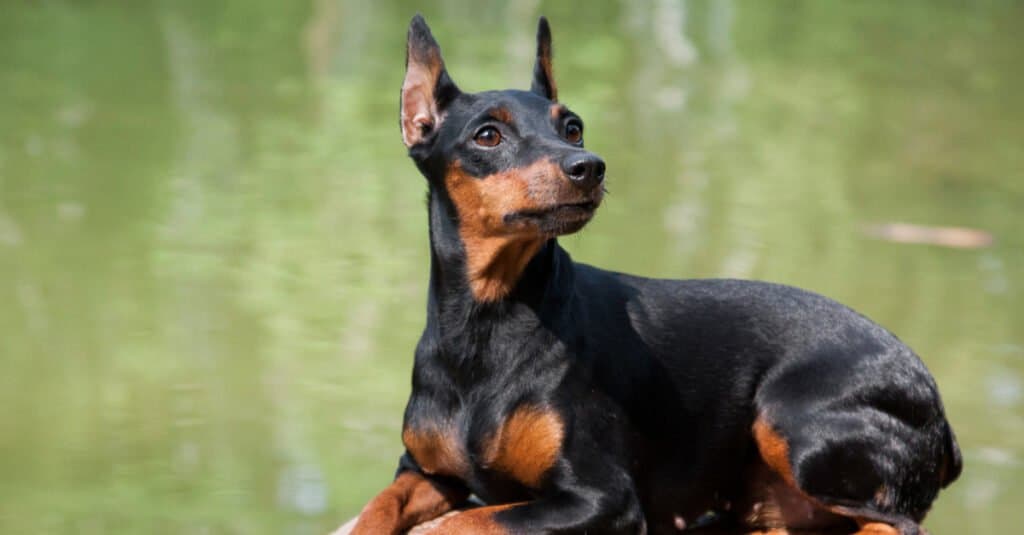
Miniature pinschers can be black with defined rust-red markings.
©katamount/Shutterstock.com
Chihuahuas are one of the world’s most colorful dog breeds. There are many non-standard colors listed on the American Kennel Club’s (AKC) Chihuahua webpage. It is easy to see why kennel clubs only accept a few as breed standard. However, the AKC states that any color — whether solid, marked, or splashed — is permissible for Chihuahuas. Common colors include chocolate, fawn, tan, cream, red, and black.
The Min Pin can be solid red, Stag red, black with defined rust-red markings, and chocolate with defined rust-red markings. Any other colors are disqualified in the show ring. However, there are other non-standard colors than can be registered according to the AKC’s Miniature Pinscher webpage.
Temperament
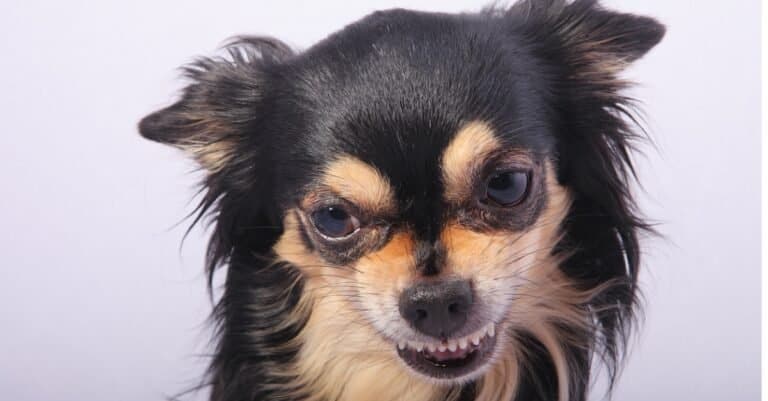
Chihuahuas are inherently territorial and protective of their owners. They show their teeth, snarl, bark, and bite when they feel the need to defend themselves. They are not generally recommended for young children due to their small size. This breed’s alertness and wariness of strangers make them great watchdogs. They are also loving but sensitive. They are reserved with outsiders and typically bond with one family member. However, Chihuahuas can be pleasant and accepting of others if well-socialized early on. They are smart and eager to please, so they can be trained with a firm but gentle hand and plenty of positive reinforcement.
The Min Pin is an independent, self-assured pup. These dogs are fearless, vigilant, and inquisitive. They are good watchdogs since they are naturally curious and protective. Miniature pinschers are affectionate with family and enjoy being the center of attention, but separation anxiety can occur when they are left alone for too long. They get along with children and other dogs; however, they are very possessive of their food and toys. Min Pins are intelligent and can challenge their owner’s limits, so early training and socialization are recommended.
Energy Levels
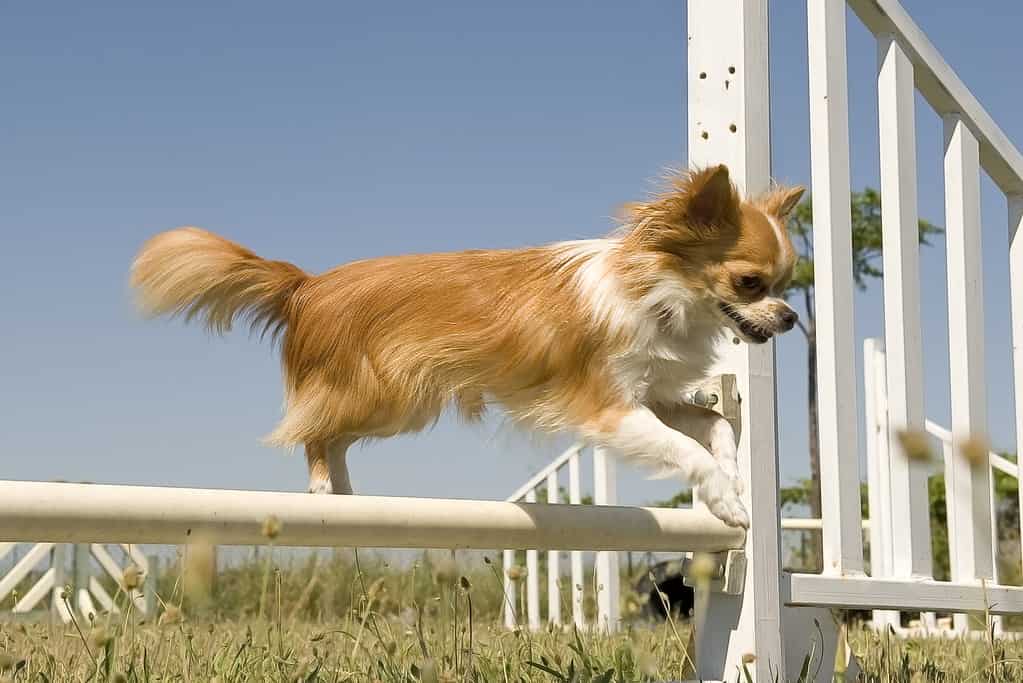
Chihuahuas are very active and love to play.
©iStock.com/cynoclub
Despite their small statures, both the Chihuahua and the Min Pin are very active and need regular exercise. Chihuahuas love to play and will do so for as long as you let them. They enjoy fetching toys, touring the neighborhood, and playing in the backyard. Due to their small size, they can get plenty of exercise in a small space.
Min Pins are a high-energy breed that needs ample time to run and play. However, they also require mental stimulation to keep them from becoming bored and causing mischief. Long walks with their humans plus puzzle toys or training will help keep your Min Pin busy and fit.
Health Problems
Chihuahuas can be prone to eye disease, heart problems such as mitral valve disease, and they can suffer from patellar luxation, or loose kneecaps. The AKC also notes that idiopathic epilepsy is known to occur in Chihuahuas.
Miniature Pinschers may suffer from Legg-Calve-Perthes disease, patellar luxation, thyroid issues, and cardiac problems. They are also known to suffer from progressive retinal atrophy (PRA), a disorder that causes slow degeneration of the retina.
Life Expectancy
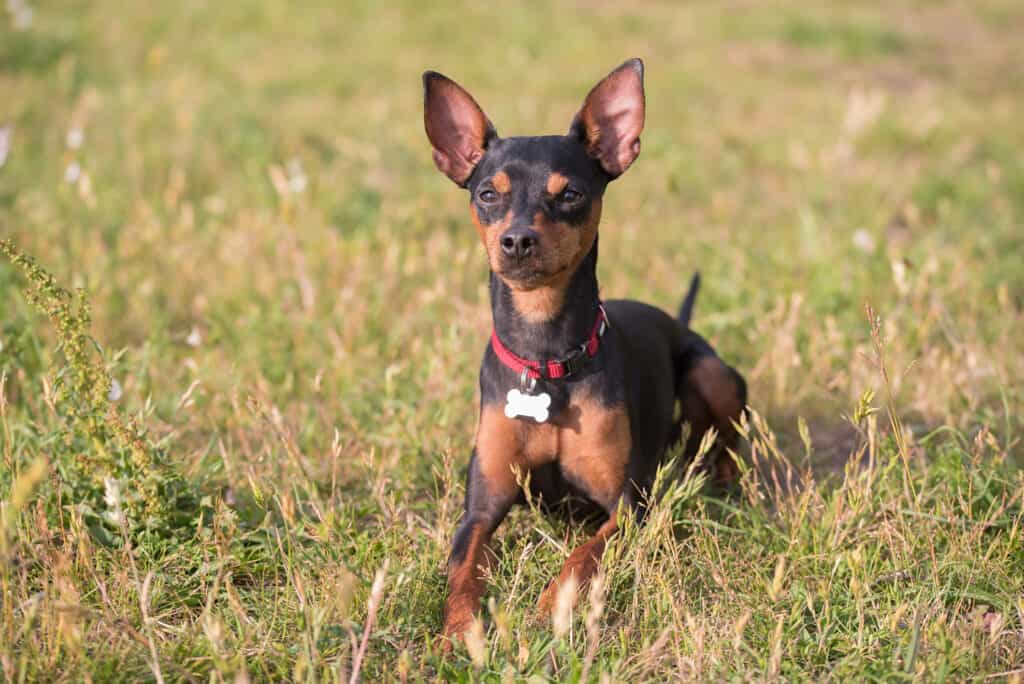
Miniature pinschers generally live between 12 and 16 years.
©iStock.com/sssss1gmel
The Chihuahua is a generally healthy breed that lives for 14 to 18 years on average. Some may even live as long as 20 years! They are one of the longest-lived dog breeds.
The average lifespan of a Miniature Pinscher is around 12 to 16 years; however, some pups have been known to live longer. Many factors, including your dog’s nutrition and exercise routine, can influence their life expectancy.
What Kind of Dog Is a Cross Between a Chihuahua and Min Pin?
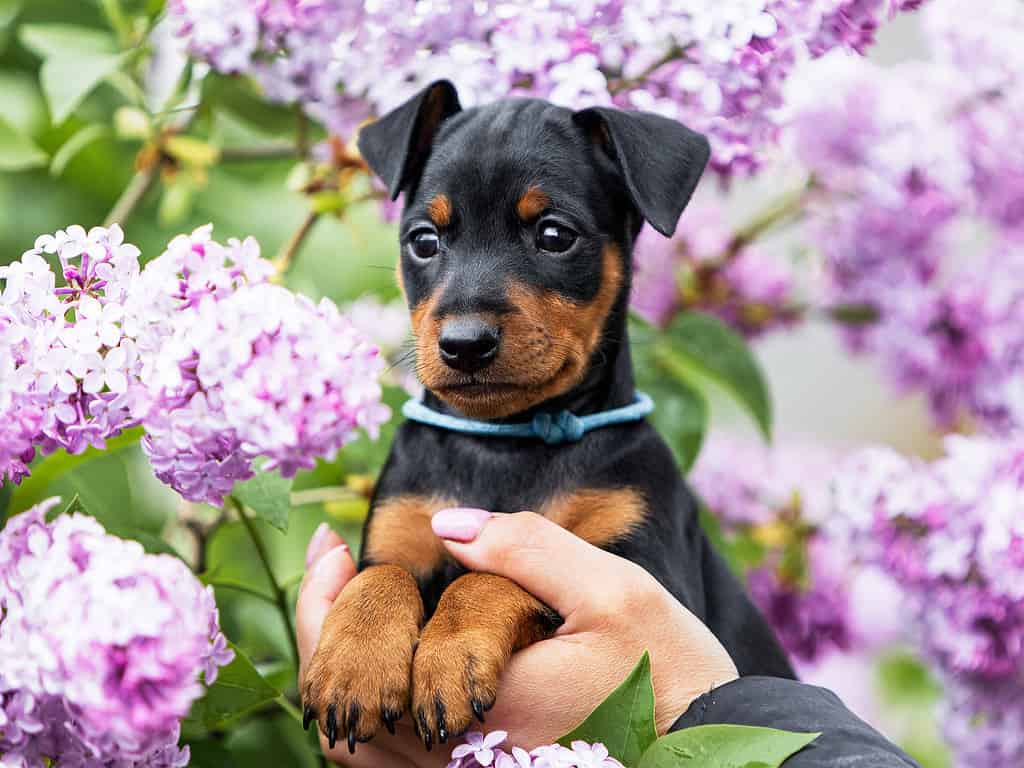
Chipins may resemble their miniature pinscher parent, shown above, and match their energy as well.
©Evgenia Glinskaia/iStock via Getty Images
Sometimes when looking to adopt a dog, you don’t know which one to choose. You may have it narrowed down to a Chihuahua and a Min Pin but aren’t quite sure which one is for you. However, you may not have to choose one or the other — you can simply choose the Chipin! They also go by the names Pinhuahua and Minchi.
The Chipin is a cross between the Min Pin and a Chihuahua, and while it likely existed naturally, it is believed to have been “invented” in the early 2000s. This small cross-breed is between 8 and 10 inches tall and can weigh between 5 and 15 pounds. Their coats are typically short and come in a variety of colors, ranging from tan to black to chocolate. These mixed breed pups are thought to be very intelligent and quick to learn. Because they tend to be territorial, early socialization is important.
Wrapping Up
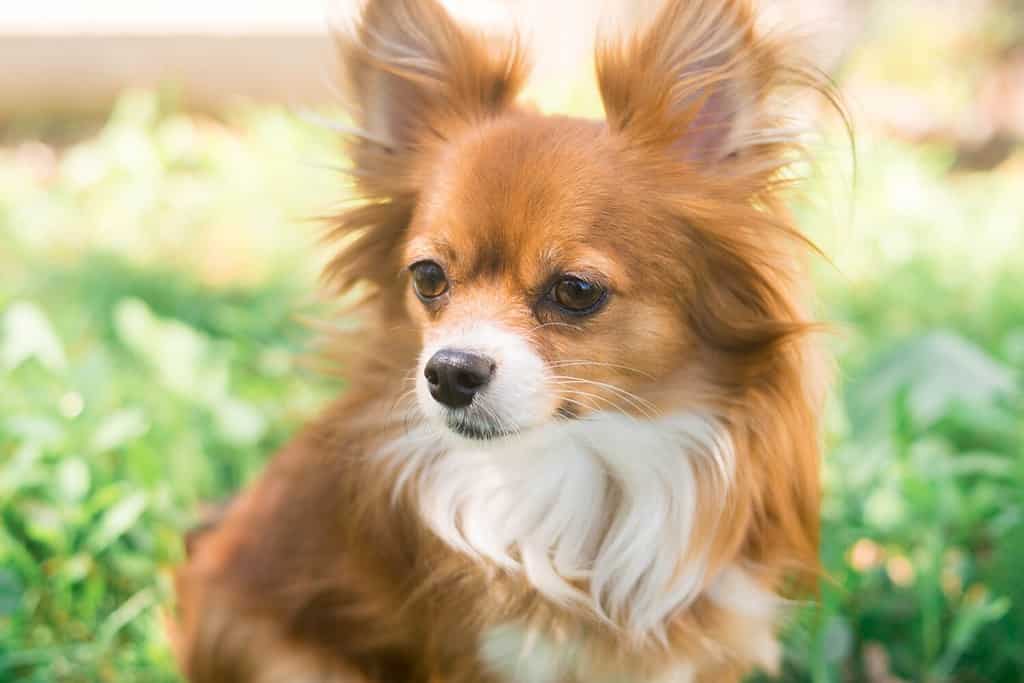
Chihuahuas’ small size makes them fragile.
©Lisa Chip/Shutterstock.com
There is no such thing as a better or worse dog breed. What matters is that the breed you choose best suits your family, interests, and lifestyle. Both the Min Pin and the Chihuahua can be ideal family dogs. They are both smart and affectionate, but the Miniature Pinscher is more independent and difficult to manage than a Chihuahua. Additionally, Chihuahuas are not generally recommended for families with young children as their small size makes them fragile. Both breeds may thrive anywhere as long as they get plenty of exercise and ample time with their owners.