


Quick Take
- Laying 500 million eggs is a vital survival requirement for Atlantic cod populations.
- Maturity delays of 8 years create severe population recovery challenges for Arctic stocks.
- Modern DNA sequencing proves the evolutionary tree is actually an unexpected connecting web.
- Traveling 200 miles to specific breeding grounds is a mandatory phase of the spawning cycle.
Codfish is a type of saltwater fish, with “cod” the common name for the demersal or groundfish genus Gadus. The most common species are the Atlantic cod and Pacific cod, which are closely related. Both species are popular as food with somewhat different flavor profiles, while the livers from both species are used to make the popular home remedy of cod liver oil. Atlantic cod is classified as Vulnerable due to high demand.

4 Incredible Codfish Facts
- Codfish are carnivorous and eat other fish.
- They can travel up to 200 miles to reach breeding grounds during the mating season.
- Females can lay up to 5 million eggs, with most being eaten by other fish and sea creatures.
- Humans are the main predators of cod, but adult cod are also preyed upon by sharks, spiny dogfish, and marine mammals. Juvenile cod are eaten by larger fish, including adult cod, and other marine predators
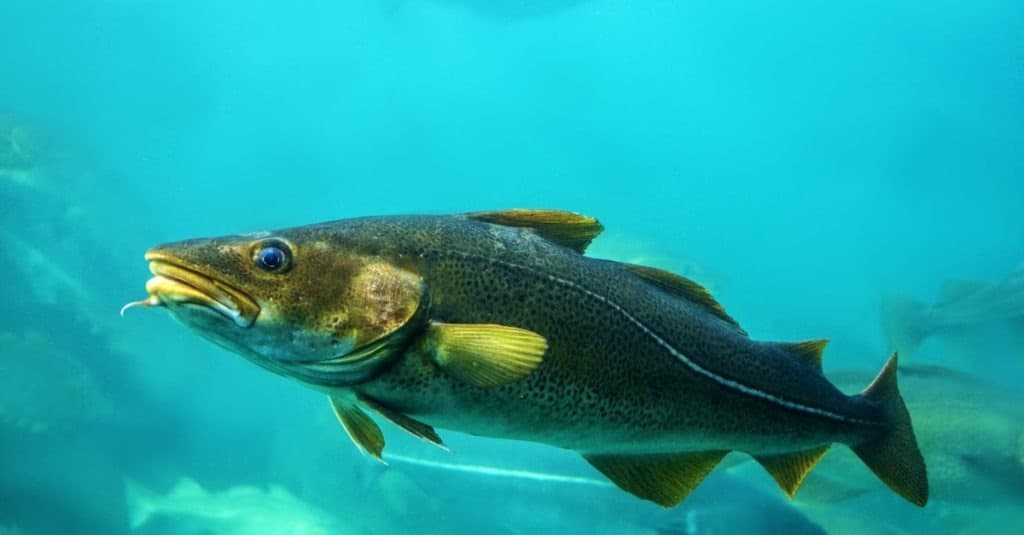
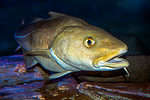
Codfish are carnivorous and eat other fish, including their own species.
©Travel Faery/Shutterstock.com
Classification and Scientific Name
The word “cod” refers to the genus Gadus, but specifically to members of the Atlantic cod or true cod family Gadidae, as well as three related families in the order Gadiformes. Gadus includes eel, flatfish, ray, and pollock, and “cod” can mean Atlantic cod, Pacific cod, or any species of hake, pollock, or haddock. However, some species belonging to the Gadus genus, such as the Alaska pollock (Gadus chalcogrammus), are not commonly referred to as cod.
Many fish species in the order Perciformes are also referred to as “cod,” although they are not true cod. These include blue cod (Parapercis colias), trout cod (Maccullochella macquariensis), and the notothens (cod icefishes) of the family Nototheniidae containing the Antarctic cod (Dissostichus mawsoni), black cod (Notothenia microlepidota), and Maori cod (Paranotothenia magellanica).
Coral cod, reef cod, and rock cod are also in the order Perciformes. Many species are groupers that are in the same order but in the family Serranidae and subfamily Epinephelinae. Haddock (Melanogrammus aeglefinus) and Whiting (Merlangius merlangus) both belong to the Gadidae family and are sometimes sold as cod.
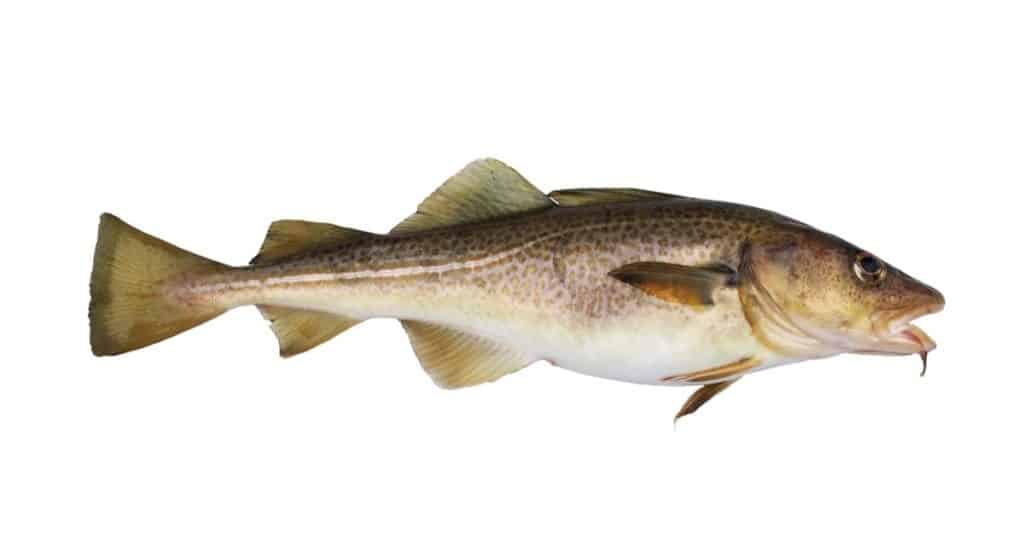
“Codfish” refers to true cod, while “cod” can be the common name for both true cods and cod-like fish.
©Krasowit/Shutterstock.com
Types of Codfish
The species of codfish are:
- Atlantic cod (Gadus morhua): This species is also called haberdine, codling, scrod cod, sacred cod, market, or steaker.
- Pacific cod (Gadus macrocephalus): This cod is also known as greyfish, grey cod, grey wolf, Alaska cod, true cod, or Tara.
- Alaska pollock (Gadus chalcogrammus): Closely related to Atlantic cod, this is not usually known by its alternative name of snow cod or bigeye cod, but as walleye pollock.
Commonly called ogac, Greenland cod (Gadus ogac) is considered by some to be a different species but is thought by many to be synonymous with Pacific cod.
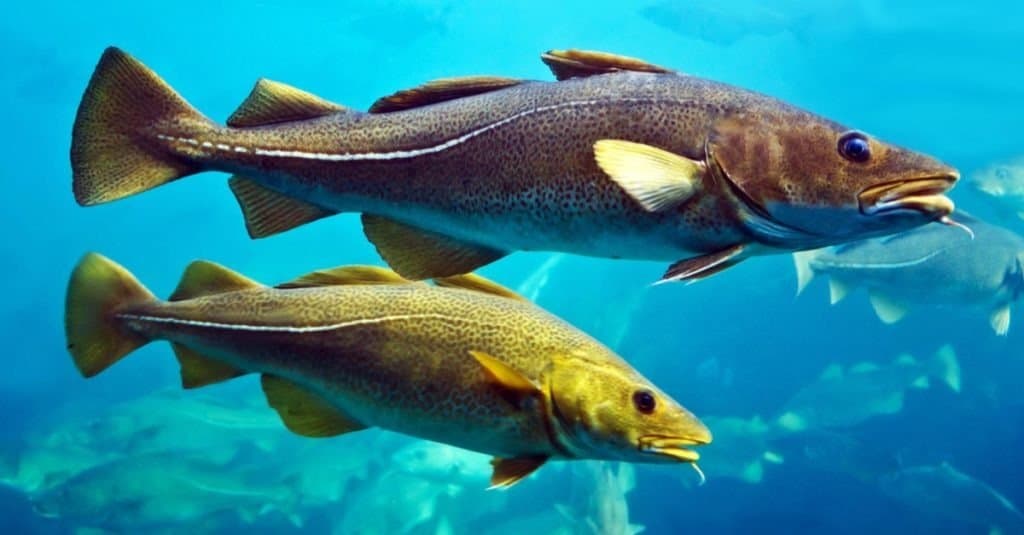
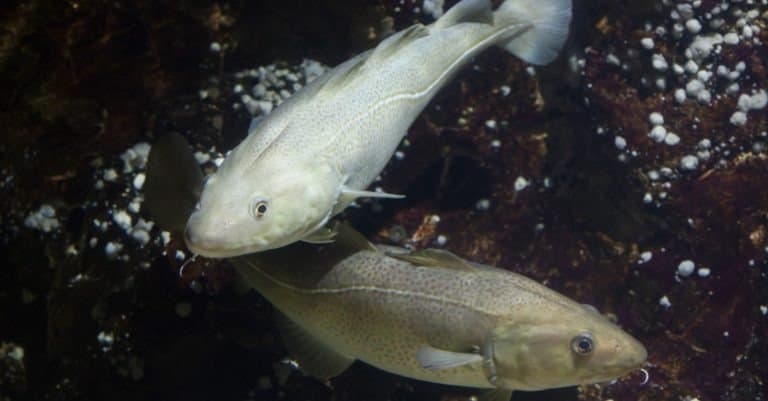
There are three recognized species of cod.
©Travel Faery/Shutterstock.com
Evolution and Origins
A few million years ago, following their migration to the Pacific, the ancestors of the Atlantic cod were responsible for the creation of the Pacific cod and Alaskan pollock. DNA sequencing of types of cod in the Atlantic, Arctic, and Pacific by scientists from the University of Iceland showed in 2019 that the evolutionary history of codfish could be seen as a connecting web rather than a traditional tree. The scientists found the Atlantic cod hybridized with species present in the Arctic to create the Alaskan pollock species, and the genes resulting from this crossbreeding enable the codfish to easily adapt to new habitats and become a dominant predator within an ecosystem.
Codfish has a long history as a worldwide commodity that can be traced back to Viking times around 800 AD. Norwegians developed the dried cod market in the south of Europe that lasted over 1,000 years, while the Portuguese started fishing cod in the 1400s and played a vital role in building cod markets. In the New World, particularly in North America, in Massachusetts and Newfoundland, during the 1600s and 1700s, cod was a big commodity and opened up trade networks. In the 1900s, Iceland re-established itself as a major player in the cod markets. In recent years, fishing in Europe and America has led to significant management changes for cod stocks, including quota reductions and new regulations to help rebuild populations. In some regions, such as the Gulf of Alaska, improved stock assessments have allowed for quota increases for Pacific cod in 2026.

Codfish began to be used as a commodity around Viking times.
©iobard/Shutterstock.com
Appearance
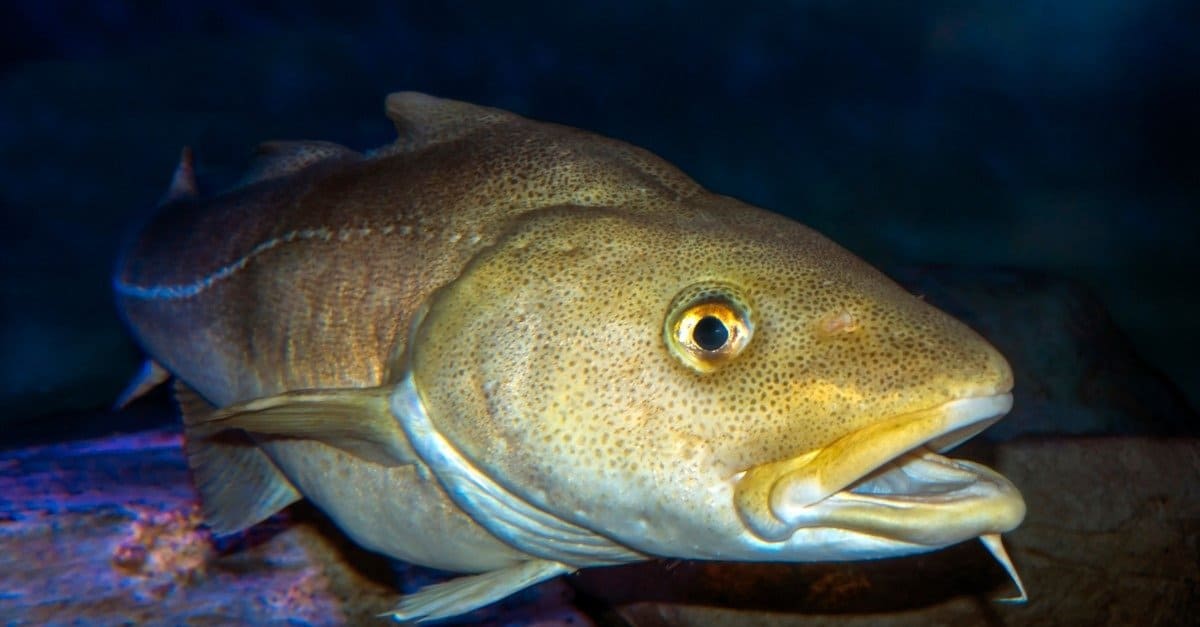
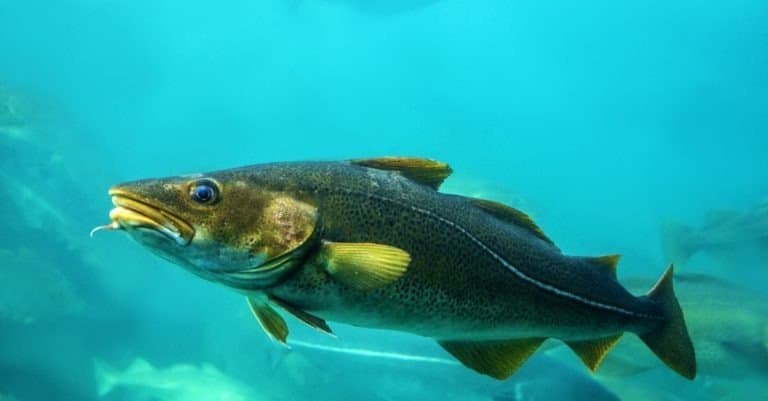
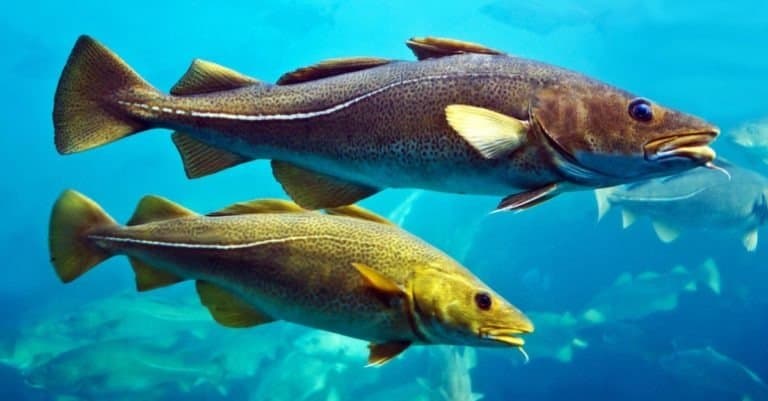
Codfish have three rounded dorsal and two anal fins. Their pelvic fins are fairly small, and with the first ray extended outward, they are set under the gill cover, or better known as the throat area, seen in front of the pectoral fins. The codfish has an upper jaw over its lower jaw, which has a beard-like barbel on its chin, which serves as a sensory organ for finding food.
Their eyes are mid-sized and are about the same length as their chin barbel. Codfish have a distinctive white lateral line that runs from their gill slit above their pectoral fin to the base of their tail fin that serves to detect motion, vibration, and pressure in the surrounding water.
Codfish’s backs tend to be green to sandy brown and may show signs of mottling. This can often be seen near the whiter sides and belly. On top of the cod, you can notice a darker brown coloration. Colors may vary depending on where the codfish is from. Codfish have a generally green-brown color that can range from grey-green to red-brown, with a lighter underside and white underbelly.
They also have dark speckles on their sides. Finally, a structure in the skull called an otolith has visible rings, the number of which determines the cod’s age.
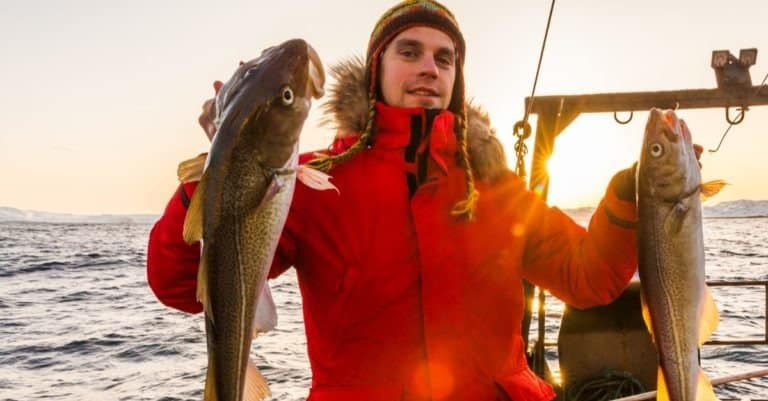
Pacific cod is smaller and darker than Atlantic cod, weighing up to 50 lbs (22.7 kg) with an average of 33 lbs (15 kg). True to its nickname of gray cod, it is brownish-gray in color. Atlantic cod can reach up to 220 lbs (100 kg) with an average of 212 lbs (96 kg) and has a silvery subcutaneous layer with a body that is yellow-green or red and olive in color.
Length-wise, they can be anywhere from 77 to 200 cm (30 to 79 inches) with an average of over a meter (51 inches).
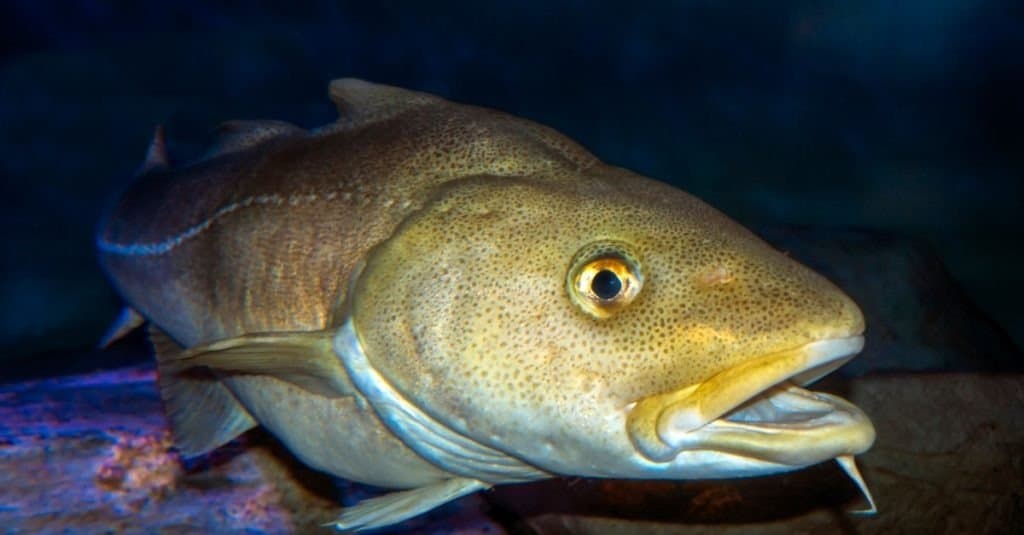
Atlantic cod can grow up to 220 lbs.
©Miroslav Halama/Shutterstock.com
Habitat
The Atlantic cod lives in the deep, cold waters of the North Atlantic. Pacific cod lives in both the eastern and western areas of the northern Pacific, including Alaskan and Russian waters. Both can be found at a depth range of 20 to 200 ft, with the Pacific cod at 900 m (3,000 ft). As groundfish, they live and feed on the seafloor.
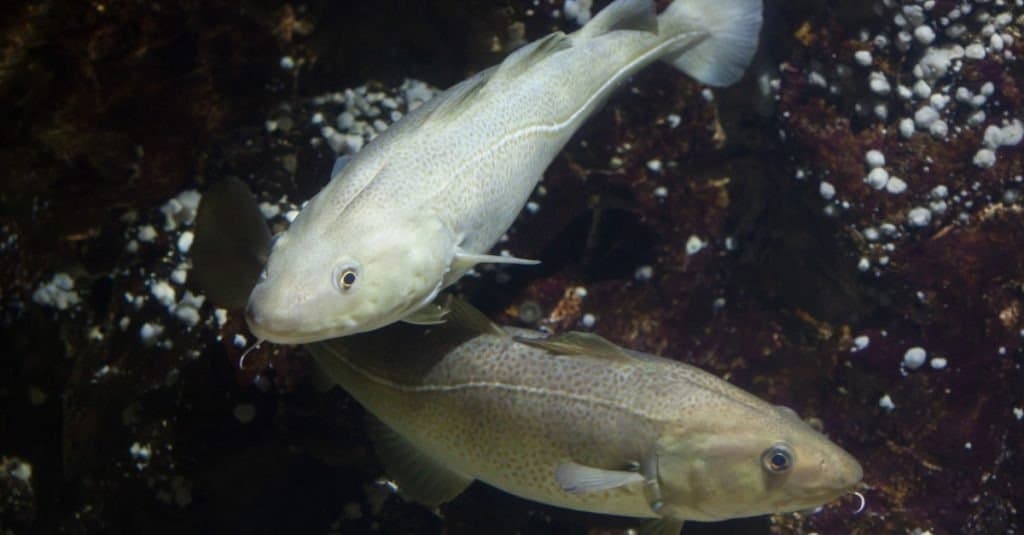
Codfish can be found in the Atlantic and Pacific oceans.
©Vladimir Wrangel/Shutterstock.com
Diet
Codfish are carnivorous and eat a variety of animals such as smaller fish (prey fish or baitfish), crustaceans, and invertebrates. Their diet includes crabs, haddock, lobsters, mackerel, mollusks, mussels, sand eels, squid, whiting, and worms. They can be cannibalistic, as adults may prey on young codfish.
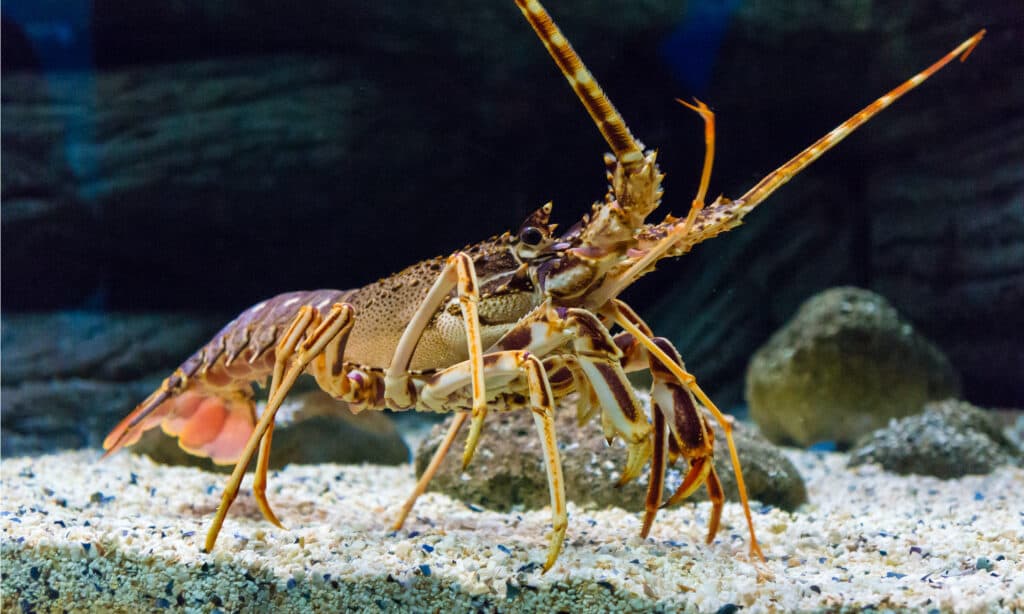
Codfish eat a range of animals, including lobster.
©Gilmanshin/Shutterstock.com
Predators and Threats
While humans are the primary predators of codfish, they are also preyed upon by sharks, spiny dogfish, marine mammals, and larger fish, especially during their juvenile stages. Juvenile codfish may also become prey to adult codfish.
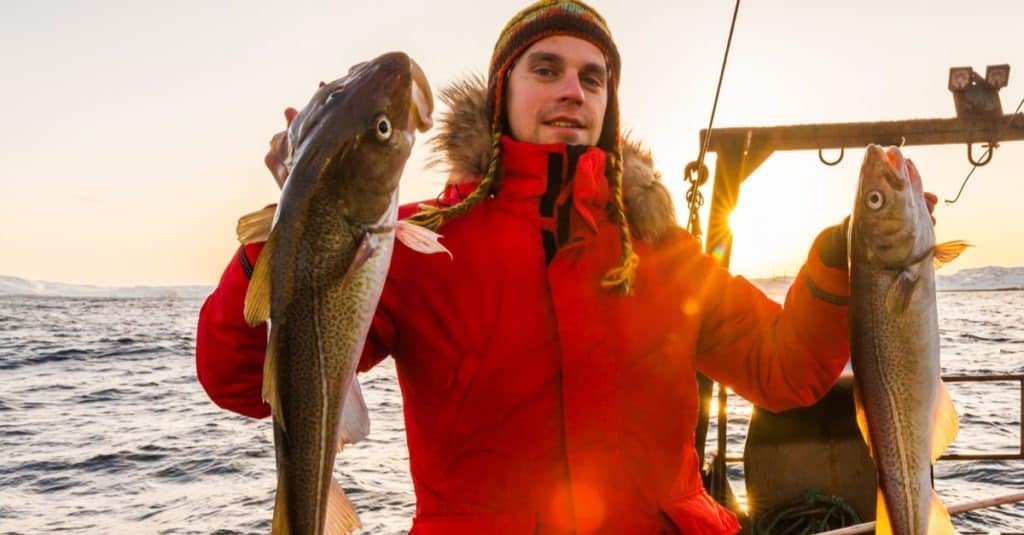
The main threat to codfish is overfishing by humans, but they are also preyed upon by other marine animals and affected by environmental changes.
©Anton Petrus/Shutterstock.com
Reproduction, Babies, and Lifespan
The life cycle of codfish starts with spawning. Codfish are slow swimmers but can travel up to 200 miles to breeding grounds during mating season. They can reproduce all year, but migrate to warmer waters during spring and winter. Spawning occurs from January to April, with March and April being peak months. Their depth range during this time is 660 ft. As part of courtship, male codfish display their fins and grunt.
Females can lay up to 500 million eggs. After they lay the eggs in batches, males compete to fertilize them. The eggs are vulnerable to the elements and most get eaten by other fish and sea creatures. The remaining hatch in 8 to 23 days, with larvae being transparent in appearance and only 0.16 in in length.
Their size increases 40 times after 10 weeks as they eat phytoplankton and zooplankton, later consuming small crustaceans. At 6 months, they reach 3.1 in (8 cm) in length. They become sexually mature between 2 and 4 years when they reach a length of 20 in (50 cm).
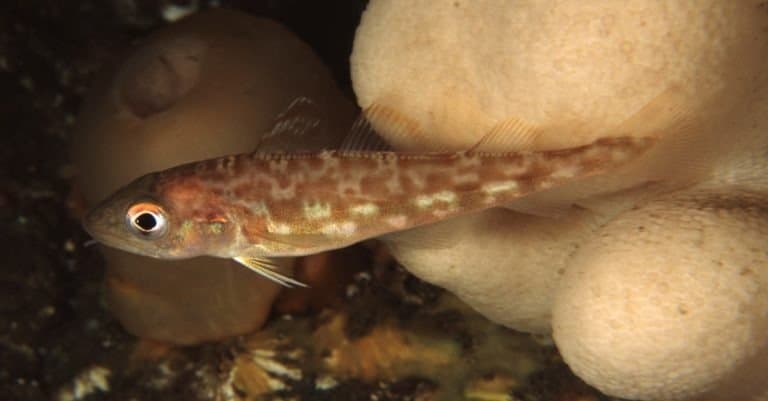
The life cycle of codfish follows egg to larvae to juvenile to adult stages. Larvae are called fry, while young codfish are called codlings. Differences in the amount of time it takes for juveniles to mature sexually do not change the basic life cycle. For example, cod in the northeast Arctic can take up to 8 years to fully mature.
Adult codfish can live 13 years or more in the wild, depending on the species. Atlantic codfish, for example, live 25 years in the wild, while Pacific cod generally lives 20 years.
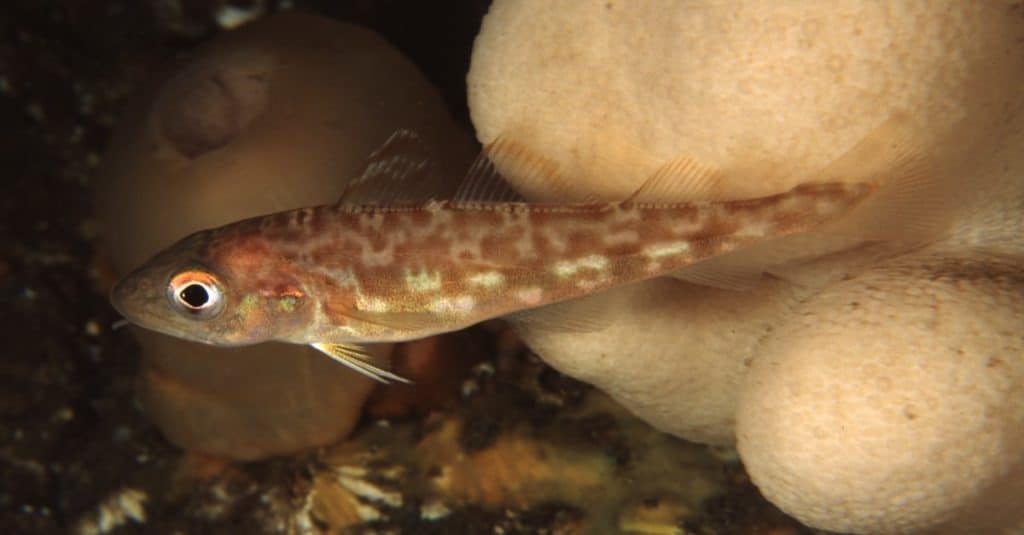
Young codfish are called codlings.
©valda butterworth/Shutterstock.com
Population and Conservation
There are several different stocks of each species that are researched for biomass or the number of reproducing females. Pacific cod stocks are actively managed with quotas and catch limits to prevent overfishing, and harvest levels are regularly adjusted based on stock assessments. In 2026, quotas for Pacific cod in the Gulf of Alaska and Aleutian Islands were substantially increased following positive stock assessments. However, due to overfishing in the late 20th century, the Atlantic cod is listed as Vulnerable by the IUCN with a significantly decreased population.
The rebuilding plan to reach target population levels includes regulations and a limited fishing status. Fishing for Pacific cod is regulated with quotas that apply to all gear types, and in 2026, these quotas were increased in several regions following updated stock assessments.
Codfish in Fishing and Cooking
Codfish that has been dried without salt is called stockfish. The more popular method of preservation, dried and salted cod, is known as salt cod, saltfish, cured salt cod, or clipfish. It is made by drying after salting, also known as salt-curing, making it suitable for long-term storage, year-round export, and incorporation into a variety of dishes.
Historically, the creation of saltfish made cod one of the most lucrative and important fish in European fisheries, but in recent years, cod stocks have declined, and quotas have been significantly reduced.
Saltfish is a specialty and a unique basis for many codfish recipes around the world. As a major export of the North Atlantic region, it is an ingredient in many Atlantic and Mediterranean cuisines, such as Spanish, Portuguese, and Italian. For example, there are several variations of codfish stew and fried cod fritters (also called saltfish fritters or salted codfish cakes) that call specifically for salted codfish.
Many dishes use regular cod. Fish and chips are a popular example that originated in England. While codfish is still the top choice, many vendors replace it with rock salmon or white fish such as halibut, haddock, or plaice.
Baked cod, pan-seared cod, fish tacos, fish sticks, fish chowder, cod stew, and cod soup are other examples of dishes that use regular cod. The dense, white, flaky, and mild-tasting flesh of codfish is extremely versatile and fairly interchangeable with other whitefish.
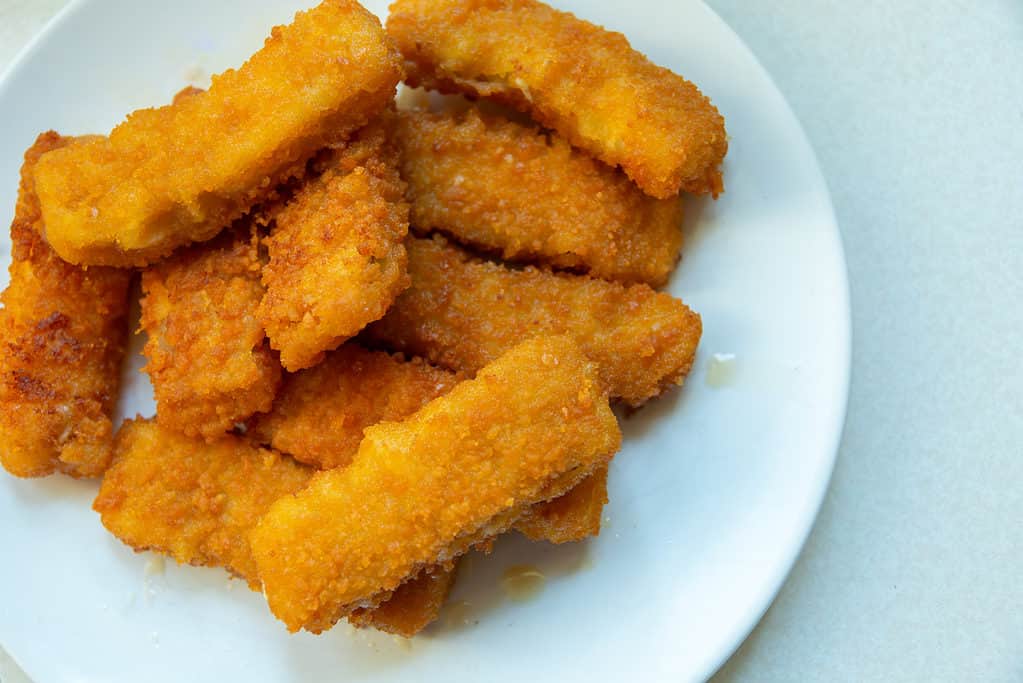
Fish sticks are a popular way to eat cod.
©iStock.com/Dariusz Banaszuk
In terms of nutrition, codfish is the fish with the highest amount of protein per calorie, whether it is Atlantic or Pacific cod. Both also provide significant amounts of B vitamins, phosphorus, and selenium. Codfish is so well-known for nutrition that a popular old family remedy is the use of cod liver oil to treat wounds, arthritis, depression, and rickets.
The oil is processed from cod livers from both species and contains highly concentrated amounts of omega-3 fatty acids (EPA and DHA) and vitamins A, D, and E.
Flavor-wise, there are small differences between the two species. Pacific cod has firm, chunky flakes with a milder and more savory flavor. Atlantic cod has bigger, sweeter, firmer, and “flakier” flakes, less moisture content, and a larger market size.
While people in the United States are used to Pacific cod and Alaska pollock, people in the U.K. enjoy Atlantic cod, which they refer to as “scrod” when under 2.5 lbs.
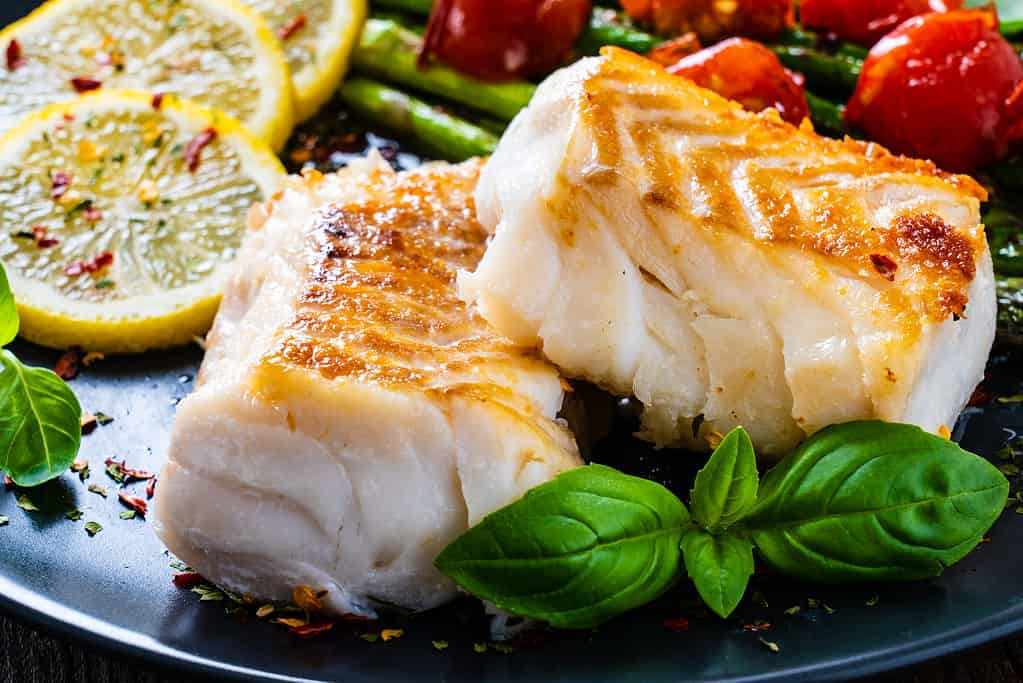
The dense, white, flaky, and mild-tasting codfish is extremely versatile.
©iStock.com/gbh007
Codfish Pictures
View all of our Codfish pictures in the gallery.

Miroslav Halama/Shutterstock.com
Sources
- Wikipedia / Accessed January 17, 2021
- Live Strong / Accessed January 17, 2021
- Soft Schools / Accessed January 17, 2021
- Fact File / Accessed January 17, 2021
- Health Benefits Times / Accessed January 17, 2021
- NOAA Fisheries / Accessed January 17, 2021
- Fishing Booker / Accessed January 17, 2021