
Quick Take
- A single shark is worth dramatically more alive than dead, and the math behind that gap is far more surprising than conservationists let on. See the numbers →
- The global shark fishing industry generates hundreds of millions annually. So how does a tiny island nation with no fishing fleet actually compete with it? See how eco-tourism competes →
- Palau made a single policy decision in 2009 that most governments dismissed, and it quietly rewired the island's entire economy. Explore Palau's 2009 decision →
Eco-tourism has proven that a living shark is far more valuable than a dead one. While the shark fishing industry profits about $630 million annually, shark tourism is gaining the upper hand. Palau is setting the global standard for this consistent profit, which has already benefitted its economy in more ways than one.
From creating job sectors to encouraging conservation of vulnerable species, Palau is leading the charge. A new era of the shark industry is changing the game with the potential to thrive as long as the species does.
Eco-Tourism Takes the Industry Lead
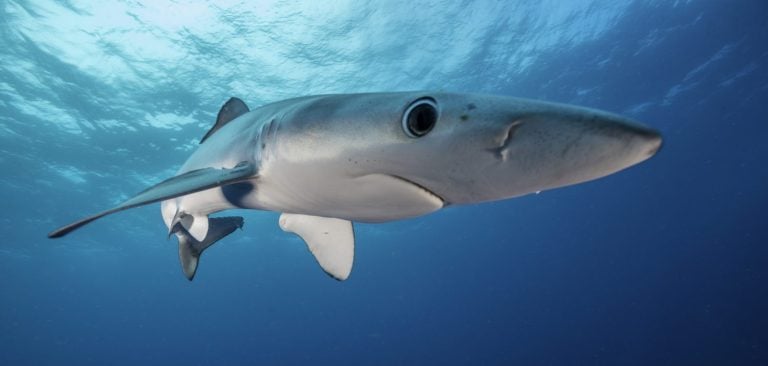
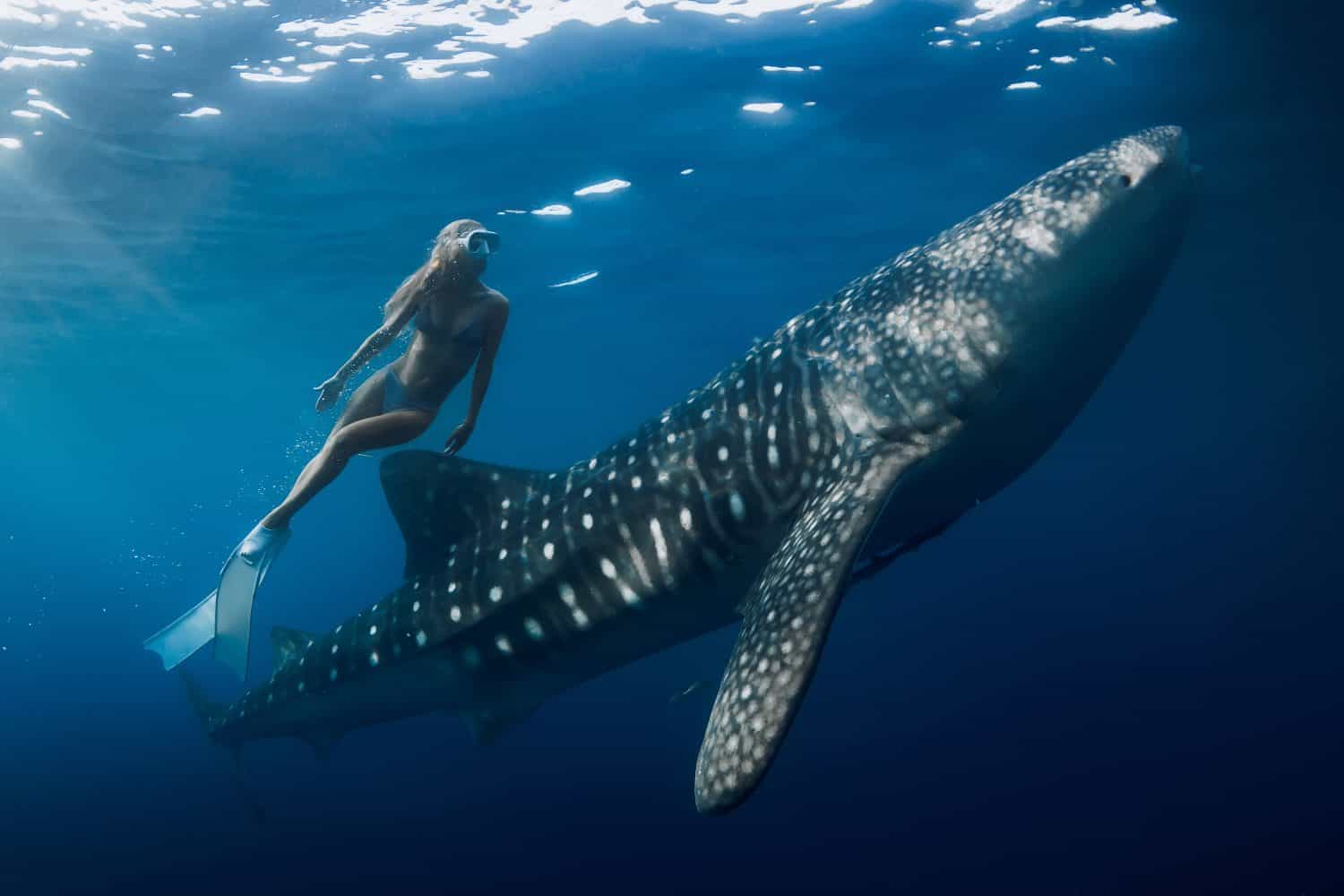
Palau is home to many small, pristine islands in Micronesia. These practically untouched marine environments protect vulnerable wildlife, including more than 135 Western Pacific shark species. The region has always been known for its World War II history and is a hotspot for experienced divers. But now, it’s also gaining a reputation as one of the top destinations in the world for shark diving.
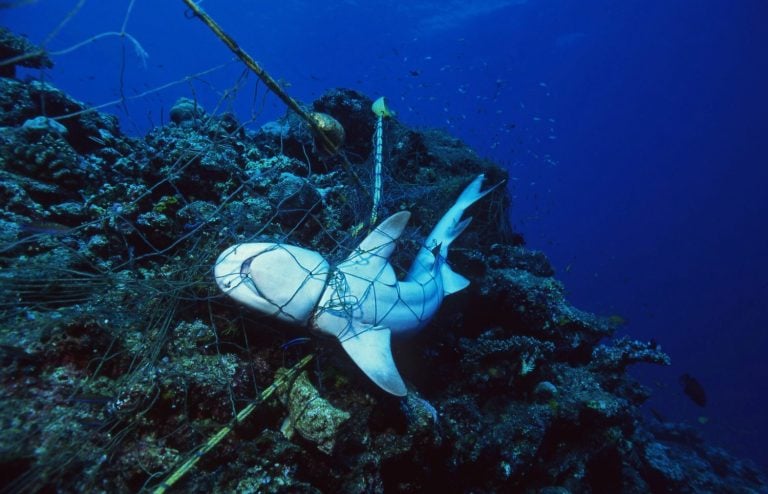
With the advent of media such as Shark Week, there’s growing interest in learning about this intimidating species up close. Palau is offering that in exchange for commerce that helps at a local and, by extension, global conservation level. Fisheries and deep-sea fishing deplete the population of many sharks, including hammerheads, oceanic whitetips, dusky sharks, and short-fin mako sharks. They’re caught and sold for their fins, meat, and liver oil. These net hundreds of millions of dollars but are unsustainable in the long run.
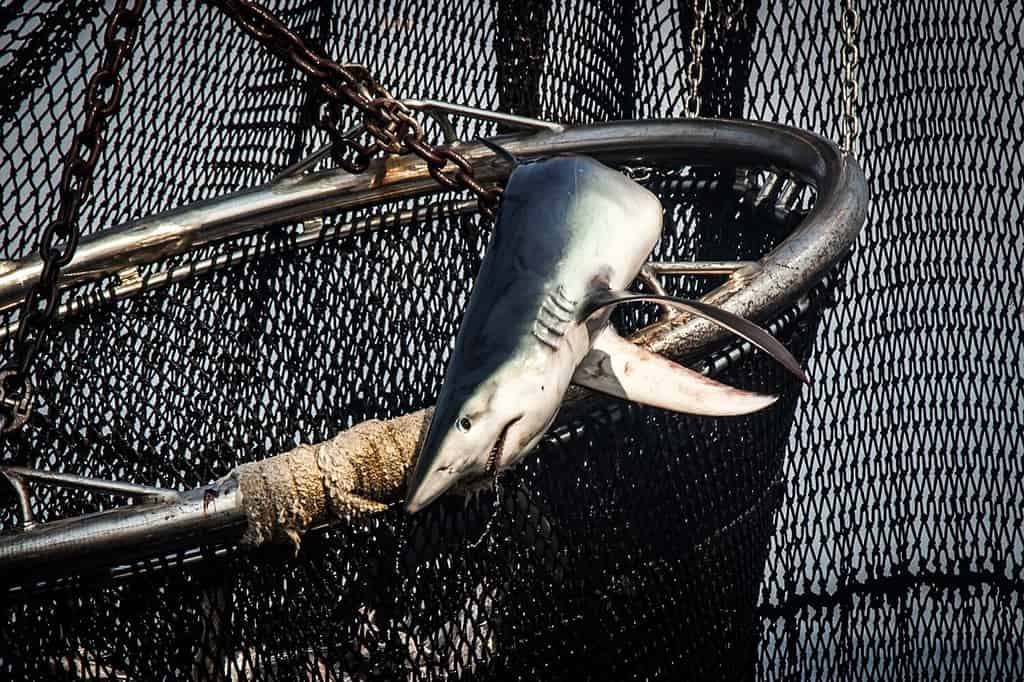
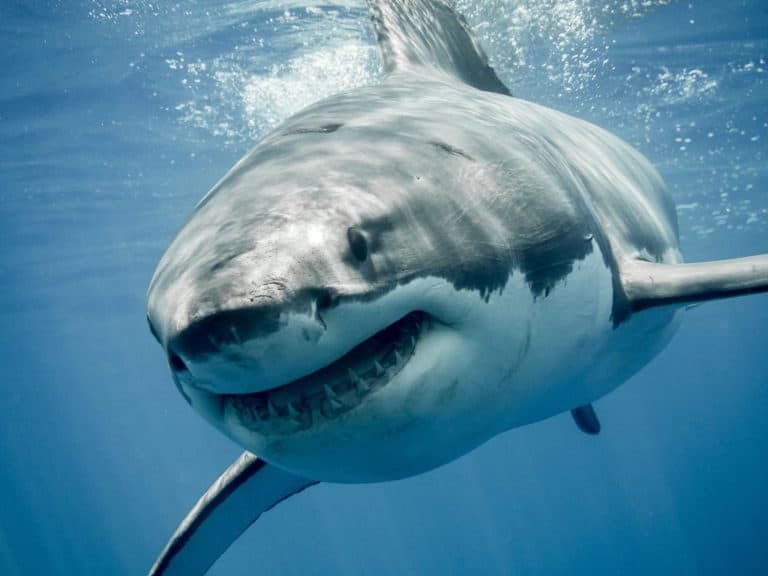
Overfishing hurts shark populations, and one shark is often not worth enough profit to justify being killed.
©Tara Lambourne/Shutterstock.com
Eco-tourism paints a different picture of these vulnerable species. Rather than being caught, killed, and sold, sharks are revered, admired, and observed. Shark diving allows tourists to learn about the species in their natural habitat, reducing stress levels and population decline. It provides an ongoing education that has a ripple effect. As more people learn about sharks, they also learn to value their environments and the local communities, like Palau, that fight to protect them.
Palau’s Shark Sanctuary Sets the Standard
On average, one dead shark sells for anywhere from $35 to several thousand, depending on the country and the market. Higher-value sharks are coveted for their fins, while lower-value sharks sell for their meat and oil. In contrast, one living shark is capable of generating thousands throughout its life. This nearly triples the profit between a dead shark and a living one when it comes to eco-tourism. And at the center of Palau’s shark diving is its shark sanctuary.
In 2009, the world watched as Palau became the first-ever shark sanctuary. It offered just over 372,822 square miles of marine land where shark fishing was exclusively banned. Over nearly two decades, this conservation action has protected hundreds of species. Palau’s coral reefs are thriving, as are the marine life that live in and around them. For the sharks, Palau is nothing short of a paradise where they can hunt, reproduce, and swim without fear.
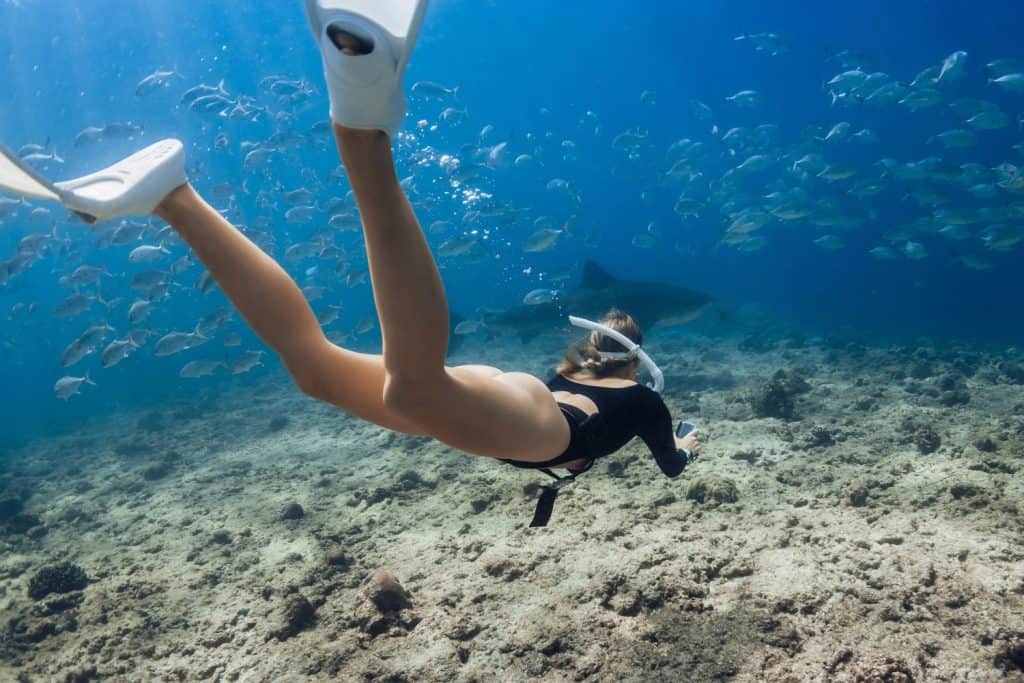
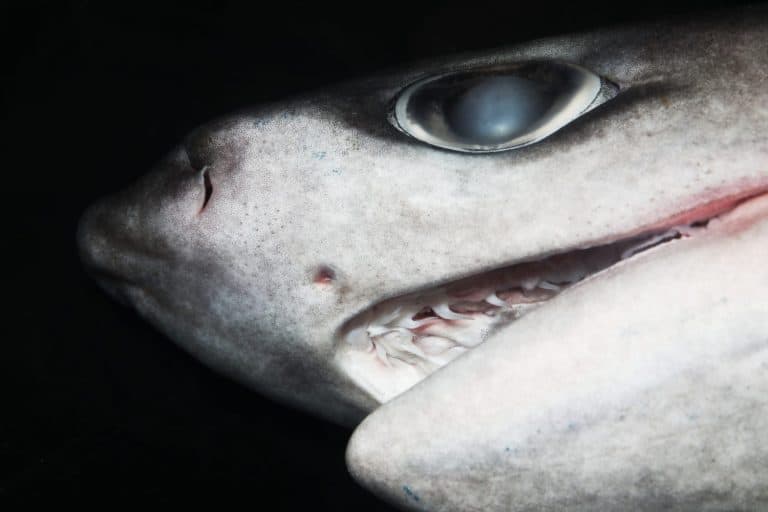
Eco-friendly tourism, such as shark diving, has taken off in places like Palau.
©Wonderful Nature/Shutterstock.com
Fish ‘n Fins is at the helm of Palau’s shark diving excursions. Taking an eco-friendly approach, the company offers day dives, side-mount diving, night dives, spawning dives, fish dives, and wreck dives. Excursions also offer scuba gear rentals and lunch, turning an experience into an all-day adventure. More vulnerable marine environments, such as Koror State, allow dives with the purchase of a permit from Fish ‘n Fins. This maintains the steady influx of tourists and allows Palau to prevent fragile marine ecosystems from being overloaded.
The Sustainable Proof Is In the Numbers
Since Palau opened its islands to shark diving, tourism has skyrocketed. As a result, so has its profit. Today, shark diving produces roughly $18 million per year, which accounts for 8% of Palau’s GDP. And while this number isn’t as large as the annual profit from shark fishing, there’s one significant difference. Whereas shark fishing is not sustainable and produces a one-time-payout, shark diving is sustainable, with consistent profit margins.
As eco-friendly dive companies, such as Fish ‘n Fins, continue to run operations with shark safety first, there’s no ceiling to their sustainable tourism practices. Additionally, Palau is only one location that is producing a profit comparable to that of the shark fishing industry. As other countries follow suit, shark eco-tourism may eventually overtake the shark fishing industry.
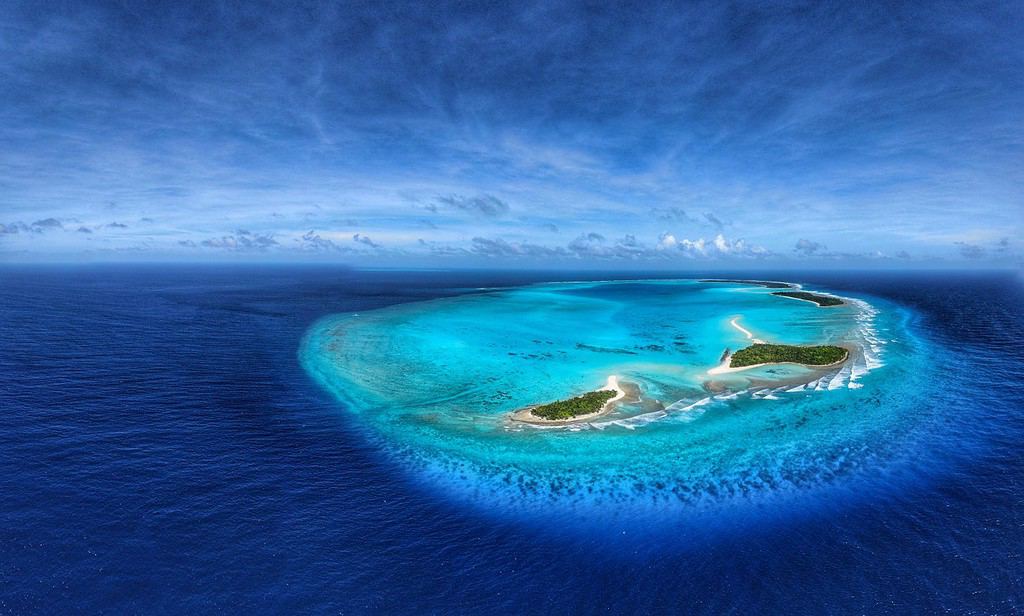
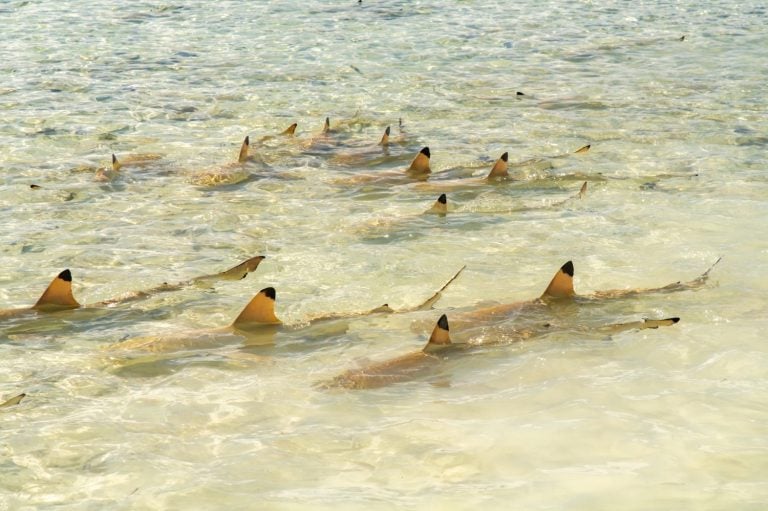
Palau’s untouched marine environments are a haven for hundreds of shark species.
©Patrick Gogeissl/Shutterstock.com
On a local level, Palau’s shark diving tourism contributes more than $1.2 million annually to its community salaries. This is shared amongst its hotels, resorts, restaurants, and other excursions. It produces roughly $1.5 million in government taxes, which provides a significant boost for a remote island. There are few downsides, if any at all, for Palau as it leads the world in an eco-tourism practice that saves more than just sharks.