
Quick Take
- Hinnies are offspring of a male horse and a female donkey, while mules are offspring of a female horse and a male donkey.
- Mules are typically larger, stronger, and have greater endurance than hinnies.
- Hinnies are generally easier to train and more docile than mules.
There are many differences between a hinny (Equus caballus x Equus asinus) and a mule (E. asinus × E. caballus). Hinnies are born from a male horse and a female donkey, while mules are born from a female horse and a male donkey. Mules are typically larger and stronger than hinnies. Hinnies are considered easier to handle than mules, whose cautious nature and problem-solving abilities make them excellent work animals. These two hoofed hybrid working animals have many similarities and differences, including size, appearance, temperament, reproduction, and training. Continue reading to discover how these equines are alike and what sets them apart.
Size
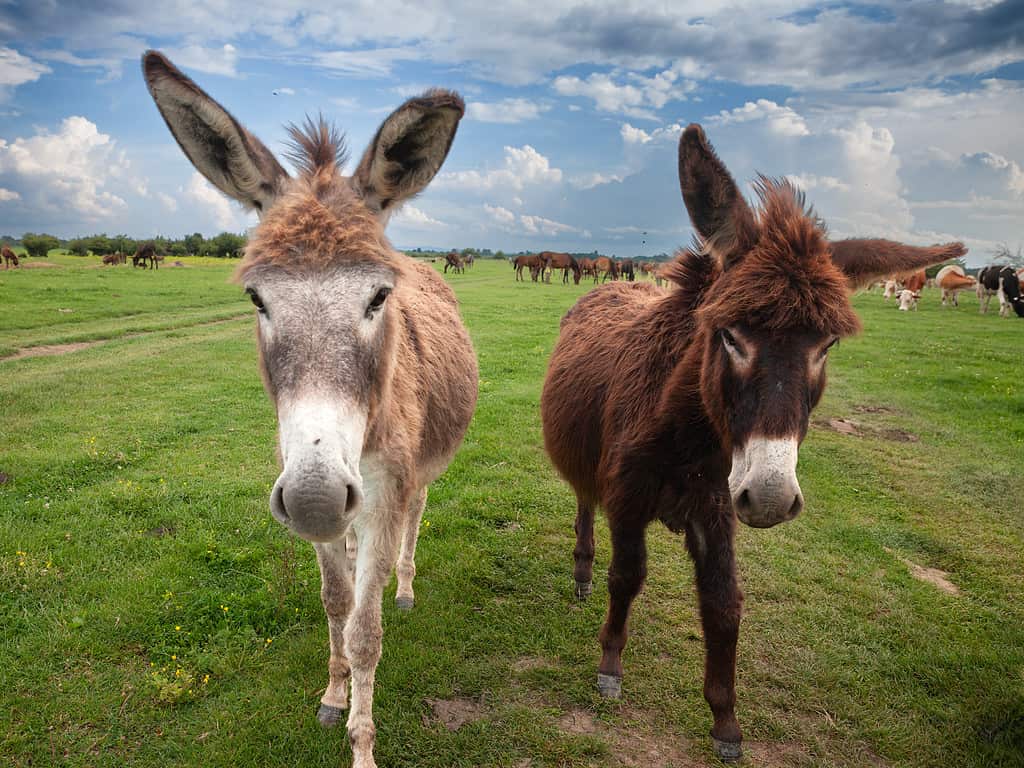
The hinny is the offspring of a female donkey (a jenny) and a male horse (a stallion).
©BalkansCat/iStock via Getty Images
Mules are typically larger, stronger, and have greater endurance, making them more suitable for heavy farm work and carrying heavy loads. Hinnies are smaller, more horse-like, and better suited for lighter tasks like riding or companionship.
Mules vary widely in size depending on the specific breeds of their horse mother (mare) and donkey father (jack), with size differences between male (john) and female (molly) mules being generally dependent on the size of the parents rather than sex alone. The average ranges for most mules are a height of 50 to 70 inches, a length of approximately 71 to 87 inches, and a weight of 600 to 1,500 pounds.
Hinnies vary considerably in size, with average dimensions depending largely on the size of their parents, especially the smaller female donkey dam. There are no significant, consistently reported size differences between male and female hinnies; their size is primarily linked to the size of their parents. The average hinny stands 36 to 57 inches at the shoulder, is 53.1 to 72.8 inches long, and weighs between 300 and 800 pounds.
Appearance
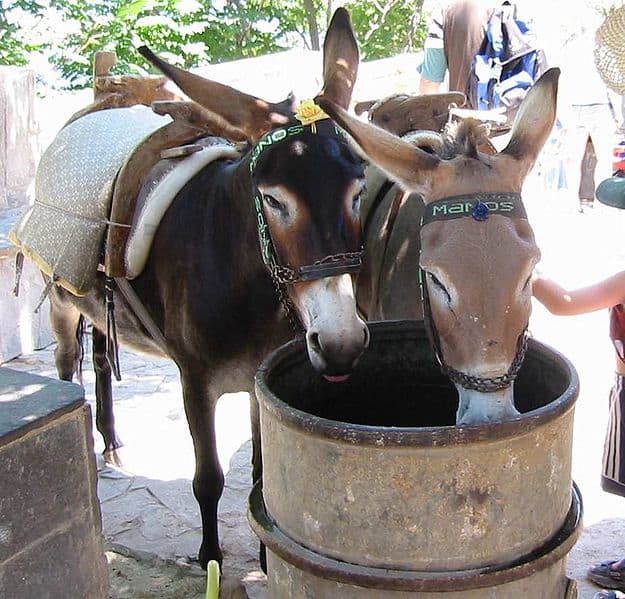
Mules are bred to work.
©Elgaard / CC BY-SA 3.0, via Wikimedia Commons – Original / License
A mule has a combination of features from both its parents, with a short, coarse mane like a donkey’s and a full, horse-like tail. Their colors can vary widely, following the patterns of their horse parent, and they often have donkey-like markings such as mealy coloring around the muzzle and eyes or primitive markings like a dorsal stripe.
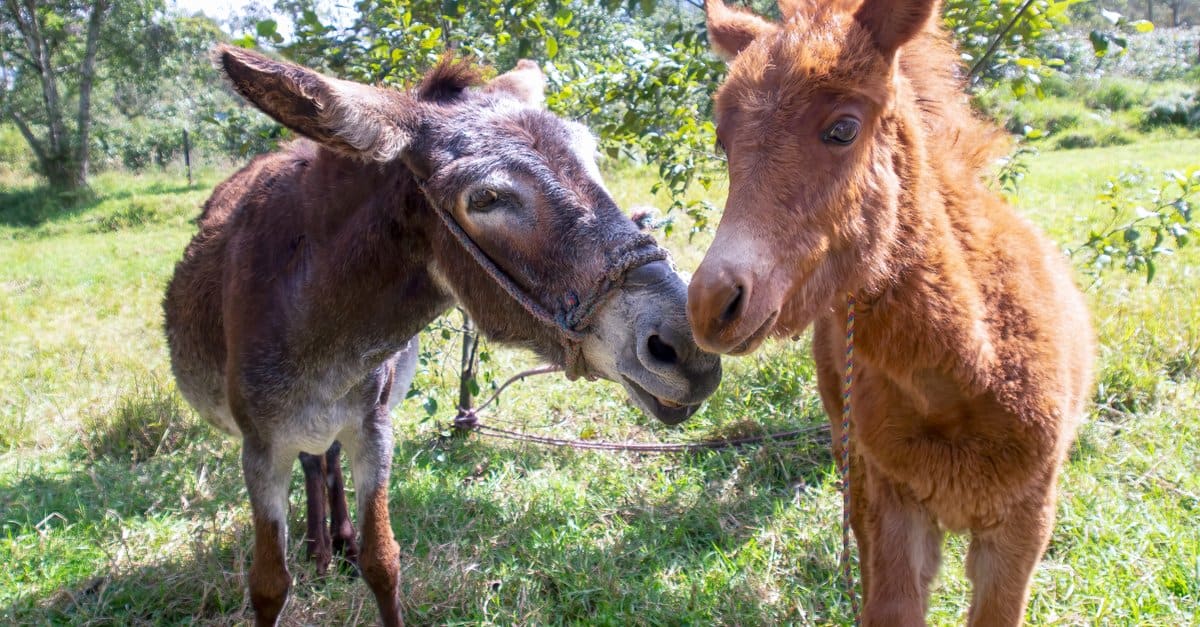
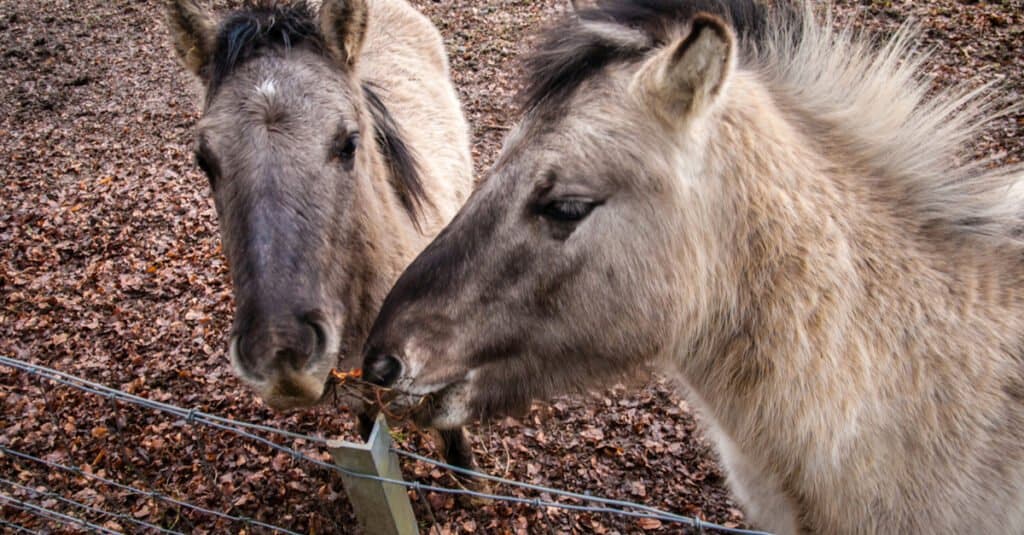
Hinnies are similar to donkeys but have more horse-like features, such as smaller ears and a fuller mane and tail, while donkeys have very long ears and a thin mane. Hinnies come in the same colors and patterns found in both horses and donkeys, including common ones like bay, black, and gray, as well as more unique shades like dun, palomino, and pinto.
Behavior
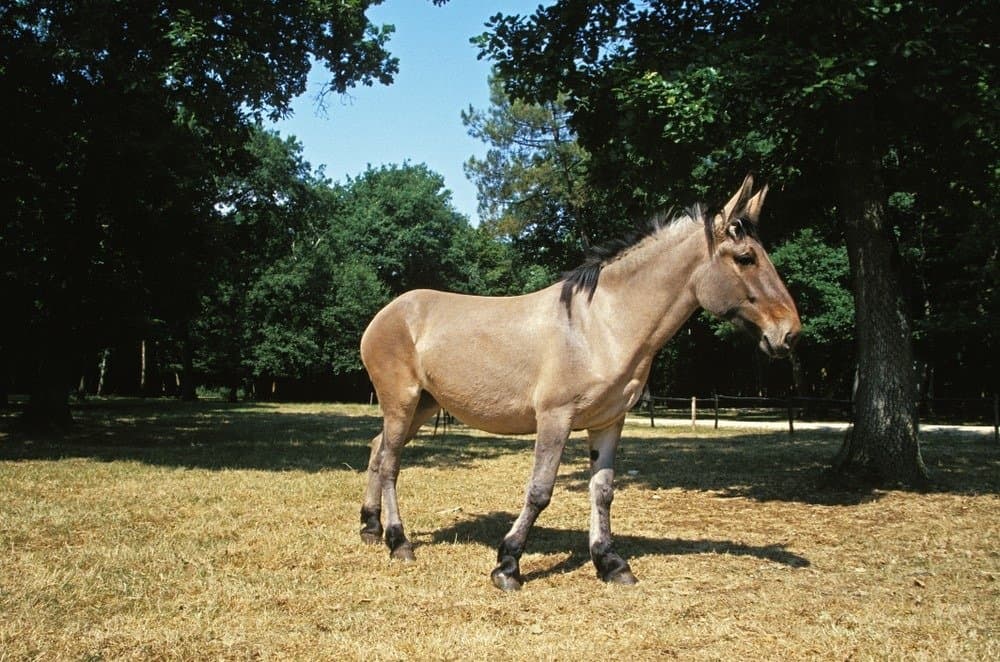
Hinnies are considerably easier to train than mules.
©slowmotiongli/Shutterstock.com
One of the main differences between a hinny and a mule is their temperament. While both of these hybrids tend to need special training, hinnies are milder and gentler when compared to mules. A mule prefers adventure and can even be more flighty than a hinny, while hinnies are docile and approachable.
Both of these hybrids are ideal for farms and working environments. Given their mellow nature, a hinny is often better suited for work than a mule. While hinnies are capable of a variety of tasks, mules generally have greater endurance and a stronger stature, making them more suitable for heavy farm work.
Reproduction
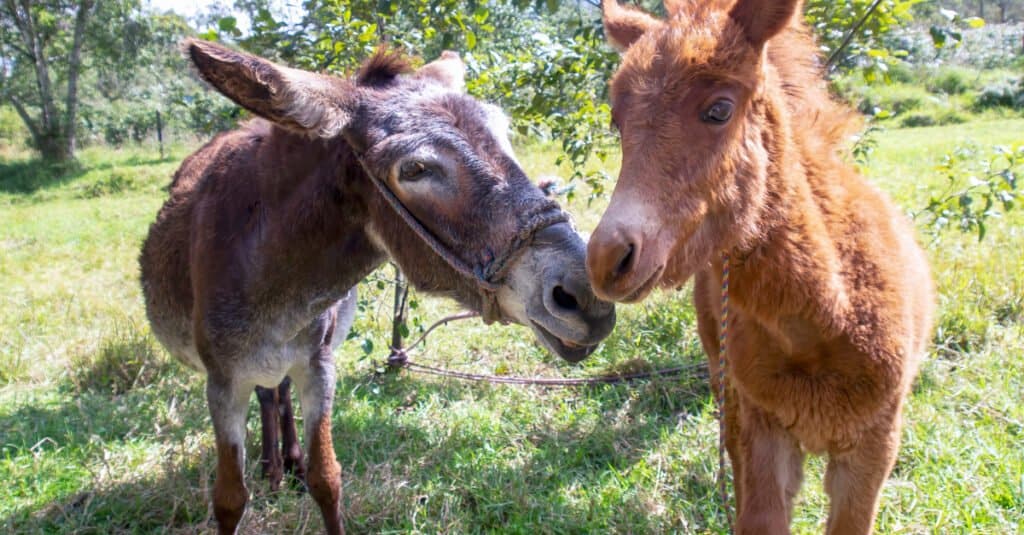
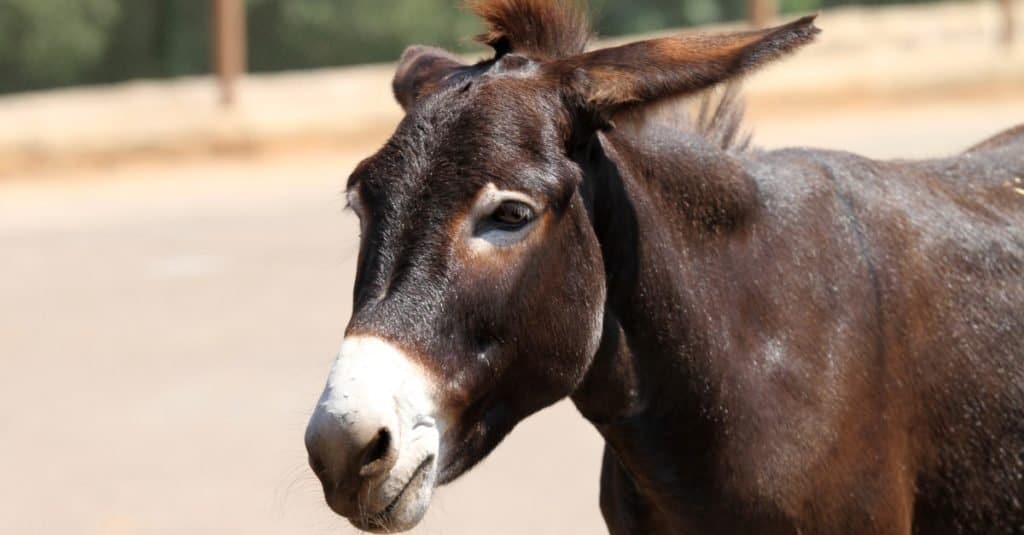
Mules are born with the legs of a donkey, as well as a face that more resembles a donkey’s face, while hinnies look more like miniature horses.
©Mauricio Acosta Rojas/Shutterstock.com
A hinny is the offspring of a male horse and a female donkey, while a mule is the offspring of a female horse and a male donkey. This leads to differences in their personality and appearance, but it also means they are typically born without the necessary chromosomes to reproduce.
Both hinnies and mules are typically born sterile and unable to breed. However, rare births may still occur, and both hinnies and mules have been documented as having reproduced, though in most cases this is due to implanted embryos.
History and Purpose
Both hinnies and mules are typically born sterile and unable to breed.
©BlackDorianstock/Shutterstock.com
Both hinnies and mules are pack animals that are well-suited for farm work. Mules have been bred for thousands of years. They are known for their strength, stamina, and hardiness for tasks like plowing and transport.
The rise of the combustion engine in the late 19th and early 20th centuries rendered mules increasingly obsolete for many applications, replacing them with motorized vehicles that offered greater speed and power for transportation and agricultural labor. Mules are still used on farms worldwide, particularly in Central and South America, Asia, and Africa, and by Amish farmers in North America.
Although they are less common than mules, hinnies are bred for specific purposes.t is safer to breed smaller stallions with a jenny, and some breeders prefer the hinny’s more docile nature. Breeding hinnies is more challenging due to lower conception rates and potential size mismatches compared to breeding mules.
Training
While mules are indeed capable of a wide variety of farm work and tasks, a hinny has more endurance and a stronger stature than a mule.
©Anna Kepa/Shutterstock.com
A final difference between a hinny and a mule is their training and care. Both of these hooved hybrids have a similarly long lifespan of 30-40 years, and both require specific training that isn’t the same training for horses or donkeys.
Mules require patient, consistent training that builds a strong foundation of trust and establishes a clear leadership role for the handler. They are intelligent and sensitive animals, so training sessions should be short and frequent, focusing on clear communication and making them feel safe.
Training a hinny requires a kind, patient, and consistent approach that accounts for their high intelligence and strong sense of self-preservation. Unlike horses, hinnies are far too intelligent to be forced into submission and will resist if they perceive a task as unsafe or nonsensical.