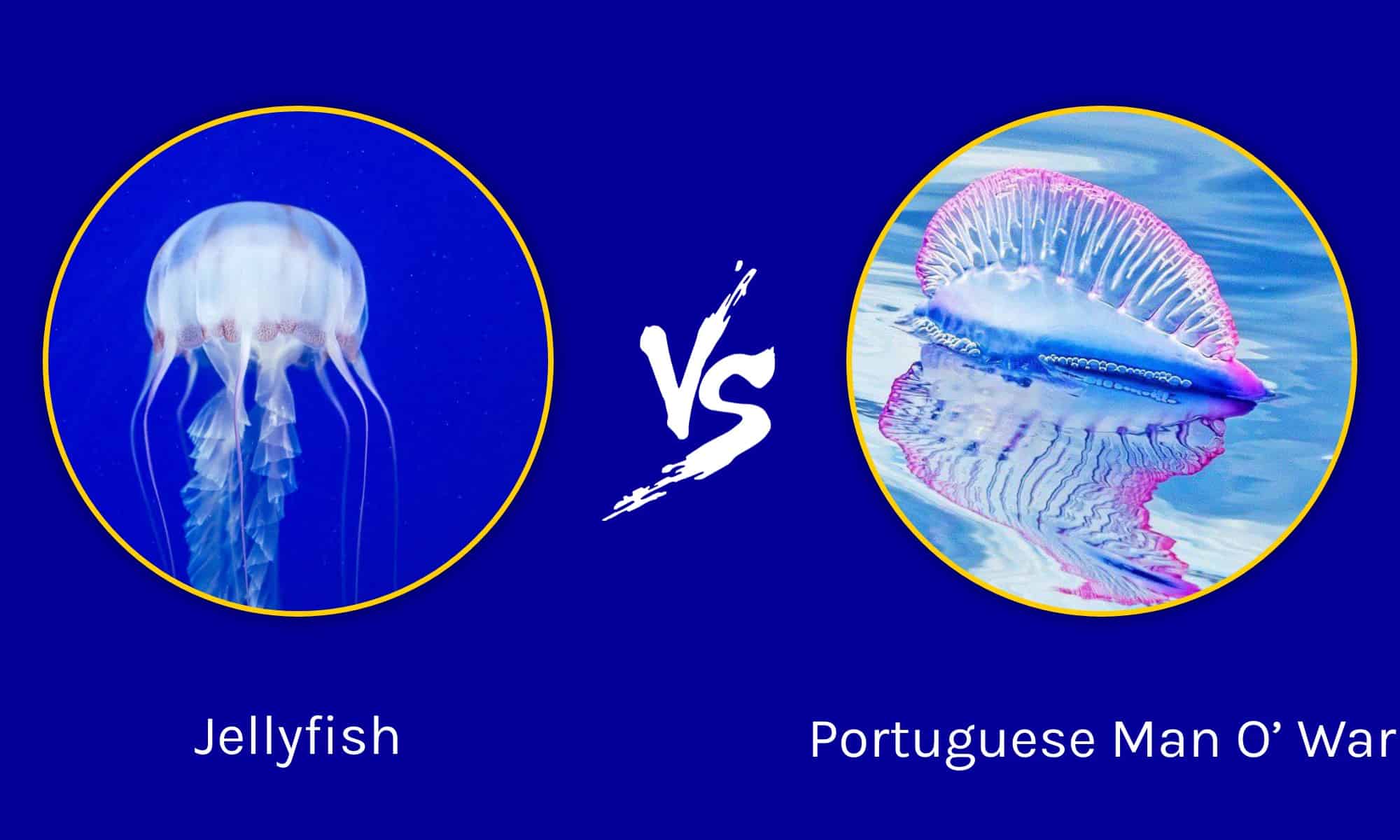

Although they may look similar, the jellyfish (Medusozoa) and the Portuguese man o’ war (Physalia physalis) are two very different marine animals. One thing they do have in common is that they have tentacles that sting, and they should be avoided at all costs. The key differences between a jellyfish and a Portuguese man o’ war include animal type, size, physical characteristics, lifespan, behavior, defenses, distribution and habitat, and diet. Continue reading to learn how these defining characteristics set them apart.
Size
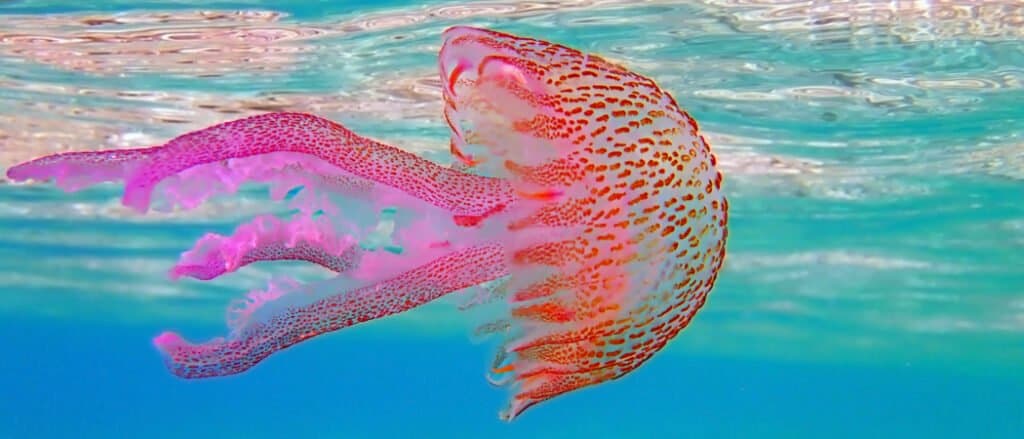
Jellyfish can range from 1 mm to 16 inches.
©iStock.com/vojce
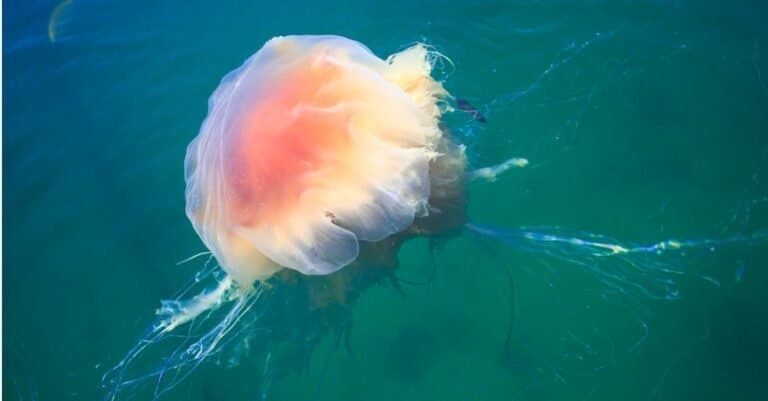
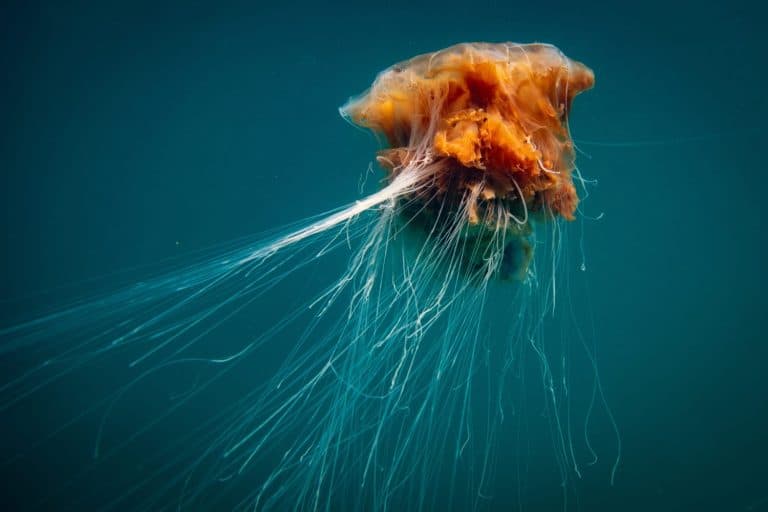
Jellyfish can range from one millimeter to three feet. When fully grown, the lion’s mane jellyfish (Cyanea capillata) can measure up to three feet across, with tentacles that are over 100 feet long. The Portuguese man o’ war’s feeding tentacles can measure up to 160 feet long, and its float (a gas-filled sac that provides buoyancy, allowing the an o’war to remain on the ocean’s surface) can measure up to six inches.
Color
©kpkellyfl/Shutterstock.com
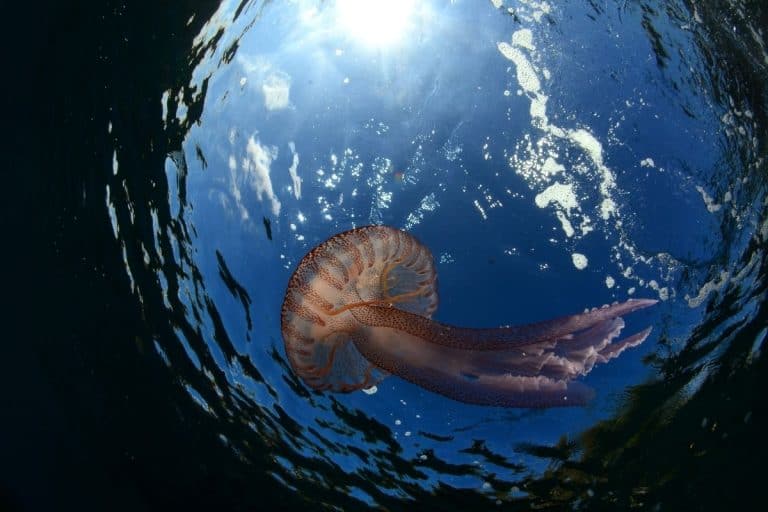
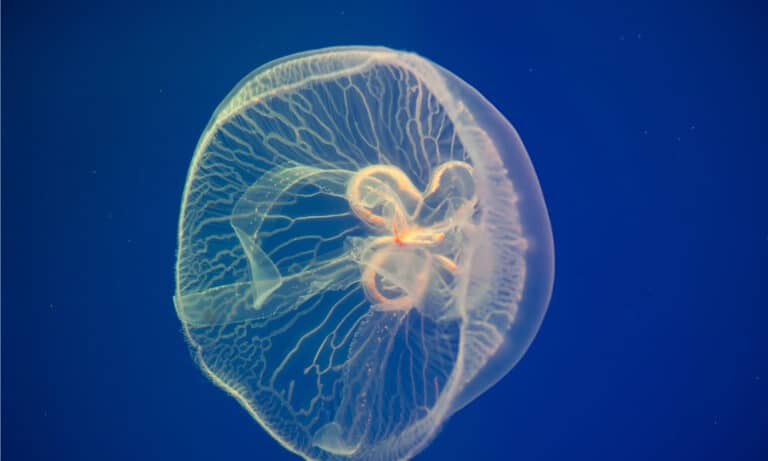
Jellyfish come in a wide range of hues from yellow to deep blue to vivid purple to pale lilac to bright orange to deep red. Many species are translucent, a form of camouflage that helps them hide from both predators and prey. More colorful species, however, acquire their hues through diet, symbiotic algae, or bioluminescence. For instance, some moon jellies may turn pink or purple after consuming crustaceans.
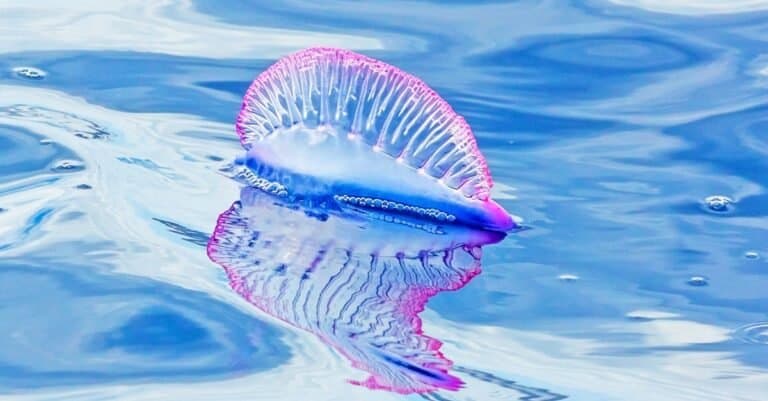
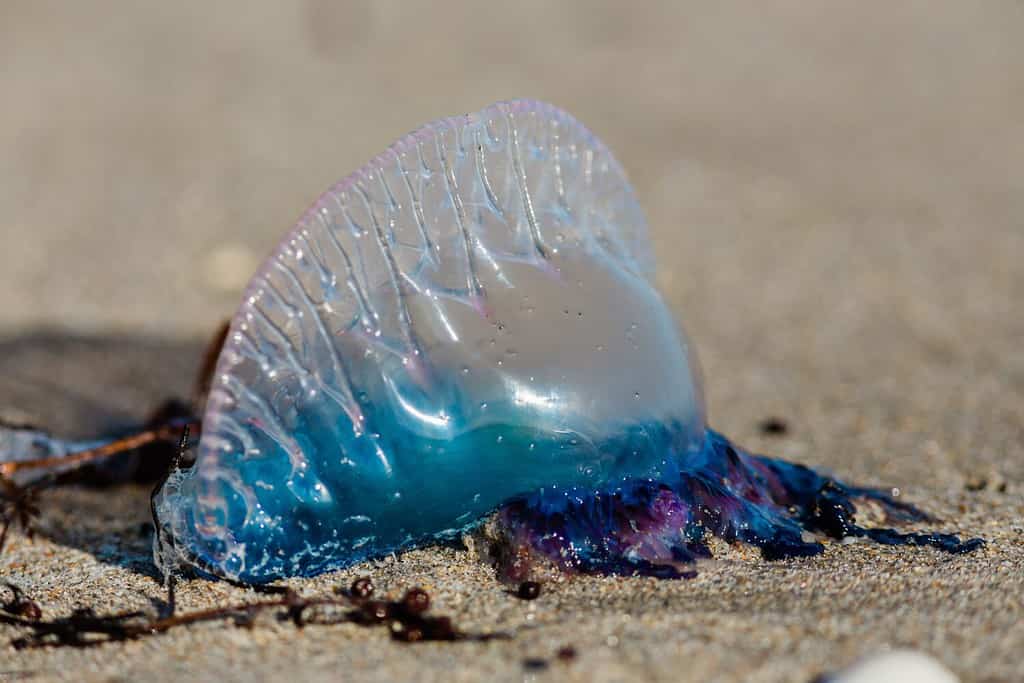
The translucent, scalloped bubble part of a Portuguese man o’ war is called the pneumatophore, a gas-filled bladder that helps it float and acts like a sail to catch the wind. This translucent float can be blue, violet, or pink and rises above the water’s surface, earning the animal its name from its resemblance to the sail of an 18th-century Portuguese warship. Its color allows it to blend in with the ocean’s water, giving it the element of surprise.
Physical Features
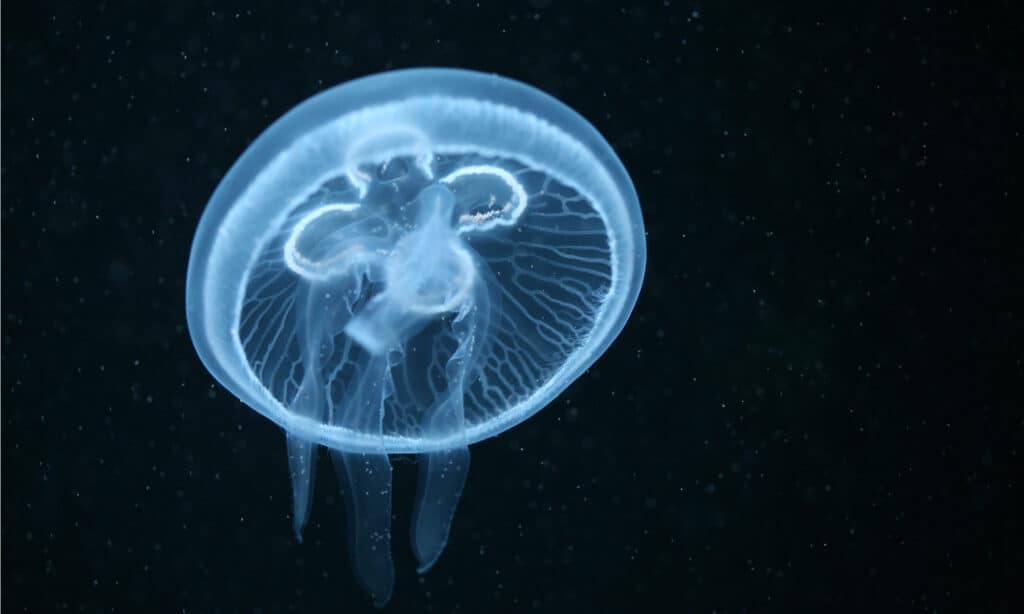
Jellyfish lack bones, brains, and eyes.
©Vladimir Wrangel/Shutterstock.com
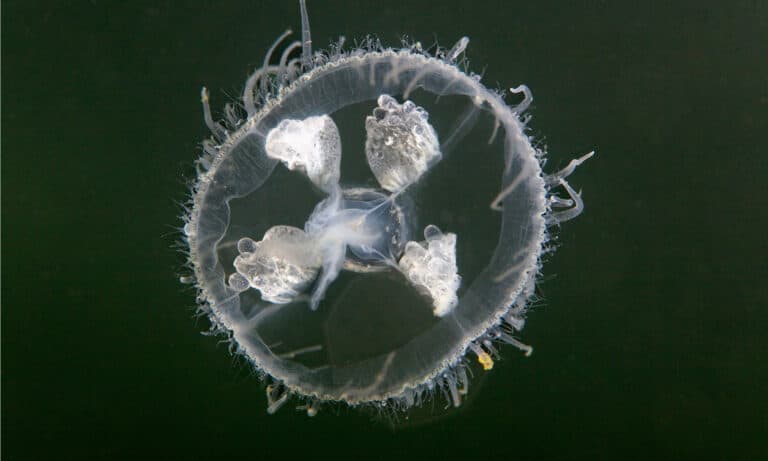
Jellyfish a smooth body and small tentacles. They lack bones, brains, hearts, and eyes. These creatures’ mouths are in the center of their bodies. They are perfectly concealed by their body, which is composed of 95% water. The umbrella, oral arms (around the mouth), and stinging tentacles are the three major parts of a jellyfish’s body. They have an interior cavity for digestion. Jellyfish maintain buoyancy primarily by being neutrally buoyant due to their high water content and gelatinous body, and they can also use a few pulses of their bell to make minor adjustments to their position. They are not perfect floaters, so they rely on ocean currents and swimming to stay afloat.
The Portuguese man o’ war is a siphonophore, a colony of specialized animals called zooids that act together. The uppermost polyp contains the gas-filled bladder; the second has the stinging tentacles covered in nematocysts; the third contains the muscle that moves food to the digestive system, and the fourth contains the reproductive organs. Each Portuguese man o’ war colony is either male or female, composed of specialized polyps (zooids) that perform different functions.
Defenses
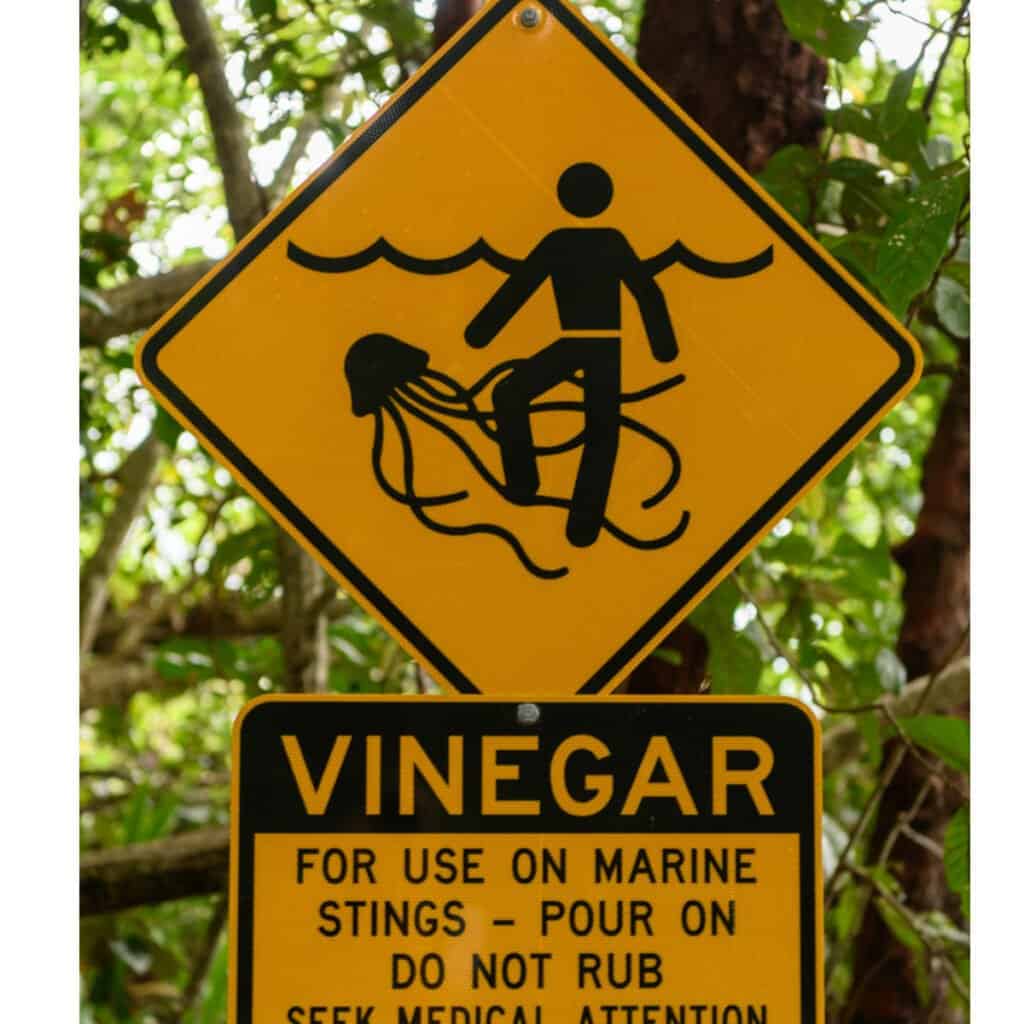
Jellyfish tentacles contain nematocysts, microscopic barbed cells that inject venom when they come into contact with skin. Vinegar is acidic and helps neutralize nematocysts, preventing them from releasing more venom.
©A Periam Photography/Shutterstock.com
Jellyfish stings are rarely life-threatening. Pain, redness, itching, numbness, and tingling are all common after a jellyfish sting. Some jellyfish stings are more dangerous than others. he Australin box jellyfish (Chironex fleckeri) is considered one of the most venomous marine animals, with venom that can cause paralysis, cardiac arrest, and death within minutes. This species is highly dangerous due to its speed, keen vision, and its transparent body.
Man-of-war stings, although incredibly painful, are rarely fatal to humans. The venom can cause extreme discomfort in humans, as well as skin welts or an allergic reaction. The best practice is to keep your distance and observe Portuguese man o’ war from afar. If stung, seek medical attention. Systemic reactions are not uncommon, but they are rarely life-threatening.
Diet
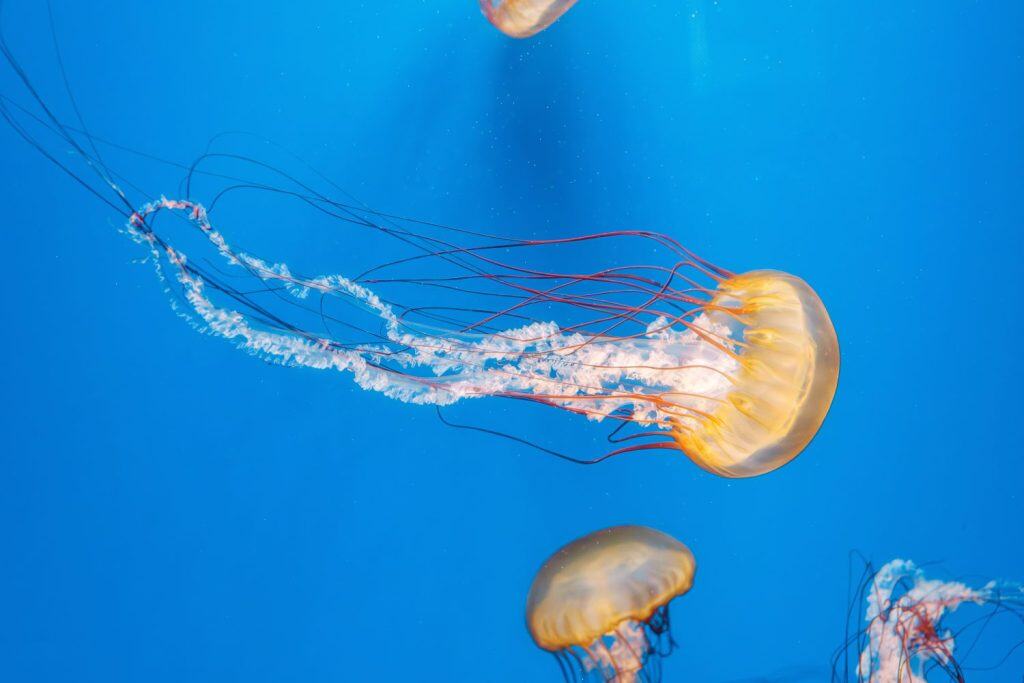
Jellyfish are passive eaters.
©Minakryn Ruslan/Shutterstock.com
Most jellyfish feed in a passive fashion. This means that they float around the ocean, feeding on anything they can fit in their mouths, from tiny shrimp to small fish. Internal body cells create digestive enzymes that break down food that reaches the jellyfish’s intestine. Using these cells, the jellyfish can absorb and distribute nutrients throughout its entire system.
The Portuguese man o’ war is a carnivore that eats small fish, plankton, worms, and crustaceans. Rather than going out in search of food, the colony catches prey as it moves across the surface of the ocean.
Jellyfish and Portuguese man o’ war feed in a similar fashion by passively capturing prey, though the man o’ war is a colony of specialized organisms and a true jellyfish is a single organism. Both are carnivores that eat small fish, plankton, and other crustaceans, paralyzing prey with venom before pulling it to a central area for digestion.
Lifespan
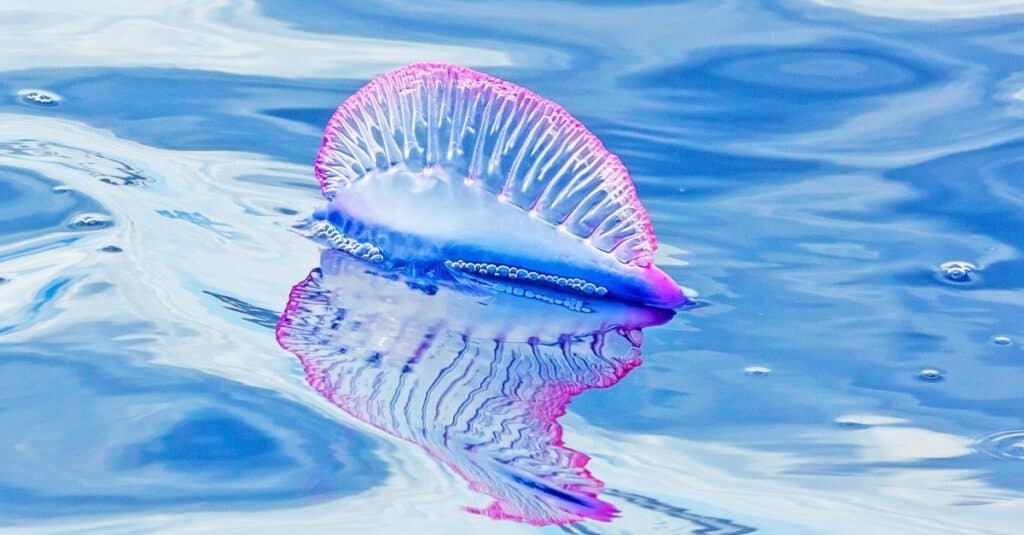
The Portuguese man o’war has a lifespan of about one year.
©iStock.com/aldorado10
In general, the average lifespan of a Portuguese man o’ war is about one year, while the average lifespan of a jellyfish is between one and three years. Some jellyfish species, however, can live for decades while others survive for only a few days. The immortal jellyfish (Turritopsis dohrnii,) can theoretically avoid death from old age by reverting to its juvenile form, but its actual lifespan in the wild is unknown.
Distribution and Habitat
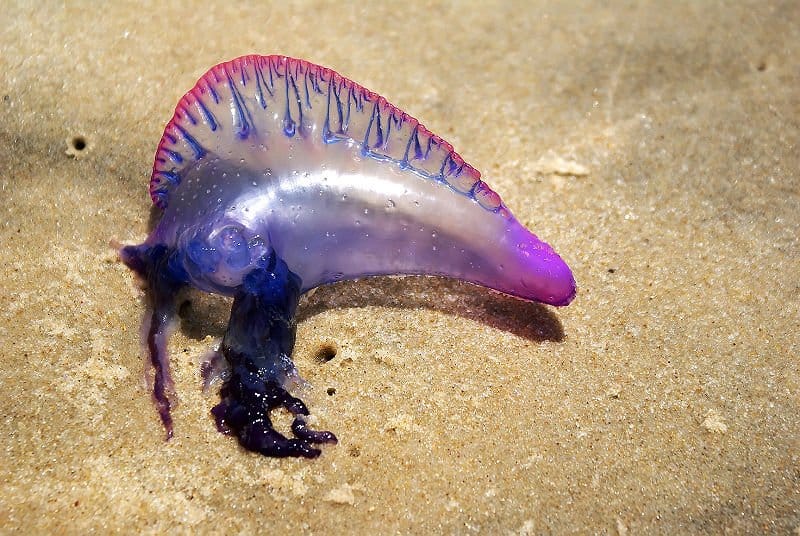
Portuguese man o’ war are found in warmer waters.
The Portuguese man o’ war is found in the warmer tropical and subtropical waters of the Atlantic and Pacific Oceans, including the Gulf Stream, the Indian Ocean, the Caribbean Sea, and the Sargasso Sea.
Jellyfish are found in all oceans, from the surface to the deepest parts, and in both saltwater and freshwater habitats. While most abundant in tropical and coastal waters, distribution varies by species.
Behavior
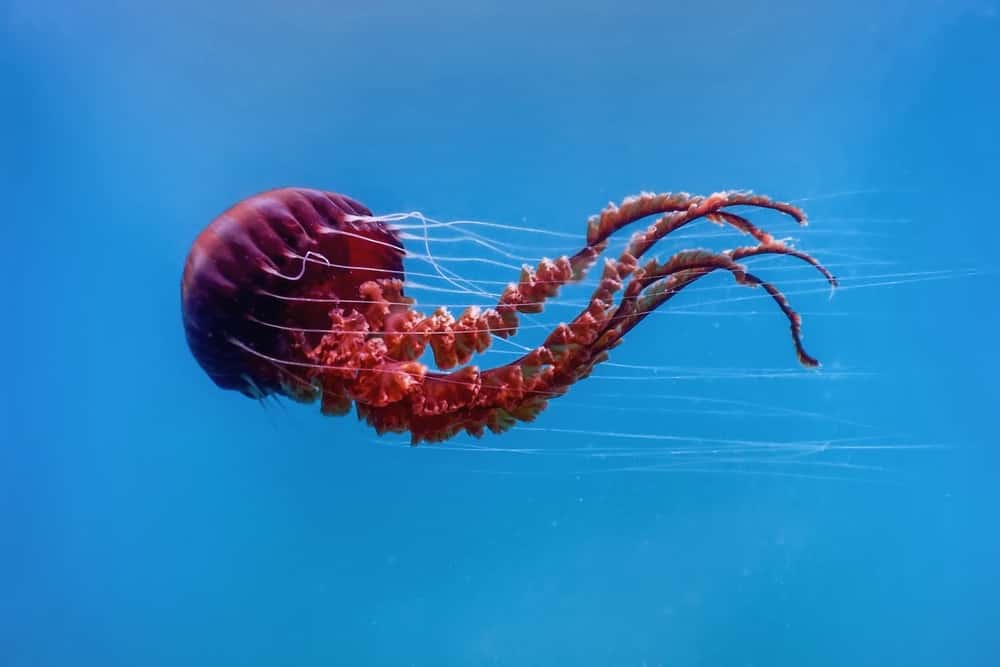
Jellyfish can somewhat control their movement through the water.
©Allexxandar/Shutterstock.com
In response to sensory stimulation, jellyfish rise to the surface, dive to avoid rock walls, form aggregations, and swim horizontally in response to turbulent waters. They move forward by rhythmically expanding and contracting their bells, the main, umbrella-shaped part of their body, but aren’t powerful enough to resist the direction of most ocean currents.
Portuguese man o’ war are effective predators. Small fish, pelagic crustaceans, and other invertebrates are stung and paralyzed by their feeding tentacles. Flotation, prey acquisition, feeding, and reproduction are just a few of the tasks that each of a man o’ war’s four distinct components is responsible for. The Portuguese man o’ war is incapable of swimming. Instead, it is propelled forward by the force of wind and ocean currents.