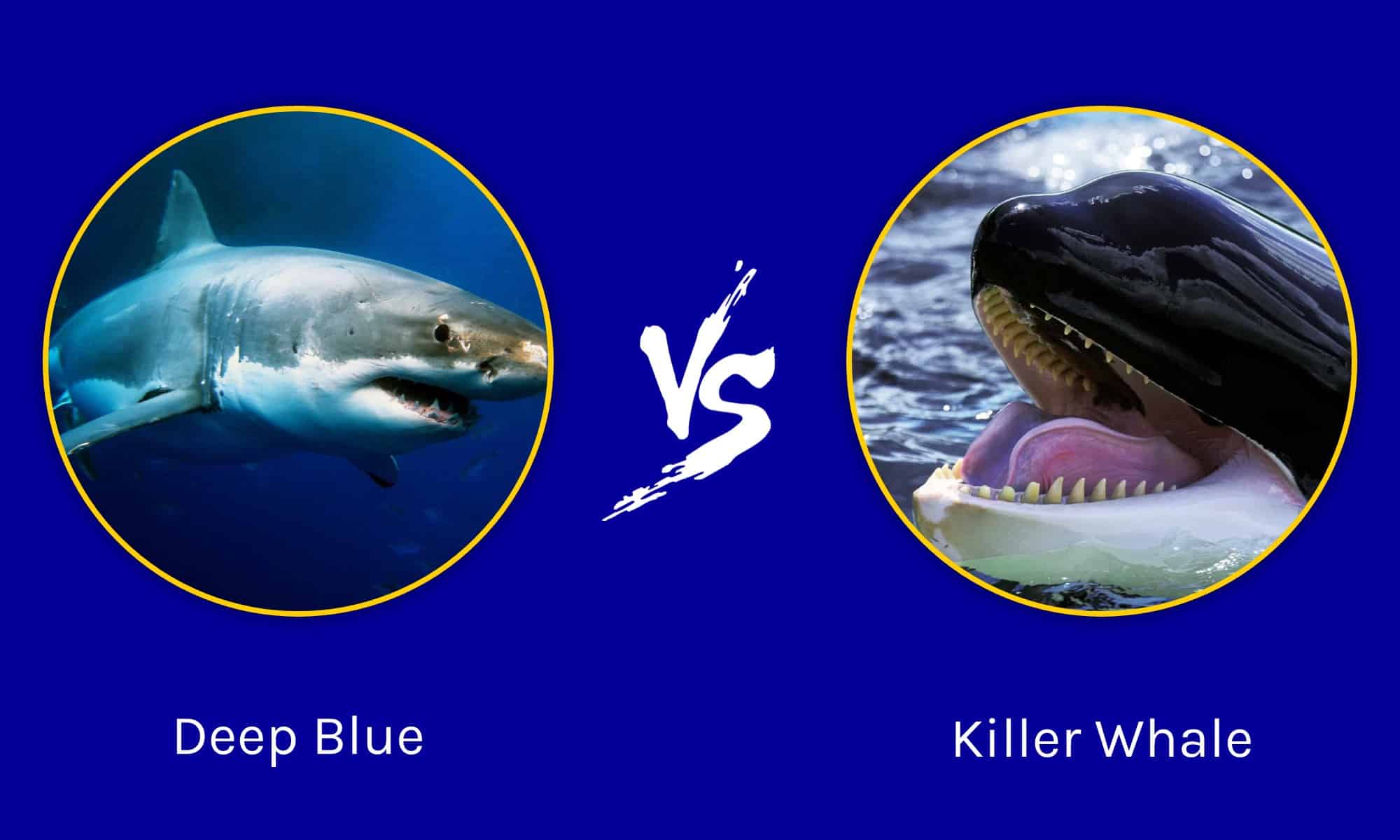

Orcas (Orcinus orca), or killer whales are incredibly large mammals that live up to that name from time to time. They’re powerful and smart, and they can take down other dreaded creatures in the ocean’s depths. Among the animals that orcas kill are great white sharks (Carcharodon carcharias). These sharks are powerful in their own right, but they’re not strong enough to take on an orca. Yet, what if there was a fight between the largest great white ever and a killer whale?
Would the large and deadly great white dubbed Deep Blue have what it takes to kill a single killer whale in a one-on-one fight? Continue reading to discover what might happen in an epic battle between these two marine mammoths.
Key Differences Between the Largest Great White Ever and a Killer Whale
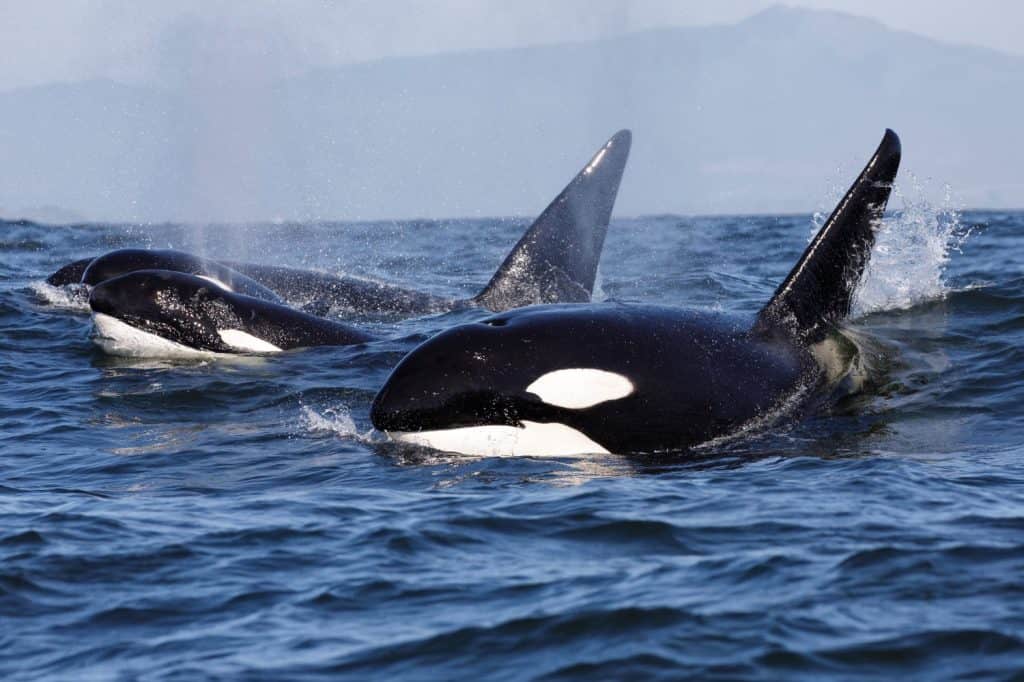
Killer whales are found in all the Earth’s oceans, from the polar regions to the tropics, but are more concentrated in colder waters.
©Tory Kallman/Shutterstock.com
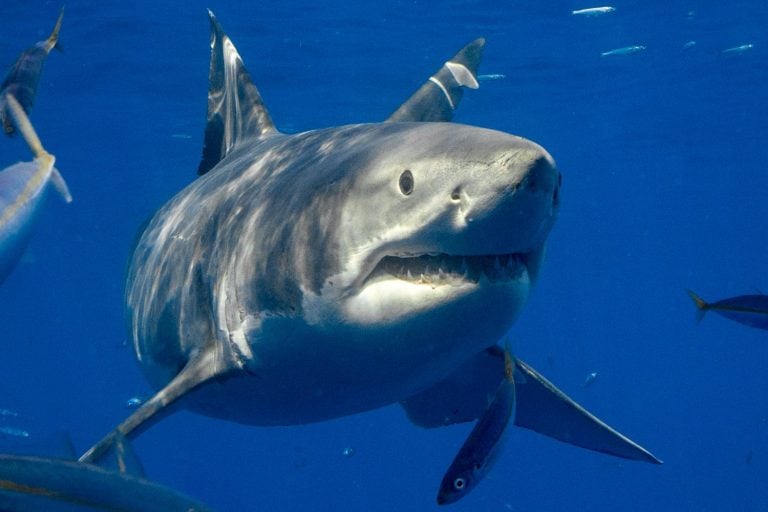
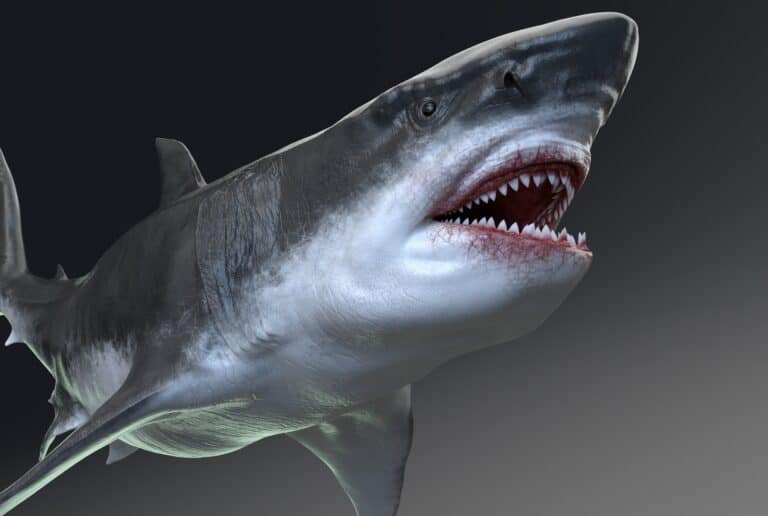
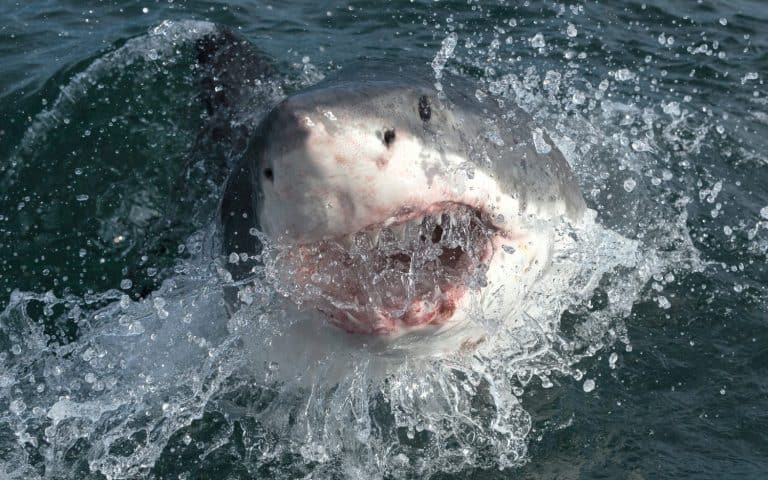
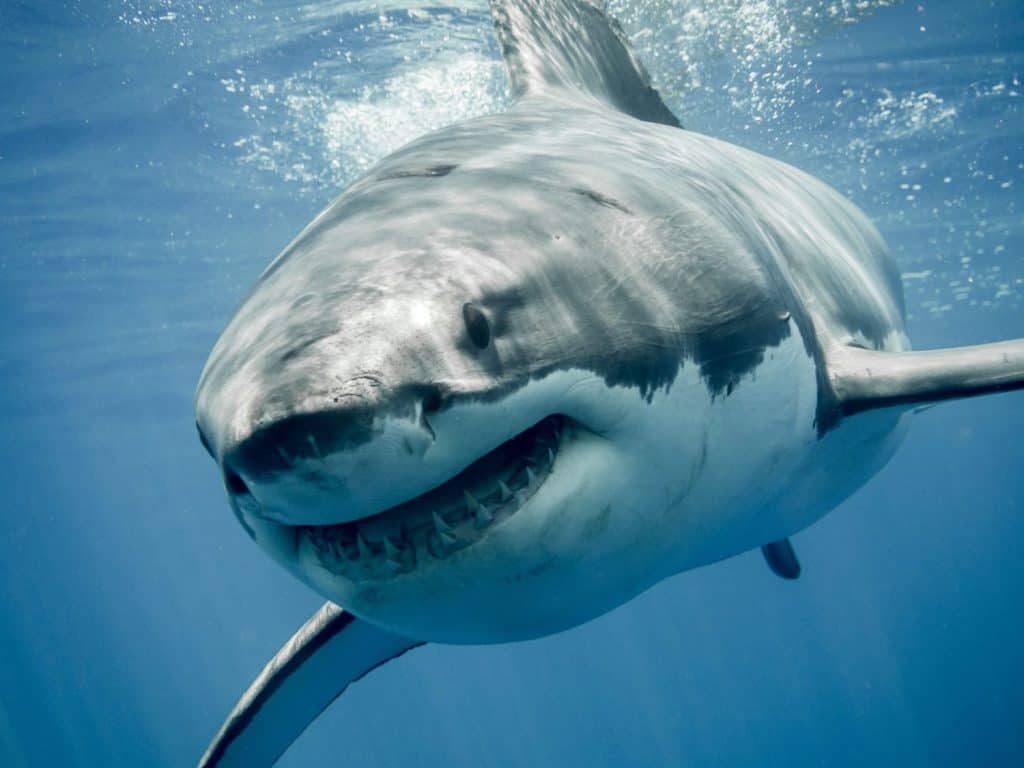
Key differences between the largest great white ever and a killer whale include their size and strength. Deep Blue is the largest known great white shark and is estimated to be over 50 years old. She was first observed in the 1990s and is known to frequent areas near Mexico’s Guadalupe Island. Deep Blue weighs about 5,000 pounds and measures 21 feet long, far less than the average killer whale, which can be 26 feet long and weigh 16,000 pounds.
Killer whales are believed to have a stronger bite force than great white sharks, though exact measurements for orcas are not available. Great white sharks have an estimated bite force of around 1,800 PSI, while orca bite force estimates vary and are not directly measured.
While great white sharks tend to be loners or hunt in pairs, killer whales live in pods that include as many as 20 individuals. These differences will define the fight. The largest great white ever will need to use every bit of its power and cunning to stand a chance. Size, speed, defensive and offensive capabilities, and predatory behavior are the metrics that will determine the winner.
Largest Great White Ever vs. Killer Whale: Size
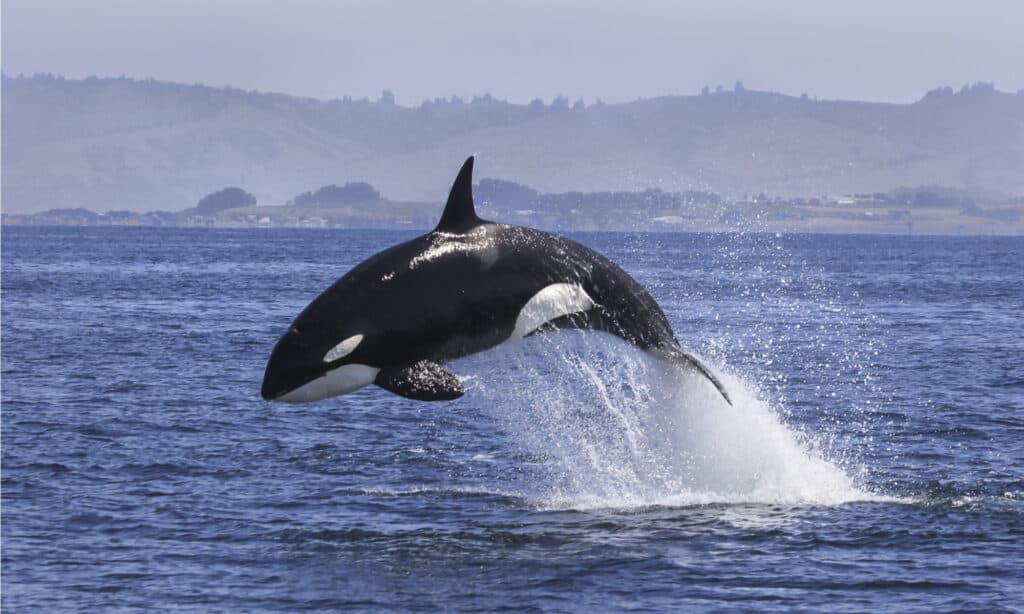
Killer whales are larger than great white sharks.
©Tory Kallman/Shutterstock.com
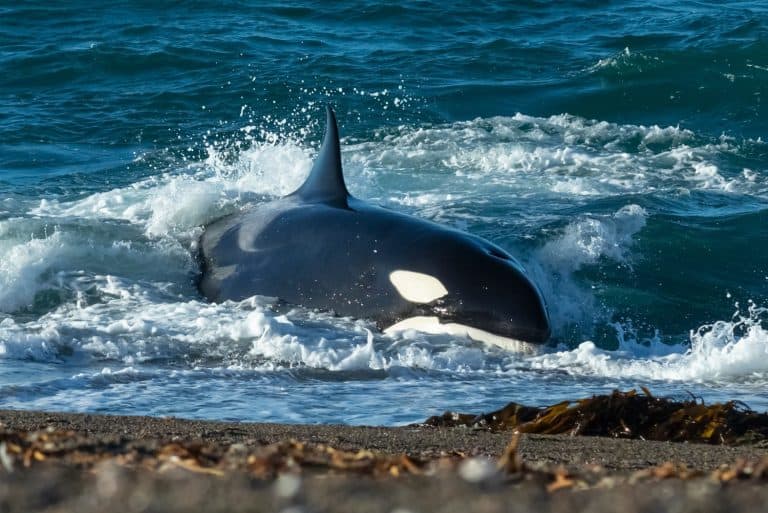
A killer whale is larger than the largest great white shark ever. Scientists estimate that Deep Blue weighs about 5,000 pounds, less than the low-end of the average killer whale weight of 6,000 pounds. Meanwhile, killer whales can weigh as much as 15,000 pounds, three times as much as Deep Blue.
Deep Blue is about 21 feet long, but killer whales measure from 16 to 26 feet.
Killer whales have the size advantage.
Largest Great White Ever vs. Killer Whale: Speed
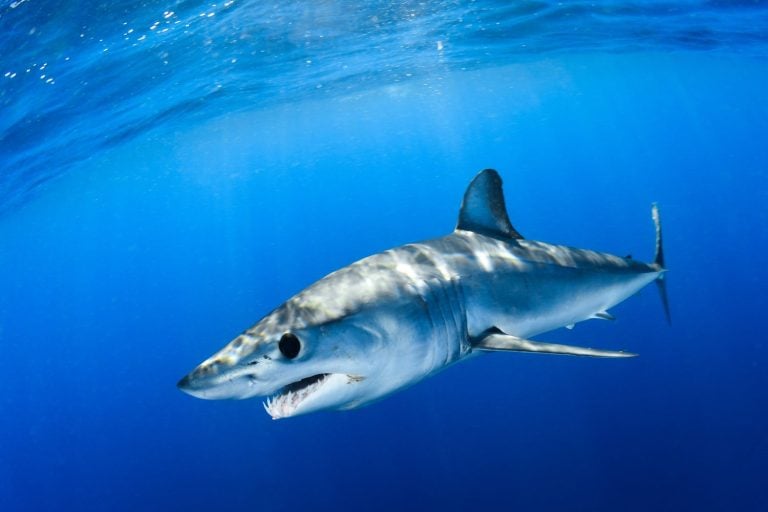
Killer whales are faster than great white sharks. Killer whales have top speeds of around 34-35 mph compared to a great white shark’s burst speed of about 25 mph. Orcas not only achieve higher speeds but also have superior sustained speed and agility, making them faster over distance.
Killer whales have the speed advantage.
Largest Great White Ever vs. Killer Whale: Defenses

Killer whales are protected by a thick layer of blubber.
©slowmotiongli/Shutterstock.com
The killer whale has better defenses than the great white shark. An orca has a great sense of hearing that allows it to find prey and avoid predators. Moreover, orcas have large, thick bodies that feature a layer of blubber between 3 and 4 inches thick. Any predator would have to deal severe damage to land a fatal blow.
In most circumstances, killer whales live with other members of their species. Few predators in the ocean would be so bold as to attack a pod of killer whales. Even if one did, it would have a hard time keeping up with them or doing enough damage to kill them without being killed in the process.
The largest great white shark doesn’t have the benefit of a group. Instead, this creature uses its keen hunting senses to find prey. Great white sharks are fast, too large for many creatures to attack, and can blend into their environment rather well. Moreover, they have denticles on their skin that help them swim quieter than other creatures their size.
Killer whales have the defensive advantage.
Largest Great White Ever vs. Killer Whale: Offensive Capabilities

A killer whale jumping in front of two sea kayaks in Alaska USA.
©Mayskyphoto/Shutterstock.com
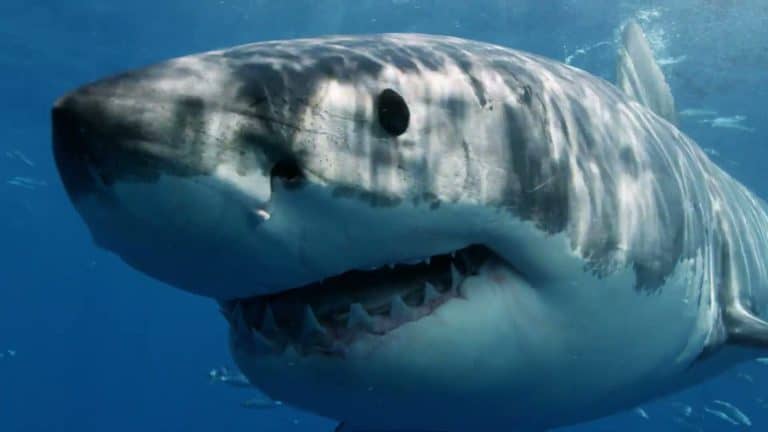
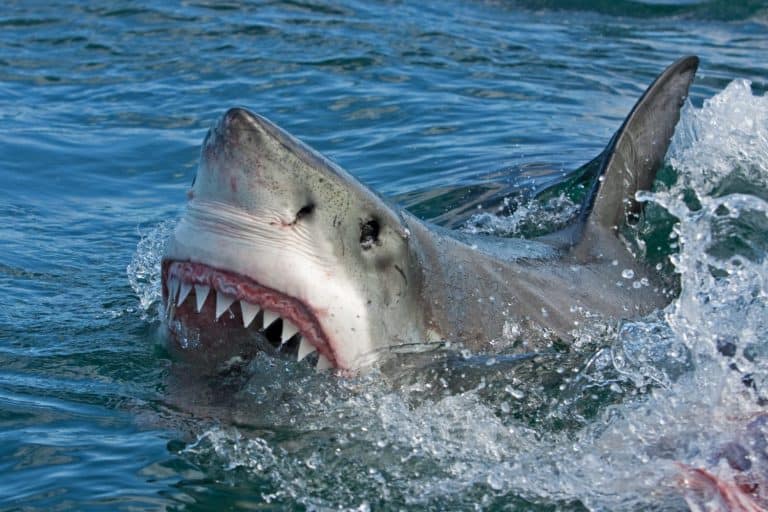
The largest great white shark ever has the potential to be an offensive powerhouse. Great whites have rows of serrated teeth meant to shear flesh from their prey. They bite with a force of around 1,800 PSI, strong enough to clamp down and tear through all sorts of sea creatures. Combined with their powerful hunting senses, great white sharks can find and kill prey with ease.
Killer whales have a bite force that measures almost five times that of a great white shark. They are estimated to have a powerful bite, though the exact PSI for killer whales has not been directly measured. Their teeth can measure up to 4 inches long. It’s not just their mouth that other creatures need to worry about, though. An orca can easily swat another animal with its tail, killing it.
The killer whale has the offensive advantage.
Largest Great White Ever vs. Killer Whale: Predatory Behavior
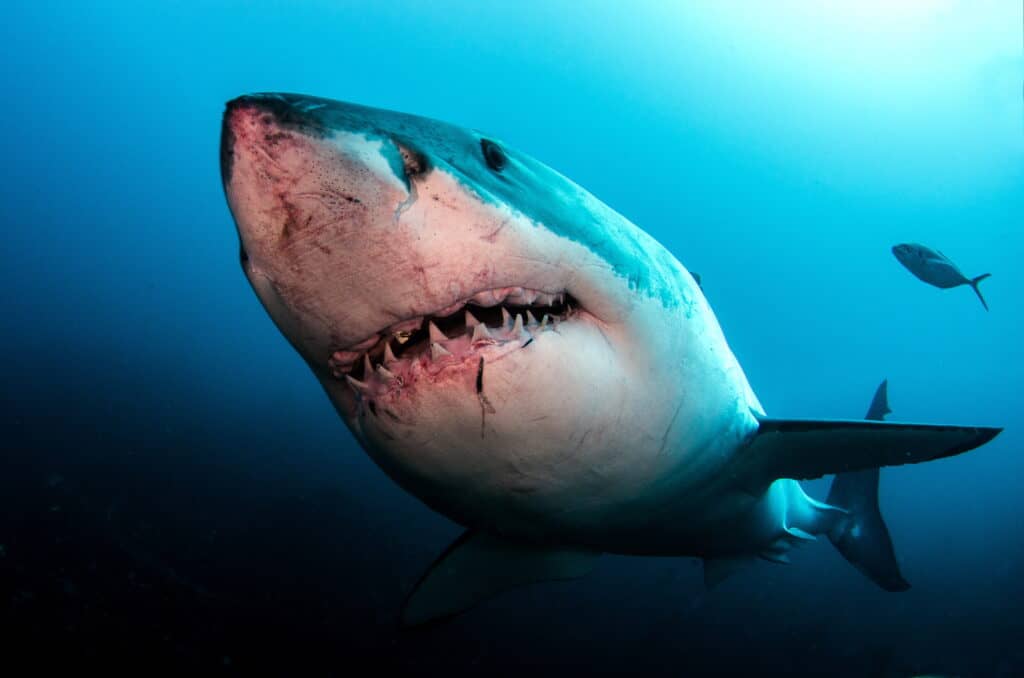
Individually, the great white shark is a better predator than the killer whale.
©Tomas Kotouc/Shutterstock.com
The great white shark has amazing predatory senses that helps it find prey based on smell, taste, hearing, and even electromagnetism. They use these senses to find prey and then ambush it with a burst of speed and a series of ruthless bites.
Killer whales are not ambush predators in the same way as great white sharks. However, they can gather large schools of fish with other orcas and eat them, knock prey into the water, and use their intelligence to overcome obstacles in obtaining food.
The great white shark has the predatory advantage.
Who Would Win in a Fight Between the Largest Great White Ever and a Killer Whale?
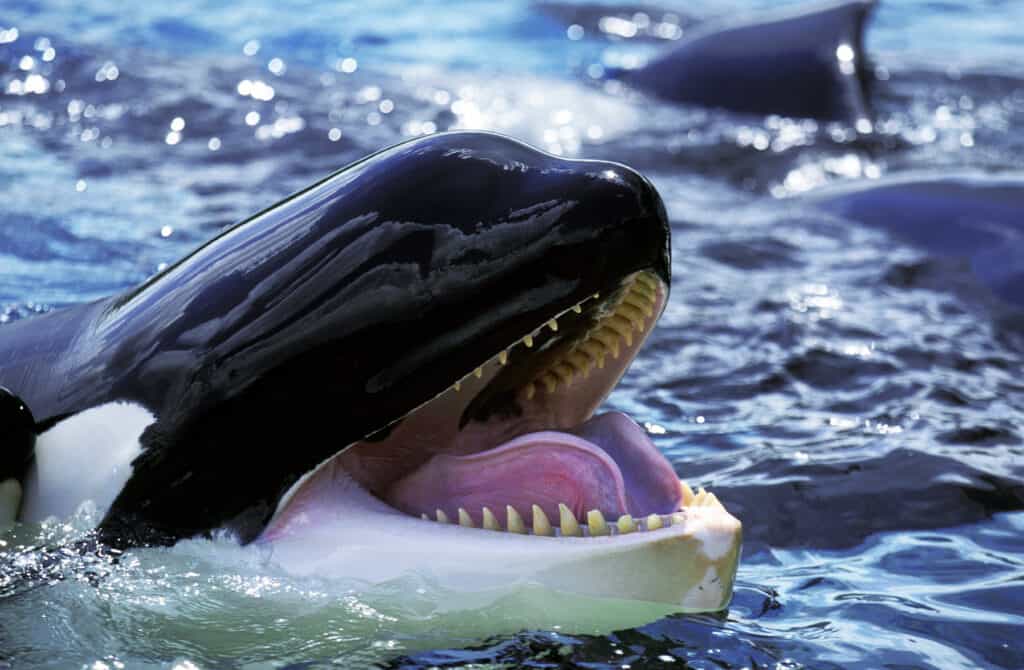
The killer whale would win the battle against the largest great white ever.
©slowmotiongli/Shutterstock.com
A killer whale would win a fight against the largest great white ever. The only case in which an orca could potentially be killed by a great white is if the largest great white took on the smallest orca, and even then, it would be at a bit of a size disadvantage.
The fight would be bloody and long, but the whale’s larger body would be able to take more damage than the shark’s before giving out. All told, even the biggest great white is completely outclassed in this battle.