
Have you ever wondered just what that small flying insect is that’s buzzing around your face? One of the most annoying things is getting bitten by an insect but not knowing exactly what has bitten you — especially when some insects have much more painful bites than you might expect given their size. Some of these small biting insects are no-see-ums, which are often known as biting midges, while others are called gnats.
Both are found virtually all around the world in many different habitats, particularly around slow-moving water. But what are the differences between the two? Join us as we discover everything you need to know about no-see-ums vs. gnats!
Comparing No-See-Ums vs. Gnats
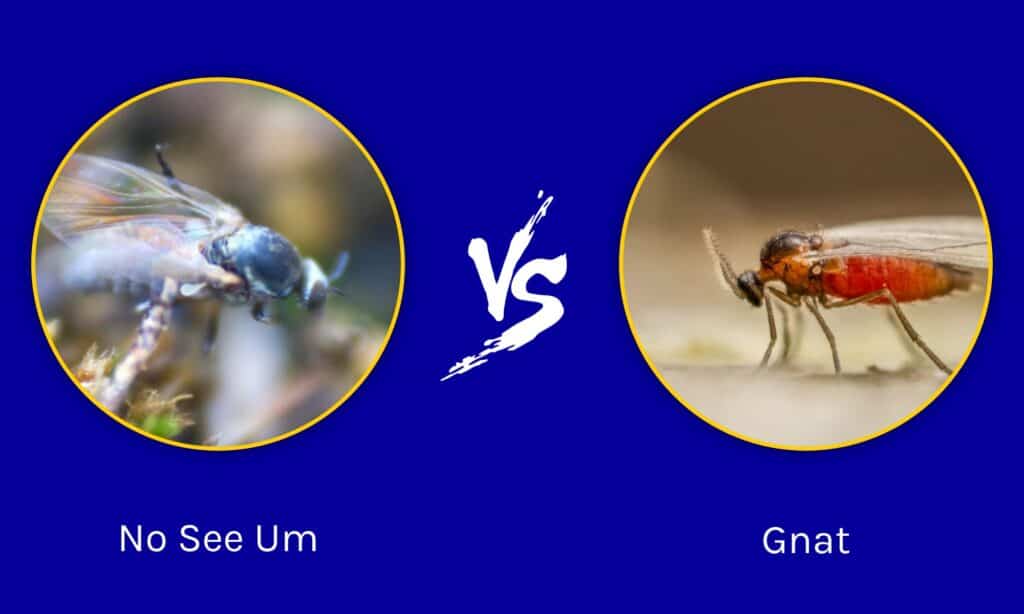
Check out a quick comparison of no-see-ums vs. gnats in the table below.
| No-See-Um | Gnat | |
|---|---|---|
| Size | 0.04-0.12 inches long | 0.04-0.5 inches long |
| Color | Grey | Yellowish-orange, tan, grey, black |
| Wings | Covered with hair | Not always covered with hair |
| Mouthparts | Saw-like cutting edge | Varies by species; can have a cutting edge or may lack biting mouthparts |
| Diet | Larvae: algae, fungi, plant matter Adult: mammal, reptile, or insect blood (females only), flower nectar | Larvae and adults may consume algae, fruit, fungus, compost, decaying organic matter, flower nectar, blood (females only) |
The 5 Key Differences Between No-See-Ums and Gnats
“Gnat” is a loose descriptive term rather than a scientific one and is used to describe a group of tiny flies. Gnats are generally described as being any species in the Nematocera suborder. No-see-ums are tiny flies from the family group Ceratopogonidae, of which there are around 5,000 species worldwide.
However, no-see-ums actually fulfill the aforementioned criteria to be classified as gnats. Despite this, there are many other species that are also classified as gnats. So there are still a few differences that we can use to distinguish them, including size, color, wings, mouthparts, and diet.
Size
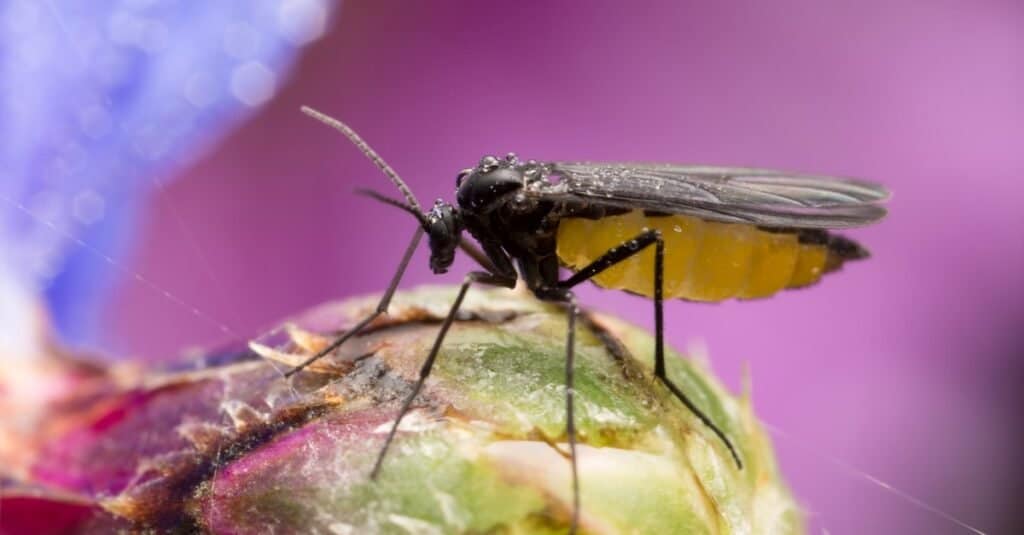
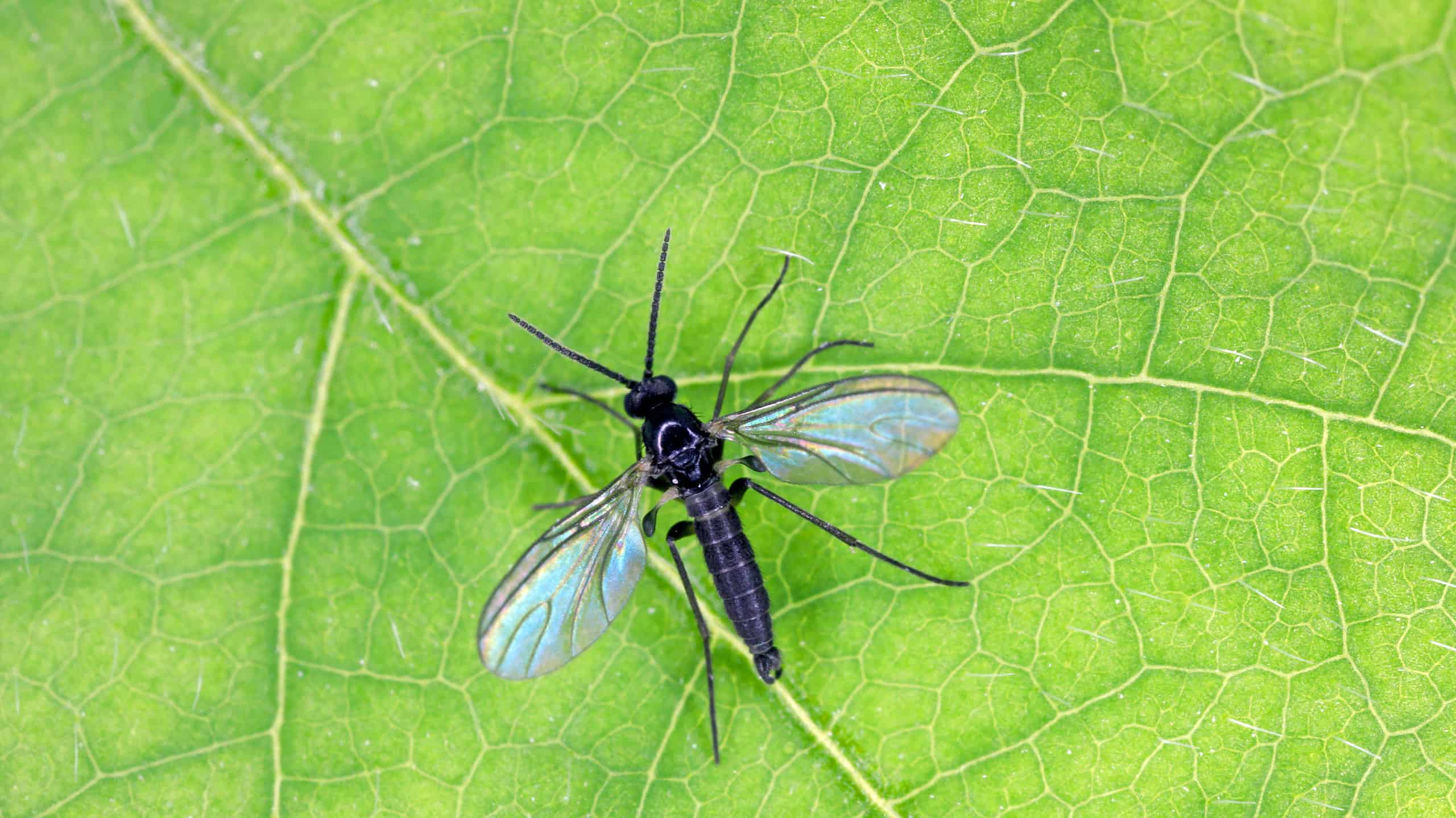
Gnats are typically larger than no-see-ums.
©Henrik Larsson/Shutterstock.com
Although no-see-ums are just a specific type of gnat, they are one of the smallest gnats around. No-see-ums are usually between 0.04 and 0.12 inches long, while gnats in general can measure from 0.04 all the way up to 0.5 inches long.
Color
Another difference between gnats and no-see-ums is their color. Although many species of gnats are grey to black, gnats can also be tan or yellowish-orange in color. However, no-see-ums are always grey.
Wings
Despite being tiny and difficult to see, the wings of no-see-ums are actually covered with dense hair. If you look really closely, the wings often appear to have tiny patterns all over them. However, these are usually just the pigmentation of their hair.
In contrast, not all gnats have hair-covered wings. Whether they have hair on their wings depends on the species. For instance, fungus gnats and Dixid midges do not have hair on their wings.
Mouthparts
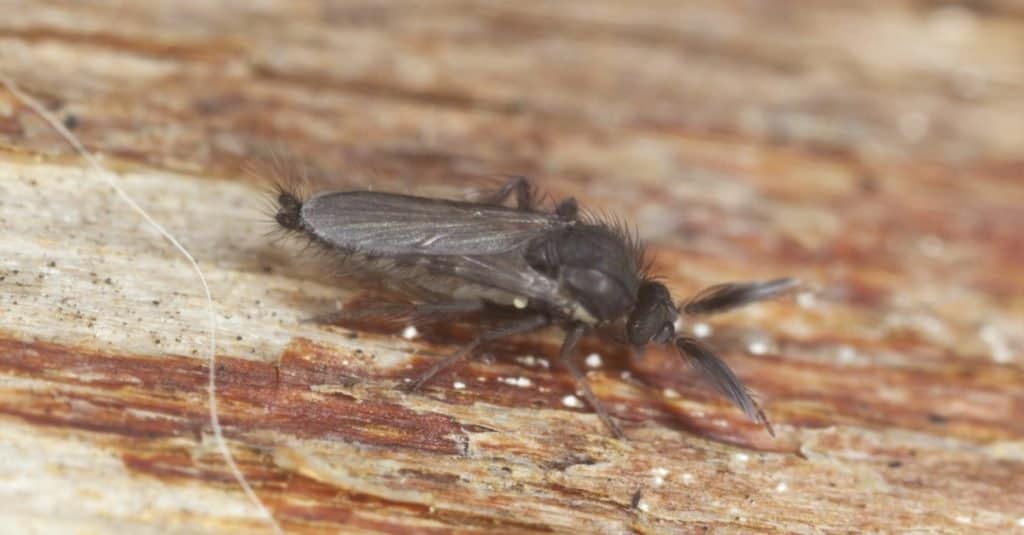
No-see-ums have specialized mouthparts for sucking blood.
©Henrik Larsson/Shutterstock.com
The mouthparts of no-see-ums and gnats can also differ depending on the species. No-see-ums are a type of biting gnat, and the females must consume a blood meal. Therefore, no-see-ums have specialized mouthparts which enable them to pierce the skin and suck up blood. No-see-ums have a reputation for having incredibly painful bites and it is easy to see why. They have a saw-like cutting edge on their mandibles. They use this to cut the skin open, then inject saliva underneath, which causes the blood to pool and creates a raised bump. Then, they suck up the blood using their proboscis.
Some gnats have mouthparts similar to those of no-see-ums. They have scissor-like mandibles that cut the skin and create a small, bleeding wound. Of course, gnat species that do not bite lack these types of mouthparts. Fungus gnats and eye gnats also lack biting or piercing mouthparts, so they cannot physically bite the way that no-see-ums do.
Diet
Although no-see-ums are a type of gnat, they don’t always share the exact same diet. This is because the diet of a gnat largely depends on its species and whether it is a biting gnat. As mentioned above, no-see-ums are biting gnats and the females must consume a blood meal before they can lay their eggs.
However, not every species of gnat needs or consumes blood as part of its diet. Many other gnats are predominantly herbivores and eat a lot of fruit. They also consume algae, fungus, nectar, and decaying plant matter.
Although the diets of adult no-see-ums and gnats can differ, there is little difference between the diets of their larvae. No-see-um larvae feed on algae, fungus, and plant matter — all of which other gnat larvae also consume. However, some species of gnat larvae hatch in fruit and vegetables, and when this happens, the larvae generally feed on these until they become adults. In such cases, the gnat larvae are often considered pests due to the damage they can do to the fruit — often more than the adults. In other cases, gnat larvae might not eat at all during that stage, depending on the species.
What Does a No-See-Um Bite Look Like?
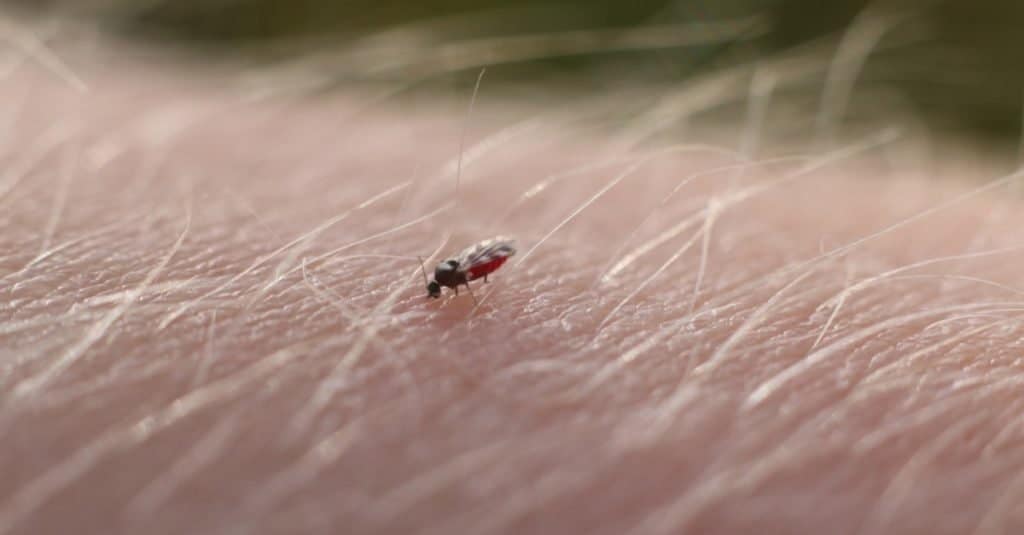
No-see-um bites are painful and itchy and an infected area will look like a small red dot or raised welt.
©Jamierpc/Shutterstock.com
These tiny gnats are only about 0.03 inches in length and are generally very difficult to spot. As noted above, they go by a few different names, like biting midges, biting gnats, and sand flies. Unfortunately, these tiny, annoying biters can transmit diseases like blue tongue and epizootic hemorrhagic disease to animals, and some species have recently been identified as vectors for the Oropouche virus, which can infect humans.
On humans, while no-see-ums can and will bite anywhere, they tend to show more interest in certain areas like the nape of the neck and the legs. Their bites are painful and itchy, and an infected area will look like a small red dot or raised welt that can burn and itch. It is uncommon to have just a single bite, so you should notice a cluster of red dots in the affected area.
If you have been bitten, you can reduce inflammation by first washing the bite area and then applying a cold compress or anti-itch medication. If your pet has been bitten, you can reduce inflammation and itching by washing the affected area, then applying a cold compress or even an oatmeal bath, which can be soothing. Scratching should be avoided as this can lead to an open wound.