
Quick Take
- Identifying a cockatiel’s sex is significantly easier after its first adult molt.
- The absence of melanin in lutino variations makes identification more difficult.
- Male cockatiels are typically more vocal than female cockatiels.
The cockatiel (Nymphicus hollandicus) is a small parrot that is native to the dry interior of Australia. They are well-loved for their charming, interactive personalities, making them splendid pets. Although a variety of physical and behavioral traits are indicative of the bird’s biological sex, these do not become apparent until the bird is six to 12 months old, generally after its first adult molt. Continue reading to discover the key differences between male and female cockatiels.
Key Differences Between a Male and a Female Cockatiel
Male and female cockatiels have different appearances, behaviors, and vocalizations. While they display slightly different plumage, behaviors and vocalizations can also help determine the sex of a cockatiel, although these traits may vary between individual birds.
Morphology
Determining the sex of a young cockatiel is difficult because they lack sexually dimorphic traits until adulthood. At six to nine months old, cockatiels will molt for the first time and develop new plumage. These new feathers will vary between the sexes. It can sometimes take several molts for the full, vibrant adult plumage to appear.
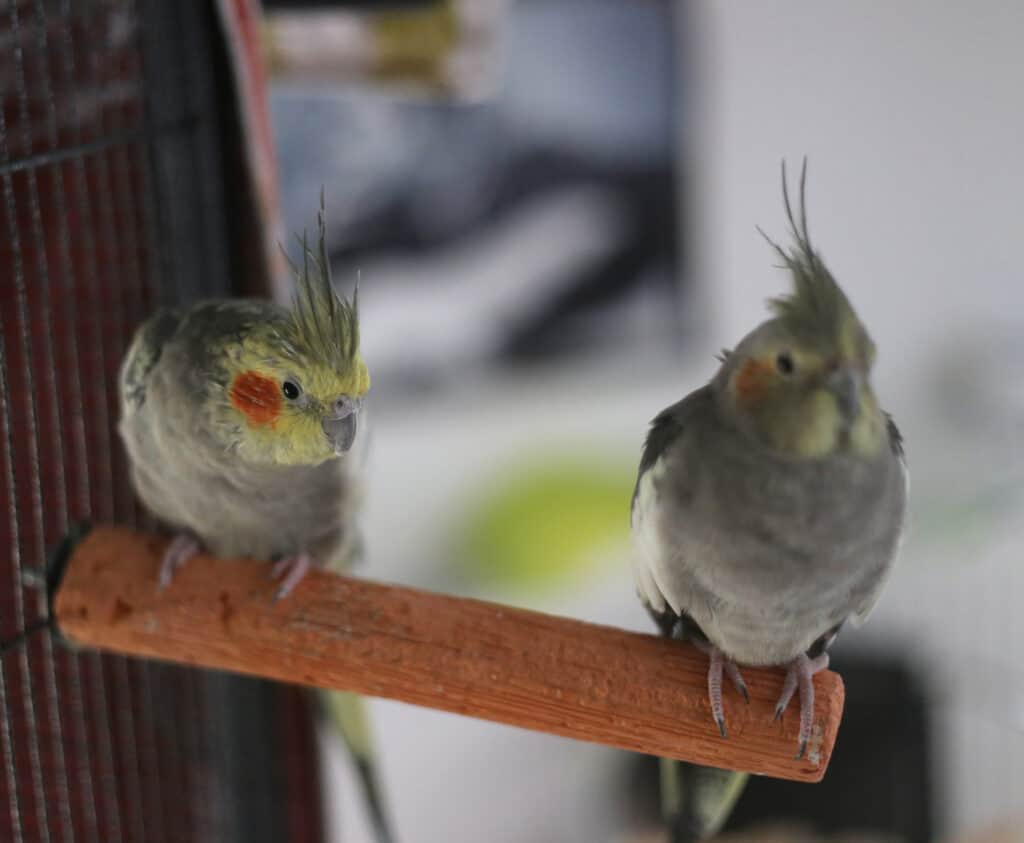
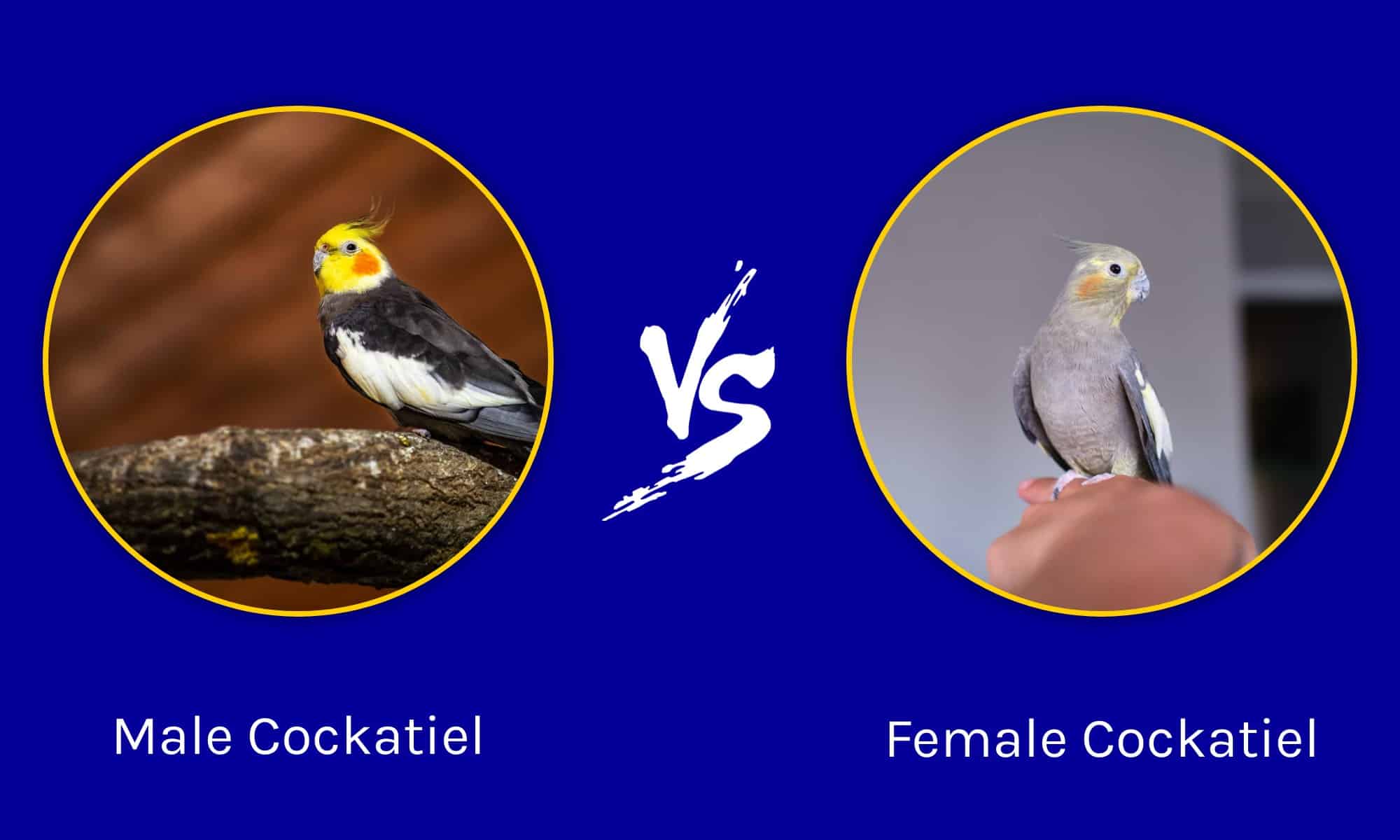
Male cockatiels tend to display more prominent cheek plumage than female cockatiels.
©iStock.com/jojoo64
Wild cockatiels are gray-bodied with white, orange, and yellow accents. However, many color variations exist in the pet market, including lutino, cinnamon, fallow, silver, yellow cheek, and pearl. Cockatiels with the lutino mutation lack melanin, resulting in a pale yellow or white color with the typical bright orange cheek circles. The female lutino displays yellow spots under her wings and yellow markings under her tail.
In gray cockatiel breeds, males are usually darker overall than females, but this is not always a reliable indicator of sex. The male will also usually show more striking facial features. Males have vivid orange cheek spots on their bright yellow faces. Males will develop their yellow face after molting, while females maintain the grayish-brown face of a young cockatiel. Females will typically have lighter, less vivid orange spots on their muted yellow, brownish, or gray faces. Females have markings beneath their tail feathers, which are typically horizontal bars or stripes that alternate between gray, dark gray, white, or yellow. Some females may also have dots or other patterns on a gray background. If there are no markings on the undersides of the tail feathers, the bird is likely a male.
Behavior
Courtship rituals are an excellent way to distinguish between male and female cockatiels. Male cockatiels actively court females and may display courtship behaviors even without any other birds around.
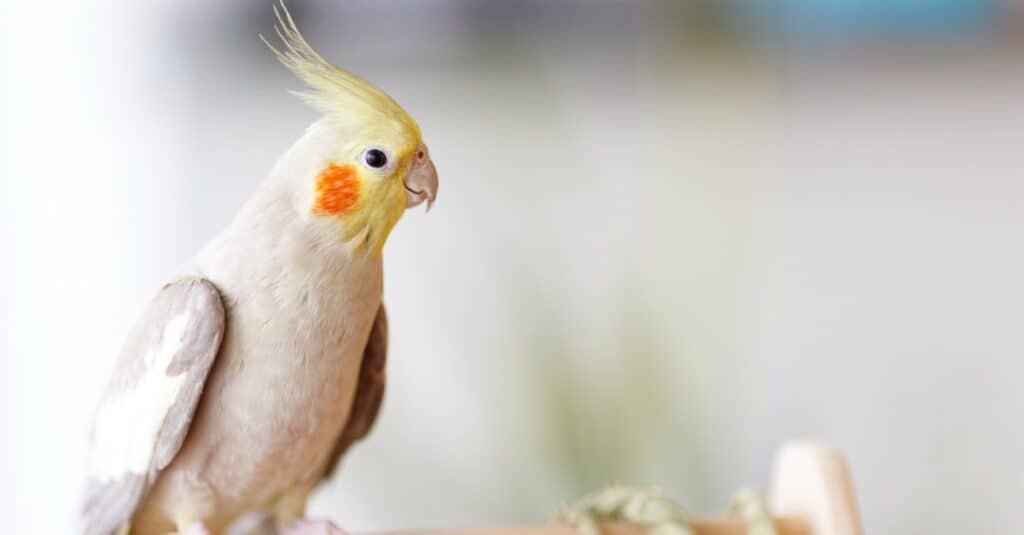
Males display more curiosity and confidence, while female cockatiels are quieter and more reserved.
©iStock.com/bee32
One of these behaviors includes tapping his beak on objects in order to gain a female’s attention. A male may also strut about while beak-tapping or whistling while hopping, combined with some quick head dips. Males will sometimes hold their wing tips away from their bodies.
Females are usually less active before bonding or mating, although they may still display certain signs that indicate they are ready to mate. A female that is ready to find a mate may sit low on a perch, peeping quietly with her tail in the air. She may feed the male she is bonded with or is trying to establish a connection with.
In general, female cockatiels tend to be more reserved and will retreat from noise and commotion, while males are more likely to approach a disturbance. Females tend to observe and flee rather than approach a potential threat.
Vocalizations
Male cockatiels typically do not have large vocabularies, but with training, some can learn to say a few to over 20 human words and phrases, though most will only learn a handful. They can also be taught to sing specific melodies. They may imitate environmental sounds or human voices without being specifically taught.
Male cockatiels are more likely than females to use these types of vocalizations. Female cockatiels are typically quieter, sticking to chirps and whistles, though they do respond to familiar human voices or to other cockatiels.
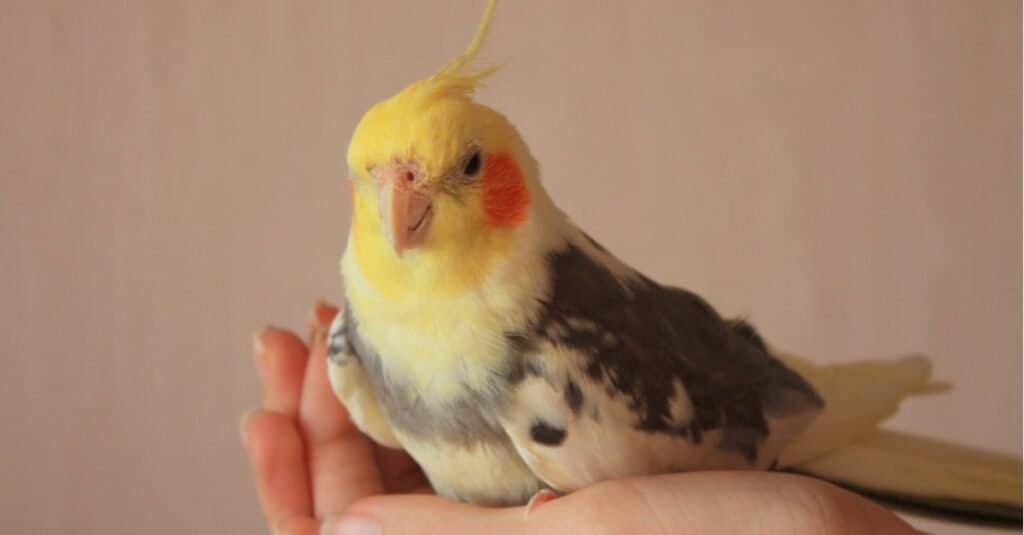
Females tend to be less vocal than males.
©iStock.com/sapozhnik
Comparing a Male Cockatiel to a Female Cockatiel
| Male Cockatiel | Female Cockatiel | |
| Size | 12-14 in, 2.5-4.2 oz, as adults | 12-14 in, 2.5-4.2 oz, as adults |
| Morphology | Darker colored body plumage, yellow face, vibrant cheek spots | Lighter body plumage, brown or gray face, muted cheek spots, markings beneath tail feathers |
| Behavior | Active, curious, investigate potential threats | Reserved, shy, flee from potential threats |
| Vocalization | More expressive, more likely to sing and speak human words | Quieter; may whistle at family members or other cockatiels. |