
Quick Take
- Frog and fish eggs may look similar at first, but their structure, environment, and even parental strategies differ.
- Fish eggs are individually placed and adapted to moving currents. Frog eggs are laid in gelatinous masses in shallow, oxygen-rich water.
- Both frogs and fish act as bioindicators, and their decline highlights the urgent need to protect them.
Although frogs and fish may appear similar from the water’s surface, they have many differences that make them easy to distinguish with a trained eye. Fish typically spend all of their lives in water. Frogs, however, bridge the gap between terrestrial and aquatic life through metamorphosis.
These differences are reflected in the characteristics of their eggs and stages of life. While both may rely on water in their first stage of development, the main differences between their eggs are found in their structures, environments, parental strategies, and vulnerabilities (and, of course, the fact that they come from two completely different types of organisms).
How Alike Are Frog Eggs and Fish Eggs?
Initially, both frog and fish eggs seem similar in size and shape. As amphibians who have evolved from fish-like ancestors, the shared early life stages being so similar is no coincidence. Fish and frogs both rely on external fertilization, or a reproduction method that exists outside of the body. External fertilization, otherwise known as spawning, typically occurs when a male and female release their gametes (sperm and eggs) into the environment. In the case of frogs and fish, that environment is usually aquatic.
While it is common for fish and frogs to engage in external fertilization, some species do reproduce via internal fertilization. In frogs, internal fertilization is rare; with fish, this reproductive method can occur in live-bearing fish such as guppies. For this article, only the most common reproductive methods are discussed.
Differences in Structure & Appearance
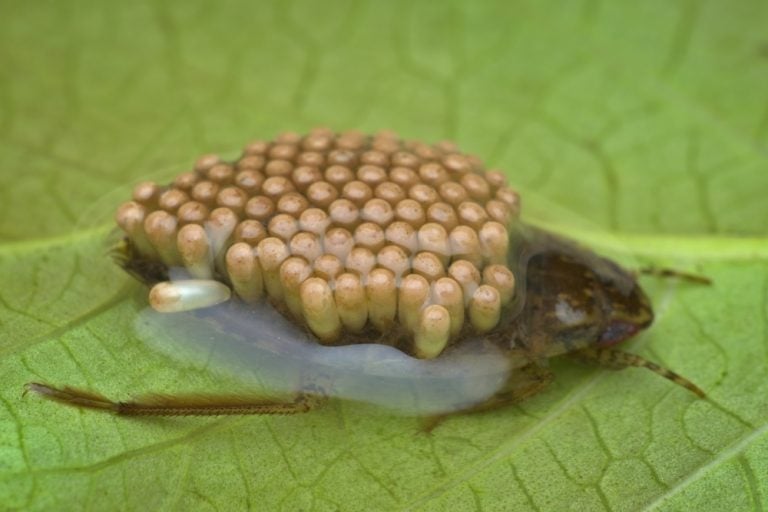
At first glance, frog and fish eggs look quite similar, with their jelly-like, round appearance and similar environments, which can make them difficult to tell apart. However, one of the key differences between frog and fish eggs lies in their appearance and structure upon closer inspection.
Frog Eggs
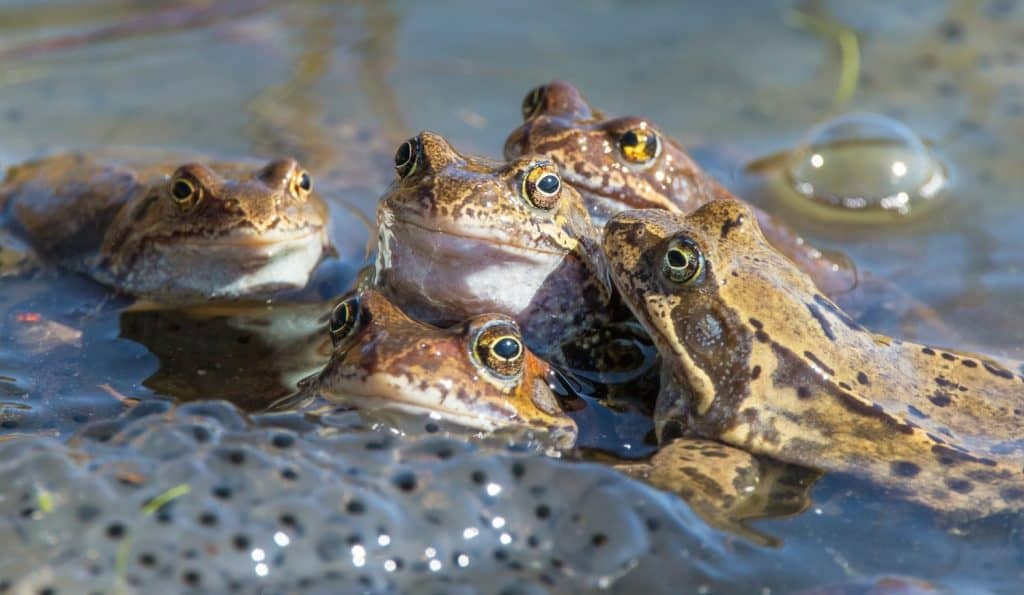
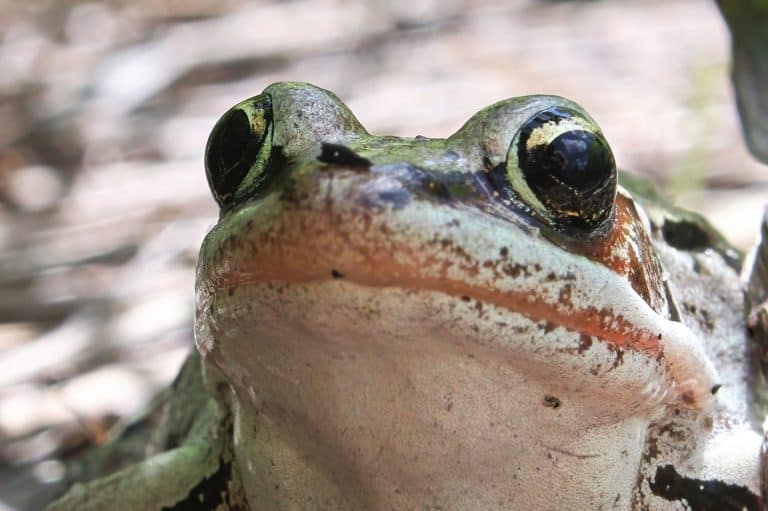
Frogs are essential to ecosystems, serving as environmental indicators and controlling insect populations.
©Daniel Prudek/Shutterstock.com
The eggs laid by a frog are often left as a large gelatinous mass. This single buoyant raft usually has a distinct dark spot in each egg, while the surrounding mass is clear.
Fish Eggs
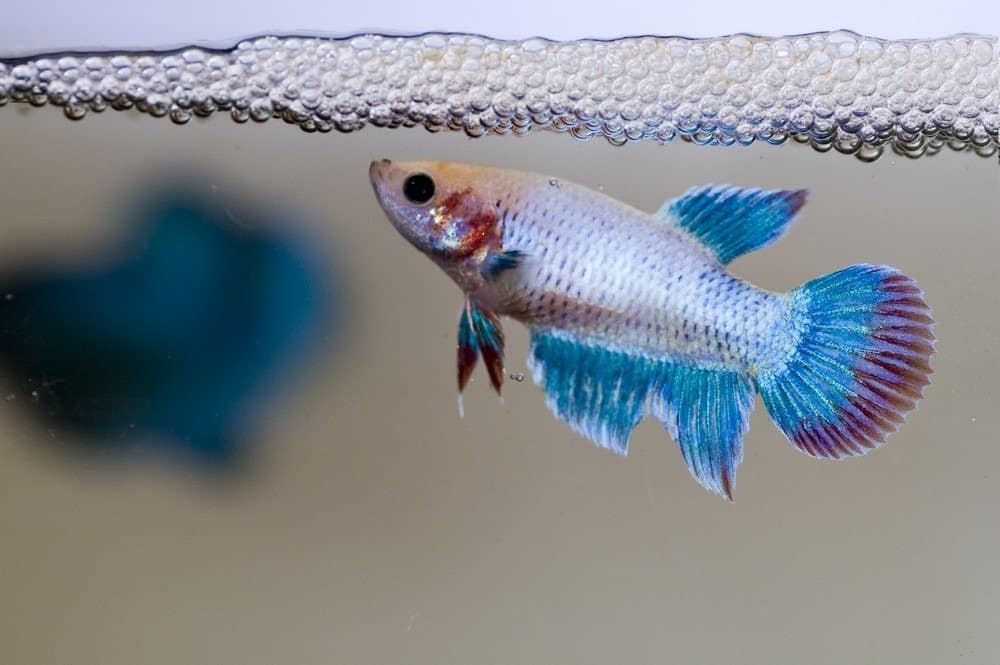
A Siamese female fighting fish guarding her newly laid eggs amongst the bubble nest.
©mnoor/Shutterstock.com
For the most part, fish eggs are laid individually or in smaller clusters compared to frog eggs. Instead of being buoyant themselves, fish eggs are usually sticky and attached to other submerged surfaces. Like frogs, fish have a protective layer around their eggs called the chorion. The chorion is much more rigid than the jelly-like matrix surrounding frog eggs. Directly after fertilization, the chorion hardens, helping to protect fish eggs from physical damage and pathogens.
How Environment Shapes Survival
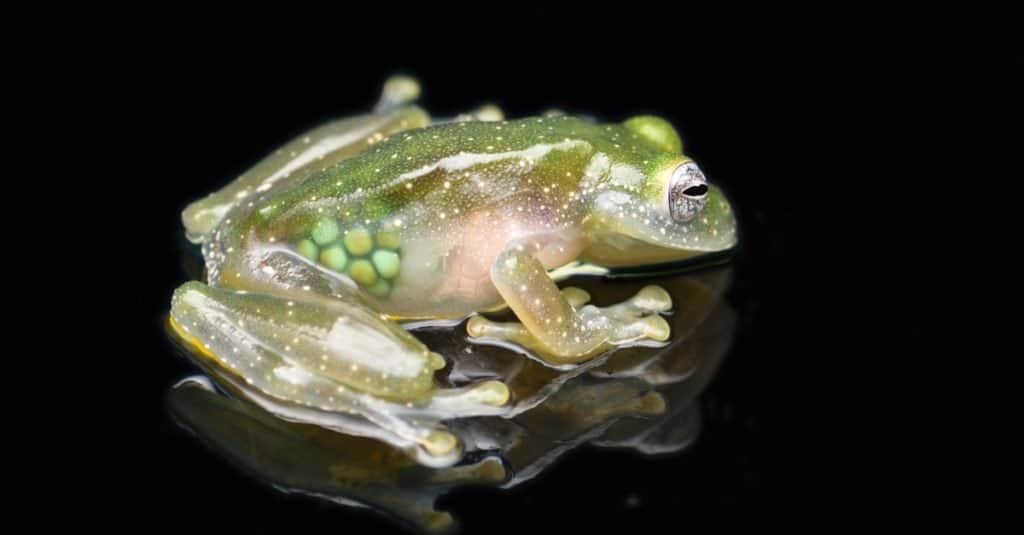
The translucent skin of some species permits an observer to see the frog’s beating heart.
©petrdd/Shutterstock.com
While most frogs do lay their eggs in the water, many species have adapted to laying their eggs on land, in plants, or even carrying them on their body like the dusty glass frog pictured above. Generally, frog eggs are laid in still or slow-moving water. This can include ponds, marsh edges, or vernal pools. For frog development, it is crucial that the areas where eggs are laid are oxygenated, shallow, and receive plenty of sunlight.
Since frogs are ectothermic, or cold-blooded, they rely on heat from their environment to develop. Tadpoles, the stage after eggs for frogs, do not have lungs at first; they develop them later as adults. Therefore, these oxygenated environments enable them to use their permeable skin for respiration. Because frogs undergo the dramatic change of metamorphosis, their development is another key difference between frogs and fish.
On the other hand, fish eggs have a multitude of environments, including flowing streams, deep lakes, and shallow shores. Fish do not have to undergo the same transformation in development and keep their gills throughout their life. Fish can breathe underwater from the start, and their streamlined bodies and powerful fins give them resilience in various aquatic environments. These adaptive traits make fish better suited for environments with currents and varying oxygen levels.
What About Mom and Dad?
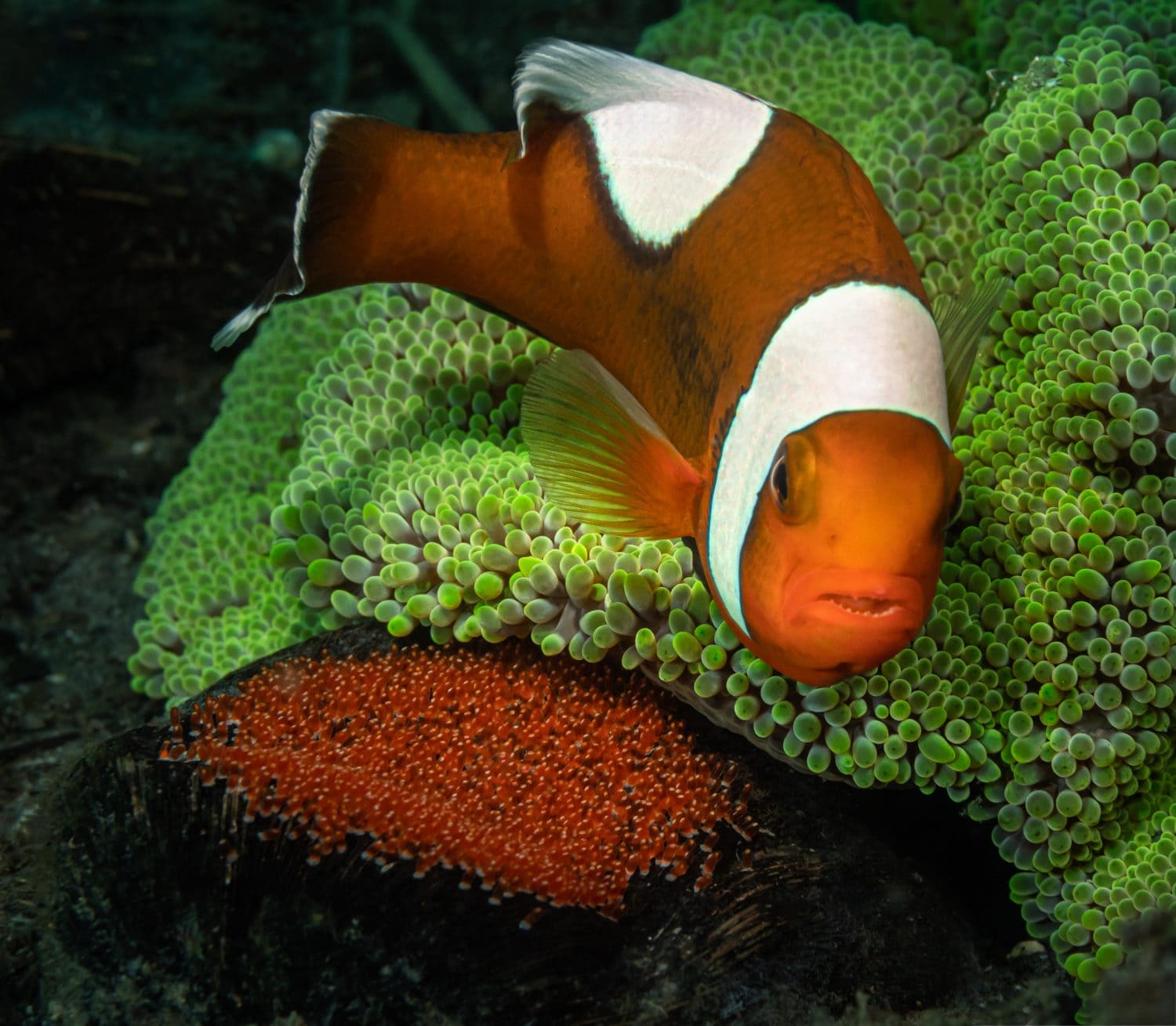
Clown fish use a sea anemone’s natural defenses to protect their clutch.
©UW.ART/Shutterstock.com
The protective strategies between frog and fish eggs also vary. Some fish abandon their eggs right after spawning, while others, like the clown fish above, actively guard them. With fish, parental care is usually related to the number of eggs they lay. This is similar to a quality-over-quantity dynamic, where species that exhibit parental care typically produce fewer, larger eggs, while those without care produce many (sometimes thousands) of smaller eggs.
Most frog species do not guard their eggs, but some rare species do. Some tropical frog species carry their eggs on their backs or use a foam nest to protect their brood from pathogens, dehydration, and predators.
Divergent Paths, Same Start and End
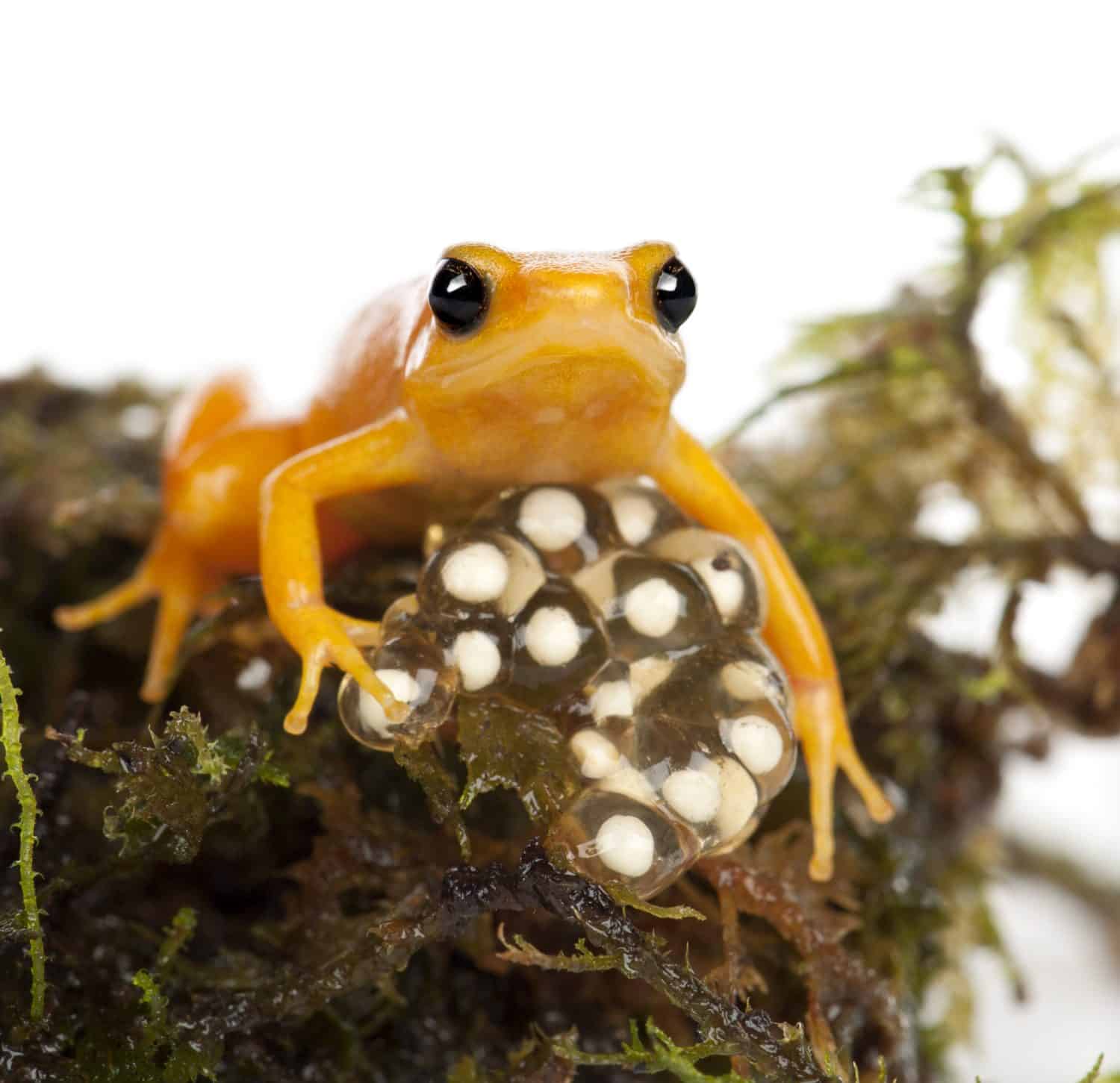
Golden mantellas are endemic to Madagascar.
©Eric Isselee/Shutterstock.com
Understanding these differences is important because the egg stage is the most vulnerable for both fish and frogs. What happens during this stage can determine whether a population survives. Though different, frog and fish eggs both serve widely as bioindicators. Bioindicators are windows into the health of our environment. Because these organisms have a unique sensitivity to many environmental changes, they can also provide early warning signals of environmental degradation. Gaining these clues about environments allows us to monitor the footprint of human activity on aquatic systems. As these clues accumulate, one pattern remains true and impossible to ignore: human actions are a major force driving species like these toward decline.
As these vital links to our ecosystems decline, the environments they support will also suffer. And those species that are more pollution-tolerant are able to survive in our modified landscapes, while more sensitive species are fading. Because human activity continues to shape all environments, it is critical to take action to mitigate our impact. Here are some more meaningful ways that we can respond.
- Reducing plastic usage
- Single-use plastics contribute to the tons of plastic that enter the oceans annually, directly contributing to the decline of countless marine animals. You can find effective strategies for community clean-up initiatives and more on the research of marine debris here.
- Creating and protecting protected areas
- Support the creation and protection of protected areas to safeguard our ecosystems. You can explore current global active projects on the Protected Planet website.
- Helping to restore habitats
- Encouraging cleanups in your area to remove immediate threats and improve water quality. Find information on starting local restoration projects and volunteer opportunities on the Nature Conservancy webpage.
Though these actions may seem small, small changes are how every real shift starts. My mom always says, “How do you eat an elephant? One bite at a time.” And she’s right. These glaring problems only begin to change when we are willing to take that first step. And when we do, we give species that share the earth with us (not for us) an honest chance to survive.