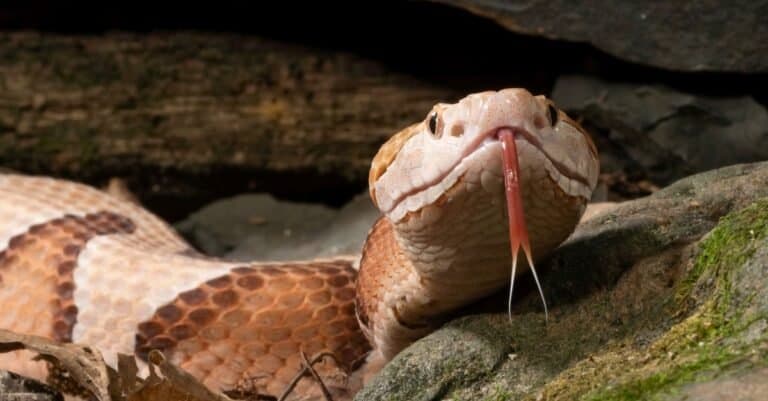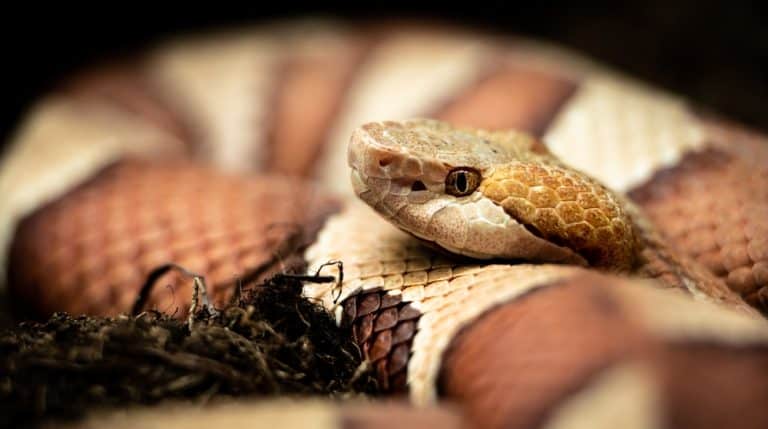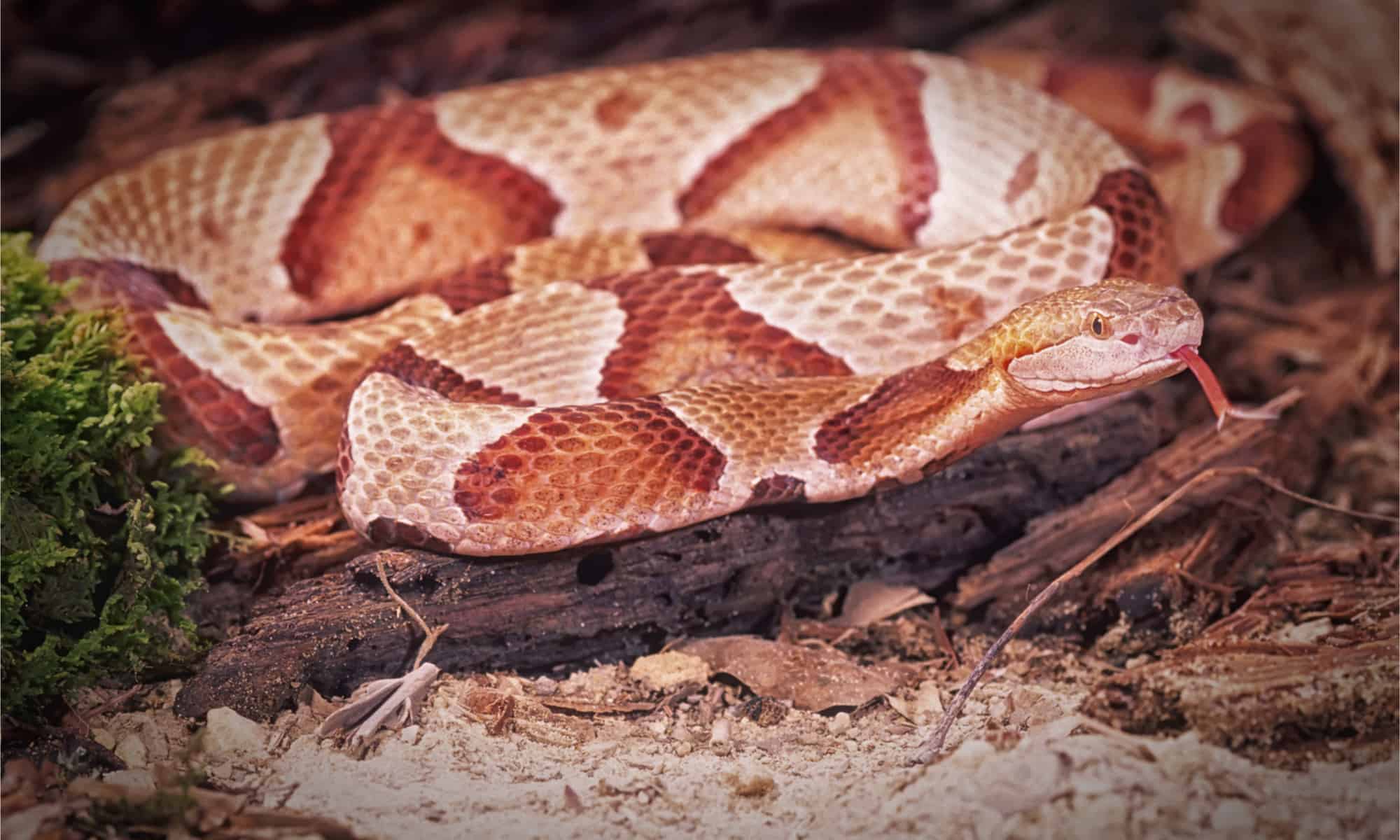

Indiana is home to 32 species of snakes, four of which are venomous. One of Indiana’s most common venomous snake species is the copperhead. Copperheads are endemic to the North American continent and are found in many southern and eastern American states. These snakes are venomous pit vipers, easily recognized by their copper or orange-red heads, hence their name. This article takes a look at copperheads in Indiana, where they live, and how often they bite.
How To Identify Eastern Copperheads
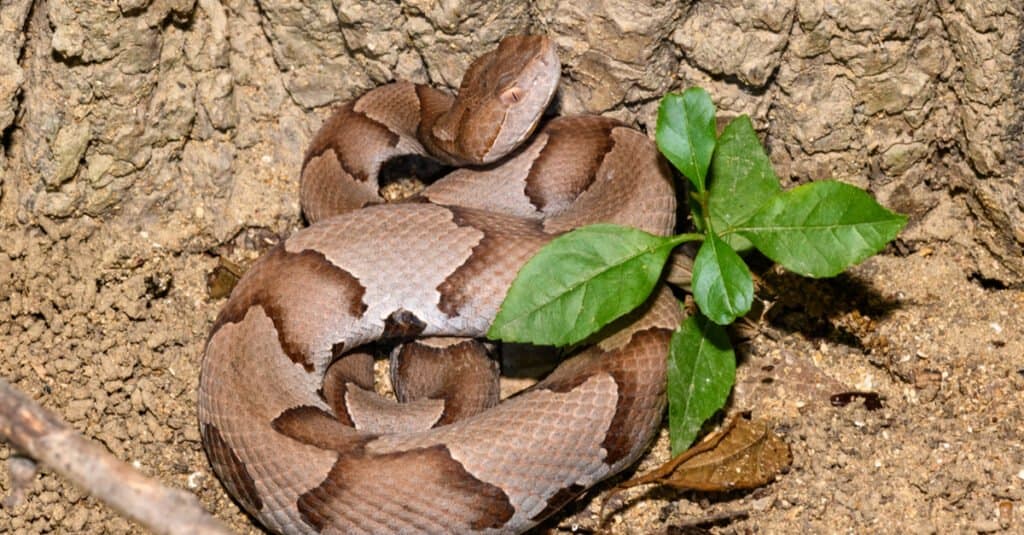
The eastern copperhead measures 20-37 inches and have pale brown to pinkish-brown ventral and dorsal scales.
©Jeff W. Jarrett/Shutterstock.com
Indiana is home to the eastern copperhead (Agkistrodon contortrix) which is a species that is found primarily in the eastern region of the United States. Eastern copperheads can easily be recognized by their pale brown to pinkish-brown ventral and dorsal scales, which are marked by hourglass patterns colored copper to reddish-brown. These snakes measure 20 to 37 inches on average and weigh anywhere from 3.2 to 11.2 ounces.
Adult copperheads primarily feed on amphibians and mammals such as rodents, while babies feed mostly on insects like caterpillars, grasshoppers, and cicadas. Baby copperheads have bright yellow or green tail tips which they use to lure some of the animals that they feed on. Even as babies, they are venomous and can inflict a dangerous bite.
Where Are Copperheads Found in Indiana?
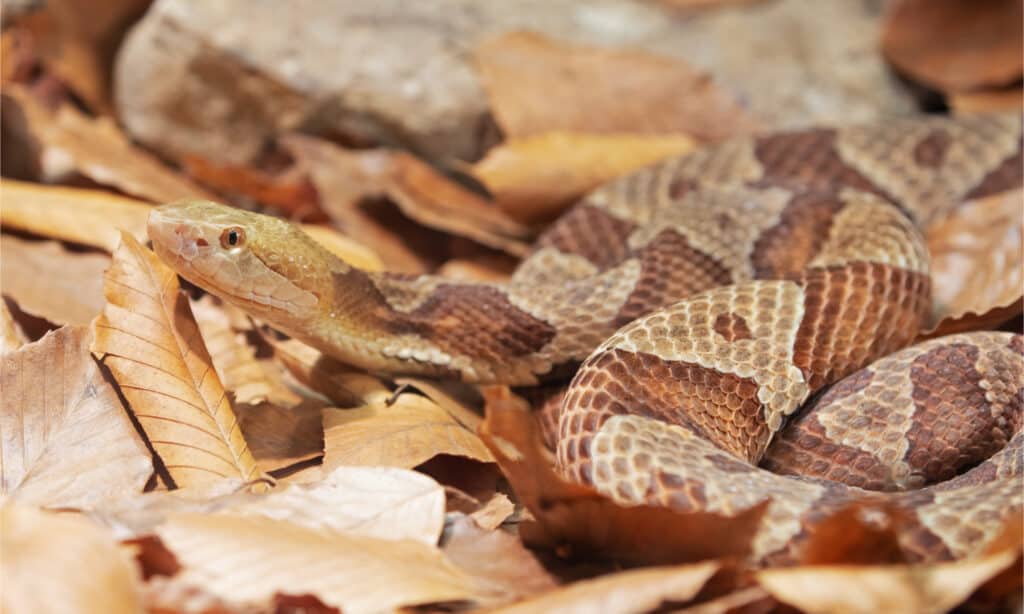
Indiana’s copperheads can be found in its rocky hills and outcrops, as well as ridgetop forest openings.
©DnDavis/Shutterstock.com
Copperheads are Indiana’s most commonly-seen venomous snake, but are only found in the southern half of the state. These snakes prefer Indiana’s rocky hills and outcrops as well as ridgetop forest openings. Copperheads also like deciduous forests and mixed woodlands, giving them ample habitat in Indiana’s nearly 4.9 million acres of forestland.
How Often Do Copperheads in Indiana Bite?
Although copperheads bite more people than any other venomous snake in the USA, bites in Indiana are very rare. One fatality was recorded on July 24, 1931, when a 28-year-old farmer named Jess Correll was bitten on the hand.
Luckily, there have been no more reports of fatalities by copperheads since then. Generally, in America, copperheads are responsible for about 2,920 of the 7000 to 8000 bites seen each year and 0.01% of the reported bites are fatal.
Copperhead Venom
Despite their notoriously painful bites, copperheads are not highly venomous snakes. They have hemotoxic venom known to attack their victims’ blood cells and tissues and even cause respiratory problems. Their bites can hinder blood clotting or induce excessive clotting and necrosis.
It takes about 100 mg of copperhead venom to kill a person, but these snakes produce 26 mg of venom on average with an average maximum of 85 mg.
How To Avoid Copperhead Bites in Indiana
Since copperheads are common in the southern half of the state, it’s important to know how best to avoid them. As we’ve explained, Indiana’s copperheads like to frequent rocky hills, ridgetop forest openings, rocky outcrops, and hollow logs. So, avoiding these places after dark is a great idea.
Sticking to clearly defined paths is important, as snakes do not frequent places humans commonly pass. Snakes are also known to stay in abandoned buildings such as barns and sheds, so avoiding abandoned places is important too.
Another important step that you can take is clearing brush piles near your home. Some say that snake-repelling plants can help, but it’s more likely that the plants are repelling some of their prey.
What to Do if You Come Across a Copperhead in Indiana
If you come across a copperhead in Indiana, consider yourself lucky. Most people don’t see them but step on or near them, which results in them getting bitten. Copperheads’ high bite rate occurs because they camouflage or hide instead of slithering away when they sense humans.
Consequently, if you spot them, they’ll be more than happy to let you leave. Remember that most snake bites occur after human provocation, so if you leave a snake on its own, it’ll return the favor.
What To Do If You Get Bitten By A Copperhead Snake
If you’ve been bitten by a copperhead or any other snake in Indiana:
- Stay calm and contact the Indiana Poison Center at (800) 222-1222. It is a free medical resource and is available 24/7.
- Do not administer any first aid to yourself. Most home treatments previously administered to snake bite victims are now known to cause more harm than good.
- Do not attempt to suck out the blood, as their fangs inject the venom more deeply than you can reach.
- Do not apply a tourniquet, as this can cause more harm than good.
- Do not cut off or make any cuts on the bitten part, as you do not want to bleed out in addition to having snake venom in you. Antivenom can reverse the venom’s effects of the venom, so focus on contacting the poison center or other medical professional.
- Stay calm and avoid pacing, as movements can help the circulation of the venom. If you are outside, walk slowly, taking conscious efforts to breathe gently.