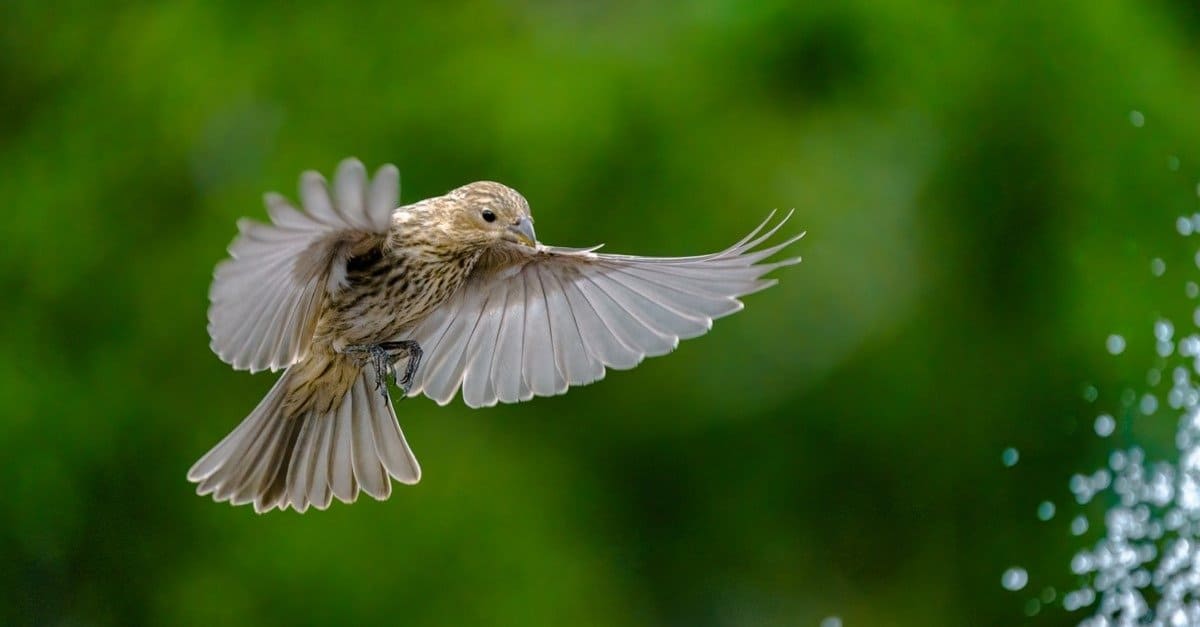

If you were to point out a little brown bird to a birdwatcher (or even an experienced ornithologist) and ask them to identify it, they would probably throw up their hands and say it’s an “LBJ”. Those “little brown jobs”, otherwise known as little brown birds, are incredibly hard to tell apart at a glance. Finches and sparrows are notoriously difficult to tell apart. That’s why we are going to spend some time examining both a brown female house finch vs. sparrow, as well as male house finches — which vary in color.
You’ll still have some trouble telling them apart, but you might know what elements to seek when you’re trying to identify them.
Comparing a House Finch and a House Sparrow
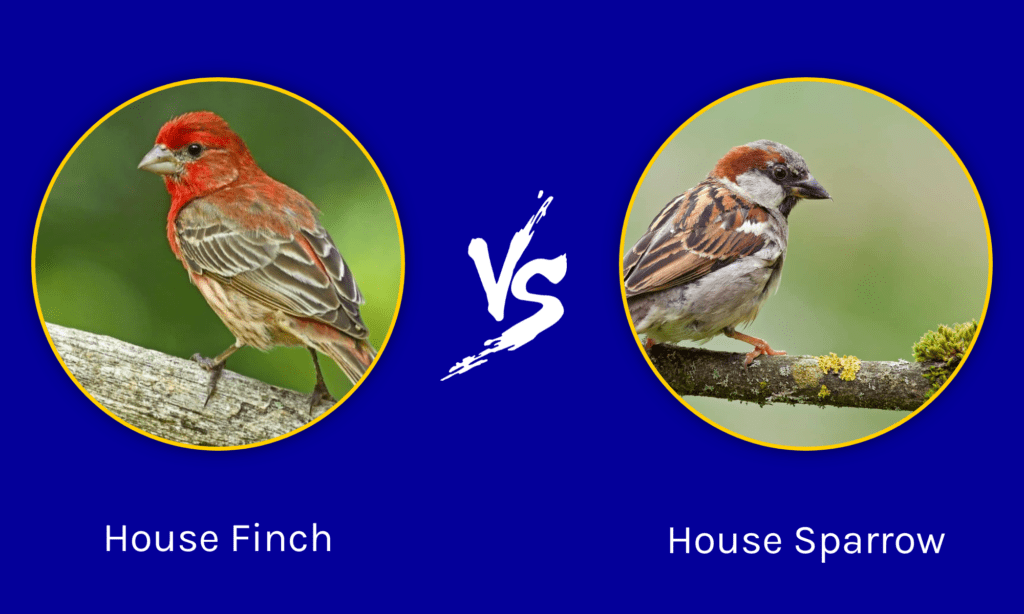
| House Finch | House Sparrow | |
|---|---|---|
| Size | Weight: 16 g – 27 g Length: 5 to 6 inches | Weight: 14 g to 32 g Length: 5.5 to 7.1 inches |
| Color | – Usually brown or gray on the back and wings – The necks and shoulders often have reddish coloration – Color varies based on the food they eat and the season | – Dark brown, black, and white – Integrates more black color into the wings |
| Bill | – Thick beak – Often integrates gray into beak color | – A conical beak, not as thick as the house finch – The bill is adapted for eating seeds |
| Distribution | – North America, especially the western coasts of the U.S. Mexico, and parts of Canada – Has spread to the East Coast of the United States as well | – Originally Europe, Asia, Southeast Asia, and North Africa – Now available in North America, South America, southern Africa, and parts of Oceania |
| Family | Fringillidae | Passeridae |
| Diet | – Grains, seeds, flowers, buds, and berries | – Mostly eats seeds, but also insects and human scraps |
The 6 Key Differences Between a House Finch and a House Sparrow
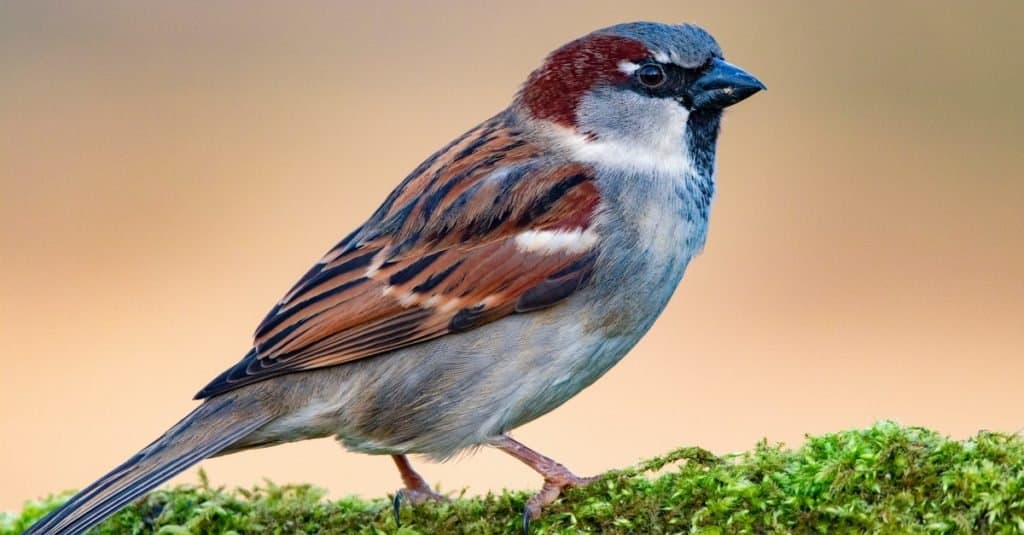
A male House Sparrow (Passer domesticus) sitting on a mossy branch
©Craig Howman/Shutterstock.com
The greatest differences between a house finch and a house sparrow include their diet, bills, and distribution. The house finch lives in North America and Mexico, has a thicker, gray beak compared to the house sparrow, and is herbivorous. The house sparrow lives in the Americas, Africa, Asia, Europe, and Oceania, is an opportunistic omnivore, and has a more conical beak compared to the house finch.
These are just three of the six key differences we have identified between these two creatures. We need to go into depth about each of them to fully understand these animals and to tell them apart. Without further ado, let’s get to know the house sparrow and house finch a little better.
House Finch vs. House Sparrow: Size
The house finch and house sparrow are remarkably similar in size, but they do have differences. For example, the house finch weighs between 16 g and 27 g, meaning they weigh less than an ounce on average. Moreover, the house finch has an average length of between 5 and 6 inches.
The house sparrow is a little larger on average. For example, the bird weighs between 14 g and 32 g, and it measures between 5.5 and 7.1 inches long. As you can see, telling these birds apart from one another according to their size alone is incredibly difficult. The same can be said about other facets.
House Finch vs. House Sparrow: Color
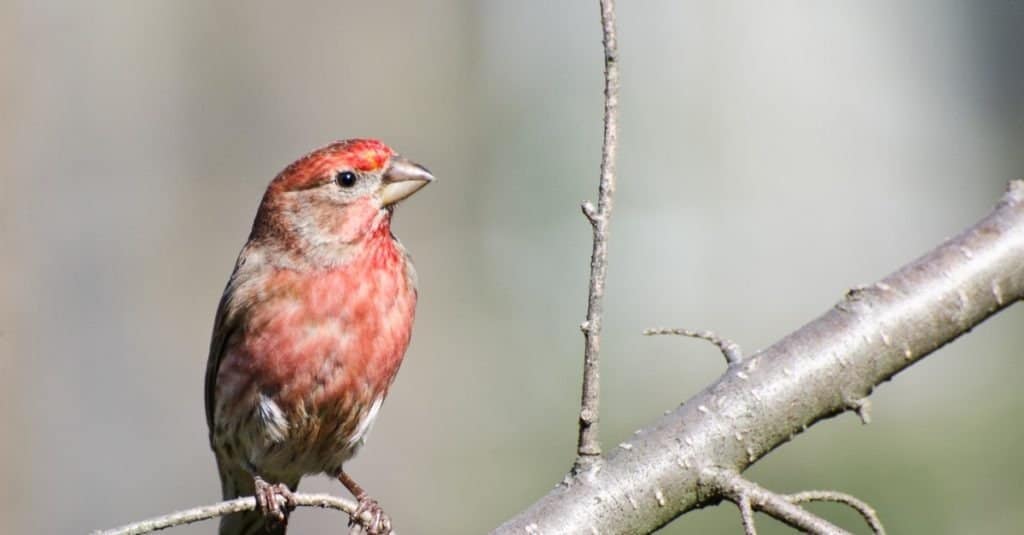
Adult male house finches have red in their feathers.
©rck_953/Shutterstock.com
The adult male house finches have reddish tones in their feathers that help set them apart from house sparrows, but that’s one of the best and only clues we have to tell them apart.
The house finch and house sparrow can demonstrate a variety of colors. The house finch is usually some mix of brown and gray, especially along its back and wings. However, they tend to have different colors on their necks and “shoulders.” These colors can be several different colors, especially reddish ones, due to the berries that they eat.
The house sparrow is a dull-colored bird. This bird tends to have dark brown, black, gray, and white mixed into its feathers. However, they do not get the same reddish coloring that finches get from their unique diet. Of course, not all finches have the reddish coloring. Only the males get the reddish coloring, and the females stay brown and gray for the most part.
As you can see, the differences between the colors of these birds are minor, but they are helpful for differentiating the birds.
House Finch vs. House Sparrow: Bill
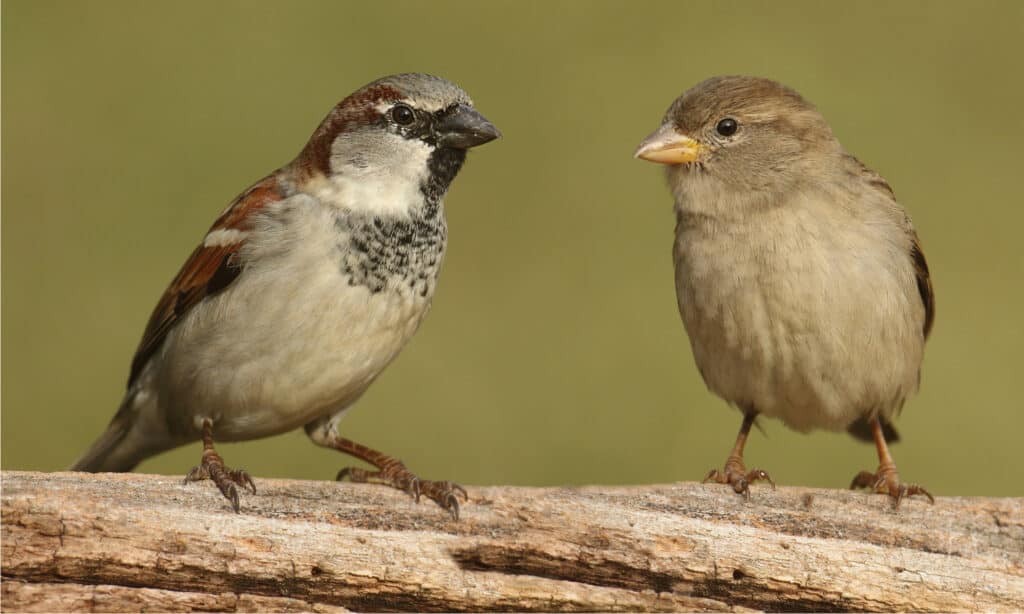
The house sparrow has a conical beak that helps them consume seeds
©Steve Byland/Shutterstock.com
The house finch has a bill that is slightly thicker than that of a sparrow. Furthermore, the finch tends to have gray on its bill instead of just a pale yellow. Meanwhile, the house sparrow has a more conical beak than the house finch. This beak is meant to help the bird more easily consume seeds.
House Finch vs. House Sparrow: Distribution
The house sparrow has a larger distribution than the house finch, so it is found in more places around the world. The house finch was originally tracked along the western coast of the U.S., Canada, and Mexico. However, the bird has since spread to the East Coast of the United States as well.
The house sparrow is found in Europe, Asia, North Africa, Oceania, and the Americas. The Americas were added to its distribution in the 19th century.
House Finch vs. House Sparrow: Family
Although the two birds look very similar to one another, they come from different families. The house finch comes from the Fringillidae family. However, the house sparrow comes from the Passeridae family. These birds are not related on any significant level, even though they seem like they could pass for species of one another.
House Finch vs. House Sparrow: Diet
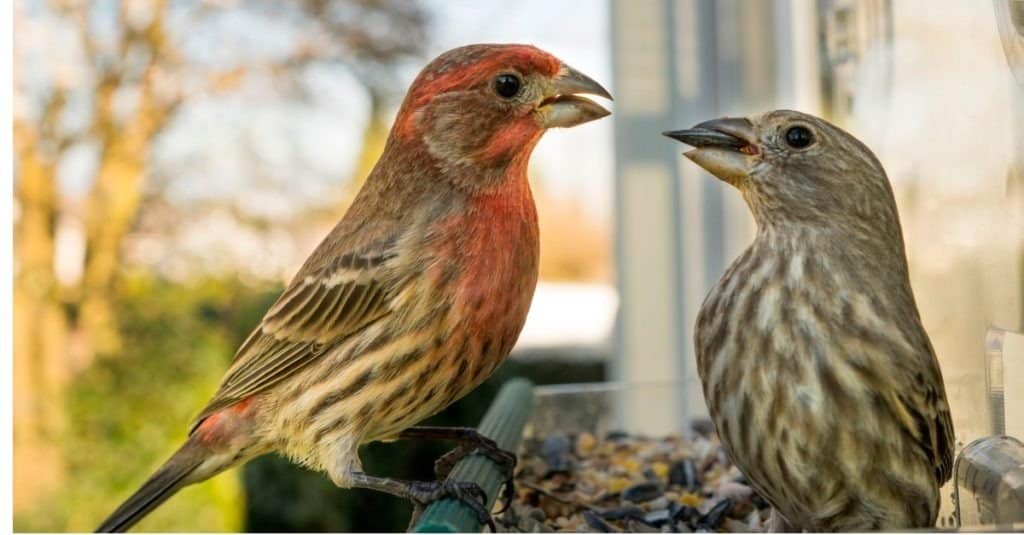
The diet of house finches changes the color of their feathers
©Real Window Creative/Shutterstock.com
The house finch is known for eating a lot of grains, seeds, flowers, buds, and fruit. They eat berries, too, and those influence the colors that the male birds attain throughout their lives.
The house sparrow is more opportunistic than the finch. They are primarily herbivores that survive on seeds, and their bills are made to eat them easier. However, they have been seen eating an odd insect or even surviving on the scraps of human food.
All in all, these birds are not very different from each other. However, they do have some elements that separate them. Aside from these small differences, though, it’s hard to tell these small birds apart from one another. While it’s easy to tell a male from a female house finch vs. sparrow, it’s not quite as easy to distinguish the rest.