
West Virginia is home to 20 snake species, including the copperhead. Copperheads are known to bite more people than any other snake in the USA, and West Virginians are not exempt. If you live in West Virginia, you’ve probably come across your fair share of snakes, as they are nocturnal during the summer and diurnal in the spring. This article takes a look at copperheads in West Virginia: where they live and how often they bite.
What Does a Copperhead in West Virginia Look Like?
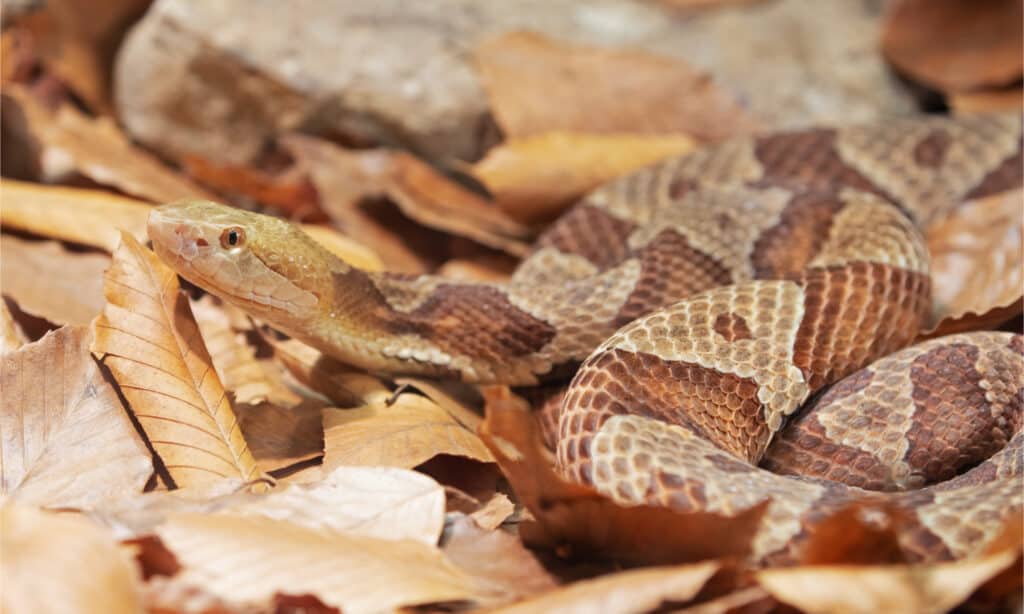
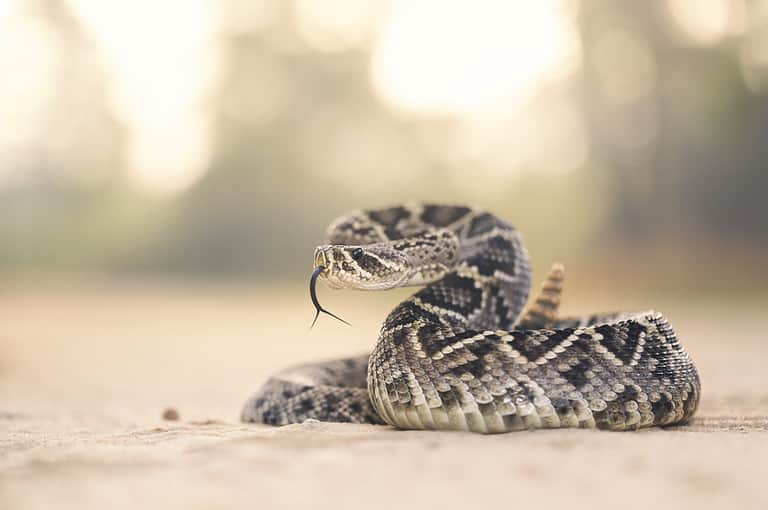
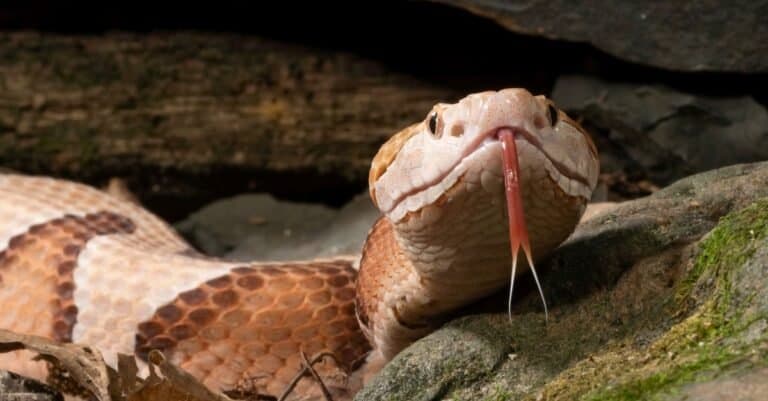
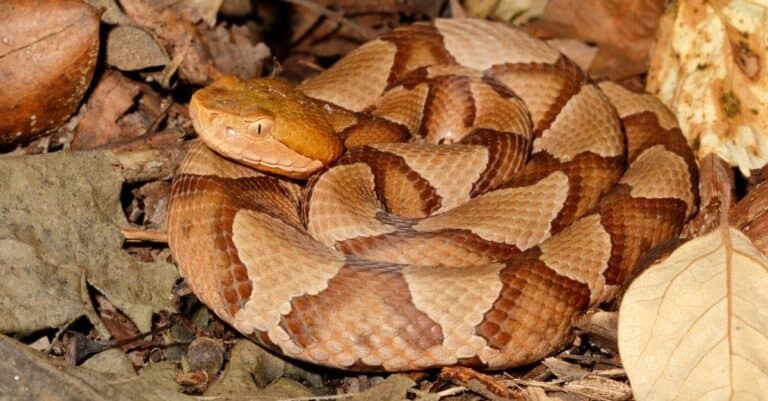
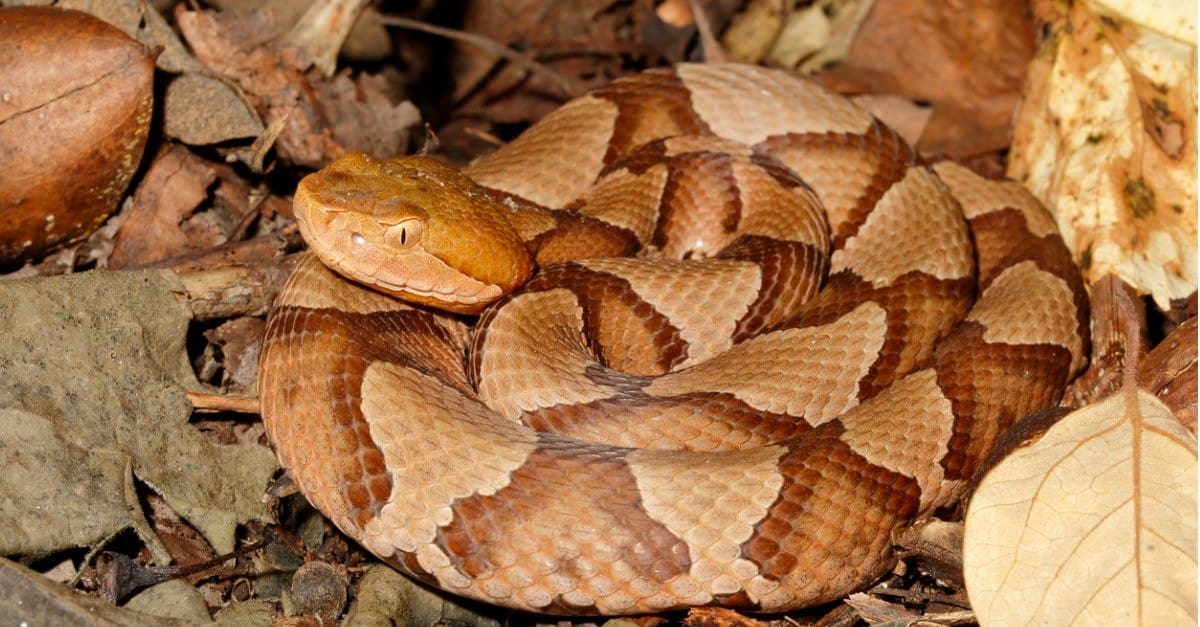
Eastern copperheads in West Virginia can easily be identified by their copper heads.
©DnDavis/Shutterstock.com
West Virginia is home to the eastern copperhead. Eastern copperheads are pit vipers found in many eastern US states. The only other venomous snake found in West Virginia is the timber rattlesnake, which is much more dangerous and venomous than copperheads.
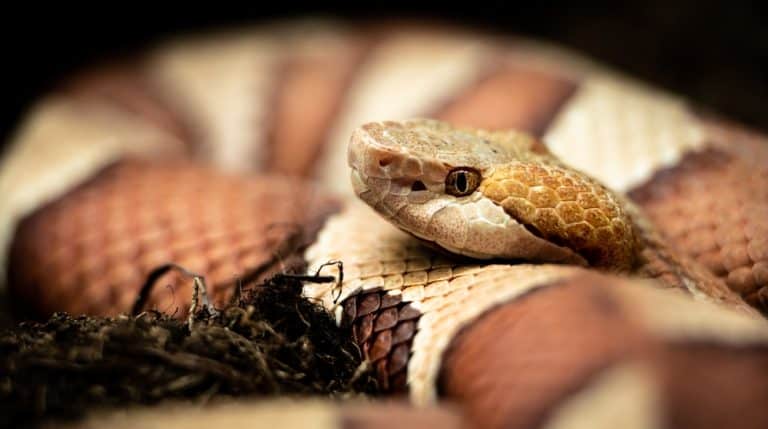
On average, copperheads in West Virginia measure from 24 to 36 inches but can occasionally reach 53 inches. Their scales are colored reddish-brown or copper and are marked with dark chestnut hourglass crossbands and small, dark spots. However, the copper-colored head is what gives them their common name.
Copperheads are pit vipers with solenoglyphous fangs and pit organs like the members of their snake family, vipers. Solenoglyphous fangs are the longest fang type and work like hypodermic needles. Consequently, their bites are extremely painful, and their venom is injected faster than snakes with other types of fangs.
Like all pit vipers, they are ovoviviparous. Their young have bright yellow-tipped tails, which they use to lure prey such as grubs, frogs, and other small insects. As they age, their tactic switches to ambush hunting. These snakes wait for long periods for their prey to come close enough. If the prey is large enough, they hold onto it until they are done injecting it with venom. Then, they let them go and allow the venom to work.
Where Are Copperheads Found in West Virginia?
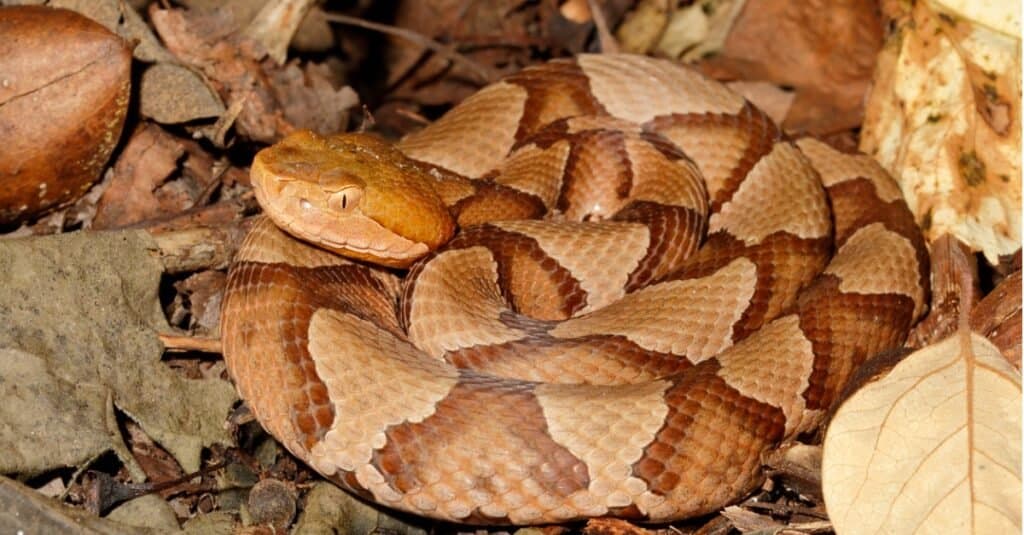
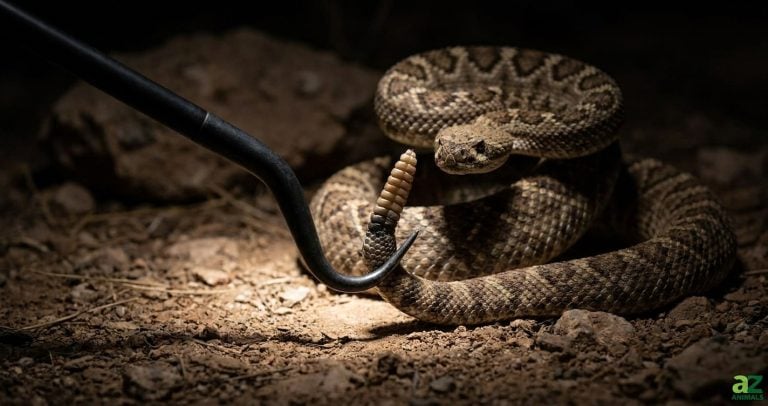
Eastern copperheads are pit vipers and have solenoglyphous fangs.
©iStock.com/David Kenny
Copperheads are West Virginia’s most common snakes and are found throughout the state’s rocky outcroppings and deciduous forests.
Copperhead Venom
Copperheads have hemotoxic venom, which attacks the blood. Bites from these snakes can result in necrosis, inability to breathe, and circulatory problems, not to mention the intense pain. Copperheads have a maximum venom yield of 85 mg, but it takes at least 85 to 100 mg to kill a person. However, they yield 26 mg of venom on average, which is much less than is needed to cause a fatality.
It is important to note that most copperhead snake deaths occur because victims do not get treatment in time. Copperhead bites are treated with antivenom designed to neutralize the effects of the venom.
How Often Do Copperheads Bite in West Virginia?
About 2,920 copperhead snake bites are reported yearly in the USA with a 0.01% fatality rate. Although there are no official state statistics, an article published in Chesterfield by herpetologist J. D. Kleopfer states that an average of 100 snake bites are reported yearly in West Virginia.
This large number of bites occurs because copperheads freeze instead of running away when humans approach, allowing people to step on or near them accidentally. And when this happens, copperheads react fearfully and bite. Luckily, a lot of these bites come with little or no venom.
According to the West Virginia Division of Natural Resources, no deaths from copperhead snakes have been recorded in West Virginia for the past 30 years. In the US, about five deaths from snake bites are recorded yearly. However, statistics show that deaths from copperheads are only recorded once in three years.
How To Avoid Copperhead Bites in West Virginia
If you live in West Virginia, it’s a good idea to have some snake-avoiding tips on hand. For starters, avoid forested areas after dark as copperheads are more active around this time.
Keeping your yard free of dirt is also an important tip. Snakes like to stay in places where they can camouflage or blend into, and if there are many piles of wood, leaves, or similar materials lying around, snakes may try to hide beneath them.
What To Do If You Come Across A Copperhead in West Virginia
If you come across a copperhead snake in West Virginia, do not disturb it. Many snakebites occur due to humans intentionally or accidentally stepping into a snake’s territory. So, if you spot a snake, get as far away from it as possible without alarming it. Copperheads aren’t aggressive animals and will gladly let you peacefully leave.
However, if you spot a copperhead in your West Virginia home, exit as soon as possible and contact a snake removal service. Do not attempt to kill a non-threatening or aggressive snake. Remember that they play an important role in our ecosystem by keeping certain pest populations in check, among other things.
What to Do if You Get Bitten by a Copperhead Snake
If you’ve been bitten by a northern copperhead or any other snake in West Virginia, contact the emergency services or West Virginia Poison Center at (800) 222-1222. They are available 24/7. It is important to contact emergency services even if you suspect the snake is nonvenomous because it’s much better to be safe than sorry.
While you wait, stay still and do not move about, as this can help the venom circulate. Do not attempt to remove the venom yourself by cutting it out or sucking it out as it will not work. Remember that most deaths from snake bites occurred because the victims didn’t seek medical help. Anti-venom is highly effective, and people recover quickly if they receive it promptly after being bitten.