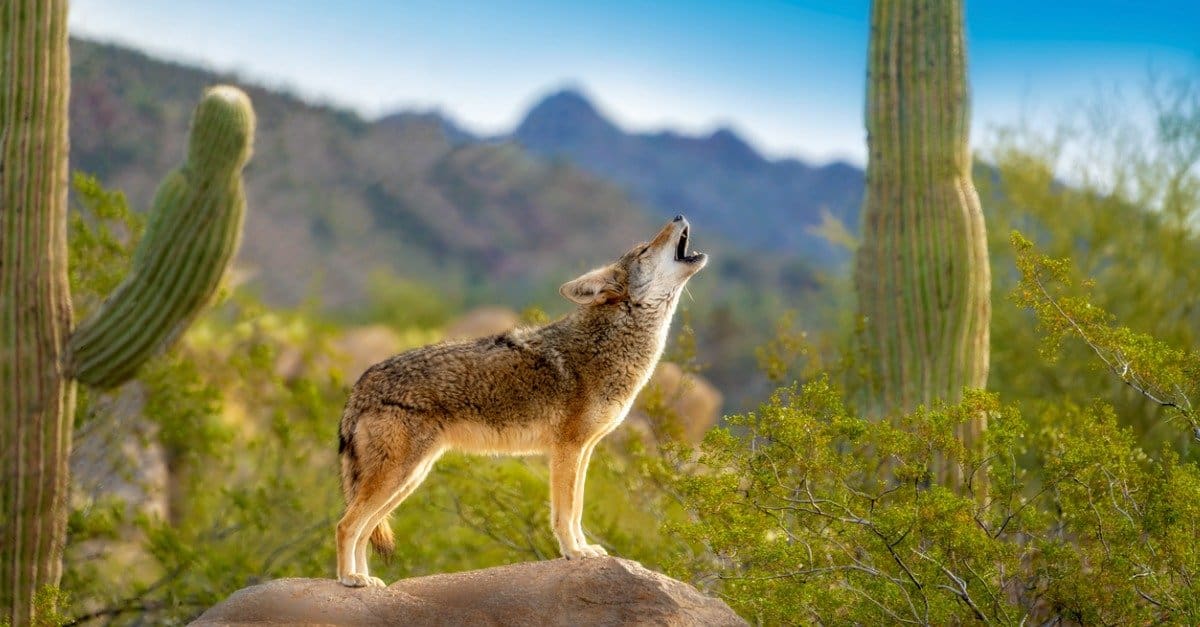

In the United States, coyotes can be found in all regions of the country, from deserts and marshes to mountains and urban areas. These natural-born scavengers can be found anywhere that food is available. So, how can you tell if a coyote has been tracking through your yard? Keep reading to learn what coyote tracks look like!
Characteristics of Coyote Tracks
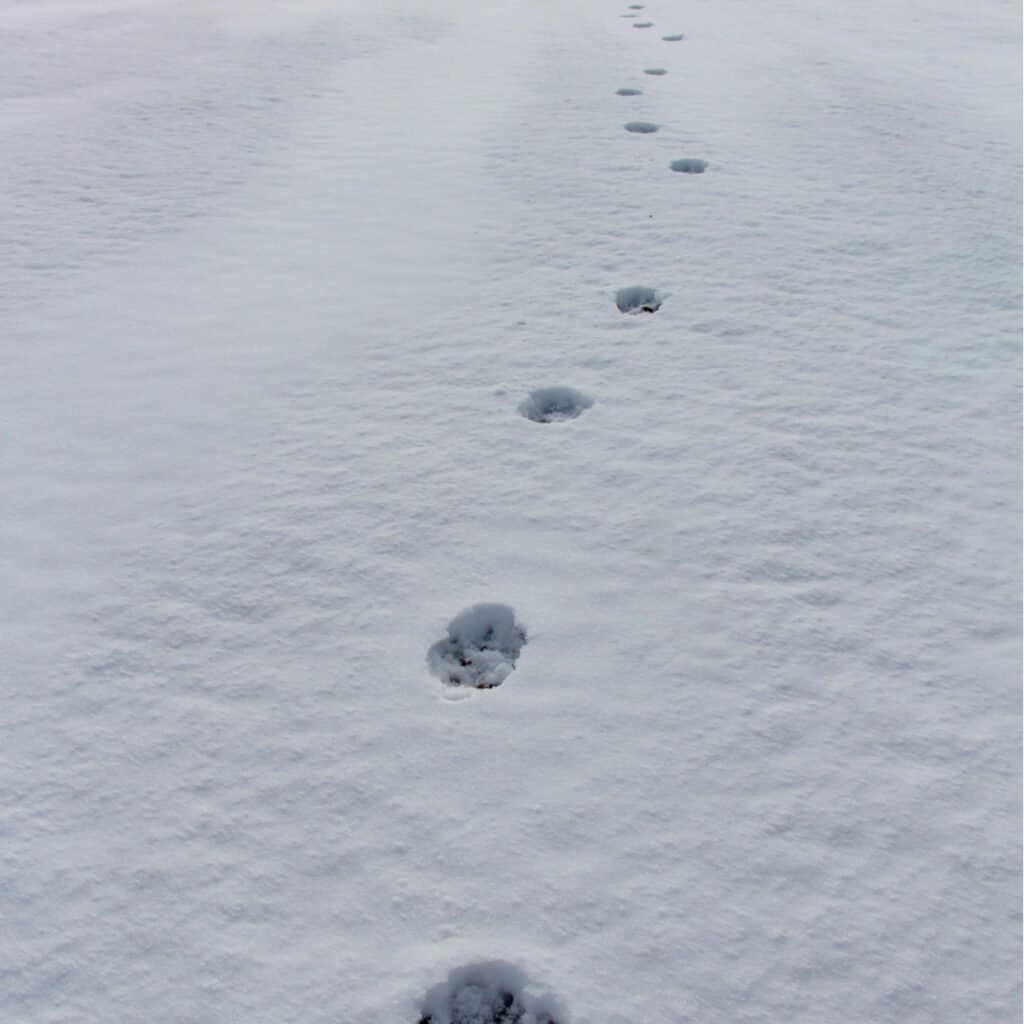
Coyote paws are like those of a dog or a cat, with four toes on each pad.
©DCA88/Shutterstock.com
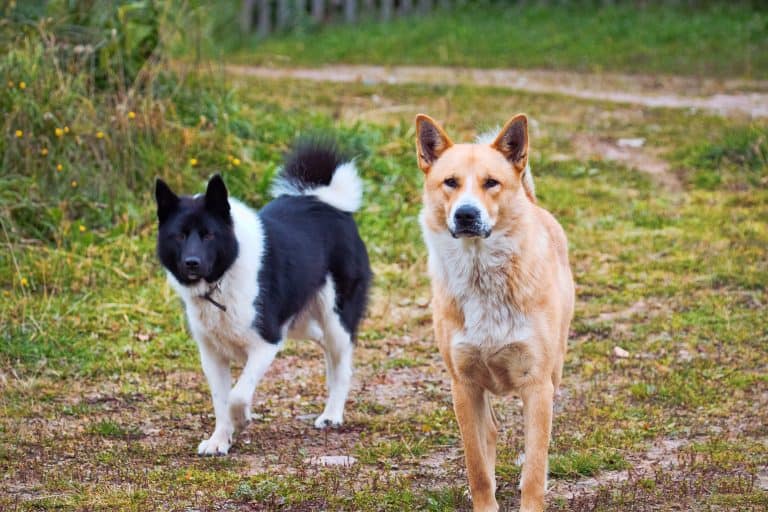
Several canine footprints are likely to be similar in appearance to coyote tracks. It is possible to distinguish between a domestic canine and a wild animal by looking for certain characteristics in the tracks. In the suburbs, be on the lookout for claims of coyotes preying on livestock or pets.
Shape of Print
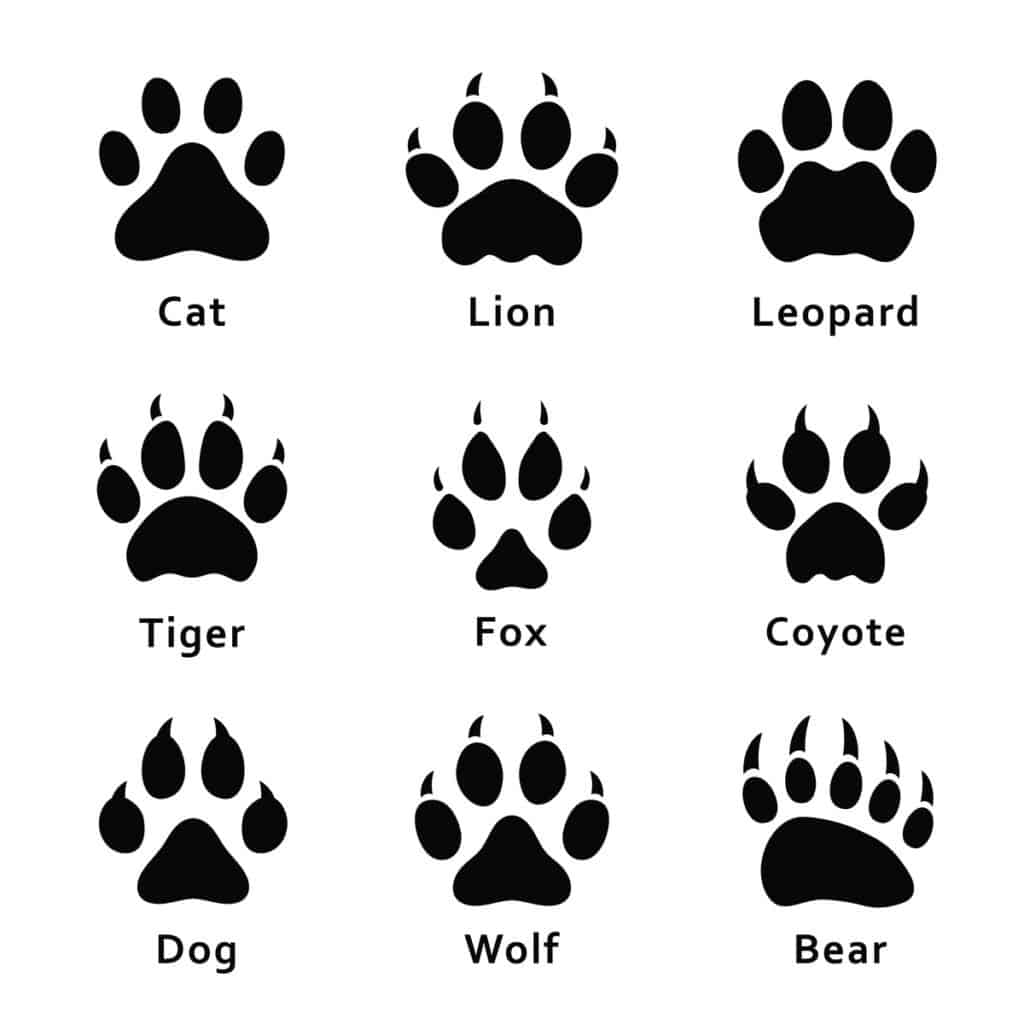
Coyote paw prints are oval-like. Their paws are like those of a dog or a cat, with four toes on each pad. Coyotes have more prominent heel impressions than domestic dogs do. When compared to coyotes, dogs have a smaller negative space between their toes and heel pad.
Size of Print
©Yevgenij_D/Shutterstock.com
Coyote prints are less varied in terms of size than other prints. The front paw print of a coyote measures 2.5 inches in length by two inches in width, while the back paw print measures 2.25 inches in length by 1.75 inches in width.
Hints of Claws
Coyotes are unable to retract their claws, which means those claw impressions are typically evident on prints. Coyote tracks often show more pointed and closely set claw marks on the middle toes, while dog tracks may have more splayed and less distinct claw marks.
Look for the pointed nail tip of a coyote, which penetrates deeper than the nail of a dog. However, when tracks are formed on hard surfaces such as concrete or asphalt, it is possible that claw prints will not be visible.
Similar-Looking Prints
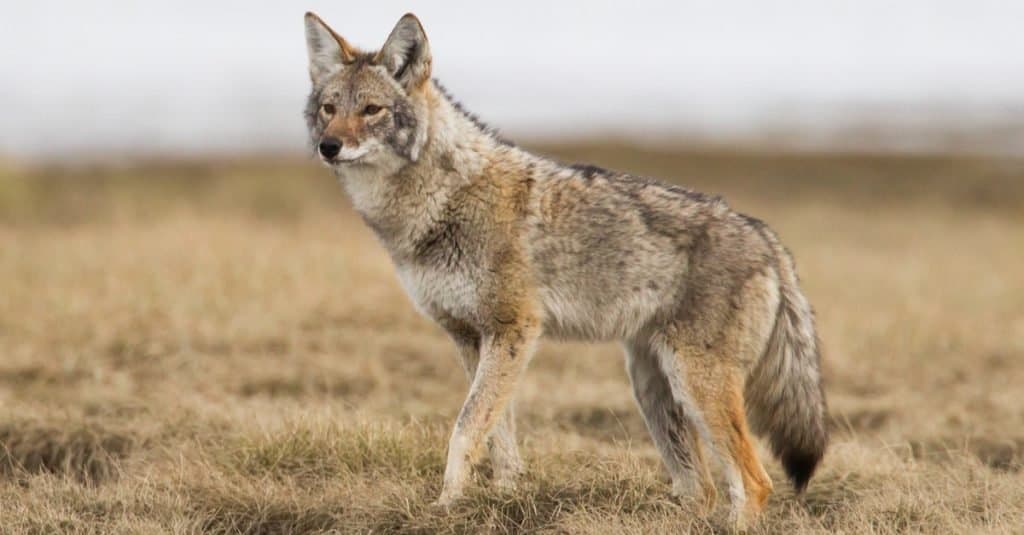
Coyote tracks are more oval and narrower than domesticated dog prints.
©Jukka Jantunen/Shutterstock.com
It can be easy to confuse coyote tracks with those of other animals. Let’s do a quick comparison between coyote tracks and other animals that you may come across.
Fox Tracks vs. Coyote Tracks
Coyote tracks are normally three inches long, whereas fox tracks are usually two to two and a half inches long. In contrast to coyotes, fox tracks and toes are smaller and narrower, while coyotes’ toes and footprints are wider.
Wolf Tracks vs. Coyote Tracks
Wolf tracks are about five inches long and four inches broad, with four symmetrical toes, large claws, and a single lobe on the front of the footpad. This means they are larger than those of coyotes.
Dog Tracks vs. Coyote Tracks
The tracks of the coyote are narrower and more oval than those of the dogs. Coyote paw prints have two separate claw patterns on the middle toes, whereas dog tracks have four distinct claw patterns on the middle toes.
Also, the positioning of prints may aid in the identification of a dog or coyote track. For example, when active, it is common for domestic dogs to walk off-balance due to their lack of coordination. Coyotes tend to walk in straighter lines than domestic dogs, whose tracks often zig-zag or circle, making coyote tracks appear more direct and consistent.
Also, keep in mind, since domestic dogs vary in size, their prints might look quite different from one another.
Safety Advice: Coyote Paw Tracks
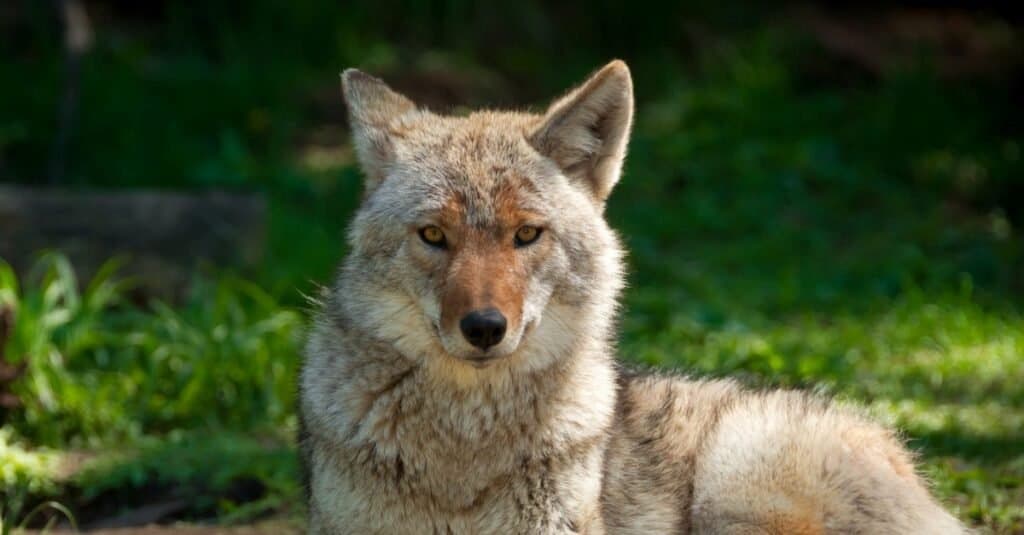
Putting up a fence that stands taller than five feet is the most humane way to keep coyotes away.
©iStock.com/GatorDawg
Coyotes have been known to attack pets, especially small, unattended animals, but attacks on humans are extremely rare. However, it is believed that attacks can be lessened or prevented by changing the way we respond to certain situations.
If You Spot Coyote Tracks
When you start seeing the above indications, you might worry about your pets’ safety and the landscape you’re looking to cultivate. It is always advised to contact local animal control if you are concerned about a coyote invasion on your property.
Most experts advise removing the coyote’s food supply. Therefore, avoid leaving pet food outside, and secure trash cans so they can’t get to them.
Fencing is widely recommended as an effective and humane option for keeping coyotes out, especially when combined with other deterrent methods. Keep in mind, coyotes can jump and readily clear a barrier less than five feet tall, so a fence that is at least five feet tall is advised.
If You Spot a Coyote
Never run away from a coyote if you spot one, no matter how scared you are. Raise your arms in the air and shout threateningly at the coyote to scare it away. Throw small stones, sticks, tennis balls, or whatever you can find. Remember, the goal is to startle, not harm the coyote.
You should never get close to a coyote or other wild animal. Never leave food out because it may attract coyotes. Keep a watch out for aggressive behavior, and if the coyote refuses to leave your property, call wildlife removal immediately. Coyotes are known to attack dogs and cats, so if you have pets, make sure you lock them securely away straight away.