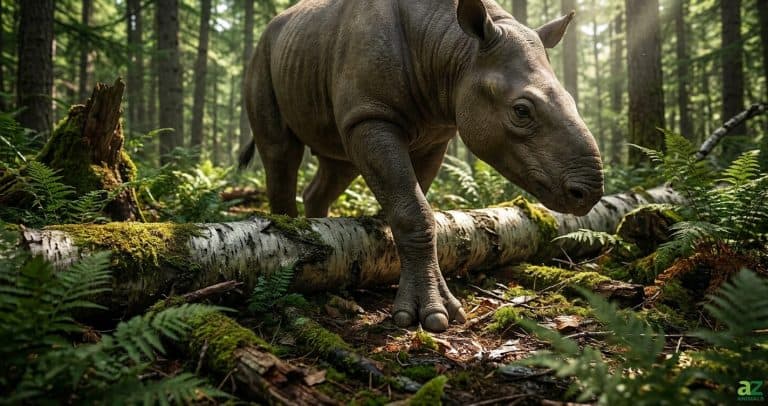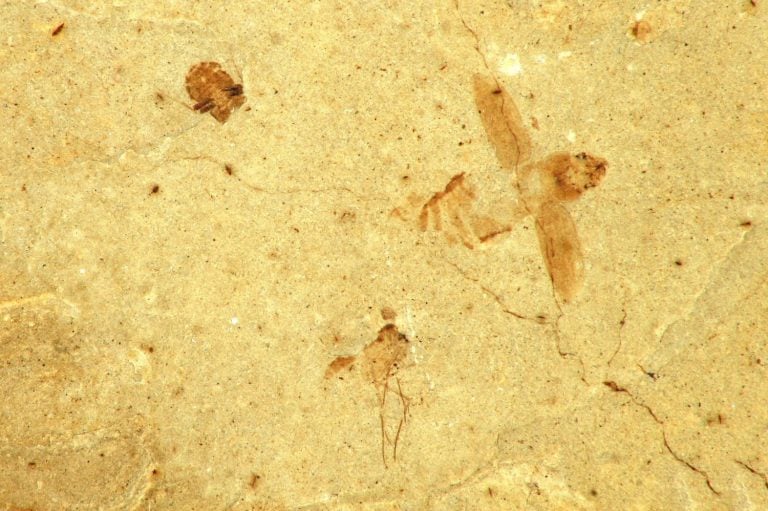

Learning about dinosaurs and other prehistoric creatures is fascinating. The thought that the place you currently live was once home to giant creatures roaming freely is even more exciting. The United States is one of the few countries with abundant dinosaur fossils. This means that, at some point several million years ago, they were abundant in the prehistoric forests, plains, and waterways of the country. So which of these fascinating creatures made their home in New Hampshire? Keep reading to find out.
Did Dinosaurs Live in New Hampshire?
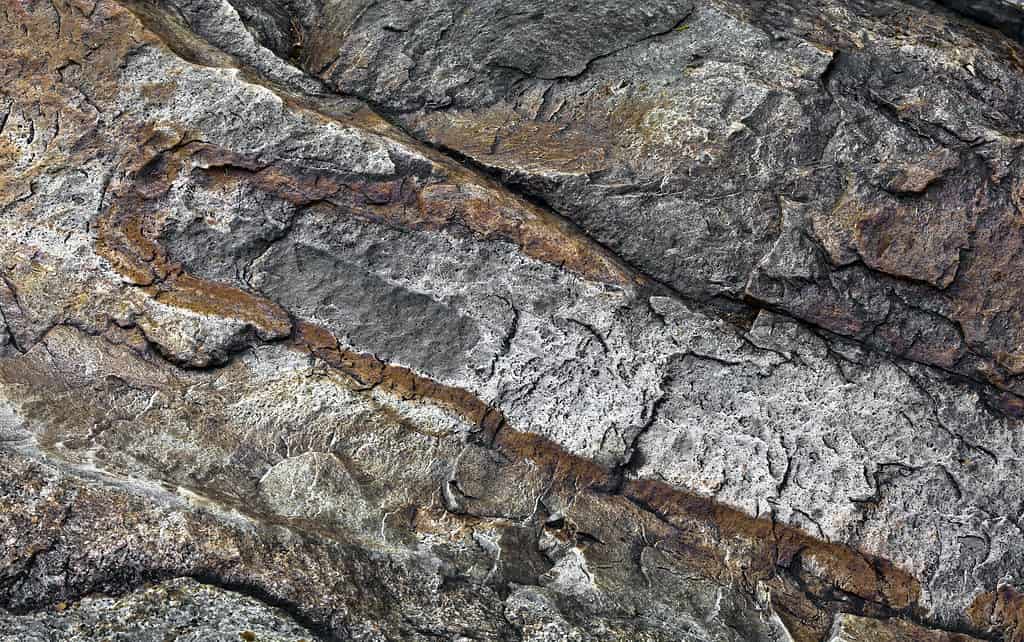
New Hampshire sits on granite, a type of igneous rock formed from cooling lava that cannot preserve fossils.
©John A. Anderson/Shutterstock.com
Dinosaur enthusiasts will probably be disappointed to discover that there are no records of dinosaurs that lived in New Hampshire. That’s not to say they didn’t live here at all. The geological conditions make it virtually impossible for their remains to have been preserved well enough for us to find them. So there is no way to tell exactly which dinosaurs lived in New Hampshire and which ones did not. However, we can make some guesses based on fossils found in New England. For example, in Massachusetts, fossils of Anchisaurus polyzelus, a sauropodomorph dinosaur, have been found. Footprints of small theropods, such as Grallator and Eubrontes, have also been unearthed in New England.
The last dinosaurs died at the end of the Cretaceous era, about 66 million years ago. The remains of animals that have lived so long ago can be preserved for us to study if certain conditions are met. First, you need sedimentary rock formations for fossils to be preserved. The remains also need to be deposited in an arid environment. Unfortunately, the geology of New Hampshire does not meet these conditions. The state’s nickname is the Granite State because it sits on granite, a type of igneous rock that is formed from cooling lava. The state has too much igneous and metamorphic rock for fossils to be preserved. Additionally, the eastern part of the U.S. was eroding, so deposition was not typically occurring in New Hampshire when dinosaurs lived.
Prehistoric Animals Apart From Dinosaurs That Lived in New Hampshire
So, for geologic reasons, New Hampshire has no records of Mesozoic Era fossils. This period, 252 to 65 million years ago, is commonly referred to as the “age of dinosaurs.” Despite the poor preservation of fossils in the state, remains of other prehistoric animals have been discovered. Most of the recovered fossils belong to marine invertebrates, such as brachiopods and corals, but fossils of megafauna like woolly mammoths and mastodons have also been found. Take an in-depth look at each of these discoveries below.
Brachiopods
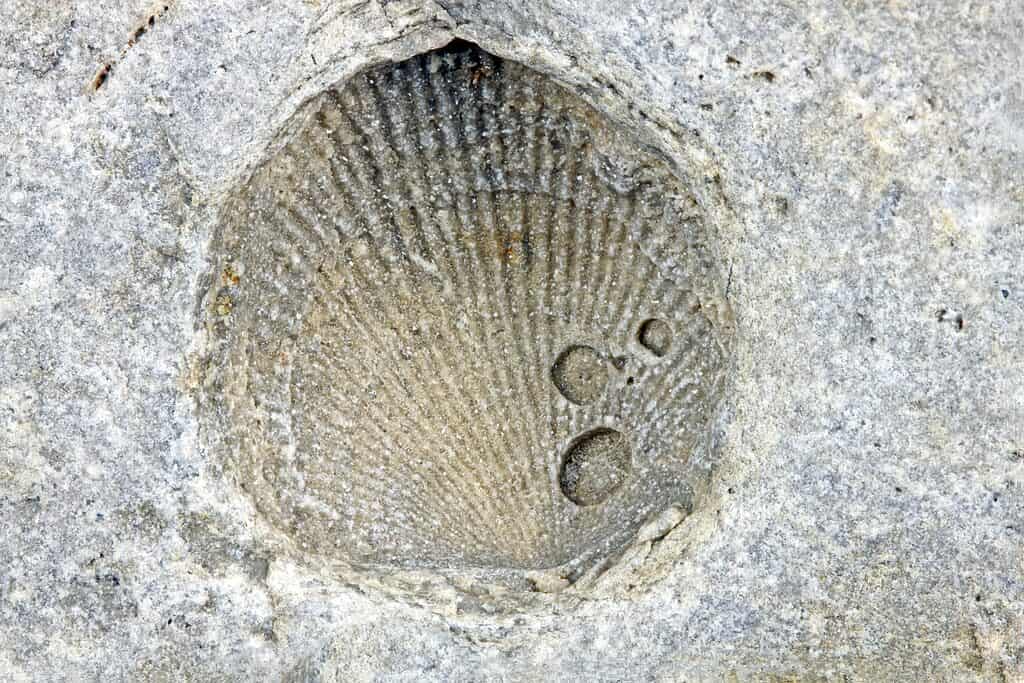
Brachiopods are among the oldest prehistoric animals found in New Hampshire.
©HodagMedia/Shutterstock.com
Animals that belong to the phylum Brachiopoda are called brachiopods, which are small bivalve mollusks. Scientists have classified the phylum into about 100 living genera and over 5,000 fossil genera. The shelled mollusks are among the oldest types of prehistoric animals found in New Hampshire, with fossils dating back about 400 million years.
These bivalve creatures were particularly abundant in New Hampshire during the Late Paleozoic Era, approximately 419 to 252 million years ago. Their population drastically dropped during the Permian-Triassic extinction event that occurred around 250 million years ago. Despite this catastrophic event, brachiopods persisted and their descendants are still living today.
Brachiopod remains are identified by groove-like depressions on rock bodies made by their shells. Ancient remains of these tiny creatures can be found in the Fitch Formation, Mormon Hill, and the Clough Formation located in west-central New Hampshire.
Ancient Corals
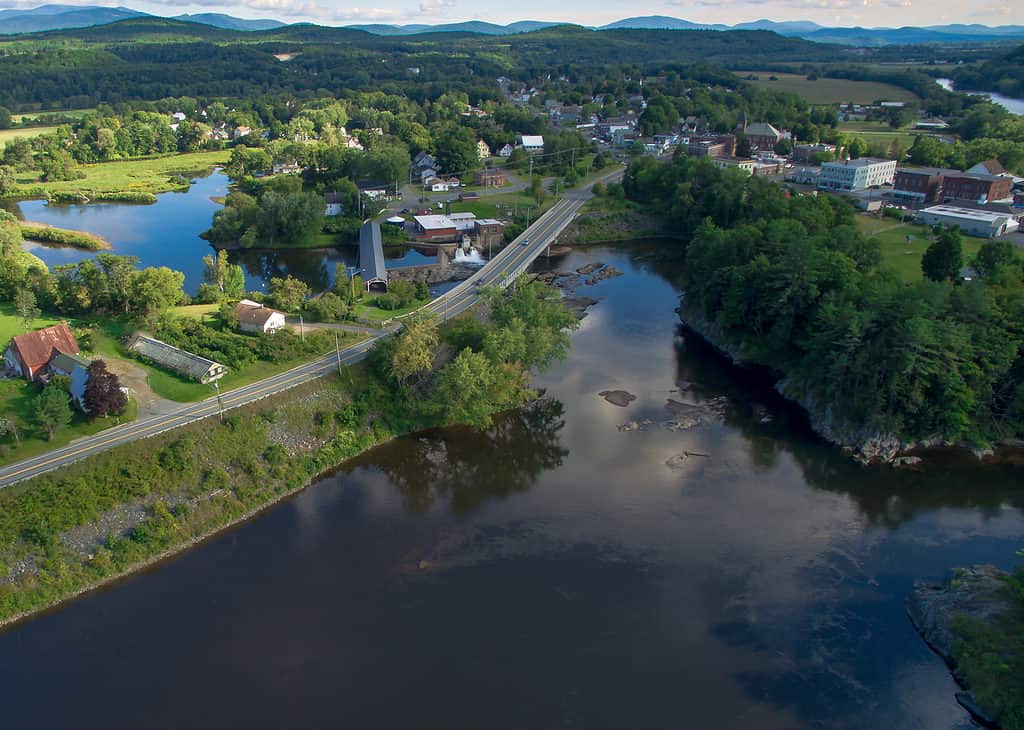
Fossils of ancient chain corals are still present in the marble of the Ammonoosuc River.
©Josh Conover/Shutterstock.com
Corals are small marine invertebrates that live in colonies. Unlike the modern species that have bodies made from aragonite material, the prehistoric species that existed in New Hampshire were made up of calcite (calcium carbonate). These marine invertebrates came into existence 535 million years ago and greatly flourished in New England between 443 and 420 million years ago. However, the Permian-Triassic extinction event that occurred 250 million years ago caused a brief pause in the history of their existence.
Corals are still important reef builders today, and people often mistakenly regard them as plants. There have been several discoveries of the preserved remains of the ancient marine animal in New Hampshire. Fossils of ancient chain corals are still present in the marble of the Ammonoosuc River. You can also find their fossils in various sites of the Fitch Formation near Littleton.
Crinoids
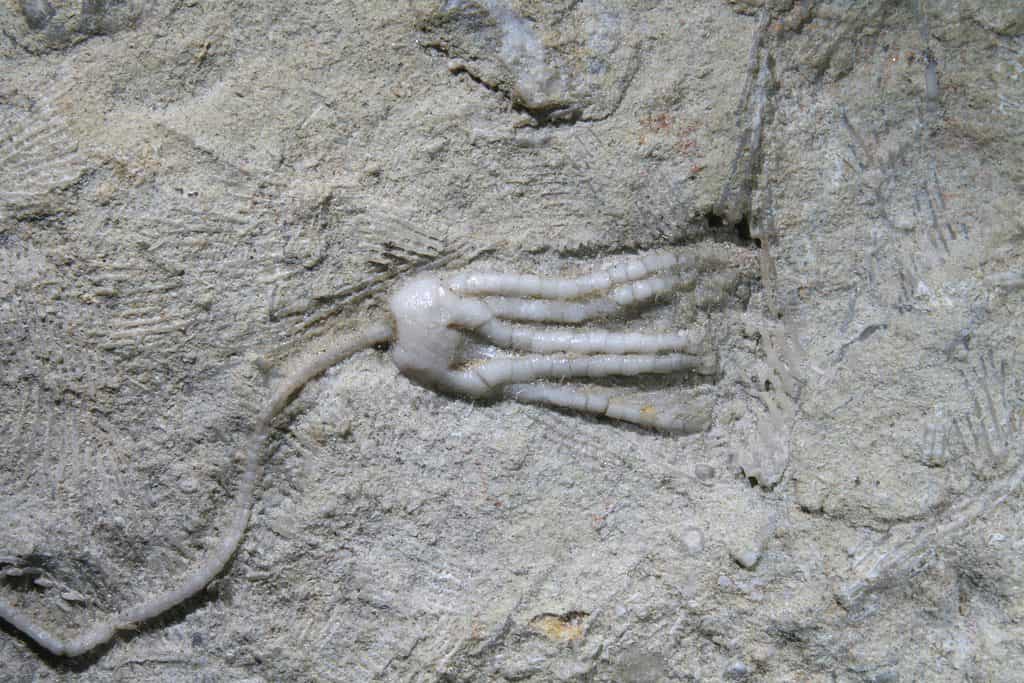
Early crinoid fossils were found in New Hampshire’s Fitch Formation.
©Michael LaMonica/Shutterstock.com
These animals belong to the phylum Echinodermata (the same taxonomic category as starfish, sea urchins, and sea cucumbers). Crinoids are marine invertebrates, and they stay attached to the sea floor. In appearance, crinoids look like starfish with stems positioned upside-down or flowers with their feathery arms sprayed out.
Early crinoid fossils were found in the Fitch Formation. Columnal crinoids can be seen in Franconia, along the Ammonoosuc River a few miles westwards of Littleton, and in the marble located on the eastern bank of the river. The Clough Formation in the western part of the state also contains crinoid fossils.
Woolly Mammoth and Mastodons
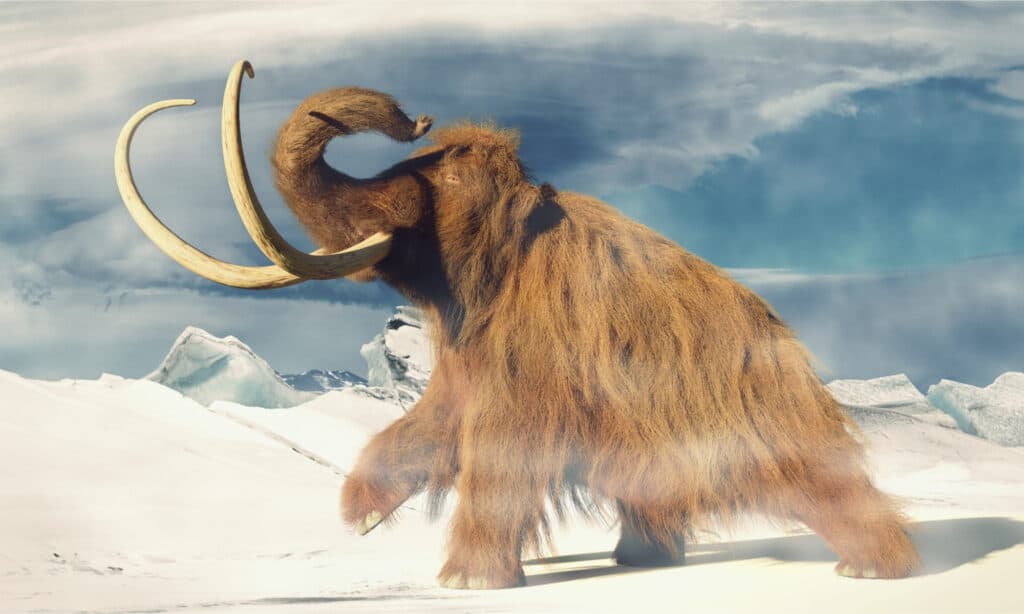
At least one confirmed woolly mammoth fossil, a tooth fragment, has been found in New Hampshire.
©Dotted Yeti/Shutterstock.com
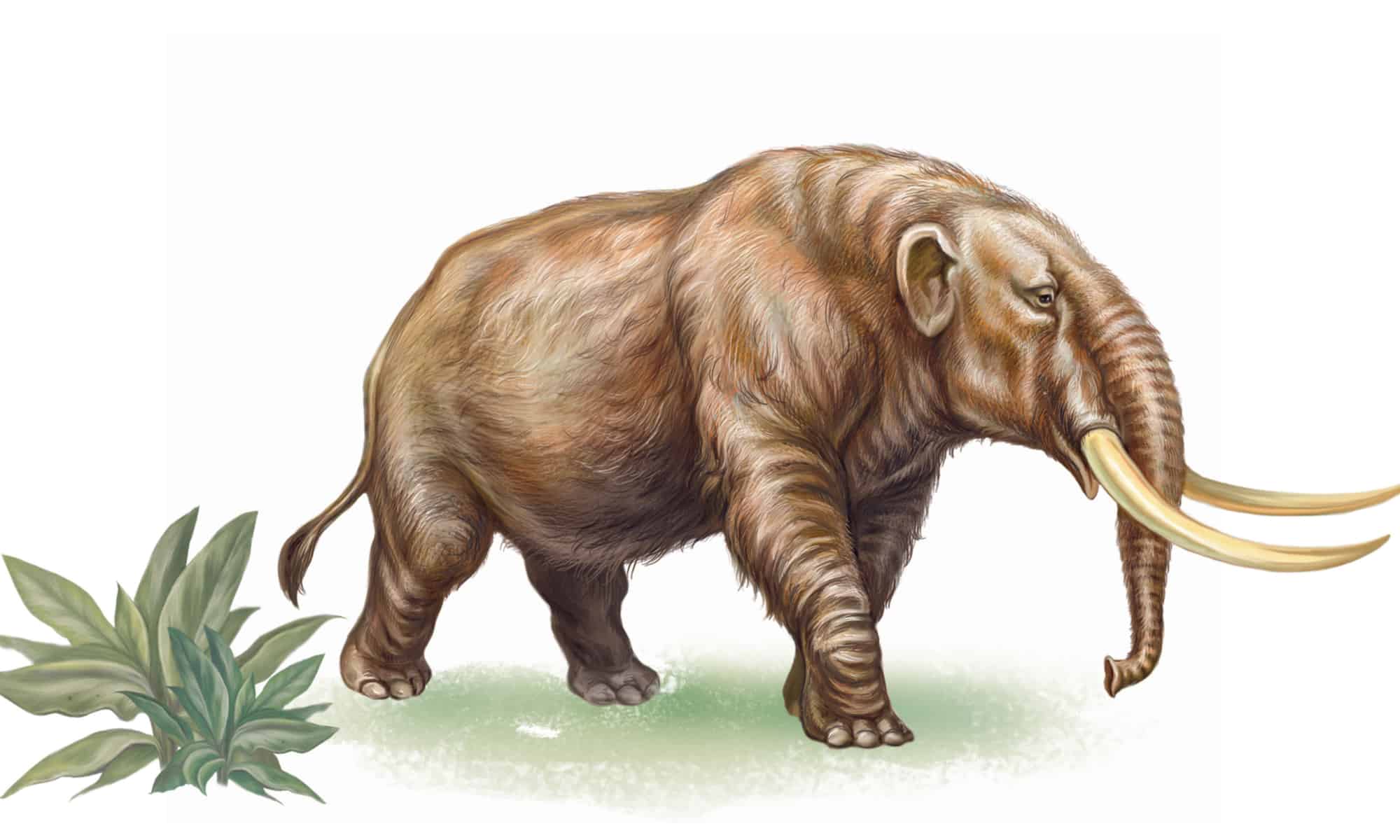
The largest animal fossils found in New Hampshire belong to the mammoths and mastodons. Both groups of mammals are in the order Proboscidea, the same order as modern elephants. Mammoths lived in the cold tundra environment of Europe, Asia, and North America about 300,000 years ago. The last recognized group of these species died out in 1650 B.C.
Only a few fossils of these large animals have been found in New Hampshire. Unlike the fossils of smaller animals, there are no specific sites where the remains of mammoths and mastodons can be found. Most of the discoveries made so far were accidental finds by people on fishing trips.
In 2013, Captain Mike Anderson and Kelsi, his daughter, found a fossilized mammalian tooth near the Isles of Shoals while fishing. The pair were also lucky enough to discover a tooth and part of the jaw of a mastodon a few months later.
Something even more intriguing happened in 2014. Professor Fred Prince recovered a fragment of a woolly mammoth tooth from the Upper Pemigewasset Valley river bed. The valley is located right in the middle of New Hampshire’s White Mountains. The professor reported that he had found something similar a decade earlier but couldn’t figure out what it was at that time. Thinking it was junk, he tossed it back into the water. When he discovered how valuable what he had disposed of was, he went back in search of it.
The Possibility of Future Discoveries
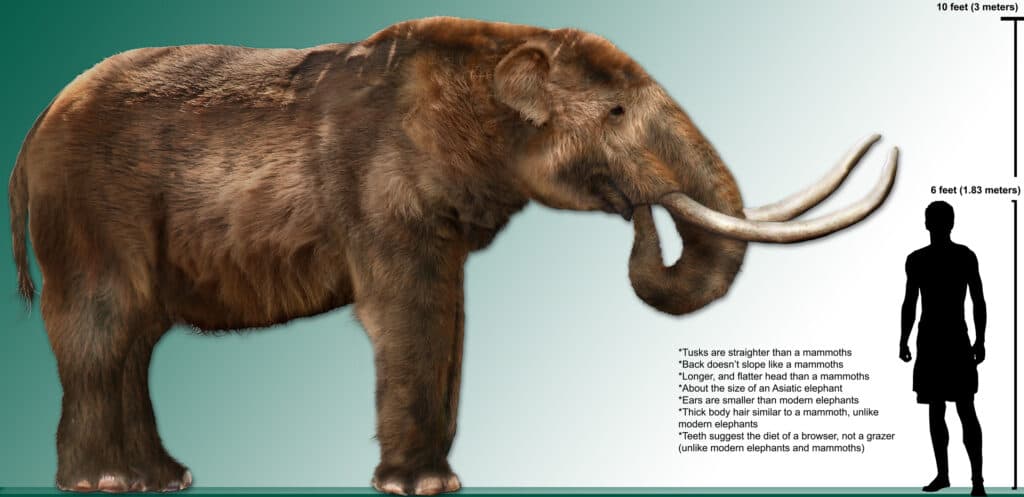
Residents have found evidence that mastodons once lived in the area that is now New Hampshire.
Due to the unique geology of New Hampshire, fossil preservation is unlikely. So far, no dinosaur has been found in this location, and the chances of finding one in the future are slim. It is still possible to find remains of brachiopods, bryozoans, trilobites, and other marine creatures that lived millions of years ago in this location. There is also evidence that large animals like woolly mammoths and mastodons lived in the state. Although only fragmentary fossils of these animals have been found so far, there is a good chance that better-preserved fossils of these megafauna may be discovered in the future.