Quick Take
- Paludohadros proudlovii was a newly identified iguanodontian that lived in the wetlands of southern England around 125 million years ago.
- The 16-foot-long juvenile could potentially have grown to twice its size as an adult.
- Scientists identified the new dinosaur after re-examining fossils previously classified as Iguanodon or Mantellisaurus.
- Paludohadros lived alongside predators such as Baryonyx, which may have hunted young iguanodontians.
Southern England has long been regarded as one of the most important locations in palaeontology due to its Jurassic coastline and famous fossil discoveries. This time it is Surrey that is the location where the latest new species was found. However, the fossil was actually unearthed 25 years ago and has been held in the Natural History Museum. Once thought to be a known species, in a surprising twist, differences in the fossil were recently identified, leading to it being named as the new species Paludohadros proudlovii. Keep reading to learn more about it!
What Was Paludohadros?
Paludohadros is derived from the Latin word for “swamp” and refers to the wetland habitat where it lived. However, the species is also named proudlovii after Will Proudlove. He was the former manager of Ewhurst brickworks where the fossil was discovered and died before the fossil was excavated.
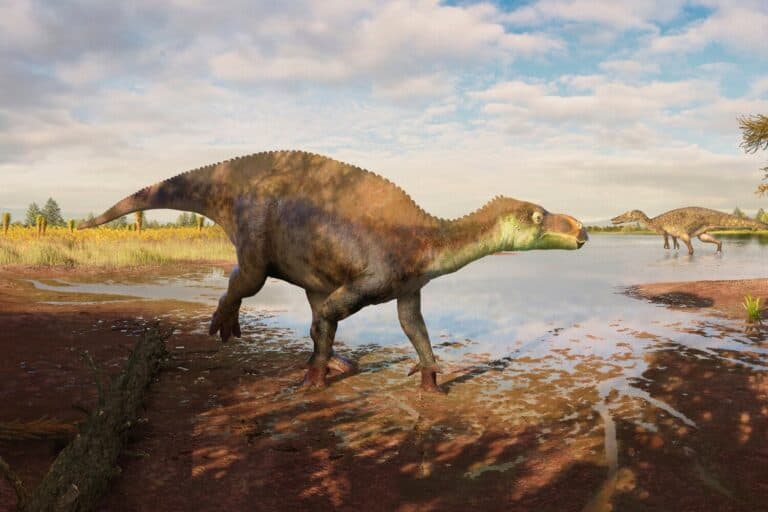
Paludohadros proudlovii was a large herbivorous dinosaur that belonged to the group known as iguanodontians. Iguanodons lived from the Late Jurassic to the Early Cretaceous period. Paludohadros is estimated to have lived approximately 125 million years ago. Iguanodontians are known for their distinctive thumb spikes. These were large spikes on the end of their hand, sticking out away from their main digits. It is thought that these spikes were used for fending off predators. However, they could have been used for breaking into tough seeds and pulling foliage and vegetation up. They also had strong hind limbs and could move on two legs or on all four, depending on their size and activity.
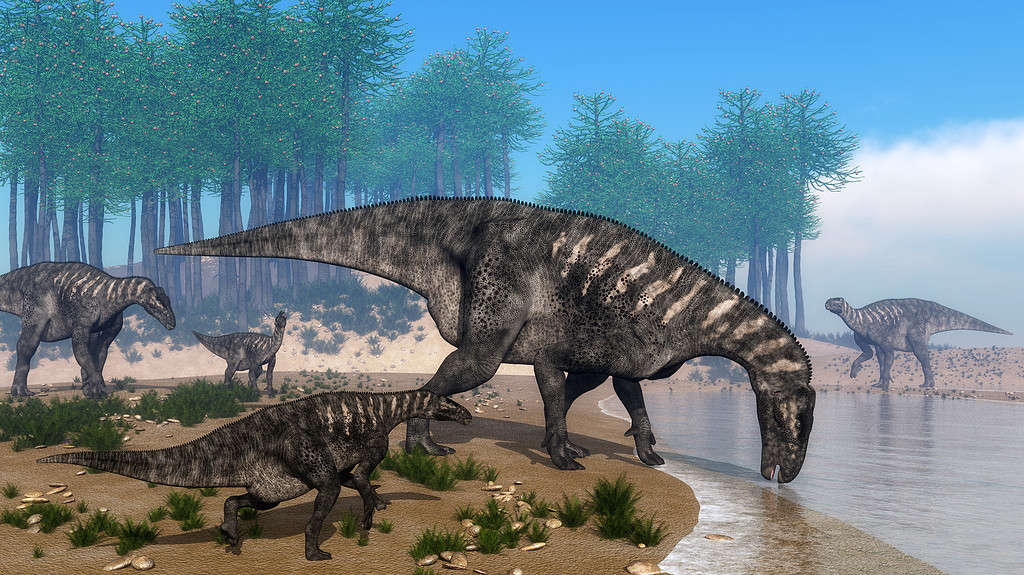
Paludohadros was a species of iguanodontian dinosaur, famous for their large thumb spikes.
©Elenarts108/iStock via Getty Images
Paludohadros was approximately 16 feet long and was a similar size to a rhino. However, scientists believe that it was only a juvenile because its bones weren’t fully developed. They believe Paludohadros proudlovii could have been twice as large in its adult form, making it an impressive size.
Why Did It Take 25 Years to Identify?
The fossilized remains of Paludohadros proudlovii were discovered in 2001 during excavations at Ewhurst brickworks in Surrey, which exposes part of the Weald Clay Formation. However, the dinosaur was not named as a new species until this year. It doesn’t often take 25 years to identify a dinosaur fossil, but Paludohadros is a unique case.
Iguanodontians were fairly common across southern England, as evidenced by the number of fossils that have been found in the region. When the fossil was discovered, it was initially believed to be another Iguanodon fossil or the related Mantellisaurus. The fossilized remains were donated to the Natural History Museum, where they were classified with these better-known dinosaurs.
However, things began to change in 2023, when scientists from the Natural History Museum published a detailed study of the Mantellisaurus. This research identified some important differences between species, which led researchers to reassess fossils that had previously been grouped together.
Following this new revelation, the fossilized remains from Ewhurst were identified as an entirely new species of iguanodontian. Now, several other fossils in the Natural History Museum are being considered as possible Paludohadros specimens.
What Does Paludohadros Tell Us About Prehistoric England?

Paludohadros lived alongside the carnivorous Baryonyx, which may have preyed on juveniles.
©kamomeen/Shutterstock.com
Paludohadros was just one of many dinosaurs living in southern England during the Early Cretaceous period, and it shared its habitat with some large predators. Baryonyx walkeri was a large theropod that was also discovered at Ewhurst works, back in 1983. Paludohadros was discovered just 300 feet away from where Baryonyx had been found. Researchers believe Paludohadros was possibly preyed on by Baryonyx, as two Baryonyx teeth were also discovered.
Baryonyx is widely regarded as a fish eater. However, it was found with the remains of a juvenile iguanodontian in its stomach, though the exact species is unknown. Additionally, it’s impossible to tell if Baryonyx attacked the juvenile or if it later scavenged the leftover remains. However, it does offer an interesting insight into the possible relationship between the two.
The discovery of Paludohadros is part of a wider series of new iguanodontians identified in recent years, including Brighstoneus and Istiorachis. With so many iguanodontian fossils found in southern England, it suggests that the area was part of a rich habitat that offered enough vegetation to support numerous plant-eating dinosaurs.