
Quick Take
- The tool scientists relied on for decades to measure sturgeon age has a fundamental flaw, one that quietly skewed every estimate made before this study. See the flawed method →
- Researchers cracked the sturgeon age mystery by borrowing a math model designed for a completely different creature. Explore the new approach →
- Indigenous communities described these fish's true lifespans long before scientists would accept it, and the new data finally proves them right. Indigenous knowledge confirmed →
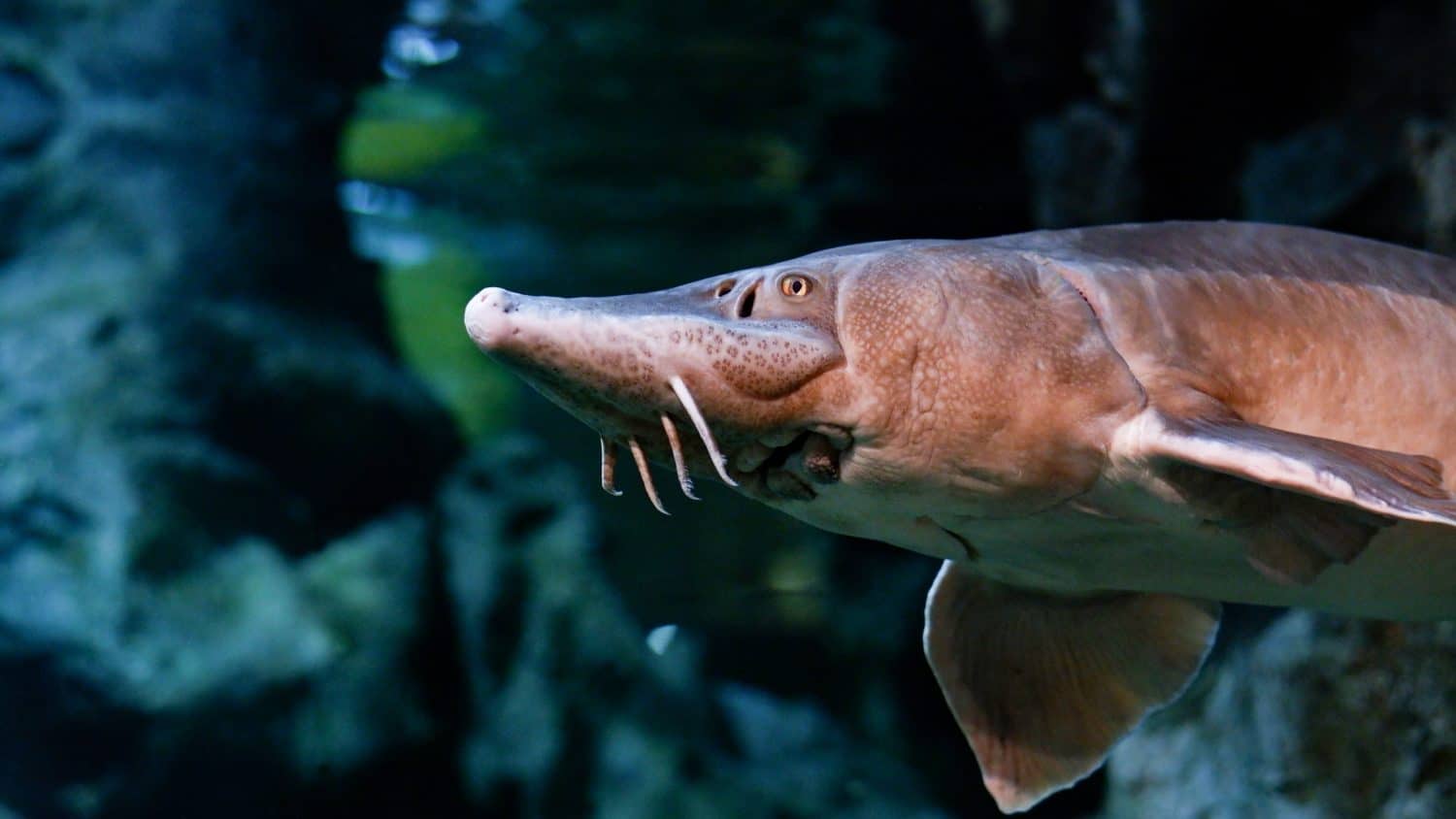
It’s hard to appreciate the sheer scale of a lake sturgeon until you see one up close. They are massive, prehistoric fish that were likely mistaken for sea monsters in centuries past. That line is blurry, however, much like the water they navigate. But for all intents and purposes, lake sturgeon are sea monsters. They weigh over 200 pounds and grow up to seven feet in length. The latest research suggests that these hefty fish may be one of the oldest living vertebrates known to science, too.
Scientists have long known that lake sturgeon can live over 100 years. The U.S. Fish and Wildlife Service, for example, estimates that lake sturgeon can live up to 150 years. A new study by Michigan scientists, however, suggests that even the more extreme estimates of sturgeon lifespans are woefully underestimated. Thanks to careful study and observation, these researchers now believe that lake sturgeon can live twice as long as previously thought. Let’s learn more about lake sturgeon, their incredible lifespans, and how scientists discovered just how long they can actually live.
Large and In Charge
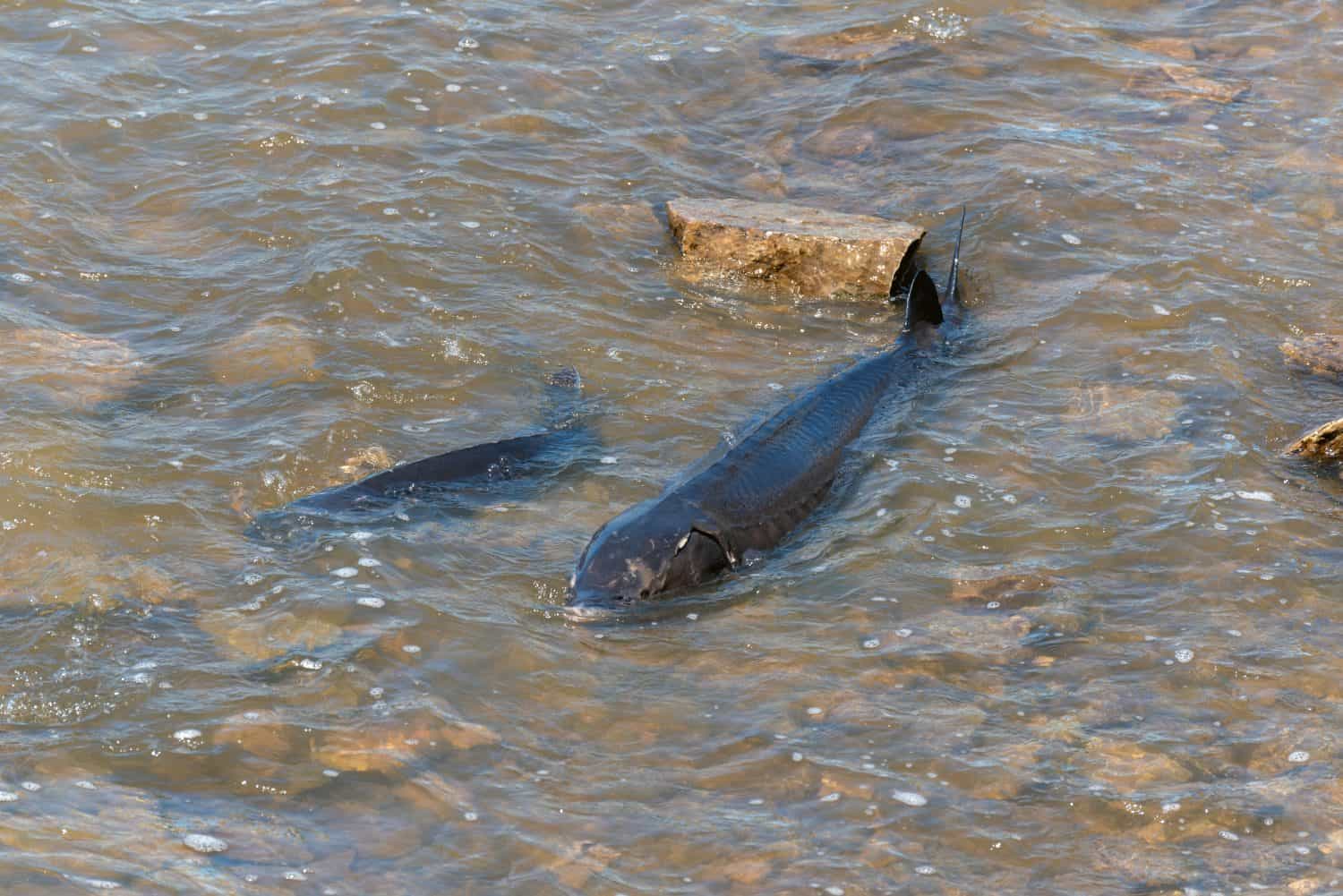
Lake sturgeon have been around for over 100 million years, can weigh over 200 pounds, and sometimes grow to over seven feet in length.
©Barbara Smits/Shutterstock.com
The lake sturgeon, Acipenser fulvescens, also called the rock sturgeon, is one of the biggest and oldest freshwater fish in North America. As previously mentioned, they grow to a massive size, topping out at over 200 pounds and reaching over seven feet in length. They are found in notable water sources across the continent, including the Hudson Bay watershed, the Mississippi River basin, and the Great Lakes.
Lake sturgeon have been around for between 150 and 200 million years, which means they swam in North American waters while the dinosaurs were still around. Despite this history, they haven’t changed much since then. They have retained most of their primitive traits, including cartilaginous skeletons, shark-like tails, and five rows of armored plates along their bodies. As such, they are often called living fossils. Lake sturgeon lack teeth; they rely on several facial barbels to detect small prey like crustaceans, fish, and leeches, which they suction up with their snouts.
As with many species, human activity has taken a toll on lake sturgeon populations. Habitat loss and overfishing in the 19th and 20th centuries sent lake sturgeon populations into decline. Luckily, conservation efforts have helped sturgeon populations gradually recover in the years since. Remarkably, the latest research suggests that some of the lake sturgeon affected by human overreach a hundred years ago are still around.
Updating Priors
According to the latest research, lake sturgeon live about twice as long as previously estimated. A new study in collaboration between the Michigan Department of Natural Resources, Michigan Technological University, Michigan State University (MSU), and the Wisconsin Department of Natural Resources investigated how long these fish truly live. As explained in a press statement, the study’s co-author Scott Colborne said, “The new study suggests they may live far longer than previously appreciated. These fish are a living connection to history.”
Historically, scientists estimated the age of lake sturgeons by counting growth rings in their pectoral fin spines, much like dating trees. The problem, however, is that these rings become harder to distinguish as a fish ages. Before the study, the researchers suspected that lake sturgeon ages were underestimated. With this hypothesis in hand, they set about proving it. This took them to the mathematical approach used for estimating the age of Greenland sharks. Specifically, this involved analyzing a 44-year dataset of captured, recorded, and recaptured sturgeon. Then, they used a mathematical model to calculate the mean annual growth rate of the fish.
They realized that lake sturgeon likely live a lot longer than previously expected. Some individuals could live up to 400 years. And living for centuries may be a byproduct of lake sturgeon’s ability to enter hibernation-like torpor during the winter season.
Ancestral Ages
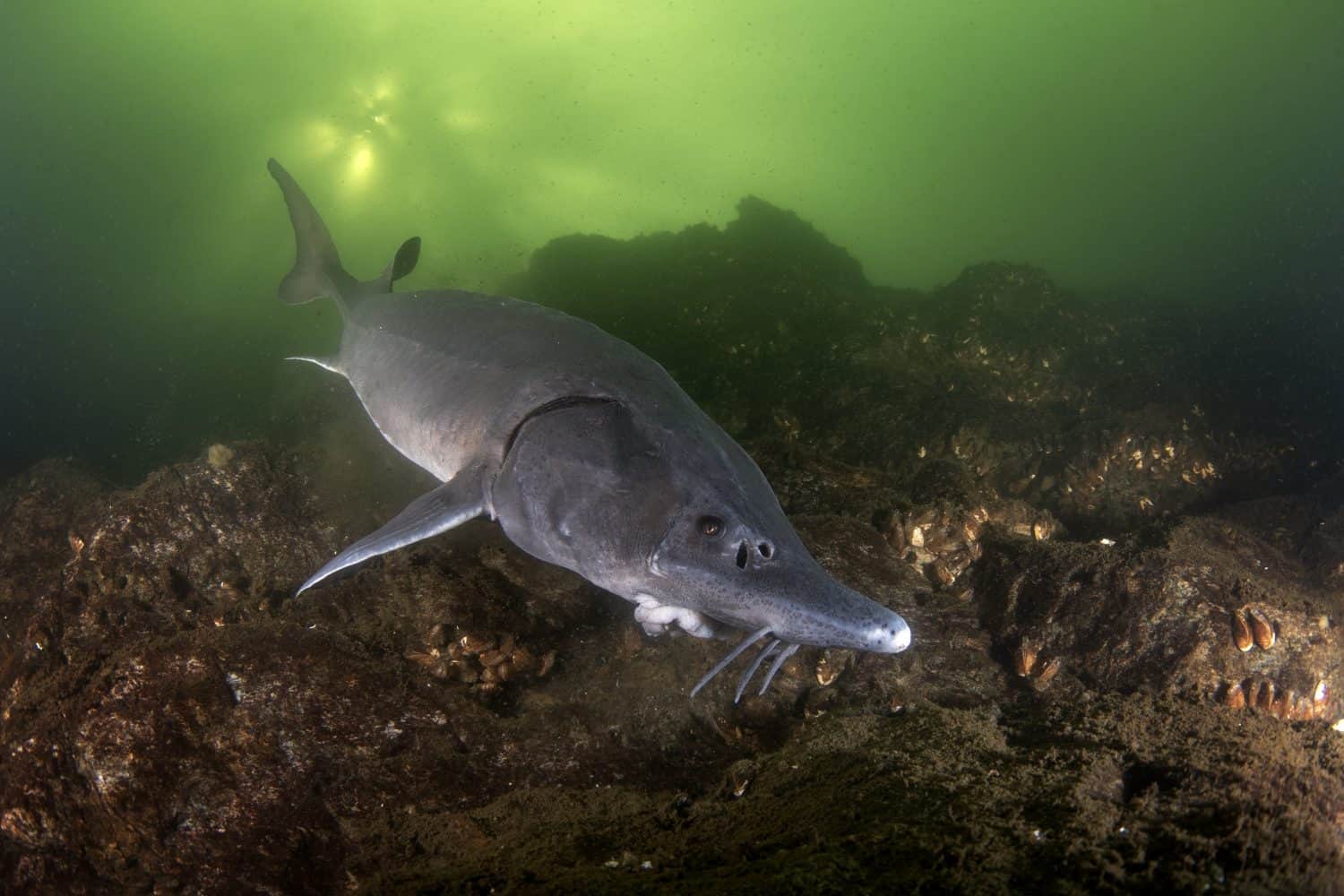
Sturgeons have been around a long time. Providing sanctuaries for them will ensure they live for much longer.
©Martin Prochazkacz/Shutterstock.com
Native American tribes that honor the lake sturgeon have long described their incredible life spans. It simply took scientists longer to formally confirm this. As Scott Colborne explained in the press statement, “That was one of those goosebump moments. Here we were using modern analytical approaches, and they were pointing us toward something that Indigenous communities had long understood—that these fish live incredibly long lives.”
By combining innovative mathematical models with decades of data, the researchers were able to determine the true scope of lake sturgeon lifespans. Just two years ago, the U.S. Fish and Wildlife Service announced that partnerships at every level of government have resulted in an increase in freshwater sturgeon spawning. This latest study further reinforces the importance of such conservation efforts. As Colborne said, “Because of their life history, sturgeon are very resilient and adaptable animals. If we give them the opportunity to survive, they’ll figure it out. There’s a reason these fish have been around for millions of years.”