
Quick Take
- Gavials are nearly extinct today, yet they once thrived somewhere you'd never expect. The proof is hiding in plain sight beneath one of history's most iconic monuments. Explore gavial history →
- The ancient crocodile and the Great Sphinx share a bizarre physical detail that drove researchers to name the species after an Egyptian god. Meet Herugavialis cairensis →
- Modern CT scanning just rewrote the identity of a 100-year-old fossil, with what it revealed reshaping our picture of life along the ancient Nile. How CT scanning revealed the truth →
Even today, in an era of advanced technology and science, Ancient Egypt remains a place of untold mystery. Despite existing thousands of years ago, almost no other civilization came close to Ancient Egypt’s expansiveness, sophistication, and scientific innovation. Perhaps no symbol captures its success better than the Great Pyramid at Giza. It is the oldest wonder in the world and was once the tallest as well. Recently, scientists discovered an ancient crocodile hiding in the rock formation used to build its neighbor, the Great Sphinx of Giza.
This crocodile species was discovered in the same rock formation used to construct the monument more than 4,000 years ago. It belonged to a group of fish-eating crocodiles with considerably long and thin snouts called gavials. Only two gavial species still exist on Earth today; one is critically endangered and the other is endangered. Interestingly, the ancient crocodile fossil was missing the tip of its snout, just as the Great Sphinx is missing the tip of its nose. Let’s learn more about this ancient gavial crocodile species, its discovery, and what it tells us about life on the Nile Delta over 4,000 years ago.
Gavial Crocodiles
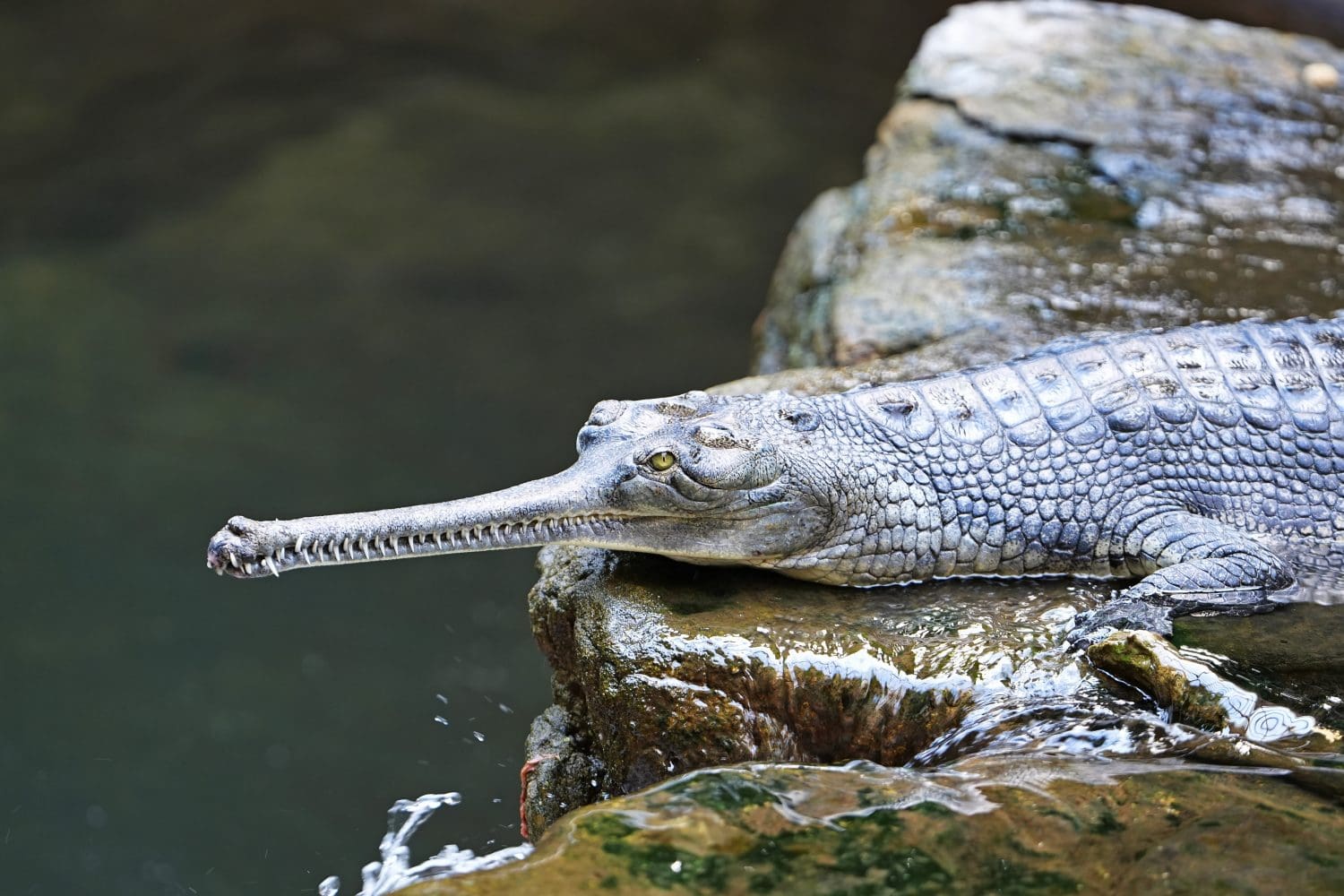
Gavial crocodiles are distinct from other alligator and crocodile species due to their incredibly long and thin snouts made for catching fish.
©AlevtinaGorskaya/Shutterstock.com
There are crocodiles, and then there are gavial crocodiles. Belonging to the family Gavialidae, these crocodiles are distinct due to their incredibly long and thin snouts. While alligators and Nile crocodiles have wider snouts made for eating all manner of animals, gavial crocodiles have snouts specifically designed for eating fish in fast-flowing river systems.
Currently, there are only two distinct living species of gavial crocodiles, both of which are confined to Asia. There is Gavialis gangeticus on the Indian subcontinent, and Tomistoma schlegelii, also known as the false gharial, in Indonesia and Malaysia. Human expansion has severely threatened both species; mining, damming, and even accidental drownings have made all living gavials critically endangered.
However, in the ancient world, gavialoids were widespread, living in coastal and freshwater habitats across Europe, North America, and Africa. It is in the latter region where one of the more interesting fossils of an ancient gavial crocodile was found.
Initial Discovery
A great flurry of archaeological activity sprang up around Ancient Egyptian sites in the early 20th century. This produced incredible discoveries, including some biological specimens. For example, in the 1920s, researchers excavated Egypt’s Mokattam Formation. This layer of Eocene limestone from the Mokattam Formation was used to carve the Great Sphinx at Giza.
In the process of this excavation, researchers found fossils. One such fossil was an ancient crocodile. German paleontologist Wilhelm Otto Dietrich Müller formally described it in 1927 as Tomistoma cairense. From there, the complete holotype skull was transferred to Germany and housed at the Stuttgart Museum. In the past year, however, researchers took a closer look at the fossils, resulting in an incredible discovery.
Species Reclassification
A new paper, published in Royal Society Open Science, detailed a research team’s examination of the ancient crocodile fossils and their subsequent findings. The research team, composed of members from the United Kingdom, Sweden, Germany, and Egypt, analyzed multiple fossils, including a nearly complete crocodile skull from the Mokattam Formation.
Using computed tomography, the researchers looked inside the skull. They noticed several features that differentiated it from Tomistoma cairense, including a raised ridge around its eyes. This prompted the researchers to reassign the fossil to a new genus; they named it Herugavialis cairensis.
Interestingly, the fossil was missing the tip of its snout, much like the Great Sphinx missing the tip of its nose. Recognizing the parallels, the researchers named the ancient gavial crocodile in honor of Ancient Egyptian mythology. As co-author Professor Philip Mannion from UCL Earth Sciences explained in a press statement, “Given this coincidence, we decided to name the new crocodile after the Egyptian god Heru, who was possibly the inspiration for this monument.”
Widening Perspective
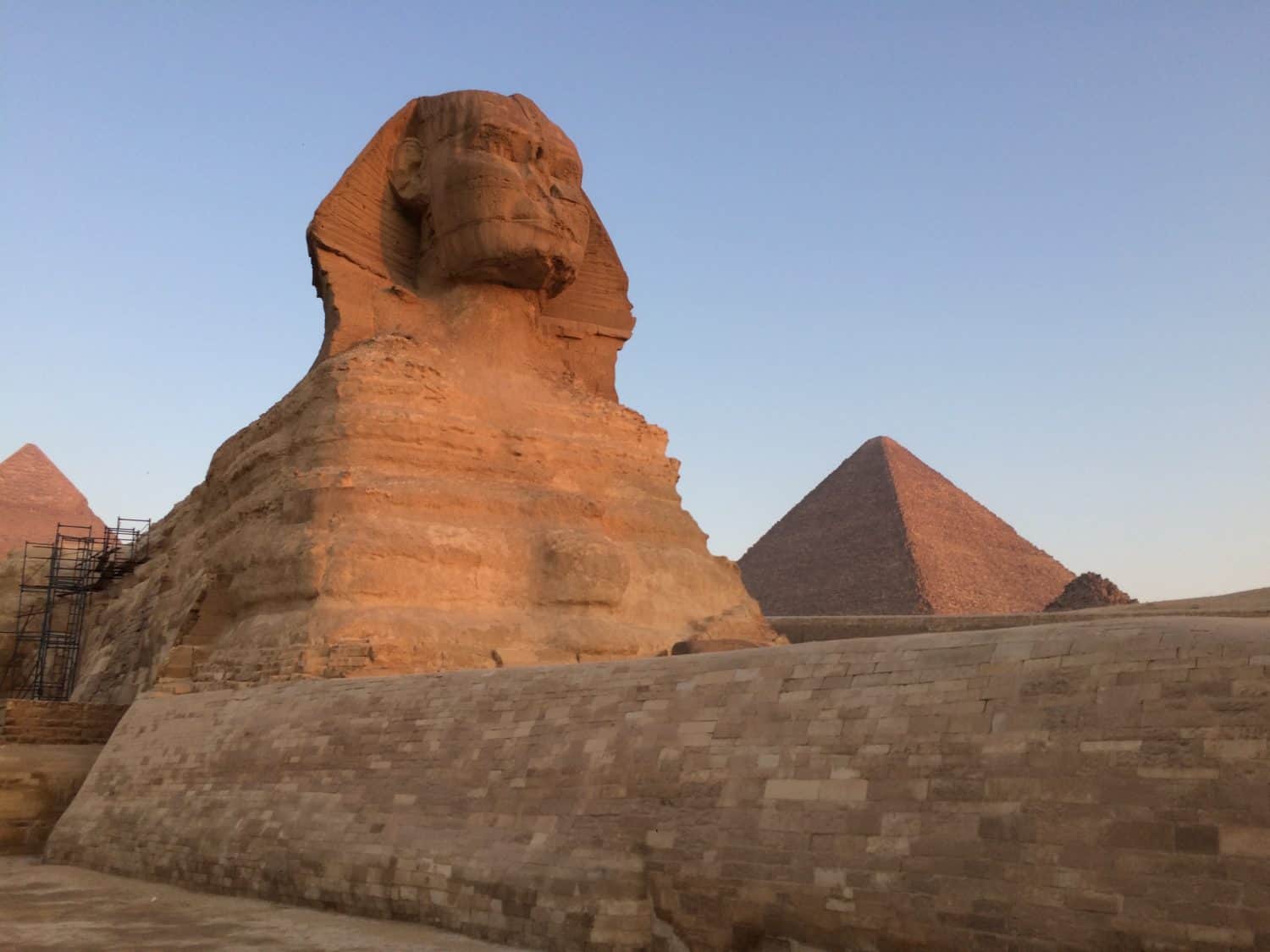
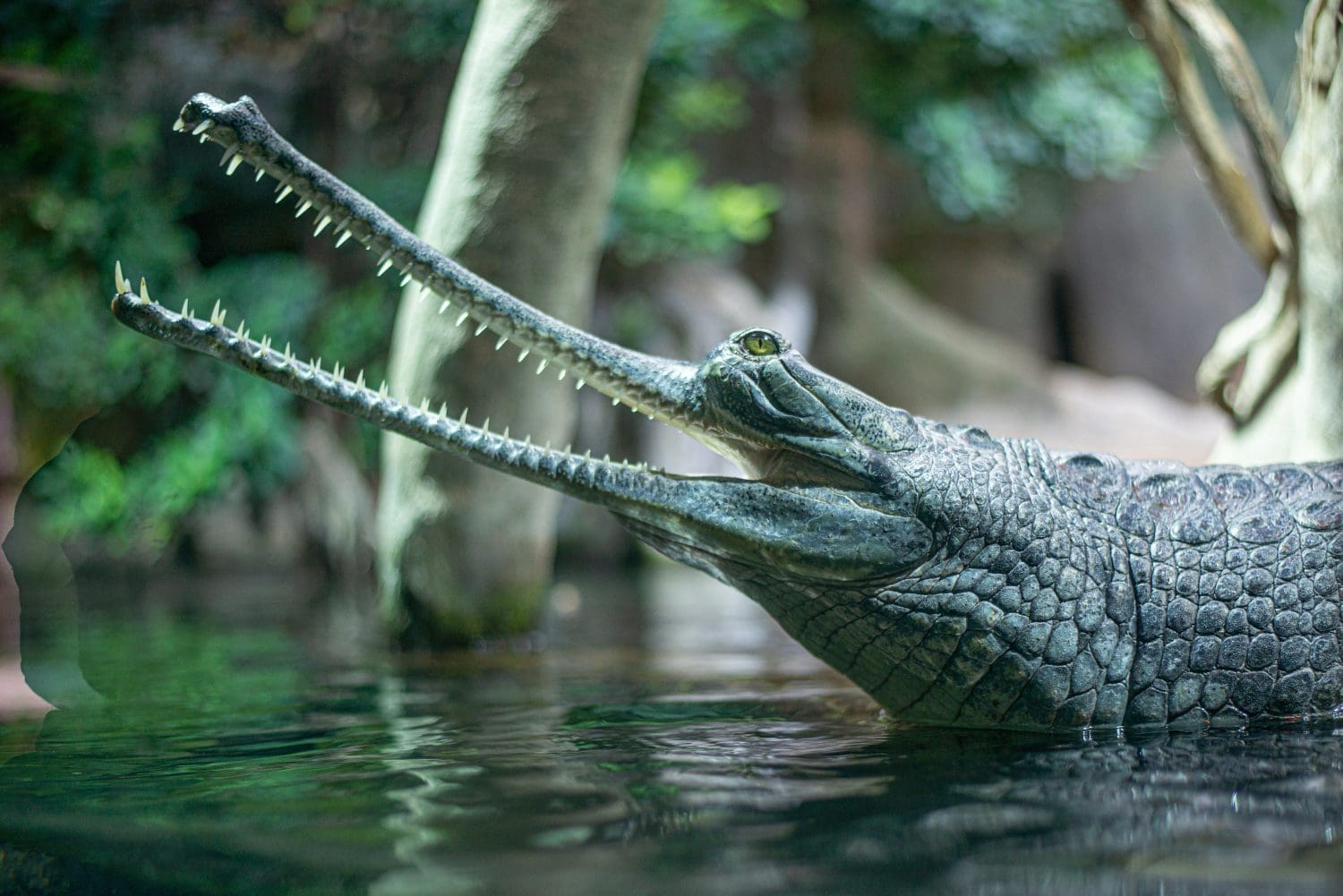
The newly described species was missing the tip of its snout, much like the Great Sphinx. Both came from the same limestone formation.
©Opus Magnum/Shutterstock.com
Gavials are incredibly rare in the modern world. However, they once lived on nearly every continent, from South America to Africa, Asia, and Europe. They even lived on the UK’s Isle of Sheppey during the Eocene period, around 50 million years ago. This newly described species was not the only crocodile in prehistoric Egypt. The now-dry coastal regions were submerged beneath the Mediterranean Sea at that time, providing space for at least two other species of gavials.
This latest discovery — or rediscovery — highlights the rich history and broad distribution of these thin-snouted crocodiles. As lead author Dr. Paul Burke stated in a press release: “Gavials are critically endangered today, but they have so much history that few people know about. They lived all over the world, from Europe and the Americas to Asia.”