
Quick Take
- A dinosaur sat in a museum for 25 years wearing the wrong name tag, and nobody was actually to blame for the mix-up. How the mix-up happened →
- The fossil's location inside the museum may be the only reason scientists finally cracked its true identity. How the museum solved it →
- This juvenile dinosaur's last moments tell a grim story, and the clue was found just 328 feet away. Its final moments →
- The dinosaur's name carries a personal tribute to someone who never got to see the discovery, and the timing of that tribute is heartbreaking. The tribute behind the name →
Southern England has become a hotbed for dinosaur discovery over the past several decades. An ancient English wetland yielded an incredible new dinosaur discovery, one that was hiding in plain sight for over two decades.
Dinosaur Identified 25 Years After Being Discovered
Dinosaur fossils have been discovered around the planet over the course of hundreds of years. Unfortunately, scientists do not always identify them correctly because of limitations in current technology. In some cases, too few specimens within a genus have been discovered to properly identify a species.
According to a new study published in the Journal of Systematic Paleontology, a new species of Iguanodontian was hiding in plain sight for nearly three decades. It was only when the fossils discovered in 2001 were reanalyzed that it became clear a new species of Iguanodontian was unknowingly housed at the Natural History Museum.
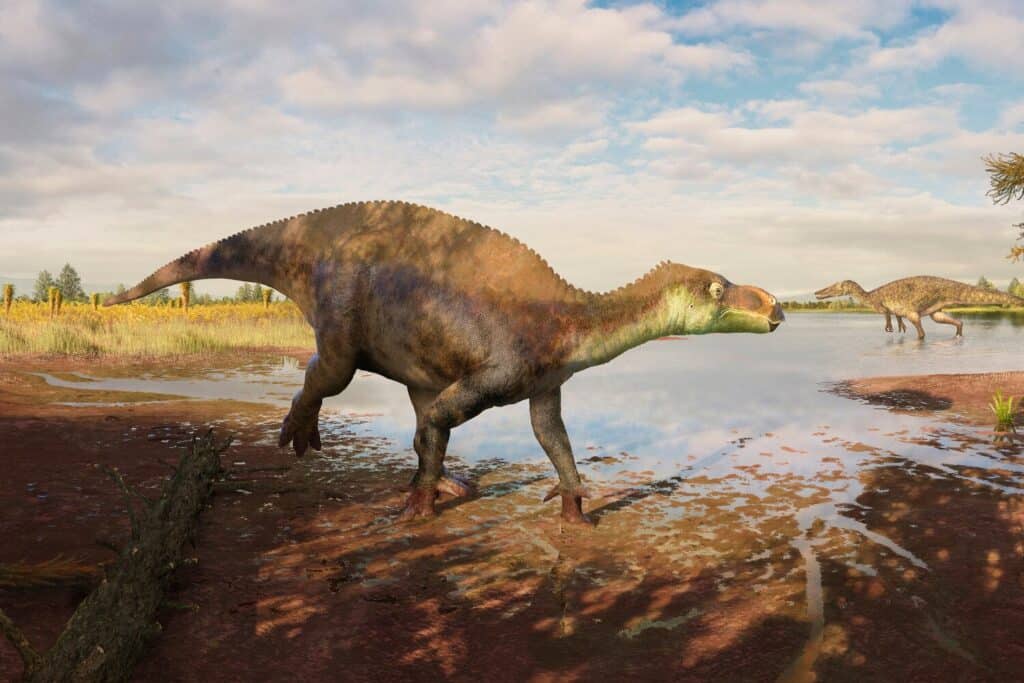
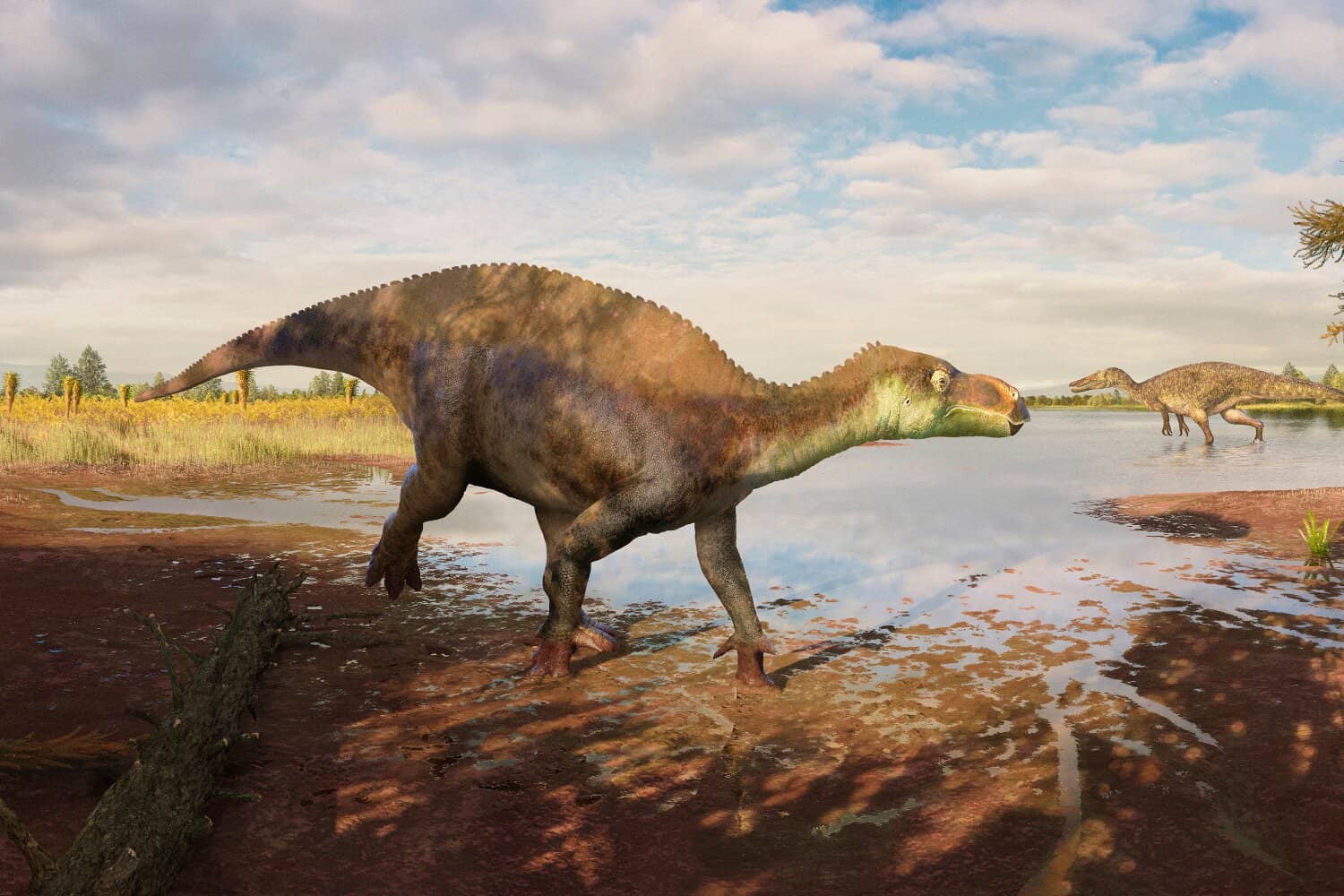
Paludohadros proudlovii is the most recently identified Iguanodontian.
©Guilherme Gehr / phys.org – Original
Paludohadros proudlovii is only the fifth Iguanodontian identified. Its name, Paludohadros, means “swamp” in Latin. This is fitting, given its habitat. The name Proudlovii is a bit more personal, as it honors a man who worked at the site where the fossils were found. Will Proudlove, who died at 35, leaving behind a wife and two children, was an avid dinosaur enthusiast. He would have been thrilled by the discovery but sadly passed away a year before the fossils were unearthed.
The particular specimen discovered was a juvenile when it died, believed to be about 16 feet long and weighing up to 2.2 tons. This size would put it on par with a rhinoceros, and paleontologists believe Paludohadros proudlovii may have been double this size as an adult.
Where and When Paludohadros proudlovii Lived
The recently identified Paludohadros proudlovii once roamed the English countryside.
According to the study, Paludohadros proudlovii lived about 125 million years ago during the Early Cretaceous. Earth as a whole was relatively warm, allowing dinosaur species to diversify. Consequently, 68 known dinosaur species lived during this period.
Paludohadros proudlovii called southern England home. It is believed to have spent much of its time in the Weald Clay Formation. This habitat would have been well suited to the species, given its swampy nature. The dinosaur likely enjoyed a diet of diverse wetland vegetation that would have been easily accessible, given its stature, which allowed it to be low to the ground.
The Weald Clay Formation was known for its seasonal flooding, which produced a rich, swamp-like habitat. The ecosystem was stable and had a balanced food chain. As a result, Paludohadros proudlovii thrived during the Early Cretaceous.
Where Were the Dinosaur Fossils Discovered?
The Paludohadros proudlovii fossils were discovered at Ewhurst Works in Surrey, England. Found in 2001, the study states that researchers identified the specimens as Iguanodon. They were then donated to the Natural History Museum, where they were forgotten until 2026.
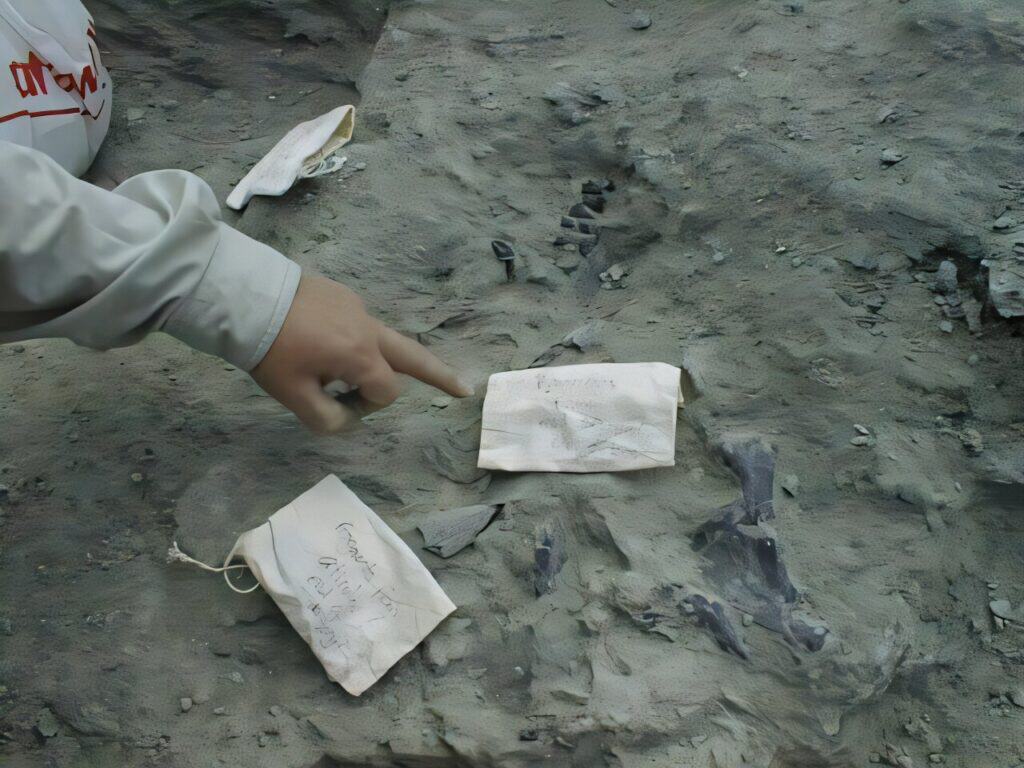
Skull bones of Paludohadros proudlovii found at Ewhurst Works in Surrey, England.
©Tim Burgess (Wienerberger Ltd) / phys.org – Original
The fortunate thing about Ewhurst Works is that the clay pit on the property is an exceptional fossil-preservation site. Over the centuries, the clay formed a mold around dinosaurs as they died. The fossils created here include everything from bones to teeth and even skin tissue.
Although the fossils were stored for 25 years, they remained in excellent condition. Therefore, compared with more recent Iguanodontian discoveries, it became clear that Paludohadros proudlovii was a new species, further expanding the genus.
What the Last Hours of Paludohadros proudlovii Reveal
According to the study, the particular specimen was likely a juvenile. This particular individual’s life did not end peacefully.
Over the years, Ewhurst Works has been a hotbed of fossil discoveries because the area was once a collection of wetlands where everything from fish to reptiles to dinosaurs lived. One of the most publicized discoveries was Baryonyx, a large carnivorous dinosaur identified in 1983.
The Baryonyx find is important to the Paludohadros proudlovii because the fossils were discovered just 328 feet apart. Therefore, according to Susannah Maidment of the Natural History Museum, London, the University of Birmingham, and the study’s senior author, it is not out of the realm of possibility that one of the Baryonyx’s last meals was the young Paludohadros proudlovii.
“Paludohadros was found just 100 meters (328 feet) away from Baryonyx, whose fossils we also look after at the Natural History Museum,” Maidment explained in a press release. “While Baryonyx is best known for eating fish, this dinosaur’s last meal also included a baby iguanodontian.”
It is unclear if Baryonyx killed Paludohadros proudlovii or scavenged it. What is clear is that Paludohadros proudlovii did not die of natural causes.
Several New Species of Iguanodontians Have Been Discovered Recently
The first Iguanodontian to be named was Iguanodon in 1825. The specific species, Iguanodon anglicus, was the only Iguanodon until 1878, when Iguanodon bernissartensis was discovered. Over the years, researchers found that the former was not actually an Iguanodon at all. They dubbed the specimen nomen dubium, or invalid, because it provided insufficient evidence to define the species. Consequently, the latter became the only Iguanodon species accepted in the scientific community.
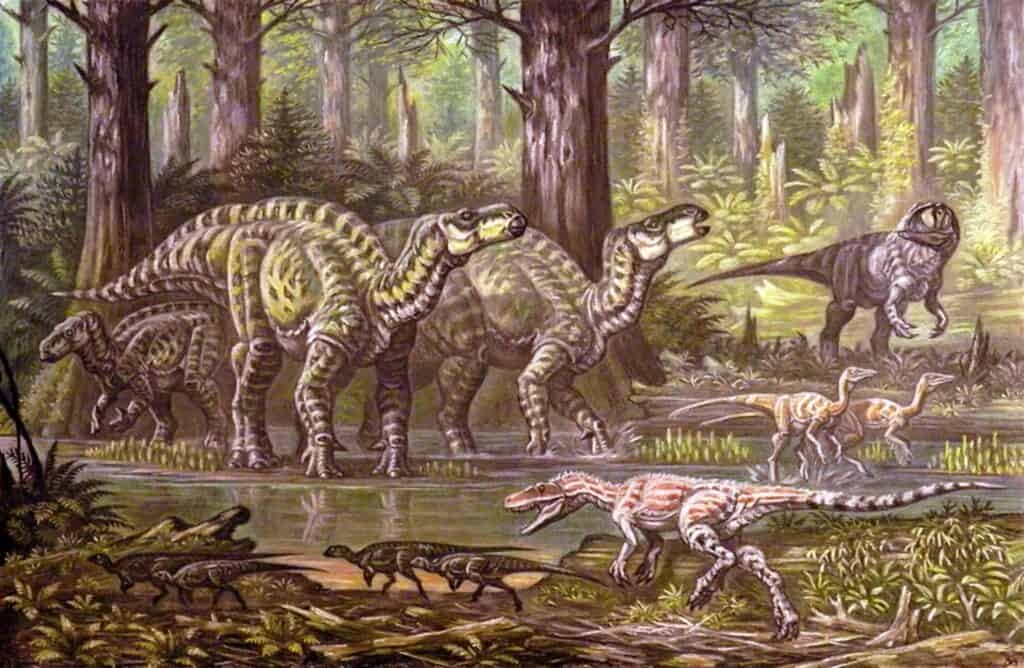
Brighstoneus is another recently identified Iguanodontian.
©<a href="https://commons.wikimedia.org/wiki/File:Wessex_Formation_dinosaurs.jpg">ABelov2014 (https://abelov2014.deviantart.com/)</a>, <a href="https://creativecommons.org/licenses/by-sa/3.0">CC BY-SA 3.0</a>, via Wikimedia Commons – Original / License
For more than a century, as researchers discovered fossils from the Iguanodontian genus, they lumped them under the name Iguanodon. Some were even miscategorized under other genera. Only when paleontologists reevaluated museum collections with new technology did they realize that far more than one species of Iguanodon roamed the planet long ago.
The most recent Iguanodontians discovered include:
- Brighstoneus: Identified as a new species in 2021
- Comptonatus: Identified as a new species in 2024
- Istiorachis: Identified as a new species in 2025
With five separate species of Iguanodons identified to date, it is clear that these animals roamed across more territory than previously expected. Therefore, it will not be surprising if more Iguanodons are named in upcoming years, allowing the genus to be further defined.