
Doves belong to the Columbidae family of birds. They usually have plump bodies, relatively long necks, long tails, and short, slender beaks. Doves are found everywhere on Earth except in the polar regions and the driest deserts. The rock dove, or pigeon, has one of the greatest ranges of any bird and has made itself at home in many cities around the world. Keep reading for more information on what doves eat.
What Do Doves Eat?
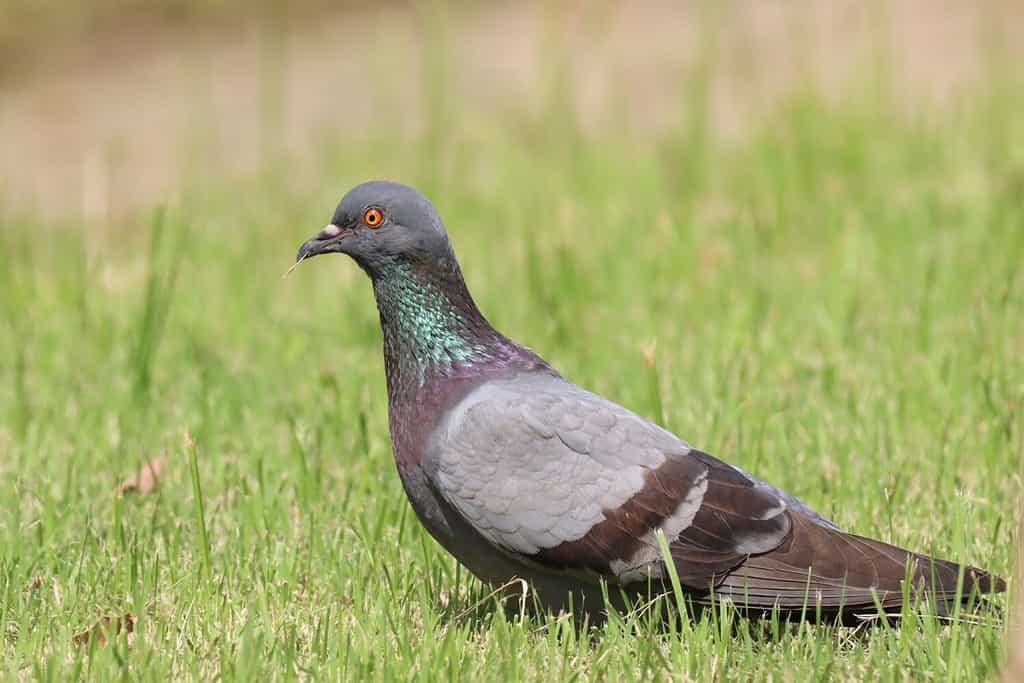
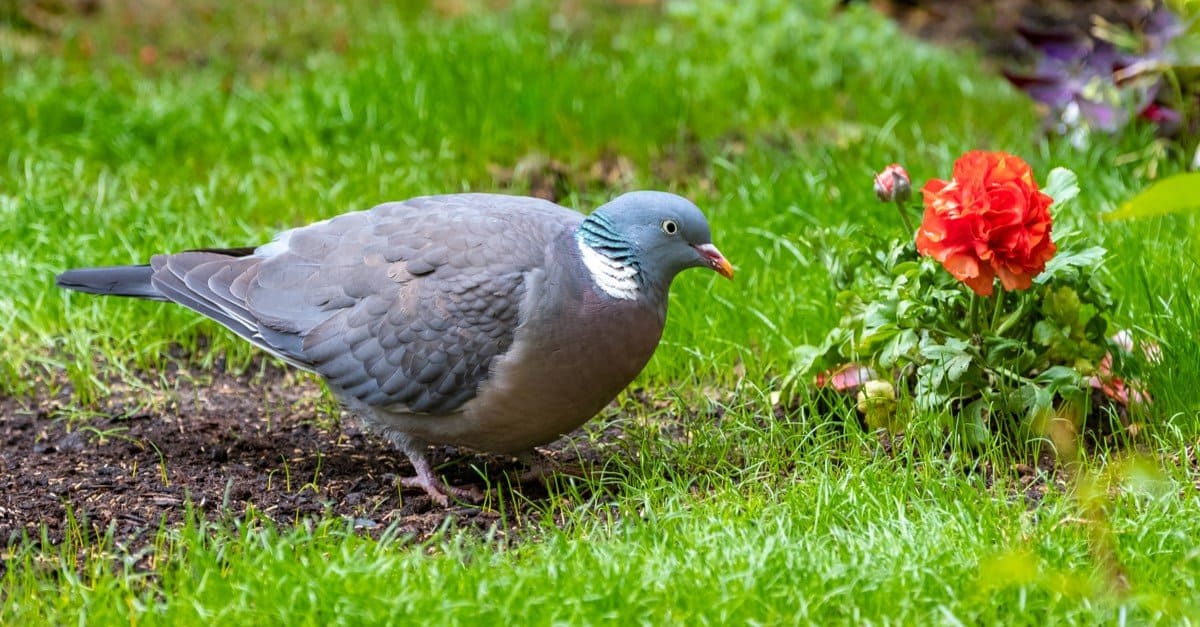
Rock doves, or common pigeons, are opportunistic feeders.
©Opasbbb/Shutterstock.com
Doves’ food preferences depend on the type of dove and where they live. For example, mourning doves primarily eat seeds, while ringneck doves eat more fruits and insects. Most doves prefer an herbivorous or granivorous diet, but some species, like rock doves, are opportunistic feeders that will supplement their diet with animal matter when available. So, what do doves eat? Some foods that doves eat include:
- Seeds, including those of dove weed, sunflower, hemp, safflower, and crowngrasses
- Grains like wheat, rice, corn, barley, oats, and sorghum
- Grasses, including Panicum and Echinochloa
- Weeds, including knotweed, ragweed, and poison ivy
- Berries
- Fruits, including dates, figs, and plums
- Flowers and buds
- Leaves from trees such as willows, poplars, and elms
- Acorns
- Insects, including ants, beetles, and grasshoppers
- Insect larvae and pupae
- Snails
- Worms
- Bones from owl pellets and animal feces
- Pollen
- Nectar
- Discarded human food
Feeding Backyard Doves
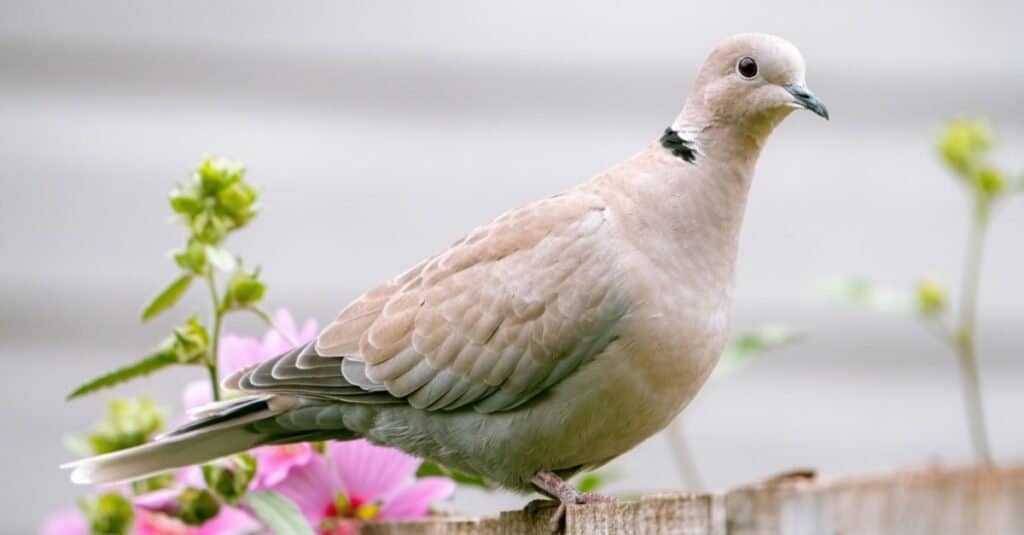
The best way to feed backyard doves is to scatter a handful of seeds on the ground.
©Oren Douek/Shutterstock.com
Most doves are ground feeders, so the best way to feed backyard doves is to simply scatter a handful of seeds over the ground. To be a bit tidier, you can also put seeds in a ground feeder or on a platform feeder that’s open on all sides. Though hanging feeders are more likely to attract other birds, doves don’t mind taking seeds that these birds have dropped.
Although just about all seed-loving birds covet black sunflower seeds, these should be mixed with some nuts, cracked corn, millet, safflower, and niger seeds. Frequently remove old husks so they won’t attract rodents, including squirrels. Also, provide a source of clean water for both bathing and drinking.
How Do Doves Forage and Hunt?
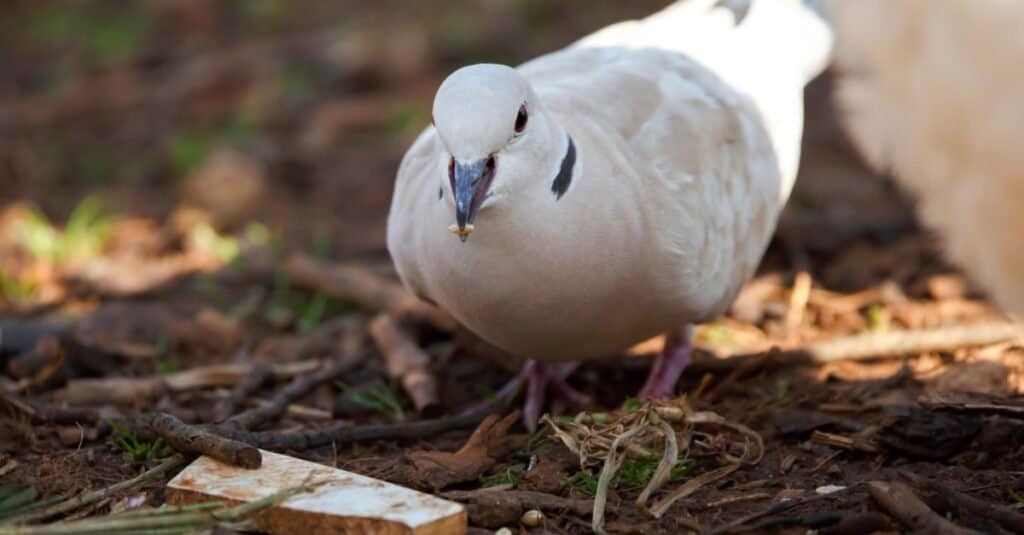
Regardless of their diets, doves typically forage for food on the ground.
©iStock.com/T O
Though most doves are granivores, there are a few that do hunt and consume animals. However, doves do not have a sophisticated hunting strategy. They merely pick up insects, grubs, caterpillars, ants, worms, and snails where they find them on the ground. If the snail is small enough, the dove simply swallows it whole and does not bother smashing the shell or poking its beak inside to reach the snail.
The Young Dove’s Diet
Young doves, called chicks, feed on crop milk produced by both parents. All doves in the Columbidae family produce crop milk. Crop milk is a fatty substance secreted from the lining of the crop, which is an expandable pouch near the base of the bird’s esophagus. Not only is this substance full of protein, but it also contains bacteria and antibodies that are beneficial for the chicks’ development.
The parents regurgitate this milky substance into their chicks’ mouths. The young will feed on this milk for the first few days before transitioning to an adult diet. For example, mourning dove chicks feed on crop milk for about 6 to 9 days, and by the 10th day, their diet is the same as that of their parents.