Eels first appeared over 65 million years ago, and they continue to thrive to this day. There are over 800 species of eel throughout the world. Eels play a crucial role in marine ecosystems; these nocturnal hunters prey on everything from fish to crustaceans to other eels. Some species live up to 20 years and can grow to enormous sizes. Continue reading to learn more about the specimens that live up to the eel’s nickname, The Devil of the Sea.
10. Southern Conger
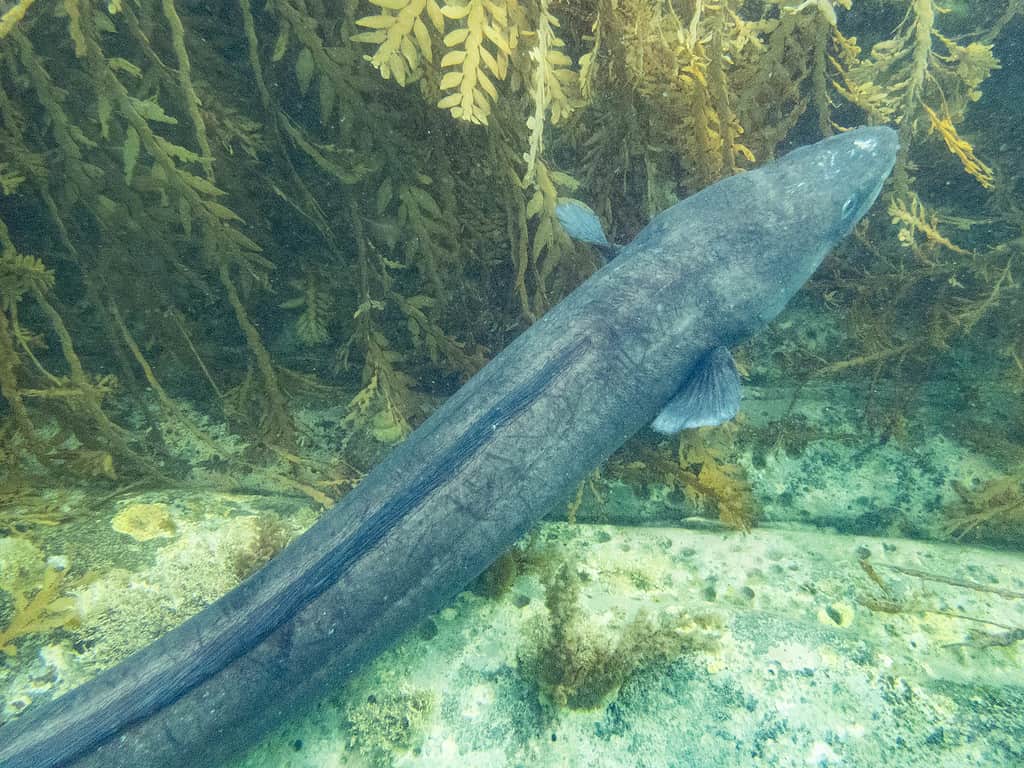
The Southern conger can typically be found around Australia and New Zealand.
The Southern conger (Conger verreauxi) is a member of the Congridae family. At their largest, they reach lengths of 6.5 feet and weigh up to 11 pounds. They are found in waters off the Southern Coasts of Australia and New Zealand.
Southern congers tend to live in rocky reef areas at depths up to 330 feet. Opportunistic, nocturnal hunters, they will eat anything from fish to crustaceans and even other eels. Currently, the IUCN lists them as Least Concern.
9. California Moray Eel
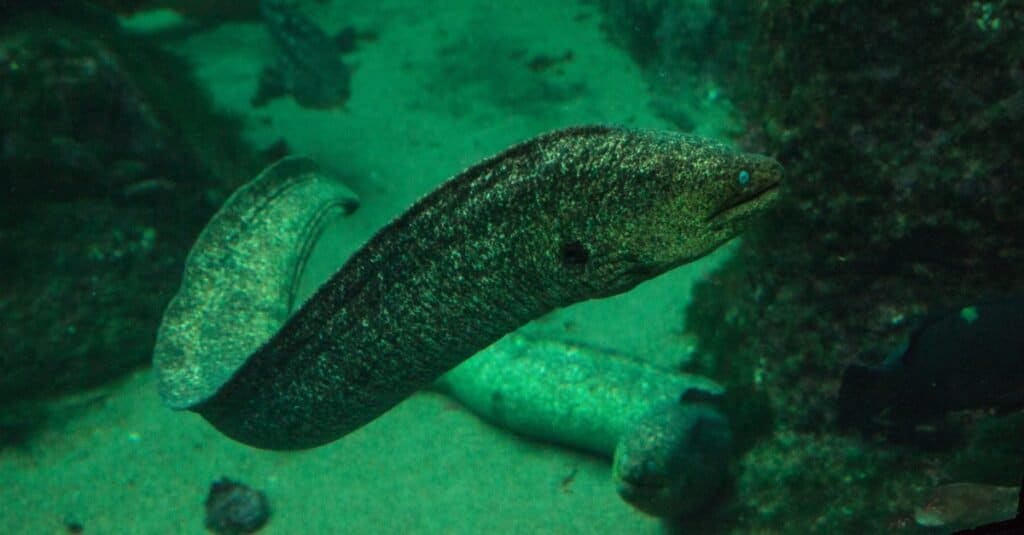
California moray eels are the only moray eels in California waters.
©SunflowerMomma/Shutterstock.com
The California moray (Gymnothorax mordax) is the only species of moray found off the coast of California. They can grow up to five feet long and weigh nearly 15 pounds. They range from a mottled brown color to almost entirely green. While most morays live in temperate waters, the California moray is one of the few subtropical members of the genus.
The California moray typically occupies bouldered habitats approximately 120 feet below sea level. Their diet primarily consists of fish, but they will also eat lobsters, shrimp, and octopuses. As they are not commercially fished and face few natural predators as adults, the IUCN lists them as Least Concern.
8. American Eel
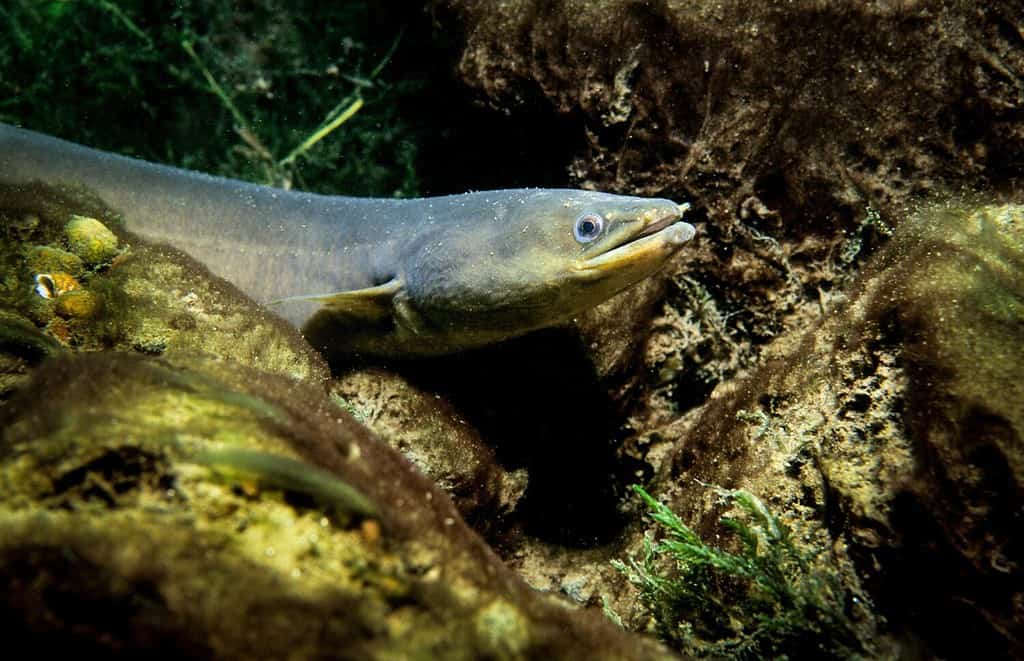
American eels spend most of their lives in freshwater.
©RLS Photo/Shutterstock.com
The American eel (Anguilla rostrata) is a migratory fish found off the East Coast of North America. The largest specimens measure around four feet long and weigh up to 17 pounds. They vary in color from dark green with brown shading to light grey with white bellies. A layer of mucus covers their bodies, giving them a slimy appearance.
American eels spend most of their lives in freshwater and only venture into the ocean to spawn. Females can lay up to four million eggs at a time. Their diet includes crustaceans, insects, and anything else they can find to eat. Due to the building of dams along their migration routes, their numbers have dwindled significantly in recent years. As a result, the IUCN lists them as an Endangered Species.
7. Fangtooth Moray Eel
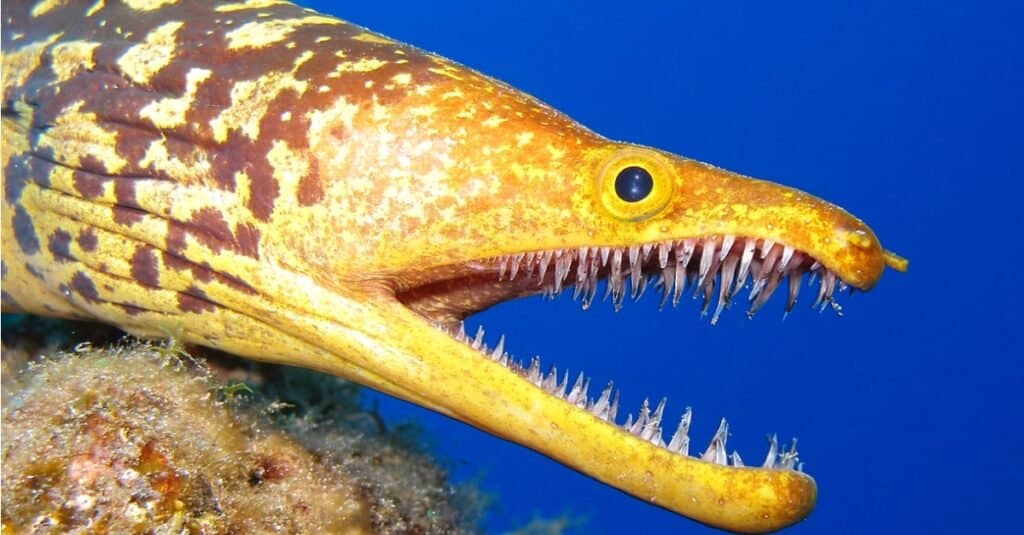
Fangtooth moray eels have two sets of teeth, an outer row and a hidden row in their throats.
©Natursports/Shutterstock.com
Also known as the tiger moray or bird-eye conger, the fangtooth moray (Enchelycore anatina) is one of the most terrifying eel species. It is named for its rows of large, glass-like teeth lining its mouth. They can grow up to four feet long and weigh up to 30 pounds. These eels are distinguishable by their bright yellow-orange and brown coloring.
Fangtooth morays can be found in warm regions of the Atlantic Ocean, including the Canary Islands and Madeira, as well as the Mediterranean Sea. Fangtooths live and hunt in the rocky crevices along the seafloor. They mainly feed on crustaceans, cephalopods, and bottom-feeding fish. The IUCN lists the fangtooth moray as Least Concern.
6. Slender Giant Moray
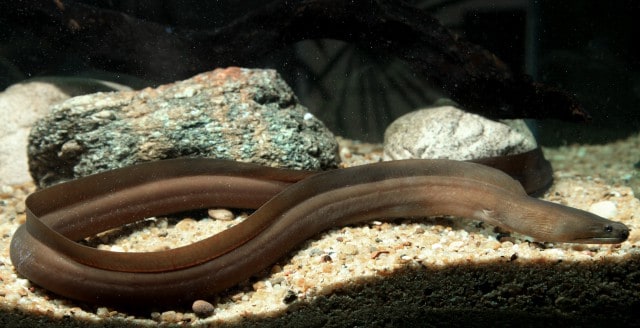
Slender giant morays inhabit the Indian and Pacific Oceans from the Red Sea to the western Pacific.
The slender giant moray (Strophidon sathete) is the longest eel in the world. The largest specimen ever recovered measured an incredible 13 feet long. While details about their weight vary, based on their size, estimates suggest a range of 30 to 60 pounds. They are usually brownish-grey, although their coloration tends to get lighter on their bellies.
Slender giant morays occur throughout the Indian and Pacific Oceans, from the Red Sea to the Western Pacific. They are often found in muddy environments where they can blend in with their surroundings. River estuaries and bays are among their hunting grounds. Their diet includes fish, crustaceans, and mollusks. The IUCN has not assessed the conservation status of the slender giant moray as of August 2025.
5. Grey Conger
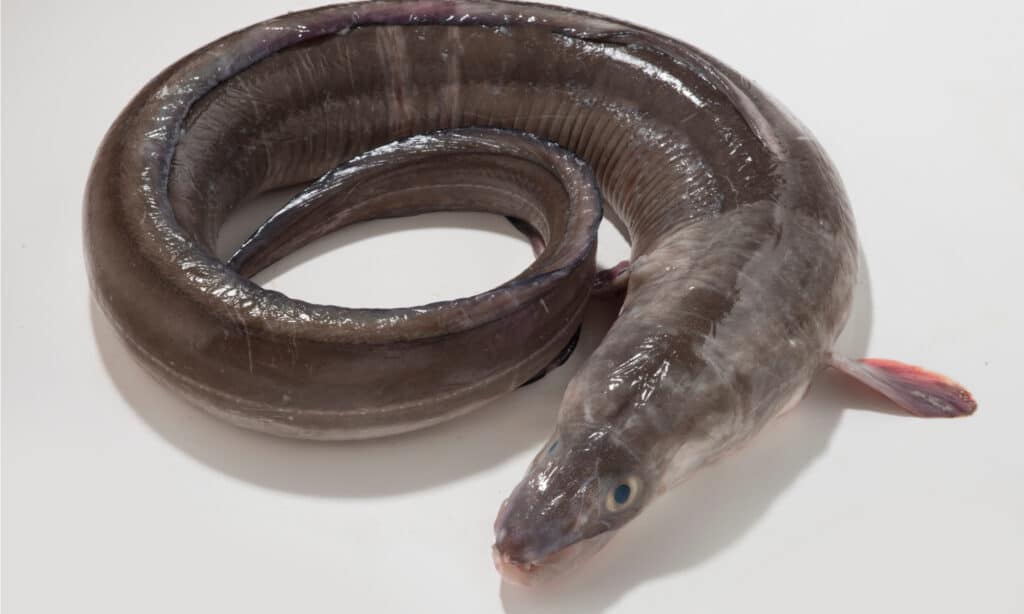
Grey congers inhabit coral reefs and rocky regions along the ocean floor.
©JoaoSilvaB/Shutterstock.com
Also known as the Antillean conger, the grey conger (Conger esculentus) is another member of the conger family. They are named for their color, although their bellies appear more white than grey. While most specimens commonly measure about three feet in length, they can reach up to 5.2 feet long and weigh nearly 55 pounds.
Grey congers live in tropical and subtropical marine environments. They occur throughout the Caribbean, particularly around Cuba, Jamaica, and Northern South America. Capable of living at depths of 1300 feet, grey congers inhabit coral reefs and rocky regions along the ocean floor. Their primary food source is finfish, along with other bottom-feeding species. Despite a thriving fishing industry for grey conger meat, the IUCN lists them as Least Concern.
4. Green Moray Eel
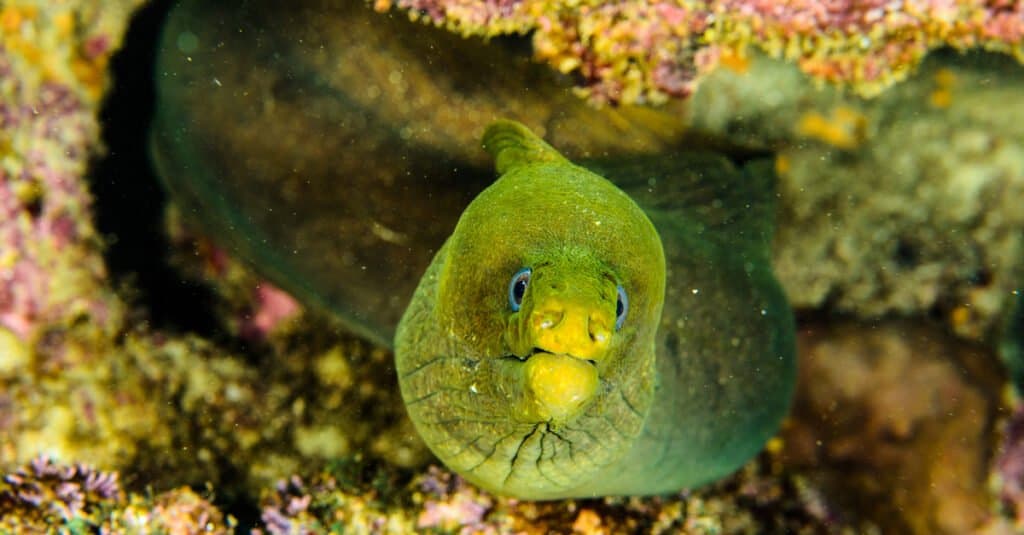
The green moray eel can reach up to eight feet long.
©Leonardo Gonzalez/Shutterstock.com
Green morays (Gymnothorax funebris) are named for their bright greenish-yellow color. Sometimes confused with the yellow moray, green morays are easily distinguishable by their size. These enormous eels can grow up to eight feet long and weigh approximately 65 pounds.
Green morays live throughout the Western Atlantic Ocean from New Jersey to Bermuda and off the coast of Brazil. They live at depths of up to 130 feet. Like most species of moray, they are nocturnal hunters. They primarily prey on fish, crabs, shrimp, octopuses, and squid. The IUCN lists the green moray as Least Concern.
3. Giant Moray Eel
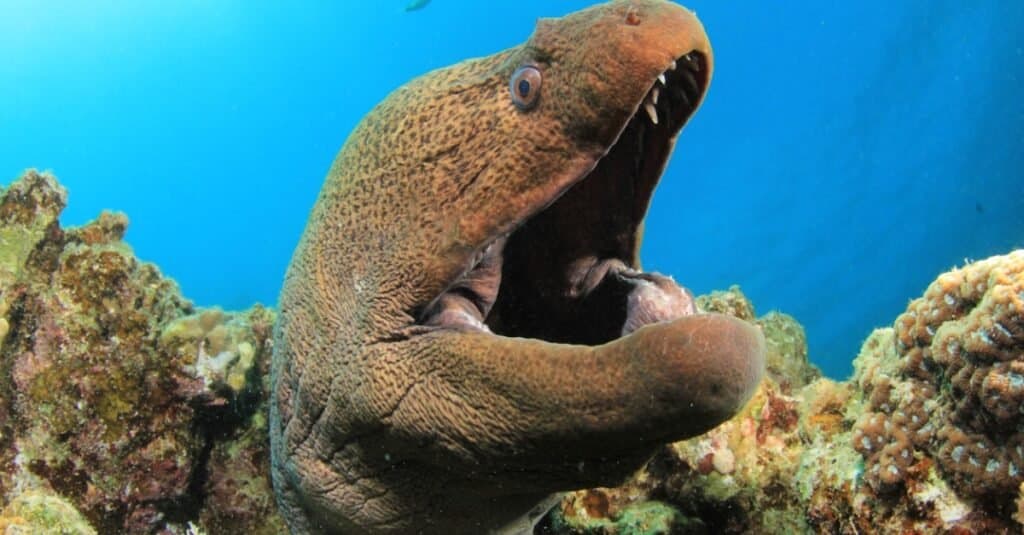
Giant moray eels sometimes hunt with other fish.
©Rich Carey/Shutterstock.com
The giant moray (Gymnothorax javanicus) is the largest moray eel in terms of body mass. While the slender giant moray may be the longest eel in the world, the giant moray is much heavier than its skinny relative. At their most massive, they can measure 9.8 feet in length and weigh 66 pounds. Large tan spots cover their brownish bodies, and adults feature leopard-like spots behind their heads.
Giant morays are found throughout the Indian and Pacific Oceans, including the Eastern Coast of Africa, the Red Sea, the Hawaiian Islands, Polynesia, Fiji, and Japan. They live in lagoons and along the outer edges of coral reefs. Their diet consists of fish and crustaceans. They have few predators, and they will even cooperatively hunt with other species. While usually not aggressive toward humans, they will attack if cornered or threatened. Currently, the IUCN lists them as Least Concern.
2. American Conger
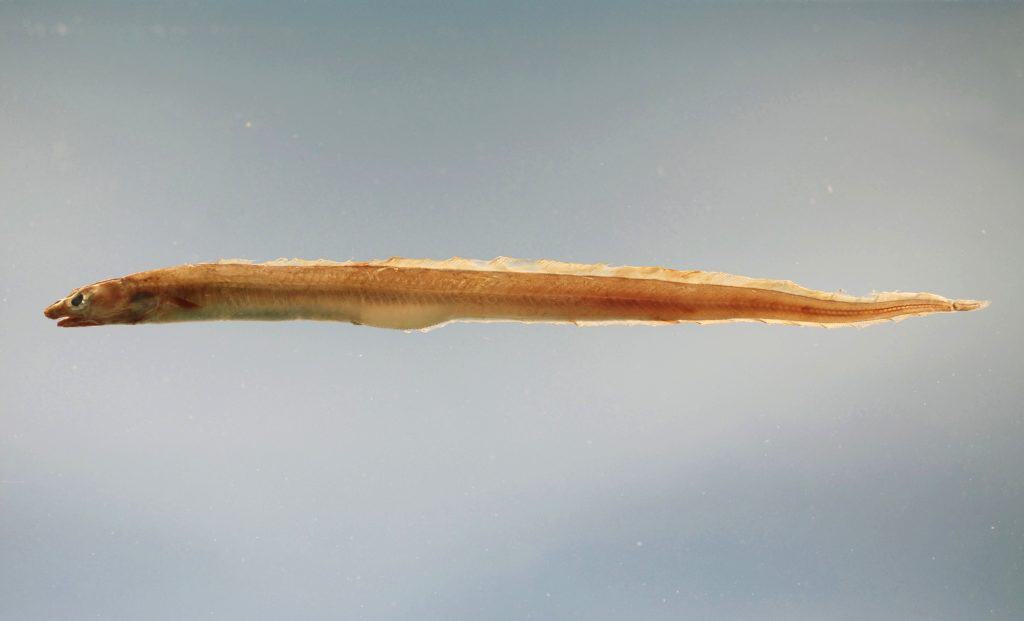
The American conger eel lives only in saltwater habitats.
©SEFSC Pascagoula Laboratory; Collection of Brandi Noble, NOAA/NMFS/SEFSC/Public Domain – Original / License
Also known as the dog eel, poison eel, and sea eel, the American conger (Conger oceanicus) is one of the largest eel species. While most specimens measure slightly over three feet, they can reach up to 6.5 feet long and weigh 88 pounds.
American congers dwell throughout the Western Atlantic Ocean from Cape Cod to Northeastern Florida. Although they migrate, they do not spend any part of their lives in freshwater. They are found in shallow and deep water, although they prefer to live along the seafloor. Their diet consists of fish, mollusks, and crustaceans. While they have no natural predators, a small fishing industry exists for the American conger. As their population is widespread and abundant, the IUCN lists them as Least Concern.
1. European Conger
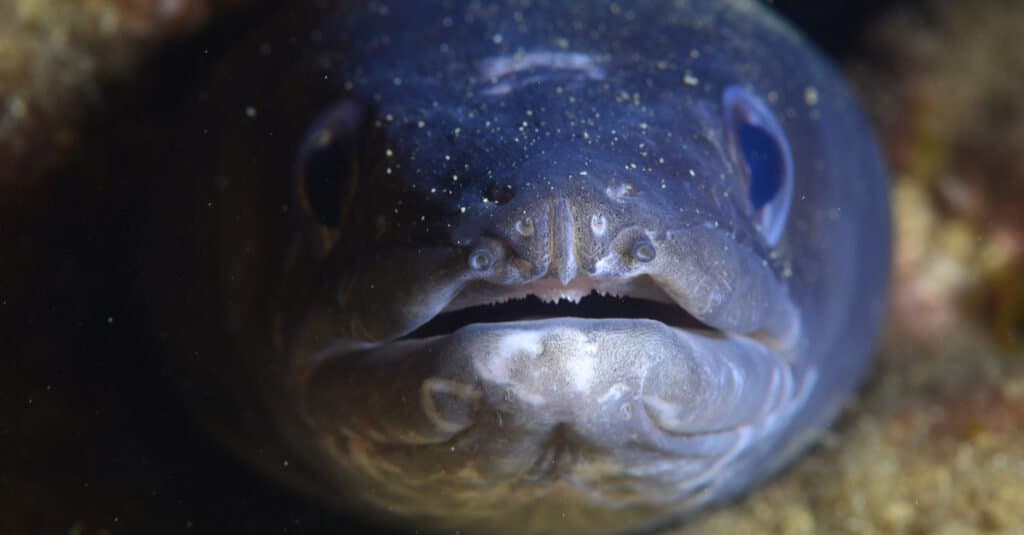
European conger eels sometimes swim at depths up to 10,000 feet.
©Osman Temizel/Shutterstock.com
The European conger (Conger conger) is the largest eel in the world. On average, adults measure approximately five feet long and weigh between 20 and 50 pounds. Exceptionally large individuals have been reported at up to 240 pounds, though unverified claims exist of even larger specimens. Although they usually appear grey, they can also be blackish with white bellies. Because of their large size and aggressive nature, they occasionally pose a threat to divers.
European congers are found in the Eastern Atlantic around Norway and Iceland, the Mediterranean, and the Black Sea. While usually found at depths between 0 and 1500 feet, they can live in depths up to 10,000 feet when migrating to spawning grounds. They inhabit rocky outcroppings called eel pits and will occasionally live with other eels. Their diet consists of fish, octopuses, squid, and crustaceans. Because of their wide distribution and high population numbers, the IUCN lists them as Least Concern.