
Although Canada is not one of the more biodiverse countries in the world, it is the second-largest country by landmass. Canada is home to over 550 natural freshwater lakes, including Lake Superior, the largest freshwater lake in the world by surface area. Scientists have identified over 34,000 distinct fish species globally, with approximately 1,200 to 1,300 of them found in Canadian waters. Continue reading to learn about the 9 largest fish species in Canada.
9. Northern Pike
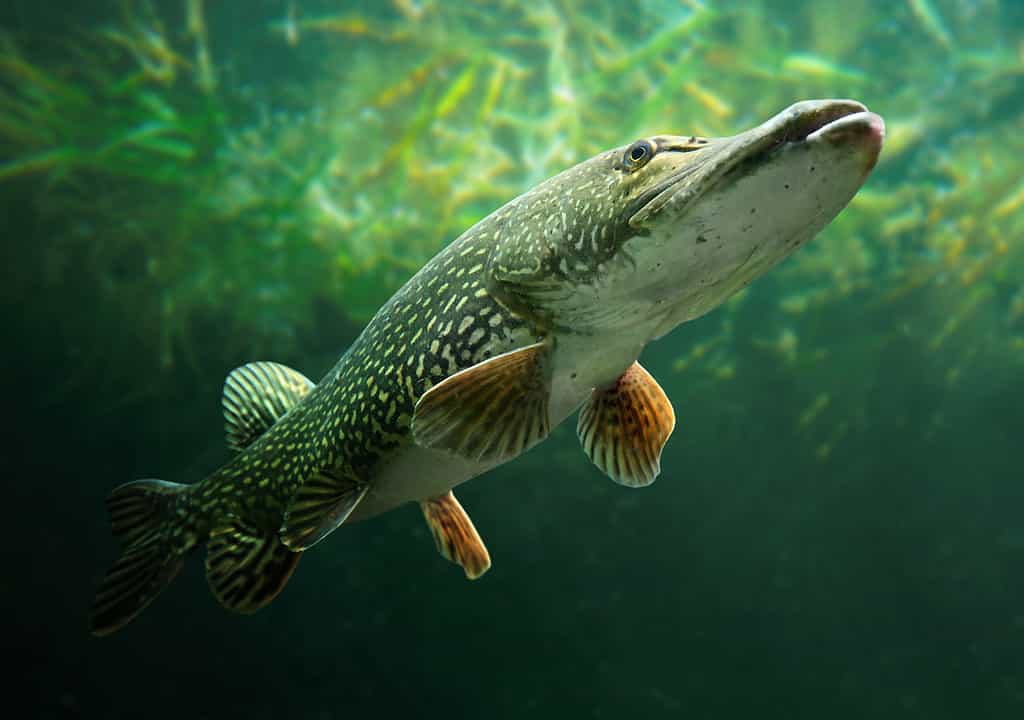
These fish are some of the most prized sport fishing catches in Canada.
©iStock.com/abadonian
Northern pike (Esox lucius) can grow up to 4 feet long and weigh over 40 pounds. These fish have elongated bodies that are dark green, mottled with lighter green. Northern pike have large mouths filled with sharp teeth. They live near underwater structures such as fallen trees and vegetation, which they use to their advantage to ambush their prey.
The Northern pike is an aggressive ambush predator. Their diet consists of small fish, crayfish, and small mammals. They occasionally feed on frogs and birds. They can reach speeds of up to 10 miles per hour. Anglers flock to Canadian lakes to try their hand at catching these massive sport fish. Northern pike are known for putting up a fight when caught on a fishing line, making them a difficult, but satisfying catch.
8. Chinook Salmon
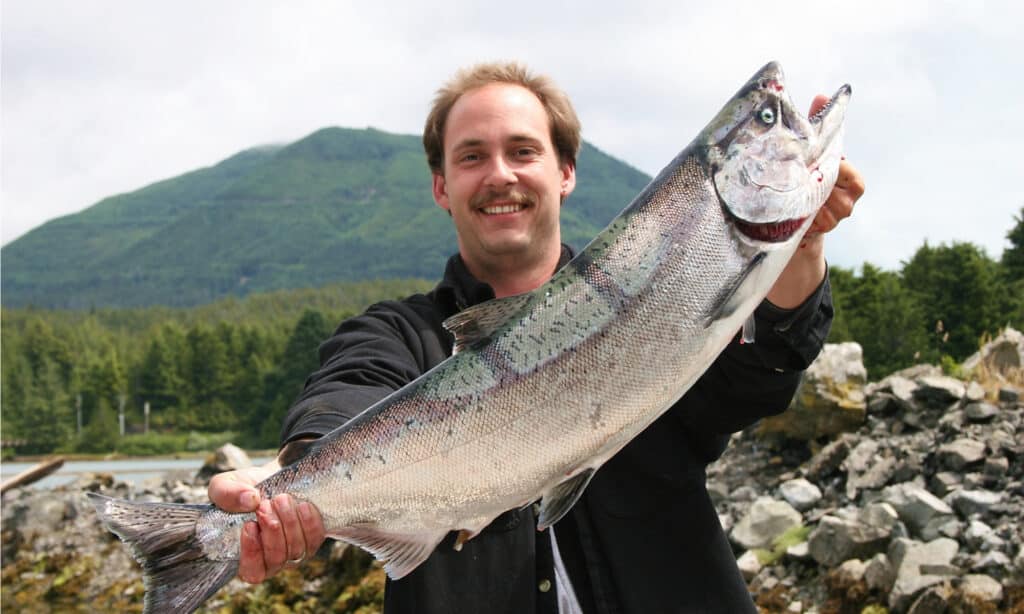
Chinook salmon are often used in cooking.
©Crystal Kirk/Shutterstock.com
Often referred to as the King of Salmon, chinook salmon (Oncorhynchus tshawytscha) are the largest species of Pacific salmon. They are between 30 and 47 inches long, and have been reported to weigh up to 126 pounds, though their average weight is approximately 30 to 50 pounds. They have a blue-green coloring which transitions to a silver underbelly and small black spots on the back. These salmon are also known as blackmouth salmon due to their black tongue and gums.
Chinook salmon are born in freshwater rivers and then migrate to the ocean. Once mature, they return to freshwater to spawn. These salmon feed on various insects and small aquatic life in rivers. In the ocean, they eat squid, shrimp, and other small fish. Chinook salmon are a delicious and highly sought-after fish species.
7. Muskellunge
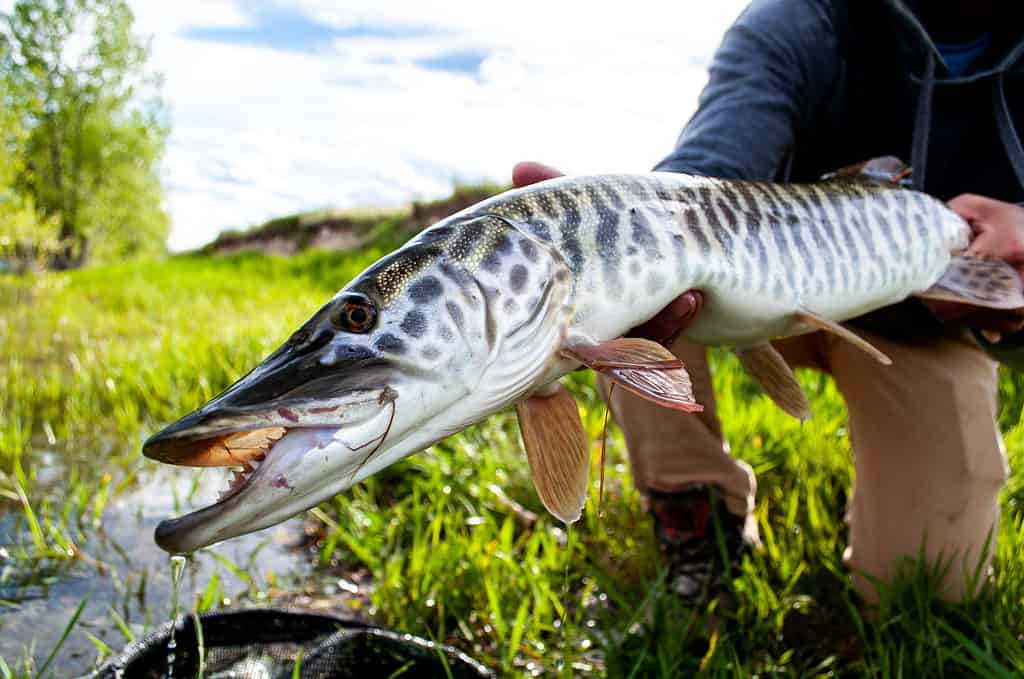
As one of the largest freshwater predatory fish in Canada, the Muskie is a highly sought-after fish by anglers.
©Jennifer de Graaf/Shutterstock.com
The muskellunge (Esox masquinongy), commonly known as the muskie, is a large predatory fish found in freshwater lakes and rivers. These fish have streamlined bodies and large mouths full of sharp teeth. They can grow up to 5.6 feet long and weigh approximately 60 pounds. They have a mottled green or brown body with vertical dark stripes or spots along their sides and a long dorsal fin that is placed far down on their backs.
Muskellunge inhabit large, clear lakes and rivers, often in areas with abundant vegetation and moderate to deep water. The muskies’ diet includes waterfowl such as ducks, as well as small fish like yellow perch, whitefish, and crayfish. Muskies are apex predators in their ecosystem, with adult muskellunge rarely being preyed upon, though juveniles may be vulnerable to larger fish and birds. This fish is commonly known as the fish of 10,000 casts, as they are extremely difficult to catch. Surprisingly, they can recognize artificial lures and avoid them.
6. Lake Sturgeon
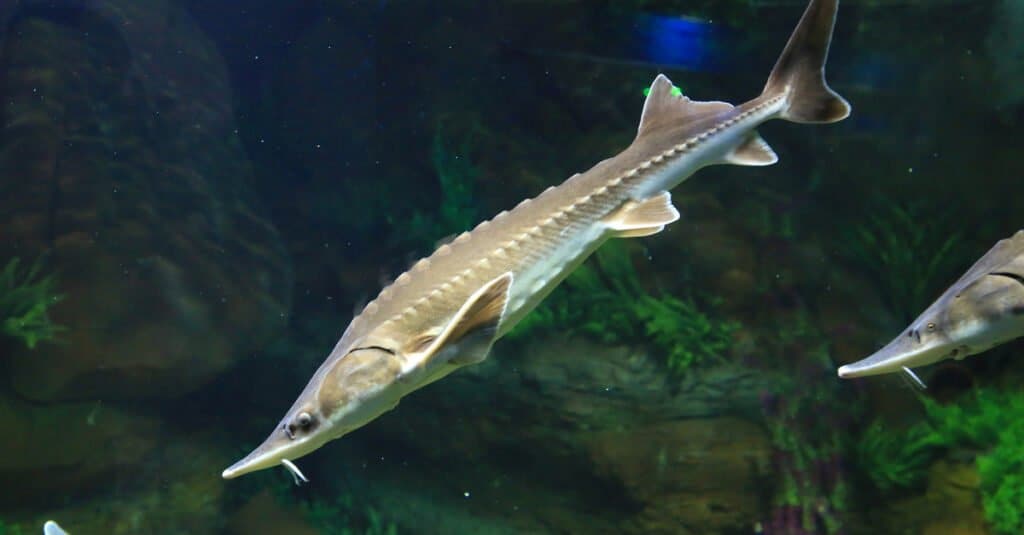
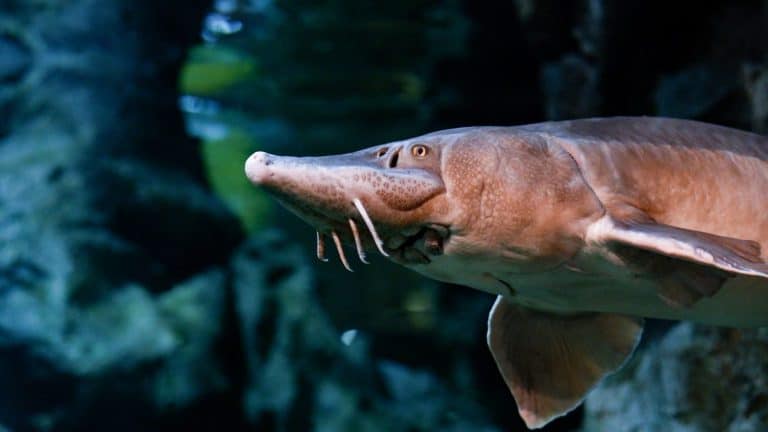
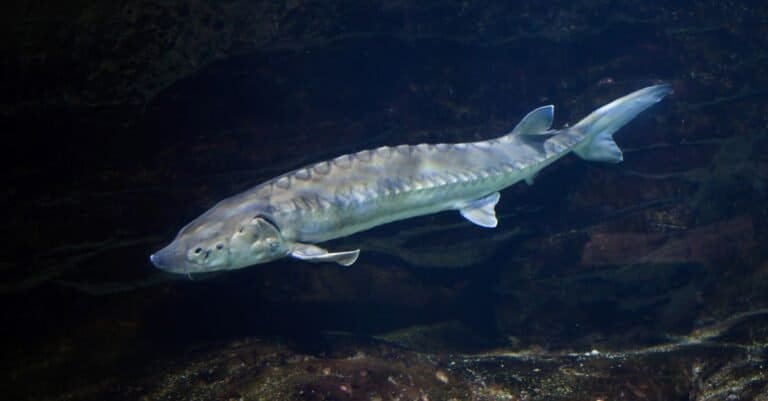
These massive bottom feeders have a prehistoric look and can grow to incredible lengths.
©Geermy/Shutterstock.com
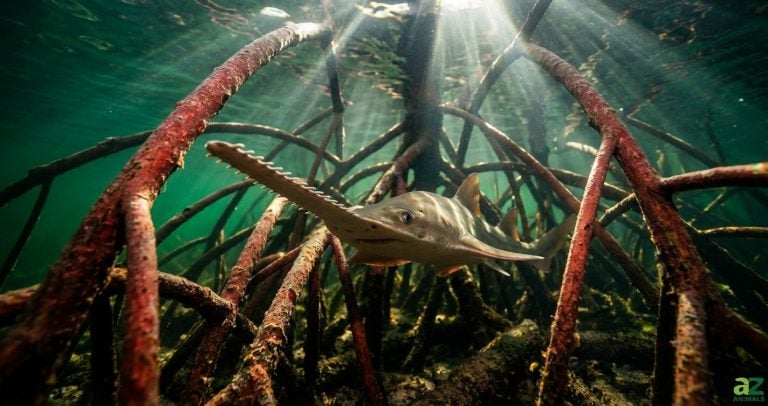
The lake sturgeon (Acipenser fulvescens) can grow to over 7 feet long. This fish is also commonly known as the rock sturgeon due to its prehistoric look. Lake sturgeon are bottom feeders that inhabit the bottoms of large lakes and rivers. These massive fish can reach weights of up to 300 pounds, though most individuals are much smaller. Their dorsal side is gray or dark olive, and their ventral side is white or yellow.
The diet of the lake sturgeon is varied; like most bottom-dwelling fish, it will essentially eat anything it can suck into its mouth. This includes insect larvae, snails, small fish, and crayfish. Adults are too large to be preyed on by other fish, except for lampreys (Petromyzontiformes). Lampreys are parasitic fish that feed on the bodily fluids of other fish.
5. Blue Shark
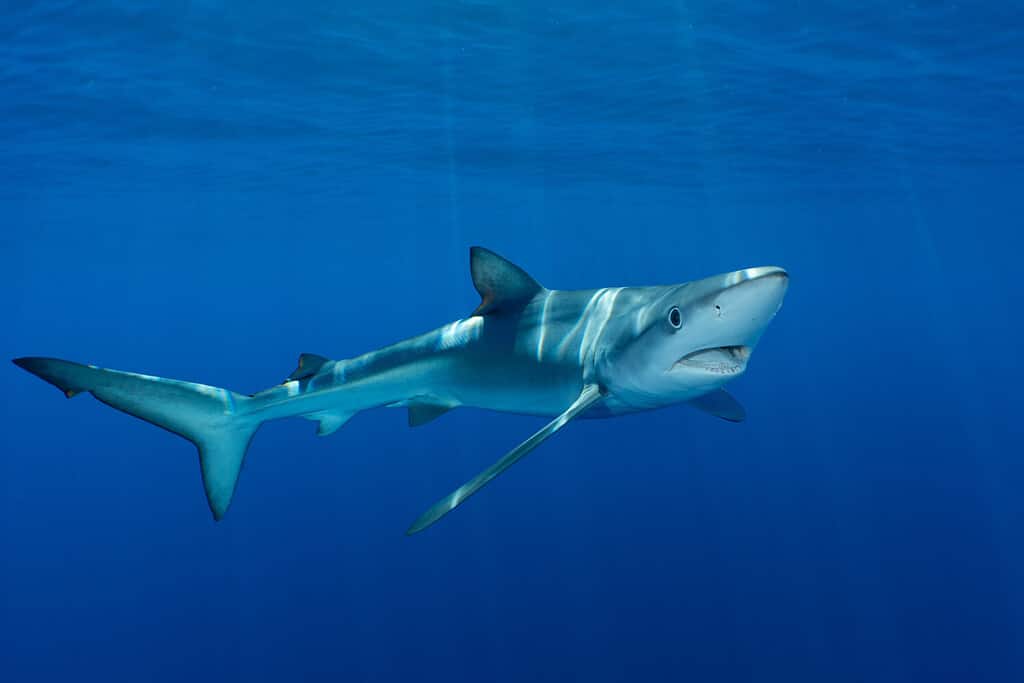
A relatively small to medium shark, the blue shark can be found along the Canadian coasts.
©Samy Kassem/Shutterstock.com
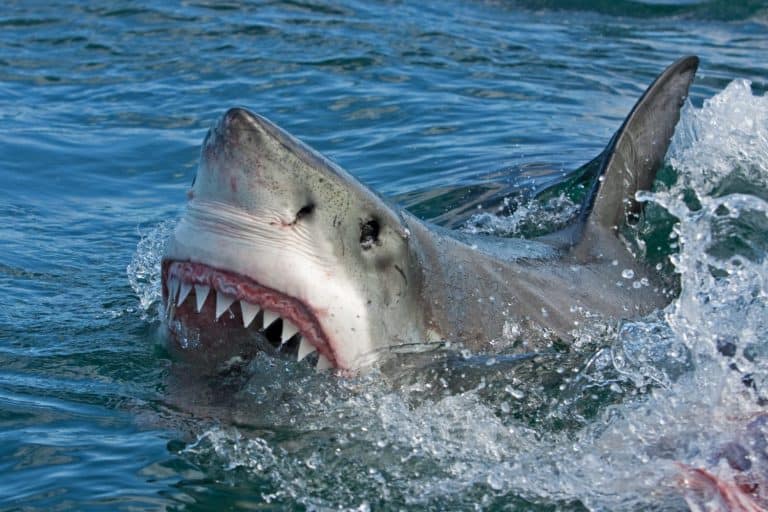
The blue shark (Prionace glauca) is named for the bright blue color of the upper half of its body. It has a long, slender body and a pointed snout. These sharks can reach lengths up to 13 feet, but are usually around 10 feet long. Although large, they are considered medium-sized sharks, weighing approximately 300 to 450 pounds.
Blue sharks inhabit oceans around the world, including Canadian waters. They are a migratory species and will travel great distances in search of food. They eat a variety of sea life, including small fish, squid, octopus, and other sharks. These sharks are notoriously curious and will often get close to fishing boats. Fortunately, they are not typically aggressive toward humans.
4. Atlantic Bluefin Tuna
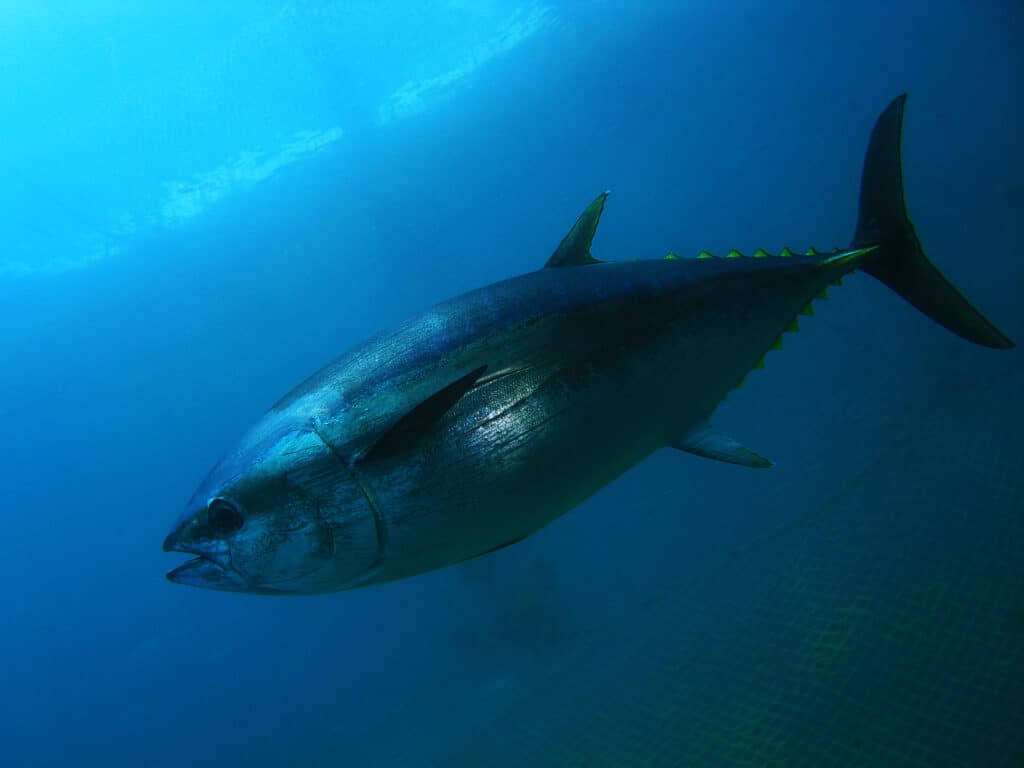
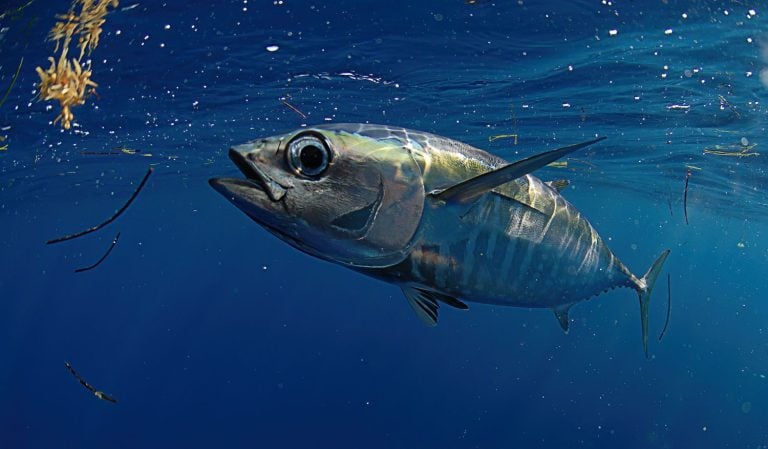
Growing to unbelievable sizes, Atlantic bluefin tuna is one of the largest fish and the largest tuna species.
©Alexius Sutandio/Shutterstock.com
Atlantic bluefin tuna (Thunnus thynnus) are one of the most prized species of tuna, often considered the Rolls-Royce of fish. A pound of high-quality bluefin tuna can sell for up to $5,000 per pound. In 2019, one Atlantic bluefin tuna sold for a record-setting $3.1 million. Atlantic bluefin tuna have a powerful body and are capable of propelling themselves to speeds up to 43 miles per hour.
Atlantic bluefin tuna have smooth skin covered with small, embedded scales, which are dark blue or black on top and silvery-white on the belly. These fish can grow to impressive lengths and weights, averaging approximately 6.5 feet long with average weights of approximately 500 pounds.
This mammoth fish inhabits the Atlantic Ocean, including in waters off the coast of Canada. They are migratory fish and will travel thousands of miles to reach warmer waters and new feeding and spawning grounds as the seasons change. Atlantic bluefin tuna have a fierce appetite. They eat a range of aquatic life, including smaller fish, squid, herring, and mackerel.
3. White Sturgeon
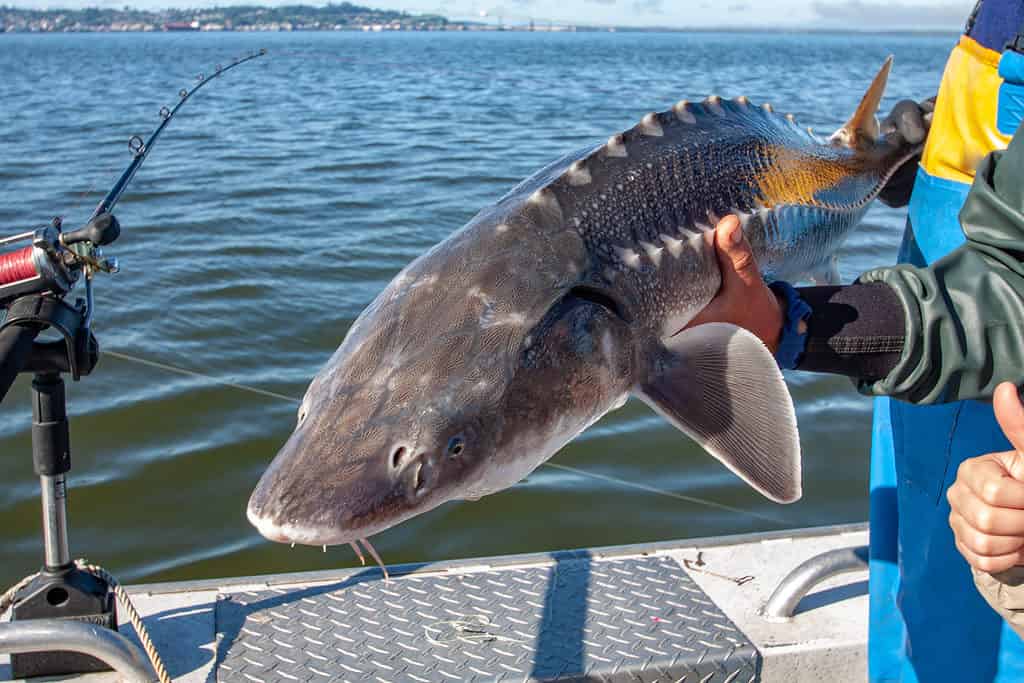
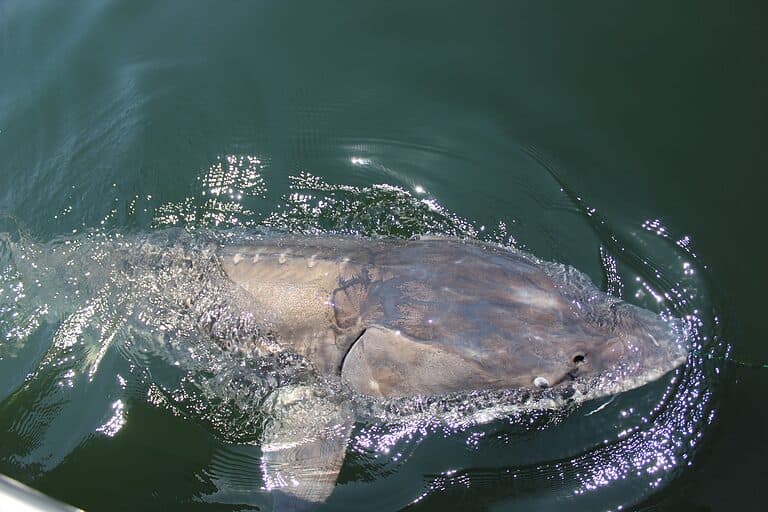
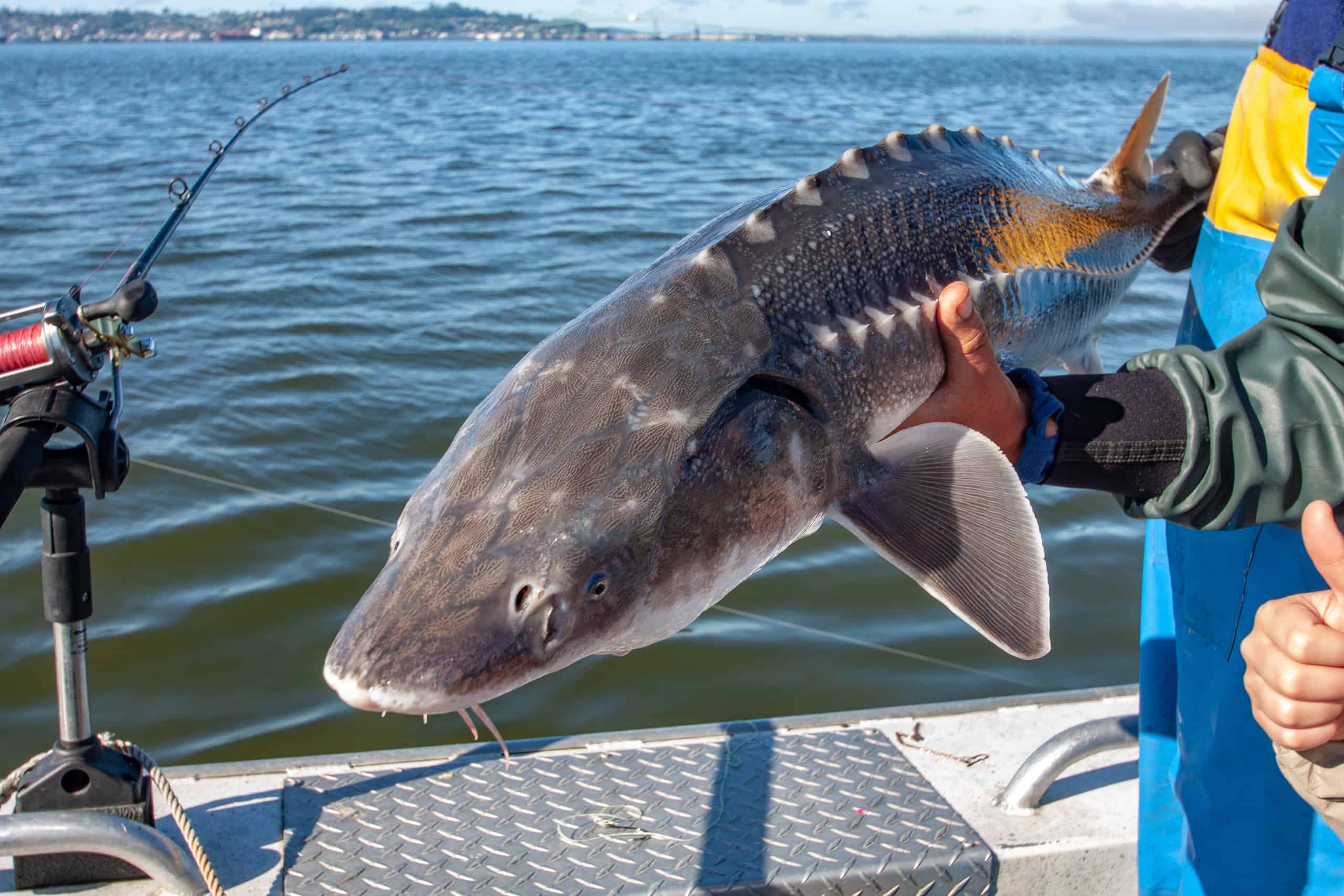
The largest freshwater fish in North America, white sturgeon can grow to over 11 feet long.
©CSNafzger/Shutterstock.com
The white sturgeon (Acipenser transmontanus) is the largest freshwater fish in Canadian waters and in all of North America. The largest confirmed white sturgeon was 11.7 feet in length and weighed 1,100 pounds. However, there have been unconfirmed reports of white sturgeon 20 feet long. Despite their name, white sturgeon are not predominantly white. Instead, their dorsal side is grey or brown, while their ventral side is white. These fish do not have scales; instead, they have rows of scutes, which are bony plates.
The white sturgeon inhabits both freshwater and saltwater bodies. They can be found in Canada, the United States, and Mexico. These fish swim through estuaries to move upriver to spawn. White sturgeon are carnivores and eat other fish, small crustaceans, and aquatic insects. Being as massive as they are, white sturgeon rarely fall prey to other animals. However, as juveniles, these fish face predation from larger fish, such as salmon and sharks.
2. Greenland Shark
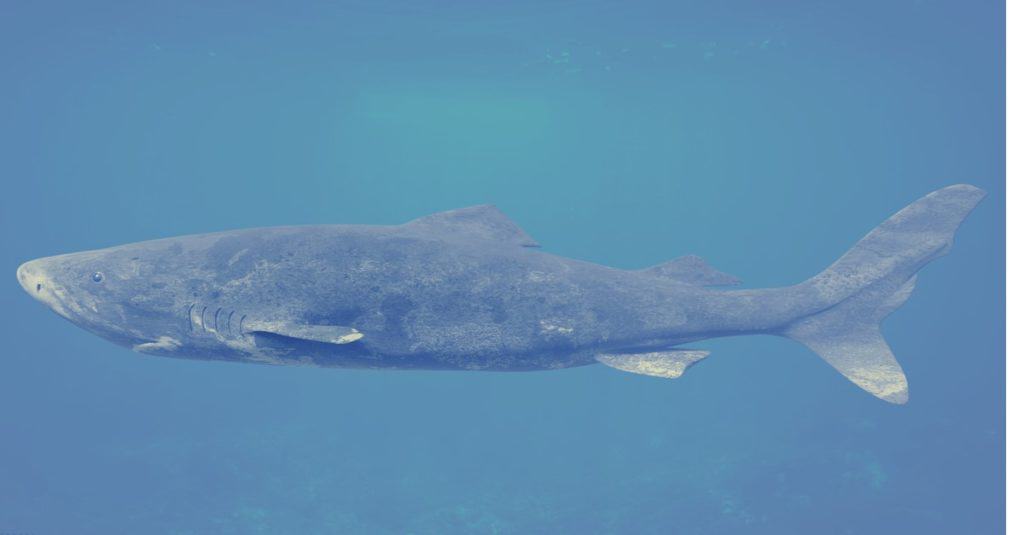
These sharks can survive in extremely cold temperatures and are the longest-living vertebrate animals.
©Dotted Yeti/Shutterstock.com
The Greenland shark (Somniosus microcephalus) is a unique species found in the cold waters of the North Atlantic Ocean. These sharks are among the longest-lived vertebrates on Earth, often living for hundreds of years. Their dark gray to brown skin is thick and rough. They can reach lengths of up to 21 feet and weigh over 2,200 pounds, though most individuals are smaller.
The Greenland shark has adapted to survive in near-freezing waters and is found at depths of 800 to 7,200 feet. These sharks are opportunistic feeders that scavenge for their food, collecting anything that sinks to their depths. Unfortunately, due to their long lifespans and slow growth rate, they are subject to overfishing and environmental changes.
1. Basking Shark
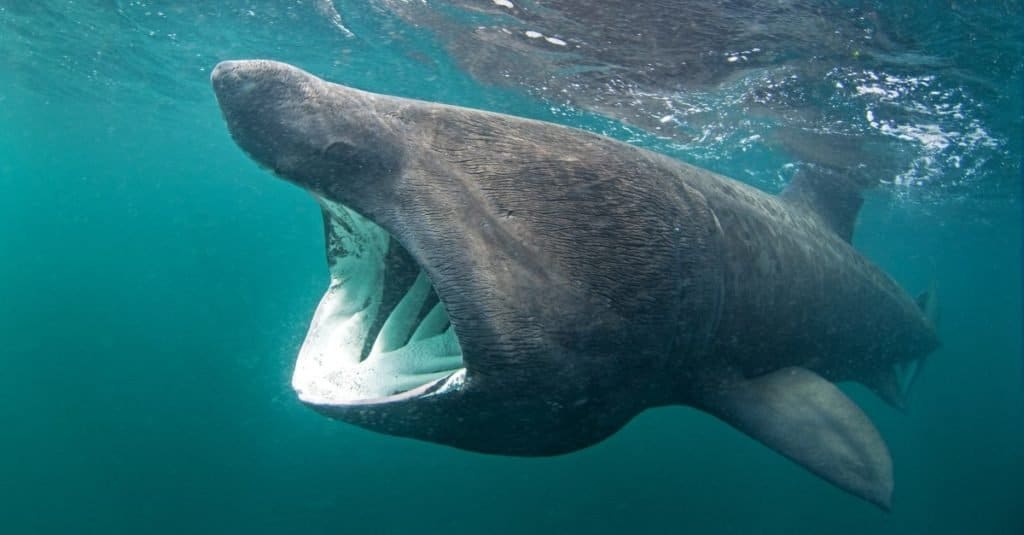
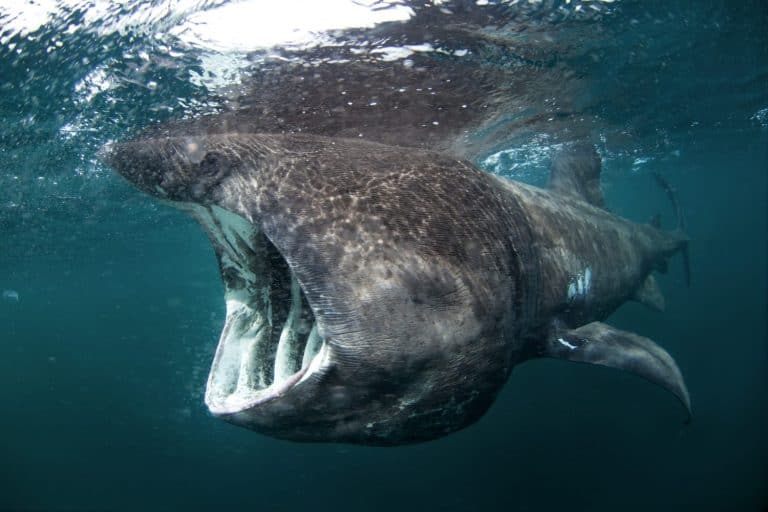
The most impressive feature of the basking shark is its mouth, which opens up to 3 feet wide.
©Martin Prochazkacz/Shutterstock.com
Coming in second place to the whale shark as the world’s largest fish, the basking shark (Cetorhinus maximus) is the biggest fish found in Canadian waters. On average, basking sharks measure between 26 and 33 feet long and weigh approximately 10,250 pounds. They are named for their tendency to swim near the surface of the water and bask in the sun. Basking sharks are slow-moving sharks that lack teeth. Instead, they have a mouth full of gill rakers, allowing them to filter feed.
Basking sharks live in coastal waters and often migrate, following the movements of plankton. They feed by swimming with their mouths wide open, catching small fish, plankton, krill, and copepods. These sharks are an endangered species due to their declining populations. They have been overfished for their liver oil and fins, and are now protected in many countries worldwide, including Canada.