
Quick Take
- This fish has been virtually unchanged for 10 million years, yet it pulls off something behaviorally flexible that few species can manage. Meet this ancient fish →
- Scientists assumed animals follow fixed behavioral rules regardless of environment, but sticklebacks just proved that assumption wrong. See the experiment →
- Murky water is bad for fish, but that is not always the case. Sticklebacks do something unexpected when visibility drops that actually gives them an edge. See how they adapt →
Environments change, and nature adapts. But environments are changing rapidly, in considerable part due to the substantial impact of human beings. These changes are evident in bodies of water as increased murkiness. Whether it is farming, mining, or pollution, human development increases the turbidity of water. Human activity stirs up algae, mud, and silt, making the water murkier and making it harder for aquatic creatures to find food, companions, or detect threats. A recent study, however, suggests that murky water may increase the sociability of fish.
Researchers from Bristol’s School of Biological Sciences examined the behavior of three-spined stickleback shoals in response to water turbidity. While comparing shoals of small and larger sizes, the researchers found that even in the murkiest of waters, fish like three-spined sticklebacks compensate by working together. Though they struggled to find suddenly appearing food in murky water, the fish regrouped and changed their swimming behavior. This allowed groups of sticklebacks to find food more quickly than if they searched on their own. Let’s learn more about this new study and what it suggests about fish adaptability in rapidly changing environmental conditions.
Continue reading
Three-Spined Sticklebacks
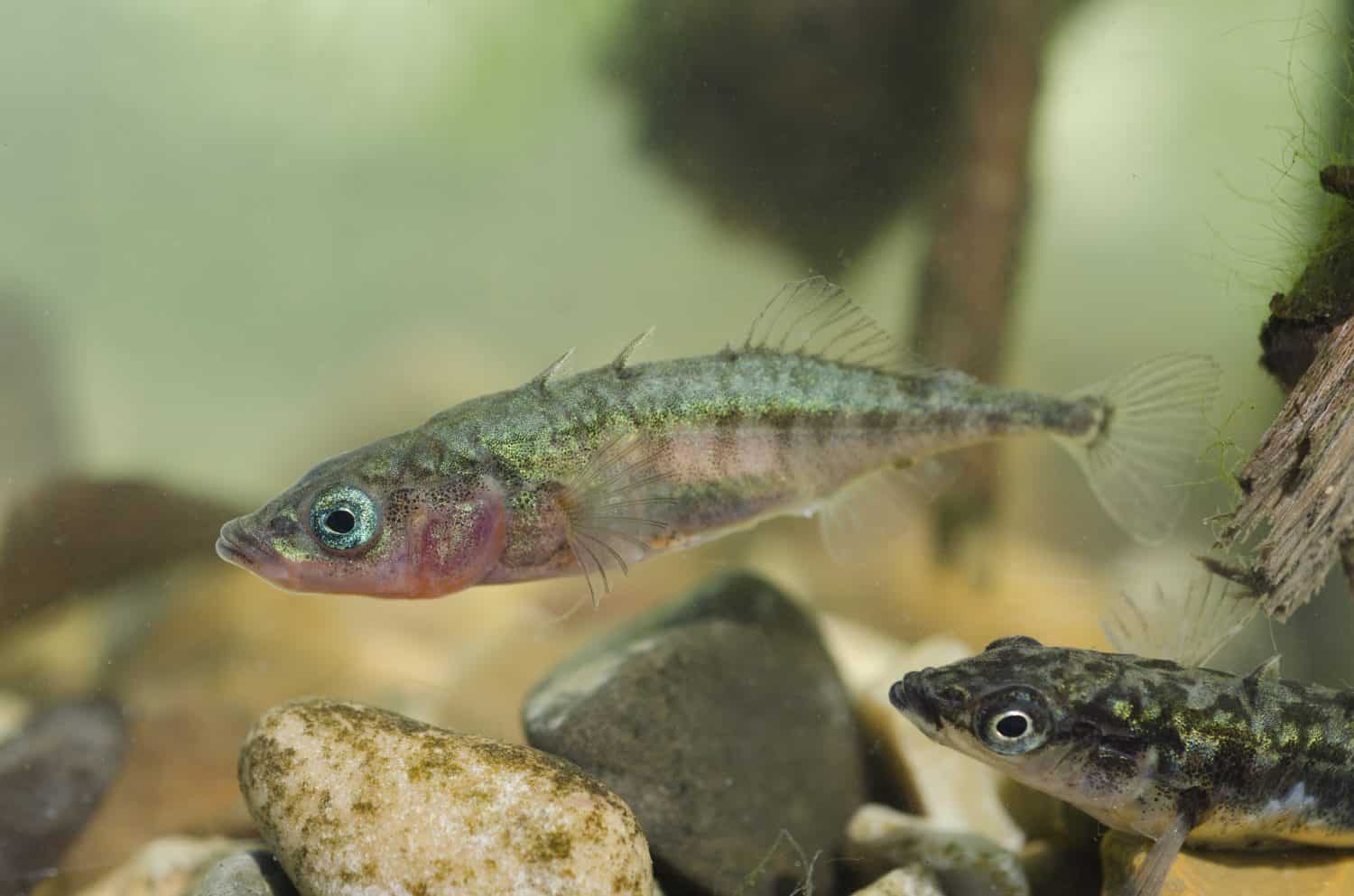
The adaptability of three-spined sticklebacks and their relative abundance have made them a subject of regular study for scientists.
©jack perks/Shutterstock.com
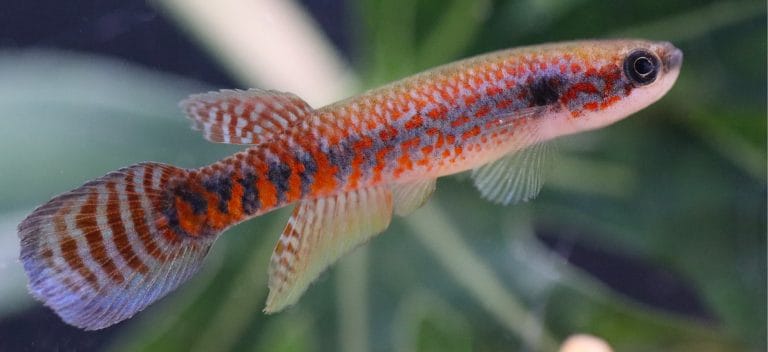
Before learning about their coordination abilities, it’s important to get a sense of the three-spined stickleback. This fish, Gasterosteus aculeatus, is native to most bodies of water north of the 30th parallel north latitude. The oldest record of the species comes from the Monterey Formation of California, some 13 million years ago. Compared to this fossil and to modern specimens, three-spined sticklebacks remain morphologically unchanged. Despite this near-living fossil status, three-spined sticklebacks show remarkable adaptability, versatility, and paradoxically, considerable morphological variation across populations.
Many populations are anadromous, meaning they live in the sea but breed in freshwater. This likely makes them tolerant of changes in salinity levels. They also show some unusual and elaborate mating rituals. Aspects of this process include defending territory, building nests, and even taking care of eggs. Sticklebacks are known for hosting parasites. Simultaneously, they show resistance to said parasites, suggesting a co-evolutionary relationship between host and parasite.
Three-spined sticklebacks have many unique qualities, which have made them of great scientific interest. Their abundance in the Northern Hemisphere and ease of care in aquariums also make them popular subjects for research. Their tolerance of salinity changes makes them of interest to physiologists, and their breeding behavior makes them a fish commonly studied by ethologists. These fish are also remarkably social, which brings us to the latest study regarding their interactive behaviors.
Muddy Waters
Rapid human development near bodies of water results in increasingly turbid waters. Researchers from Bristol’s School of Biological Sciences wanted to see what effect muddy water had on the foraging abilities of three-spined sticklebacks. To begin, the researchers purchased a group of three-spined sticklebacks and housed them at the University of Bristol under non-breeding conditions. They kept them in glass tanks and fed them bloodworms and pellets daily.
For testing trials, the researchers split the 72 fish into two tanks. They alternated the tanks between clear water and turbid water created using kaolin clay. After two minutes of acclimatization, the researchers introduced red-tape-wrapped pipettes as a foraging stimulus. Each time a fish swam the equivalent of two body lengths, researchers ejected a bloodworm as a reward. This resulted in six presentations per trial and, ultimately, 699 presentations ready for analysis.
The Results
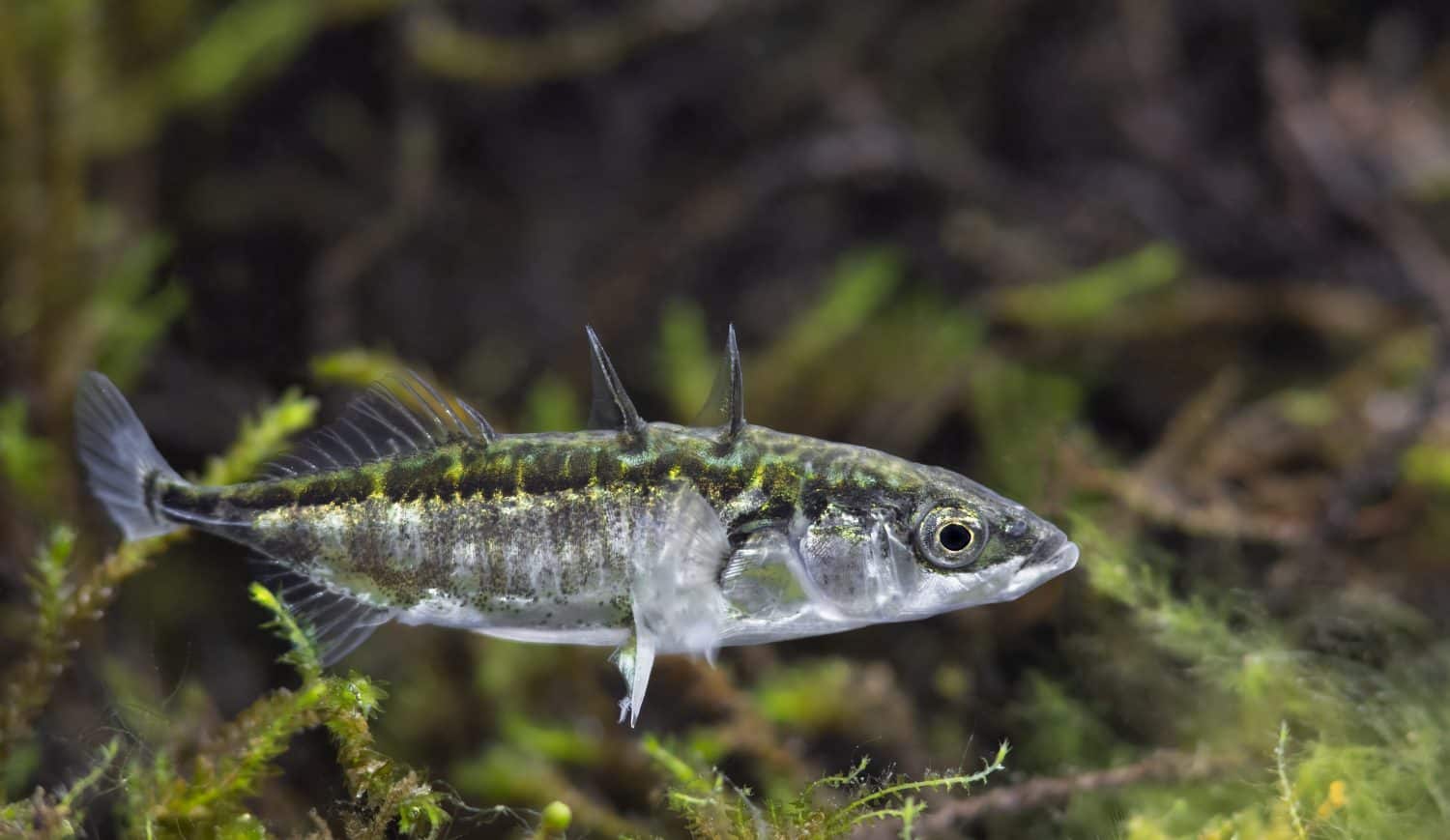
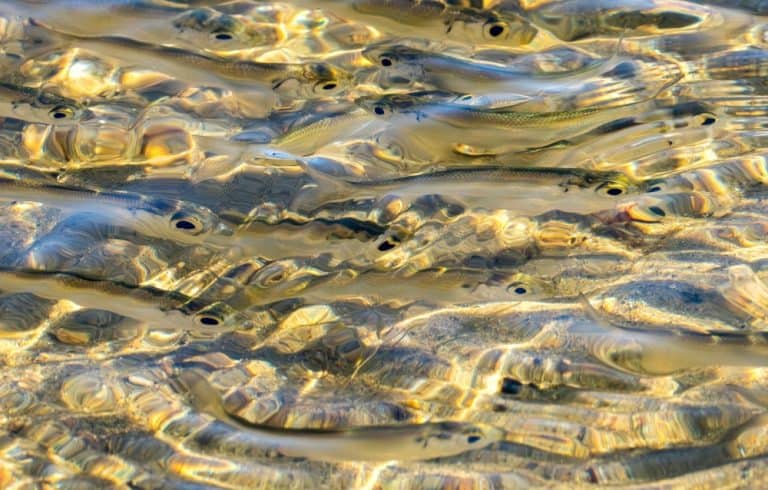
Researchers found that sticklebacks in small groups were able to adapt to murky water conditions and find food relatively quickly.
©Justas in the wilderness/Shutterstock.com
Some of the results were expected, but others were surprising. Fish placed in murkier water took longer to find food than those in clear water. Yet the grouping of fish considerably influenced their ability to find food quickly. Sticklebacks in small groups in murky water found food quickly when they remained in a tight grouping and swam in the same direction together. The larger the group, the more coordination was required, which slowed the sticklebacks’ ability to find food.
Even before food was introduced, small groups of sticklebacks in murky water stuck close together, actively responding to the behavior of nearby swimmers. These behaviors suggest that even in murky conditions, sticklebacks can adapt by working together. It also suggests that enhancing social behavior is a survival tactic, as it allows them to capitalize on food opportunities.
As co-author of the study, Dr. Sean Rands explained to Eureka Alert that stickleback behavior was almost improvisational. He said, ‘It’s interesting that the fish are changing their shoaling behaviour to match the environment. When we are studying grouping behaviour in animals, researchers often assume that there is a fixed set of behavioural rules that are used in all environments.’
Such behavior offers a glimmer of hope amidst rapidly changing environmental conditions. Despite massive changes brought to water sources in Europe and North America, fish like the stickleback can adapt to even large changes and survive.