
Quick Take
- A Discovery Channel shark stunt backfired spectacularly, and the chaos it caused reveals something real lurking in the Great Lakes.
- One invasive fish in the Great Lakes can survive on land for days, and it is not the one you would expect. Meet the land-walking invader →
- A parasite already established in the Great Lakes nearly wiped out an entire species, and the damage happened faster than anyone anticipated. See the trout collapse →
- A fish with human-like teeth has already been spotted in Great Lakes waters, and experts aren't sure how long it's been there. Track the Pacu sightings →
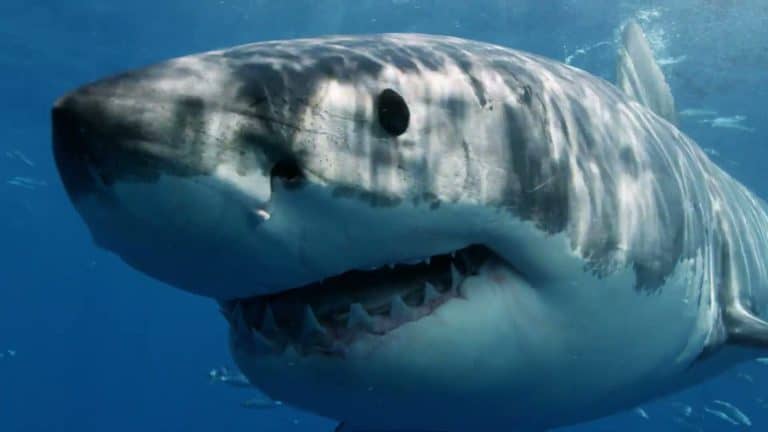
A marketing ploy for the Discovery Channel’s Shark Week backfired after they showed purported footage of a bull shark swimming in Lake Ontario. Though intended as a lighthearted promotional stunt, it triggered widespread public concern. They had to come clean about the stunt earlier than planned and were quick to admit that it was a life-like prosthetic shark. There are no sharks in the Great Lakes, but there are other dangerous fish that inhabit the region. Continue reading to learn about the most dangerous fish in the Great Lakes.

There are a few dangerous fish lurking in the Great Lakes.
©iStock.com/Posnov
Sea Lamprey
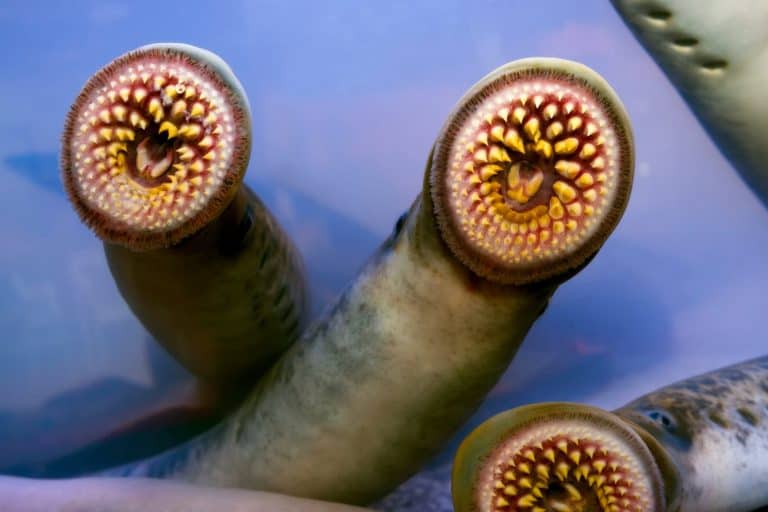
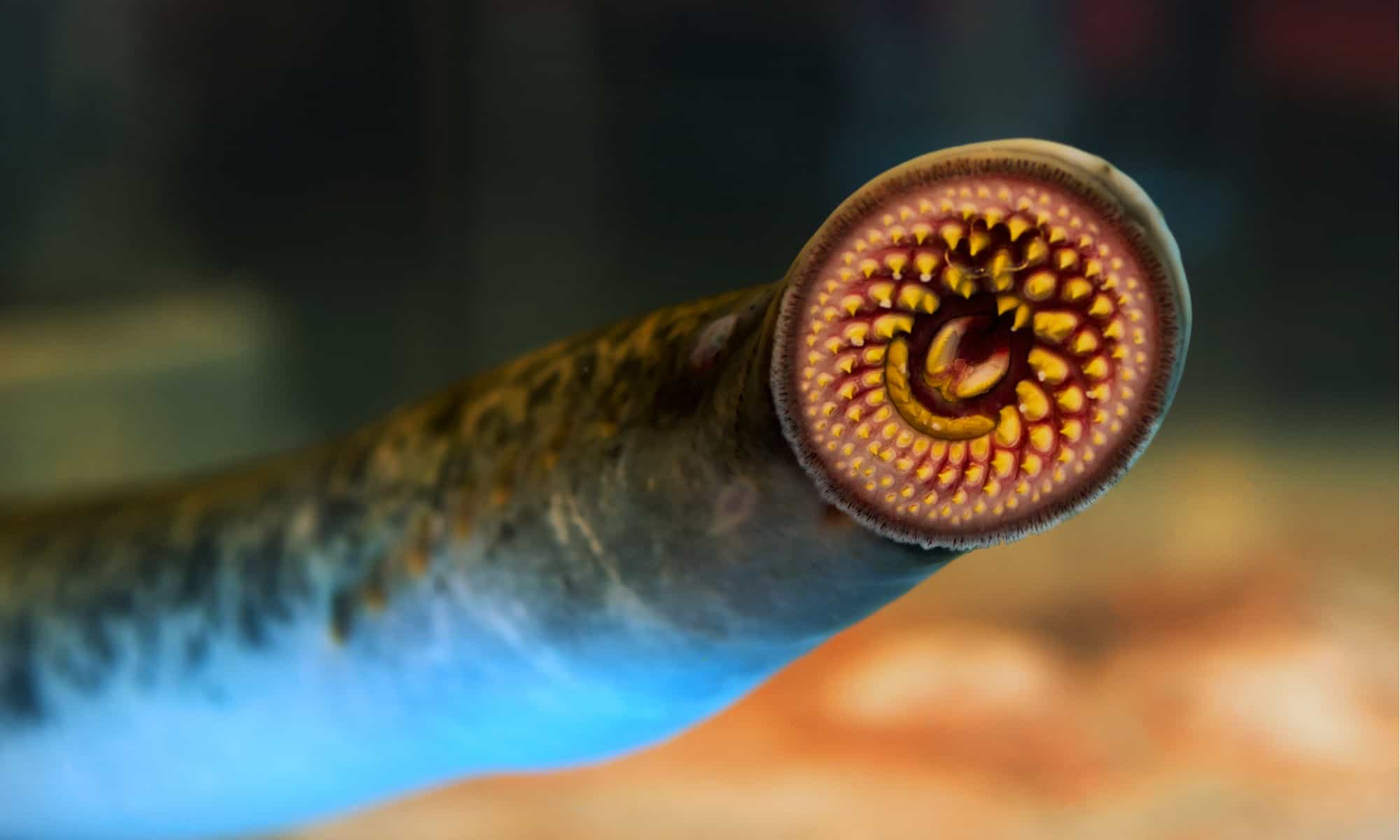
The sea lamprey (Petromyzon marinus) is a primitive, jawless parasitic fish that has wreaked havoc on the Great Lakes ecosystem since invading the region via shipping canals in the early 20th century. Known as vampire fish, lampreys attach to native fish like lake trout and salmon using their suction-cup mouth lined with concentric rows of sharp teeth. They rasp away the victim’s scales and skin to feed on its blood and body fluids.
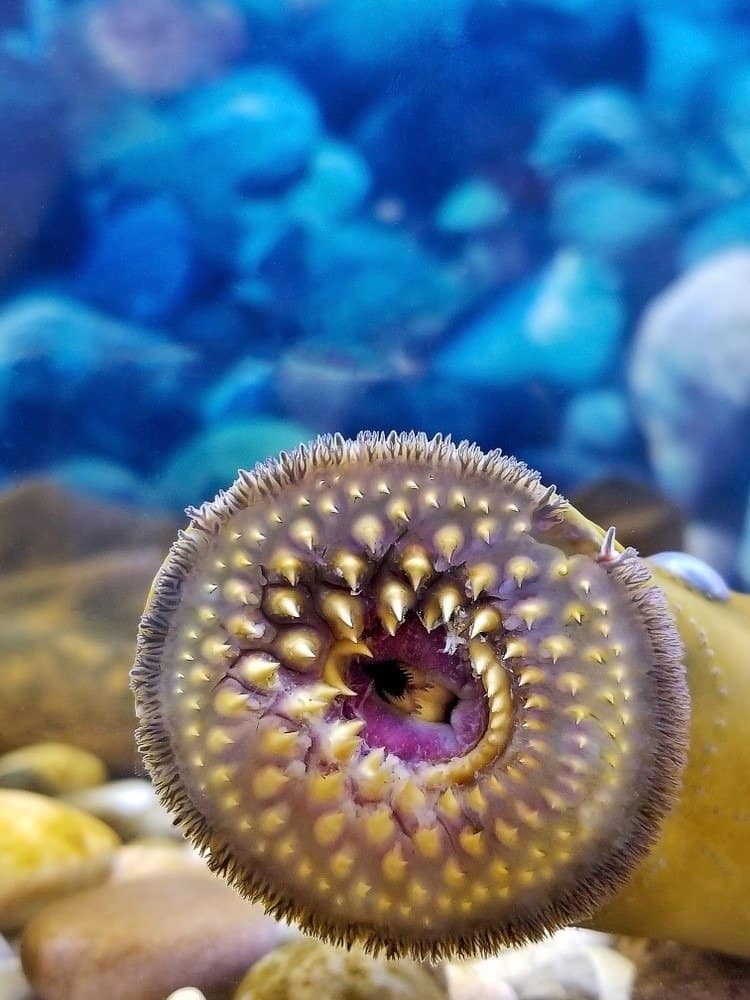
The sea lamprey is strictly an ecological and economic threat that does not pose a physical danger to humans.
©Maria Dryfhout/Shutterstock.com
Because native fish did not evolve alongside this predator, the vast majority of attacked fish die, either from blood loss or subsequent infections; a single sea lamprey can destroy up to 40 pounds of fish in its lifetime. Despite its terrifying appearance and destructive ecological impact, the sea lamprey does not pose a threat to humans.
The sea lamprey preys exclusively on cold-blooded aquatic life and will not hunt humans. While there are rare instances of a lamprey accidentally latching onto a swimmer in the water, they can be easily peeled off and do not cause serious harm.
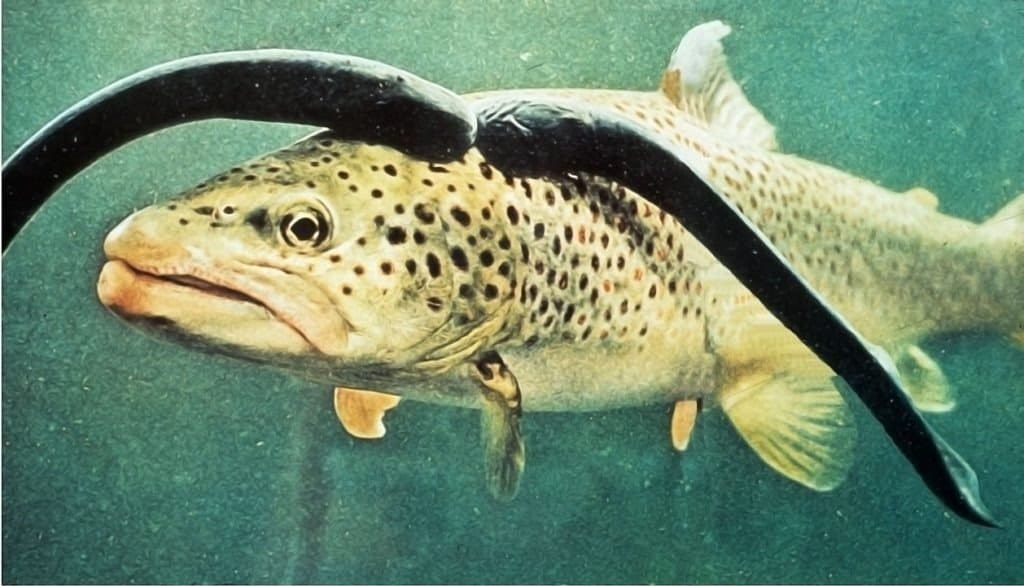
This brown trout has two sea lampreys attached to its head.
©Sweeting, Roger [Photographer] (2016) Sea lamprey parasitising brown trout. Freshwater Biological Association, UK / Creative Commons – Original / License
Northern Pike
The Northern Pike (Esox lucius) is a large, aggressive predatory fish native to the Great Lakes region, where it plays a vital role in balancing the aquatic food web by controlling prey populations. Although they do not pose an active threat to humans, they can still inflict minor physical dangers. Their razor-sharp teeth and aggressive striking behavior can cause painful puncture wounds or lacerations to careless anglers handling them, and swimmers occasionally experience accidental bites if a pike mistakes a flashing foot or hand for prey in murky water.
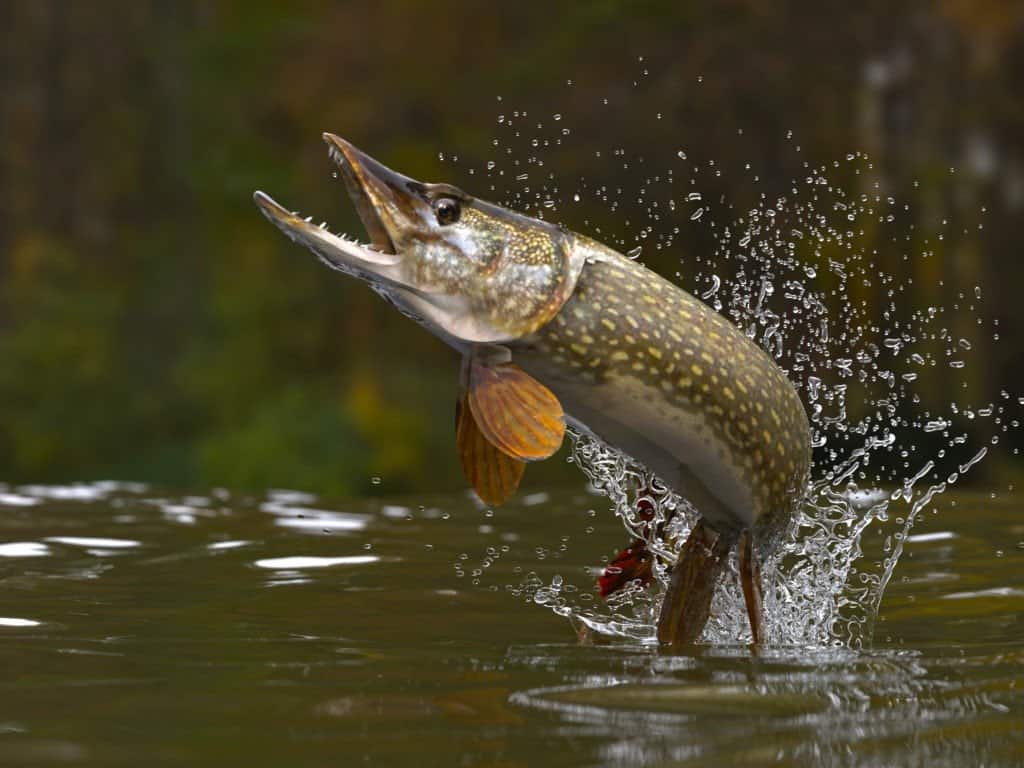
Northern pike will occasionally mistake a human hand or foot for a meal.
©bekirevren/Shutterstock.com
Lake Sturgeon
The lake sturgeon (Acipenser fulvescens) is a prehistoric, long-lived species native to the Great Lakes, where it serves as a critical indicator of ecosystem health. Rather than threatening the Great Lakes ecosystem, the lake sturgeon population is highly vulnerable due to human activities such as overfishing, pollution, and dam construction that blocks their spawning grounds.
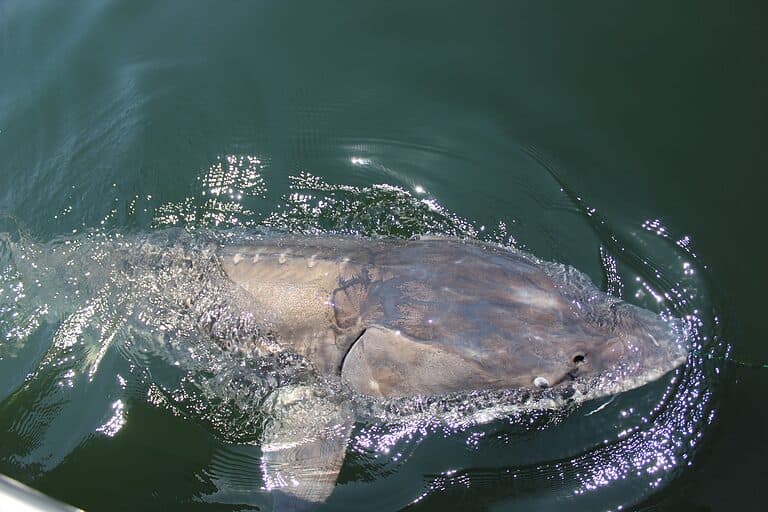
Although sturgeon are not aggressive, they are famous for breaching, leaping several feet into the air. When you combine a fish that can grow up to 8 feet long and weigh in excess of 200 pounds with its armored, bone-like plates (called scutes), a breaching sturgeon essentially becomes an airborne missile. If a boat or personal watercraft is traveling at high speeds and collides with a leaping sturgeon, the impact is catastrophic.
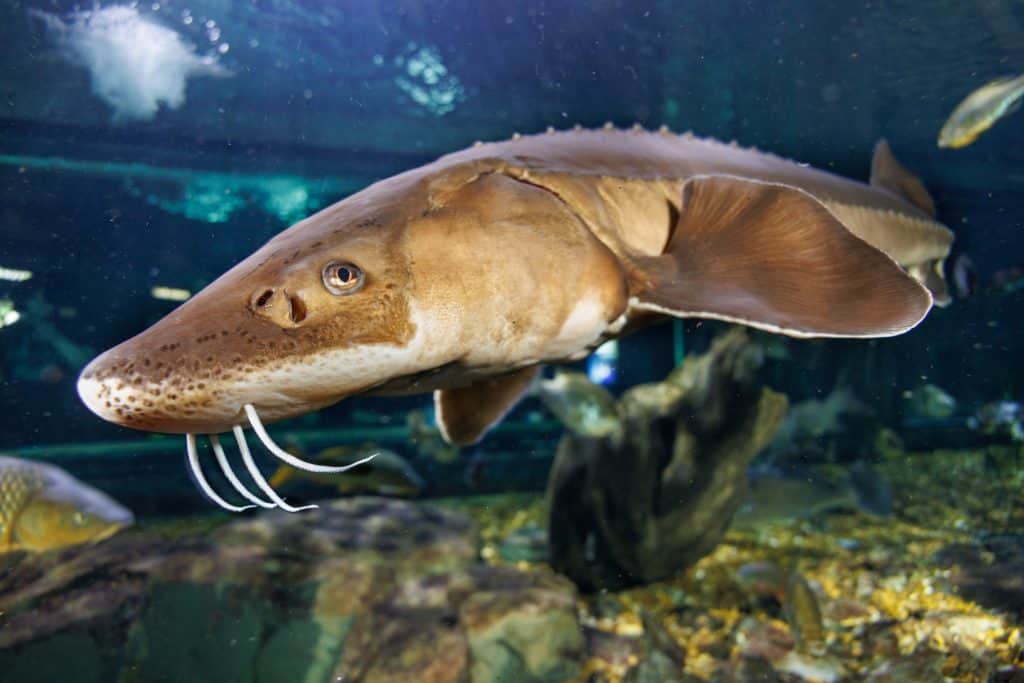
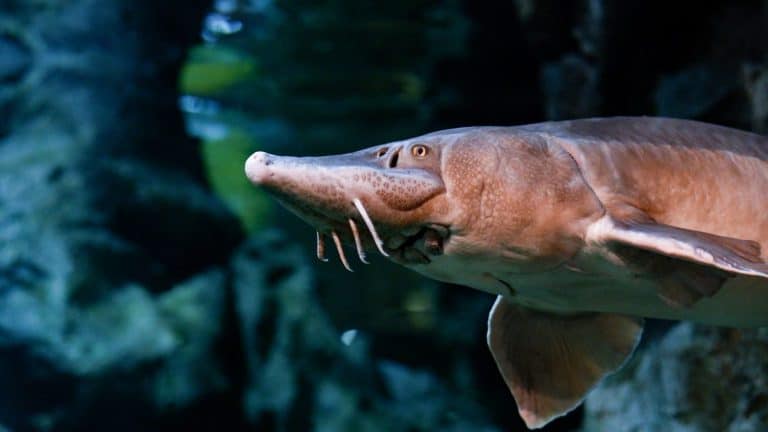
Lake Sturgeon are not inherently aggressive, but that doesn’t mean they can’t hurt you.
©Doug Strickland/Tennessee Aquarium
Real-world incidents, most notably involving Gulf sturgeon (Acipenser oxyrinchus desotoi) in Florida rivers, have resulted in boaters suffering from concussions, fractured skulls and facial bones, ruptured organs, broken limbs, and in tragic cases, death.
Tadpole Madtom
The tadpole madtom (Noturus gyrinus) is a small species of catfish that is native to the Great Lakes basin. Its primary danger lies in its pectoral and dorsal fins, which contain sharp, locking spines equipped with venom glands.
While its venom effectively deters predatory fish, it presents a painful hazard to humans, primarily anglers or researchers who mishandle the fish. A puncture wound from a tadpole madtom delivers a toxic sting often compared to a bee sting.
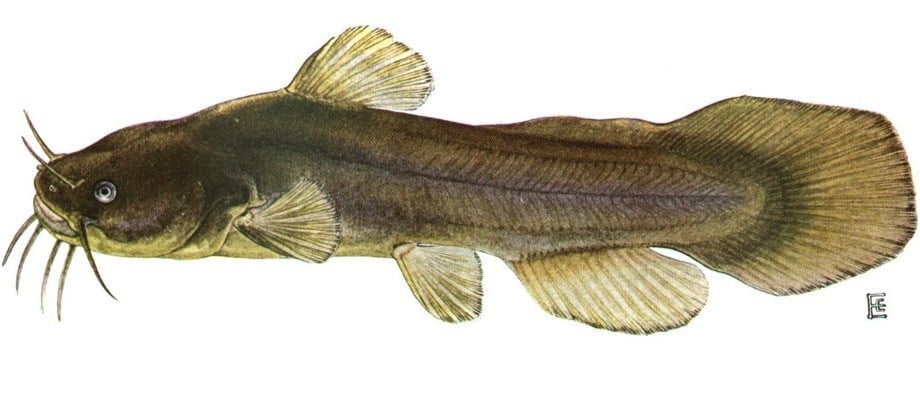
The tadpole madtom is said to have a painful sting.
©Ellen Edmonson and Hugh Chrisp / Public Domain – Original / License
While this venom is rarely dangerous or life-threatening to humans on its own, the real medical risk stems from secondary bacterial or fungal infections introduced deep into the tissue by the spine. A minor tadpole madtom sting should be monitored closely and may require professional medical attention in cases of a severe reaction or infection.
Bullhead Catfish
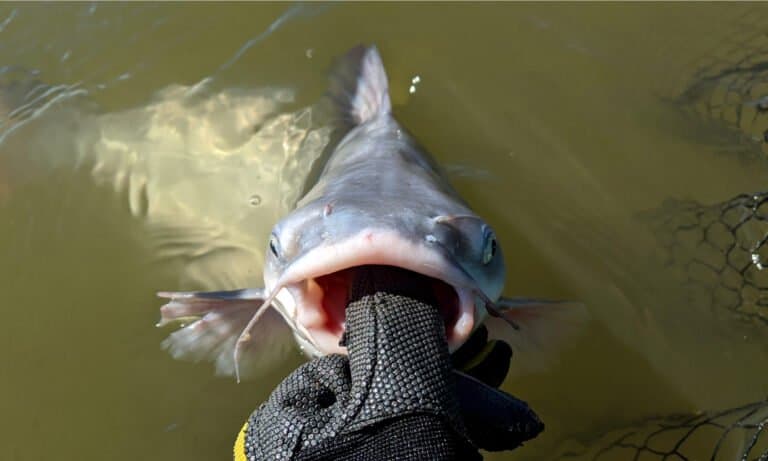
All three major bullhead species, the brown bullhead (Ameiurus nebulosus), the black bullhead (A. melas), and the yellow bullhead (A. natalis), are native to the Great Lakes basin. These three species have nearly identical venom, with the severity of their stings dependent upon the fish’s size and age rather than its species. Smaller, younger bullheads possess needle-sharp fins and highly active venom glands, whereas larger adults develop duller spines and diminished glands, according to a study conducted at the University of Michigan, Ann Arbor (Wright, 2009). A bullhead catfish sting produces an immediate, sharp, intense burning or throbbing pain, very similar to a severe bee or wasp sting.
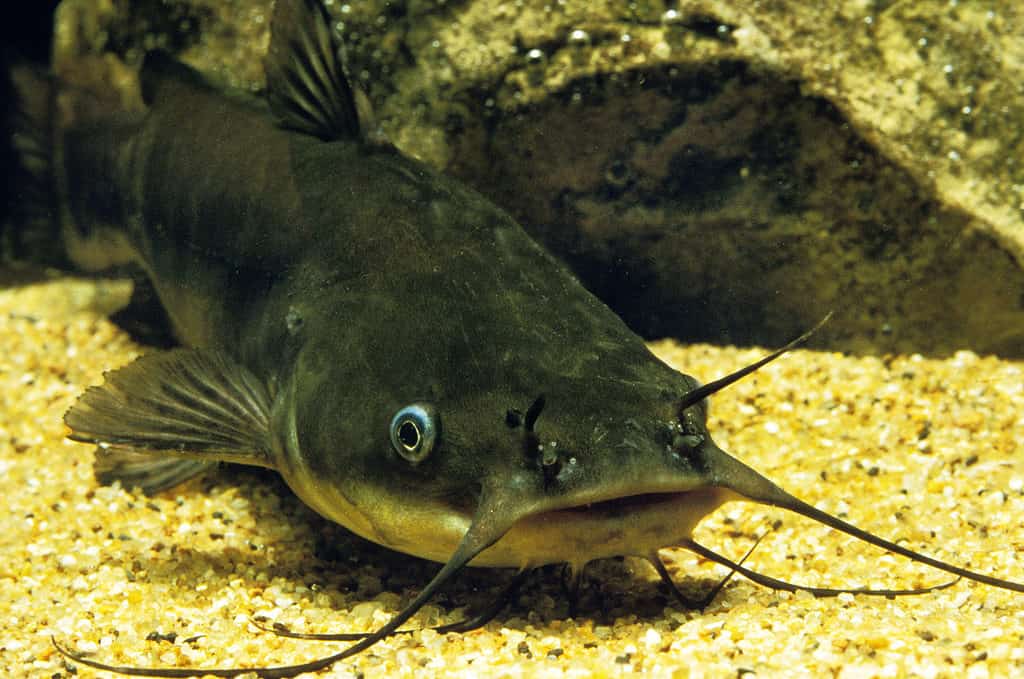
Bullhead catfish have many nicknames, including mud cat, mud pout, and horned pout.
©Slowmotiongli/Shutterstock.com