
Tigers are the largest big cats in the world, and currently, six subspecies remain in the wild. Three subspecies of tigers have gone extinct in the past century, and more may follow as their populations continue to decline. Unfortunately, all tigers are classified as either Endangered or Critically Endangered by the IUCN Red List. Some subspecies, such as the South China tiger, is already possibly extinct in the wild. Tigers are loved for their beauty, size, and strength, and these majestic creatures have walked the earth for millions of years. Discover the largest and strongest tiger species ever to live, a monster of its time that lived thousands of years ago.
What Is the Ngandong Tiger?
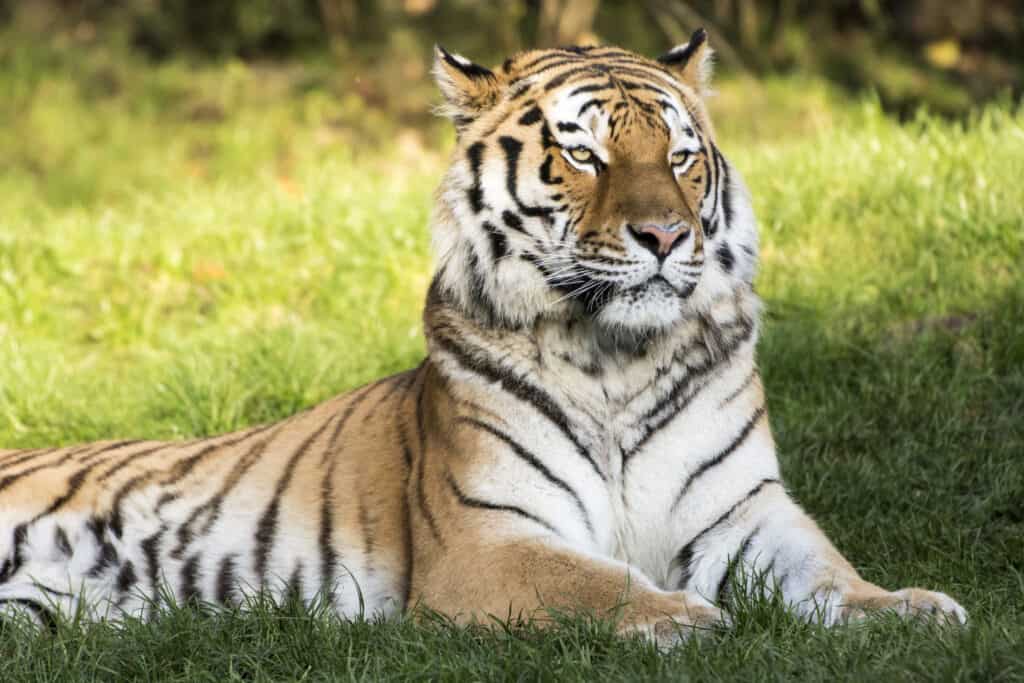
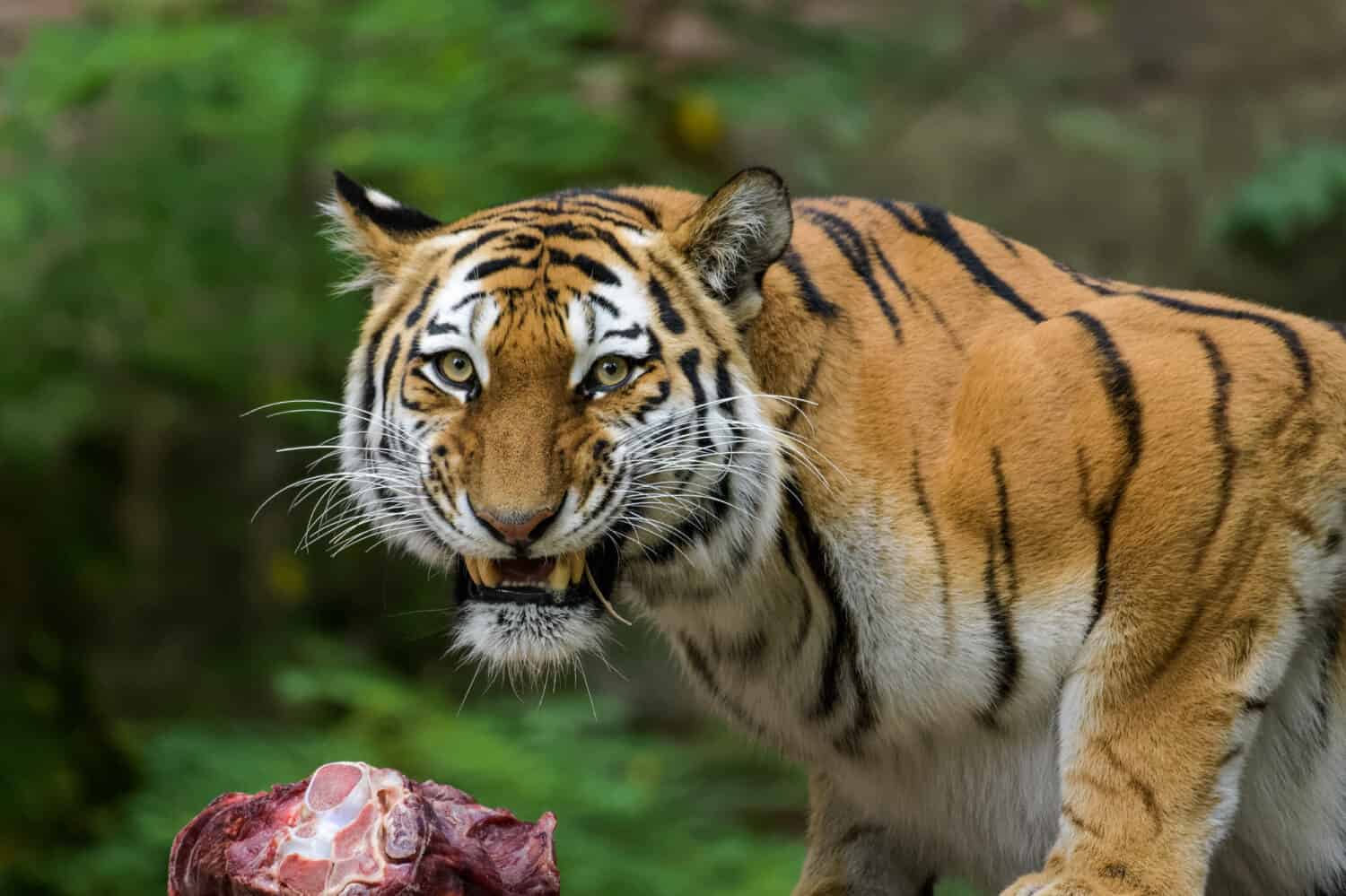
In the Pleistocene epoch, tigers evolved to become very large to compete with the other large carnivores.
©Gerckens-Photo-Hamburg/Shutterstock.com
The Ngandong tiger (Panthera tigris soloensis) is believed to be the largest and strongest tiger ever to grace the planet. It is an extinct subspecies of tiger that lived during the Late Pleistocene epoch, approximately 100,000 to 50,000 years ago. Its range was the Sundaland region of Indonesia, which includes modern-day Java, Borneo, and Sumatra. The tiger’s common name refers to Ngandong village, near the area where the remains were found. Only seven fossils of the Ngandong tiger are known to exist.
In any era, tigers are apex predators and key species in the habitats they live in. During the Pleistocene epoch, tigers in the Sundaland region evolved to become very large to compete with the other large carnivores they lived with, such as Megacyon merriami, or Merriam’s dog, and machairodonts, which are sabre-toothed cats. Early human fossils of the Homo erectus were also found in the area near the Ngandong tiger.
How Big Was the Ngandong Tiger?
The Ngandong tiger is estimated to have reached between 650 and 800 pounds, with some sources suggesting they could reach up to 880 pounds. Reconstructions estimate that the tiger stood nearly 4 feet tall at the shoulder, and some estimates suggest it reached a length of nearly 14 feet, including the tail.
However, the fossil record is incomplete. Size estimates are calculated based on the measurements of the bones in comparison to extant species, which makes accurate deductions challenging. If the largest estimates are correct, the Ngandong tiger would be the largest tiger species to have ever existed. However, if more conservative estimates are accurate, these tigers would have been about the size of modern Siberian tigers.
Ngandong Tiger Compared to Modern Tigers
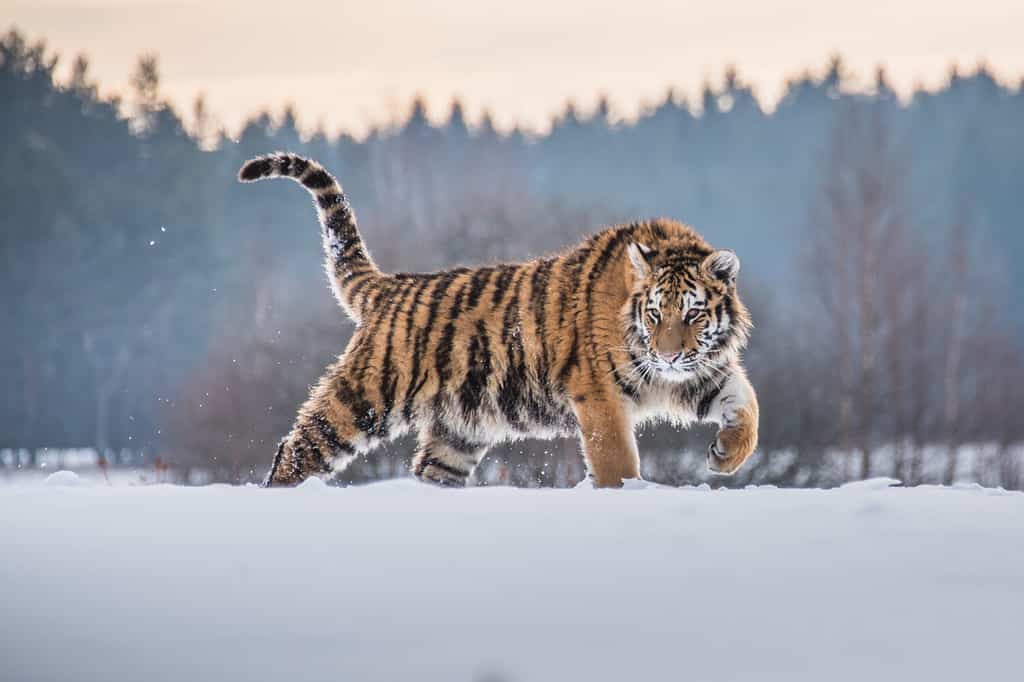
If conservative body mass and length estimates prove correct, the Ngandong tiger was the size of modern Siberian tigers.
©Vaclav Sebek/Shutterstock.com
The chart below compares the size of the Ngandong tiger to that of modern tigers. The tigers are listed by weight and length, with weight as the primary factor. Note that tigers are sexually dimorphic, and like most other big cats, males grow to be much larger than females. Length measurements include the tail.
| Tiger Subspecies | Average Length | Weight Range | Conservation Status |
|---|---|---|---|
| Ngandong Tiger (P.t. soloensis) | 14 feet | 650 to 880 pounds | Extinct (disappeared between 50,000 and 12,000 years ago) |
| Siberian Tiger (P.t. altaica) | 10 to 12 feet | 242 to 675 pounds | Endangered (approximately 500 to 600 left in the wild) |
| Bengal Tiger (P.t. tigris) | 8 to 10 feet | 220 to 575 pounds | Endangered (over 2,500 in the wild) |
| Caspian Tiger (P.t. virgata) | 8 to 10 feet | 375 to 530 pounds | Extinct (last seen in the wild in the 1970s, declared extinct in the 2000s) |
| Indochinese Tiger (P.t. corbetti) | 8 to 9 feet | 220 to 430 pounds | Endangered (approximately 250-350 left in the wild) |
| South China Tiger (P.t. amoyensis) | 7.5 to 8.5 feet | 220 to 386 pounds | Critically Endangered (possibly extinct in the wild; no confirmed individuals in the wild) |
| Javan Tiger (P.t. sondaica) | 6.5 to 8.2 feet | 165 to 310 pounds | Extinct (died out in the wild between the 1950s to 1980s) |
| Malayan Tiger (P.t. jacksoni) | 7.5 to 9.5 feet | 220 to 300 pounds | Critically Endangered (approximately 100 to 150 left in the wild) |
| Sumatran Tiger (P.t. sumatrae) | 7 to 8 feet | 200 to 265 pounds | Critically Endangered (approximately 500 to 600 left in the wild) |
| Bali Tiger (P.t. balica) | 6.2 to 7.6 feet | 143 to 220 pounds | Extinct (Likely died out in the wild in the 1950s) |
Why Did the Ngandong Tiger Go Extinct?

The fossils of the Ngandong tiger were found primarily near the village of Ngandong in Central Java, Indonesia.
©Nasrul Ma Arif/Shutterstock.com
Genetic research suggests the Ngandong tiger became extinct at the end of the Pleistocene era, though the exact cause is unknown. One theory is climate change. Southeast Asia’s forests were abundant in the early Pleistocene until grasslands became more dominant. By the end of the Pleistocene epoch, the climate shifted from forests to grasslands, then back to rainforests. These changes have been suggested as one of the causes of the extinction of large megafauna. Early humans may also have played a role in the Ngandong tiger’s extinction.
Unfortunately, modern tigers are also on the verge of becoming extinct. If not protected now, they may suffer the same fate as the Ngandong tiger. Poaching has been one of the main reasons for the dramatic decline in modern tiger populations. Today, habitat loss — estimated at 95% of their historical range — remains a critical threat, alongside ongoing poaching.
Humans have destroyed tigers’ habitats by building infrastructure and clearing forests. Some estimates suggest tigers could become extinct within just a few decades. Strengthening and enforcing international laws around poaching and trafficking, as well as maintaining the natural forests tigers live in, are the only ways to preserve them in the wild.