
Quick Take
- One fish on this list buries itself in sand, shocks its prey with built-in electric organs, and it lives closer to shore than you'd think. Meet the northern stargazer →
- One of these N fish is nearly invisible in the water, though the moment it dies, everything changes. See the transparent noodlefish →
- A critically endangered shark on this list is so often misidentified that researchers have struggled to track it, and it doesn't even live in the open ocean. Discover this endangered shark →
- The largest fish starting with N can reach a weight that dwarfs most freshwater species, and it thrives across an entire continent's worth of rivers and lakes. Explore the massive Nile perch →
There are many fish with common names that start with the letter N, including massive freshwater predators like the northern pike, long, skinny noodlefish, and slow-moving, bottom-dwelling nurse sharks. Explore fish species from saltwater, freshwater, and tropical waters whose common names start with the letter N. Also, discover the largest fish species that begins with N.
1. Nase (Chondrostoma nasus)
The common nase is endemic to Europe, inhabiting the major river drainage basins that flow into the Black Sea, Baltic Sea, and North Sea. These bottom-dwelling schooling fish prefer rapidly-moving rivers with rocky bottoms. They typically measure between 9 and 15 inches and can weigh up to around 4 pounds. The common nase has metallic blue-grey scales on its back with a silvery-white underside and orange-red fins. The mouth is on the underside and has a sharp lower lip to scrape algae from rocks.
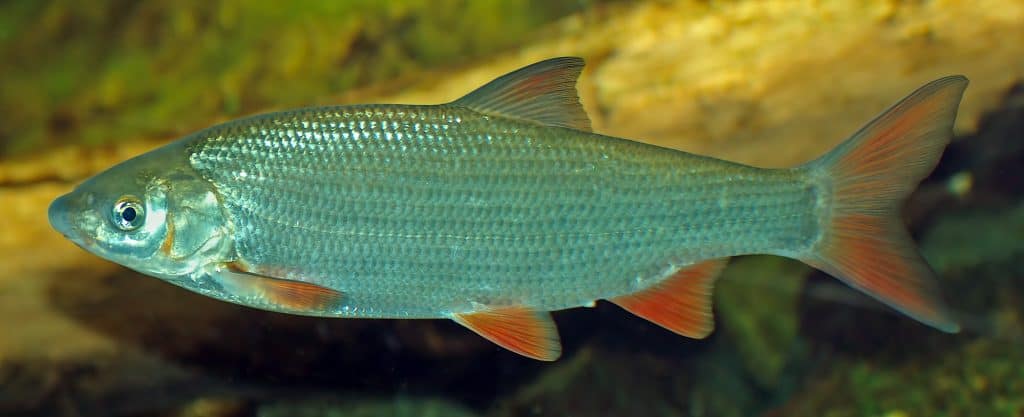
The common nase is endemic to the major river drainages of the Black, Baltic, and North Seas.
2. Nurse Shark (Ginglymostoma cirratum)
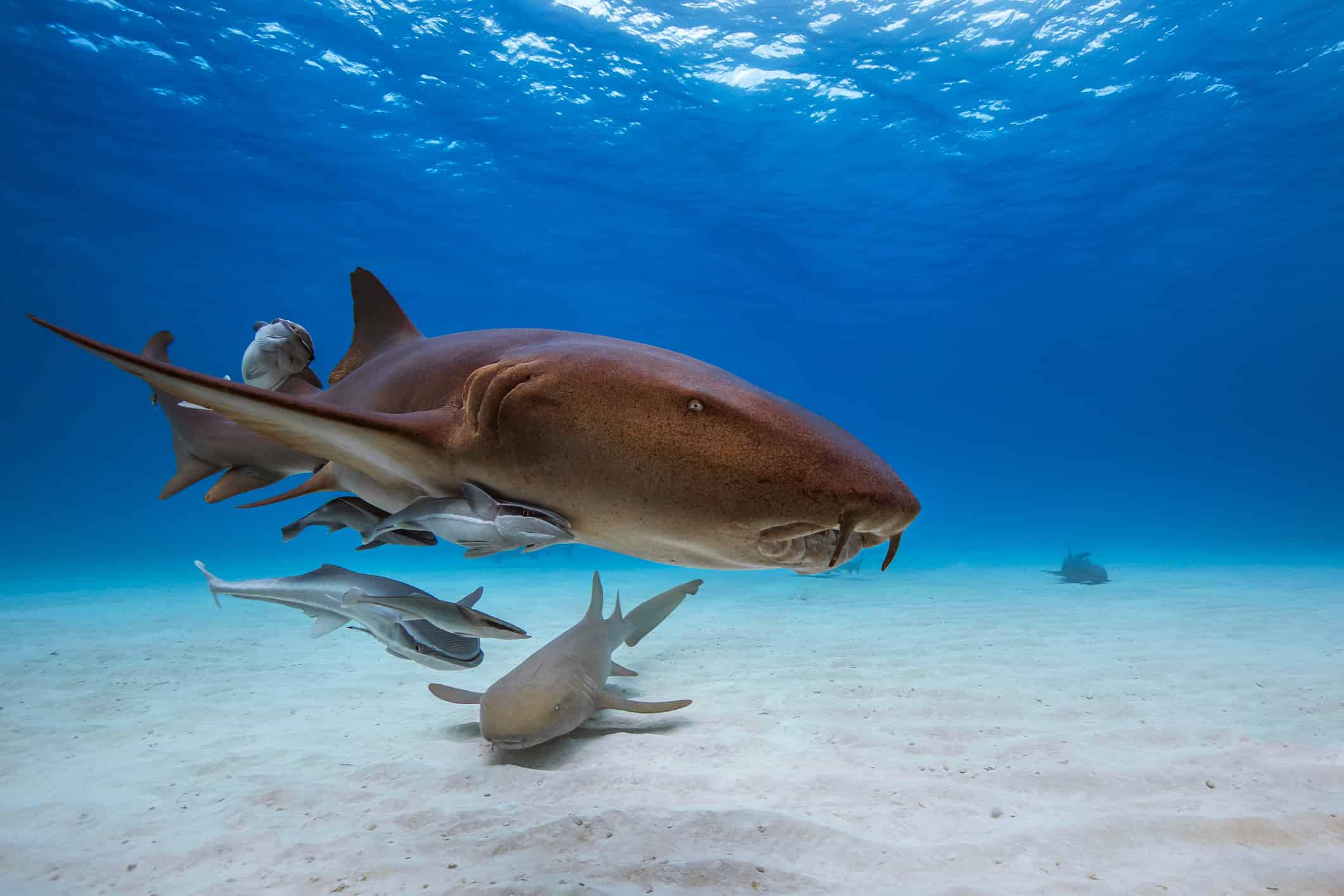
Nurse sharks inhabit the western Atlantic, eastern Atlantic, and eastern Pacific oceans. They are typically found in warm, shallow waters near shore. These sharks can be distinguished by their wide heads and flattened bodies. Their skin is brown, yellowish-brown or greyish-brown. Some juveniles may also have dark spots that fade as they mature. These sharks have two broad, rounded dorsal fins and a tail fin. However, unlike other shark species, they do not have a distinct lower lobe. Nurse sharks can grow to a maximum length of 14 feet, but most are less than 10 feet. The heaviest nurse shark on record weighed 263.8 pounds.
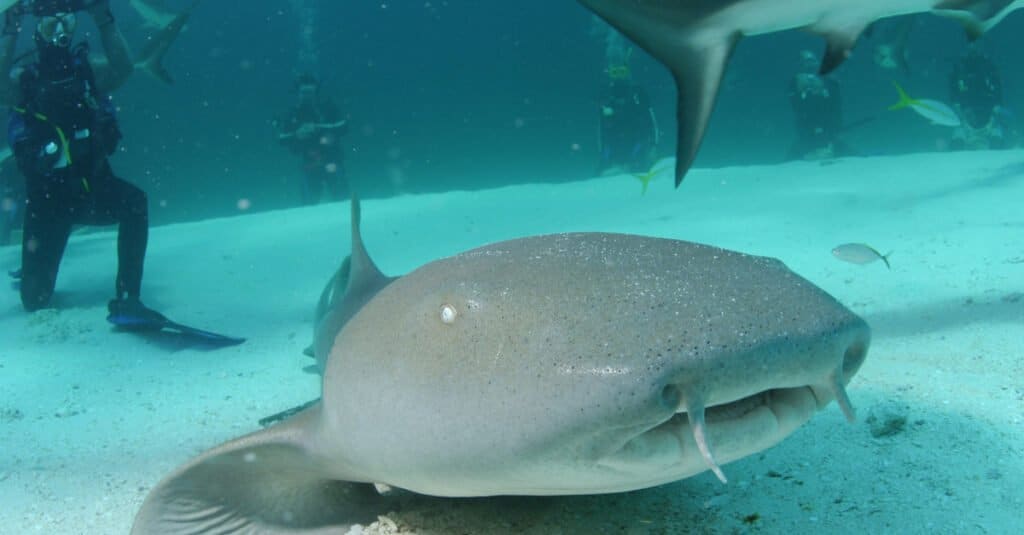
Nurse sharks have wide heads and flattened bodies.
©tali de pablos/Shutterstock.com
3. Narrow-Lined Puffer (Arothron manilensis)
Narrow-lined puffers primarily occur in temperate marine waters of the Central and Western Pacific, but they are also popular in aquariums. These puffers are beige to white with thin yellow to black stripes. The base of their pectoral fins is surrounded by a large black dot. They favor muddy bottoms, and are frequently found in sheltered estuaries. Narrow-lined puffers can reach up to 12 inches in length. Like other pufferfish, they inflate when threatened.
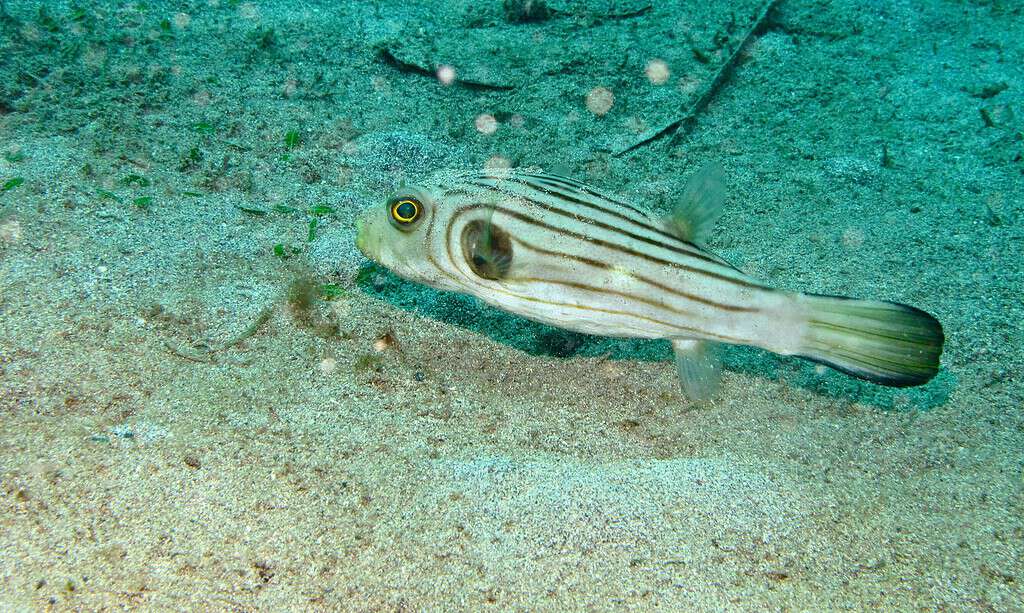
Like other puffer fish, narrow-lined puffers inflate when threatened.
4. Neon Tetra (Paracheirodon innesi)
The neon tetra is a popular aquarium fish that occurs in the western and northern Amazon basin, in both clear water and black water stream tributaries. These small, slender schooling fish have a light blue back and a silvery-white belly with an iridescent blue horizontal stripe and a bright red stripe on its sides. They generally reach about 1.5 inches in length.
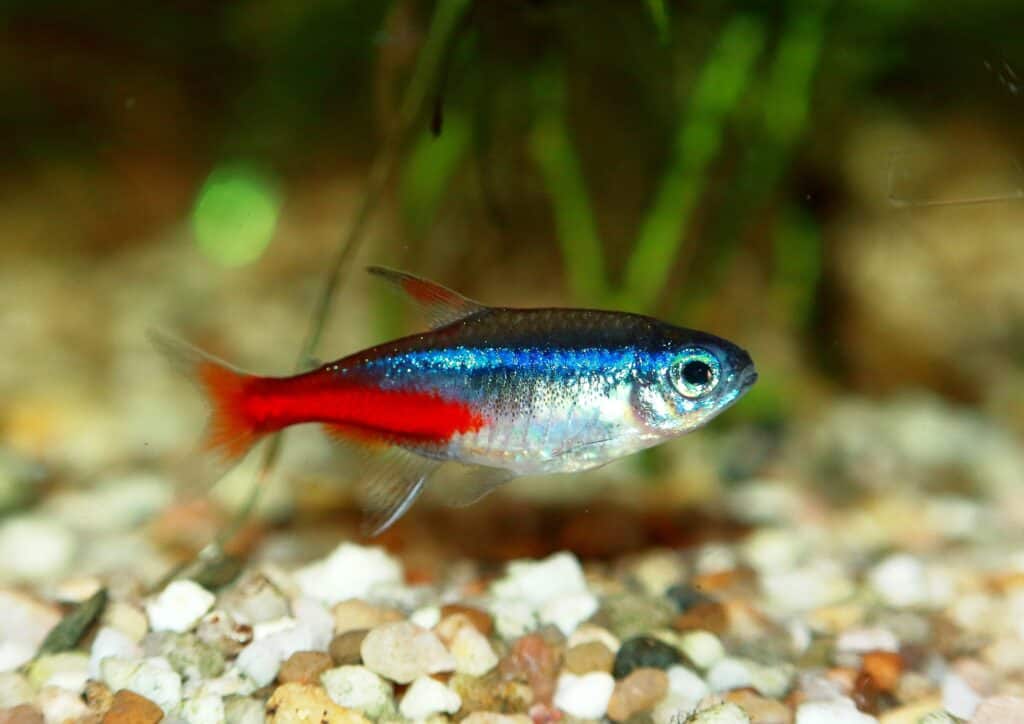
Neon tetras occur in both clearwater and blackwater stream tributaries.
©Kristiana Berzina/Shutterstock.com
5. Northern River or New Guinea River Shark (Glyphis garricki)
The northern river shark is also called the New Guinea river shark. These endangered sharks are endemic to the coastal waters and tidal rivers of Papua New Guinea and Australia. These sharks have slender teeth and small eyes. Their heads are flat and wide, with a long, broad, rounded snout, which often causes them to be misidentified as bull sharks. Northern river sharks can grow to a maximum of around 8 feet long, with larger individuals likely weighing over 100 pounds. These sharks primarily prey on fish and have evolved to inhabit murky waters with poor visibility.
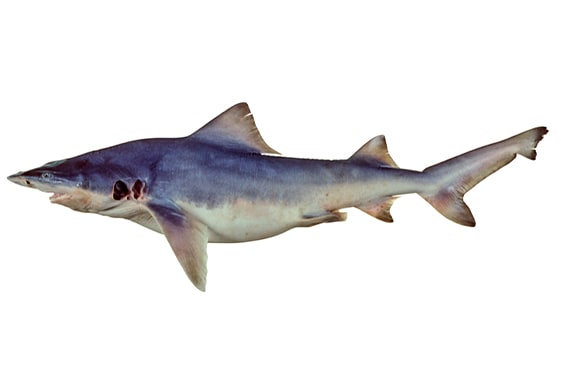
Northern river sharks occur in the coastal waters and tidal rivers of Papua New Guinea and Australia.
©CSIRO National Fish Collection, CC BY 3.0 <https://creativecommons.org/licenses/by/3.0>, via Wikimedia Commons – Original / License
6. Neon Rainbowfish (Melanotaenia praecox)
These small rainbowfish occur in the Mamberamo River Basin in Indonesia and Western New Guinea. They are often called dwarf rainbowfish, as they only measure around 3 inches in length. Neon rainbowfish have torpedo-shaped, iridescent blue bodies with bright red fins in males and yellowish-orange fins in females. They are schooling fish that prefer tropical temperatures and fast-flowing water with dense vegetation and a muddy or gravelly bottom.
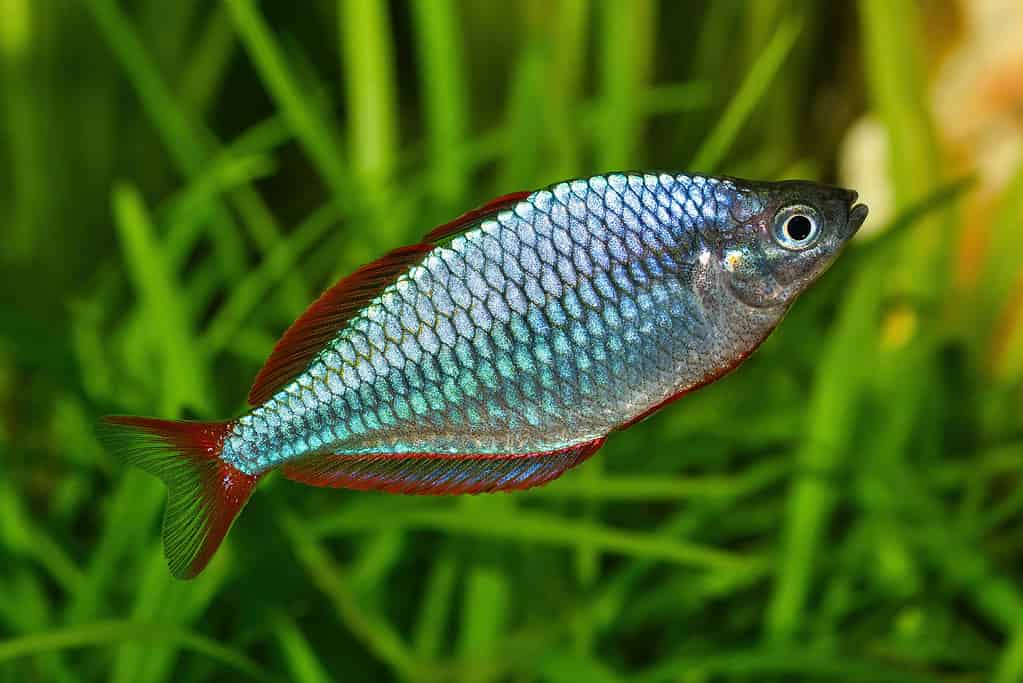
Neon dwarf rainbowfish occur in the Mamberamo River Basin in Indonesia and Western New Guinea.
©iStock.com/NERYX
7. New Guinea Tigerfish (Datnioides campbelli)
The New Guinea tigerfish is native to the estuarine waters in New Guinea and rivers surrounding the Gulf of Papua. They occur in both freshwater and brackish waters, favoring slow-moving waters in mangrove estuaries, tidal creeks, and mangrove-lined rivers. These predatory ambush hunters typically measure between 14 and 18 inches in length. New Guinea tigerfish have pale to golden-yellow bodies with wide, vertical dark stripes.
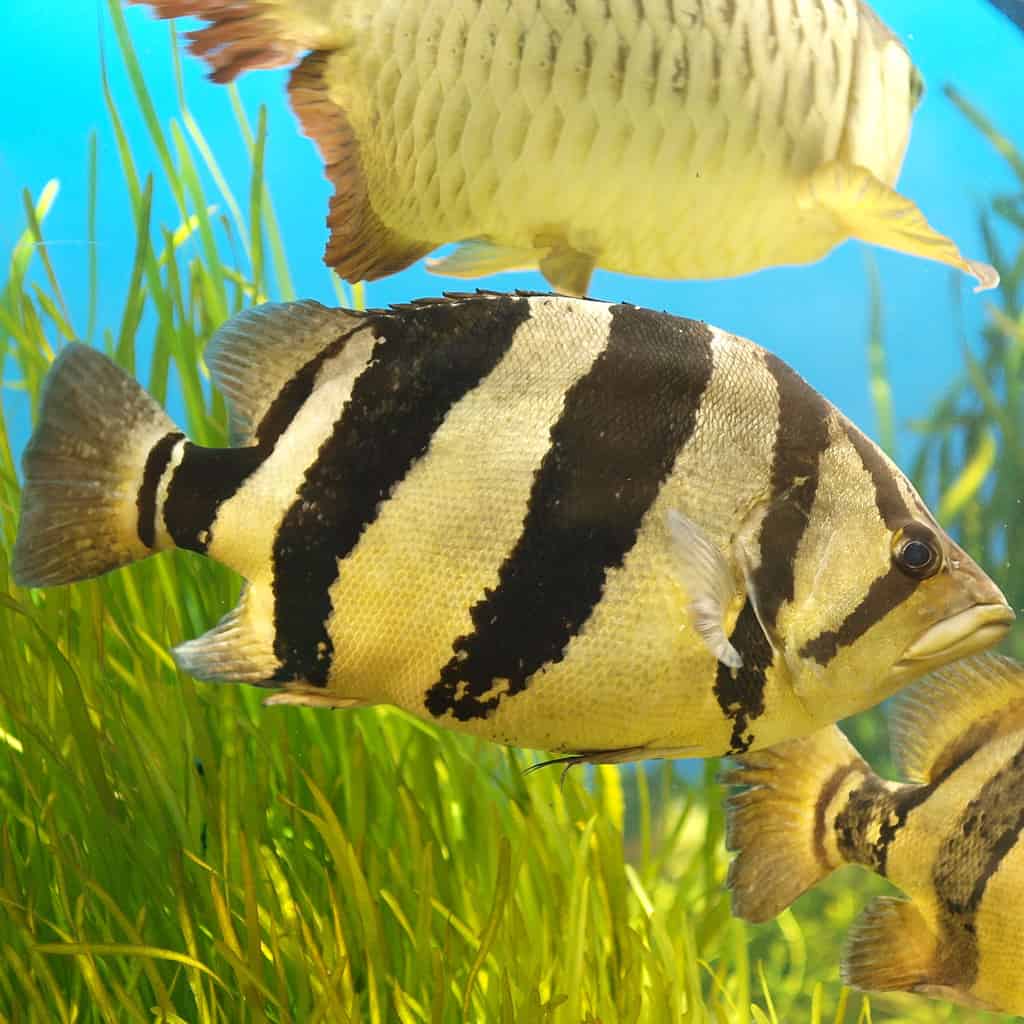
New Guinea tigerfish are predatory ambush hunters.
8. Needlefish (Belonidae)
Needlefish are frequently found near the surface of the open sea or other shallow aquatic habitats. Most species inhabit marine environments, but some needlefish live in freshwater and brackish environments. They have a long, thin body and a long, narrow mouth filled with tiny, sharp teeth. Atlantic needlefish (Strongylura marina) are found in the Atlantic Ocean from Maine to Brazil. They have silvery bodies with greenish-colored backs and thin, bluish-silver stripes down their sides. These fish can reach around 2 feet in length.
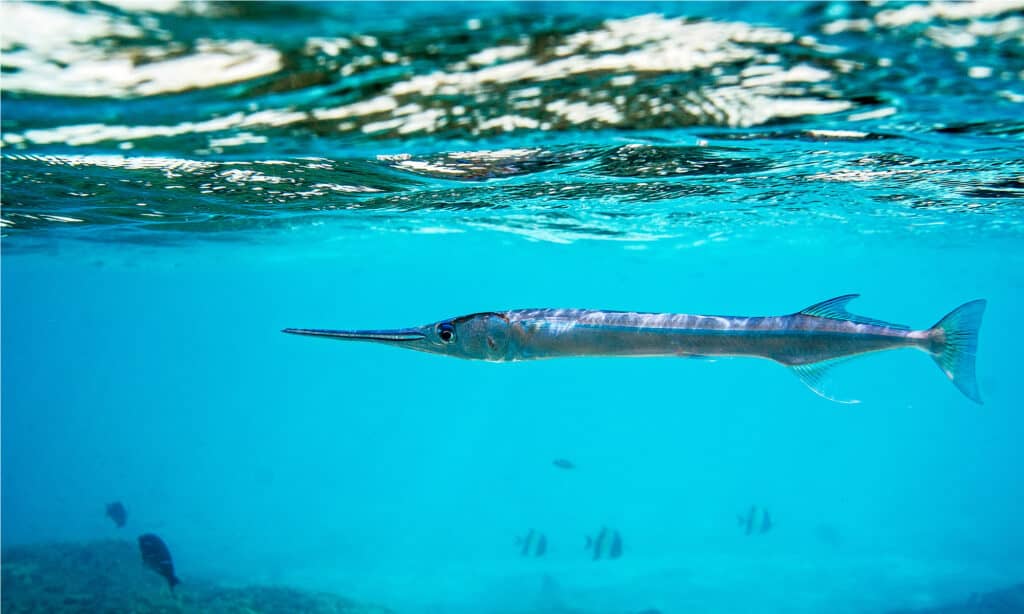
Atlantic needlefish can typically reach around 2 feet in length.
©AndrisL/Shutterstock.com
9. Northern Pike (Esox lucius)
Northern pike are cold-water fish that thrive in deep, clear, vegetated lakes and the backwaters of rivers, creeks, and reservoirs. They can be found across the Arctic regions of North America, Europe, and Asia. In North America, they inhabit Alaska, Canada, and the upper Midwest in the continental U.S. They are carnivorous ambush predators with hundreds of sharp teeth in their duck-bill snouts. Northern pike have long, torpedo-shaped, olive-green bodies with light spots and pale bellies. They can reach up to 4.5 feet in length and weigh up to 62.5 pounds.
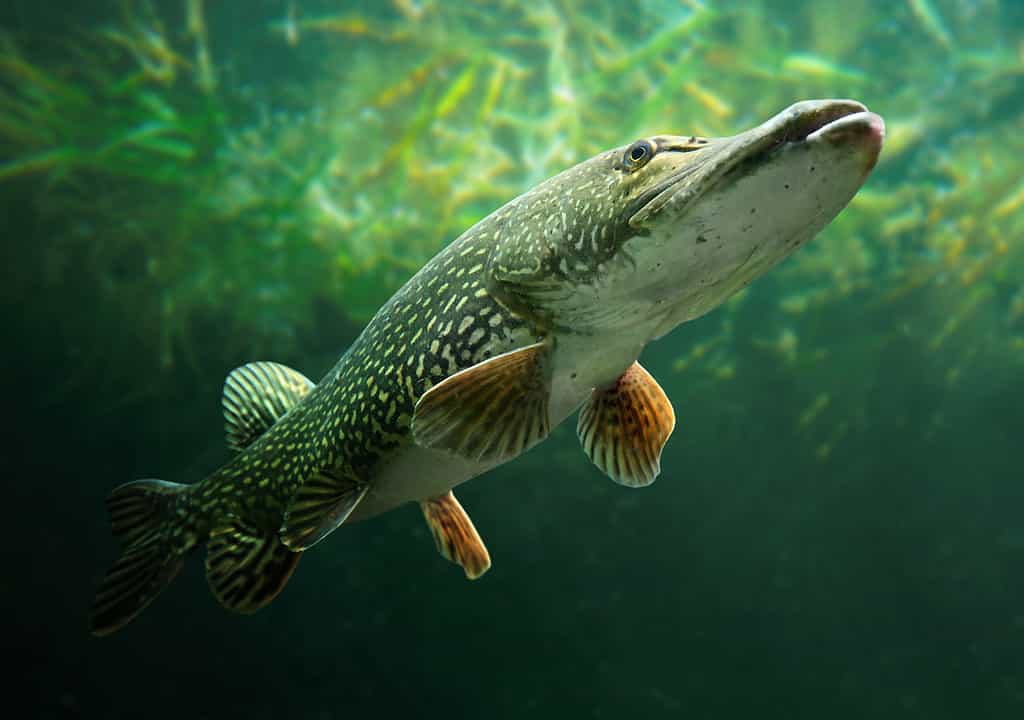
Northern pike are cold-water fish and thrive in deep lakes.
©iStock.com/abadonian
10. Northern Stargazer (Astroscopus guttatus)
The northern stargazer has a blackish-brown body with white spots, pale undersides, and three dark horizontal lines on their tails. Their flat bodies can reach 22 inches in length. Their mouths and eyes are located on top of their heads, allowing them to bury themselves in the sand to ambush prey. They also have electric organs behind their eyes to stun prey and warn intruders. Northern stargazers are found in the temperate waters of the western Atlantic from New York south to North Carolina.
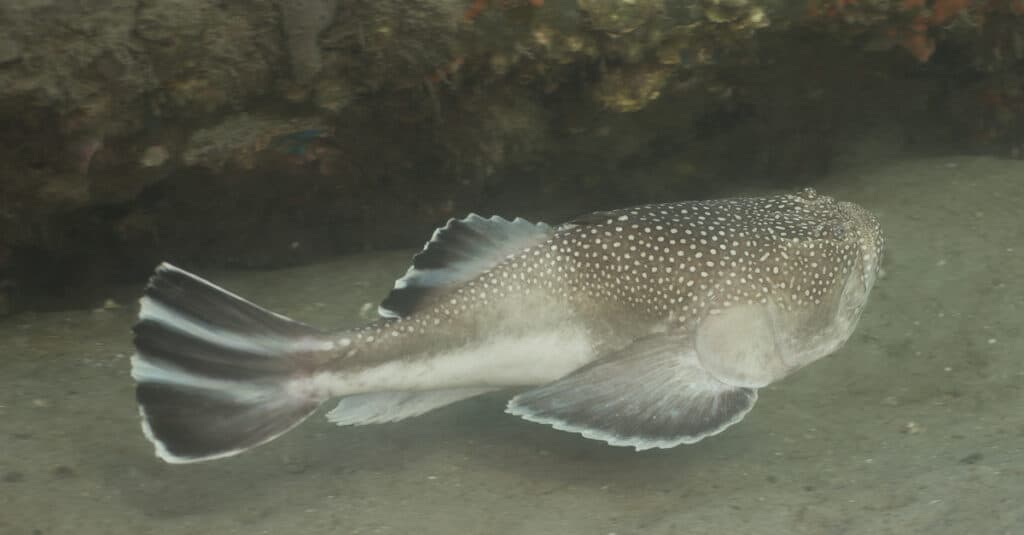
Northern stargazers inhabit the temperate waters of the western Atlantic Ocean.
©Peter Leahy/Shutterstock.com
11. Noodlefish (Salanx chinensis)
Noodlefish inhabit the waters of the East Asian coast, from the Russian Far East and Japan south to China, Korea, and Vietnam. These fish can live in marine environments, brackish estuaries, and freshwater rivers and lakes. Noodlefish have triangular-shaped heads and long, thin bodies. Their bodies are mostly smooth, without scales. However, the males have a thin line of scales near the base of the caudal fin. Noodlefish are nearly transparent while alive, but turn white after death. Some noodlefish species also have a line of black spots along their sides. They average around 4 to 6 inches in length.
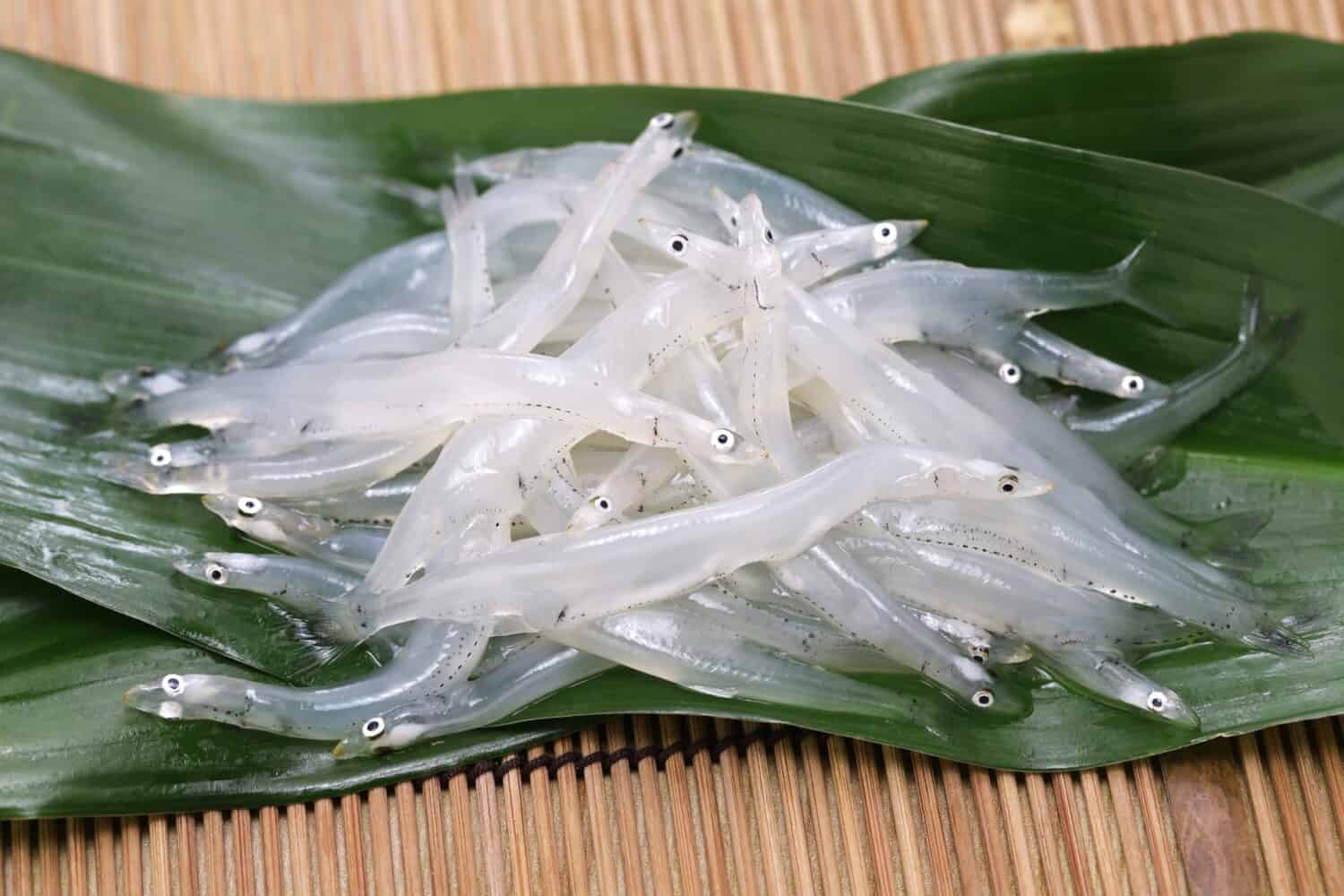
Noodlefish are common in East Asian cuisine.
©bonchan/Shutterstock.com
12. The Largest Fish That Starts with the Letter N: Nile Perch
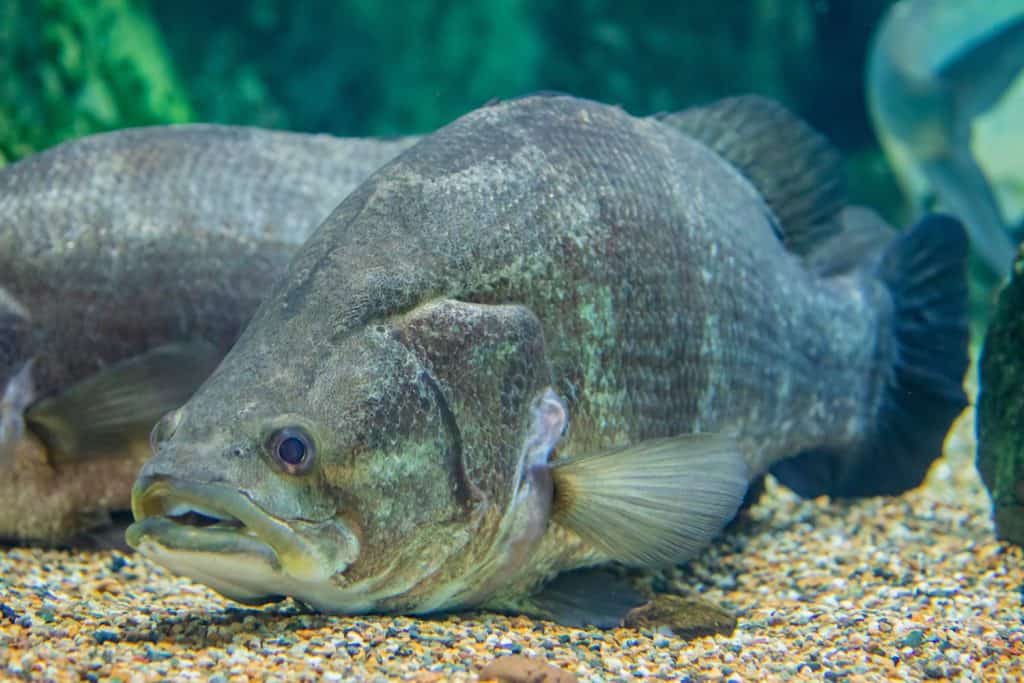
The Nile perch (Lates niloticus) is the largest fish that starts with the letter “N.” As the name indicates, these fish are native to Africa and inhabit a wide variety of habitats, including lakes, rivers, and even irrigation channels. These massive predatory fish can be found in the Nile, Congo, Niger, and Senegal rivers as well as Lakes Chad, Turkana, and Albert. They can grow up to 6.5 feet in length and weigh up to 440 pounds. Nile perch are a silvery-blue color with a greenish-brown back and a pale belly.
©Danny Ye/Shutterstock.com