Quick Take
- One pleco's scientific name literally means 'jumbo,' and yet it ranks as one of the tiniest on this list. Meet the tiny 'jumbo' pleco →
- Not all plecos actually eat algae. Some have dietary needs that will surprise anyone who bought one for tank cleanup. See the driftwood diet →
- One species looks harmless but can silently introduce fatal diseases into your entire tank if you skip one critical step. Learn about quarantine risks →
- The smallest and easiest pleco to keep is also the one most aquarists have never heard of. Discover the easiest pleco →
There are over 800 species of plecostomus (family Loricariidae) on the planet, and all of those species originate in South America and Central America. The plecostomus is sometimes called the janitor fish thanks to its sucker-like mouth that hoovers up algae and practically anything else that comes within its reach. Although some plecostomus species can be over one foot long, many plecos are much smaller and are a great addition to a home aquarium. If you’ve been looking for a clean-up crew for your tank, continue reading to learn about some of the smallest plecos.
Bristlenose Pleco
Average Size: 5 to 6 Inches
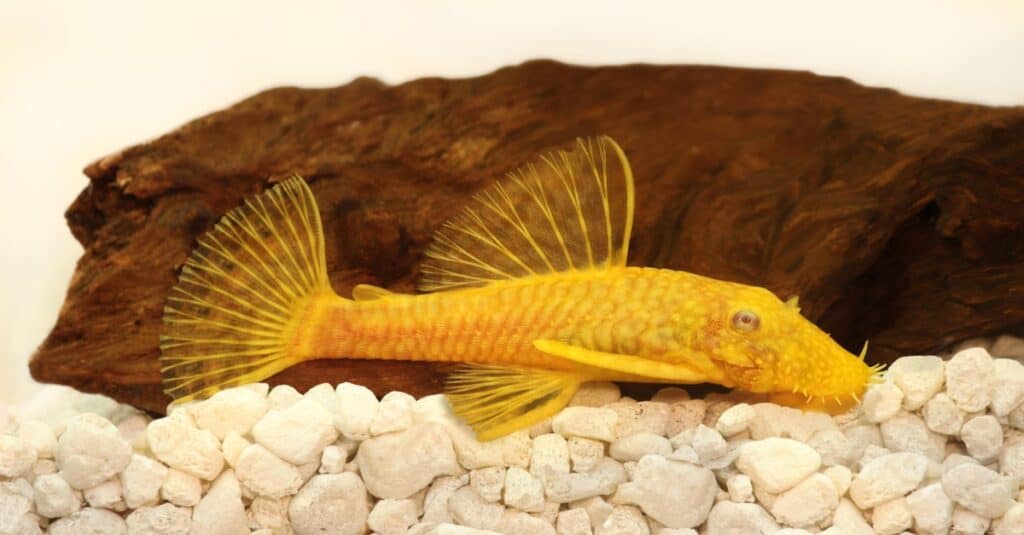
The bristlenose pleco is popular among the smallest pleco fish.
©iStock.com/Mirko_Rosenau
The bristlenose pleco (Ancistrus Cirrhosus) is so popular that most of them are now bred in captivity. There are dozens of bristlenose variants in the wild that get their name from the bristles that protrude from their face. Color and size vary by species.
Bristlenose plecos are some of the easiest plecos to care for, though you need to be careful about keeping multiple males in the same tank, as they are territorial, a common issue in most pleco species.
Dwarf Snowball Pleco
Average Size: Up to 3.5 Inches

One of the smallest pleco fish, the dwarf snowball, has white polka dots all over its body.
©otsphoto/Shutterstock.com
The bright white polka dots of the dwarf snowball pleco (Hypancistrus Inspector) really help it stand out from the rest of the fish in a tank. They are relatively docile fish that require similar water parameters to species like tetra.
Though they generally get along well with other fish species, you should limit the number of dwarf snowball plecos in a tank and avoid keeping multiple males of this species in the same tank entirely. They should absolutely be kept away from other Hypancistrus varieties, as these catfish have shared origins in South America’s Amazon River Basin, where the catfish are known to be aggressive and territorial with one another.
Clown Pleco
Average Size: 3.5 Inches
The clown pleco (Panaqolus Maccus) is one of the most popular small catfish for aquariums. Although they are chosen for how efficiently they can dispose of algae, clown plecos prefer a diet of driftwood. As long as you stay cognizant of their feeding needs and keep them separated from other plecos, they’re very low-maintenance additions to practically any aquarium setup.

This small pleco fish prefers driftwood to eat.
©iStock.com/MIKITO SHIRAI
Their popularity is due to their stunning black and brown stripes. These fish can be territorial and aggressive toward other species where food is concerned, but they generally get along fine with most other aquatic species.
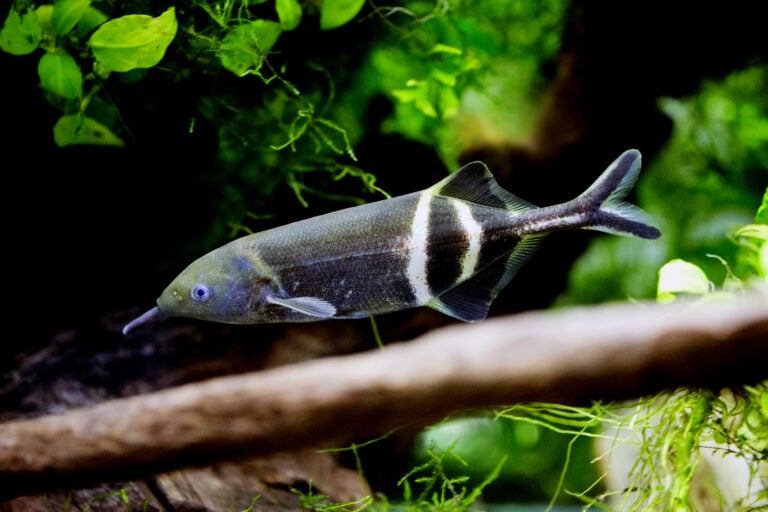
Blue-eyed Pleco
Average Size: 3.4 Inches
The blue-eyed plecostomus (Panaque suttonorum) requires ample space at the bottom of the tank in which to establish dens.
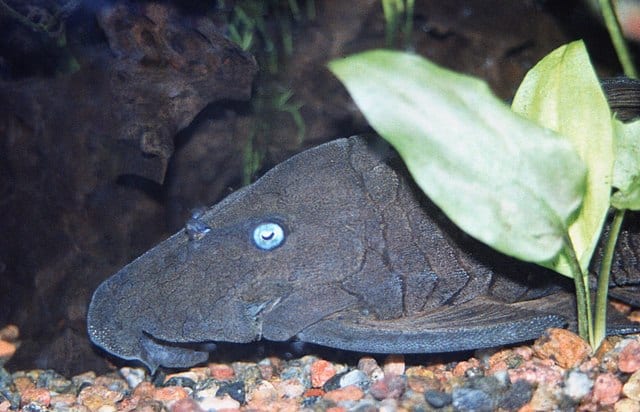
Blue-eyed plecos have blue eyes and gray or black bodies.
©Creative Commons Attribution-Share Alike 2.0 – Original
Blue-eyed plecos are also less hardy than other plecos. The risk of mortality is especially high during their first few weeks in a new home, and they should be placed in a quarantine tank before being transitioned to their more permanent home. Quarantining is suggested because blue-eyed plecos are almost exclusively wild-caught and are prone to fatal internal parasites. They can easily introduce deadly diseases into your tank.
Their dietary habits should also be watched closely, as they have a reputation for being finicky and require a bit of meat to supplement their primarily herbivorous diet.
The Blue Panaque Pleco is native to the streams and rivers of the Orinoco. They are usually around 3.4 inches long; however, they can measure up to 4 inches long.
Angelicus Pleco
Average Size: 3.3 Inches
The angelicus pleco (Hypancistrus sp. L004) is a splendid choice if you’re worried about fish eating your ornamental plants. Rather than scavenging for algae and other vegetable matter, angelicus plecos are omnivores that lean heavily toward a carnivorous, protein-rich diet.
Angelicus have a voracious appetite, and they can help keep your aquarium clean by feeding on fish food that’s been left behind by their tank mates. Water with strong currents is preferred, and they can peacefully coexist with most other fish species.
Angelicus keep to themselves, although males can be territorial if they feel constrained in a small tank. They can be hesitant at first but develop bolder personalities than many other plecos. The splash of white or yellow dots that cover the body of this pleco provides it with a distinct sense of elegance. It’s also a relatively rare species and understandably carries a higher price tag as a result.
Queen Arabesque Pleco
Average Size: 3.3 Inches
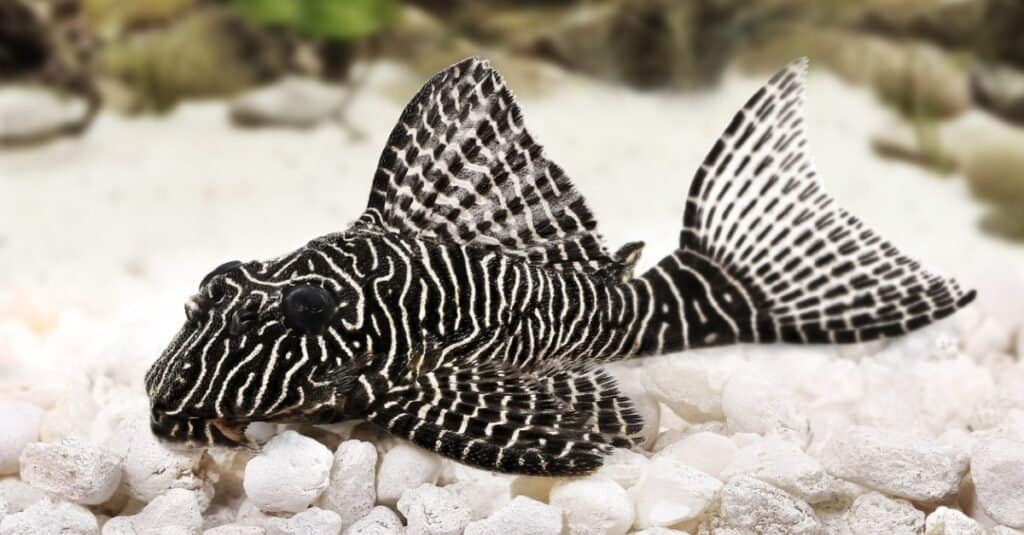
The small pleco fish known as the queen arabesque stands out because of its mesmerizing appearance.
©iStock.com/Mirko_Rosenau
The eye-catching pattern of frenetic lines covering the queen arabesque pleco (Hypancistrus sp. L260) is the reason for its popularity. Like the angelicus pleco, queen arabesque plecos are carnivores that eat earthworms, shrimp, and bloodworms, so don’t rely on these diminutive catfish to control the algae and biofilm in your tank.
Naturally solitary, they much prefer tanks without other pleco species and with a private shelter they can call home at the bottom. Just be vigilant about feeding time, as members of this species often have their share of dinner taken by more aggressive fish.
Pitbull Pleco
Average Size: 2.3 Inches

These fish will spend most of their day lingering near the bottom of the tank or hiding in the substrate at the bottom.
The pitbull pleco (Parotocinclus Jumbo) might have jumbo in its scientific name, but it’s the second smallest pleco on the size chart. Despite that, their lively and sociable personalities make them a great choice for a wide range of tanks. They should be kept at least in pairs and preferably in larger numbers, as they thrive in large groupings.
Primarily nocturnal, these fish will spend most of their day lingering near the bottom of the tank or hiding in the substrate. Due to this tendency to hide, the coloring of a pitbull pleco can change depending on the substrate used in the tank.
Because they primarily lurk near the bottom, they’ll feel safest in a tank with a sheltered space away from aquarium lights.
Gold Spotted Dwarf Pleco
Average Size: Under 2 Inches
Found in the waters of Brazil, the gold spotted dwarf pleco (Parotocinclus Spilosoma) often doesn’t even reach a full length of two inches as an adult.
The gold-spotted dwarf pleco is not only the smallest pleco, but it’s also the easiest to take care of.
However, you do need to exercise care when choosing what other fish species will share the aquarium with them. These catfish can be skittish and are best kept in a tank with similarly sized or smaller fish with equally mild temperaments.
Gold-spotted dwarf plecos should always be kept in groups of at least three and preferably as many as six, which helps them feel less anxious.