
Quick Take
- This fish has a built-in superpower that puts it miles ahead of most aquatic creatures, and that superpower has nothing to do with fins or speed. Discover the superpower →
- Its most bizarre body part isn't what you think it is, and its real function will surprise you. See what the snout really does →
- This fish hunts in near-total darkness using a sense humans don't possess, and here's how it pulls it off. How electrolocation works →
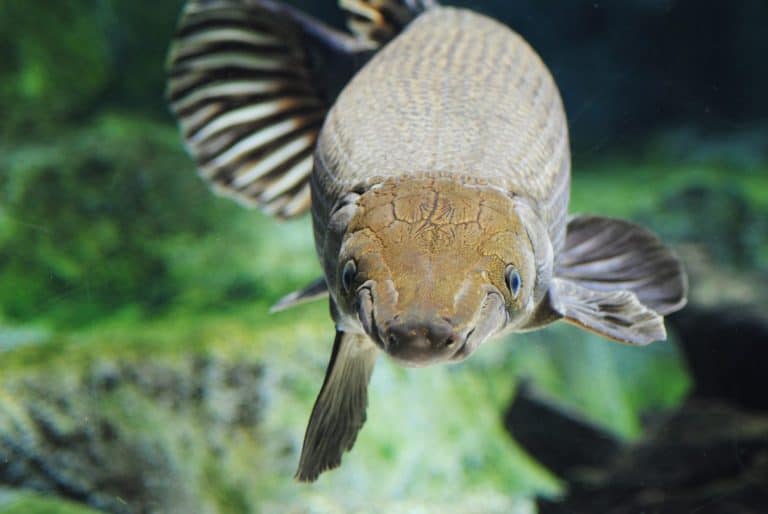
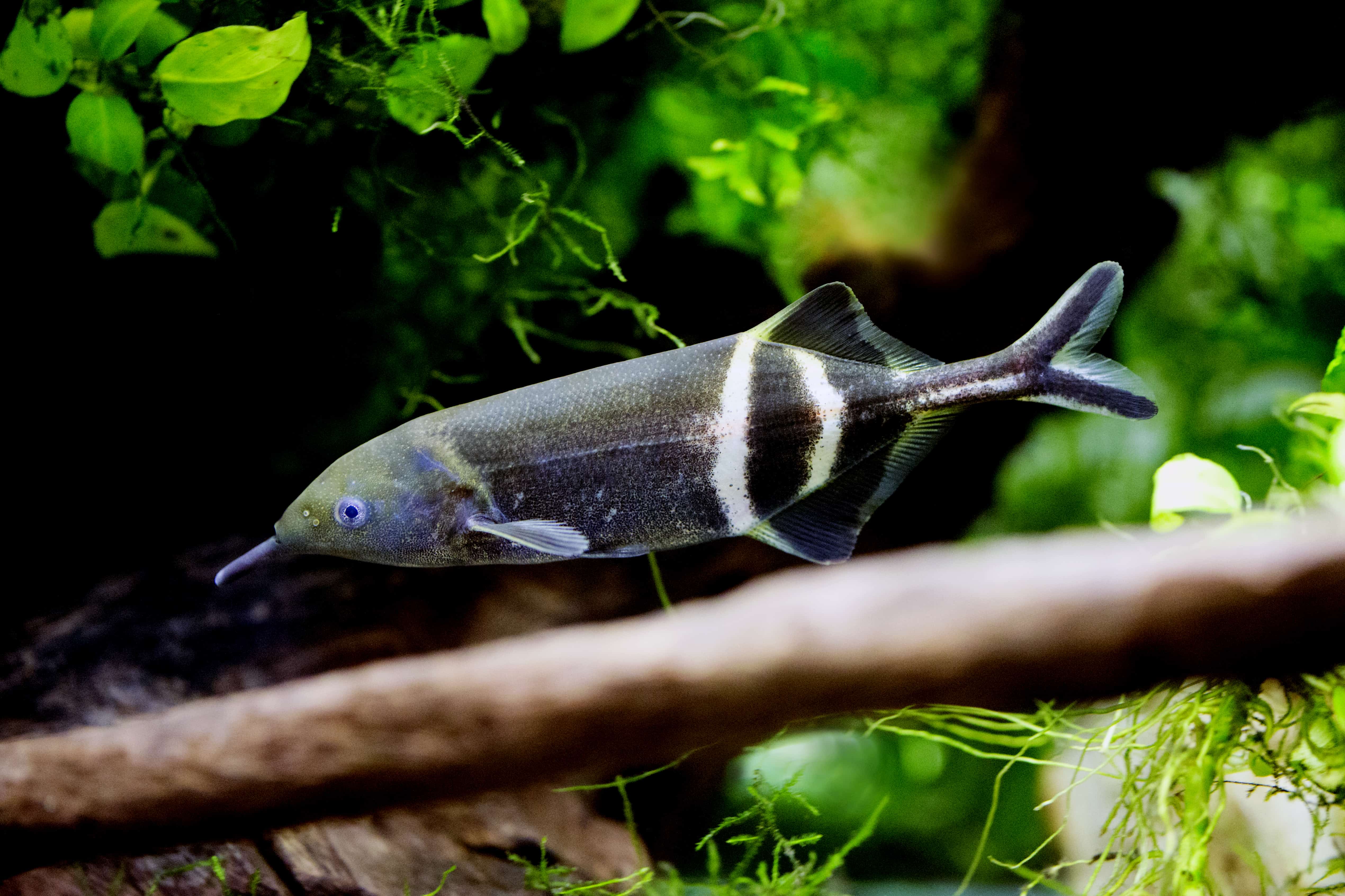
Take a look at this extraordinary fish in the Instagram clip. It’s described as the ocean’s version of an anteater and is actually called an elephantnose fish. These amazing creatures, which can be found in aquariums all over the world, can generate their own electricity.
Where Is the Elephantnose Fish Found?
The Peters’s elephantnose fish (Gnathonemus petersii) is a member of the Osteoglossiformes order of relatively primitive ray-finned fish. They are found in Africa in the Niger to Congo River basins, living in freshwater. These fish prefer muddy, slow-moving rivers and pools with some cover. Most of the time, they reside close to the bottom where they probe for food. The majority of their feeding takes place at night and their diet is made up of worms and insects.
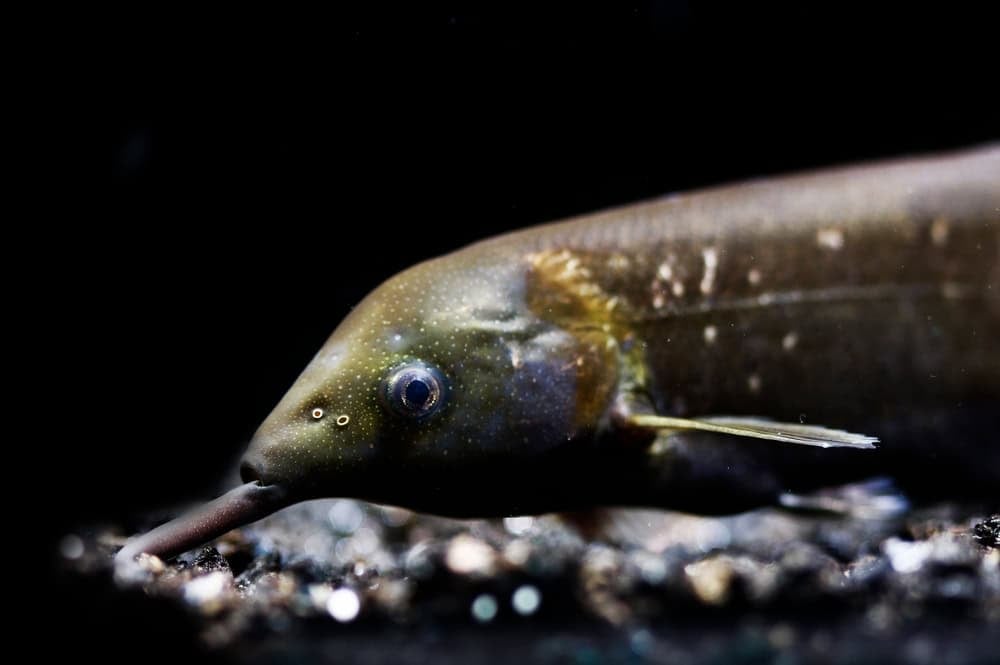
The elephant nose fish’s ‘snout’ helps them to feed.
©Pavaphon Supanantananont/Shutterstock.com
These fish are territorial and are often aggressive towards their own species. Adults generally grow to around 9 to 10 inches when they are fully grown, but some can reach up to 12 to 13 inches. Their bodies are a brown-black color and laterally compressed, which means that they are squeezed inwards from the sides. They have a rear dorsal fin and an anal fin, as well as a forked tail. Their most striking physical feature, however, is their ‘snout’, which is a trunk-like protrusion on their head. Hence their name – the elephantnose fish
What Exactly Is the Elephantnose Fish Snout?
This is a special organ called a schnauzenorgan and is actually an elongated chin appendage. It is a part of the sensory system and is used for active electrolocation and electro-communication. The schnauzenorgan is covered in electroreceptors, as are the head and the dorsal and ventral regions of the fish’s body, though they are absent from the sides and the caudal peduncle.
The fish emits and receives electric signals at the same time so it can detect and analyze nearby objects. It enables the fish to forage for food even in low light conditions. This organ is also used to find a mate!