
Severe injuries and other healthcare conditions happen to humans without notice and are expensive to treat. Pets like dogs and fish are also exposed to these healthcare conditions. Most people don’t plan for these accidents and treatments when budgeting, causing a budget strain. To avoid unplanned expenses, many owners opt to take out health insurance for their pet.
The insurance will cover vet visits, treatments, and pet surgeries. But, before insuring your pet fish, first know the importance of having the insurance, what to look for in a policy, and the amount you will pay for your fish’s insurance.
What Is Pet Insurance, and Why Is It Important?
Insurance is a healthcare policy that helps pet owners offset medical bills for their pets’ illnesses or accidents. Once the pet owner signs the agreement, they start paying monthly premiums to the insurance company.
A monthly premium is the money you pay to the insurance company to keep your coverage active. When an accident happens or your pet gets sick, you will submit a claim to the insurance company for them to pay the medical bill.
But how you pay the premiums depends on the insurance policy. Some insurance companies encourage their customers to pay the premiums yearly. Also, the amount paid per month or year depends on the pet’s breed, age, type of plan, and the benefits you want.
Before signing the insurance papers, read the policy first. Some companies pay for the pet’s wellness, illness, and accidents, while others only pay for illnesses and accidents. You will pay for your pet’s vaccines and other disease preventions in this case.
Going through the policy helps you evaluate if the insurance is worth it. Check if the company will cover the entire medical bill because some policies only cover half the bill and the pet owner pays the rest.
Benefits of Pet Insurance
There are many reasons to have pet insurance, just like your health insurance. First, you save more on vet visits and medical bills, and you can focus more on your pet’s health without worrying about the money. Other benefits of pet insurance are:
1. More Options for Treatment
Pet owners with pet health insurance policies can afford better medical facilities and more qualified vets. Paying cash for these facilities for your pet’s treatment could cost a lot of money upfront.
Also, the insurance usually allows you to choose the vet you want for your pet. Some vets are expensive to hire, but the insurance company covers all the bills. You also don’t require a vet’s referral to see a specialist, which is what happens with human treatments.
2. Pet Owners Get Peace of Mind
Illnesses and accidents happen at any time, and they are costly. Some pet owners spend a lot of time worrying that an accident will happen to their little friend because pet medical care is expensive.
One of the worst feelings in the world is weighing out the cost of a needed medical procedure for a pet and the value of the pet to you and your family. For some, cost is no option. For others, there is a breaking point. Medical procedures are not 100% guaranteed to work or make your animal better. And should you prolong the life of a pet that may be in discomfort? The most important factor may be the quality of life for the animal. It’s a difficult choice, regardless. Still, with insurance, you won’t worry about your pet’s medical bills.
3. It Saves Pet Owners Money
Pet owners invest in a pet insurance plan to save money. You will pay monthly premiums to keep the plan active. The premiums are a small amount of money you pay monthly and are calculated depending on your needs.
When your pet falls sick, the company will offset the vet’s bill using the small amount of premiums you have been paying. So, paying premiums to your insurance company is equivalent to saving money for your pet’s medical emergency.
What to Know Before Getting Your Pet’s Insurance
Insurance companies have different insurance policies. When shopping for your pet’s insurance, some essential things to know are:
1. The Cost of Insurance Depends
There are factors affecting the amount of your pet’s insurance. First, insurance companies charge various packages differently, so you must choose an affordable insurer according to your budget.
The cost depends on your pet’s age, treatment history, breed, and gender. The vet you choose for your pet will also affect the premiums you pay. This is because vets charge differently, depending on the quality of services they offer.
2. Pet’s Age
The older your pet is, the more costly the insurance will be. This is because older pets are more prone to illnesses, meaning you might visit the vet more times than if you had a young pet. Also, some companies scrap off old pet insurance, so you might not get one once your little friend grows past a certain age.
3. Breed
Your pet’s breed will also determine the monthly premiums you pay. Some breeds are more expensive, and others, like crossbreeds, are cheaper because they are less likely to suffer inherited conditions.
The Most Expensive Pet Fish to Insure and Why
Since you know the importance of pet insurance and what to consider before getting one, you can comfortably purchase one for your little friend. And if you want to keep fish, here are the most expensive fish to insure:
Platinum Arowana
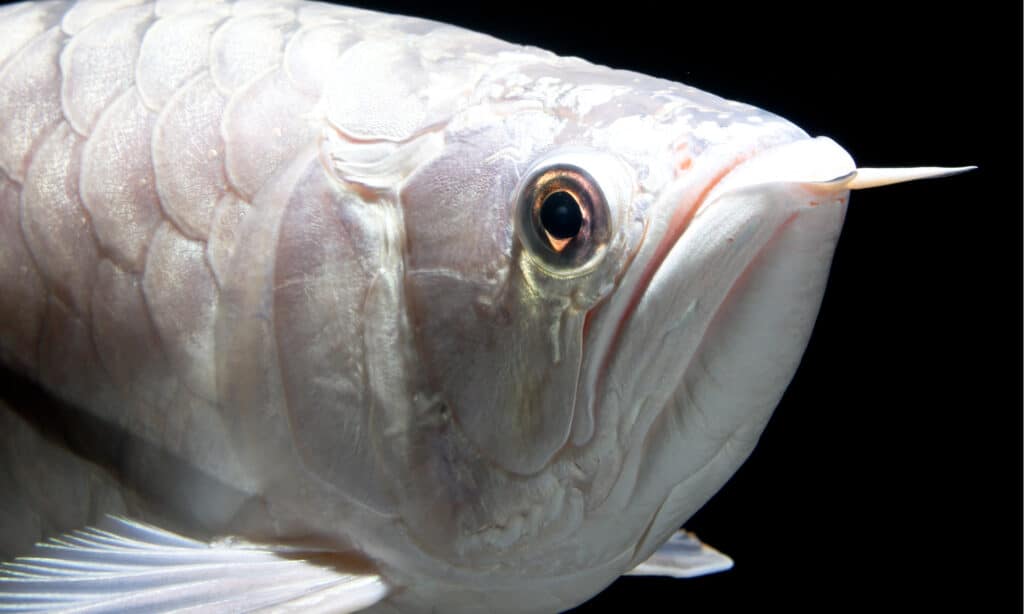
The platinum arowana is an expensive aquarium fish, costing about 0,000.
©Nantawat Chotsuwan/Shutterstock.com
Also known as the traditional home aquarium fish, the platinum arowana is an expensive aquarium fish, costing about $400,000. But the fish is available in different colors, and some cost about $300,000.
Many homeowners want a platinum arowana in their aquarium, but they are rare. Also, this fish is endangered, hence the high purchase cost and insurance. The arowana is kept mainly in Asia because they believe that it chases away bad luck.
If you are rearing this fish, your aquarium must be able to fit 250 gallons of fresh water. The full-grown platinum arowana is three feet long. USA residents cannot own one because it is an endangered species.
Freshwater Polka Dot Stingray
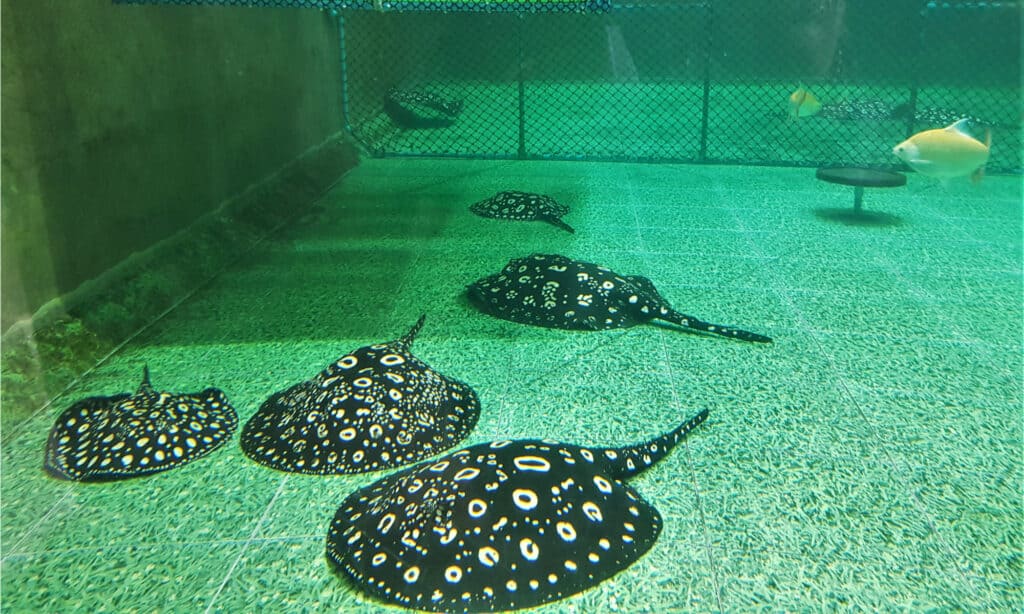
Polka Dot stingrays are popular pets in freshwater aquariums and but cost a lot to insure.
©Arunee Rodloy/Shutterstock.com
The polka dot stingray fish looks like a dinner plate due to its round body. The fish grows to about 18 inches, and their beautiful body is covered with white and black dots. The adult polka dot stingray can fit in an aquarium carrying 180 gallons of fresh water.
It costs about $100,000 to own this freshwater fish, and different states have restrictions and rules about owning this fish pet. Also, due to its rarity, it costs a lot of money to insure a polka dot stingray.
Peppermint Angelfish
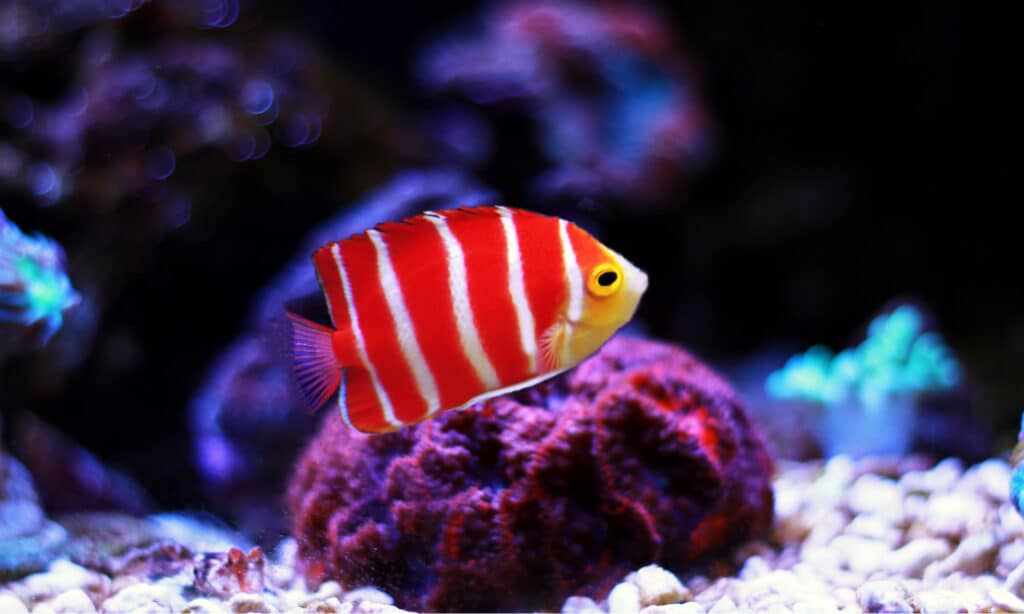
The peppermint angelfish’s unique colors make it look like the candy for which it is named.
©Vojce/Shutterstock.com
Another fish pet that will cost you an arm and a leg to insure is the peppermint angelfish. However, unlike the polka dot stingray and the platinum arowana, this fish is less expensive to purchase and costs around $30,000.
This fish lives over 300 feet under the water in the Pacific Ocean, so it is hard to catch it safely. Pet lovers call the peppermint fish the holy grail of home aquariums. You must have a medium-sized tank to keep the peppermint angelfish. Also, if you are getting tankmates for your peppermint angelfish, make sure that you get ones that prefer to occupy the bottom.
Masked Angelfish
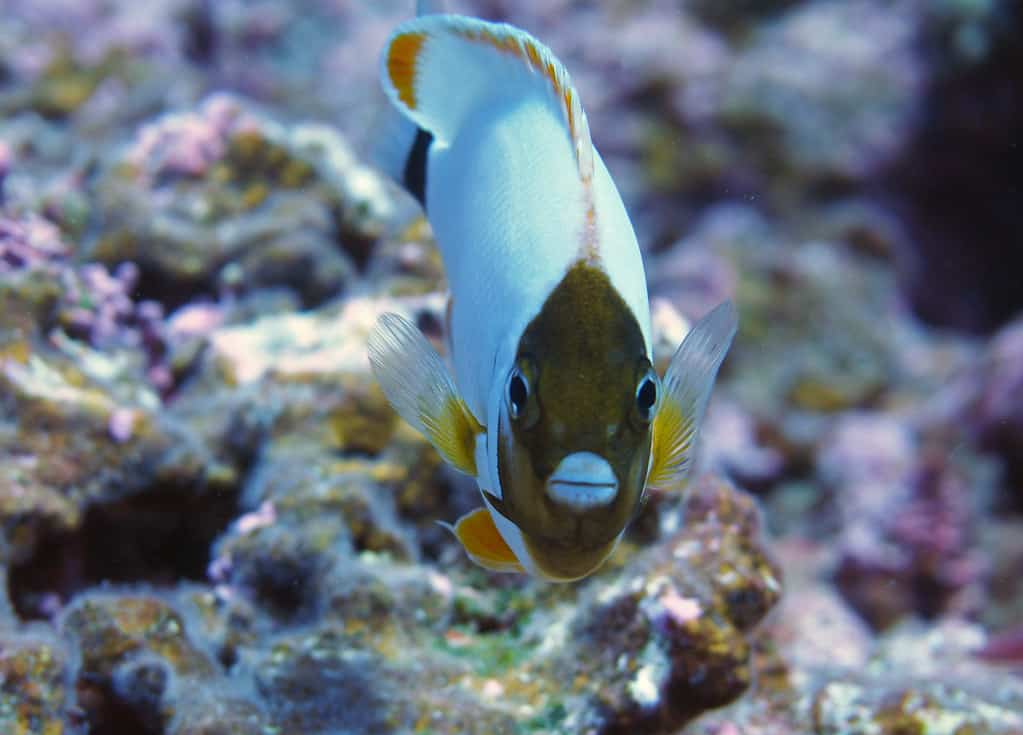
Male masked angelfish are only black on their tails, while female Genicanthus personatus are only yellow on their bottom fins
©CC BY-NC 2.0.
Another fish that is expensive to insure is the masked angelfish, which costs about $15,000 to buy. Most states allow people to keep the masked angelfish in commercial and private aquariums. These fish grow to about seven inches long and have a smooth and sleek look. Also, you can get them in different colors like white, black, and yellow.
Neptune Grouper
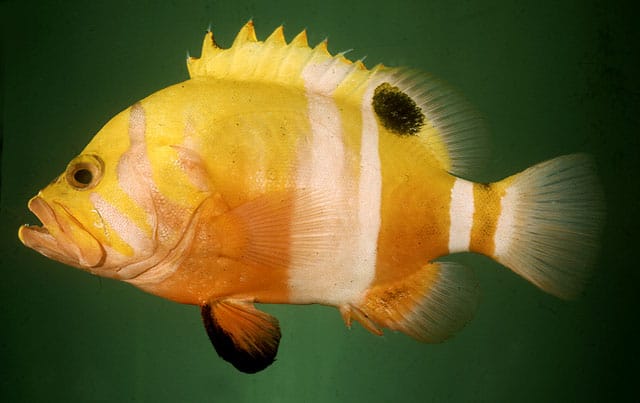
The Neptune grouper needs to be kept in a large aquarium.
The final fish on our list is the Neptune grouper, which costs about $7,000. This fish lives in depths between 200 and 800 feet around the coral reefs in the Indo-Pacific Ocean. They are quite rare to find, hence the high cost.
The Neptune grouper is also a hostile predator, making it hard to rear in an aquarium. You need a large tank to keep it in because it grows up to a foot and a half long. Although this fish is beautiful, it is hostile and unfriendly to the other smaller fish species.
Conclusion
Pets also fall sick and are involved in accidents like human beings. Pet medical care and treatment are costly, but having health insurance for your pet fish helps you save more. Also, you will have a variety of vets to choose from. Insurance premiums for pet fish are influenced by factors such as species, age, and risk, and while the value of the fish can be a factor, it is not always the sole determinant of insurance cost.