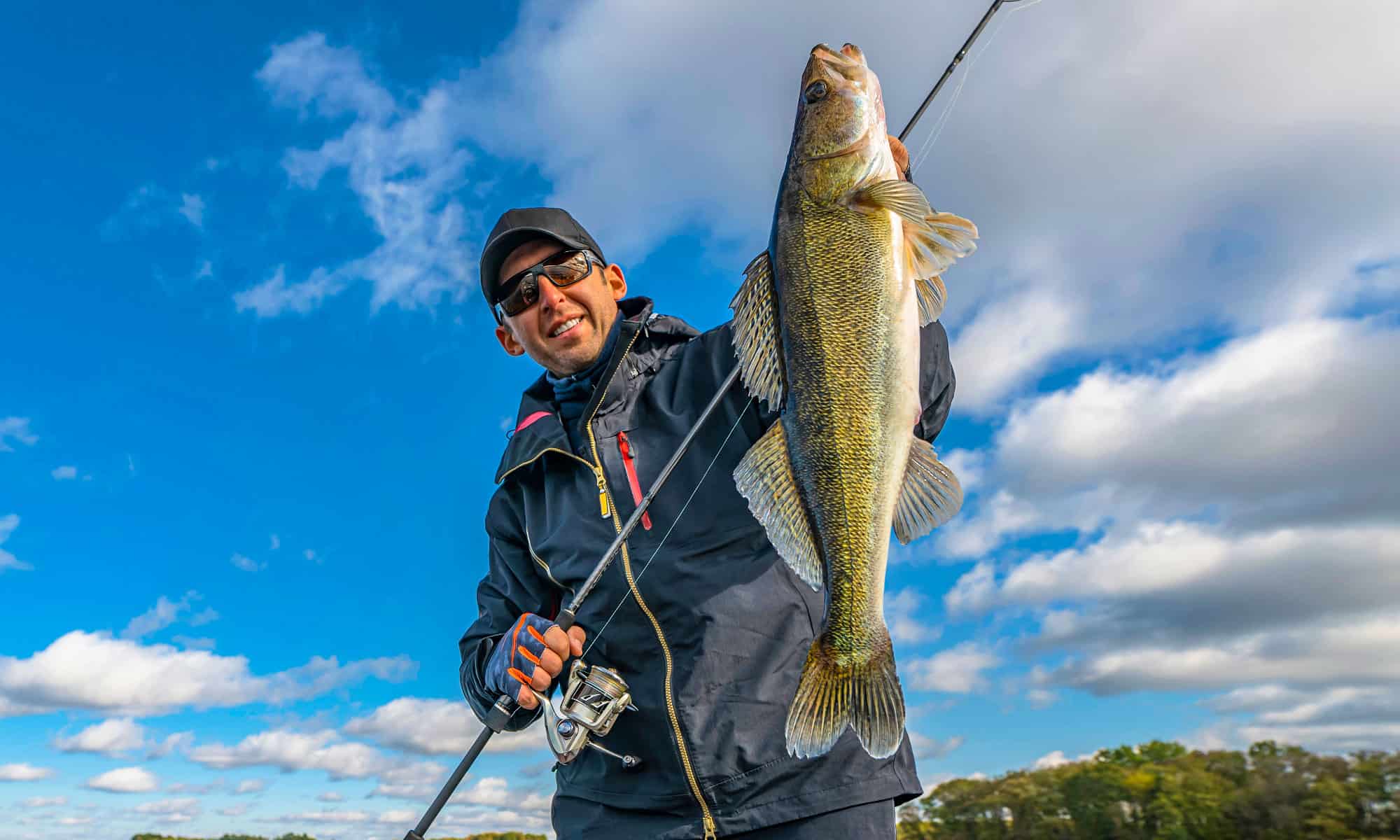

The Saint Lawrence River flows northeasterly from Lake Ontario to the Gulf of Saint Lawrence, connecting the Great Lakes to the Atlantic Ocean, passing through the Canadian provinces of Ontario and Quebec, and the U.S. state of New York. The river is famous for its bass, pike, and muskellunge fish. Bass tournaments are regularly held on the river, and the river has appeared on Bassmaster’s annual list of the best American bass lakes. Continue reading to learn about the 5 largest fish species in the Saint Lawrence River.
5. Largemouth Bass
©Maclane Parker/Shutterstock.com
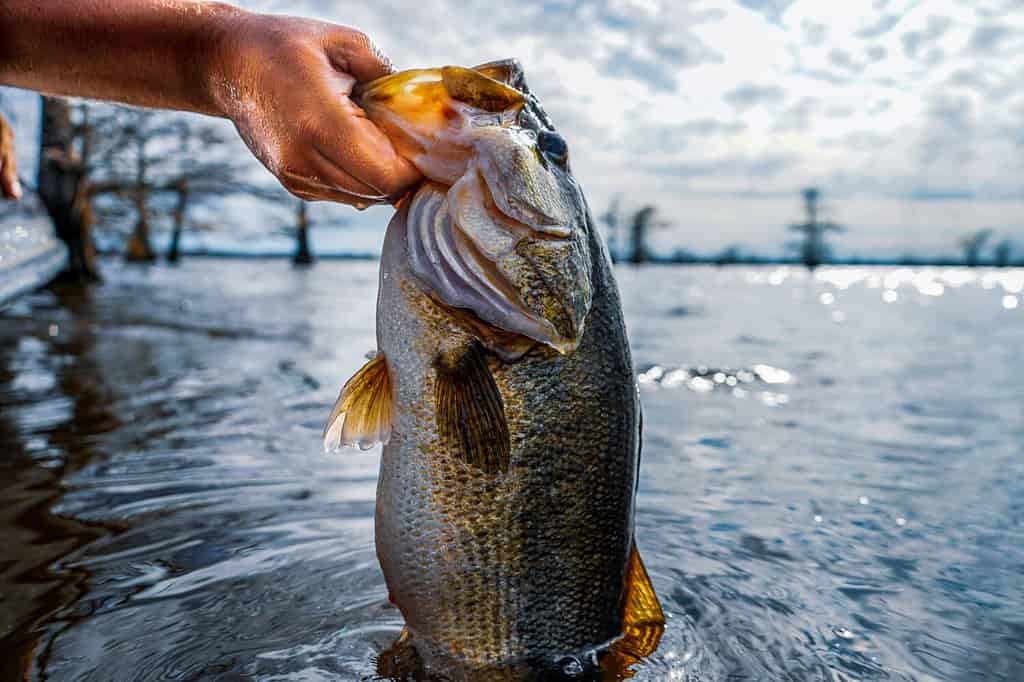
While the smallmouth bass (Micropterus dolomieu) is the star of the Saint Lawrence River, its relative, the largemouth bass (Micropterus nigricans), is larger. Smallmouth bass measure 1 to 1.3 feet long and weigh 0.8 to 4 pounds, while the average largemouth bass measures 1.25 to 1.6 feet and weighs 3 to 5 pounds. The biggest documented largemouth bass weighed 22 pounds 4 ounces. Interestingly, this record is tied between two specimens, one caught in Montgomery Lake, Georgia, United States, and the other in Lake Biwa, Japan.
4. Northern Pike
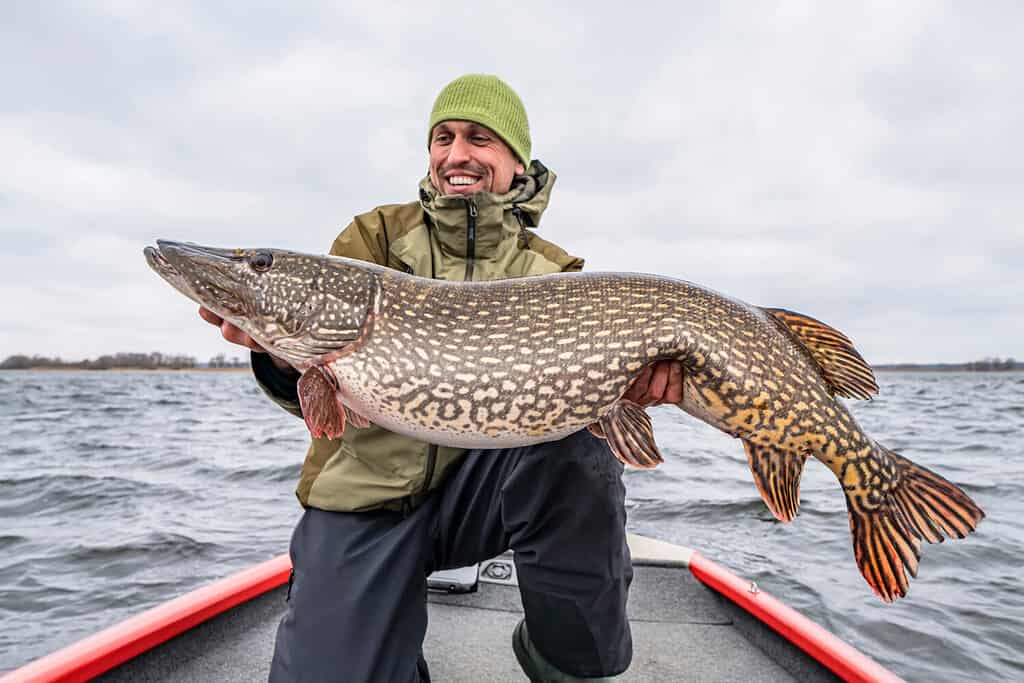
A northern pike.
©FedBul/Shutterstock.com
One of the most common and popular game fish is the northern pike (Esox lucius). Northern pike have long, slender bodies with pointed snouts. They are usually greenish or brown. On average, these pike measure 2 to 2.5 feet long and weigh 4 to 10 pounds. There are unverified reports of larger northern pike in the Saint Lawrence River, but the North American record weighed 46 pounds 2 ounces and was caught in Great Sacandaga Lake, New York.
Northern pike are often found in weedy areas with shallow water and along the edges of shoals. There, they eat smaller fish, such as perch. They are known to be extremely aggressive, striking at just about any bait.
3. Common Carp
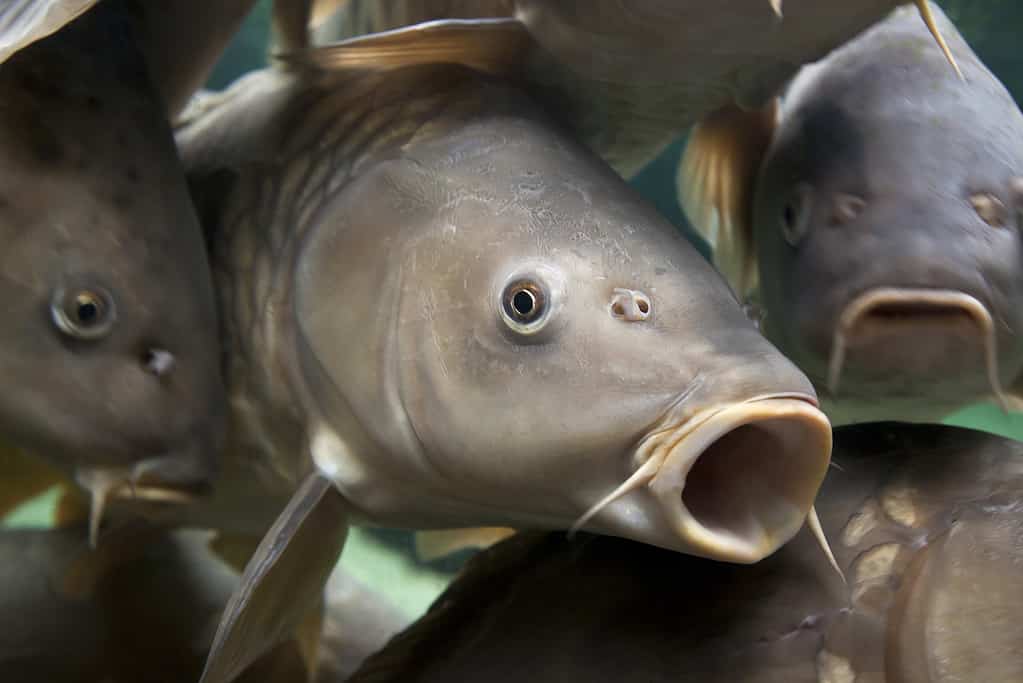
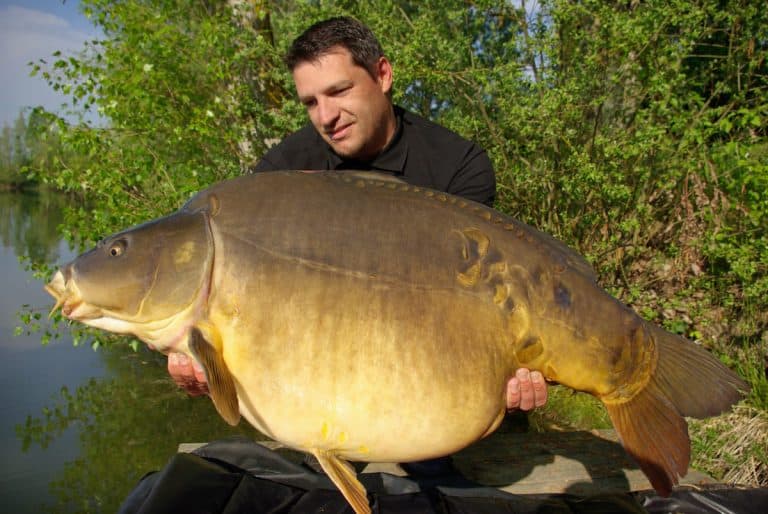
Found along the banks of the Saint Lawrence River, common carp can grow to be quite large.
©Jane Rix/Shutterstock.com
Common carp (Cyprinus carpio) are native to Asia and Europe, but they have been introduced into North America. On average, common carp measure 1.3 to 2.6 feet long and weigh 4 to 31 pounds. The largest common carp caught in the Saint Lawrence River reportedly weighed up to 40 pounds, though larger catches have been reported elsewhere in North America.
Common carp live in shallow, weedy areas, bays, and along riverbanks. Their diet consists of insects, worms, crustaceans, mollusks, and aquatic plants. They are considered an invasive species and compete with native fish species for food. However, they are a popular sport fish among anglers, who appreciate their size.
2. Muskellunge
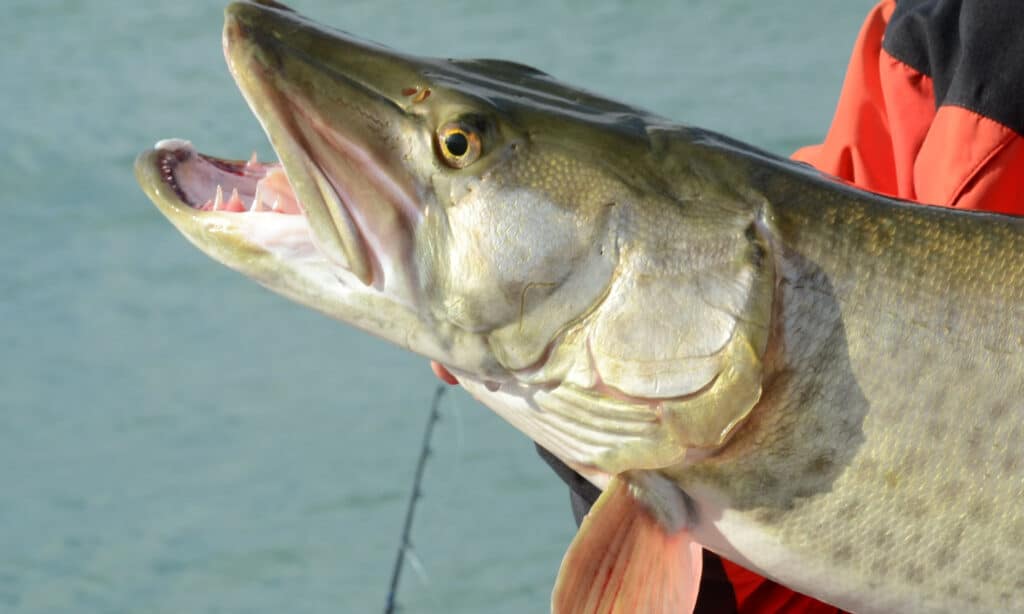
Anglers often catch 50 to 60-pound muskies in the Saint Lawrence River.
©M Huston/Shutterstock.com
The Saint Lawrence River is known for its large muskellunge (Esox masquinongy) population. This species is the largest member of the pike family. On average, muskellunge measure 2 to 6 feet long and weigh 15 to 35 pounds. The largest muskellunge ever caught in the St. Lawrence River weighed approximately 60 pounds, while the world record of 69 pounds, 11 ounces was caught in Wisconsin. These fish are prized for their fighting ability; they are aggressive and more difficult to catch than other fish. For this reason, they have earned the nickname the fish of 10,000 casts.
While not an endangered species, muskellunge numbers in the Saint Lawrence River have been in decline. Invasive gobies (Gobiidae) are believed to eat muskellunge eggs, and human development has led to the destruction of some spawning habitats.
1. Lake Sturgeon
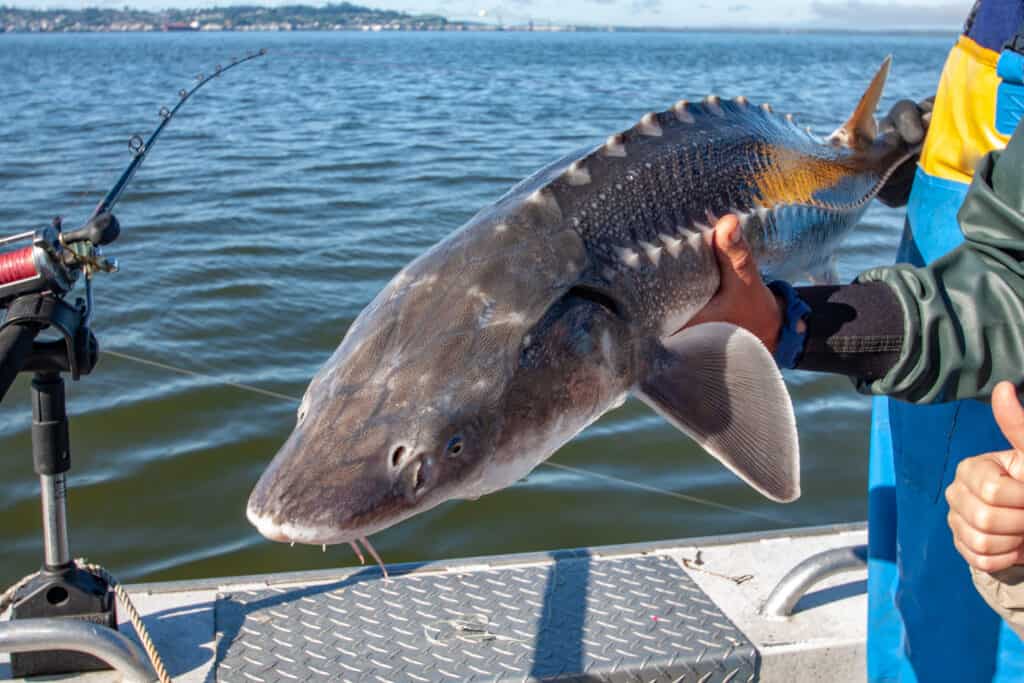
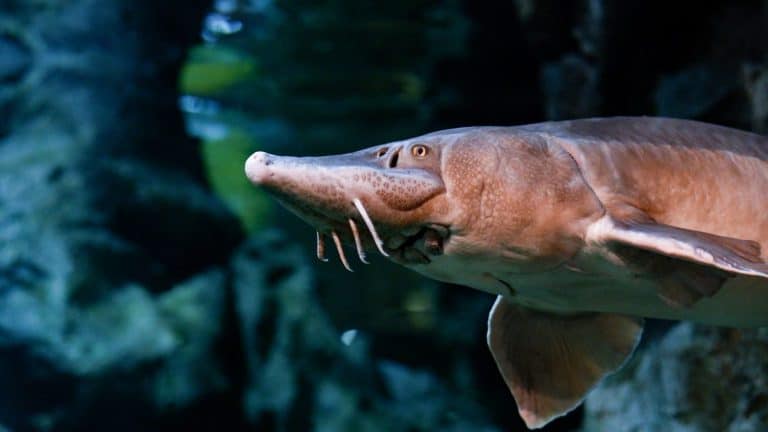
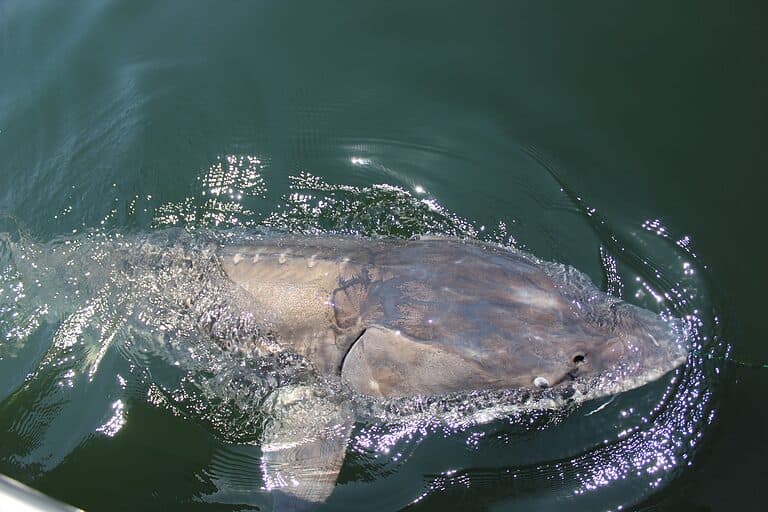
Lake sturgeons are the largest fish species in the Saint Lawrence River.
©CSNafzger/Shutterstock.com
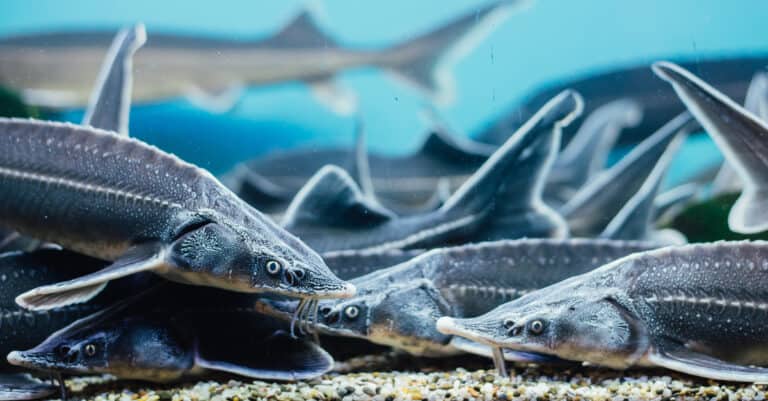
The lake sturgeon (Huso fulvescens, formerly Acipenser fulvescens) is the largest fish species in the Saint Lawrence River. On average, they measure 3 to 6 feet long and weigh 50 to 100 pounds. Lake sturgeon caught in the Saint Lawrence River have measured up to 7 feet and weighed approximately 200 pounds. The largest lake sturgeon on record, caught in the Roseau River, weighed 406 pounds and measured 15 feet 2 inches.
Lake sturgeon have been on New York State’s threatened species list since 1983 and are listed as Endangered by the IUCN. Their populations have declined because of overfishing and habitat loss.