
Quick Take
- Alaska holds a flatfish that can exceed 500 pounds, and knowing exactly where to find it changes everything about your trip. Find halibut hotspots →
- The most abundant fish on this list numbers in the tens of millions in good years, though hit the wrong week and you'll miss the run entirely. Track the sockeye run →
- Fly fishers swear by one freshwater species here that puts on a color show many anglers have never witnessed, with trophy specimens clustering in one specific watershed. Discover grayling waters →
With over 3 million lakes and more than 44,000 miles of shoreline, Alaska offers world-class freshwater and saltwater fishing opportunities. Whether you prefer fly fishing, drift fishing, bank fishing, or spin casting, you can catch a wide variety of fish in Alaska’s waterways. However, which fish should you target? Read on to discover some of the best fish to catch in Alaska.
Chinook (King) Salmon
The Chinook salmon is the largest species of Pacific salmon and the official state fish of Alaska. They typically measure 36 inches in length and weigh over 30 pounds, but the record is 58 inches and 126 pounds. In the ocean, Chinook salmon have greenish-blue backs with silvery sides and white bellies. They also have black spots on their backs, dorsal fins, and on the tail fin. In freshwater during spawning, males turn red to copper, while females are usually grey.
The best time to catch Chinook salmon is from late May through early July. This is when the largest fish move into coastal waters and major river systems. The Alaska Department of Fish and Game (ADFG) notes that major salmon populations return to the Yukon, Kuskokwim, Nushagak, Susitna, Kenai, Copper, Alsek, Taku, and Stikine rivers. Smaller streams also have salmon runs.

The Chinook salmon is the official state fish of Alaska.
©Evan Linnell/Shutterstock.com
Sockeye Salmon
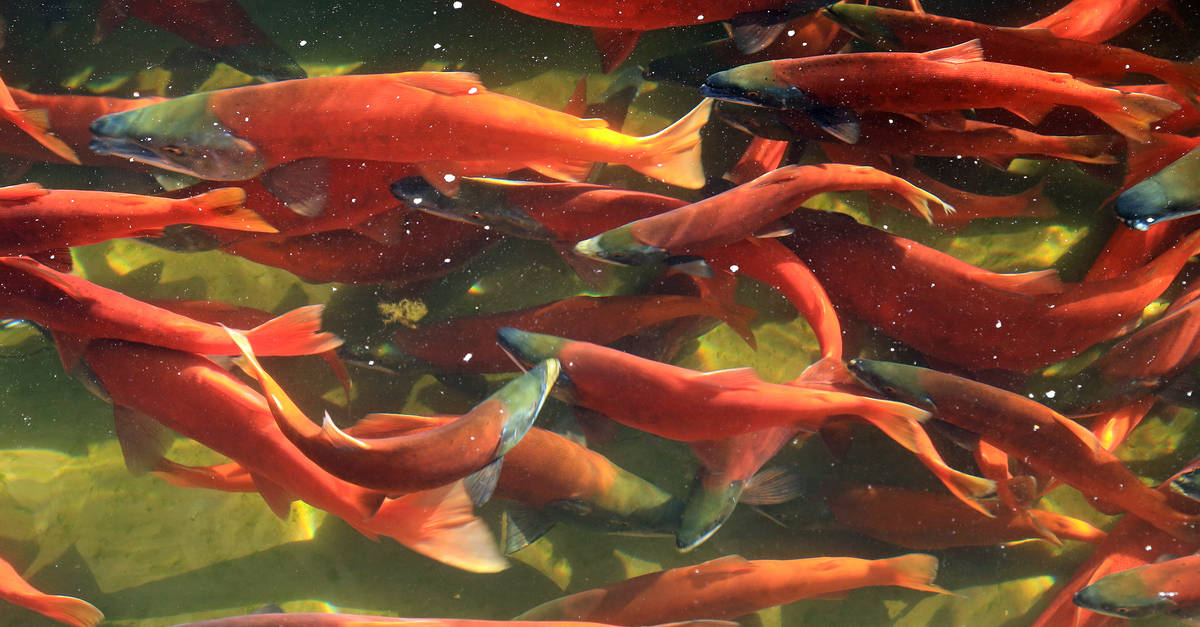
You can also target one of the smaller species of Pacific salmon, the sockeye salmon. Nicknames include blueback, red salmon, and kokanee salmon. While in the ocean, they are a metallic blue green with white undersides, and silvery flanks. When they return to fresh water to spawn, their bodies turn a vibrant red and their heads turn green. Sockeye salmon in Alaska typically measure 18 to 31 inches in length and weigh 4–15 pounds.
Sockeye salmon spend part of their lives in saltwater environments and part in freshwater. In Alaska, most sockeye salmon begin to move inland to freshwater estuaries, lakes, and streams to spawn in June and July. They’re among the best fish to catch in Alaska because there are so many of them. According to the ADFG, they number in the tens of millions in good years. Some of the largest sockeye salmon populations in the state are in the Kvichak, Naknek, Nushagak, Egegik, and Ugashik Rivers that flow into Bristol Bay.
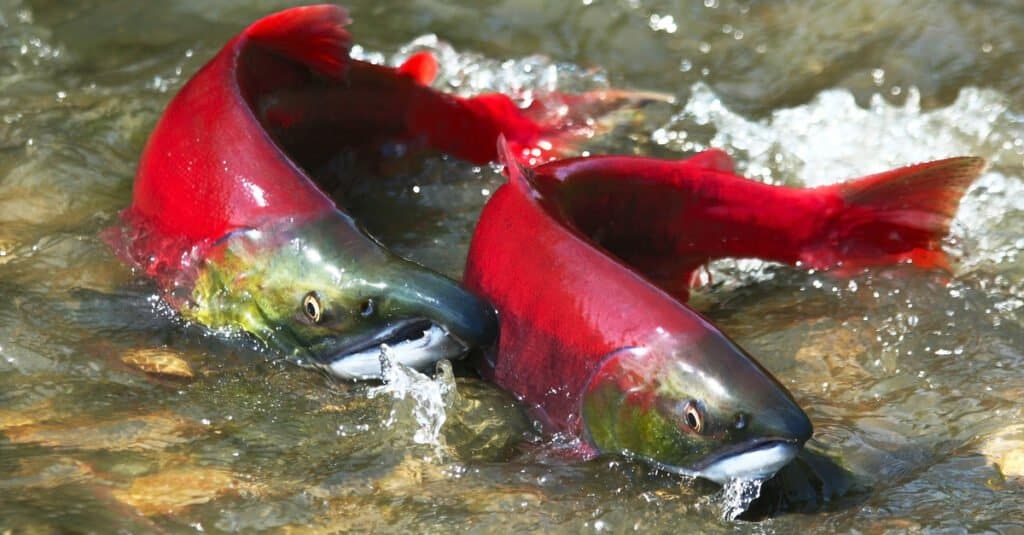
Sockeye salmon are sometimes called reds because their bodies turn bright red during spawning.
©Vasik Olga/Shutterstock.com
Halibut
Halibut are flatfish that swim with one side facing up and the other facing down. These fish are oval-shaped, with dark, mottled uppersides and pale undersides. They are generally brown, grey, or nearly black to blend in with the ocean floor. Halibut are prized by anglers for their large size and delicious white meat. Most average catches weigh 10-20 pounds and measure 30–36 inches. However, they can reach up to 8 feet long and 5 feet wide, and weigh up to 500 pounds.
Halibut are usually found along the continental shelf, but they also move back and forth between deep waters and shallow waters, depending on the season. Beginning in November and running through March, mature fish move into deeper offshore areas to spawn. In early summer, they return to nearshore areas to feed. Top destinations include Homer, Seward, and Kodiak Island. Note that Alaska enforces size and bag limits that vary by region, so check the ADFG regulations before fishing.
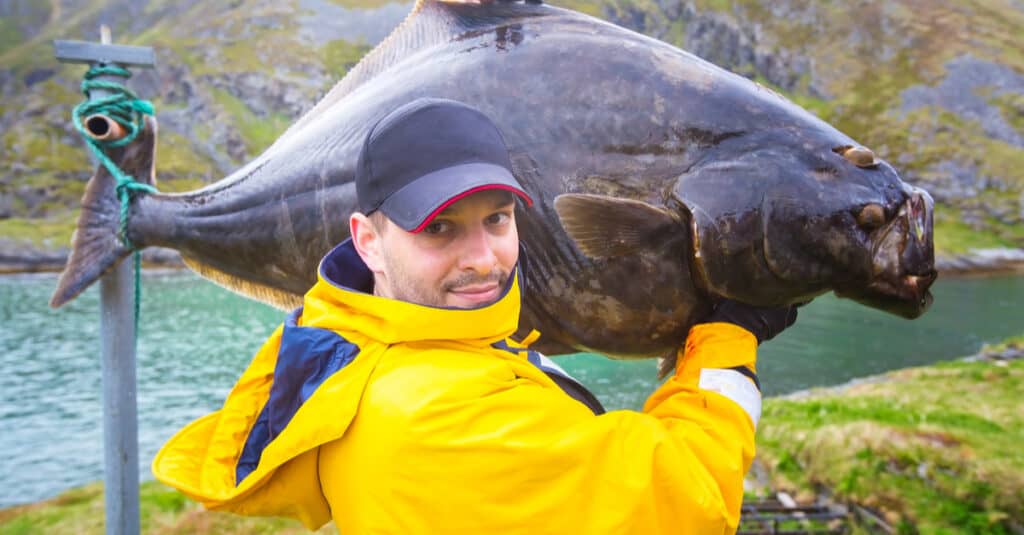
Halibut are among the most popular sport fishes in Alaska for their size and taste.
©Alexey Savchuk/Shutterstock.com
Lingcod
Lingcod are not actually cod; they are greenlings, which are bottom-dwelling marine fish. Their skin is a mottled brown, grey, blue, or green with clusters of copper or brown blotches. They have large mouths with sharp teeth and are voracious eaters. A caught lingcod typically weighs between 15 and 40 pounds and measures around 30 to 40 inches long. However, they can reach 80 pounds and measure up to 60 inches long.
Lingcod can typically be found around nearshore rocky reefs. Along the coast, spawning begins in early December, with peak spawning from mid-January through mid-March. However, since lingcod are vulnerable to overfishing, sport and commercial fisheries are closed during spawning and nest-guarding, and minimum size and catch limits apply. The best time to catch lingcod in Alaska is between July and August, when retention season is open for most coastal regions, and the fish are active. Check the ADFG website to ensure the season is open in the area you want to fish.
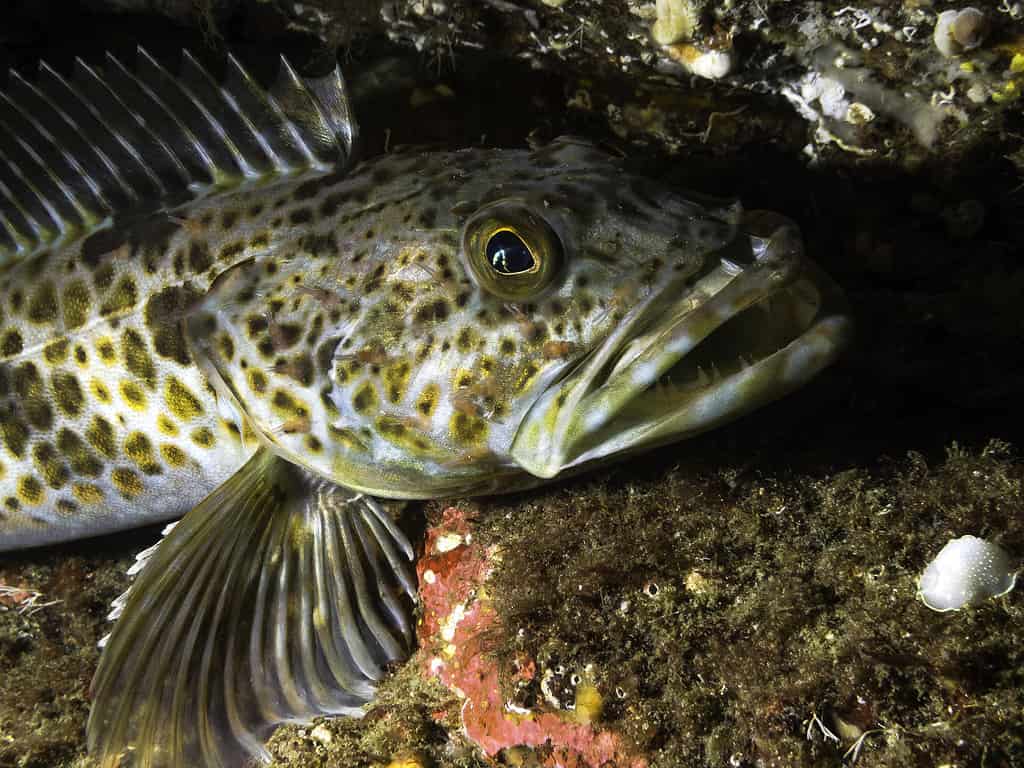
Lingcod are greenlings, which are bottom-dwelling marine fish.
©naturediver/iStock via Getty Images
Arctic Grayling
Arctic grayling belong to the char family and are favorites of fly fishers. Their coloration varies depending on the water body. These fish typically have dark backs with black, blue, gold, or silver sides, and a gold border between their sides and pale bellies. Their dorsal fins have a red fringe with iridescent red, purple, or turquoise markings. Their pelvic fins are a vibrant pink, red, or orange. The sides of their heads and bodies may also have little black speckles. Adults usually do not exceed 24 inches and they generally weigh less than 5 pounds.
Arctic graylings like cold, clear water and can be found in freshwater environments throughout most of the state. You’ll be amazed at how many fish you find when fishing along the road system in Interior Alaska. However, the majority of trophy-sized fish have come from the Ugashik Lake and River system in the Bristol Bay watershed. The best time to catch Arctic grayling in Alaska is after spawning when they migrate to summer feeding areas. From around June through September, the fish feed aggressively near the surface.
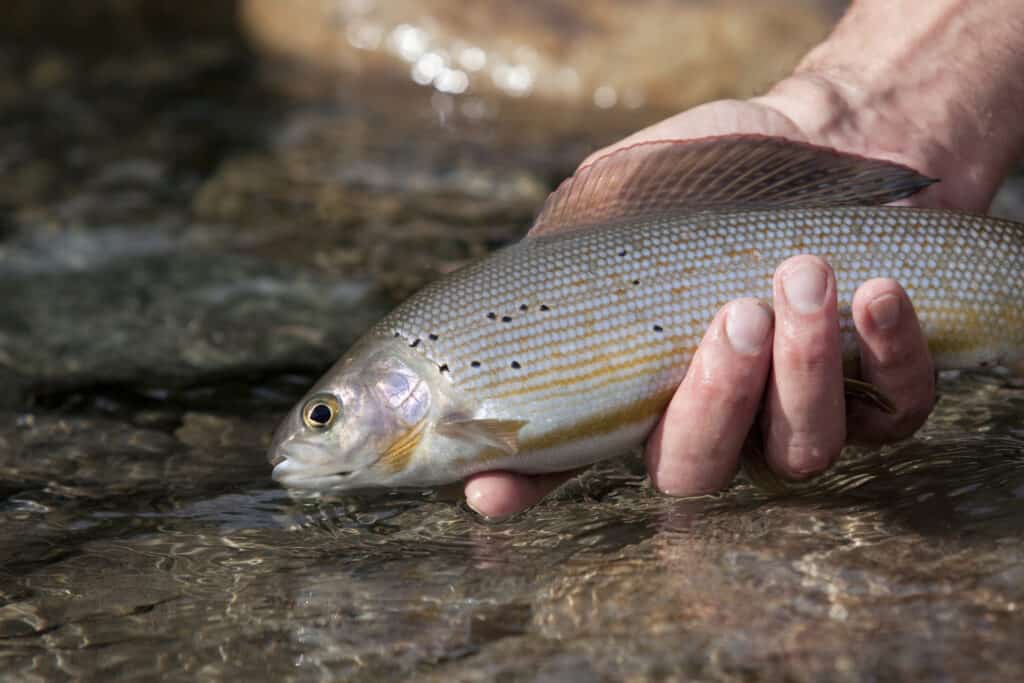
The Ugashik Lake and river system is the top hotspot for trophy-sized Arctic graylings.
©iStock.com/Alaska_icons